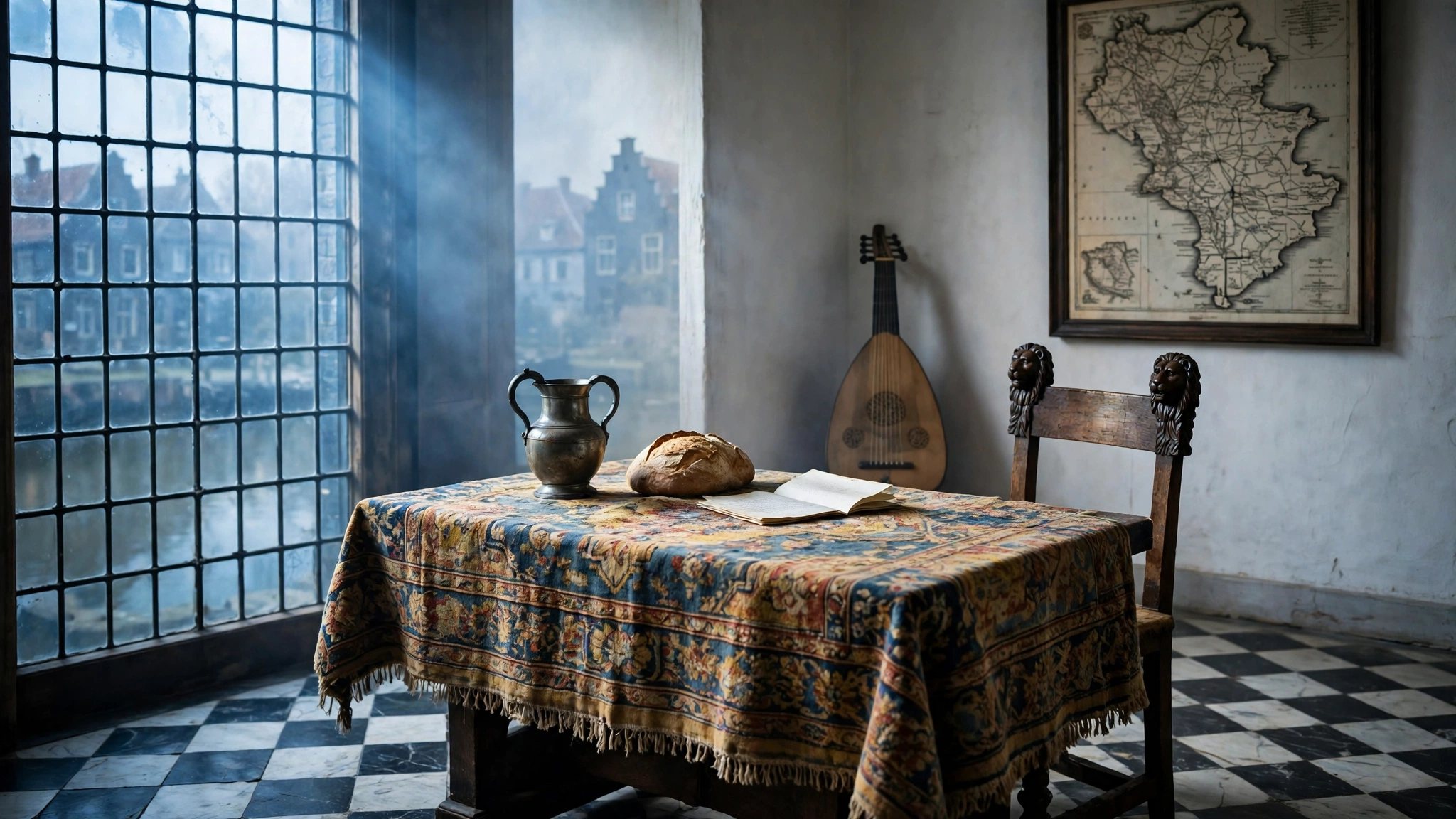
Delft, a room with the window on the left and light arriving like slow water. Vermeer painted barely thirty-seven pictures in his whole life, most of them in this one interior, and he ground his quiet out of lapis lazuli, lead-tin yellow and patience. Nothing in this room shouts. Everything glows.
No drawings by Vermeer survive, and his pictures behave like projected light: highlights bloom into little discs, perspective is exact beyond freehand skill, and things near the picture plane go soft while the middle distance stays sharp. He almost certainly worked with a camera obscura — a lens throwing the room onto his canvas — and then, being a painter and not a machine, improved on what it gave him.
In several canvases conservators have found a tiny hole at the vanishing point. He drove a pin into the wet ground, tied chalked strings to it, and snapped them against the canvas to rule the lines of floors, tables and ceilings. The perfect architecture of these quiet rooms was built with a nail, a thread and a snap of the wrist.
His blue is genuine ultramarine — ground lapis lazuli shipped from Afghanistan, dearer than gold — and he spent it like a rich man: on a milkmaid's apron, on shadows, on a whole dress. Under the microscope his blues are mixed with white and glazed over grey underpaint, which is why they seem lit from inside rather than laid on top.
On the crust of the loaf in the Milkmaid, on the basket, on the brass of a jug, the paint is dabbed in separate beads — pointillés, little points of thick paint that catch the real light of the room you stand in. It is the look of light seen through a lens, recreated in oil: sparkle you could almost pick off with a fingernail.
Nearly every interior is the same room in his house in Delft — window on the left, the same chair with lion-head finials, the same maps on the wall, the same black-and-white floor. He rearranged his small stage for twenty years and never exhausted it. Constancy was his laboratory: change one thing — a letter, a balance, a lute — and the whole room changes meaning.
He worked slowly — about two pictures a year, in thin layers that each had to dry — and sold dear to a handful of Delft patrons; a single local collector, Pieter van Ruijven, bought some twenty of them. Thirty-seven paintings, give or take: that is the whole estate of the man many call the greatest painter of light who ever lived.
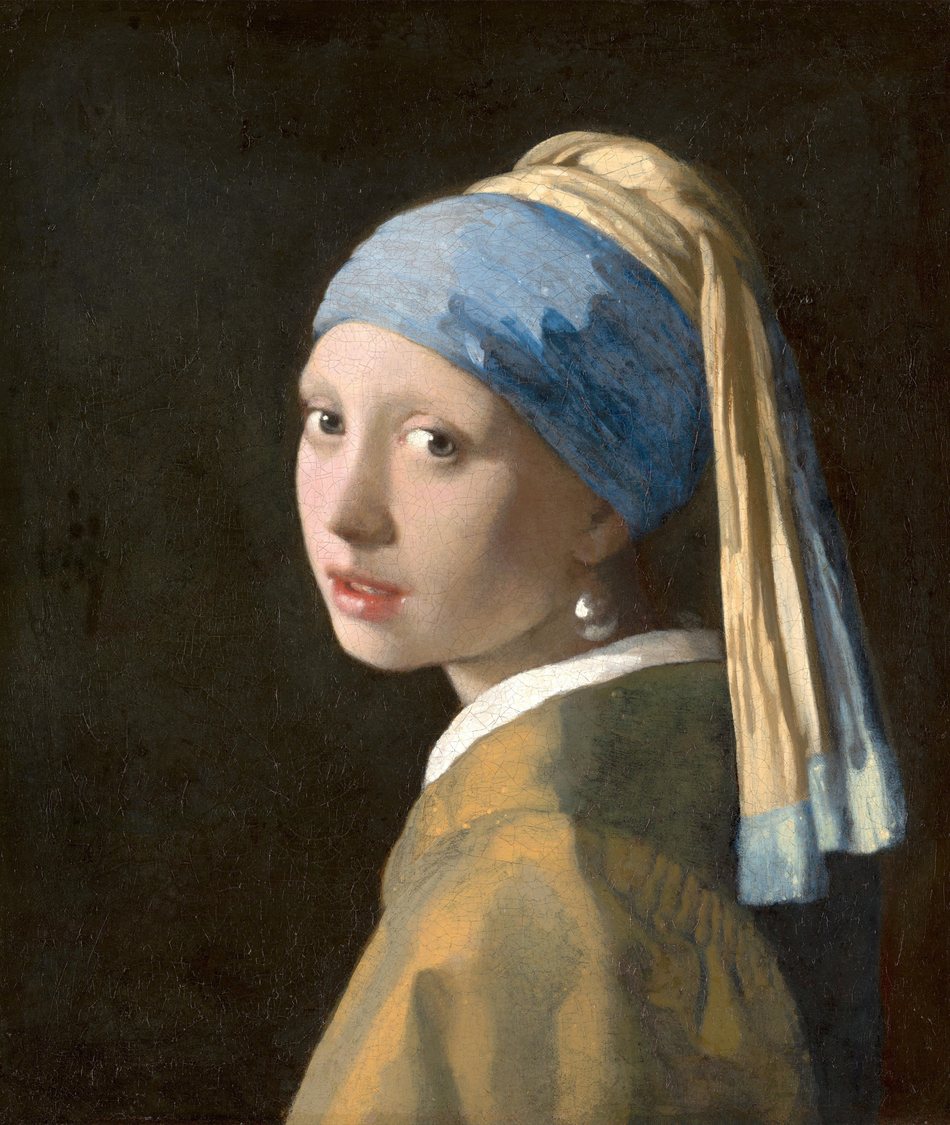
Not a portrait but a tronie — a study of a face, nobody's commission. The famous pearl is almost nothing: a soft grey shadow and one white highlight, hanging from no visible thread. The ultramarine of her headscarf is lapis lazuli, and the lips are parted as if she has just turned to answer you.
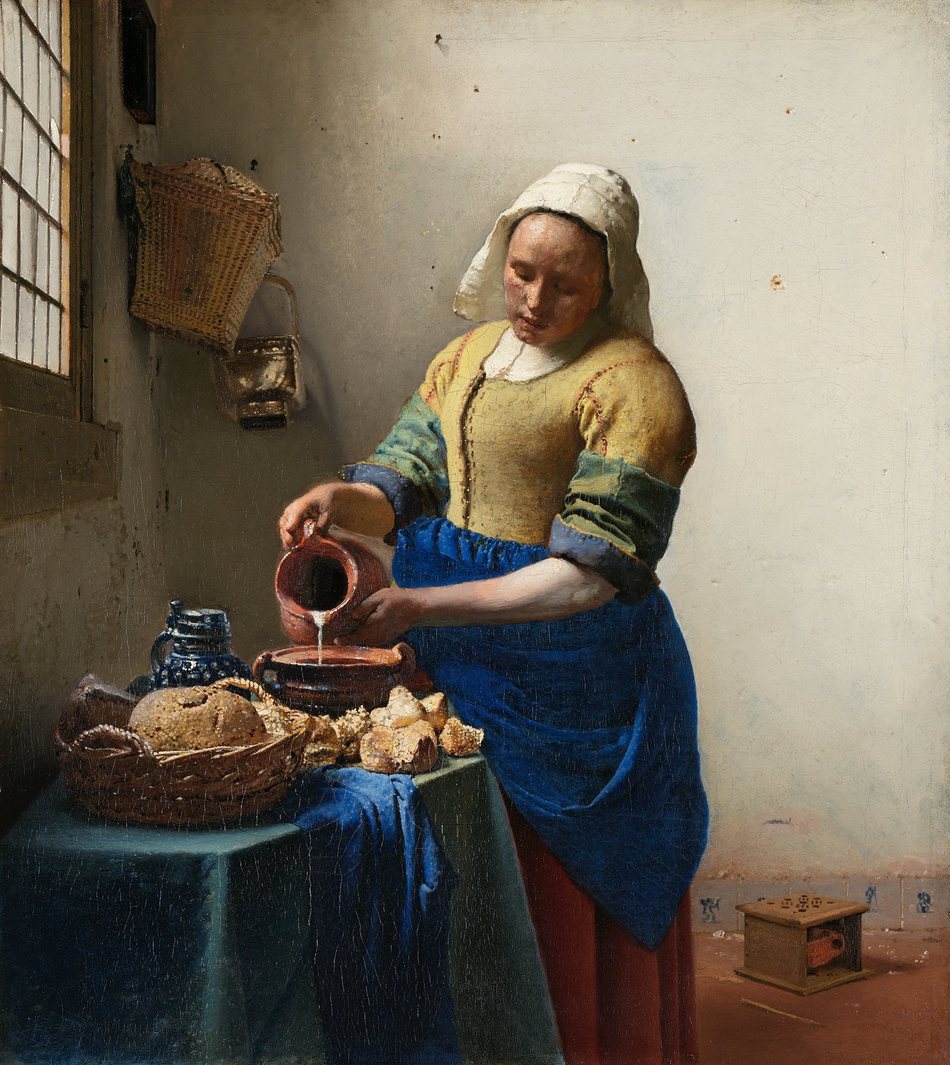
A servant pouring milk, painted like a monument. Her apron is solid ultramarine — pigment dearer than gold on a working woman's dress. The bread and the basket sparkle with pointillé dabs, a single nail casts its shadow on the white wall, and the little foot-warmer on the floor waits for winter.
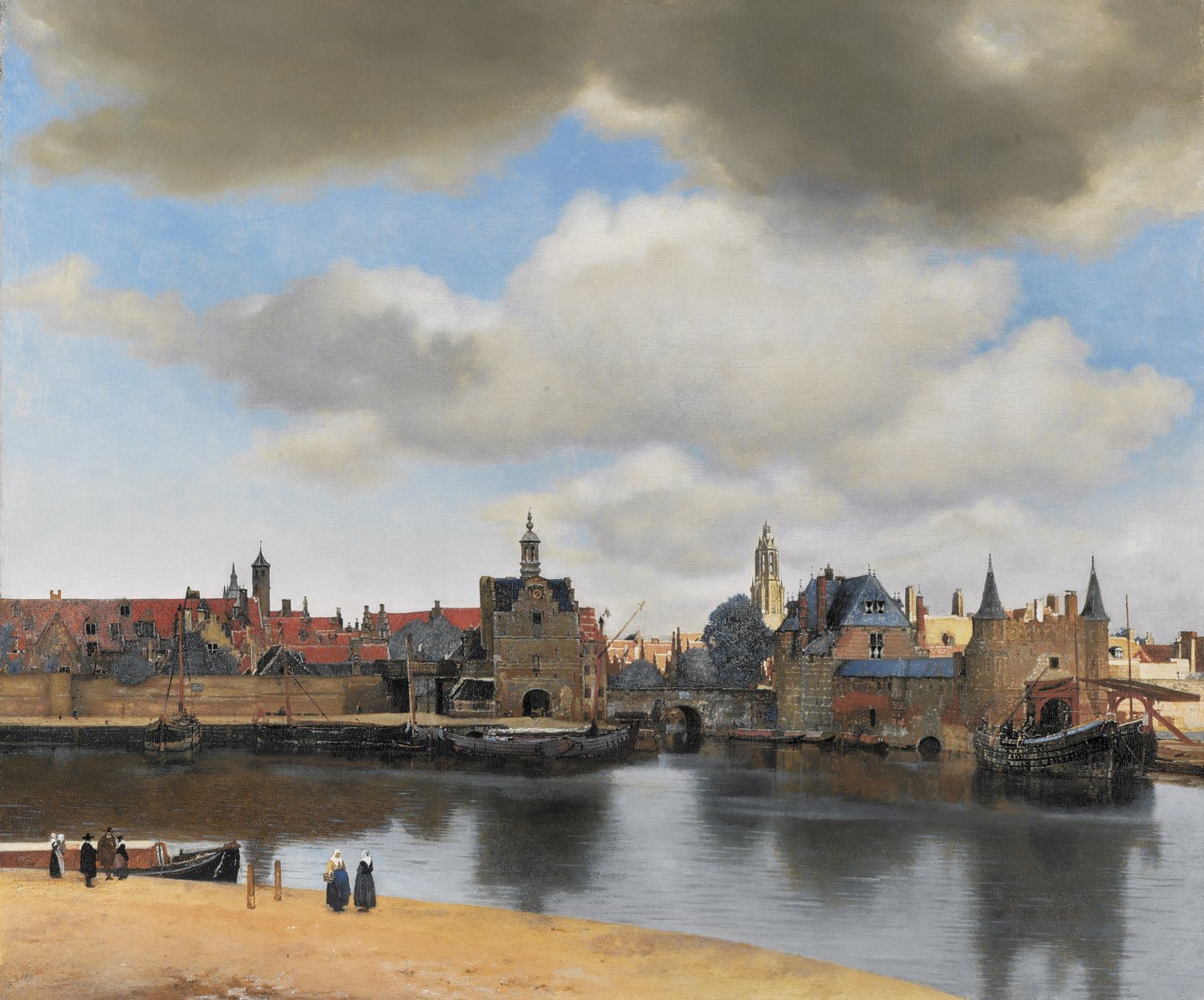
His only townscape, seen from across the water on a morning after rain. The Nieuwe Kerk tower, where the princes of Orange are buried, catches the sun while the foreground stays in cloud-shadow. On the water and the boat hulls, beads of paint sparkle — the signature of light seen through a lens.
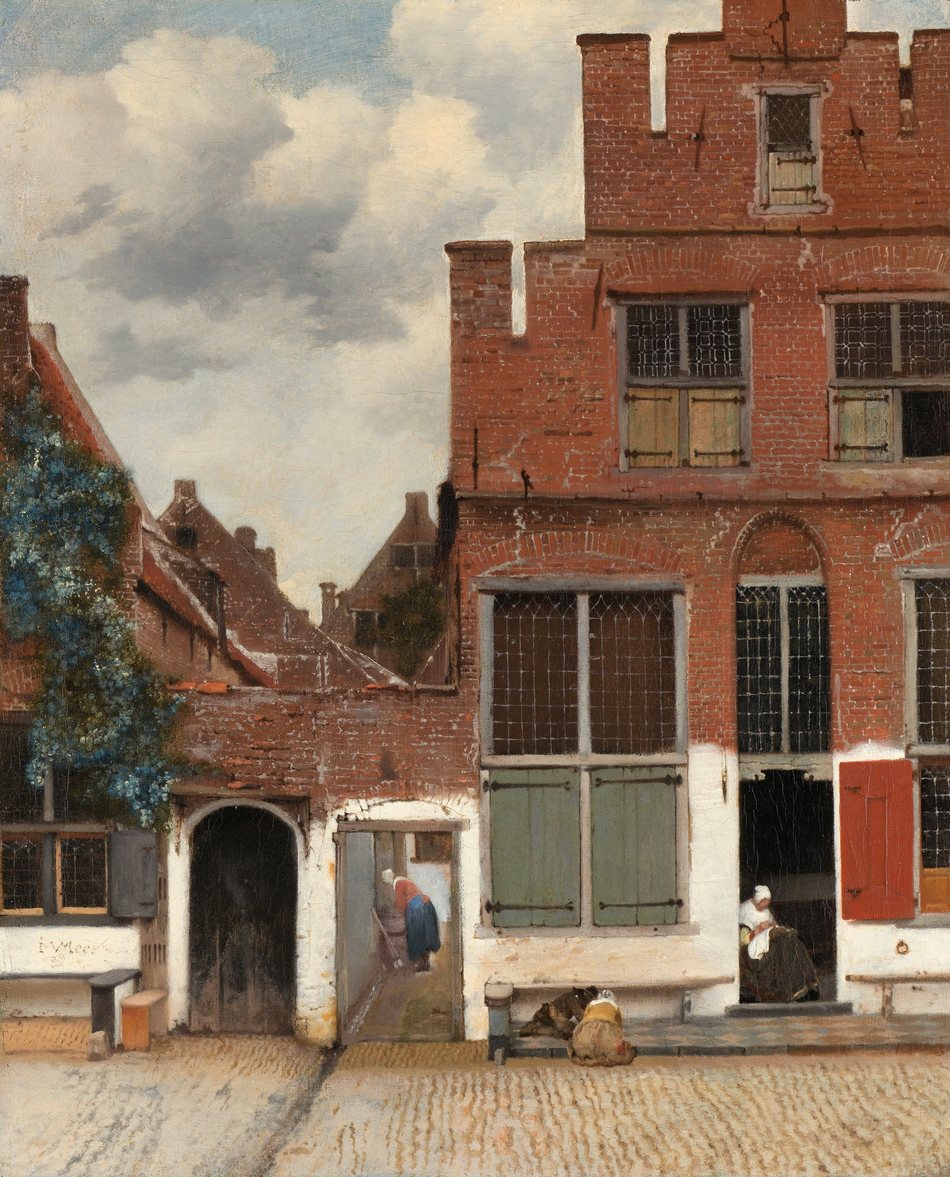
Two houses on a Delft lane — the one on the right belonged to his aunt, and his mother lived across the street. Every brick is laid with a mason's patience, women sew and sweep in doorways, and nothing at all happens, perfectly. It is the quietest masterpiece in Dutch painting.
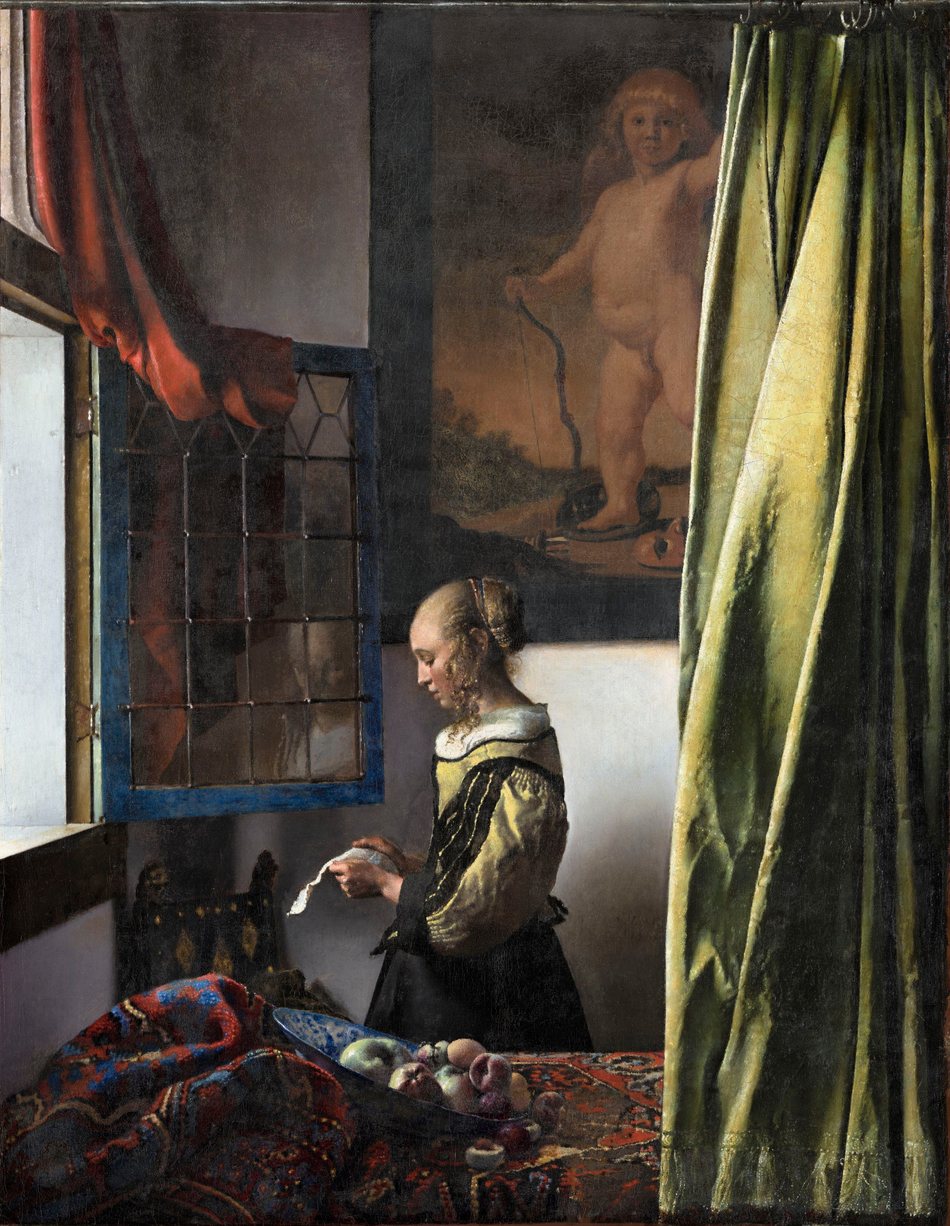
For centuries the wall behind her was bare — until X-rays found a large Cupid painted over long ago, perhaps by another hand after Vermeer's death. In 2021 the restorers brought him back, and the picture changed its meaning overnight: the letter is a love letter, and it always was.
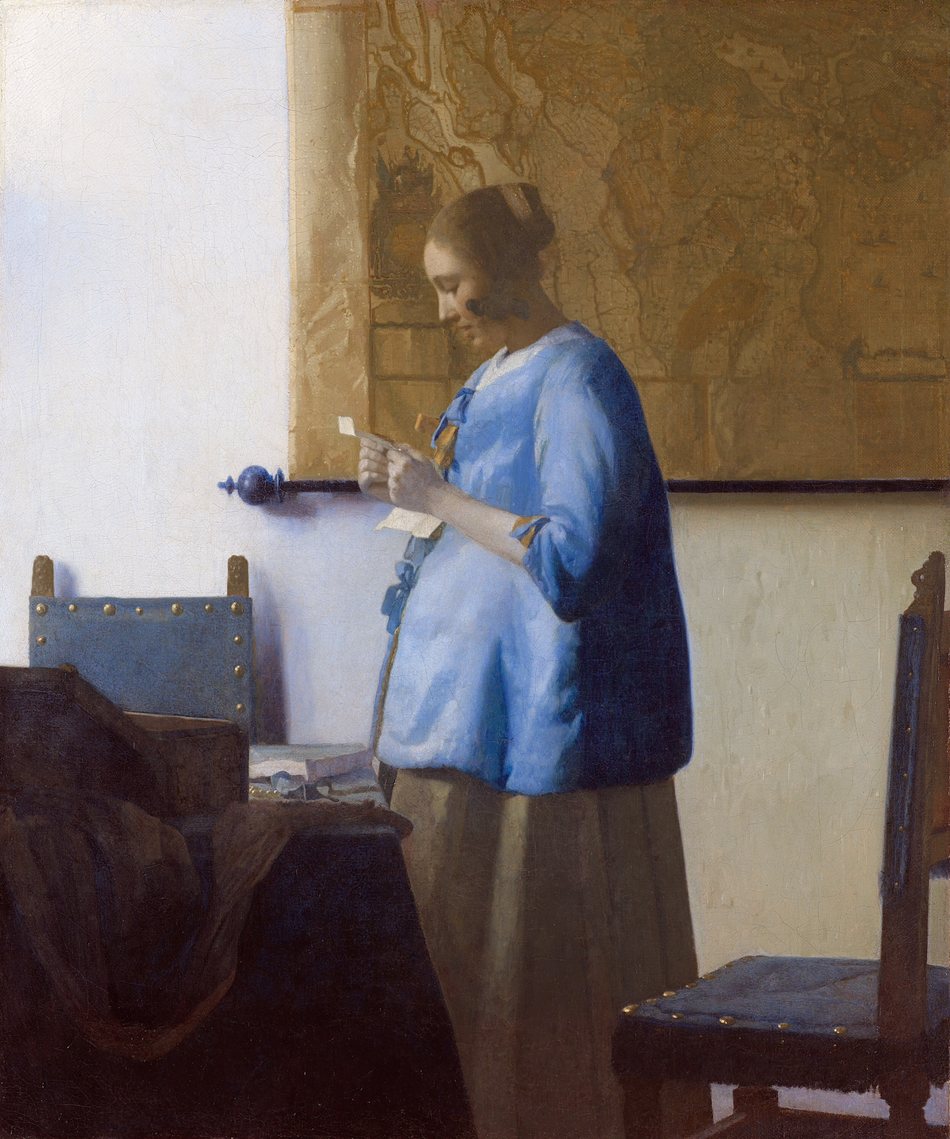
The blue of her jacket is ultramarine laid over the whole figure like morning itself; behind her, a great map of Holland and West Friesland covers the wall. She stands in profile, deep in the letter, and Vermeer leaves us exactly where the painter stood — outside it.
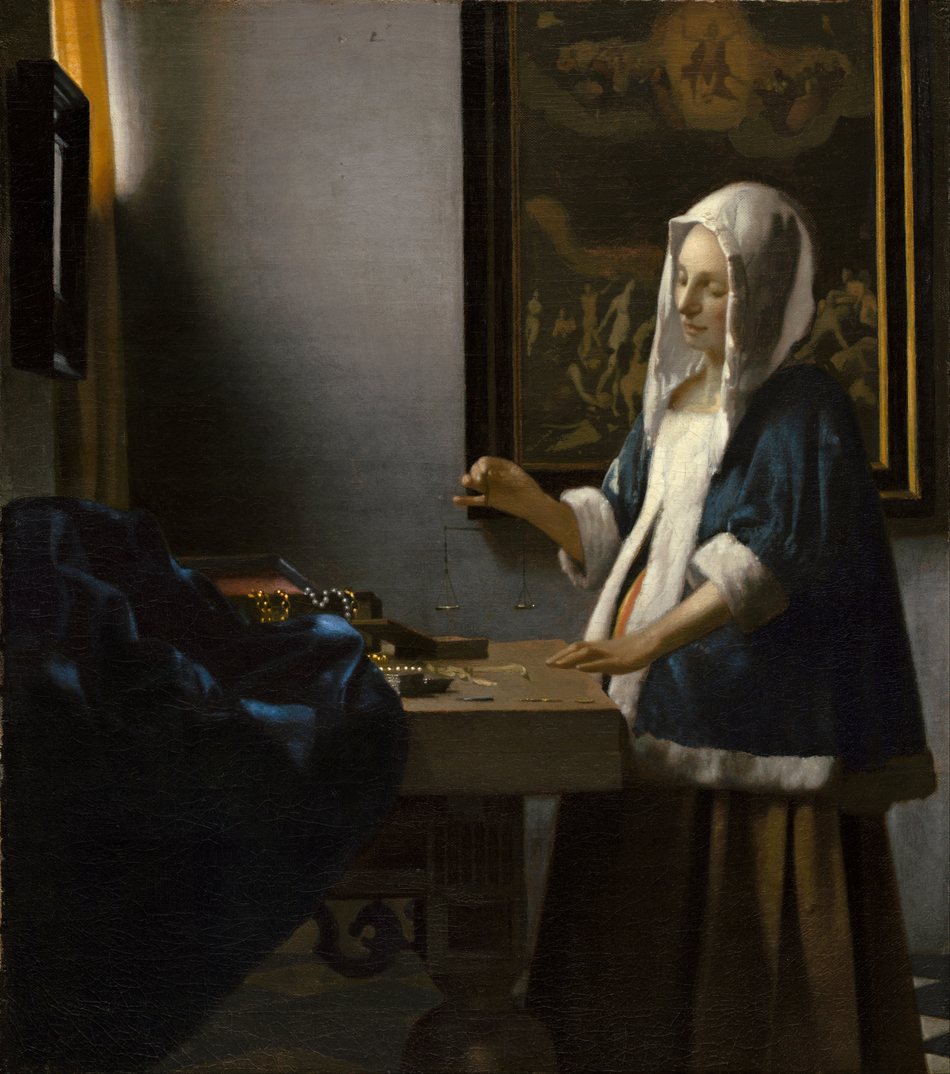
The balance in her fingers is empty, perfectly still, and perfectly level. Behind her hangs a painting of the Last Judgment, where souls are weighed — she weighs nothing, in a room of morning light, and the picture weighs everything. Her pearls and gold lie in the open boxes below, already judged by the light.
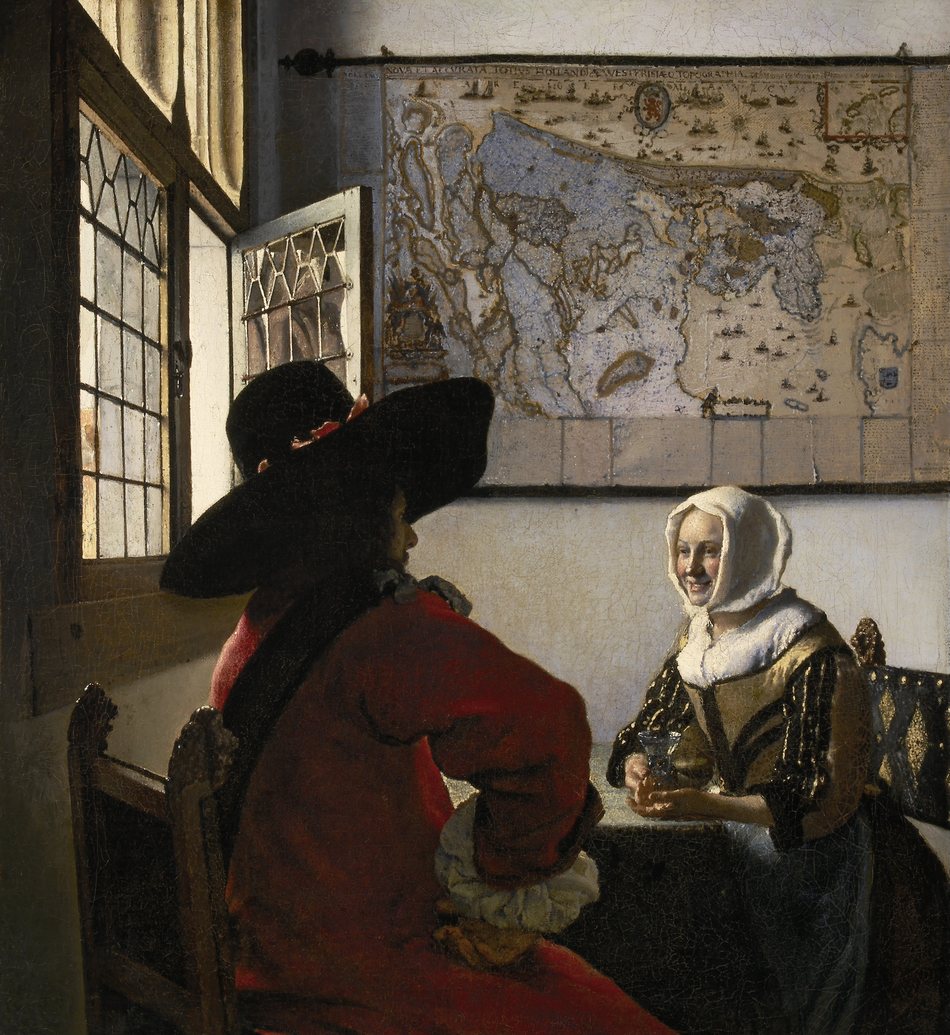
The officer is a black mountain of silhouette — hat, sash and back — and she, beyond him, is all light and laughter, holding her glass. The same map of Holland hangs behind them that hangs in half his rooms; Vermeer painted one interior the way other men paint one beloved face.
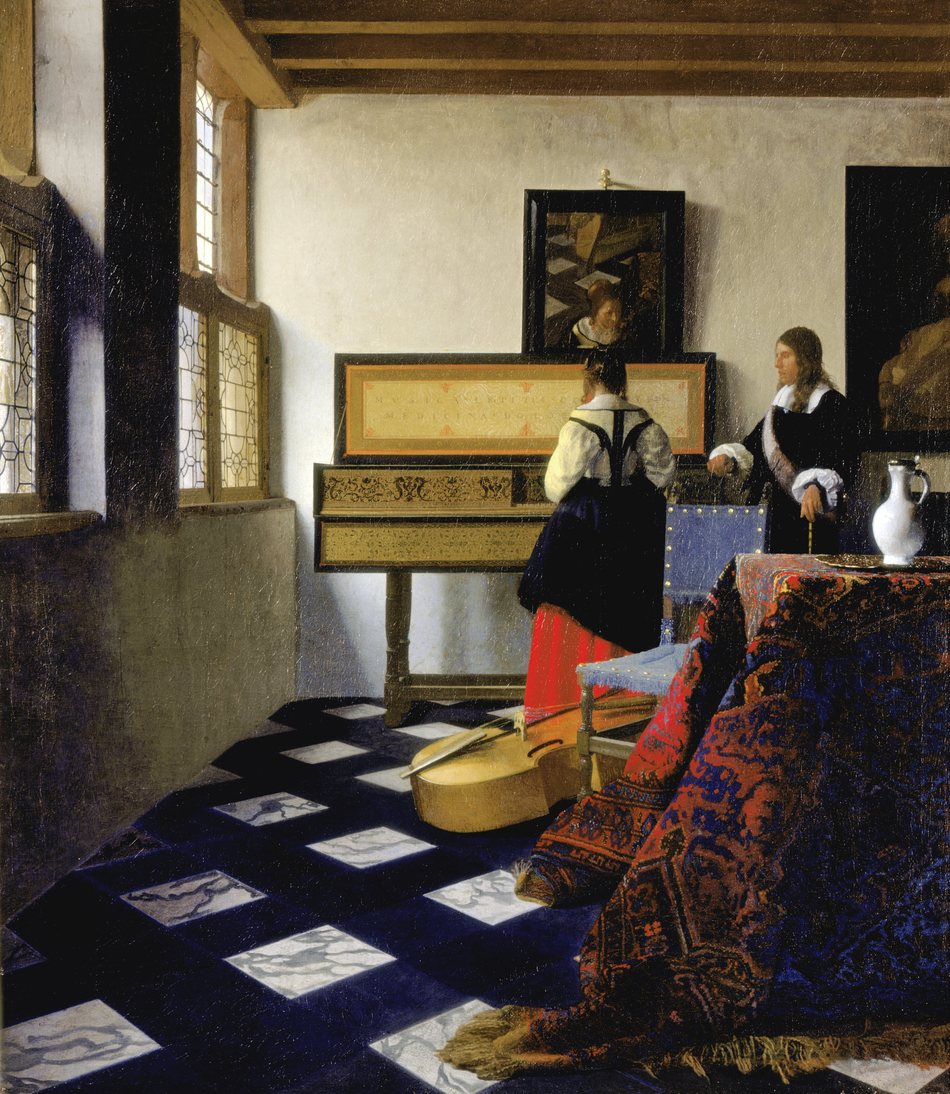
A lady at the virginals, her teacher standing close — and on the wall a mirror, in which you can see the legs of Vermeer's own easel, reflected into the scene. The room is watching itself being painted. On the lid of the instrument, in Latin: music, companion of joy and balm of sorrow.
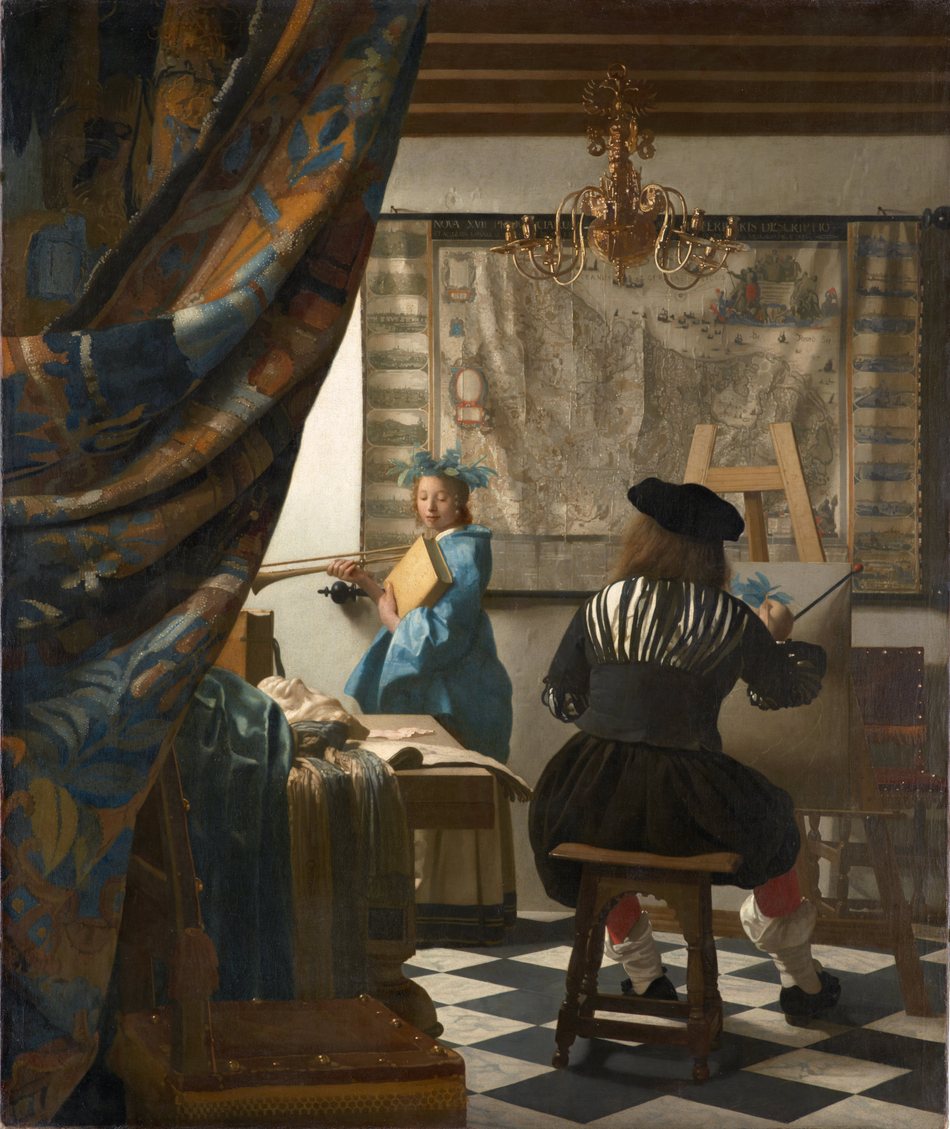
His manifesto, painted for no buyer: the painter at work, seen from behind, and Clio, muse of history, posing with her trumpet and book before the great map of the Netherlands. Vermeer kept it in his studio all his life; his widow fought to keep it from his creditors. It is the one picture he would not sell.
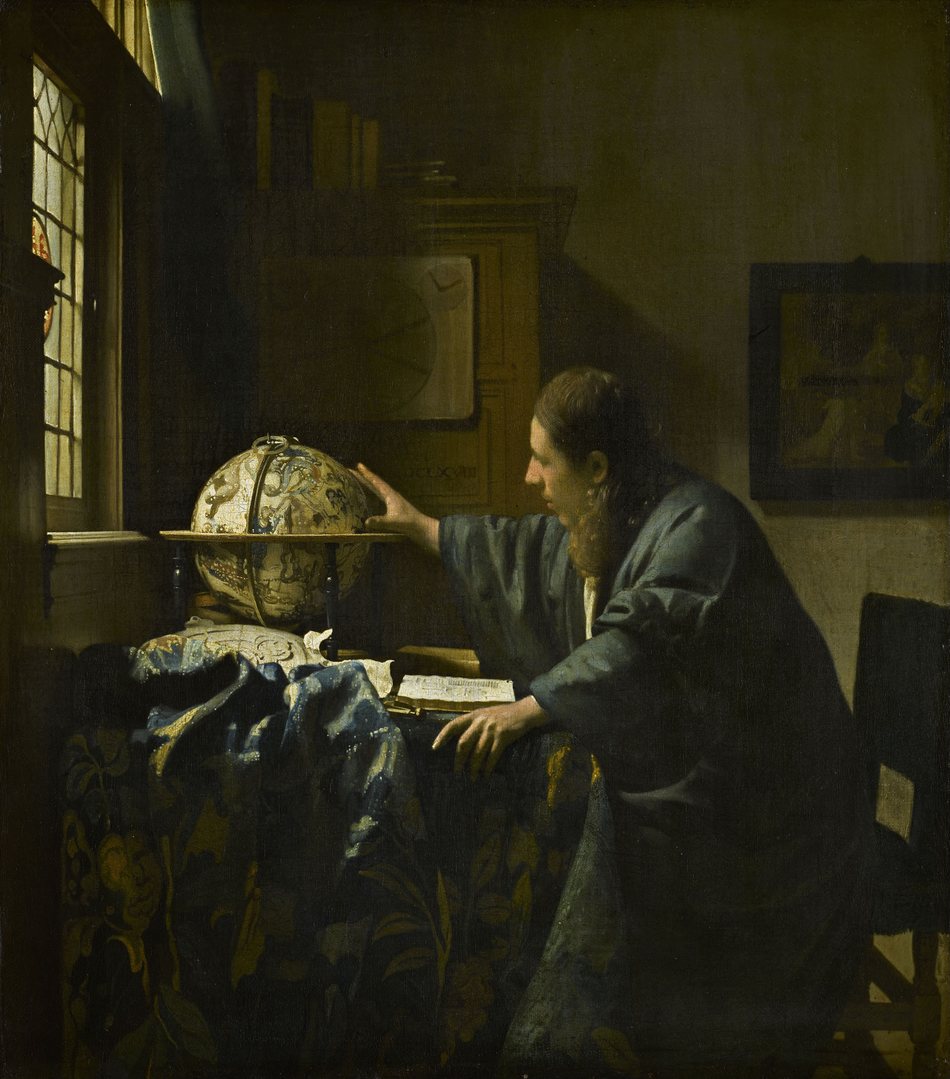
His hand reaches for the celestial globe — an actual instrument, made by Jodocus Hondius, which Vermeer paints star by star. On the desk lies an astronomy manual open at a page about following inspiration; the scholar, leaning into the light, is doing exactly that.
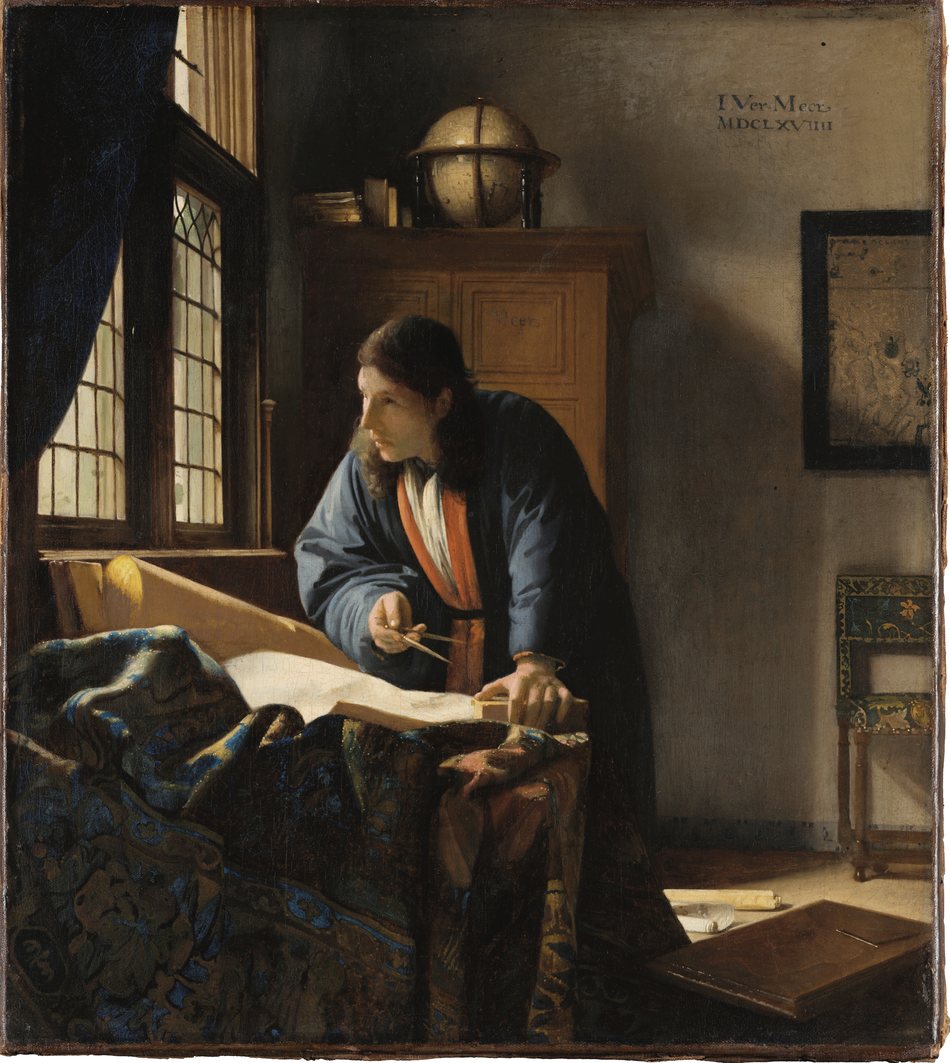
The companion to the Astronomer, with the same model and the same room — dividers in hand, charts unrolled, a terrestrial globe turned toward Asia. Delft lived by measuring the world for trade; Vermeer paints the measuring itself, in light quiet as a held breath.
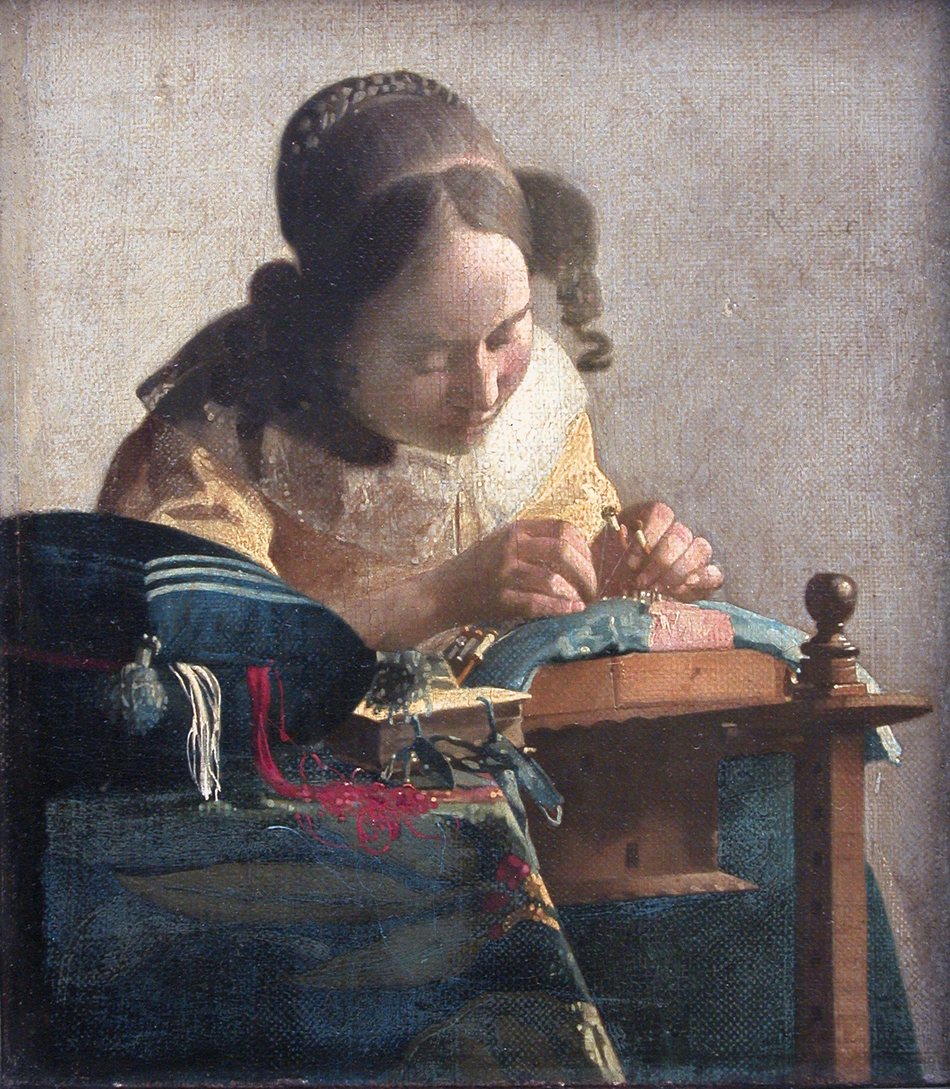
His smallest great picture, and the closest he ever came to showing us a lens at work: in the foreground, red and white threads spill from the cushion in soft focus, blurred exactly as a camera obscura blurs what is too near — while her hands and face stay needle-sharp.
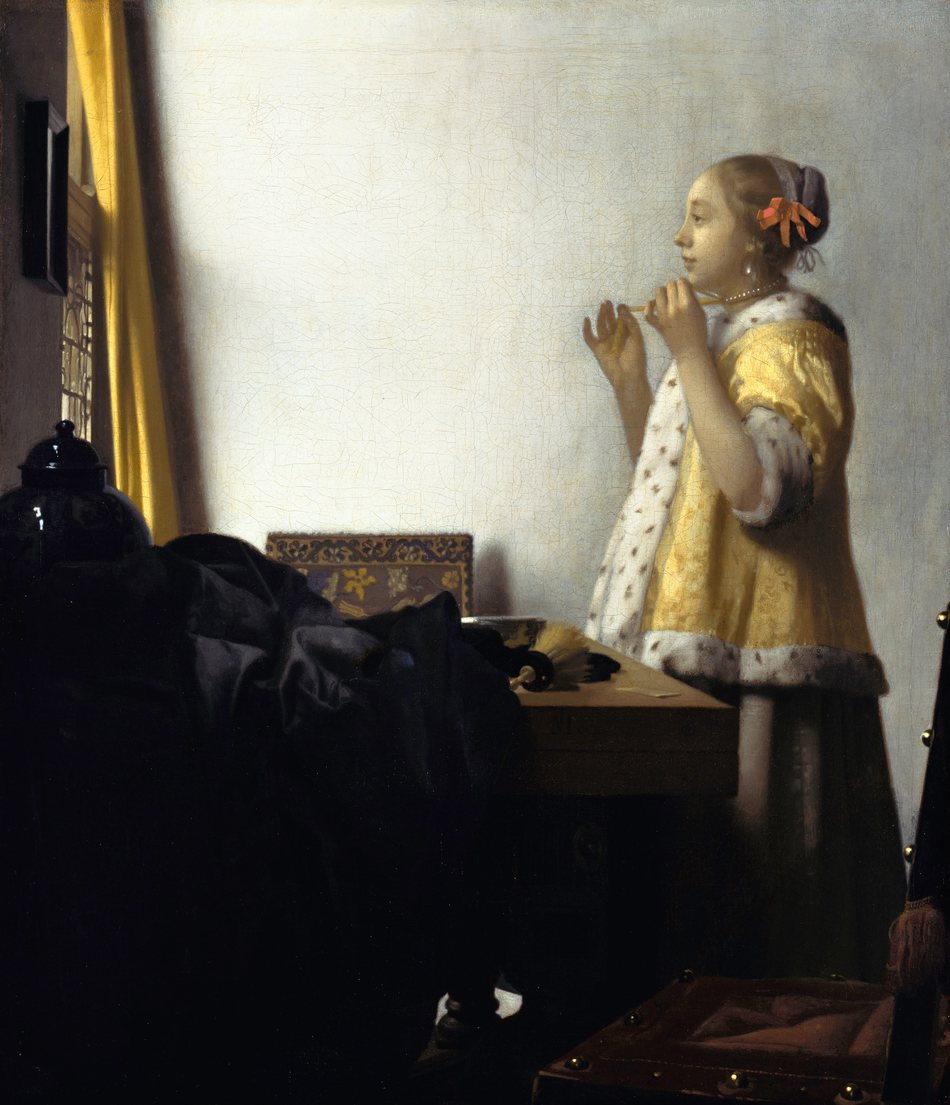
A morning ritual by the window: she holds the necklace's ribbons up to the light, earrings in, hair dressed, the yellow curtain drawn aside like the curtain of a theatre. Everything is preparation for a day the picture will never show us.
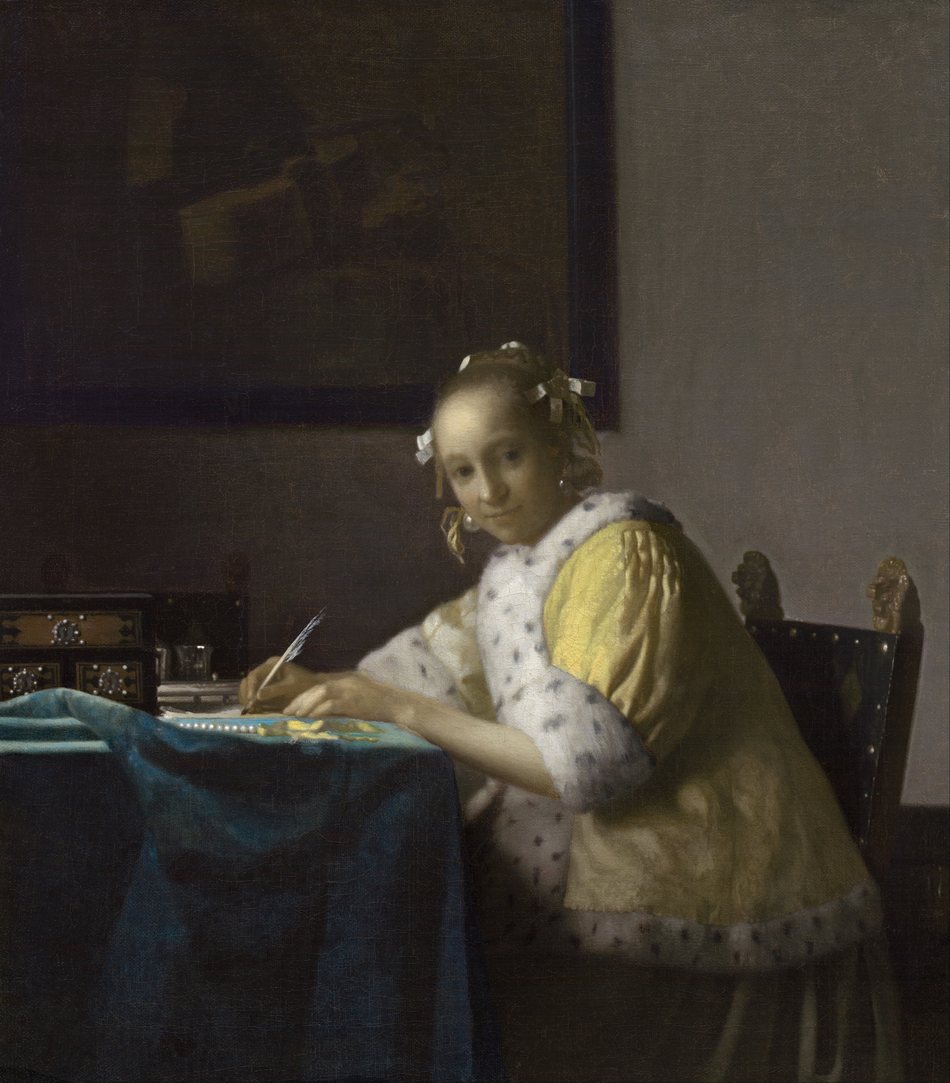
She has looked up mid-sentence — at us, the interruption. The yellow jacket trimmed with ermine appears in picture after picture; it belonged to his wife Catharina, and art historians track it through the rooms like a signature. Her sentence waits, unfinished, three and a half centuries later.
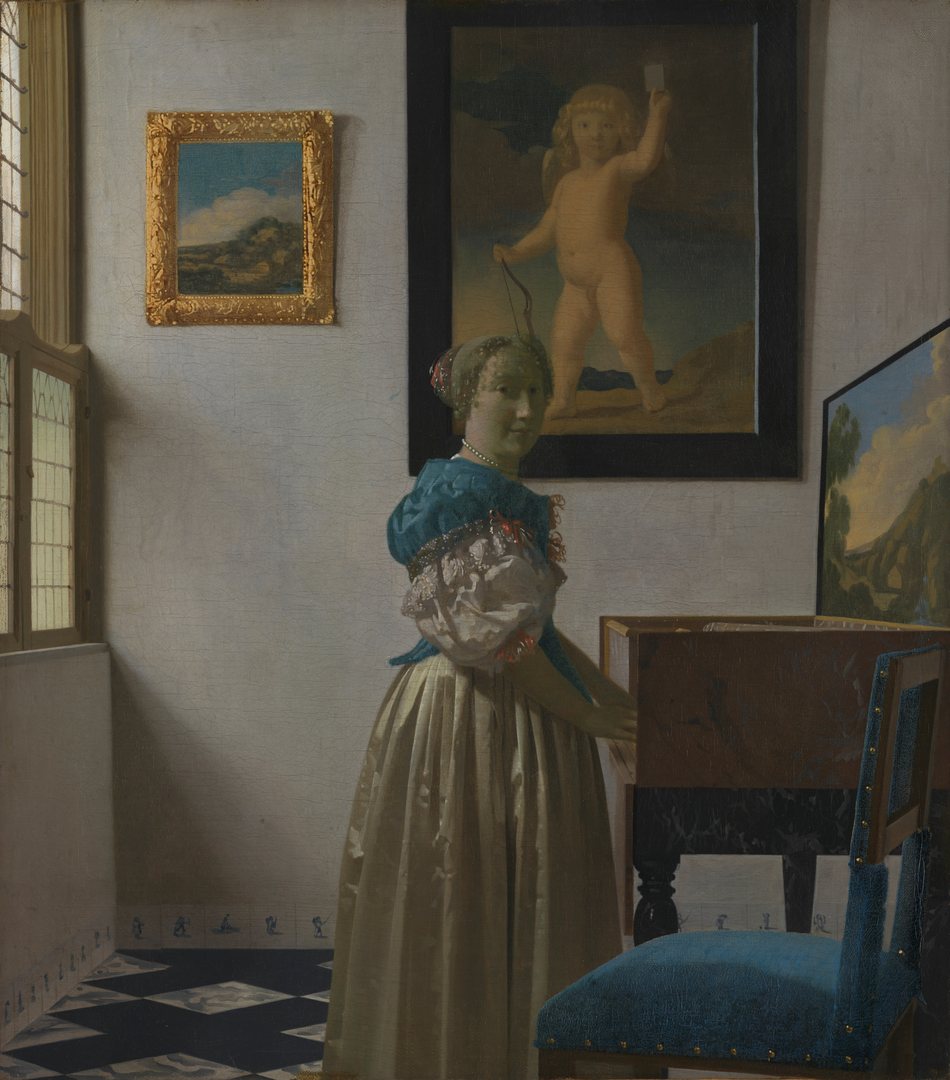
A late picture, cooler and more spacious: paintings hang inside the painting, a viola da gamba lies on the floor waiting for its player, and the lady turns from the keys toward us. By now the room itself had become his true sitter.
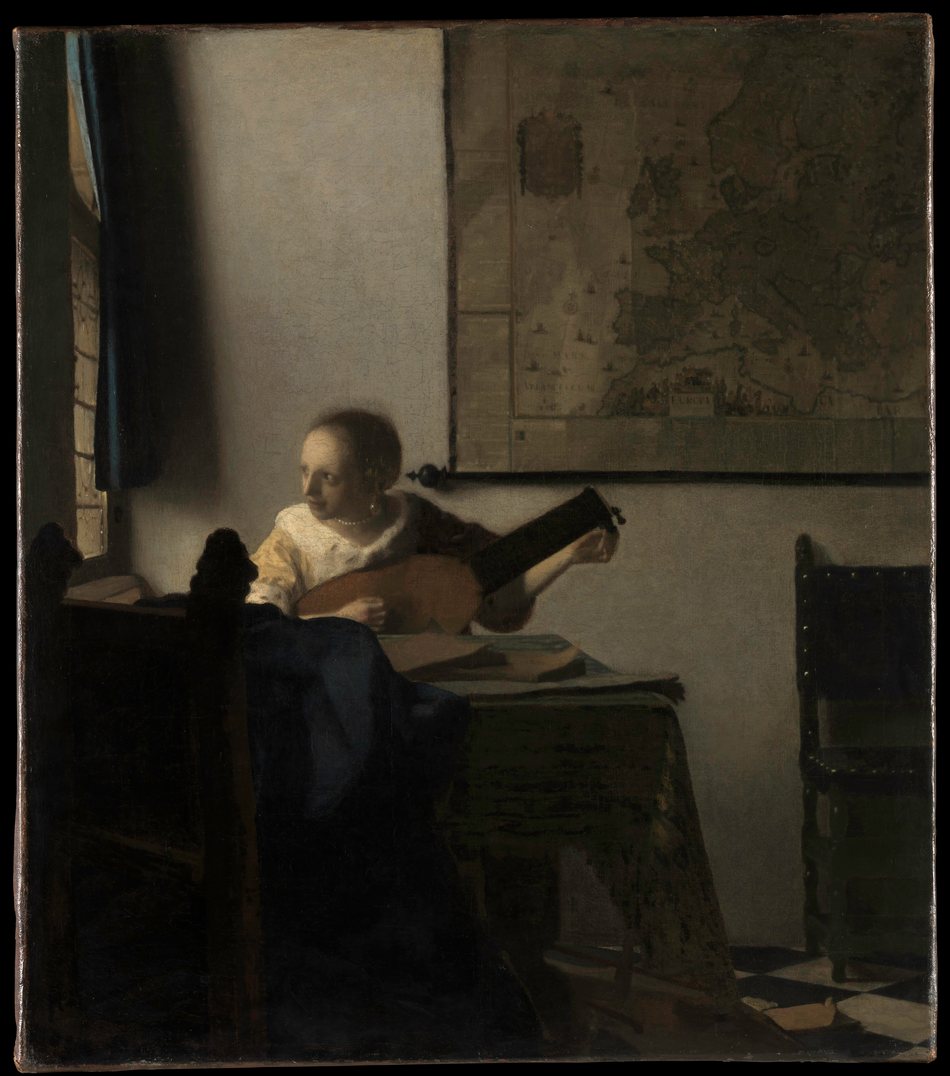
She tunes the lute by the window, glancing out as if listening for someone — a songbook open, the map of Europe behind her, one pearl earring catching the daylight. Tuning is the moment before music; Vermeer always paints the moment before.
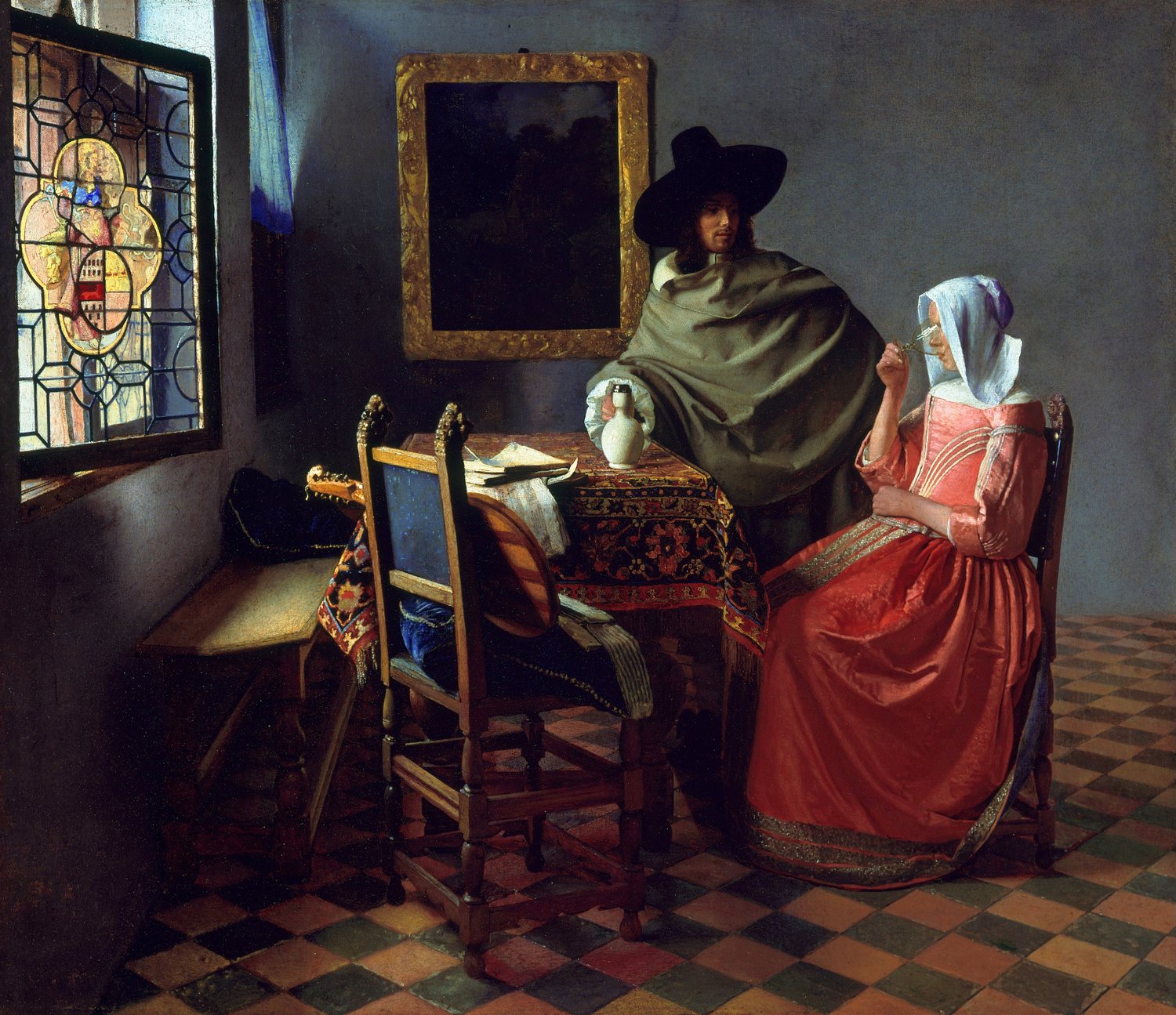
He pours; she has already emptied her glass and holds it up for more. In the stained glass of the window stands a small figure of Temperance with her bridle — the picture's own warning, glowing quietly above the temptation it describes.
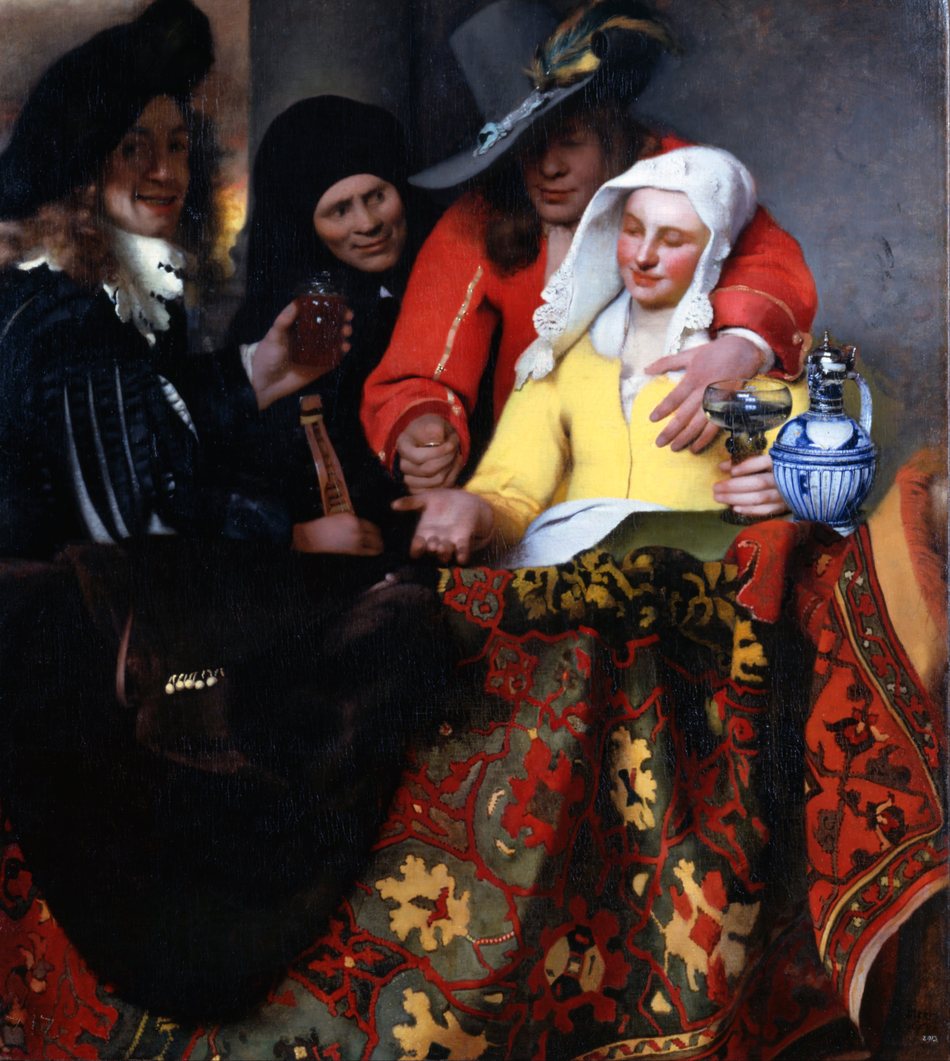
An early Vermeer, loud where the later ones are silent — Caravaggio's tavern manner, learned from Utrecht. The coin passing into the man's hand tells the whole story; the smiling drinker at the left, raising his glass to us, is believed to be Vermeer himself.
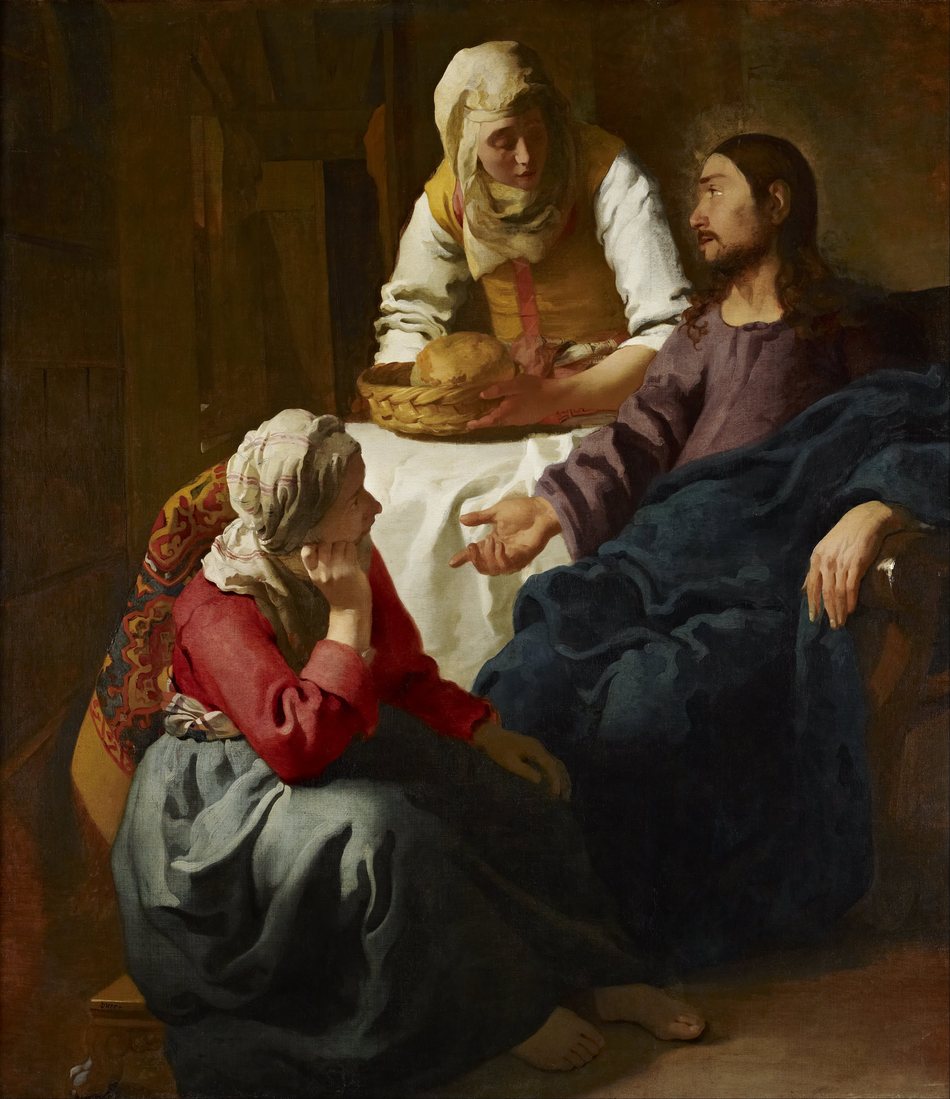
His largest early canvas — a religious scene from before the rooms of light existed. The strong diagonal, Christ's outstretched arm and Mary's bowed head come from the Utrecht Caravaggisti he studied as a young man. Within five years he would trade all this drama for a woman pouring milk.