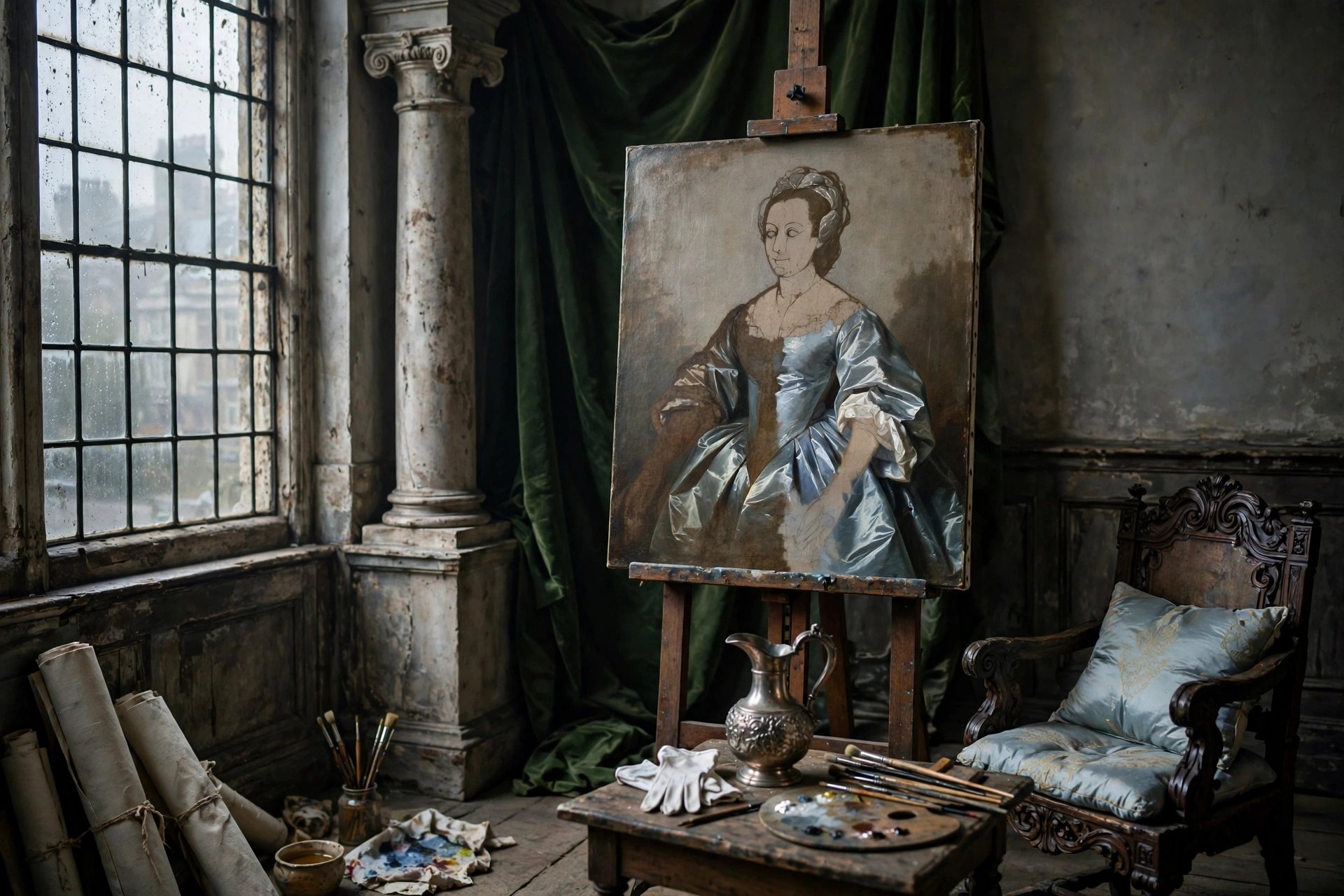
He was Rubens's most gifted pupil, and he became the painter who taught England what elegance looks like. Van Dyck's London studio ran on a system — the face from life in a single hour, the silk afterwards from a wooden layman dressed in the sitter's own clothes — and out of that system came the long fingers, the silver light and the careless grace that British portraiture went on copying for two hundred years.
A Van Dyck sitting was a piece of theatre with a strict clock: the sitter was entertained with music and conversation while the master painted the head from life in about an hour, in a thin, rapid sketch of colour. Everything else — the hands, the lace, the satin — was finished afterwards, without the sitter. Kings are busy; genius arranged itself accordingly.
The clothes were left behind in the studio and dressed onto a jointed wooden layman, which could hold a pose forever without tiring, fidgeting or having opinions. Much of the most famous silk in English painting was painted from a doll. The sitter supplied the face and the wardrobe; the layman supplied the patience.
Van Dyck quietly lengthened the people he painted — longer fingers, longer necks, a little more height in the bearing — until the whole English court looked bred rather than made. It is the most successful piece of flattery in art history: two centuries of British portraits copied his proportions, and we still read them as the truth about the aristocracy.
He entered Rubens's workshop at about seventeen and was painting beside the master within months — the only pupil Rubens is recorded as praising above the rest. The early religious pictures are so close to Rubens that experts still argue over some of them. Then Italy, then England, and the pupil became a style of his own.
Van Dyck designed the Iconography — a great series of engraved portraits after his paintings: princes, generals, scholars and fellow artists, published in Antwerp and sold across Europe. It was fame engineered in copperplate, centuries before the photograph: to be in the Iconography was to be somebody, in identical copies, everywhere.
Where Rubens laid paint like mortar, Van Dyck thinned his to a breath — cool greys, broken silvers, blacks that are really deep blues and browns, the brushwork left visible like handwriting. Conservators find barely a skin of paint on the late portraits. The elegance is partly this economy: nothing on the canvas that the effect did not require.
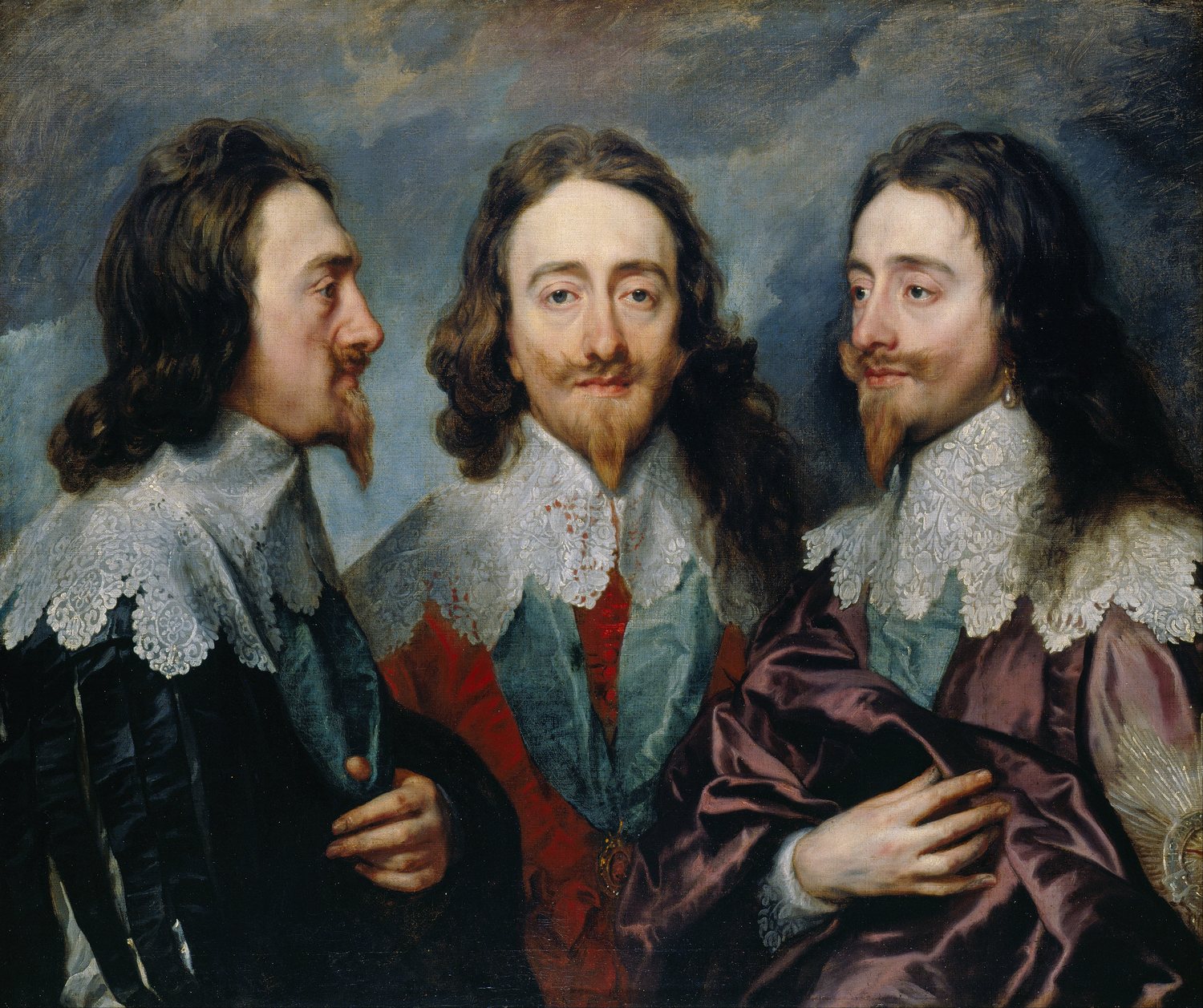
One king, three heads — front, profile and three-quarter — painted as a working model for the sculptor Bernini in Rome, who needed the king's face from every side to carve a bust. Charles sent it across Europe like a set of instructions. The bust it produced was later destroyed by fire; the instructions survive.
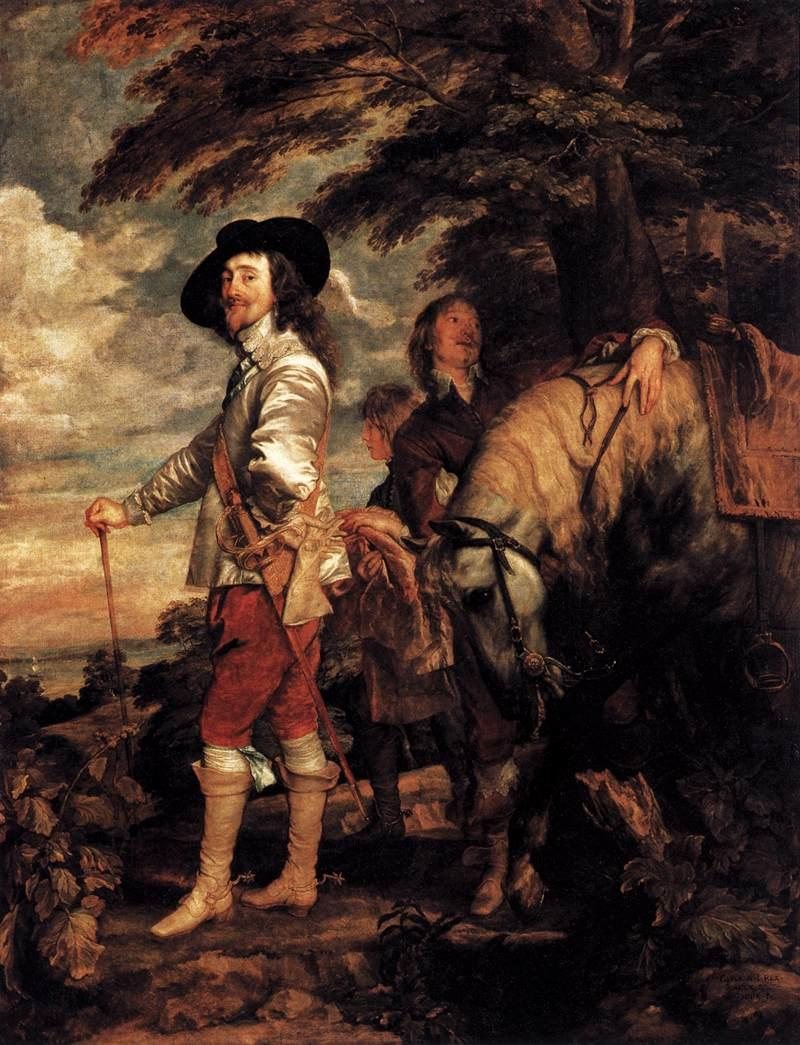
The king has just dismounted and turns to look at us — hat on, glove in hand, utterly at ease, while grooms and a great horse wait behind him like scenery. Van Dyck paints monarchy as good manners: no crown, no armour, no effort. Fourteen years later Charles was executed; this is the image he chose to be remembered by.
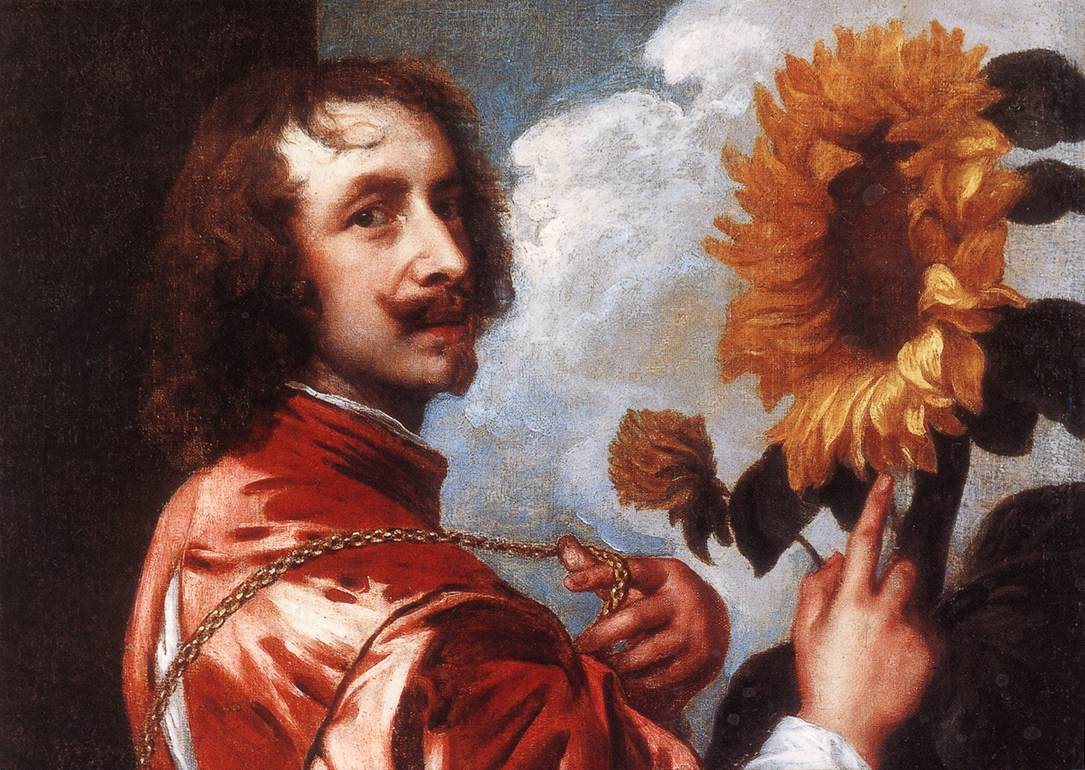
He points at himself and at the sunflower — the flower that turns to the sun, as the courtier turns to the king. The gold chain across his chest was Charles I's gift. It is a self-portrait and a piece of heraldry at once: the painter advertising both his talent and his place at court in a single gesture.
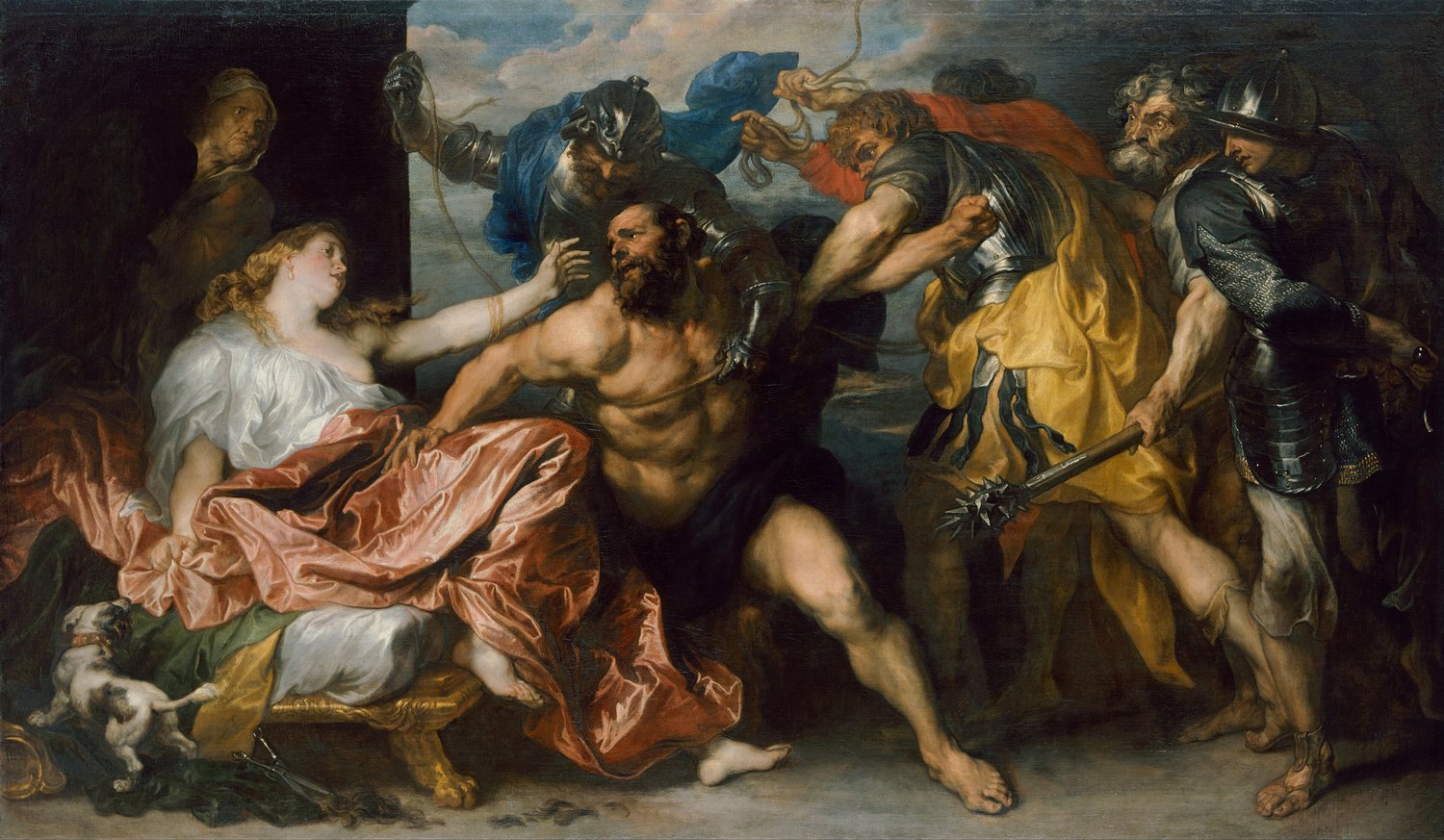
Painted at about thirty, still close to Rubens — the same subject his master had made famous twenty years earlier, and deliberately so: the pupil measuring himself against the master's signature picture. Delilah's maids flee with the hair; the Philistines are already at the door.
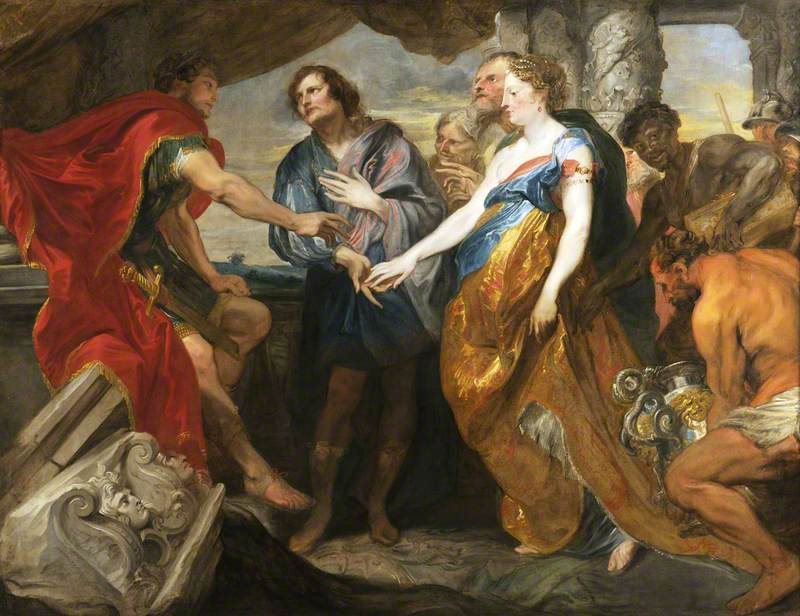
He was twenty-one. The Roman general Scipio returns a captive bride to her fiancé instead of keeping her — virtue staged as a crowd scene of armour, silk and gesture, painted in Rubens's orbit and already unmistakably his own in the silvery light on the metal. A prodigy's calling card.
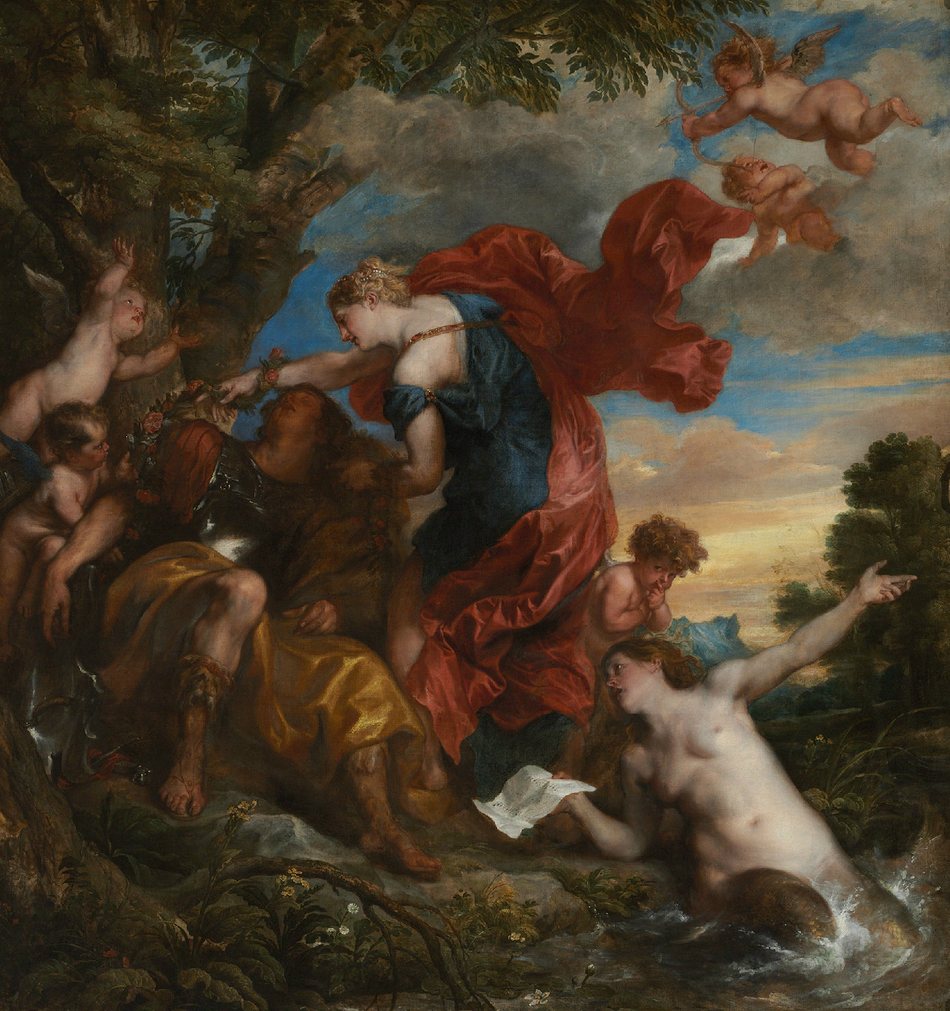
From Tasso's epic: the sorceress Armida comes with a dagger to kill the sleeping crusader Rinaldo — and falls in love instead, while putti bind him with garlands of flowers. Painted in Antwerp for a courtly buyer, all silk, roses and hesitation: violence dissolving into love at the touch of a face.
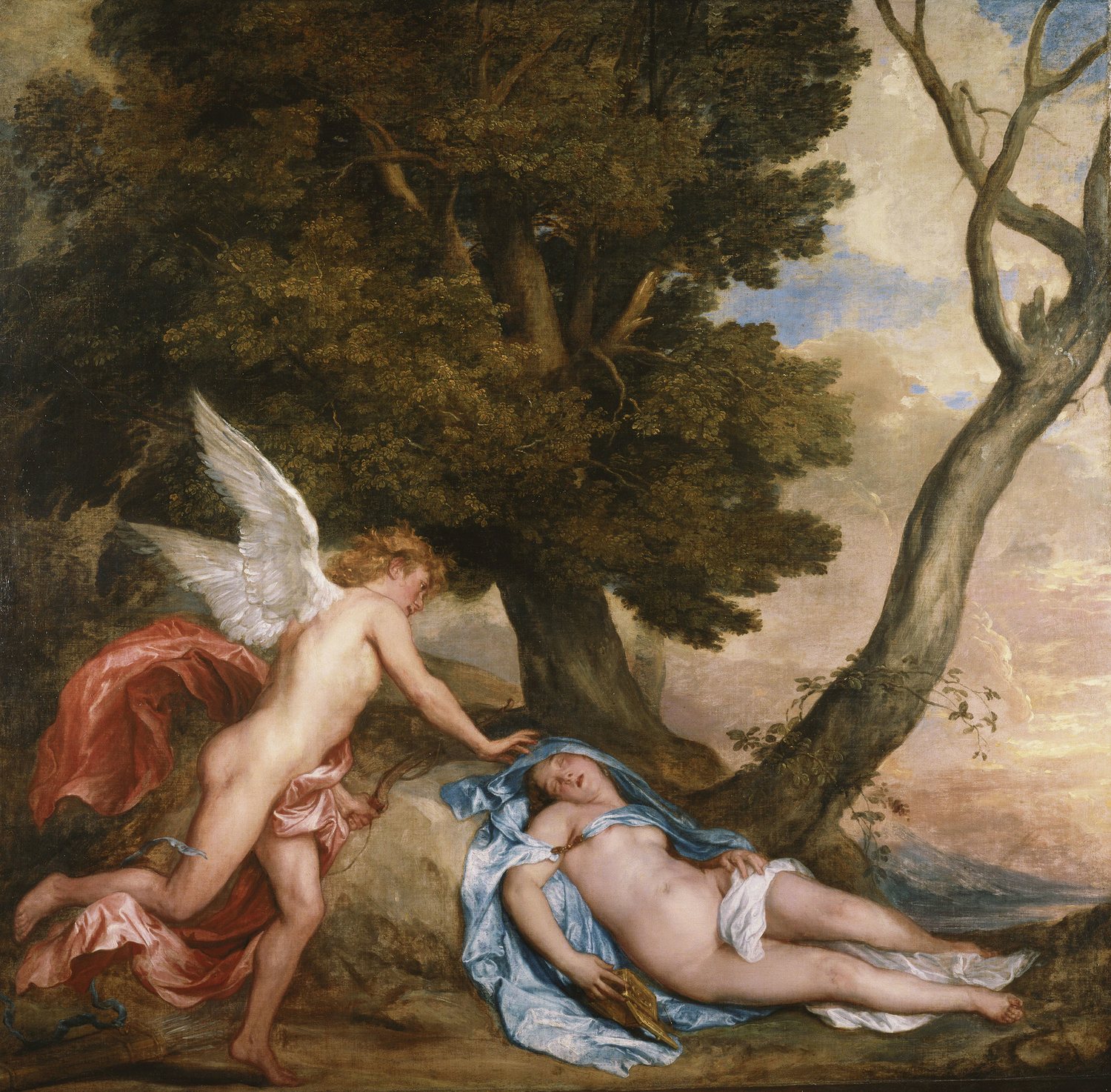
His last mythological picture, painted for Charles I in the final year of his own life: Cupid flies in through the trees to find Psyche asleep, and the whole canvas is a held breath of green shadow and white skin. He died in London in December 1641, at forty-two, and was buried in St Paul's.
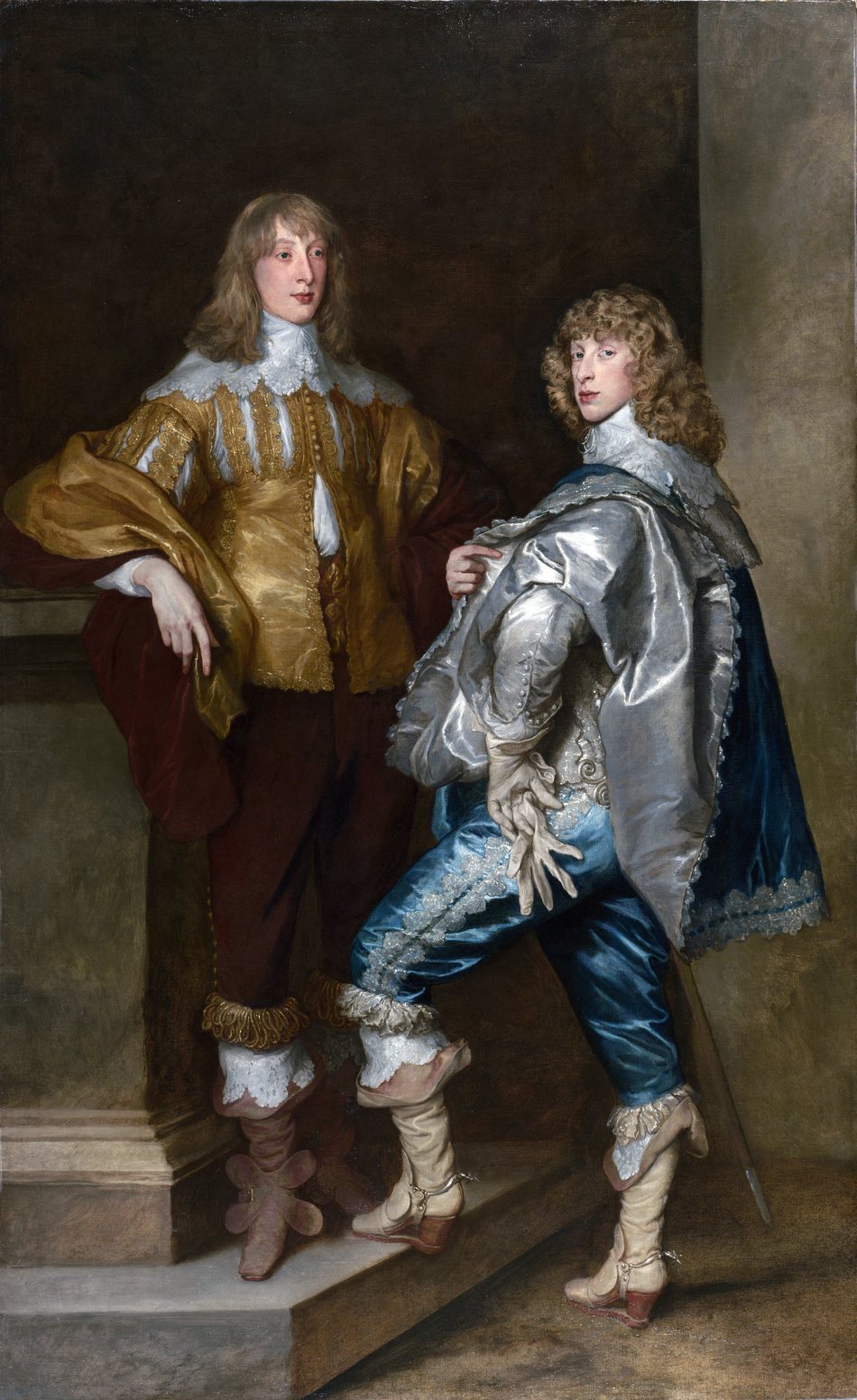
Two teenage aristocrats in silver and blue silk, one foot already on the step, looking down at the world with the complete confidence of boys who have never been refused anything. Both would die in the Civil War within a few years, fighting for the king their portraitist served. The elegance is real; so is the epitaph.
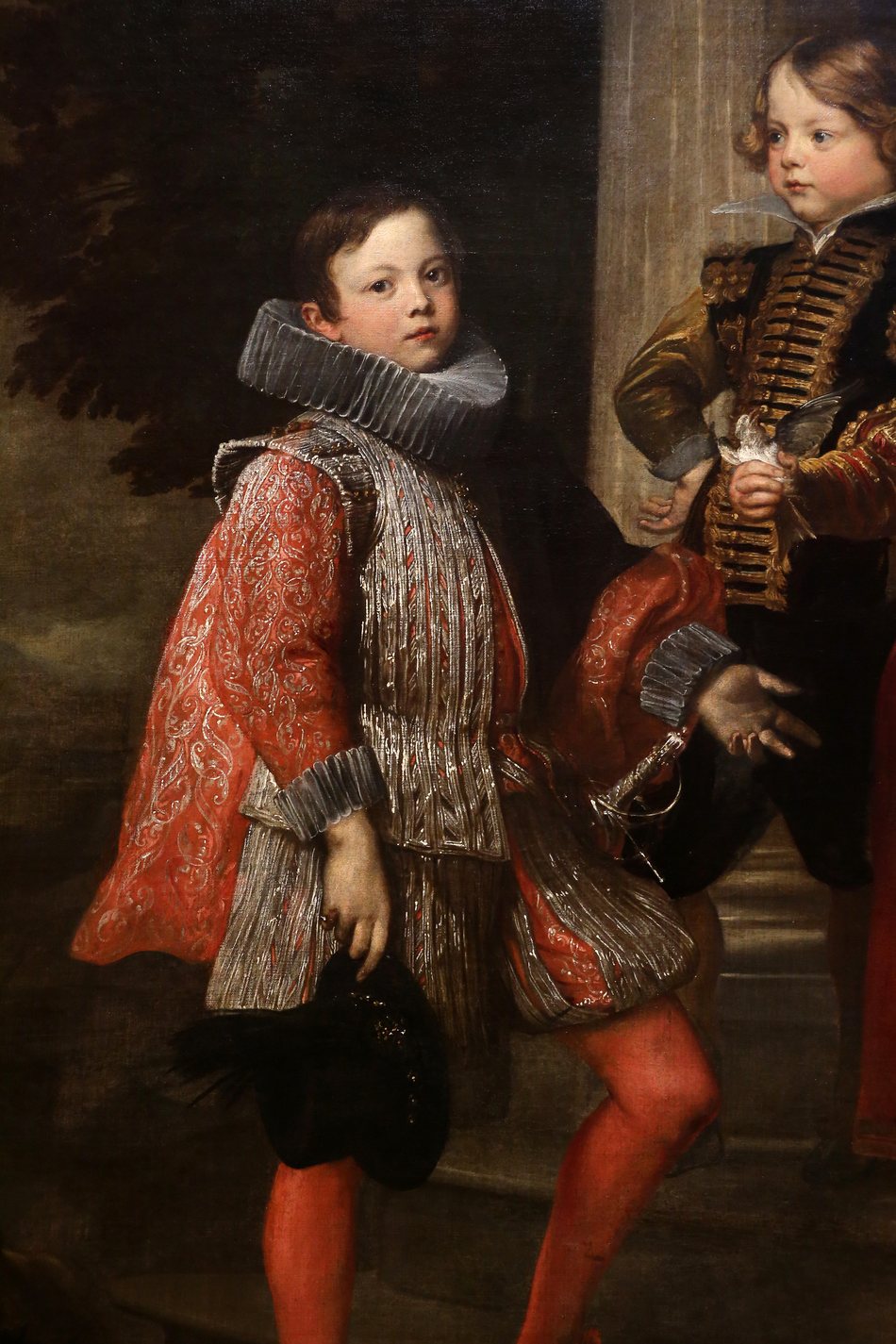
Three children of the Genoese Balbi family, painted during his Italian years — the eldest already performing adulthood in black and gold, the youngest still clutching at childhood. Genoa's merchant princes dressed their children like small sovereigns, and Van Dyck, in his twenties, painted them like a man twice his age.
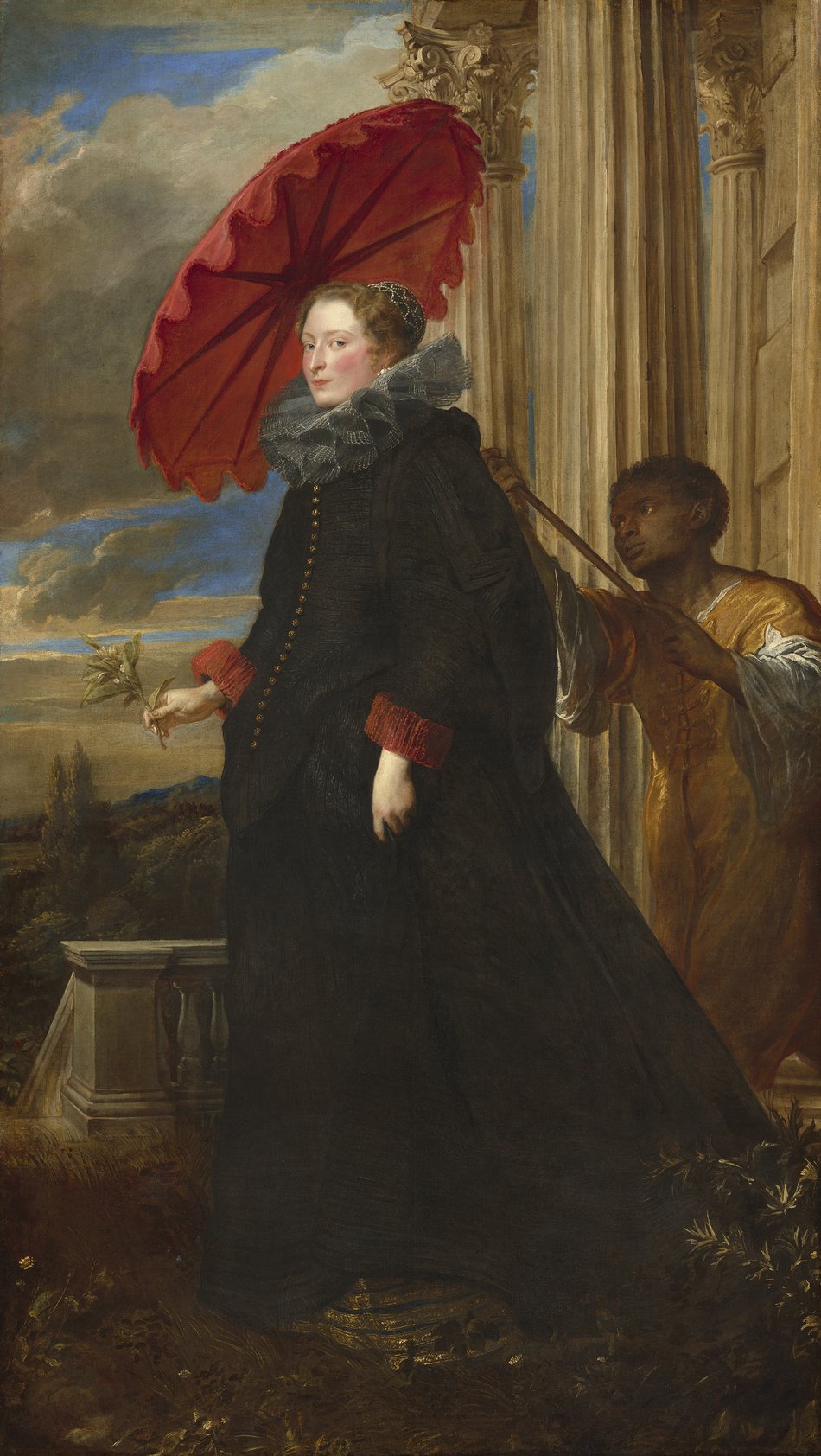
Genoa, and he is twenty-four: the marchesa in red and gold walks toward us under a parasol held by a page, as composed as a queen on a state visit. Italian portraiture had rules; Van Dyck broke the stiffness and kept the grandeur. The Italian years turned Rubens's pupil into Europe's portraitist.