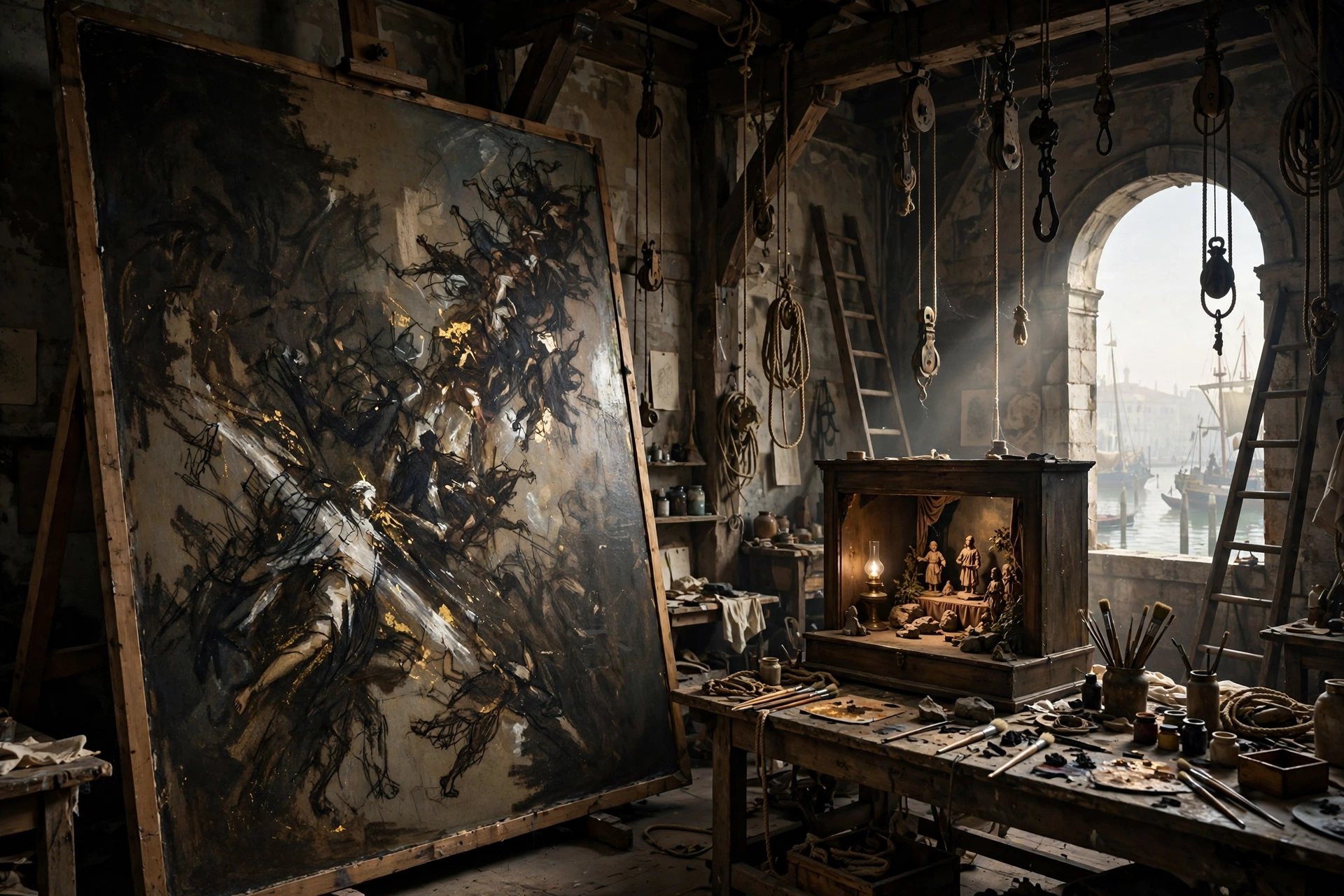
The dyer's son who painted like weather: Tintoretto built his miracles out of clay dolls, lamplight and nerve, and covered more wall than any painter in Venice — at a speed his rivals called cheating, in a light they could not copy.
Tintoretto modelled his figures in wax and clay, dressed them, and arranged them in a small wooden stage box, lit by a lamp through slits — a private theatre where he could rehearse a miracle's lighting before touching the canvas. The plunging diagonals and theatrical gloom of his paintings are that box, enlarged to the size of a wall.
His brushwork was a byword: furia del pennello, the fury of the brush — paint dragged, slashed and left rough, highlights struck in like sparks. Seen close, a Tintoretto dissolves into storms of strokes; step back, and the storm organises itself into light. The finish his rivals polished for months, he achieved by velocity.
Venice was a market, and Tintoretto undercut it: he offered the Scuola di San Rocco a ceiling painting finished before the committee had decided — then priced the whole cycle so low they could not refuse. He painted the Paradise, among the largest canvases in the world, with a workshop run like a shipyard: family, assistants, and the master everywhere at once.
His name is a trade: Tintoretto, the little dyer, son of a silk dyer from Lucca. Dyers know colour as chemistry — what mordants bite, what pigments fade, how cloth drinks dye unevenly. He brought that material cunning to painting: blacks that swallow light, whites that flare like bleached linen, and cheap pigments made to behave like costly ones.
Venice's patron saint was his lifelong commission: the Slave freed by a saint plunging from the sky, the body found in a torch-lit crypt, the corpse smuggled home through a storm. Four great canvases of Mark's miracles made his name — each one a lesson in how to stage the supernatural so the viewer stands inside it, not before it.
The motto pinned in his workshop, Vasari reports, was: the drawing of Michelangelo and the colouring of Titian. He bought plaster casts and wax copies after the Florentine's figures and drew them by lamplight for years. The synthesis he wanted — Roman bodies in Venetian light — is exactly what the San Rocco walls deliver.
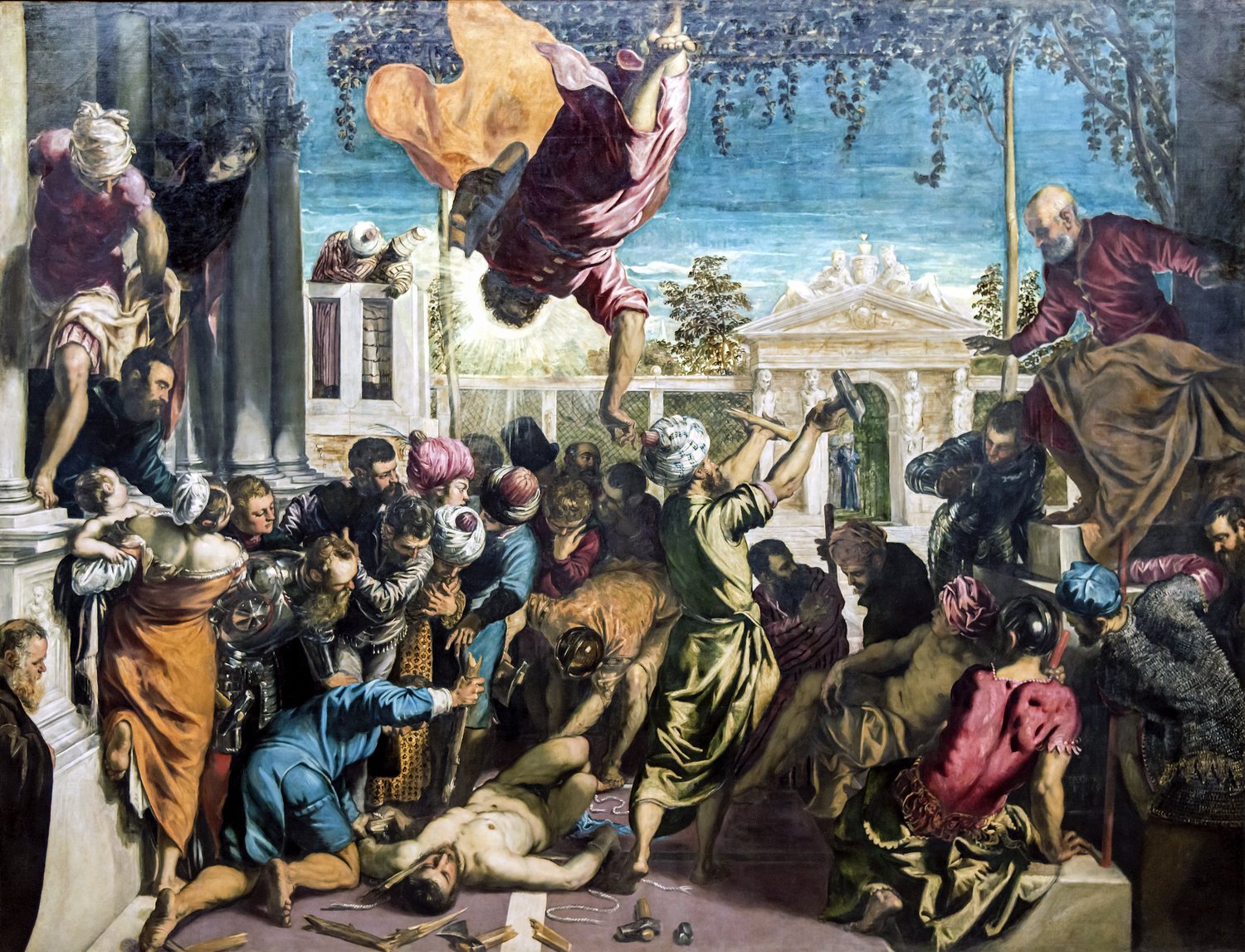
A slave who prayed to St Mark lies on the execution block, the axe already splintering — and the saint arrives upside down, plunging head-first from the sky through the crowd's upturned faces. Tintoretto was about thirty; the painting that announced him still falls out of the sky at you.
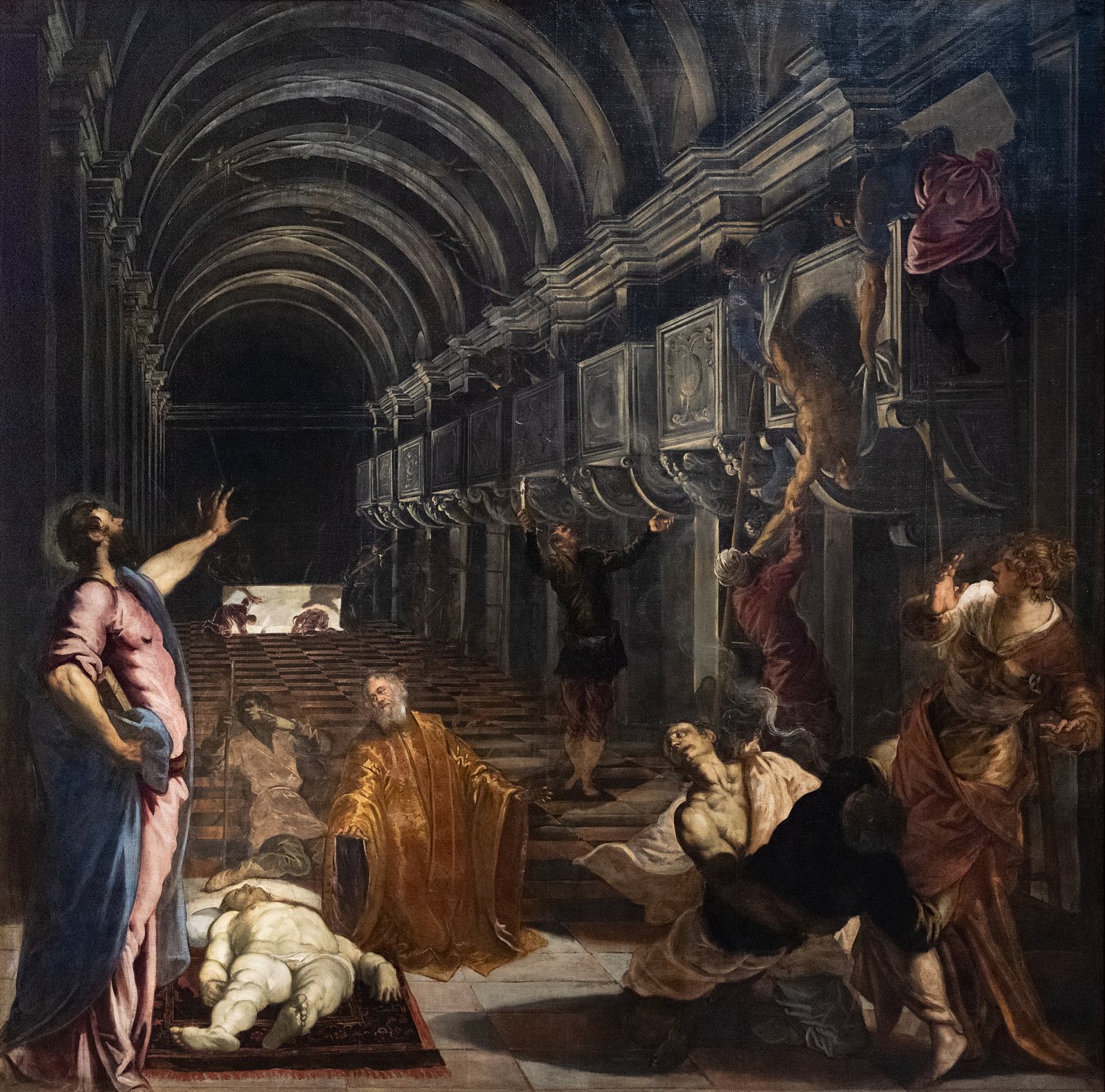
In a crypt that races away into darkness, Venetians hunting for St Mark's relics haul corpses from the tombs by torchlight — until the saint himself appears at the left, arm raised, telling them the body at their feet is the one. Perspective here is not geometry; it is a corridor of dread.
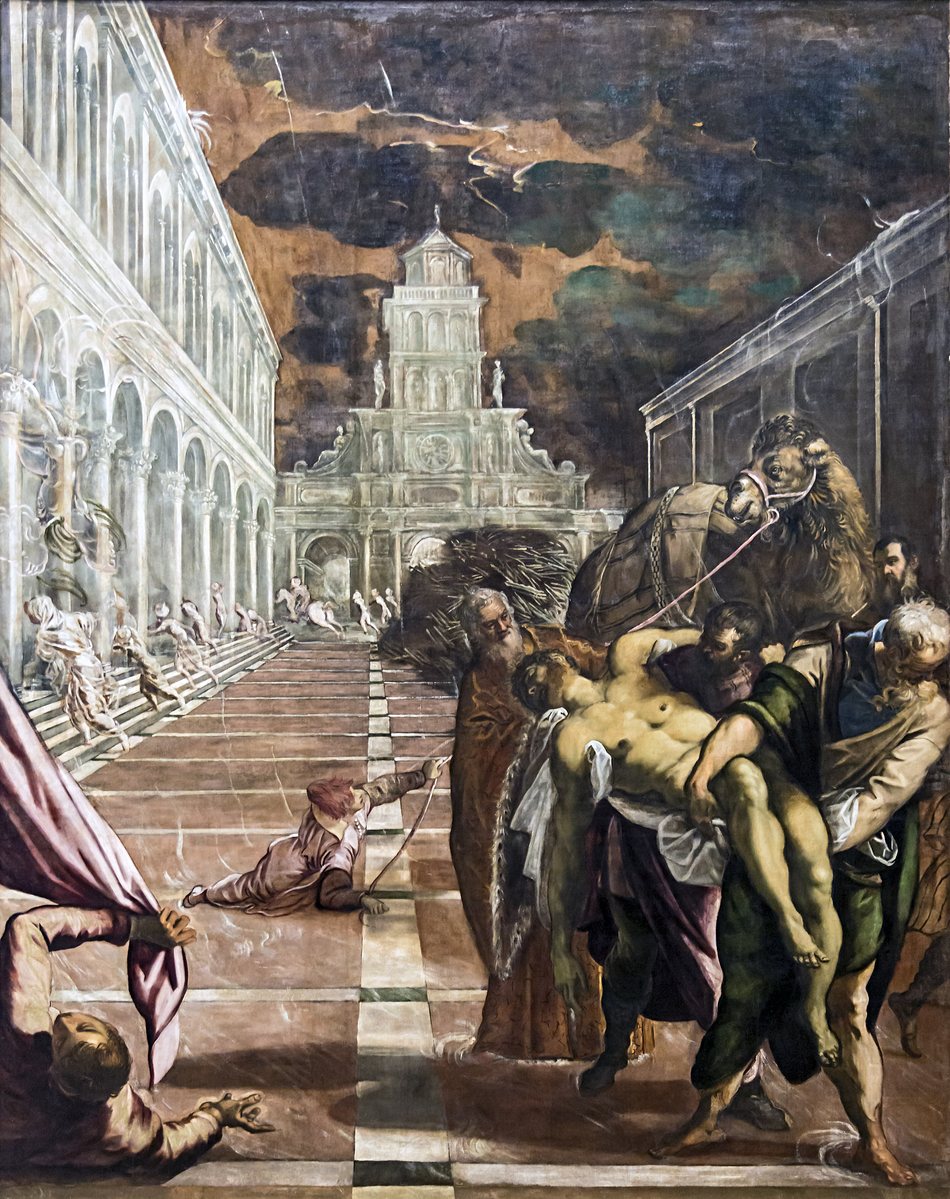
The saint's corpse is carried through an Alexandrian square emptied by a supernatural storm: bodies bend double against the wind, a camel rears, the architecture blazes white against a sky gone black. The smugglers walk calmly at the centre — the miracle is that the storm does not touch them.
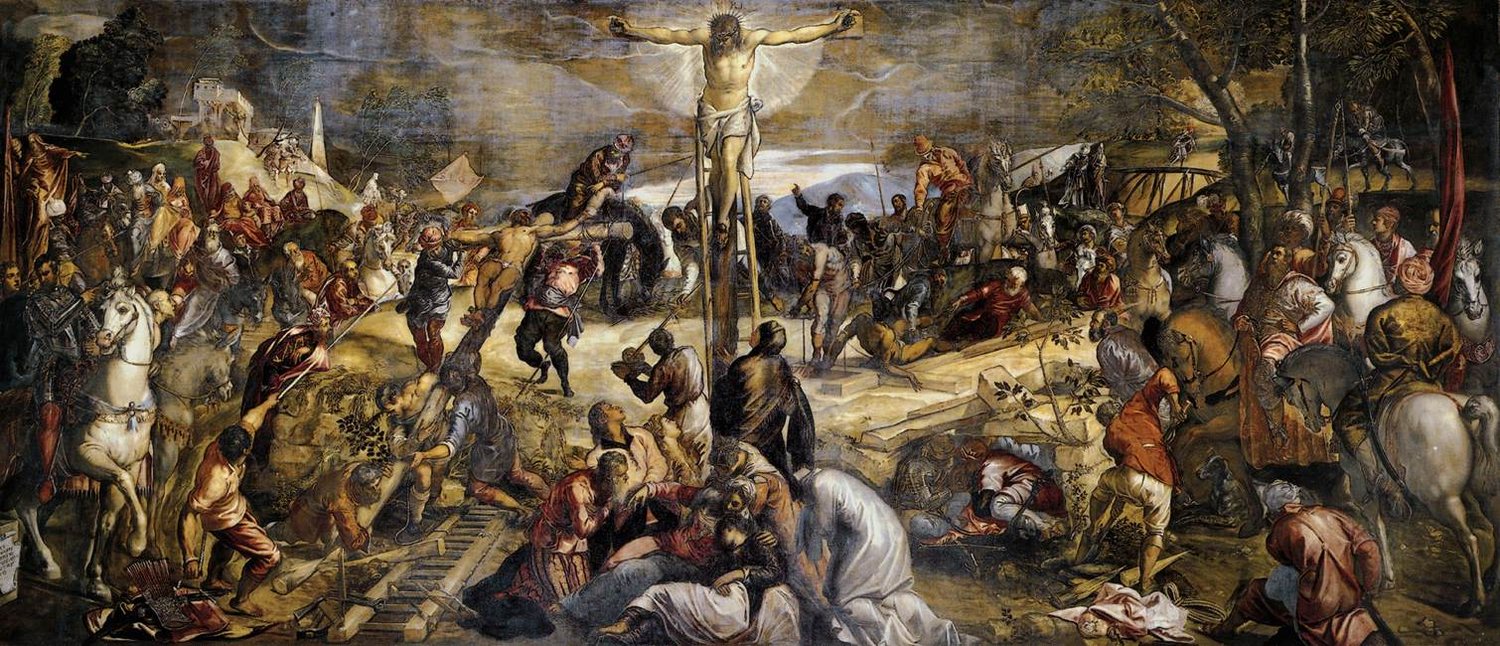
The centrepiece of the San Rocco cycle fills a wall: Christ already raised, workmen still hauling ropes and digging at the edges, a whole society arranged around the cross in a great arc of grief and labour. Vasari, no friend, called it among the most extraordinary paintings ever made.
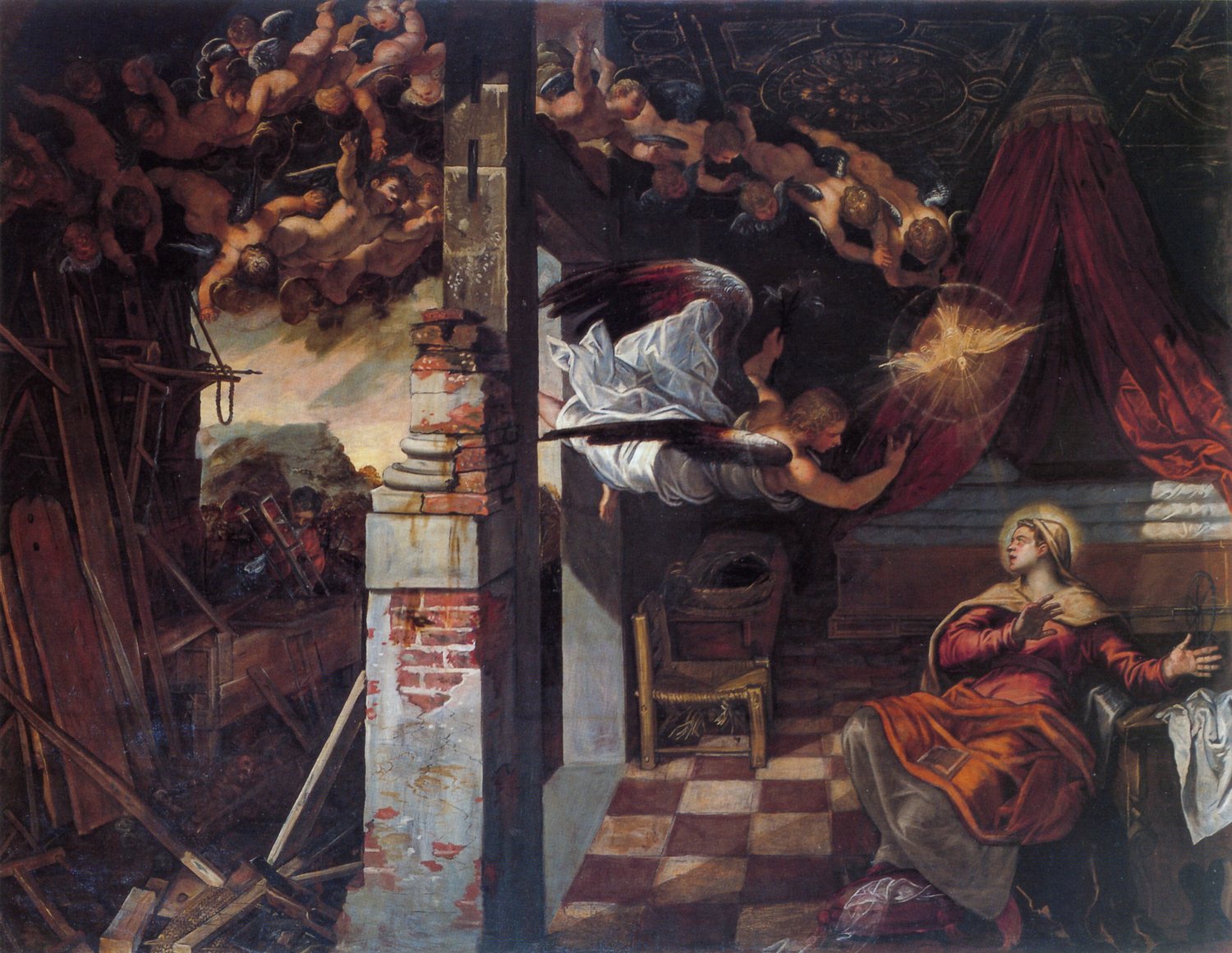
The angel does not glide in — he bursts through the wall of a carpenter's poor house in a flurry of cherubs, while Mary turns from her chair with a startled, working woman's face. Heaven arrives like weather through a roof; the broom and the basket stay where they fell.
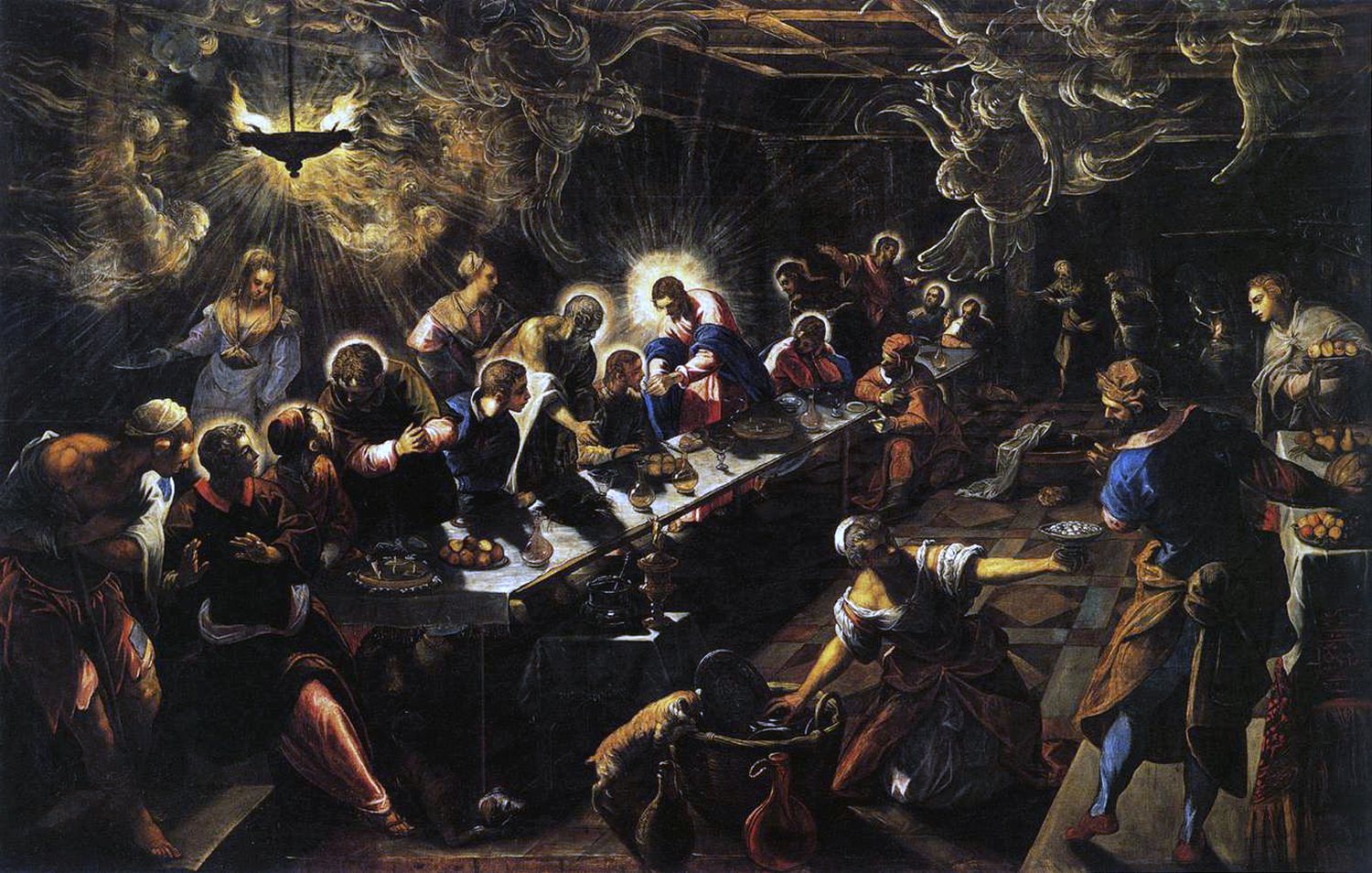
His last great canvas sets the table on a steep diagonal into smoky depth: servants bustle in the foreground shadows while Christ, far up the table's shining perspective, gives the bread — and glows. The sacrament is the brightest thing in a room full of dinner.
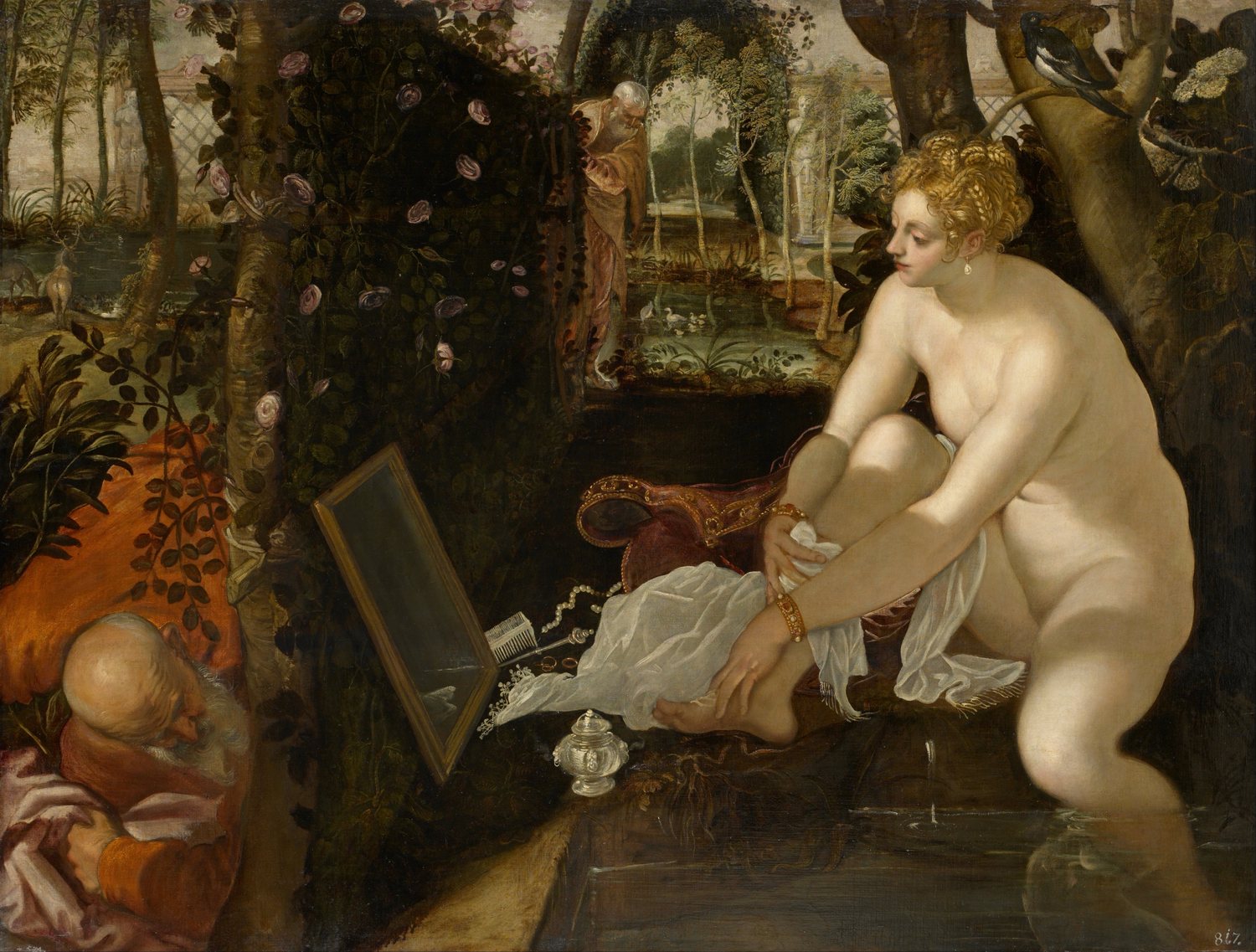
Susanna at her bath, all pearly flesh and jewels, towelling her foot and looking straight out at us in her mirror — while the two elders crawl through the garden behind her like animals. She does not know; we do. The painting makes the viewer the third voyeur, and it is not comfortable.
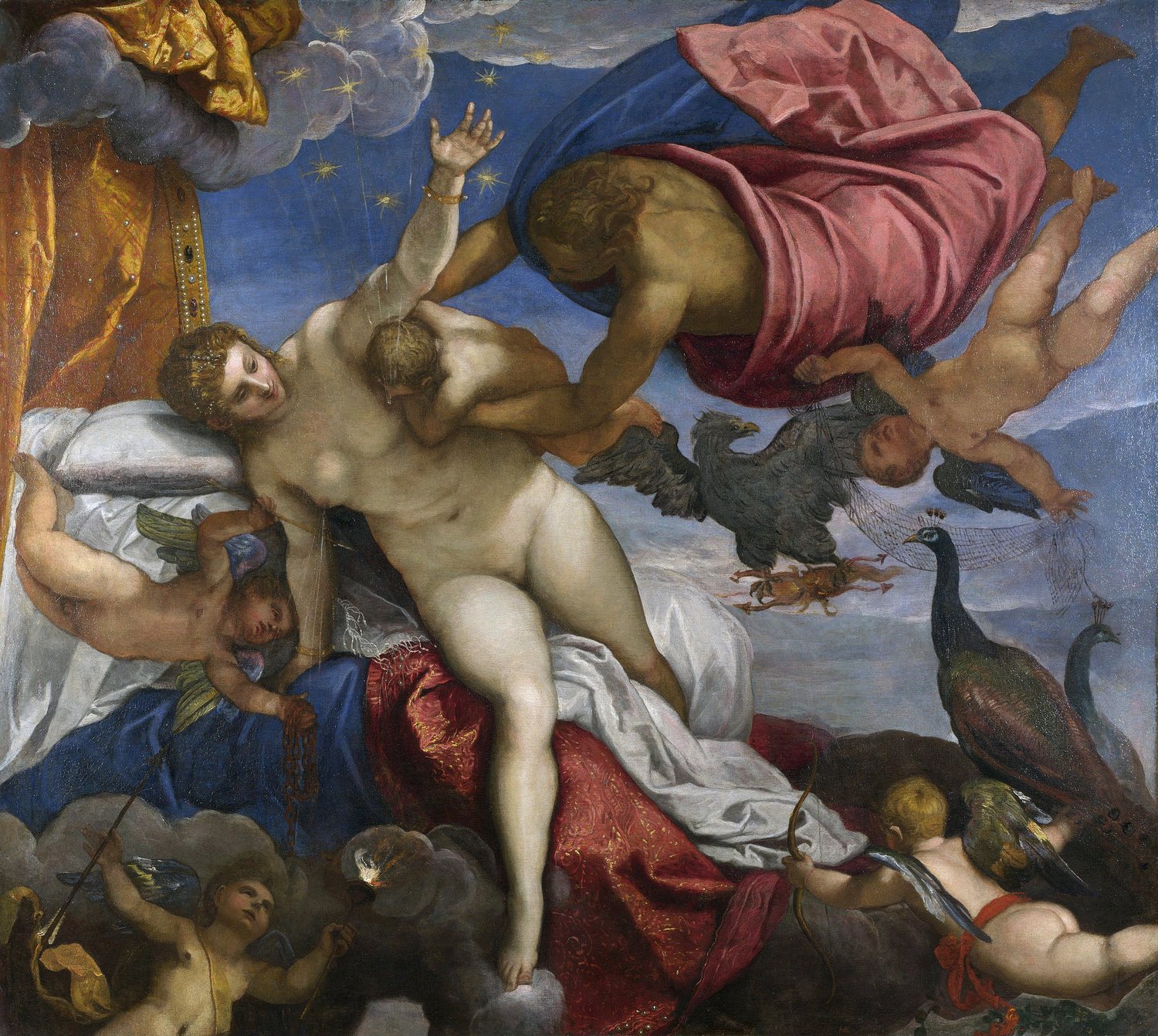
Jupiter holds the infant Hercules to the sleeping Juno's breast; the startled goddess wakes, the milk sprays upward into stars and downward into lilies. A galaxy explained as an accident of divine childcare, painted with a swirling, tilted energy that turns a myth into weather in the heavens.
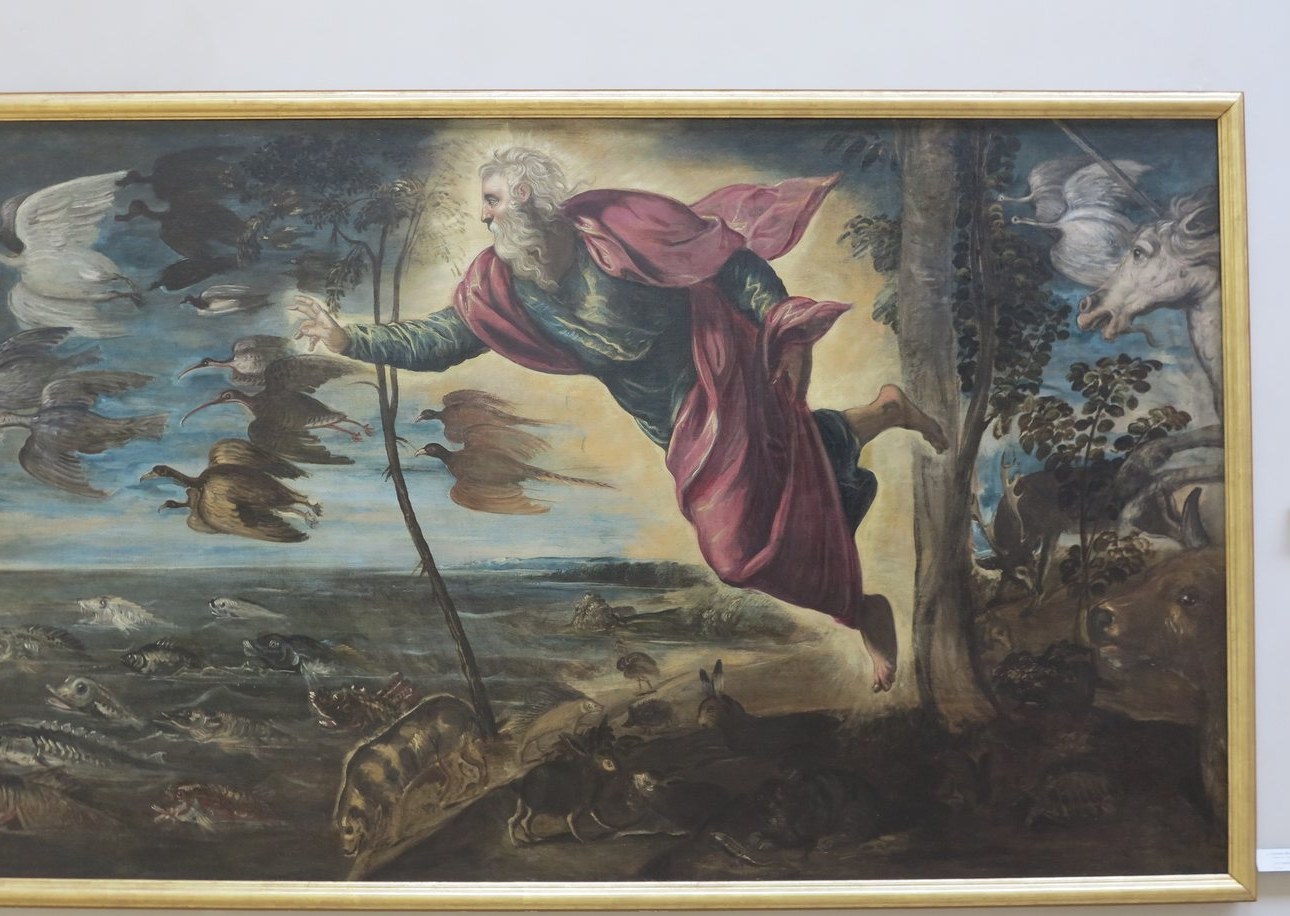
God the Father hurtles across the sky trailing creation behind him: birds bursting into the air, fish in the green water, beasts assembling on the shore — the world switched on in a single rushing gesture, painted by a young man in a hurry to show Venice what speed could do.
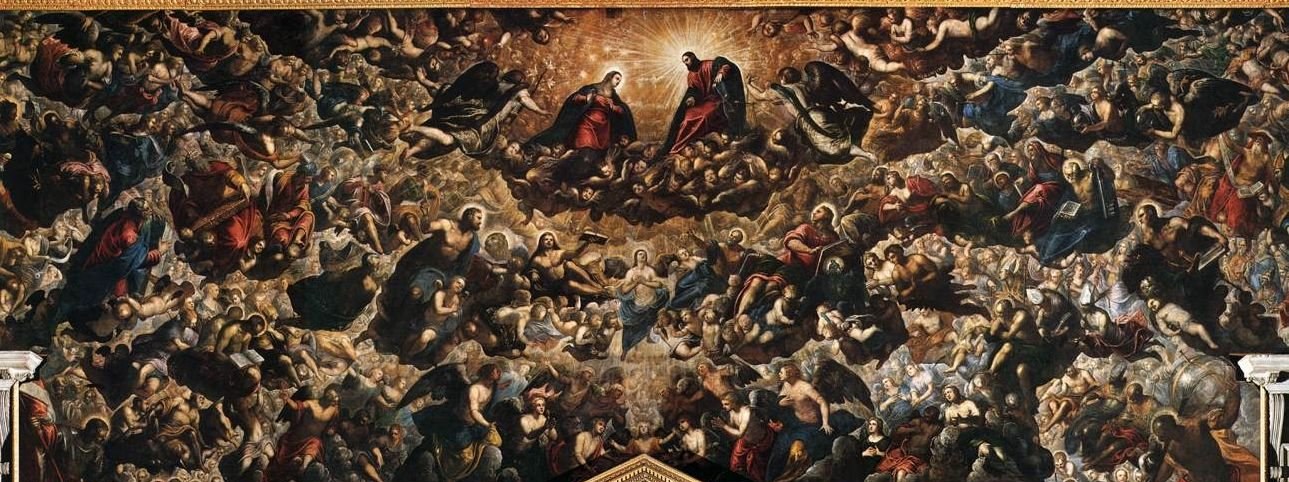
Among the largest oil paintings in the world — some twenty-two by nine metres, painted in his seventies after fire destroyed the hall: hundreds of blessed wheel around the Virgin and Christ in concentric glory above the throne of the Doge. Venice judging the universe, and finding a Venetian heaven.