The last great fresco painter, and the fastest. Giovanni Battista Tiepolo could cover a palace ceiling with heaven in a single season, working in wet plaster at a pace that left assistants breathless — yet the paint stays weightless: pink, silver and sky-blue, populated by gods who seem to have drifted in through the windows. From Venice to Würzburg to Madrid, Europe's ceilings have been brighter ever since.
A fresco day — the giornata — is a patch of fresh lime plaster that stays workable for hours, not days. Tiepolo laid in whole figures within a single patch, the joins hidden in cloud and drapery edges, and accepted the medium's rule: what is not finished by evening is cut away and replastered tomorrow.
Full-size cartoons were transferred to the wet plaster by spolvero — pricking the outlines and dusting charcoal through the holes — or by incising the lines with a stylus. For easel pictures enlarged to ceilings, small oil modelli were squared up in a grid and scaled figure by figure onto the vault.
Fresco pigments dry markedly lighter as the lime carbonates, so the painter must lay them darker and more saturated than the intended effect — and judge colour in a plaster that changes by the hour. Tiepolo's silvery blues and roses are calculated overshoots that settle, on drying, into air.
Before a ceiling was begun, Tiepolo painted a small oil modello for the patron's approval — a complete heaven a metre wide. These sketches, rapid and sketchy up close, contain the whole invention: architecture, light direction and the spiral of figures that assistants would later enlarge twentyfold.
Ceiling figures are seen from below — di sotto in sù — so bodies must be foreshortened beyond nature: legs shortened, chins doubled, drapery falling upward across the picture plane. Tiepolo anchored these flying crowds with painted architecture, quadratura, supplied for years by the specialist Girolamo Mengozzi Colonna.
Hundreds of drawings — pen and brown wash over black chalk, red chalk studies of heads and hands — powered the whole enterprise. Figures were invented on paper, filed away, and recombined for decades; the same airborne saint or river god can serve a Venetian villa and a German Residenz twenty years apart.
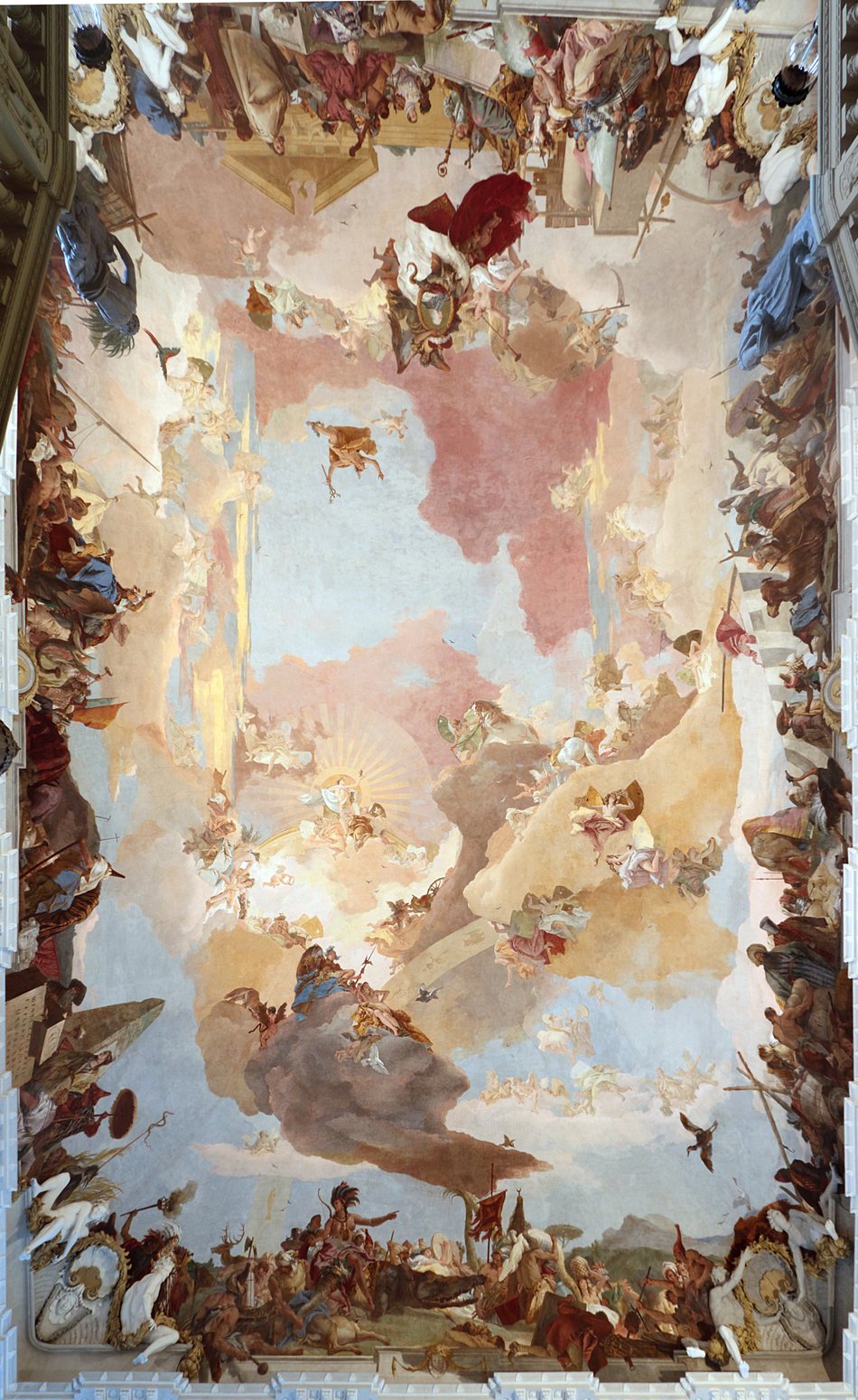
The largest fresco in the world: over the staircase of the Würzburg Residenz, Apollo and the planets wheel above the four continents — Europe, Asia, Africa and America — in 677 square metres of painted sky. Tiepolo painted it with his sons in under two years.
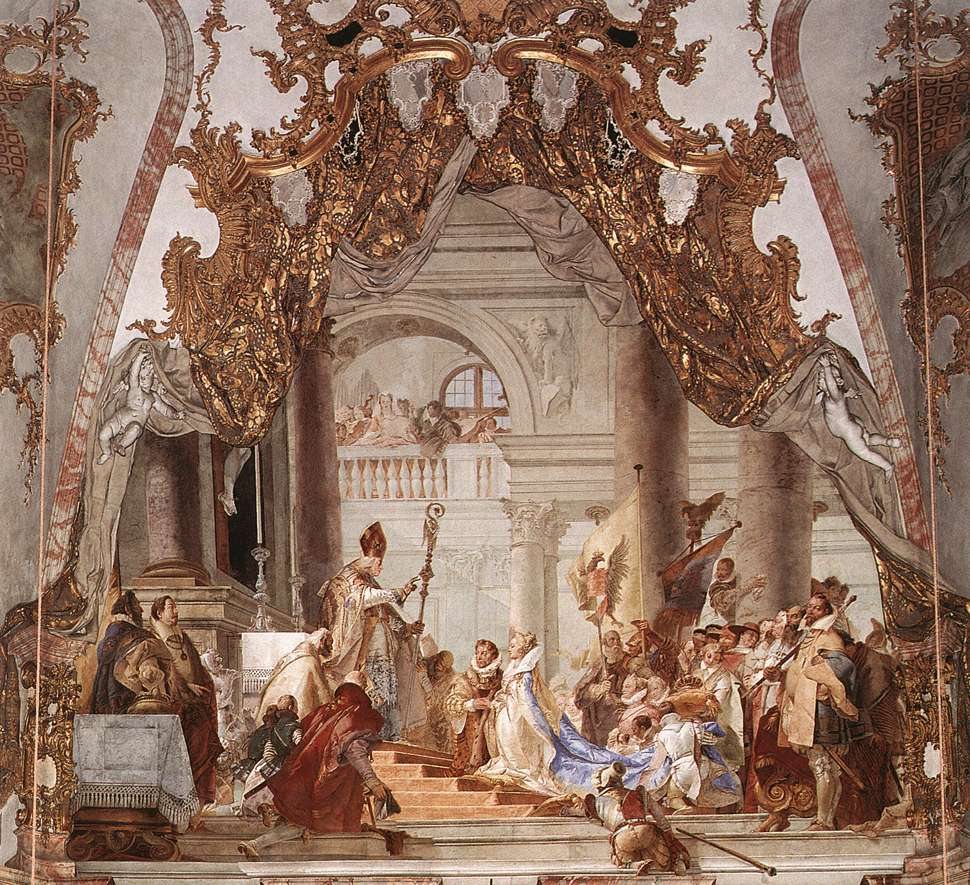
In the Imperial Hall, Tiepolo staged Würzburg's proudest legend: the wedding of Frederick Barbarossa and Beatrice of Burgundy in 1156, blessed by the bishop whose successors commissioned the room — history fresco as dynastic compliment.
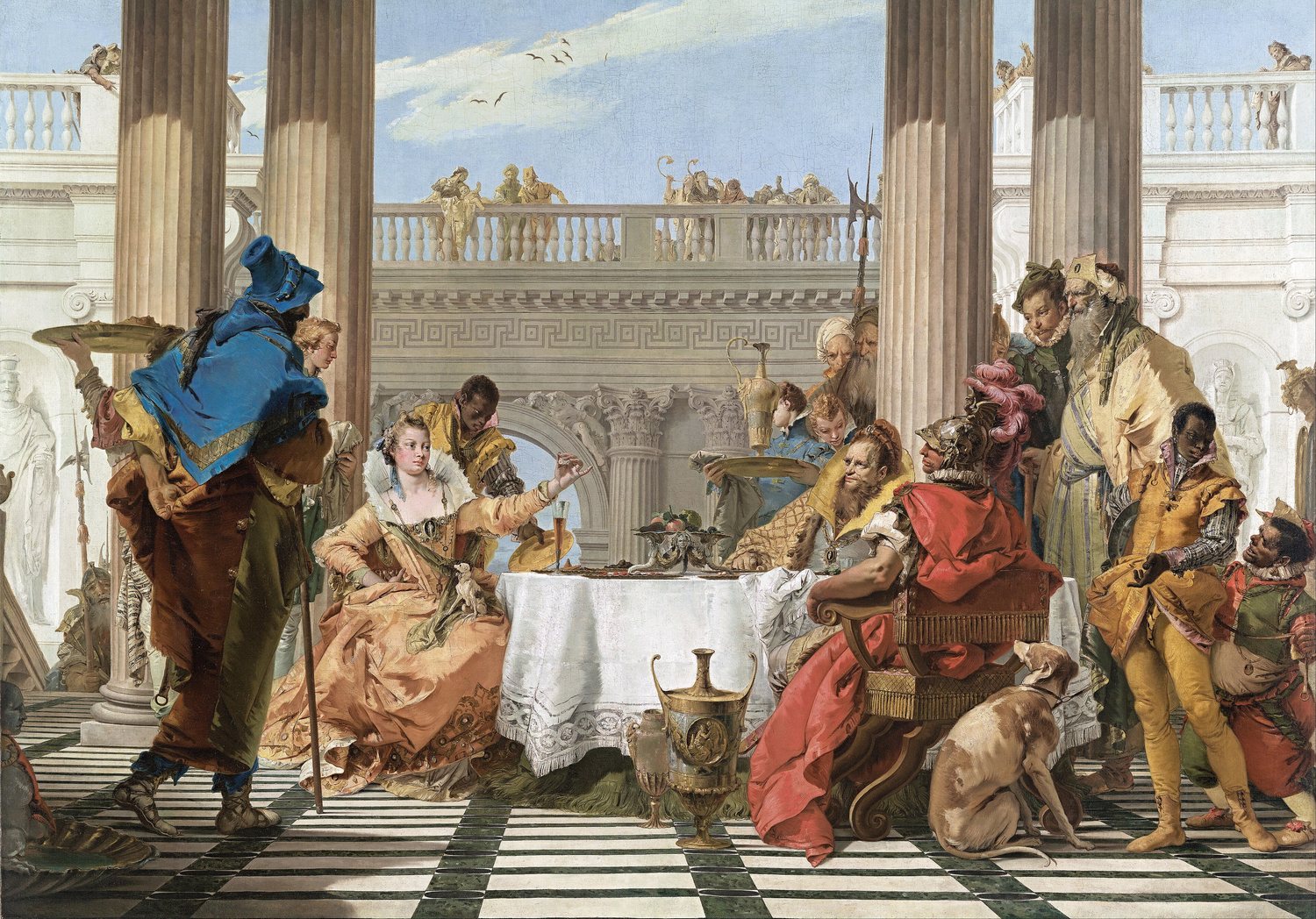
Cleopatra drops her pearl earring into the wine — Pliny's story of the most expensive drink in history. Tiepolo returned to the subject all his life; this first great version stages it as pure theatre, all silk, silver and cool daylight.
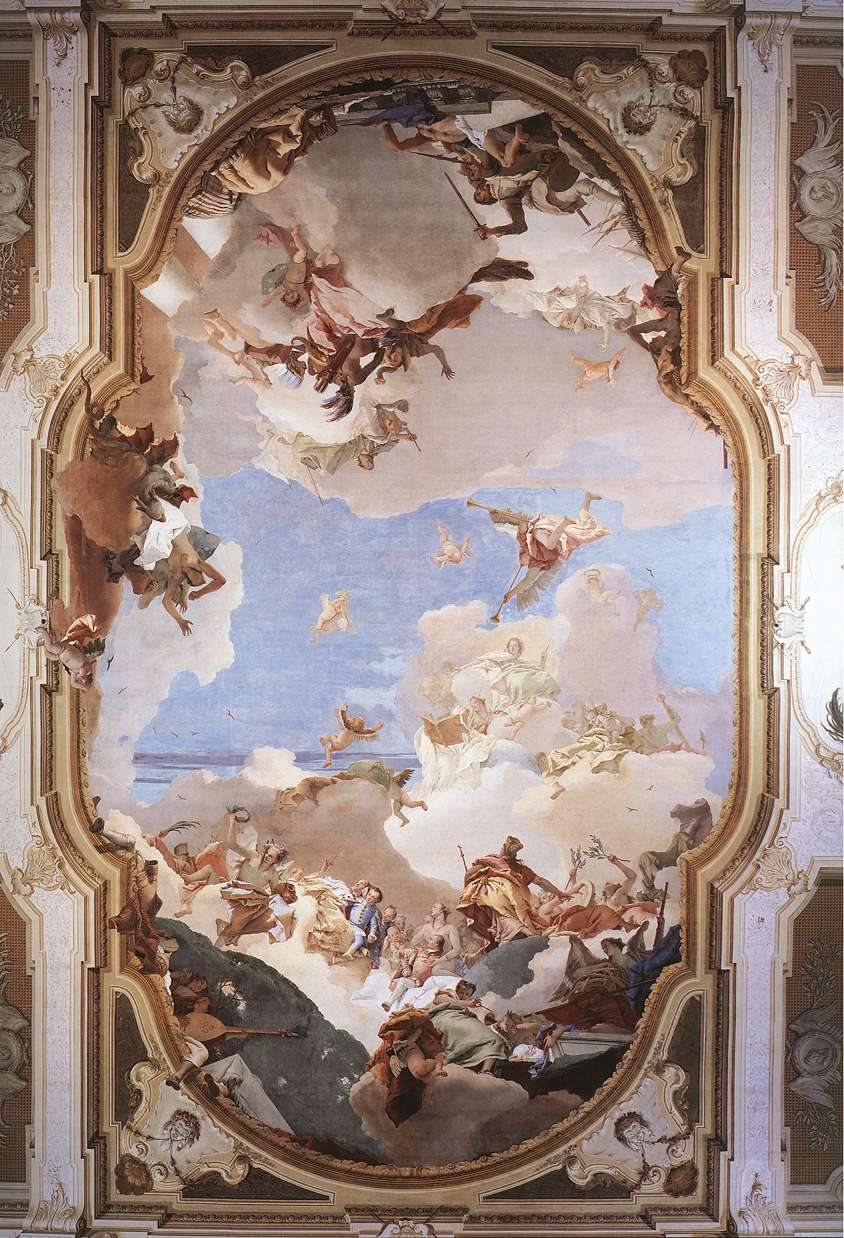
His last great Italian ceiling: the Pisani family rise among the gods in the ballroom of their villa on the Brenta, the stucco frame dissolving into painted sky. Tiepolo was sixty-five and painting faster than men half his age.
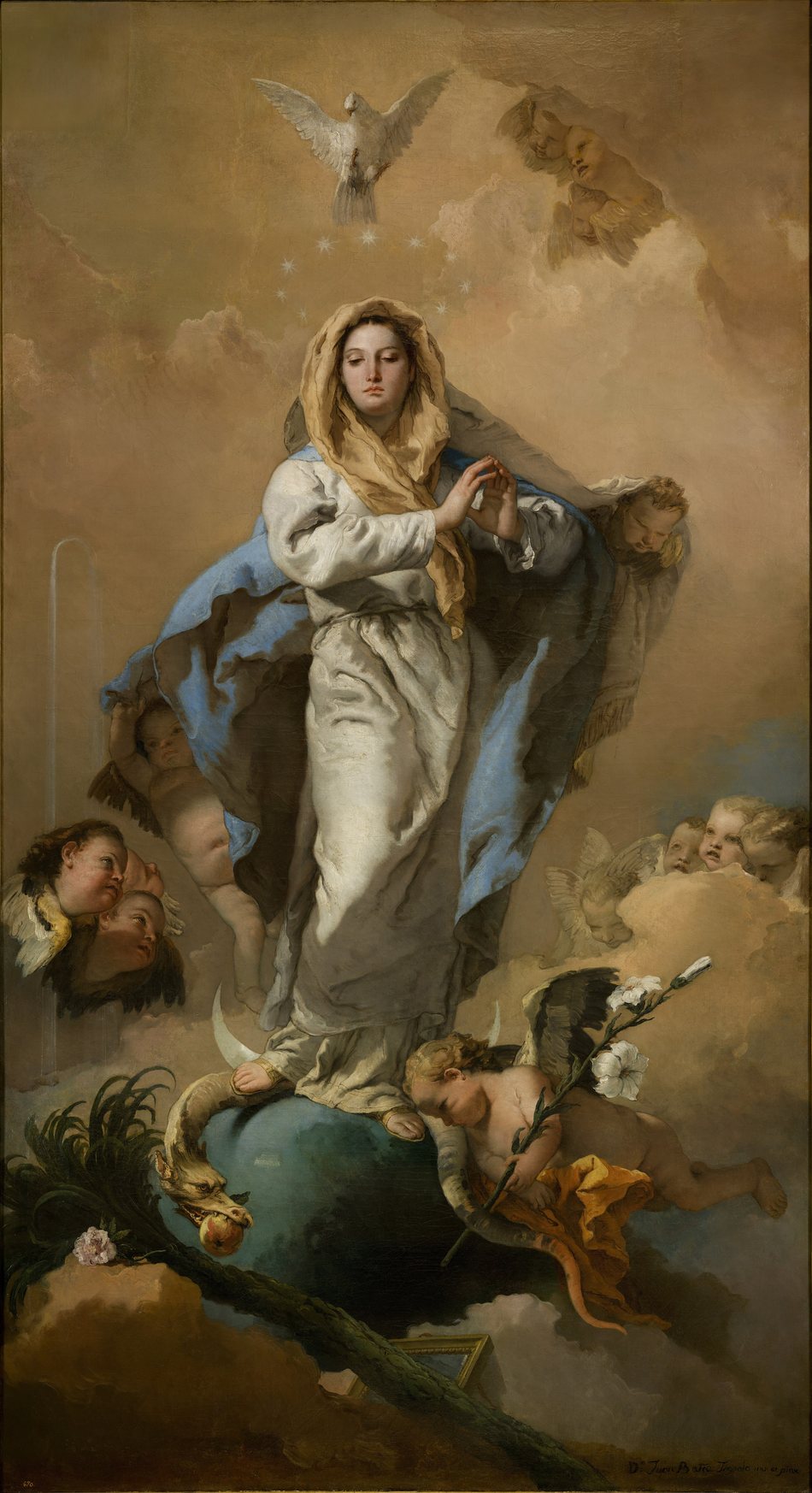
Painted in Madrid for the Franciscan church of San Pascual in Aranjuez: the Virgin rises on the crescent moon above the globe, trampling the serpent, in a vortex of angels — late Tiepolo, all ascent and light.
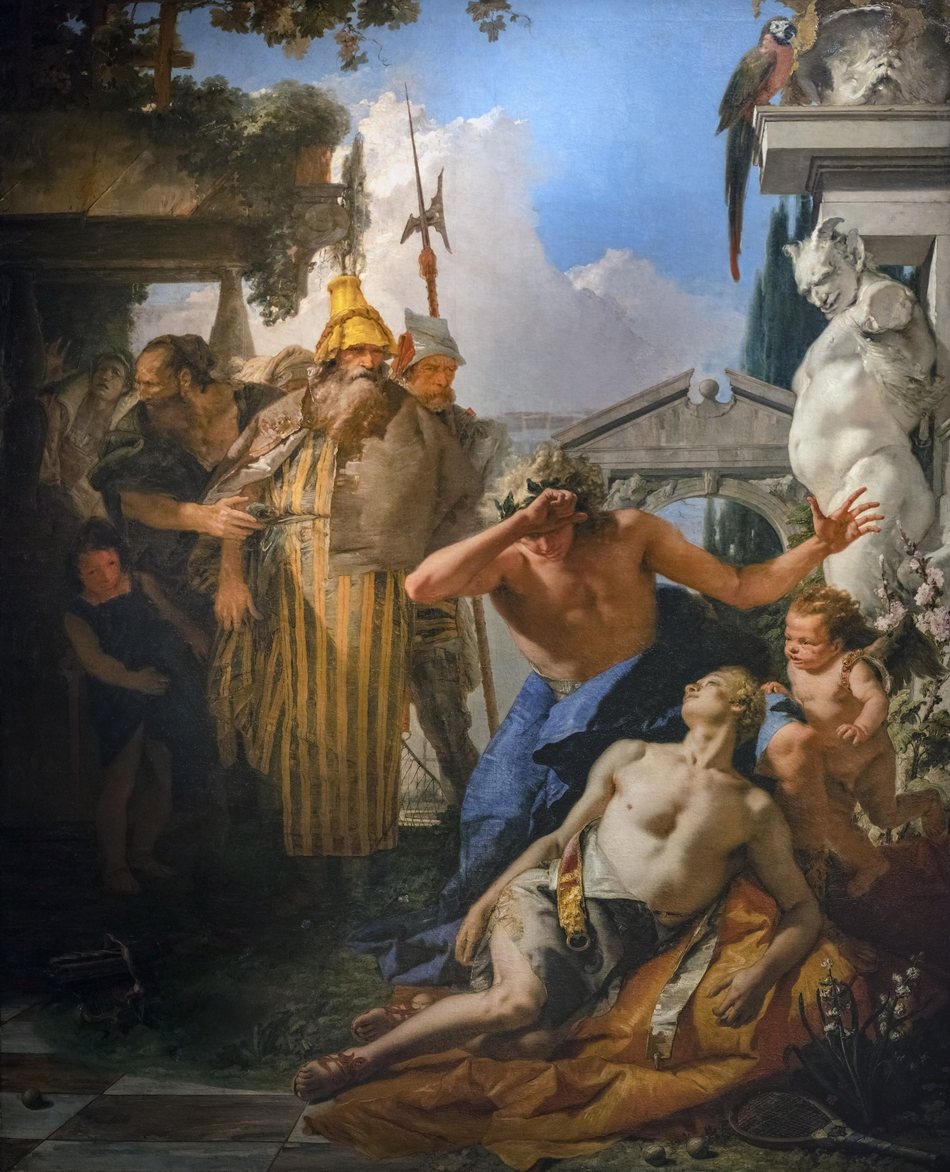
Apollo cradles the dying Hyacinthus, killed by his own discus — which Tiepolo, in a famous anachronism, paints as a tennis racket and balls lying in the grass of an eighteenth-century court.
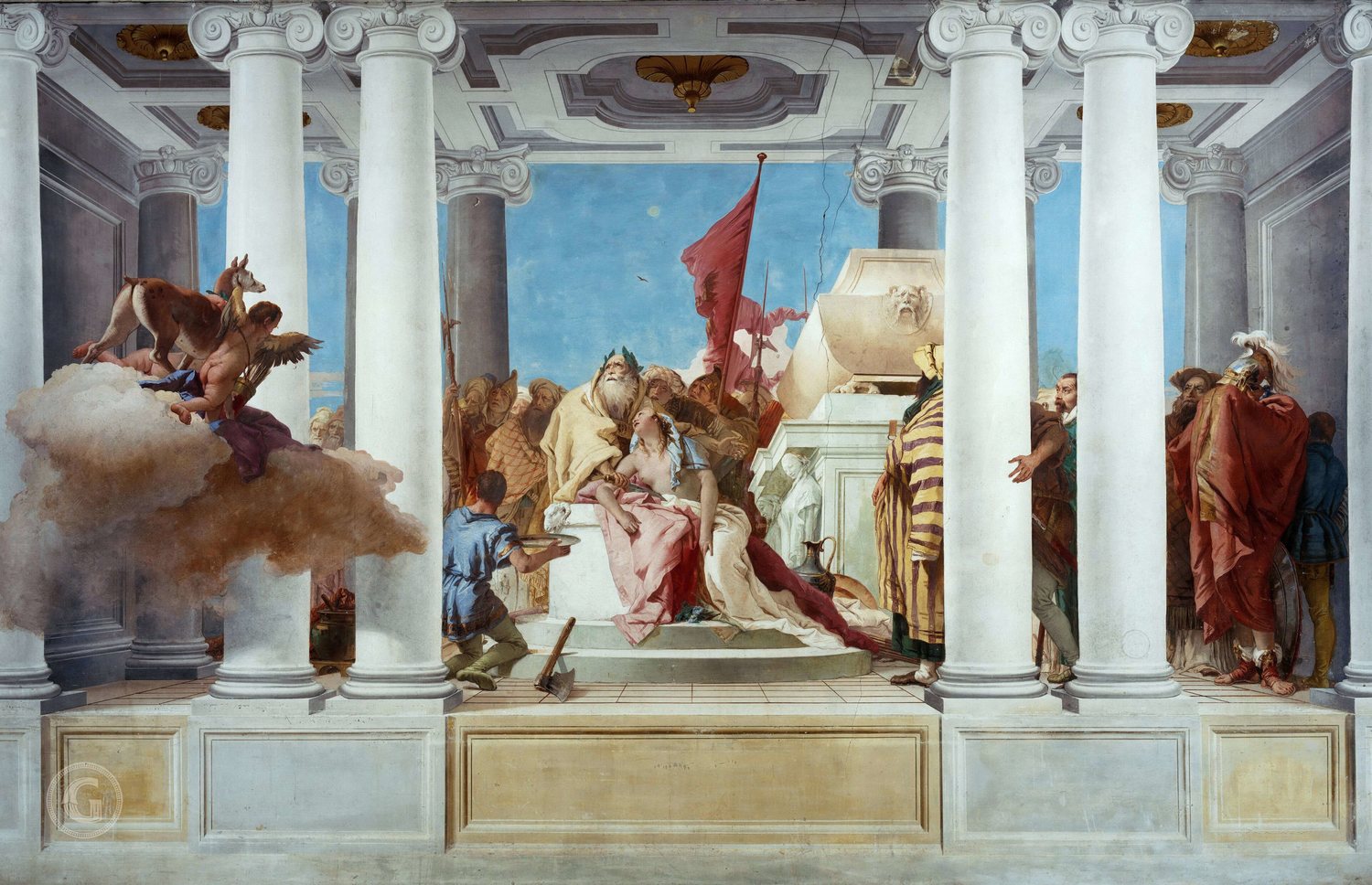
In the Valmarana villa's guest house, Tiepolo frescoed scenes from epic poetry; here Iphigenia is led to the altar at Aulis while the deer that will replace her waits in the wings — Homer and Euripides retold in clear morning light.
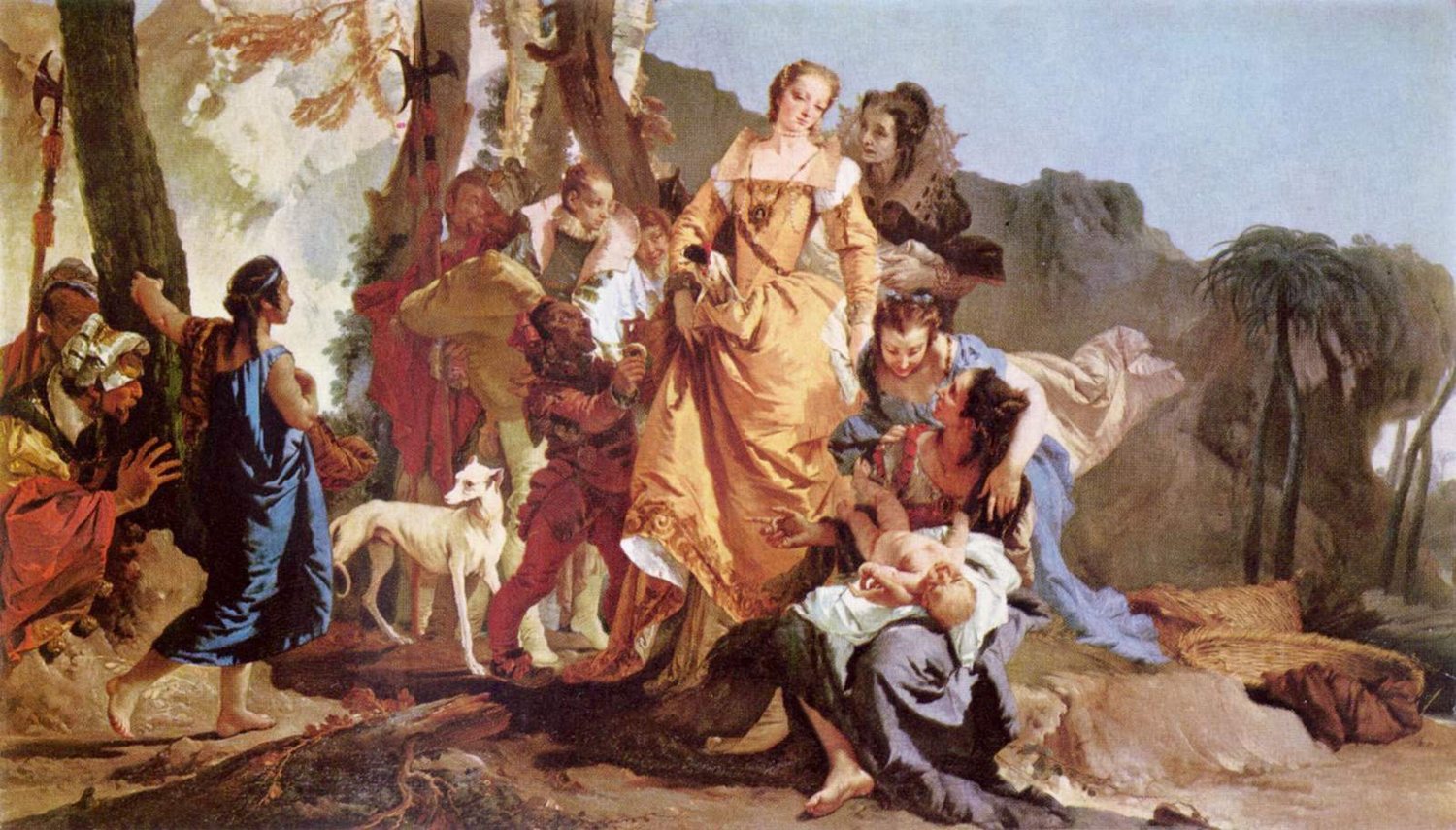
An early canvas in the manner of Veronese: Pharaoh's daughter and her court in shimmering silks along the Nile, the baby passed hand to hand like the still centre of a pageant.
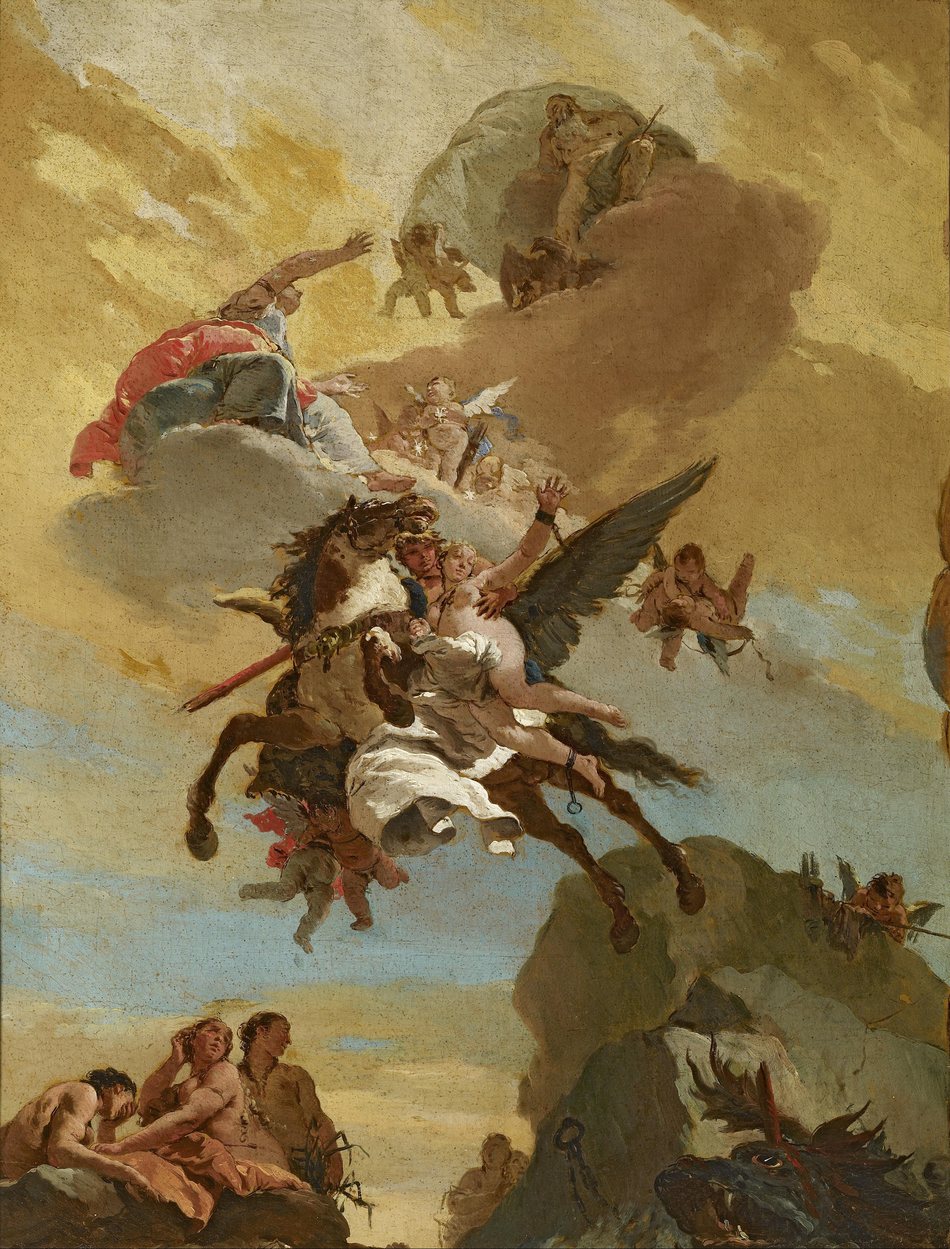
Perseus swoops down on Pegasus to free Andromeda from the sea monster — an early, jewel-bright canvas where the hero's flight path is the whole design: a single diagonal of rescue.
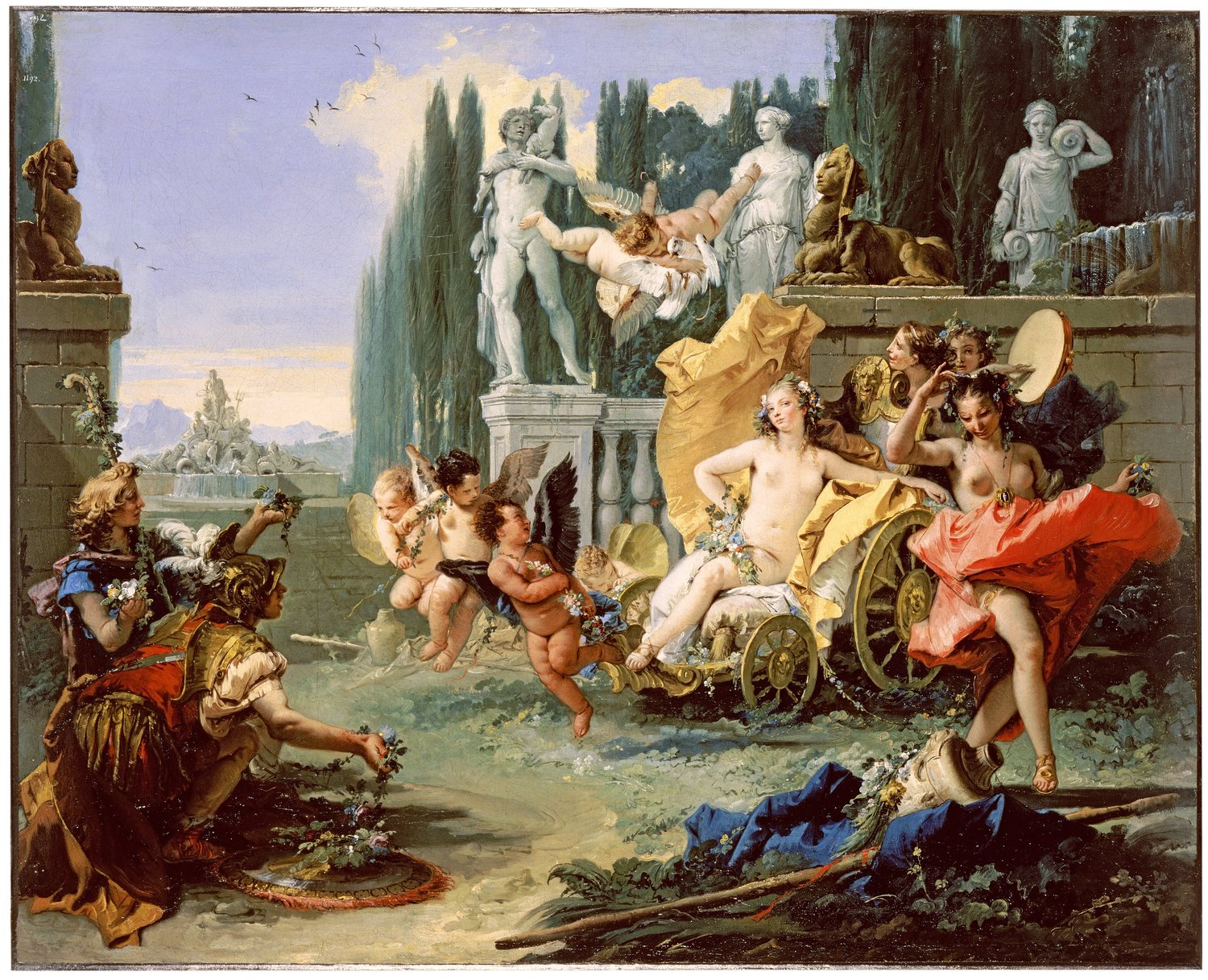
Flora rides in triumph in her chariot, showering flowers over a garden of gods and mortals — Ovid staged as a Venetian pageant, the paint itself strewn like petals.
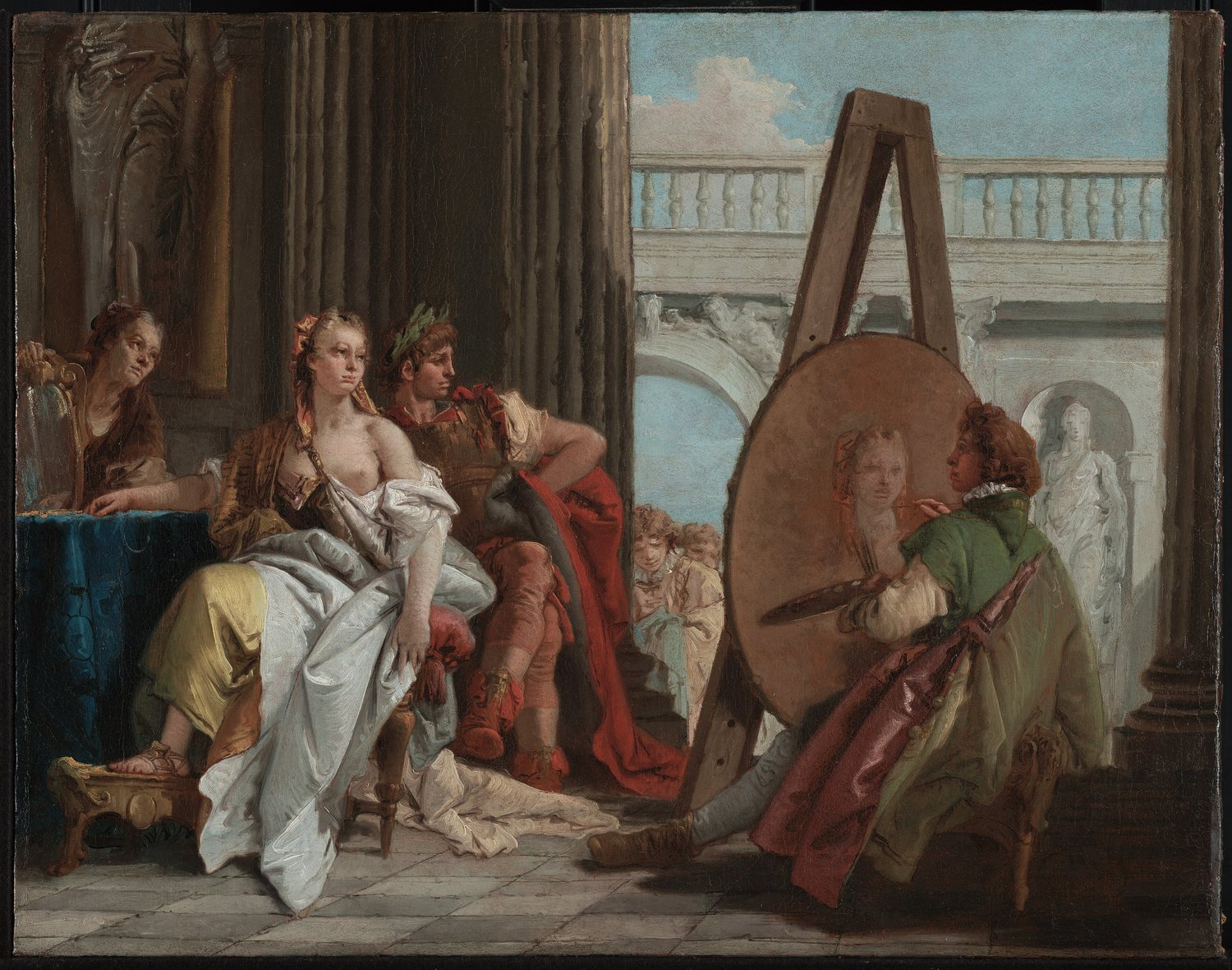
Alexander watches Apelles paint his mistress Campaspe — and, seeing the painter fall in love, will give her to him. A picture about painting itself, staged in a sunlit studio Tiepolo clearly enjoyed inventing.
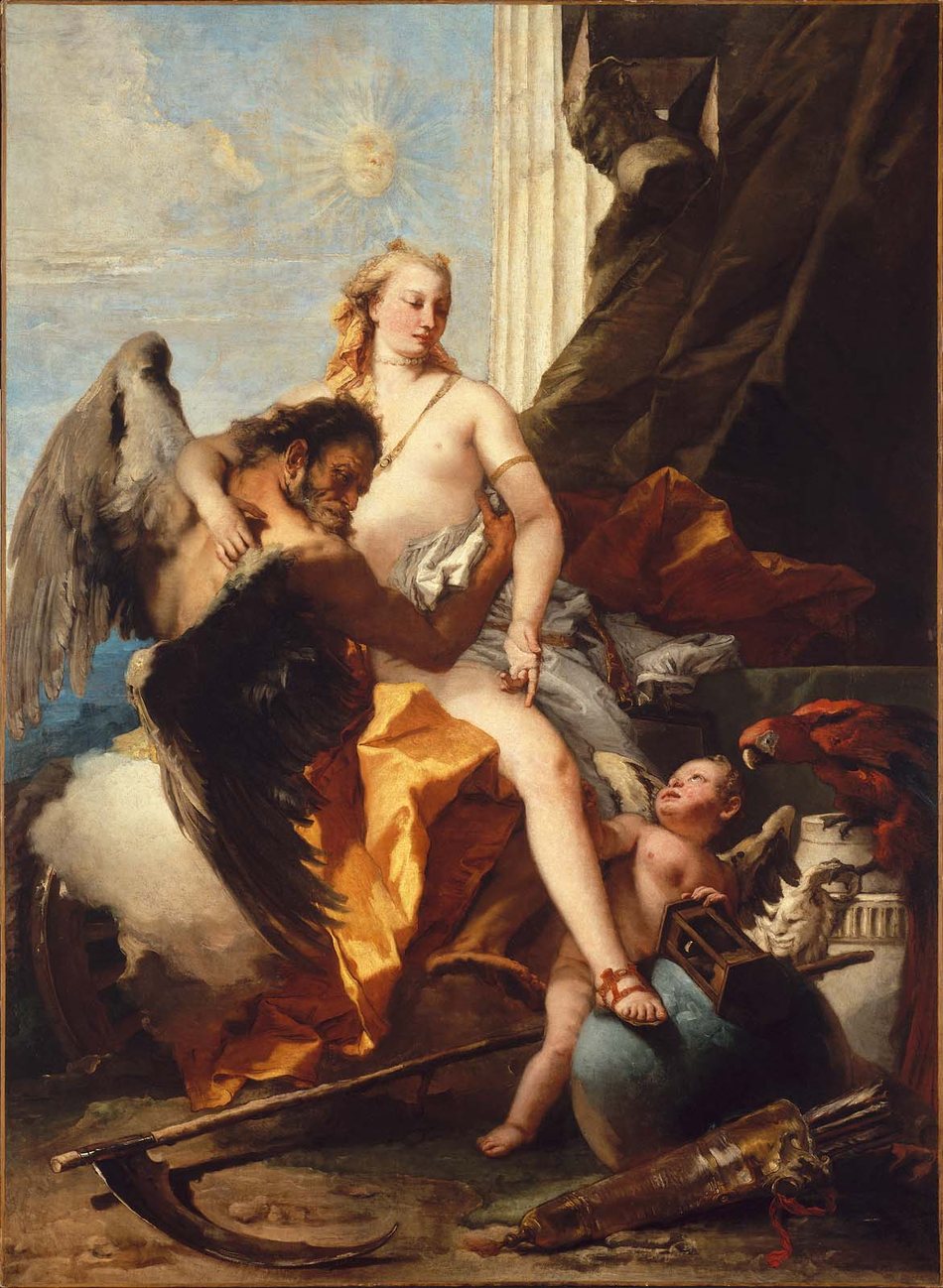
Old Time lifts the drapery from Truth, who holds the sun and a palm; below, the serpent of Falsehood is trampled. An allegory Tiepolo painted more than once — truth, in his hands, is always unveiled upward into light.
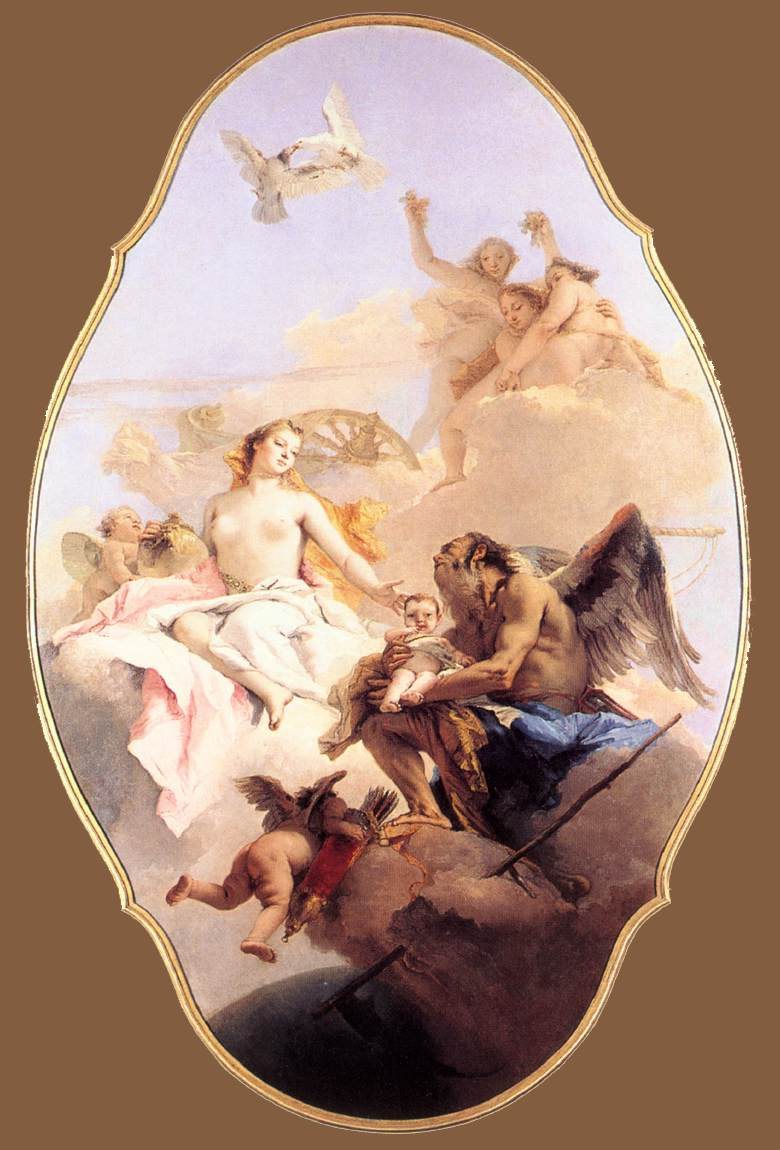
A shaped ceiling canvas: Venus hands her newborn child — usually read as Aeneas — to winged Time, while the Graces weave flowers above. Even the allegory floats; gravity has no jurisdiction here.
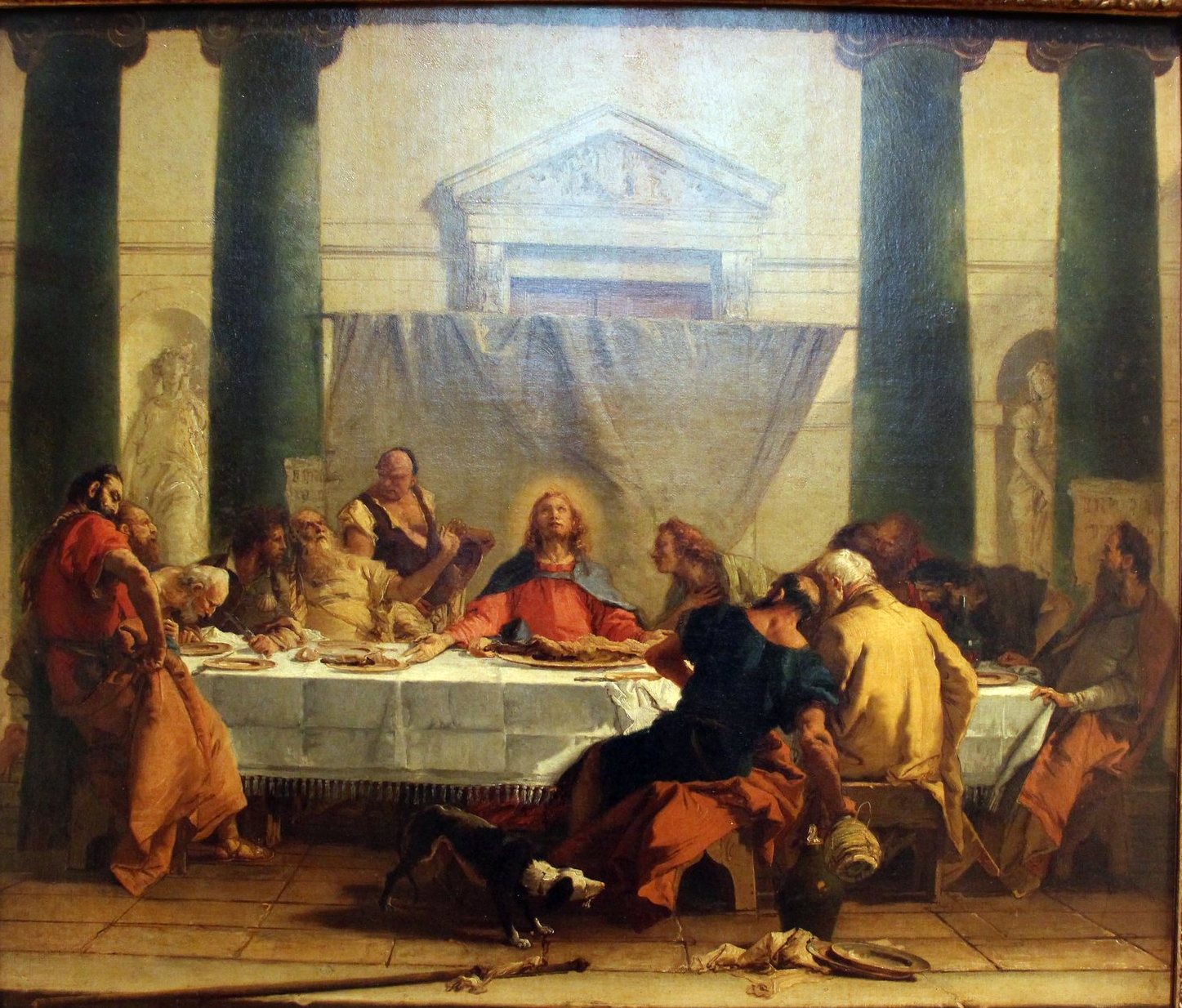
Christ gives the bread while the apostles crowd the table in a hall of green marble columns — a Venetian sacrament in the grand manner of Veronese, painted with a sketch's speed and a stage designer's sweep.
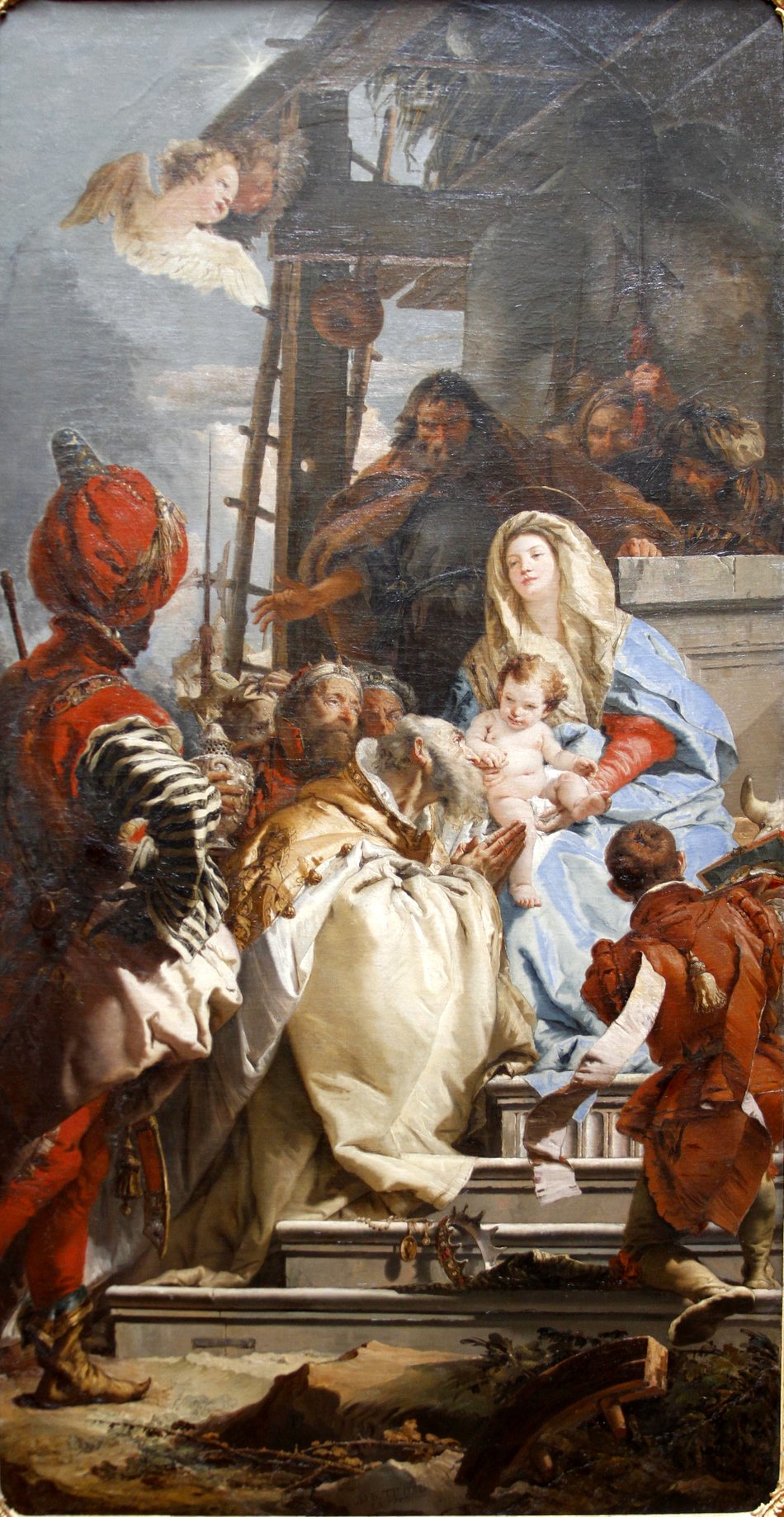
Painted in Würzburg in a single burst of bravura: the kings arrive in a whirl of horses, banners and camels, the whole tall canvas worked in rapid, loaded strokes that never quite settle into finish.
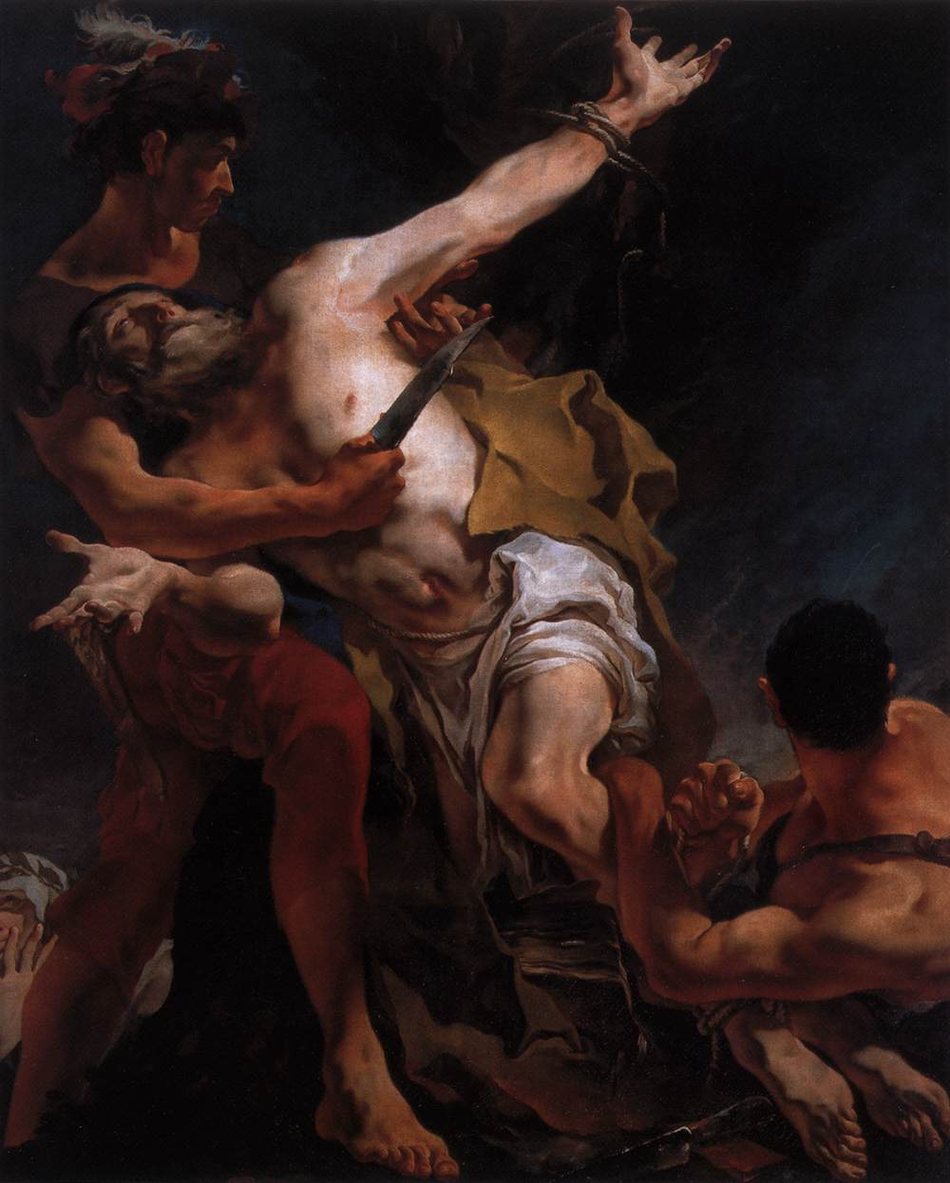
One of a famous cycle of apostle martyrdoms by twelve Venetian painters for San Stae. The young Tiepolo out-painted them all with a dark, muscular canvas that announced a new century of Venetian art.
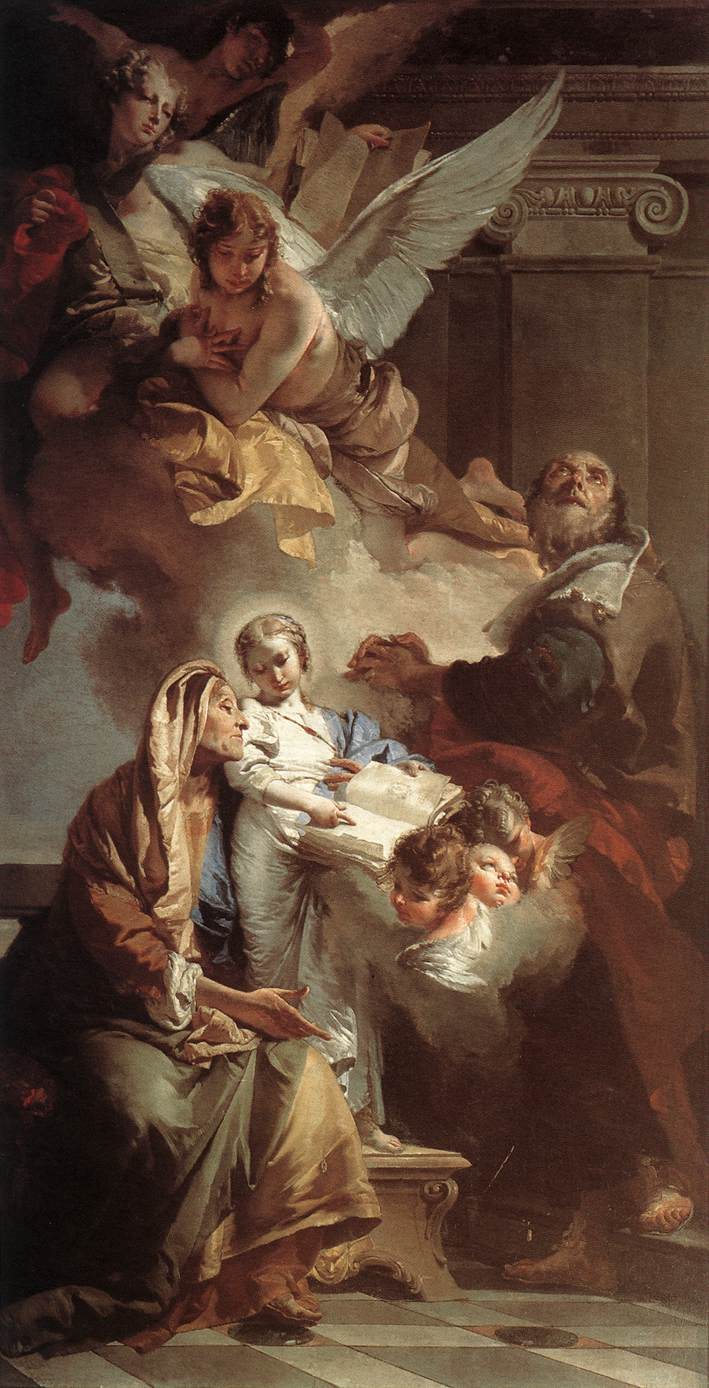
St Anne teaches the young Virgin to read, St Joachim looking on — a quiet domestic altarpiece amid the fireworks of Tiepolo's early career, its tenderness carried by candlelit flesh and deep shadow.
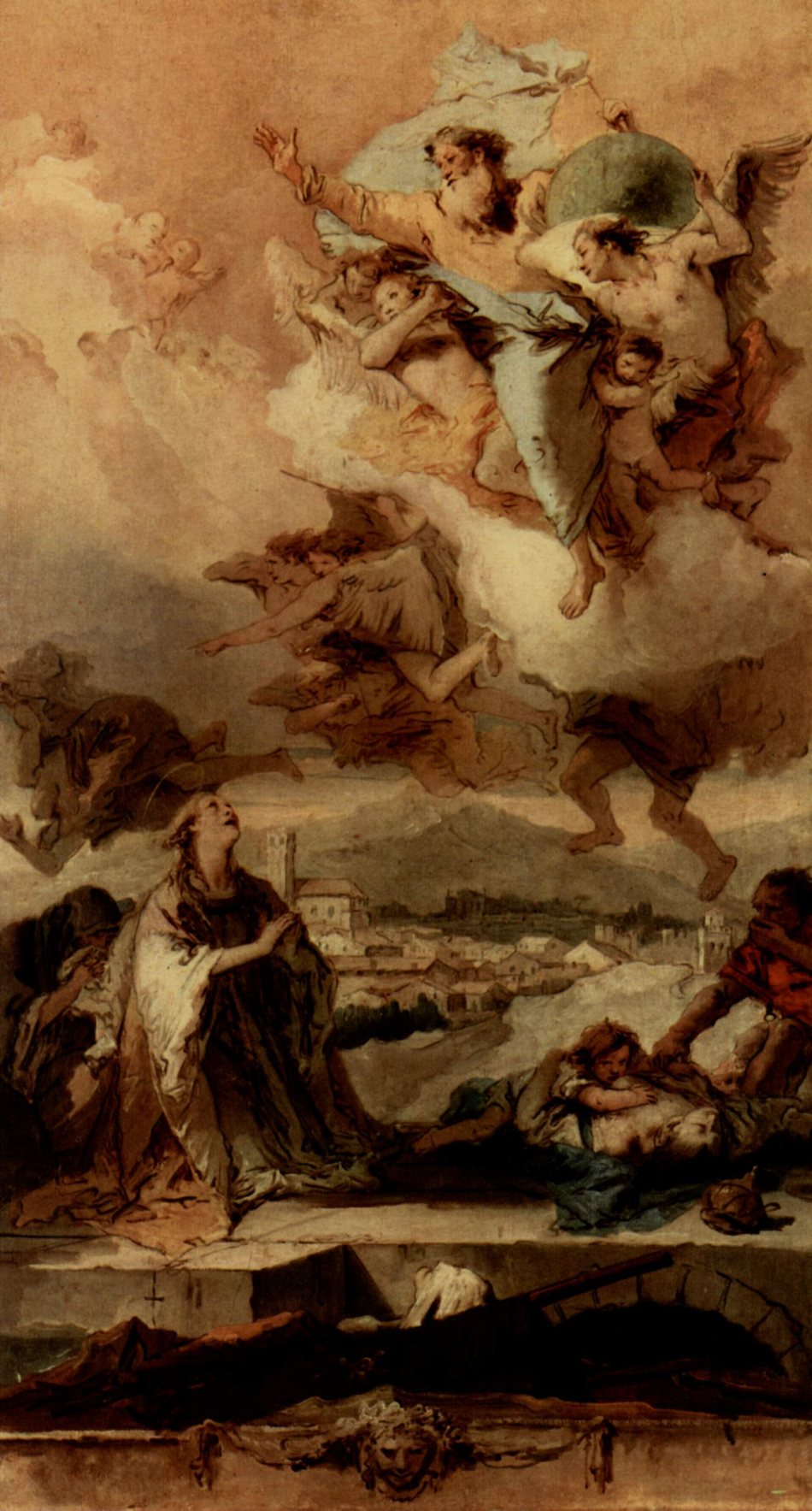
The oil modello for the altarpiece of Este cathedral: St Thecla intercedes for a city dying of plague, painted in swift, smoky strokes. The finished altarpiece still hangs in Este; the sketch keeps the first fire of the idea.
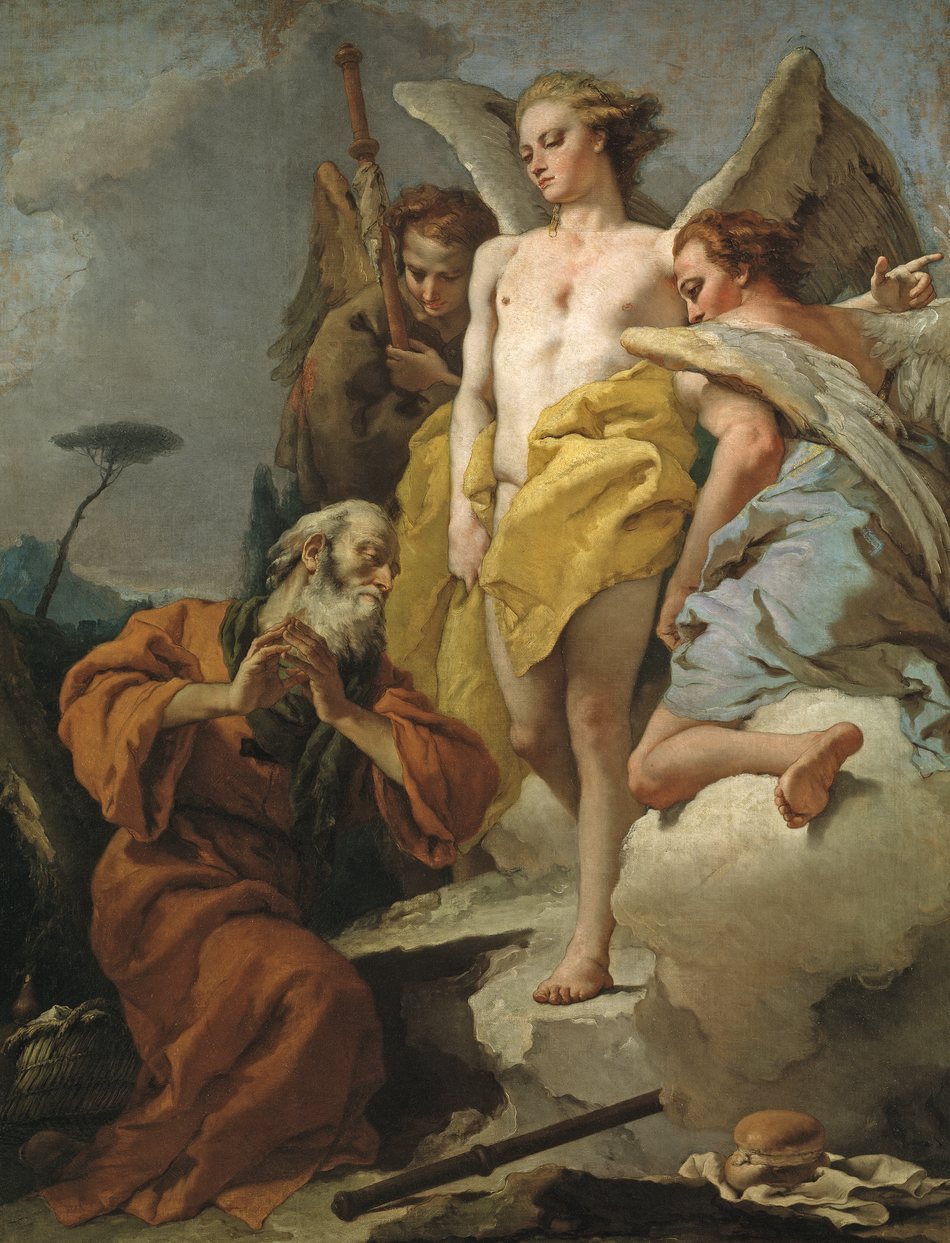
Among Tiepolo's last works, painted in Madrid: the three angels appear to Abraham in a blaze of backlight, the old man's red robe anchoring a composition that is already dissolving into radiance.
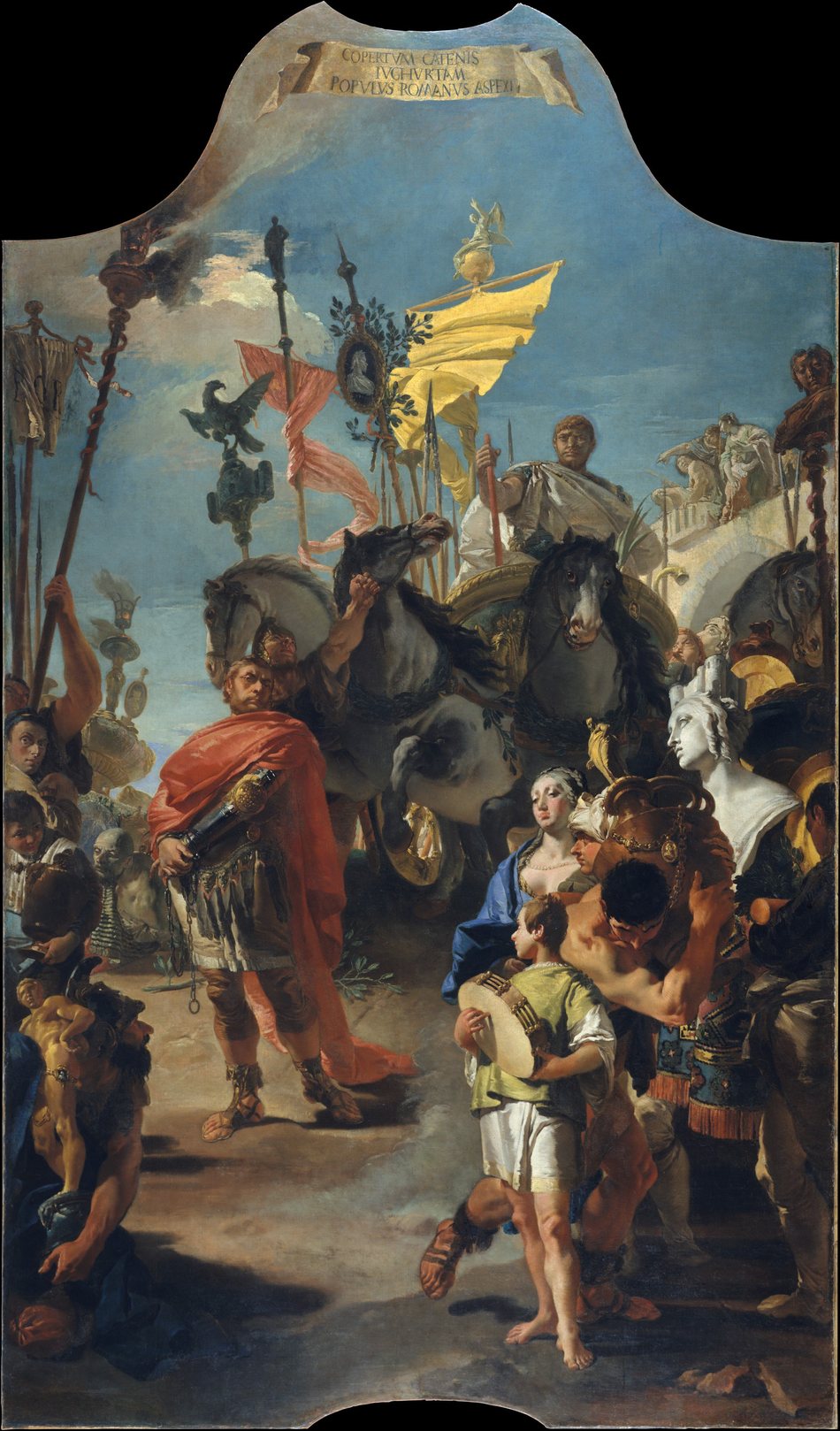
The twenty-three-year-old Tiepolo announces himself: the Roman general Marius rides in triumph with the captured Jugurtha in chains, in a canvas nearly three metres tall, painted for a Venetian palace in ten bravura weeks.