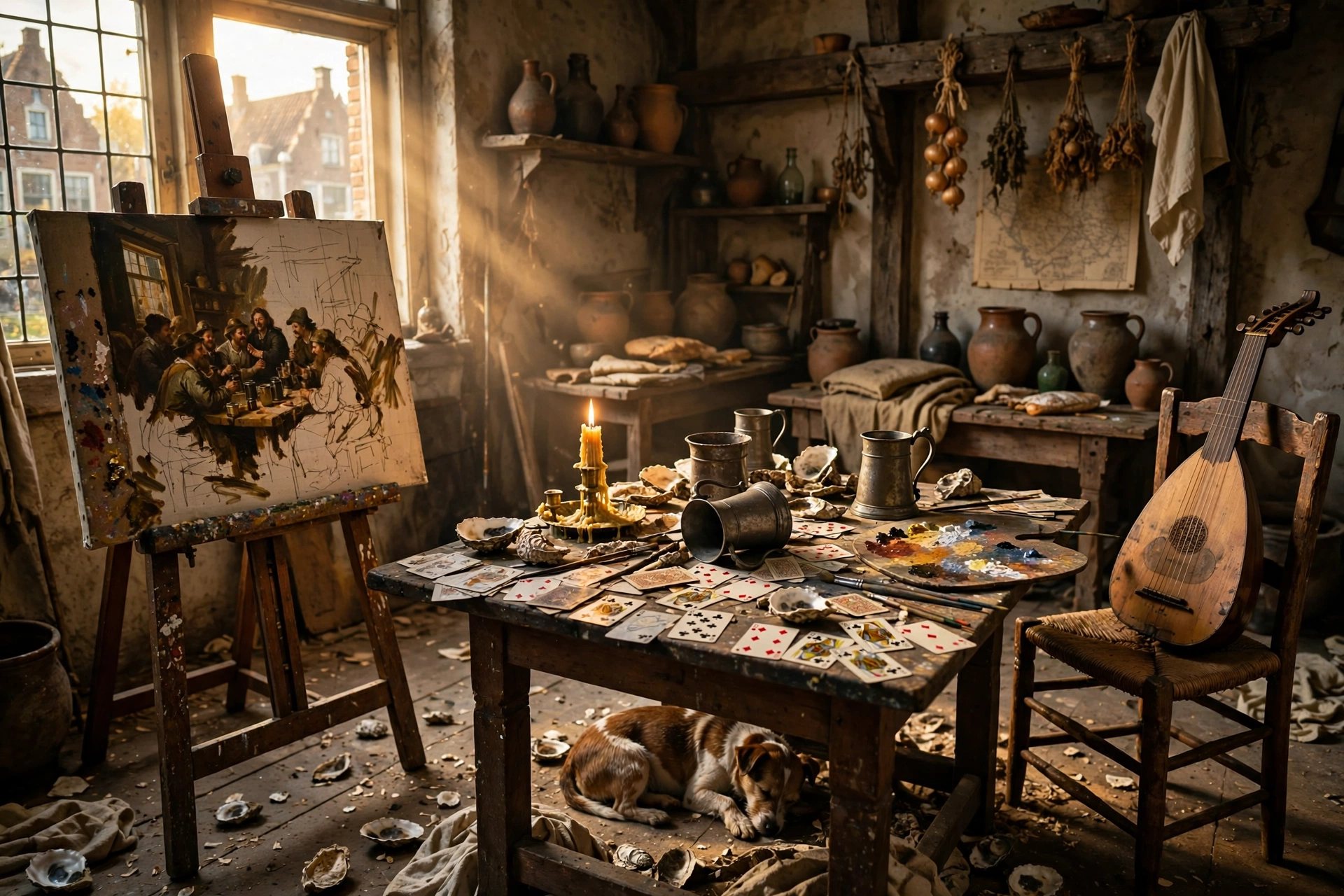
He was an innkeeper who painted, or a painter who kept an inn — in Leiden the two trades shared one house, and his pictures show what the house looked like at closing time. Nobody has ever painted cheerful disorder better: spilled, sung, danced and laughed onto the panel, with a moral tucked inside like a note in a lunchbox.
Steen's father was a brewer, and Jan himself held a licence to run a tavern in Leiden while he painted. His merry companies are field reports from his own bar: the exact gestures of people three drinks in, the lean, the spill, the laugh arriving a second late — observed nightly, at professional range.
A 'Jan Steen household' entered the Dutch language as the idiom for cheerful domestic chaos — parents feasting at the table while the children run the house into the ground. He painted the proverb so often, and so recognisably, that the language simply adopted his name for it.
Read his floors: broken eggshells, empty oyster shells, spilled wine, dropped playing cards, a lute with a snapped string. It is a moral still life scattered under the dancers' feet — in the Dutch emblem language, pleasures already consumed, pleasures already gone — painted as precisely as any face in the room.
Steen cast himself and his family. In The Merry Family the laughing man with the pipe at the centre is Steen; his wife and children recur across the oeuvre as the household troupe. It was the cheapest cast in Leiden, and the most convincing — they had clearly been rehearsing at home.
Many of his scenes carry their moral in writing — a slate, a sheet of paper, words woven into the scene itself; Beware of Luxury is inscribed 'In Weelde Siet Toe': in luxury, look out. The picture works like an emblem-book page: image above, lesson below, and the laugh comes first either way.
He painted some eight hundred pictures, quickly and thinly, often on a warm ground that glows up through the paint like lamplight through a shade. They sold cheap, the inn lost money, and he died in debt — the innkeeper the whole world now agrees was a genius of the first rank.
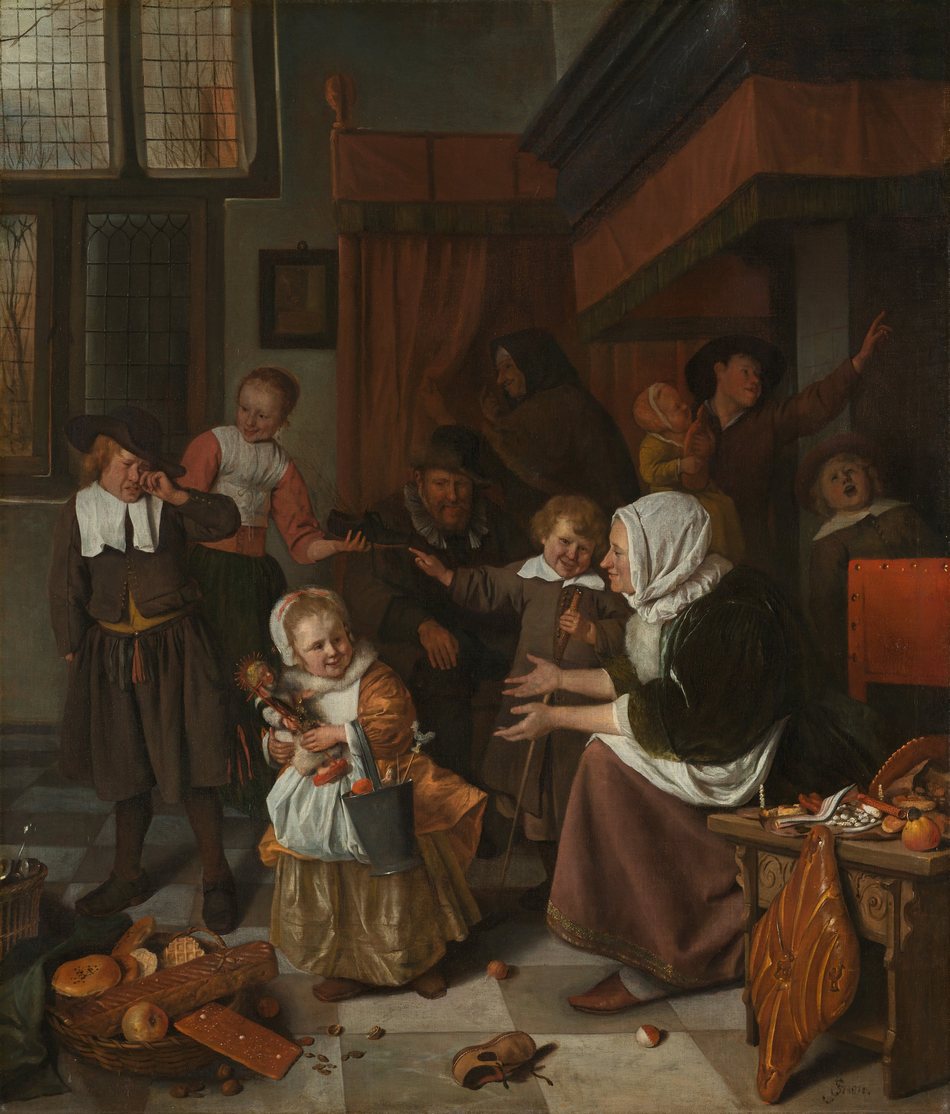
Saint Nicholas Eve in a bourgeois home: one child beams over her presents, her brother howls at an empty shoe, and grandmother hides another gift behind the curtain. Steen paints joy and injustice in the same armful — every family that has ever divided presents will recognise the accounting.
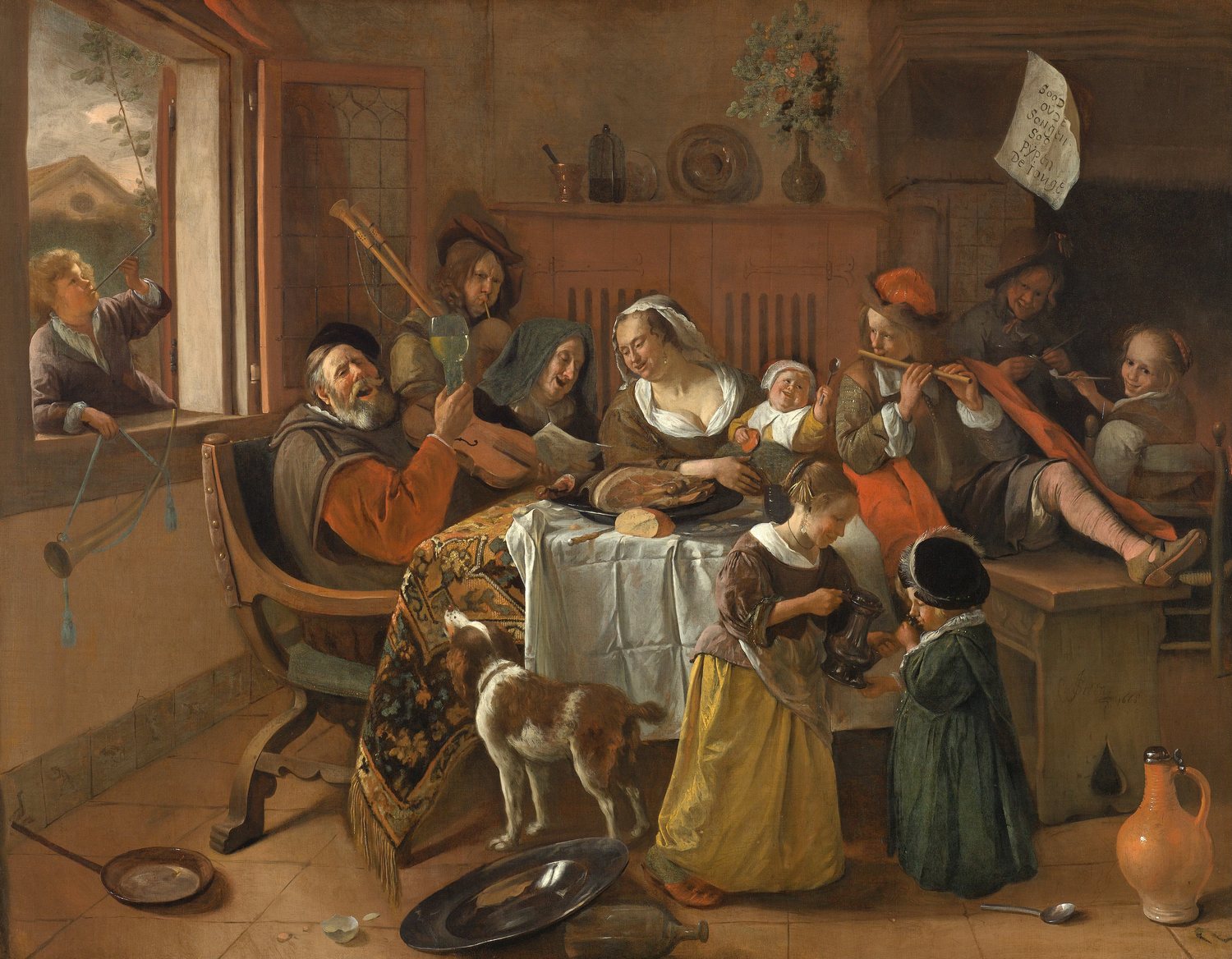
Three generations at full volume around the table — fiddles, bagpipes, song sheets, a dog joining in — and at the centre Steen himself, laughing with a pipe, conducting his own household. A note on the wall carries the moral about parents' example; the picture is too happy to care, which is the point.
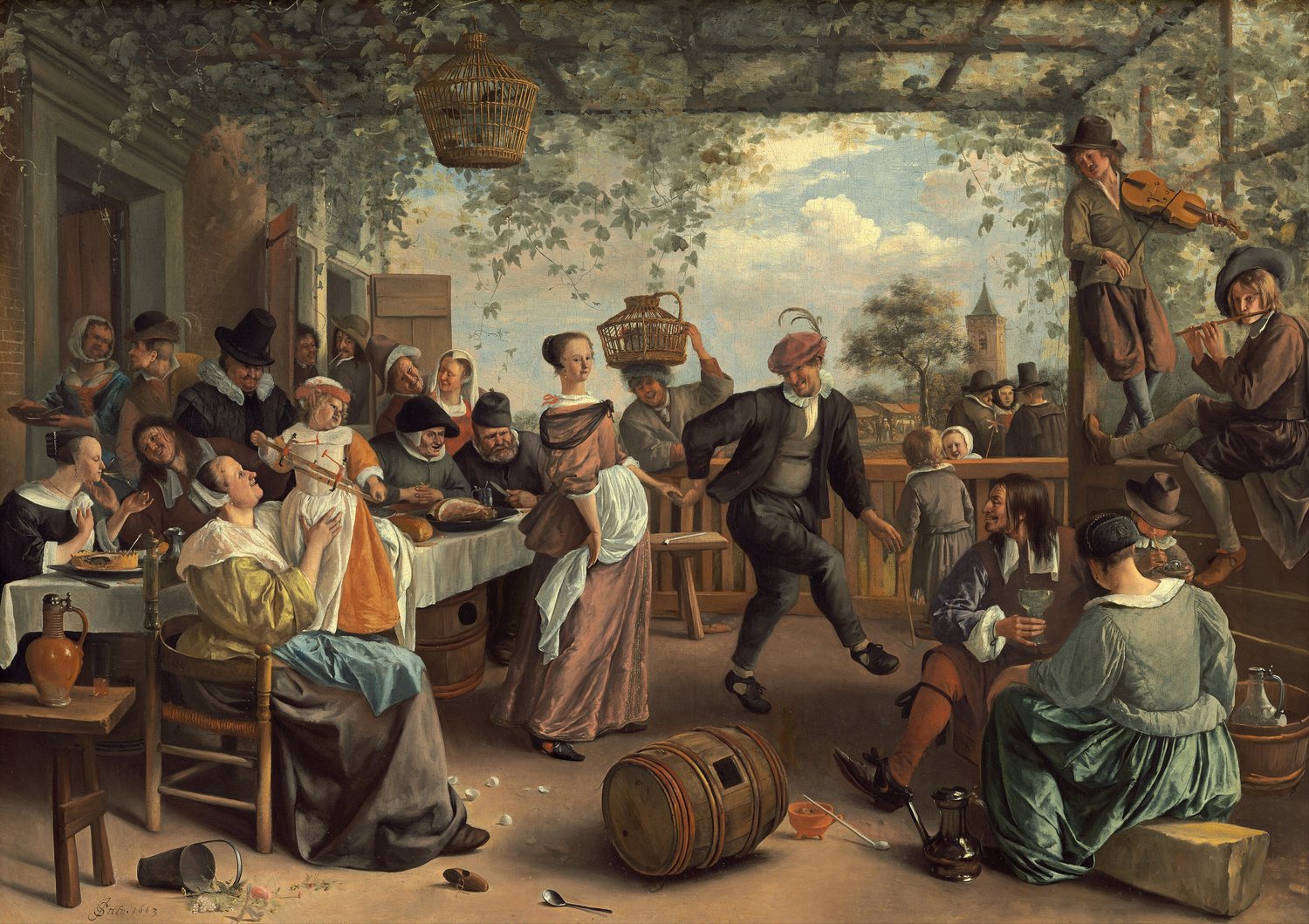
An outdoor wedding party under a trellis: the couple dances, the fiddler plays from a barrel, and around them Steen lays out the whole sociology of a village feast — the watchers, the drinkers, the children underfoot, the old men keeping the bench warm.
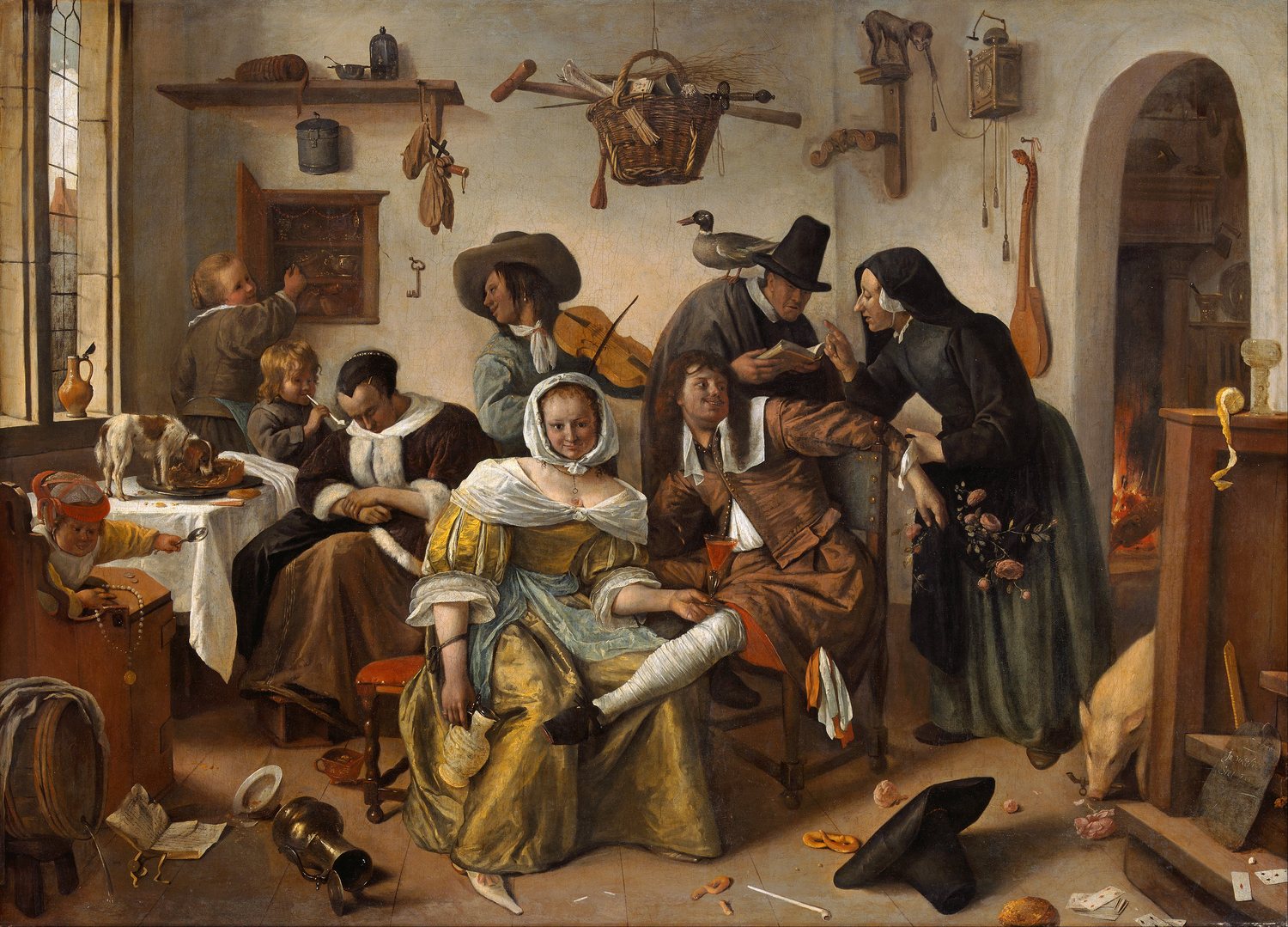
The sequel to every Steen party: the mistress asleep in her chair, the household looting itself around her, a duck on a man's shoulder, a child with a censer, the dog on the table — and above it all the written warning, 'In Weelde Siet Toe', in luxury, look out. Chaos with a caption.
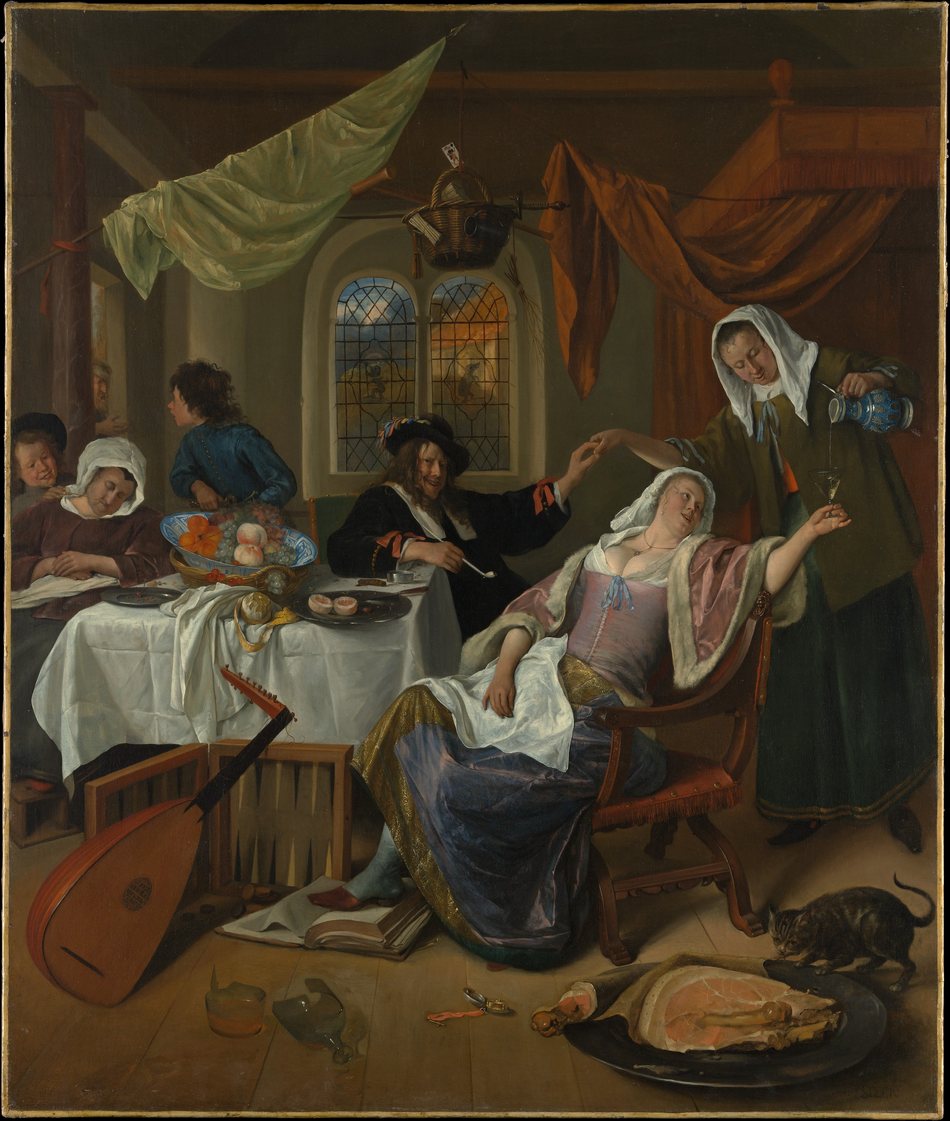
The mistress swoons — from wine, from heat, from life — while the household carries on regardless: cards, music, a lute abandoned on the floorboards. Steen's disorder always has this double bottom: the funnier the surface, the plainer the warning underneath.
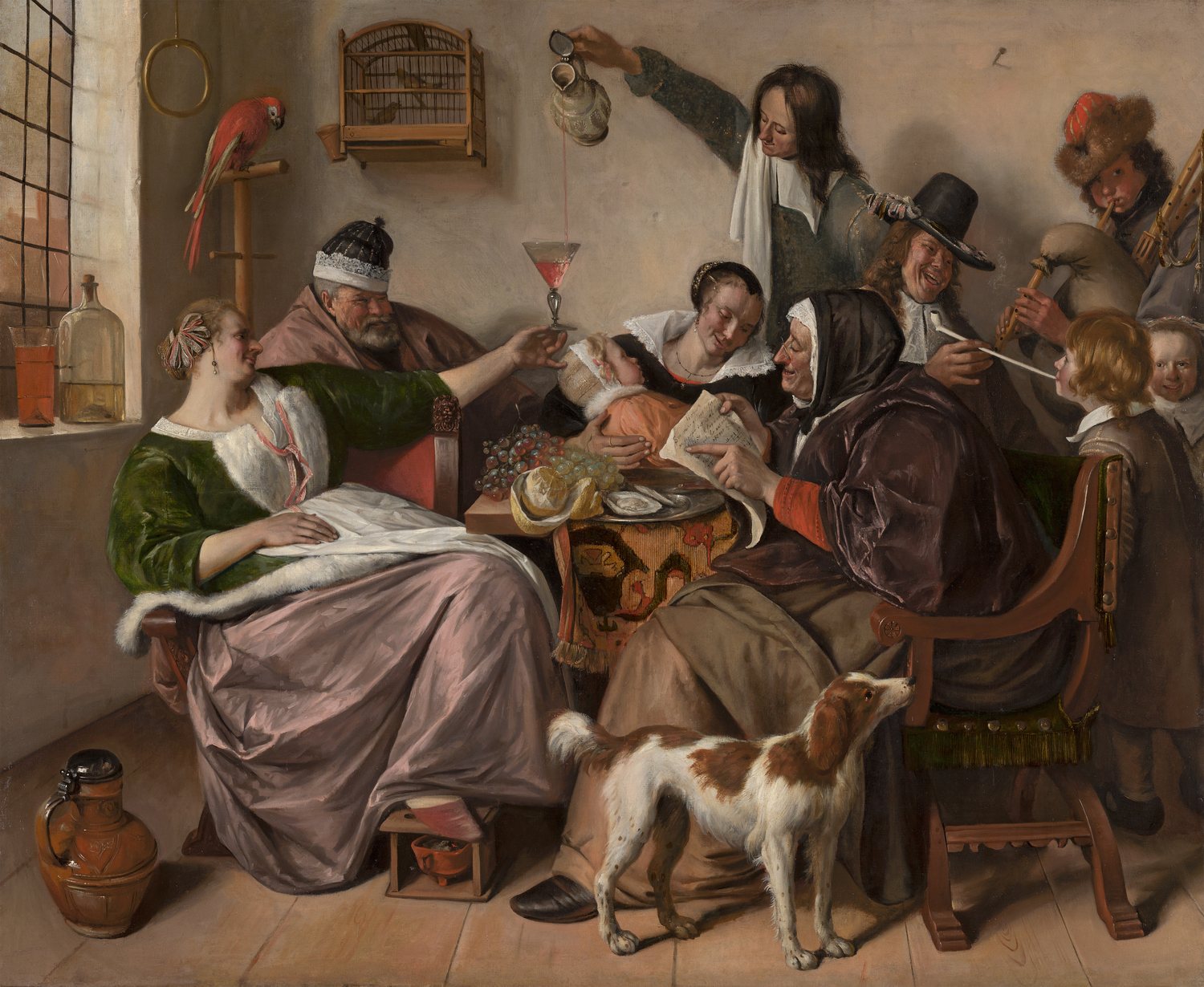
The proverb made visible: the old man sings from the sheet, glass raised, while the boy pipes along on his flute — the lesson passing down the generations in real time, wine included. Steen paints upbringing as it actually happens: by example, at the table, nightly.
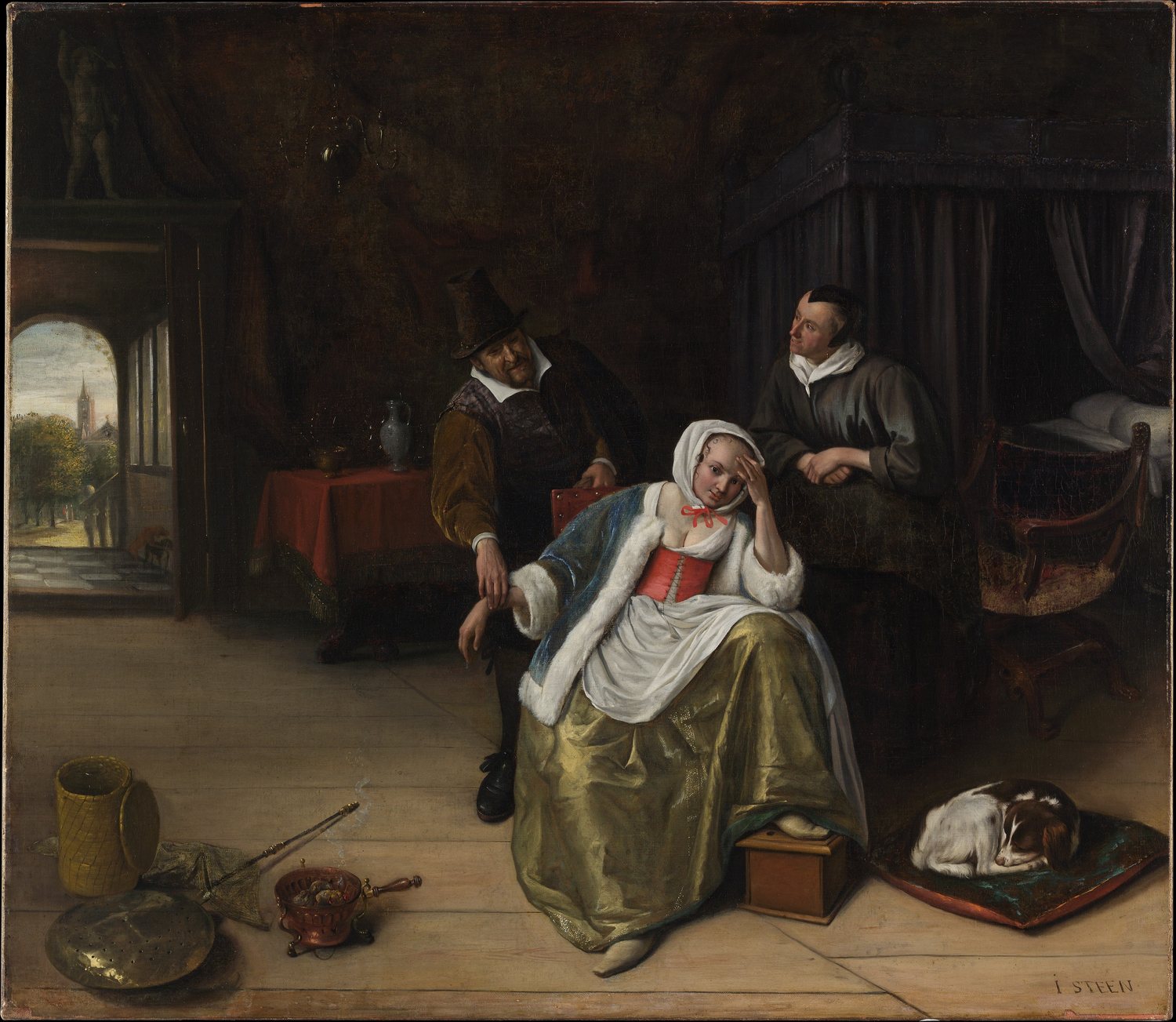
The doctor takes her pulse and inspects the flask while the maiden languishes in her chair, one slipper off, the bed waiting behind the curtain. Every seventeenth-century viewer knew the diagnosis the picture never names: lovesickness — the illness that was also an excuse, painted with a straight face.
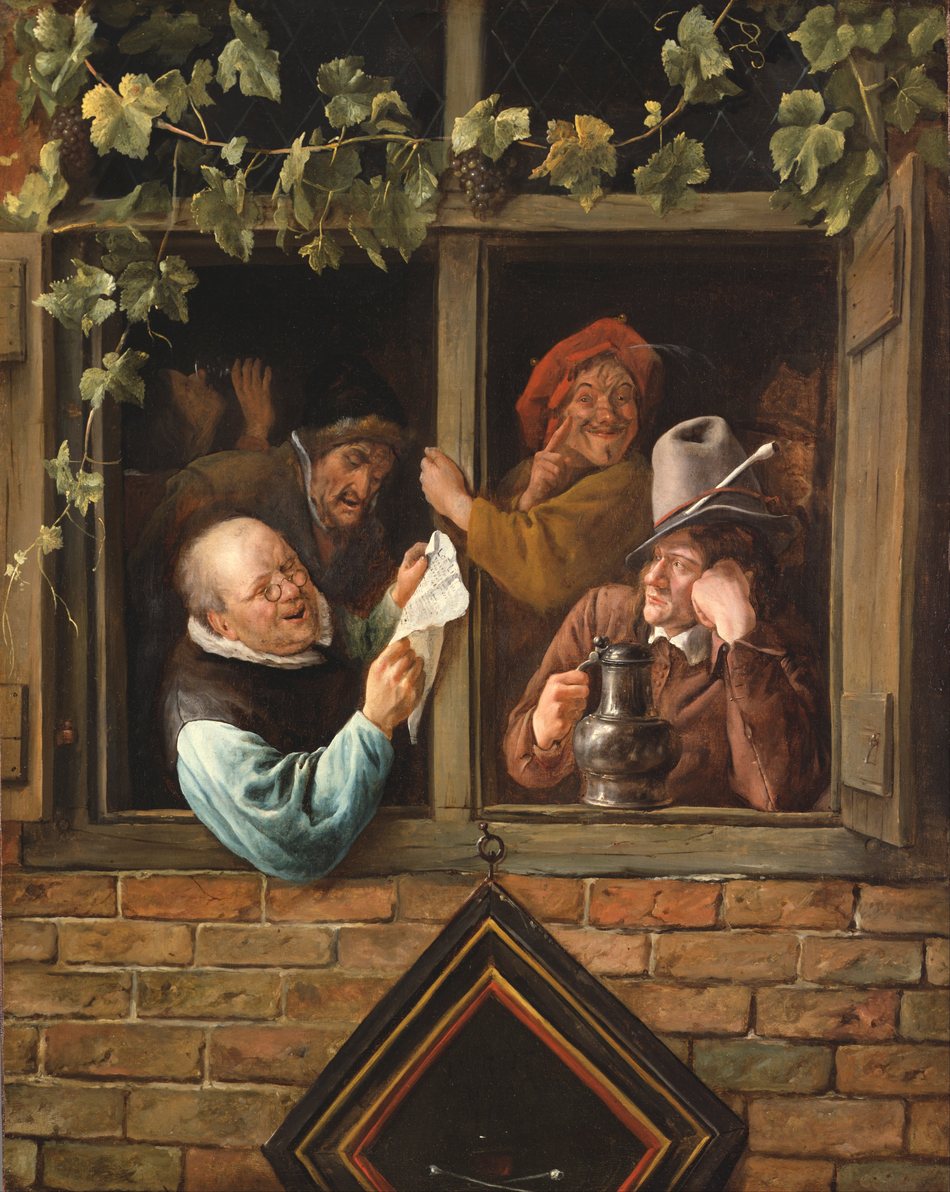
The local poetry society performs from its clubhouse window: one reads the verse aloud with feeling, another weeps into his handkerchief — whether from emotion or from the poetry, Steen leaves open. Amateur art, mocked by a professional who loved amateurs too much to be cruel.
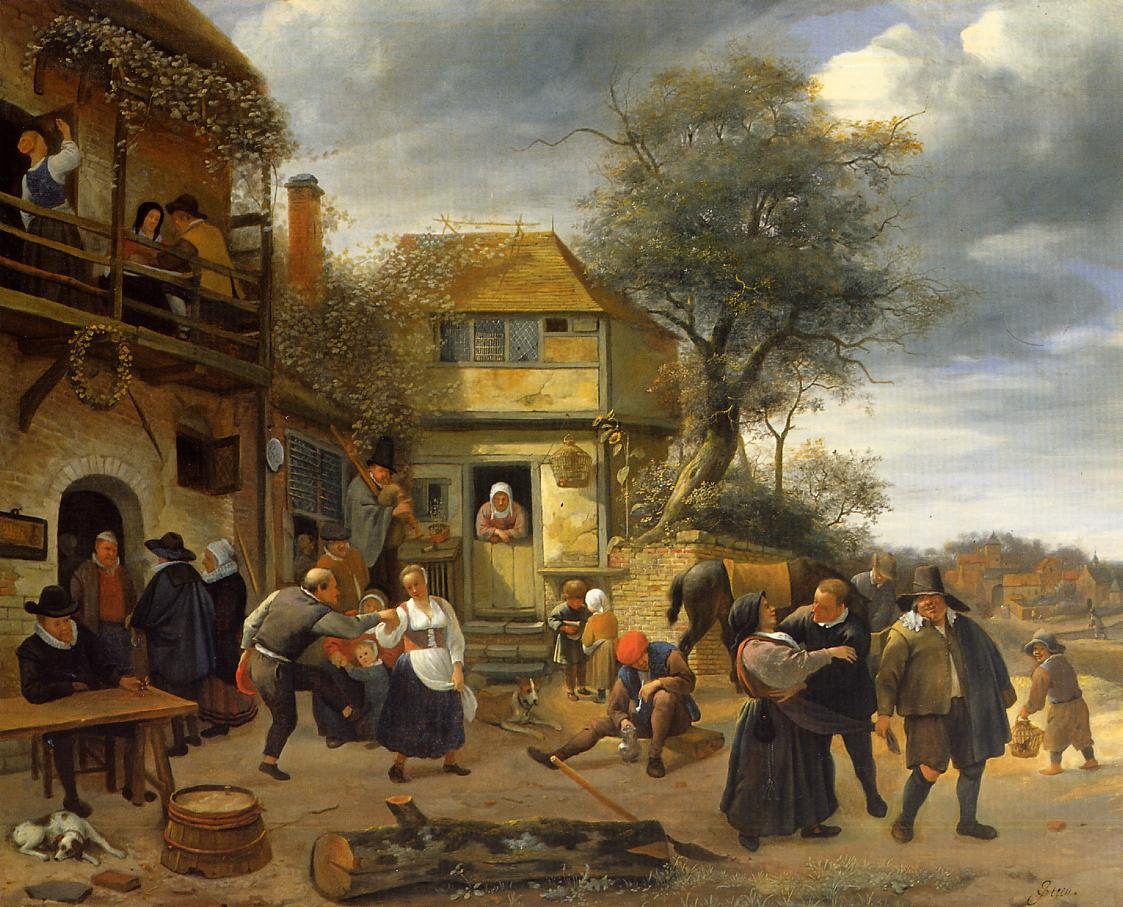
An early Steen, painted when he was in his twenties: dancers, wrestlers and drinkers spread across the inn yard in the open air, the composition still breathing Bruegel's air. The tavern would stay his stage for life — here he is still building it.
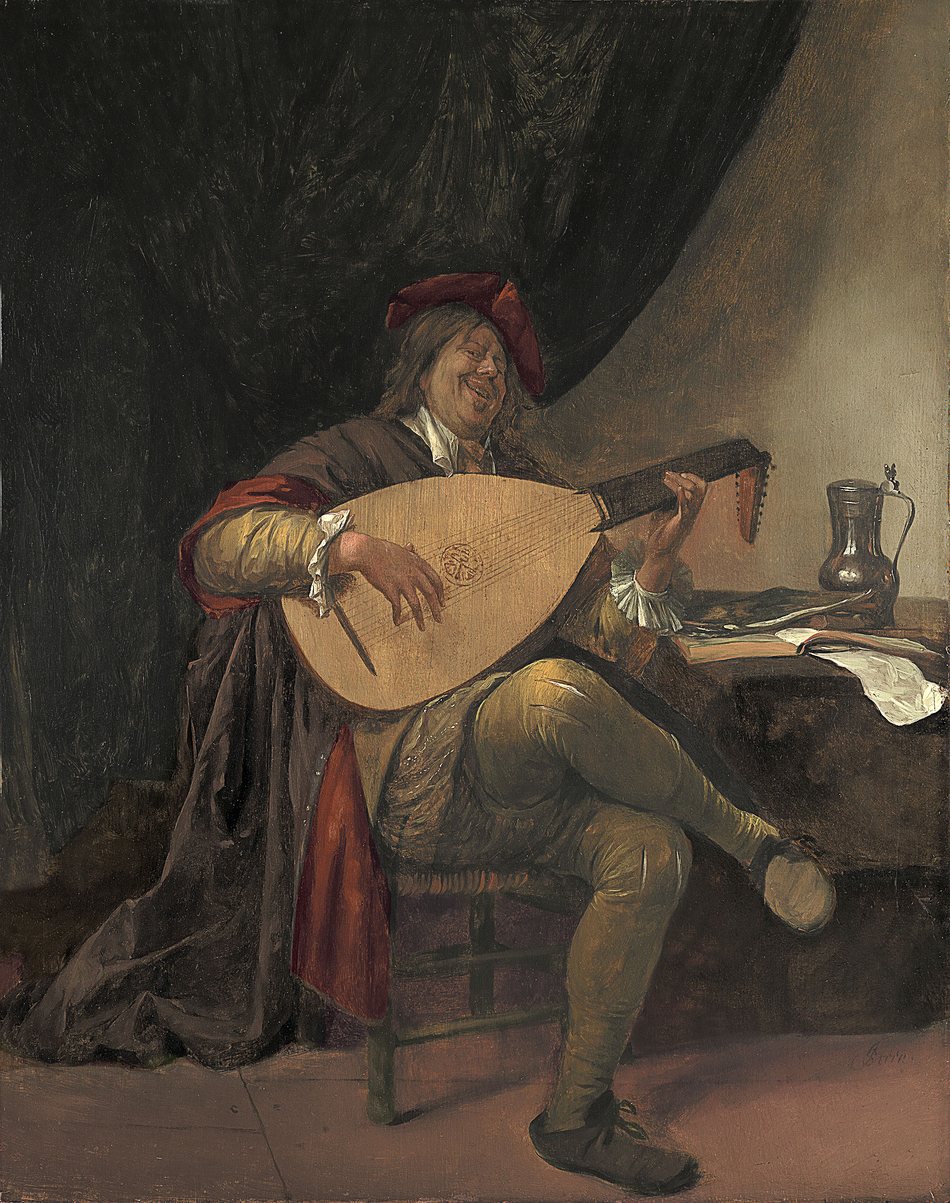
Steen presents himself as he wished to be remembered: not at the easel but with a lute, in a red cap, laughing at his own performance — the innkeeper-musician, master of the revels. It is a self-portrait as a genre scene, and the genre is his own invention.