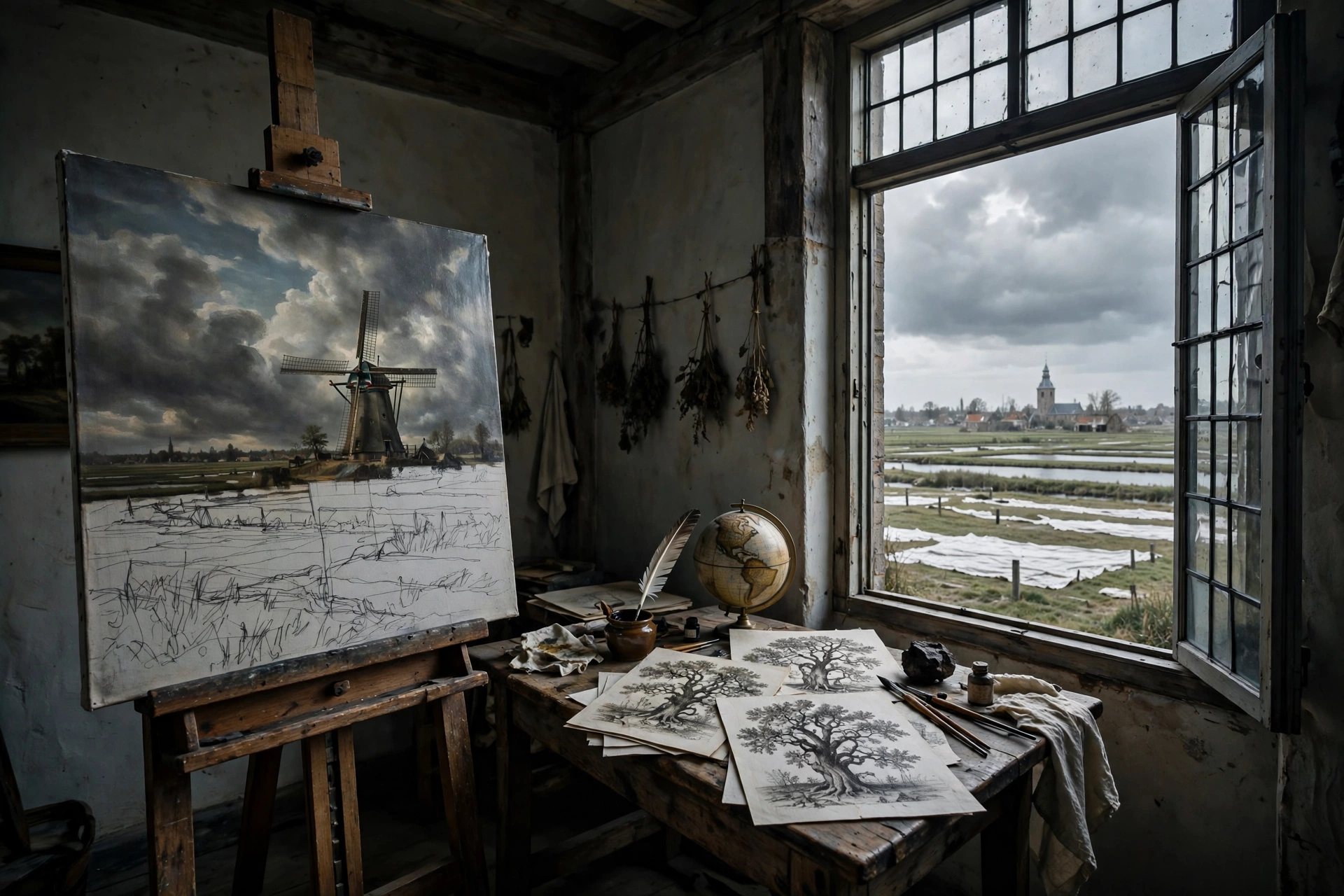
He never left the flat north, and he made it infinite. Two-thirds of his canvas is weather — clouds piling up like architecture over a strip of land — and below them the whole Dutch world at work: mills, bleachfields, harbours, and one ruined castle borrowed from Germany and quietly improved. Goethe called him a poet; standing before those skies, it is hard to argue.
In the mature landscapes the land is a narrow stage at the bottom of the canvas and everything above it is weather: cumulus piled like architecture, light breaking in shafts, rain deciding where to fall. Ruisdael composed clouds the way other painters composed figures — with a hierarchy, a drama and a climax.
The Jewish Cemetery is an invention. Ruisdael drew the great Portuguese-Jewish tombstones in Amsterdam's burial ground at Ouderkerk, then rebuilt them in the studio beneath a ruined church borrowed from Egmond and a rainbow that never shone on either place — a meditation on time assembled entirely from real pieces.
He made hundreds of drawings and oil sketches in the open air — dunes, watermills, the wooded hills along the German border — carrying the country home in portfolios. The great canvases were then built in the studio like architecture: a foreground repoussoir, a lit middle distance, a sky with its own weather system.
In 1650 he travelled to Bentheim, just across the German border, and drew its castle on its modest hill. Back home the hill grew into a wooded mountain and the castle into a fortress of romance — he painted Bentheim more than a dozen times, and never once at its true height. Geography, corrected by poetry.
His oaks are individuals: gnarled, leaning, half-dead, wrestling the wind, drawn from life in chalk and ink until he knew them by heart. Where Hals studied faces, Ruisdael studied trees — the bent oak by the road is as much a sitter as any burgher in a black coat.
In 1676, famous across Europe, he took a degree in medicine at Caen — whether he ever practised, nobody knows. It did not save him: the greatest landscape painter of the Dutch century died poor in 1682 and was buried in St Bavo's in Haarlem, the church that stands on the horizon of his own views of the city.
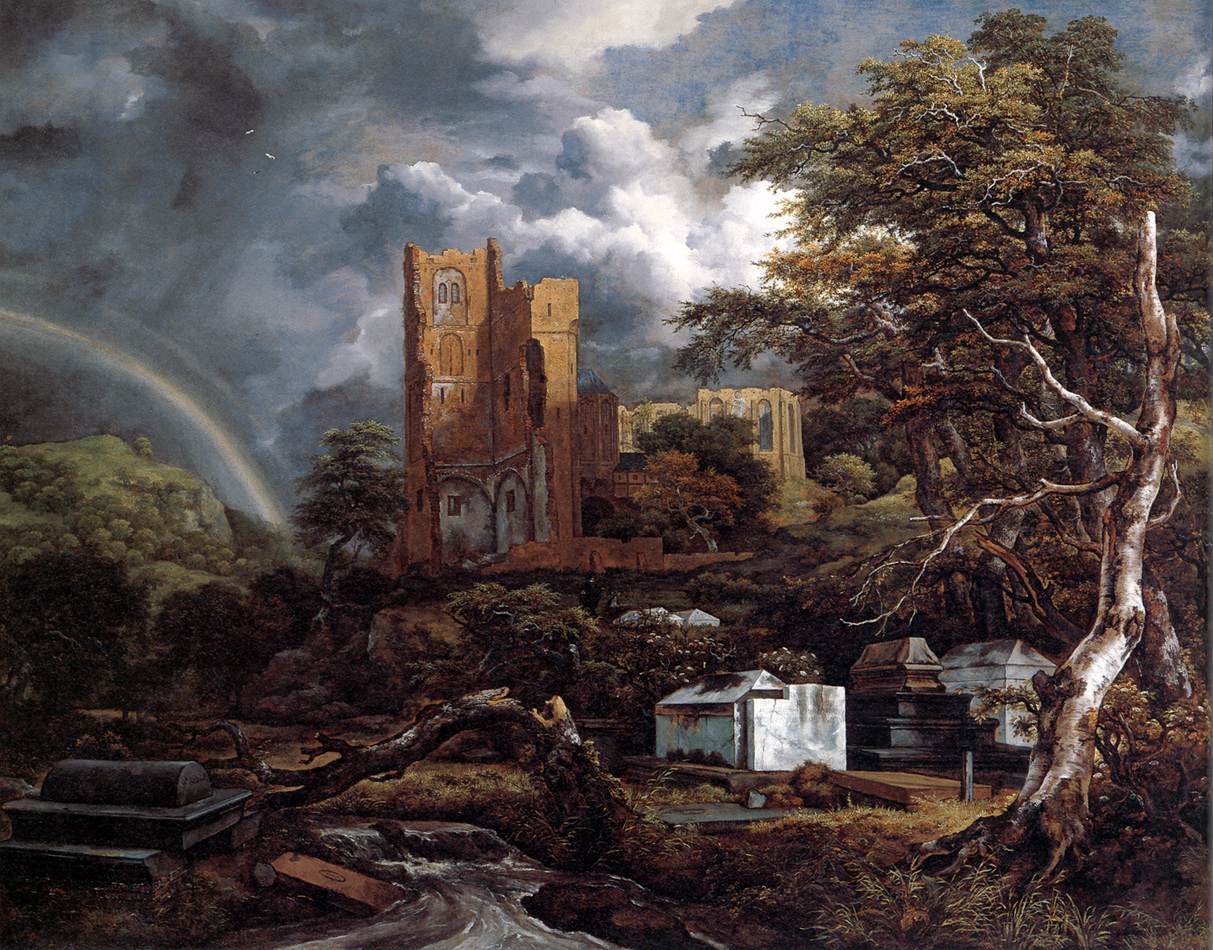
A ruined Gothic church, marble tombs from Amsterdam's Portuguese-Jewish burial ground, a dead tree, a stream, a rainbow — none of it ever stood together. Ruisdael assembled the most theatrical landscape of the Dutch century out of sketches, and turned a burial ground into a sermon on time, ruin and renewal.
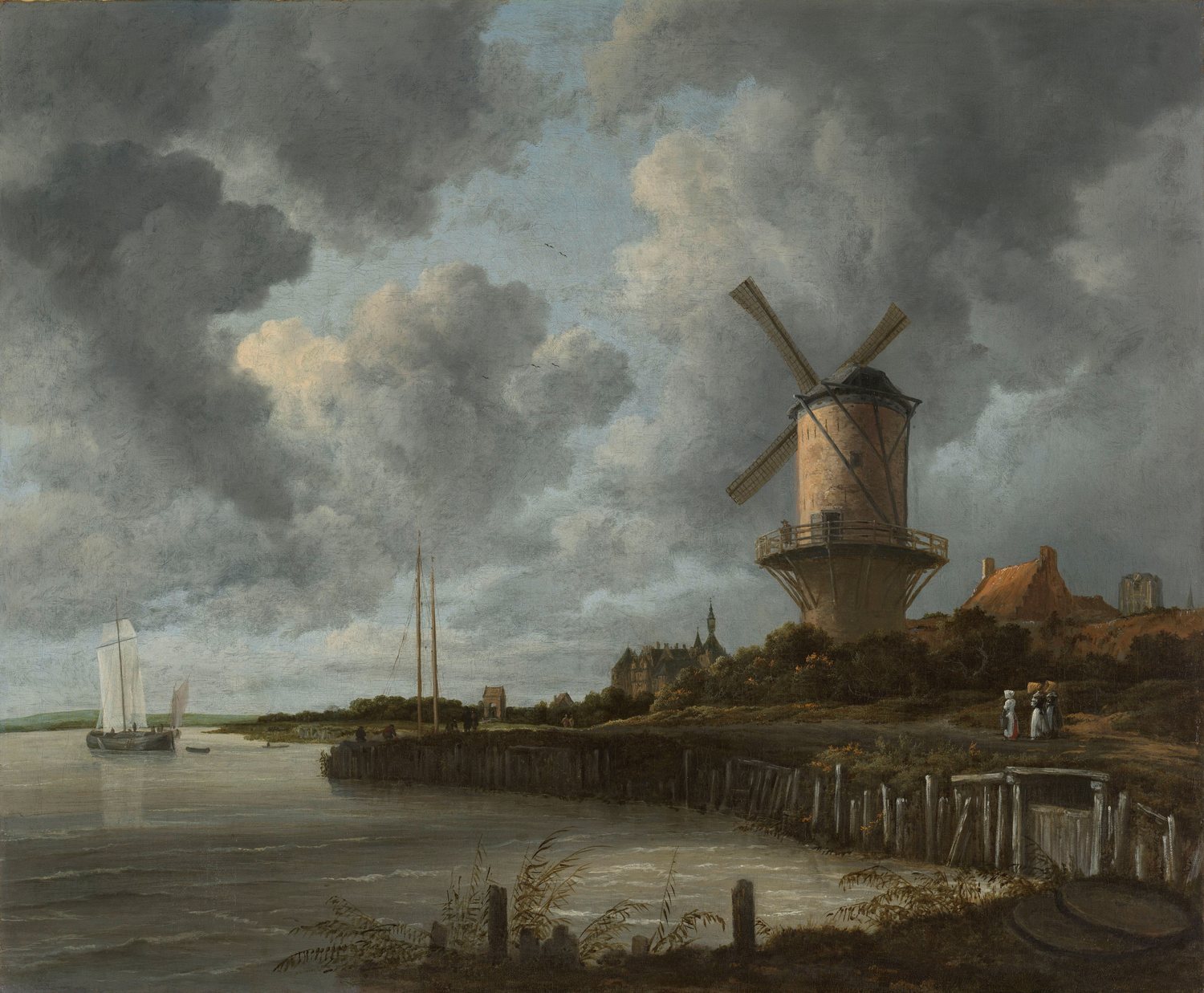
The most famous windmill in art: a tower mill on the Lek at evening, too big for its town and exactly the right size for the sky. Ruisdael enlarged the real mill and lowered the horizon until the machine became a monument — engineering portrait, weather included.
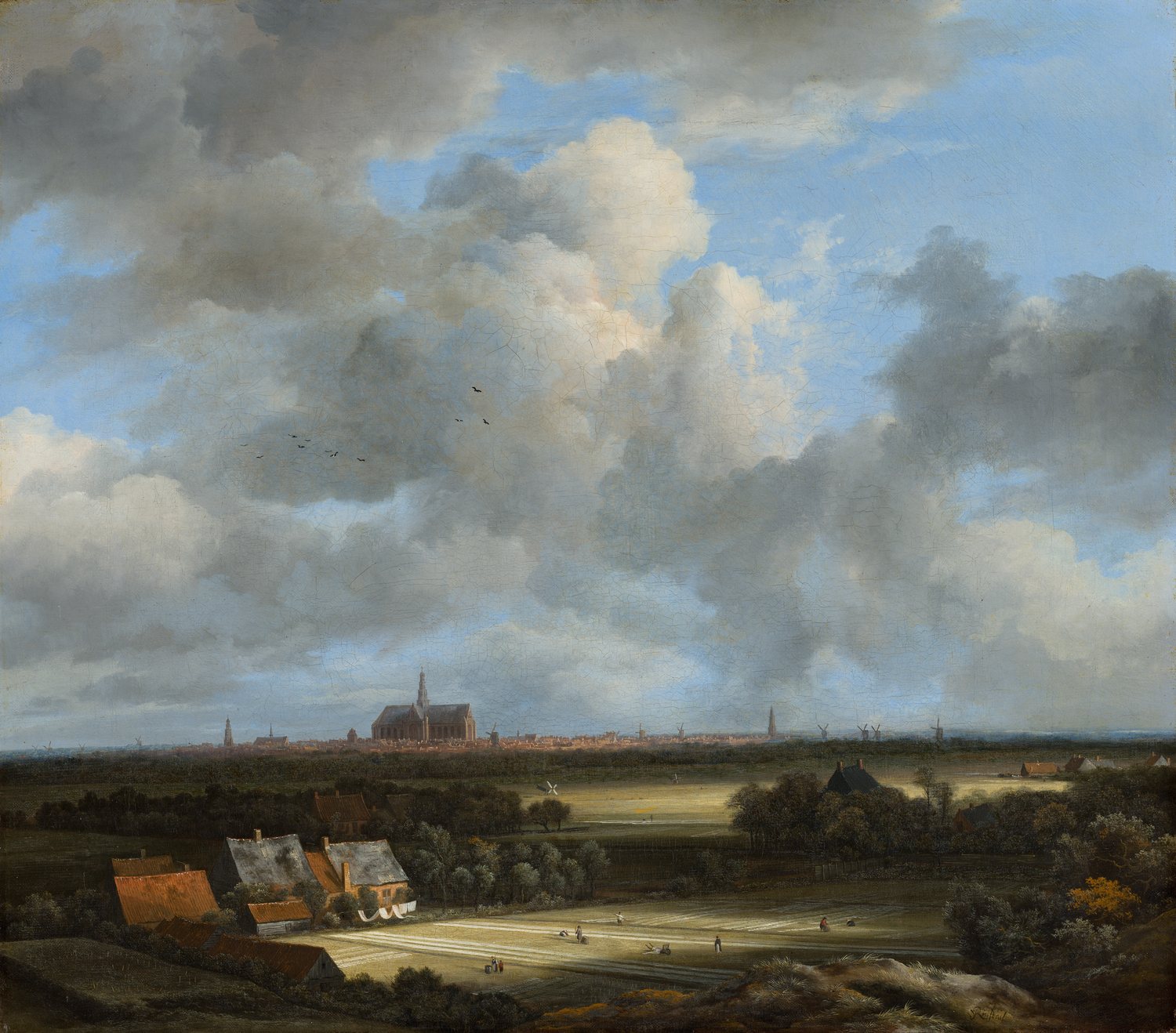
The 'Haarlempje': strips of linen whitening in the bleachfields, the dunes at the edge, and St Bavo's church small on the horizon under a sky that takes four-fifths of the picture. The Dutch made a genre of this view; Ruisdael made its masterpiece.
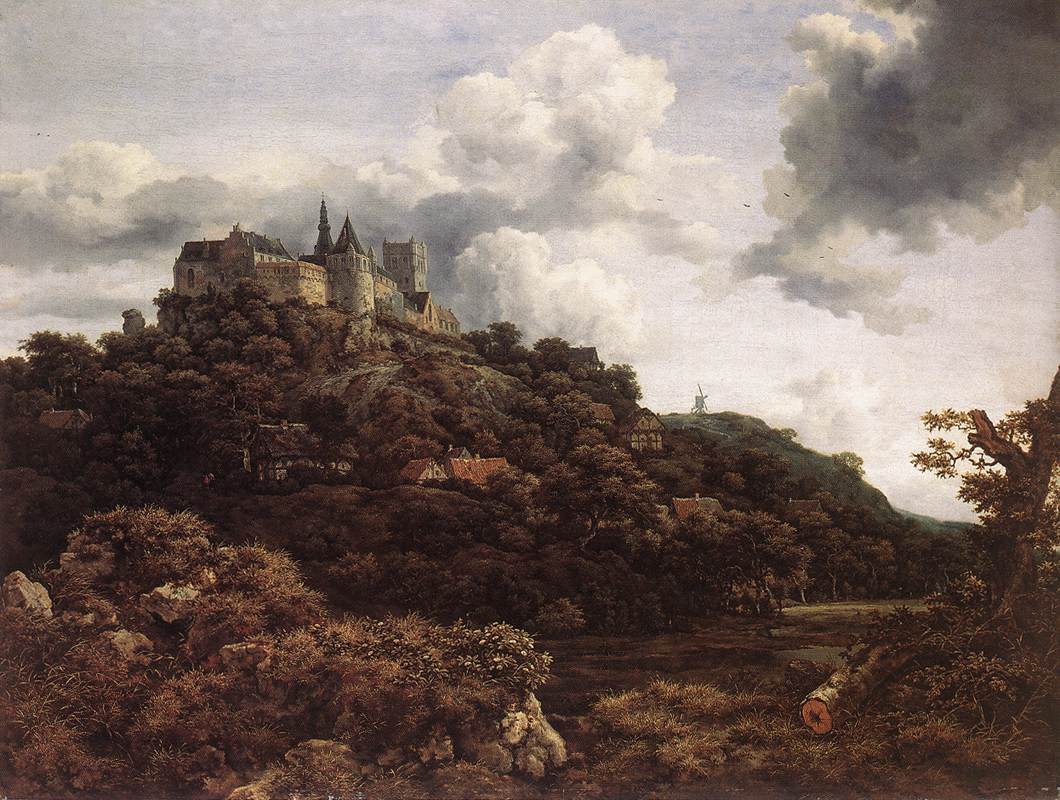
The German castle he visited in 1650, promoted by memory into a mountain fortress above a wooded gorge. Travellers who went to Bentheim after seeing Ruisdael kept reporting the same disappointment: the hill is real, and much smaller. The painting is the better country.
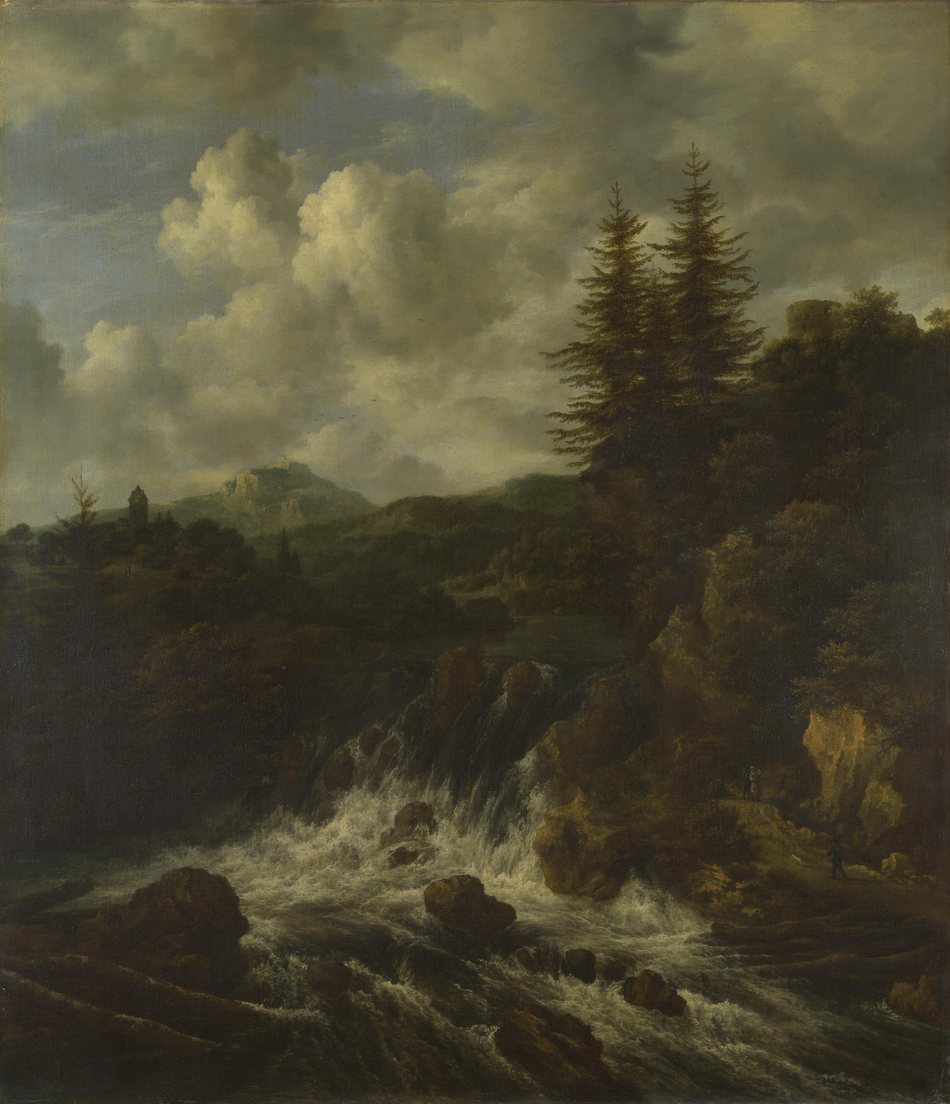
Norway by way of Haarlem: Ruisdael never crossed the sea, but Scandinavian waterfalls reached him through Allaert van Everdingen's northern pictures, and he made the genre his own — black pines, torn water, and a sky that has seen the mountains and approves.
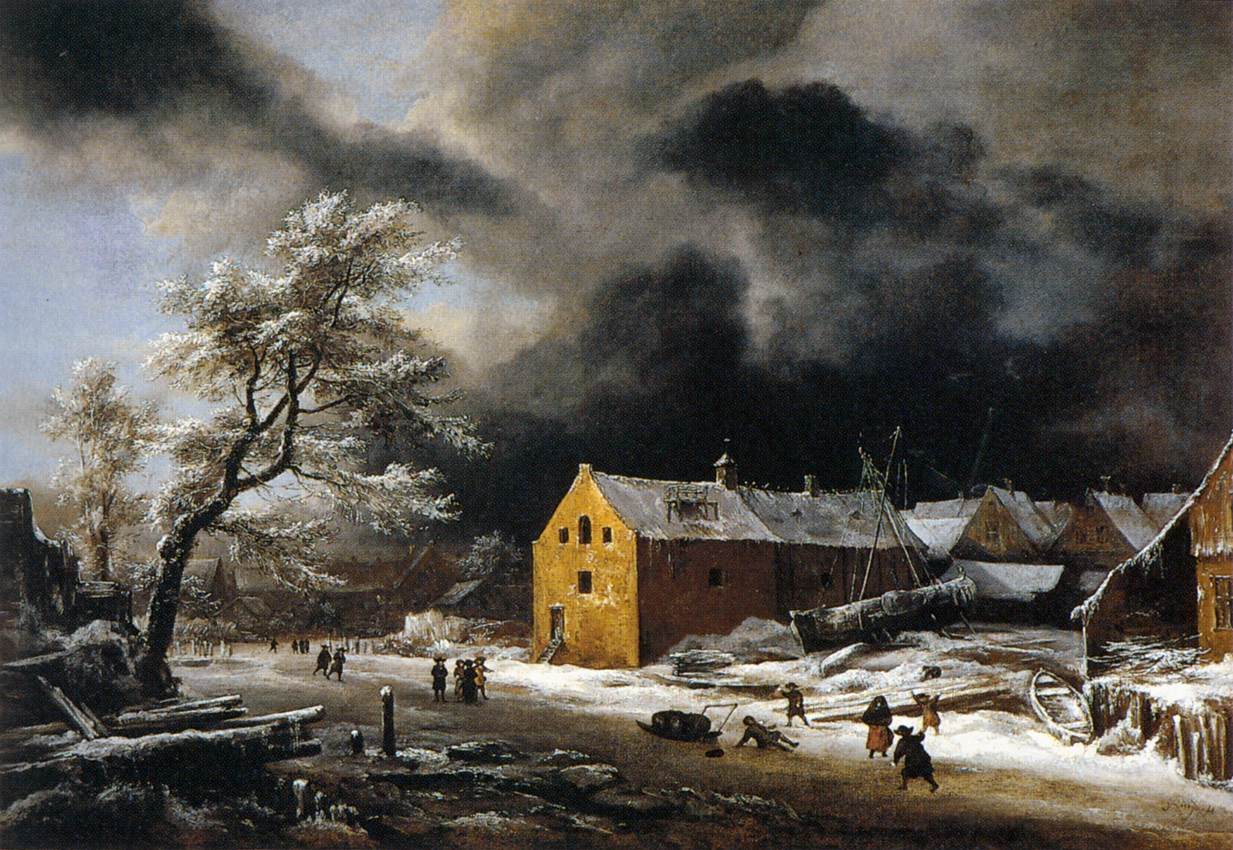
A yellow house lit like a lantern in the snow, skaters small as punctuation, and a sky the colour of wet slate. Dutch winters in his hands are never postcards: the cold has weight, and the light is rationed.
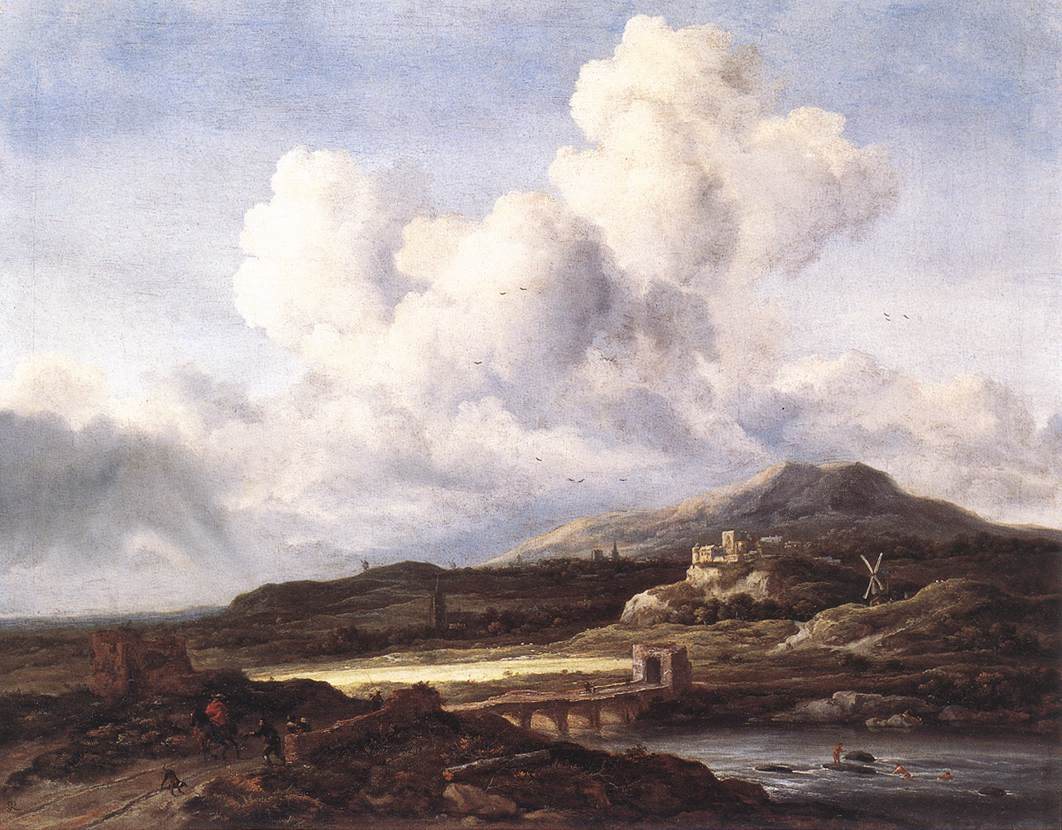
The French call it Le coup de soleil — the sunstroke: one great shaft of light breaking through cloud onto a valley, a ruined castle and a road, while the rest of the world waits in shade. Ruisdael directs light the way a stage director does: one spotlight, chosen.
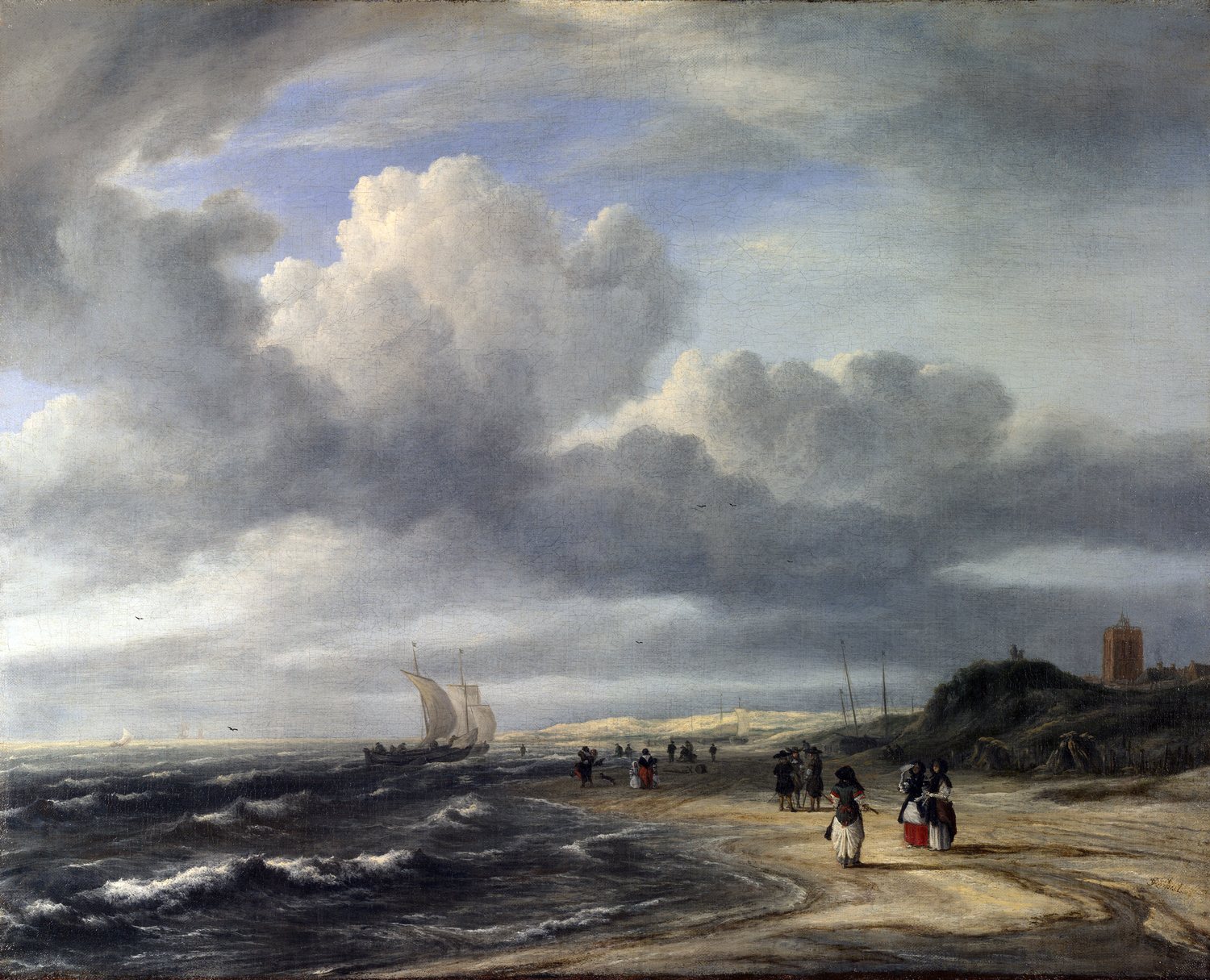
A late, great seascape of his own coast: fishing boats in the surf, figures bargaining on the sand, the dune grass bending — and over everything the enormous moving weather he had spent forty years learning to paint. The sea is Dutch, the sky is Ruisdael.
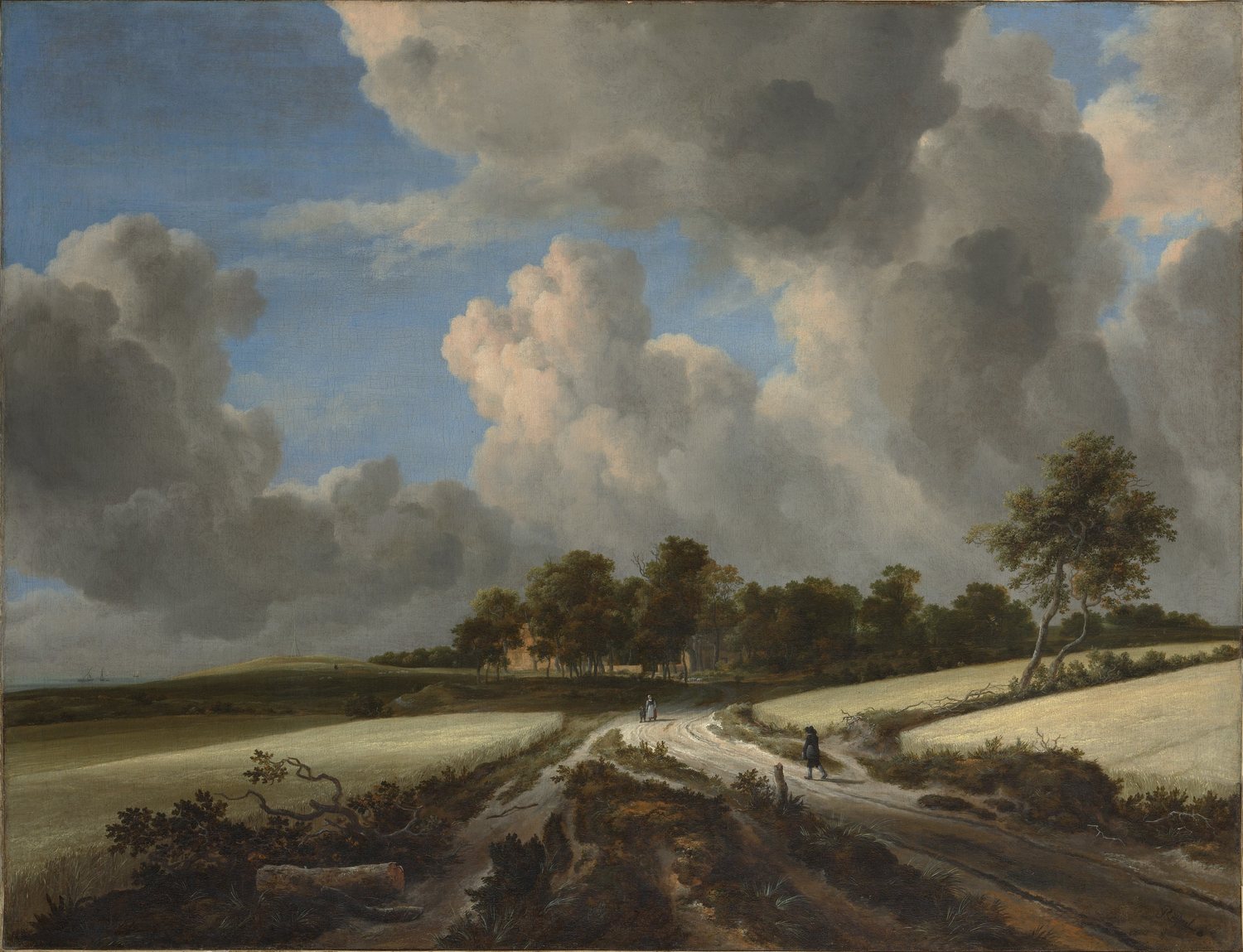
A road crossing flat wheat country under cumulus towers: almost nothing happens, and it is one of the grandest landscapes of the century. Ruisdael's late manner needs no ruin, no waterfall, no drama — just land, labour and weather, in perfect proportion.
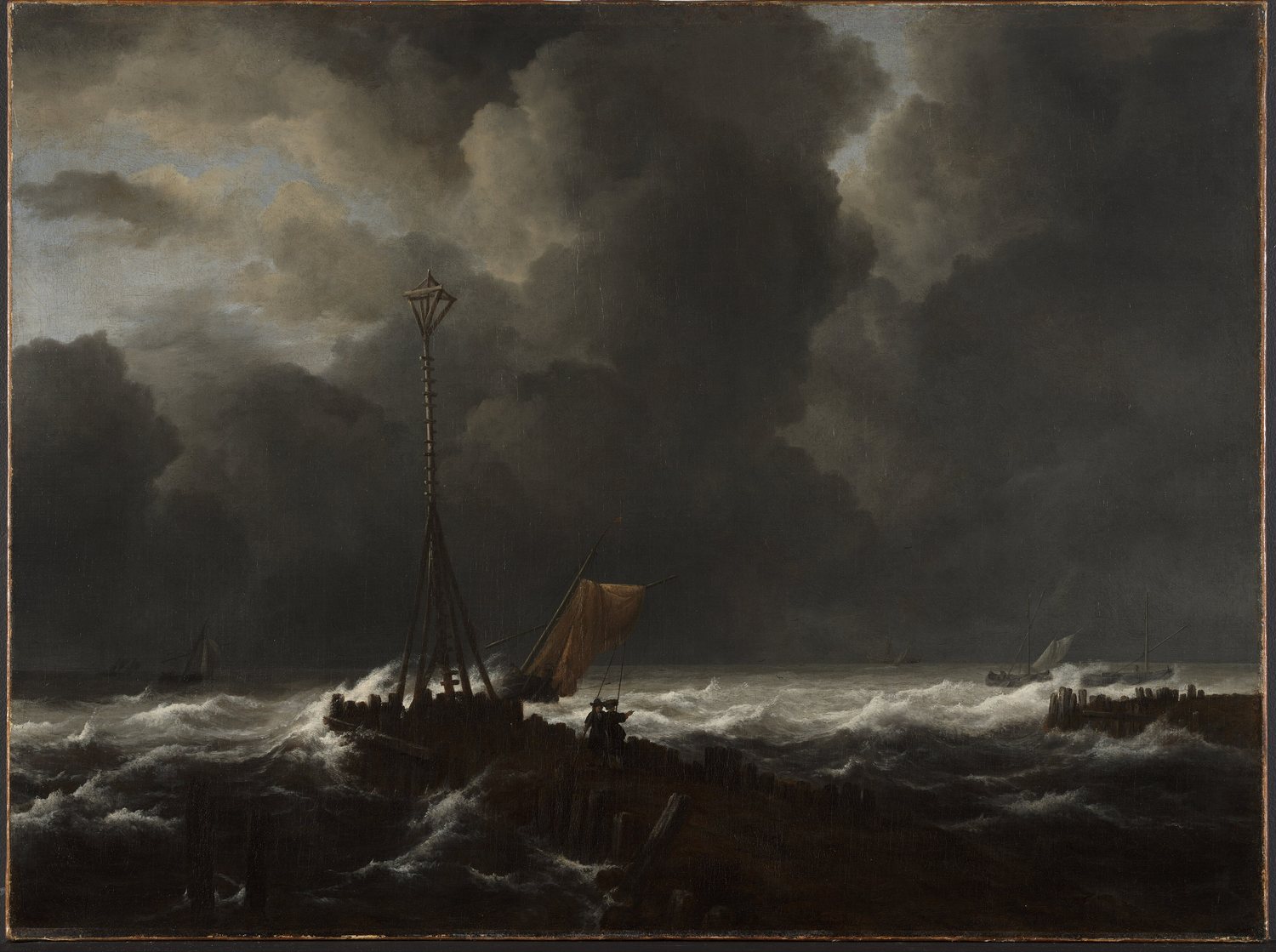
Before the calm skies, the storm: a ship labouring off a jetty in a black squall, painted when Ruisdael was twenty-four and already a master of weather at its worst. The sea pieces taught him the sky; the sky made him immortal.