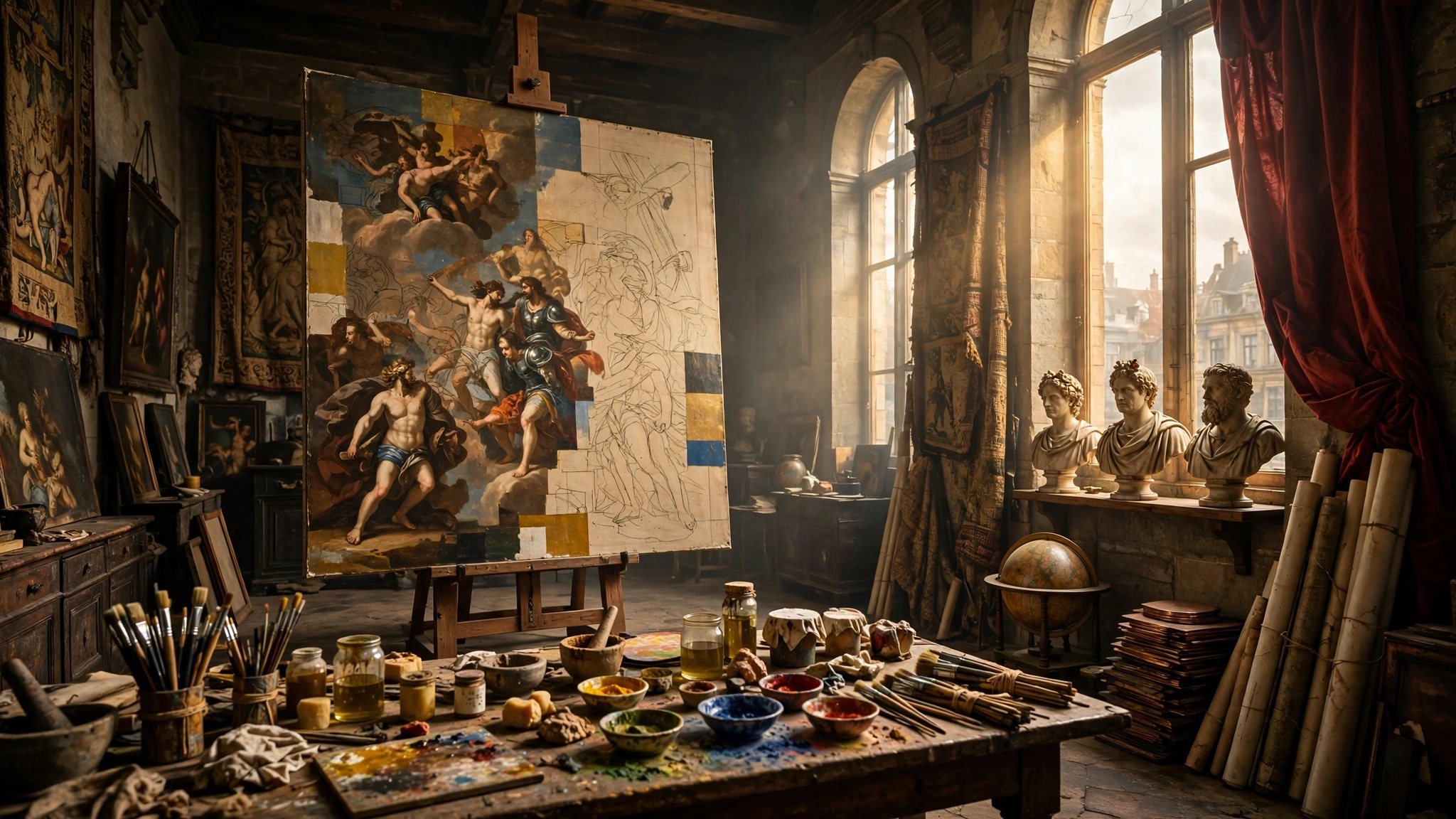
Antwerp, and everything is in motion — horses, gods, flesh, drapery, whole heavens on the wheel. Rubens ran the most productive workshop in Europe, painted like a man conducting an orchestra, and still found the hours to be a diplomat. This room is about the machinery behind the abundance: the sketch, the assistants, the recipe for flesh, and the master's hand that always returned at the end.
His house in Antwerp held a workshop run like a manufactory: Rubens invented the picture in a small oil sketch, assistants enlarged it onto the great canvas and blocked in the colours, and the master returned at the end for the faces, the hands and the light. Prices were set by how much of the work was his own hand — he wrote the tariff himself, in a letter, without embarrassment.
The invention happened on small oak panels, in oil, at speed — a whole altarpiece thought out in an afternoon, in colour, with the light already decided. Hundreds of these bozzetti survive, and many collectors prize them above the finished giants: they are the one place where every stroke is certainly his.
His flesh is built, not blended: warm lights of lead white and vermilion, a touch of red lake in the half-tones, and shadows kept cool and transparent so the body seems to glow against them. Pupils learned it as a formula. The rosy, breathing skin that half of Baroque Europe copied began as this Antwerp recipe.
Small pictures he painted on copper, whose hard surface gives an enamel finish and keeps colours jewel-bright for centuries; altarpieces on oak panel; and the giants on canvas — woven in pieces and sewn together, some over six metres wide, rolled for shipping to the courts of Madrid, Paris and London like carpets of war and love.
In Madrid he copied Titian's entire royal collection, brush in hand, canvas beside canvas — the way musicians practise other men's scores. He bought drawings by dead masters and retouched them with his own hand, arguing with the past in chalk. Nothing in his art is shy about its teachers; he turned inheritance into appetite.
Some fourteen hundred works carry his name. The day explains it: up at four, Mass, then painting while a reader read Plutarch or Tacitus aloud, a ride in the afternoon, letters in seven languages in the evening — and between commissions, embassies for the Archduchess in Brussels, Madrid and London. He was not the fastest hand in Europe. He was the best-organised life.
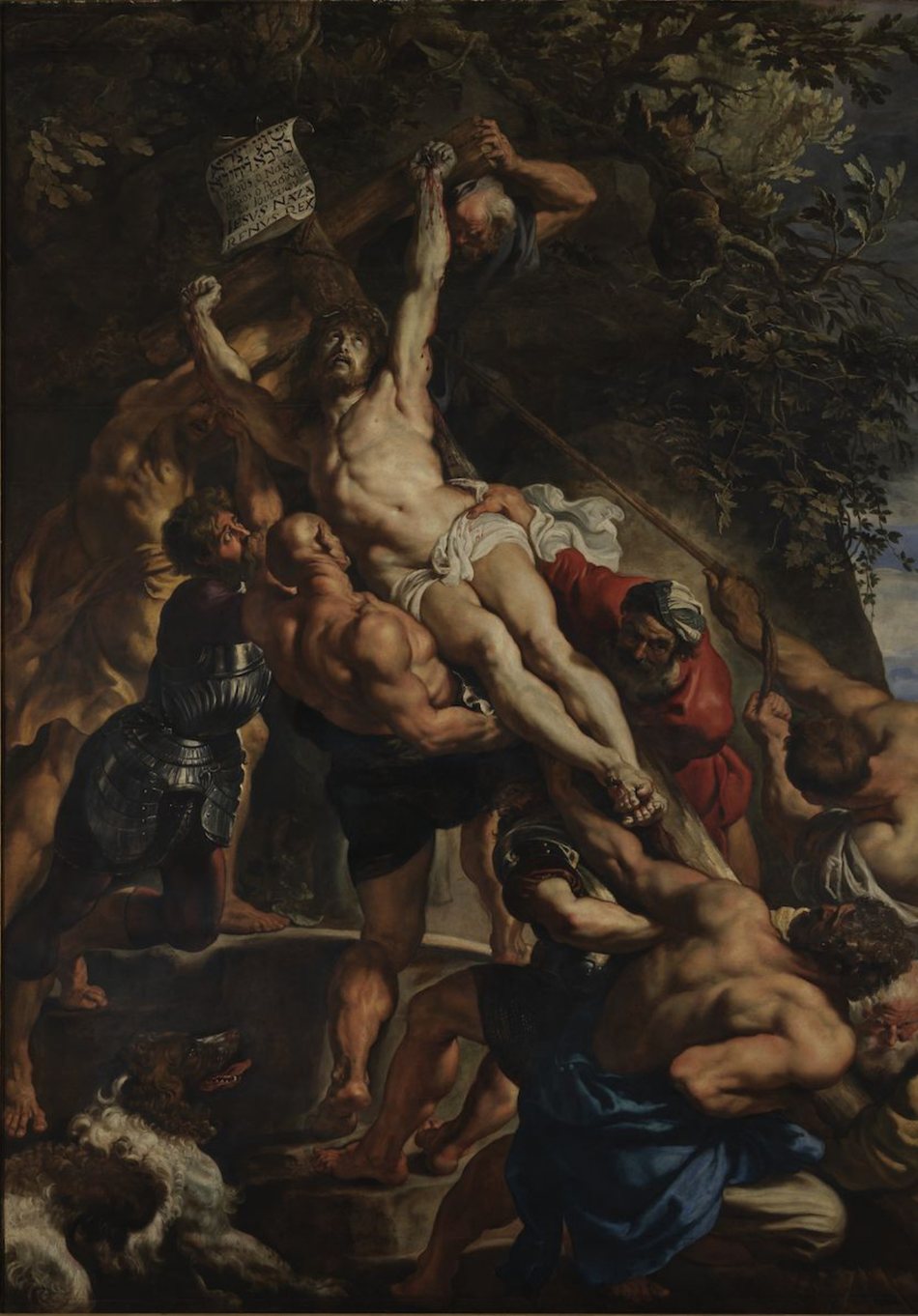
Painted straight after his return from Italy, for the church of St Walburga: a gang of executioners hauling the cross upright like one machine of muscle, on a diagonal learned from Caravaggio and Tintoretto. The young Rubens announces himself — Antwerp had never seen bodies work this hard.
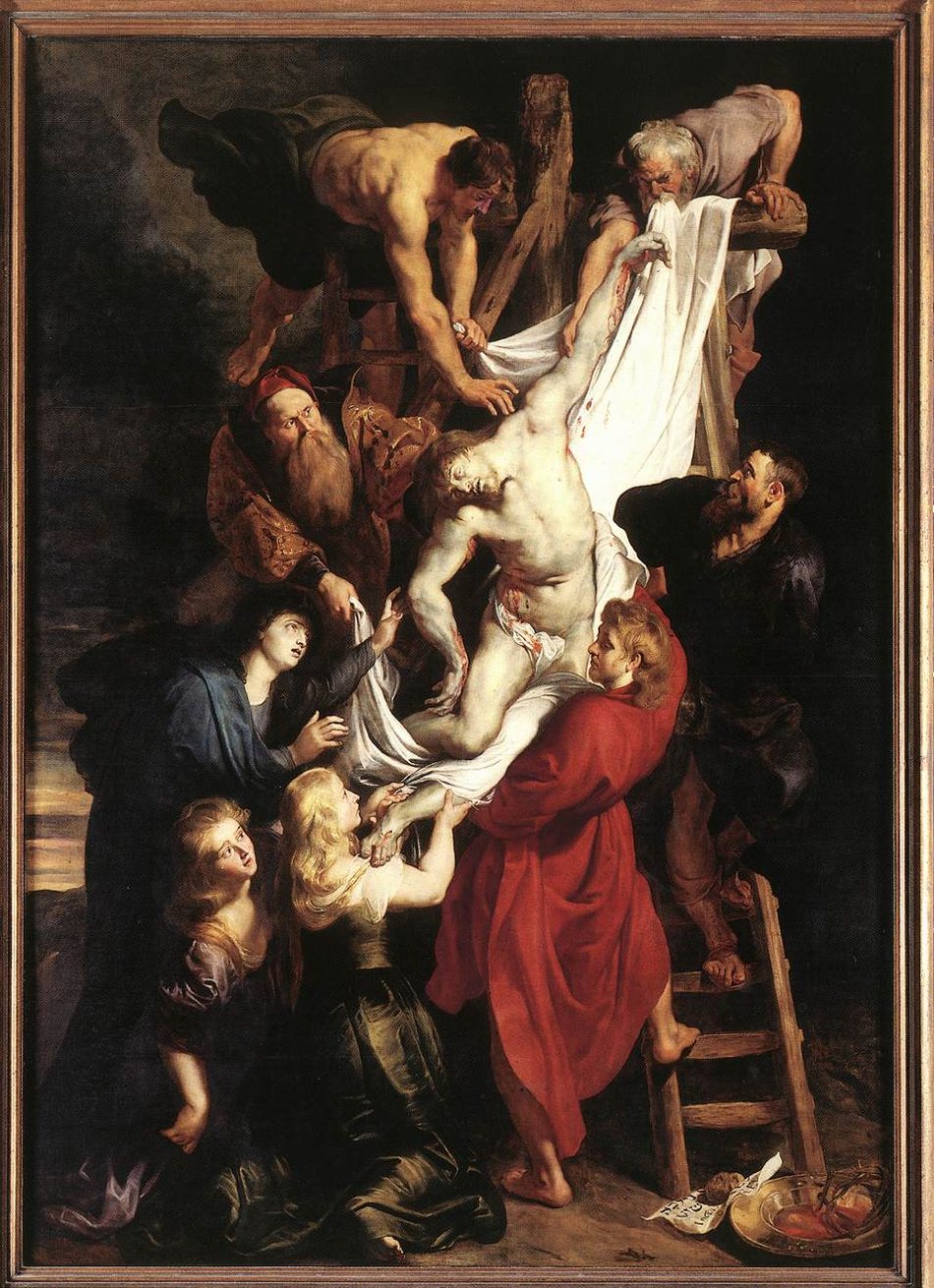
The commission came from the arquebusiers' guild, whose patron was St Christopher — the Christ-bearer — and Rubens hides the pun in the side wings. In the centre, the white shroud carries the dead Christ down like a sail full of wind, the most famous piece of cloth in Flemish painting.
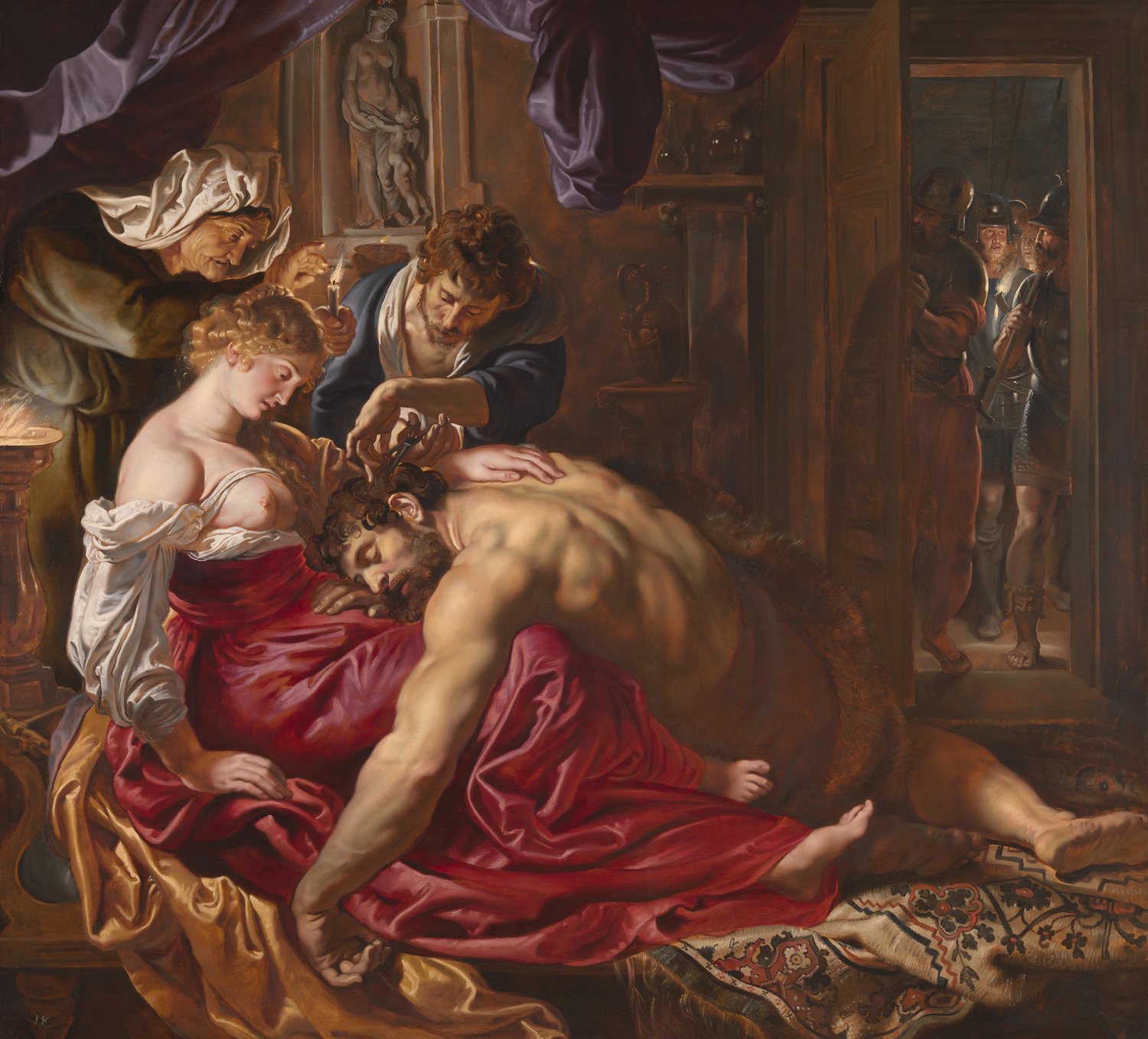
Painted for Nicolaas Rockox, burgomaster of Antwerp, to hang in his great hall. The barber's scissors are already at work, Philistine soldiers wait at the door, and the old woman watching is a procuress borrowed from Caravaggio's followers — a whole tragedy lit by one candle and a brazier.
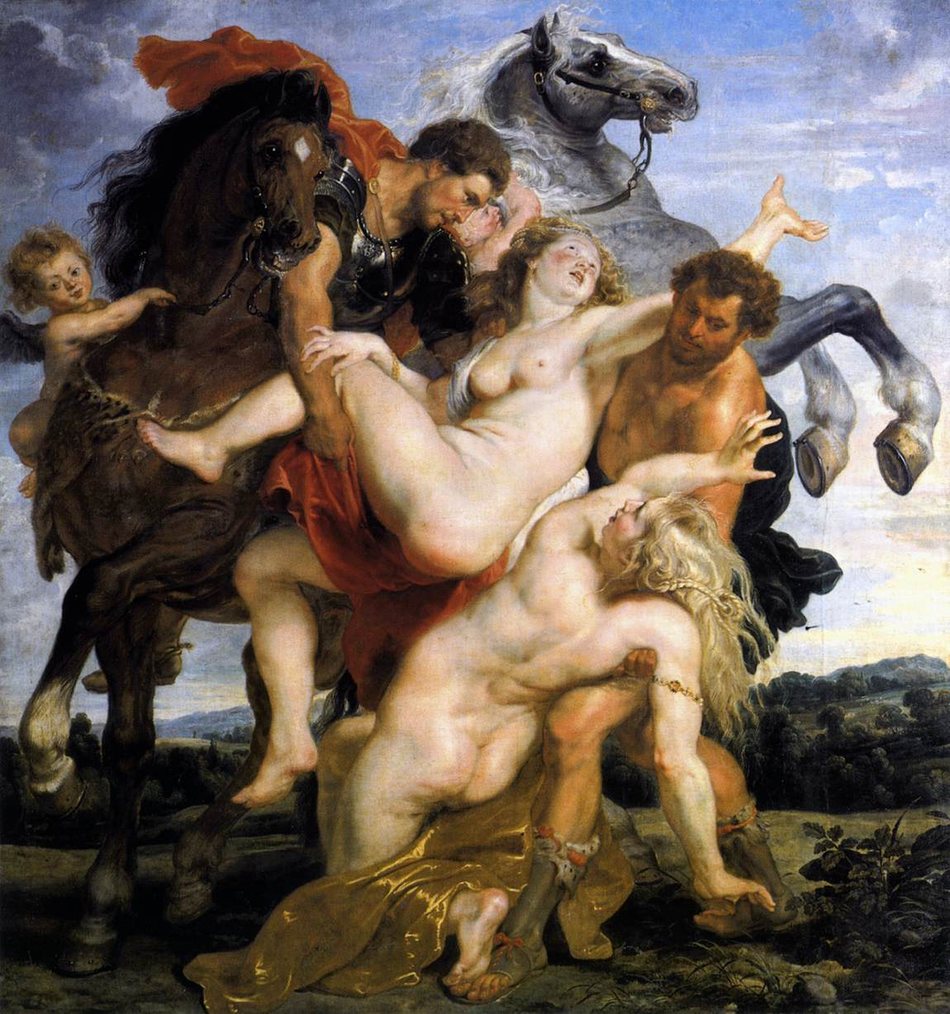
Castor and Pollux seize their brides in one rotating knot of bodies — rearing horses, armour, silk and bare flesh interlocked like a machine with no loose parts. Three textures at full gallop, and not a brushstroke out of place: this is the workshop at the height of its powers.
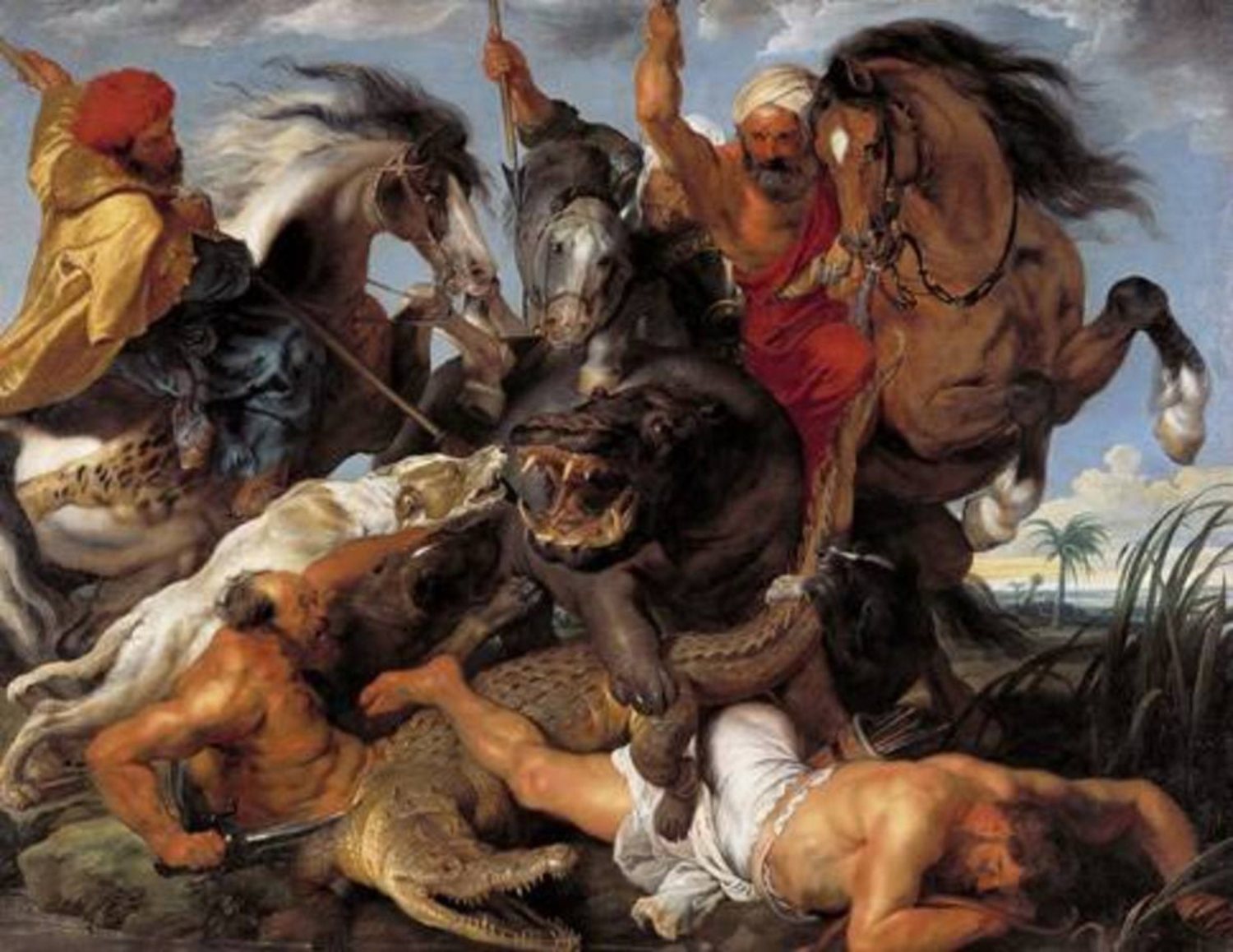
Rubens had never seen a hippopotamus. He built his from a stuffed hide that had reached Europe and from travellers' prints — and the beast still convinces utterly, which tells you the real subject: not zoology, but the organised violence of men, horses and dogs in one diagonal charge.
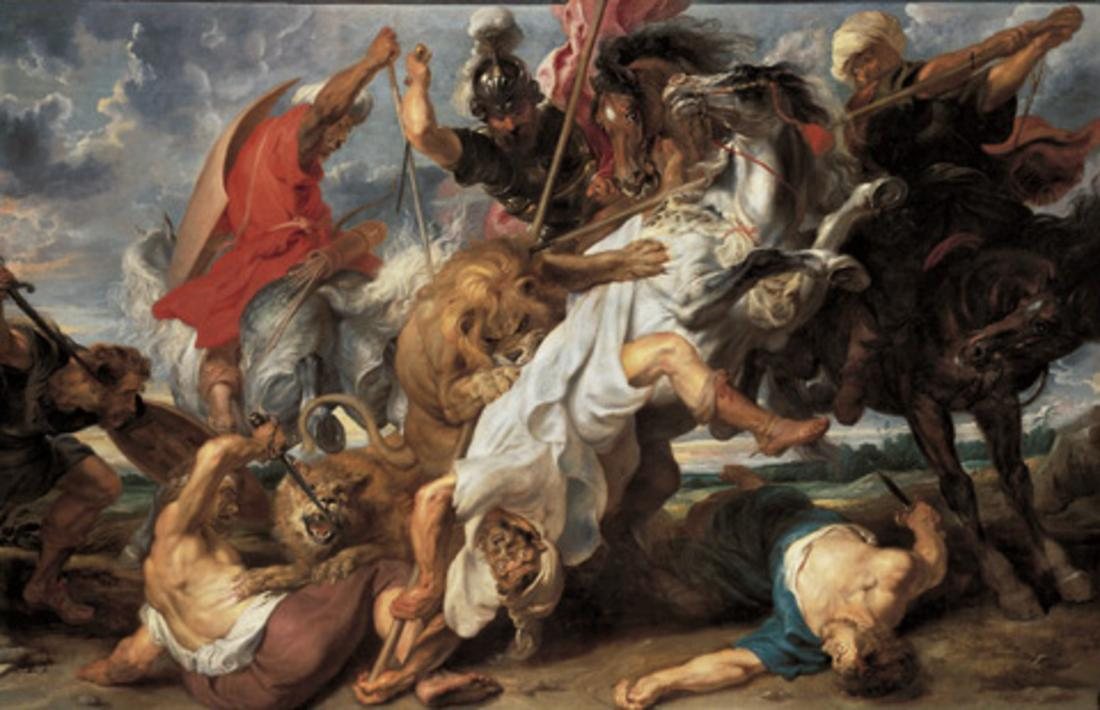
The last and wildest of the great hunts — a whirlpool of riders, rearing horses and lions that has no foreground and no rest. After this one he gave the hunts up; the courts' walls, he remarked, were full. He had painted the subject to its limit, and he knew it.
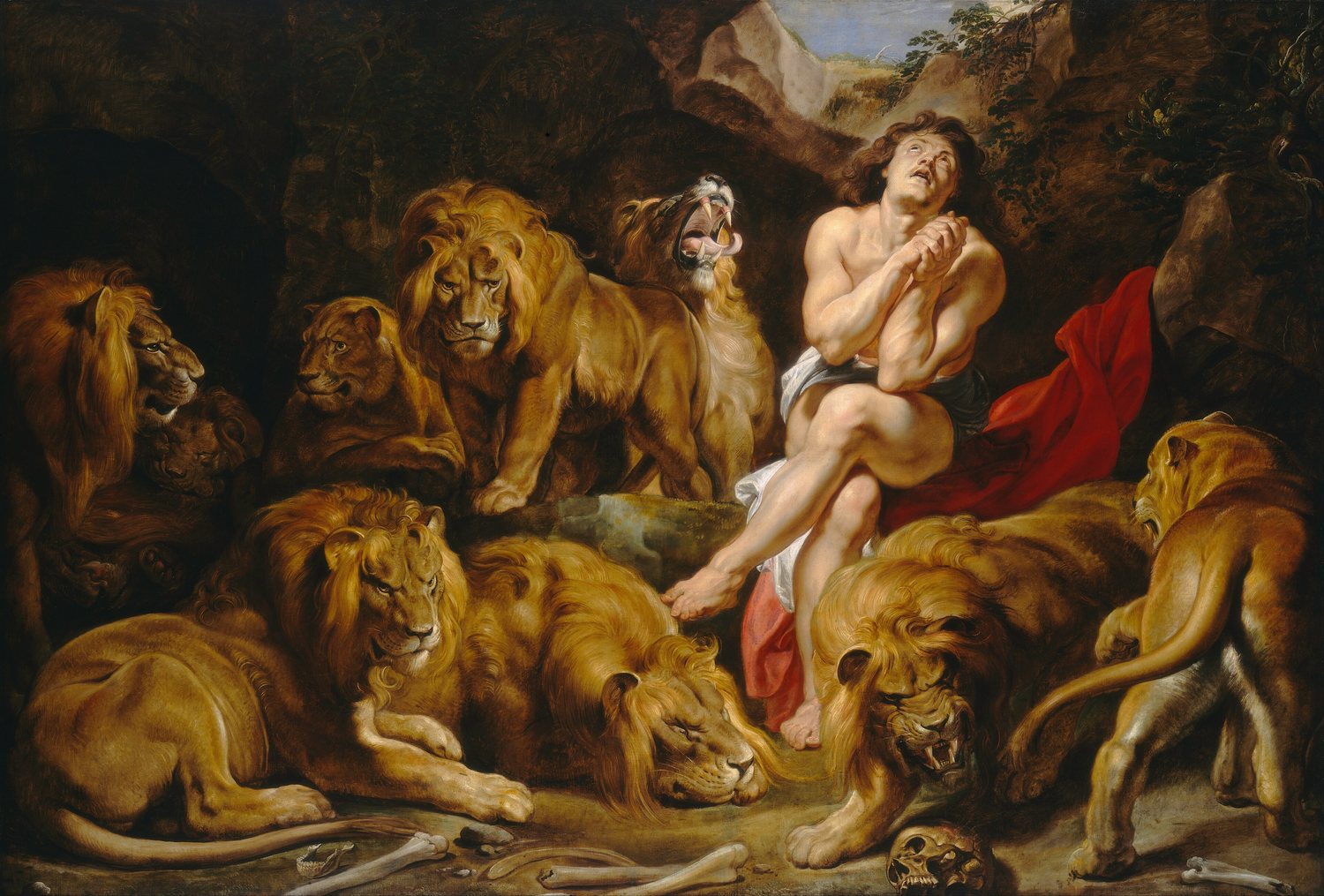
The lions were studied from life — from the Archduke's menagerie in Brussels, where Rubens kept his eye on the real animals' muscle and patience. Daniel prays at the centre of ten lions, and the morning light entering the den is painted like the answer arriving.
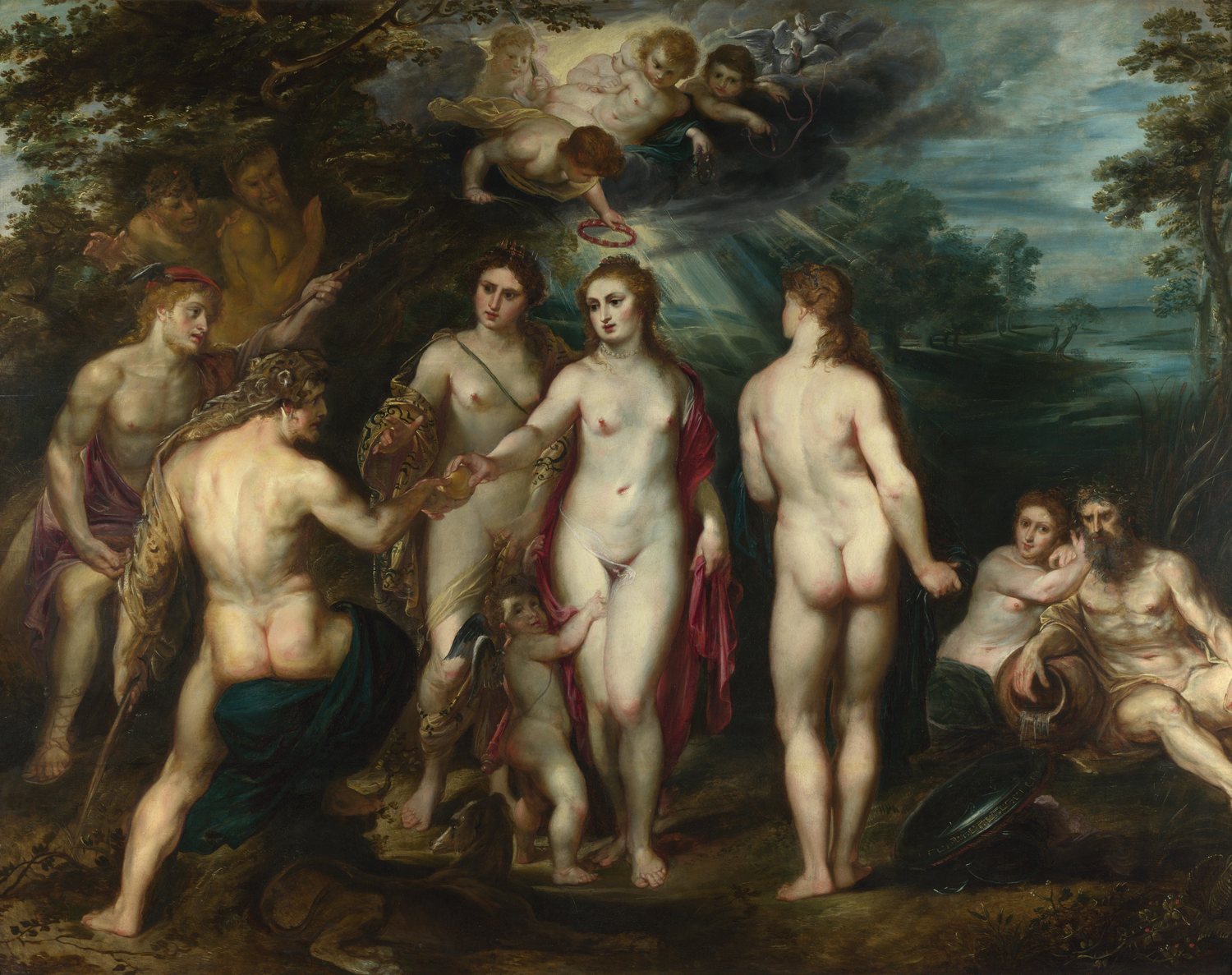
He returned to this myth all his life — the first version at twenty-three, this one in his late fifties. Paris holds the apple and hesitates; the three goddesses glow with the famous Rubens flesh; and the real judgment, the picture quietly suggests, was never in doubt.
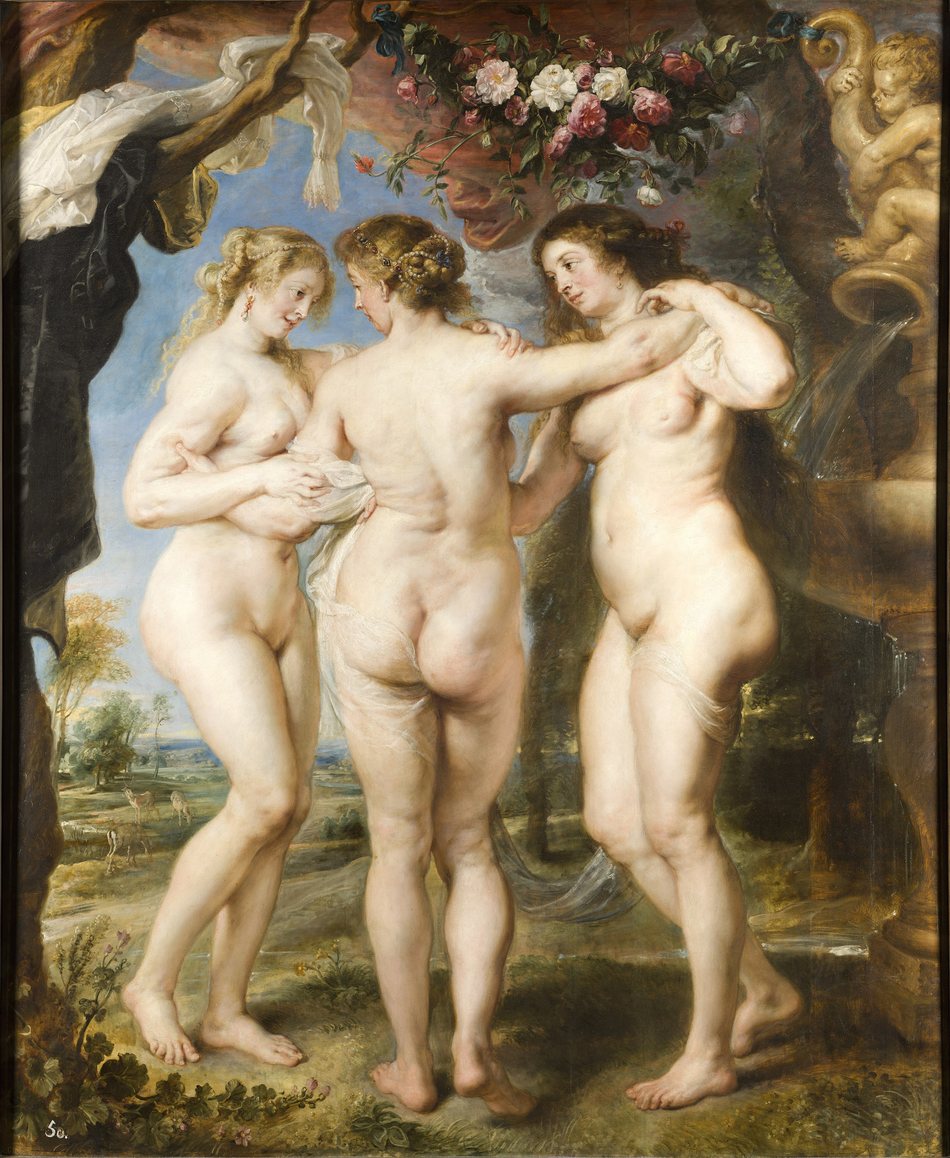
The Graces were modelled on Hélène Fourment, the sixteen-year-old he married at fifty-three, and on her sister. The picture never left his own house in his lifetime — it hung in his collection, not on the market. Some paintings are inventory; this one was a declaration.
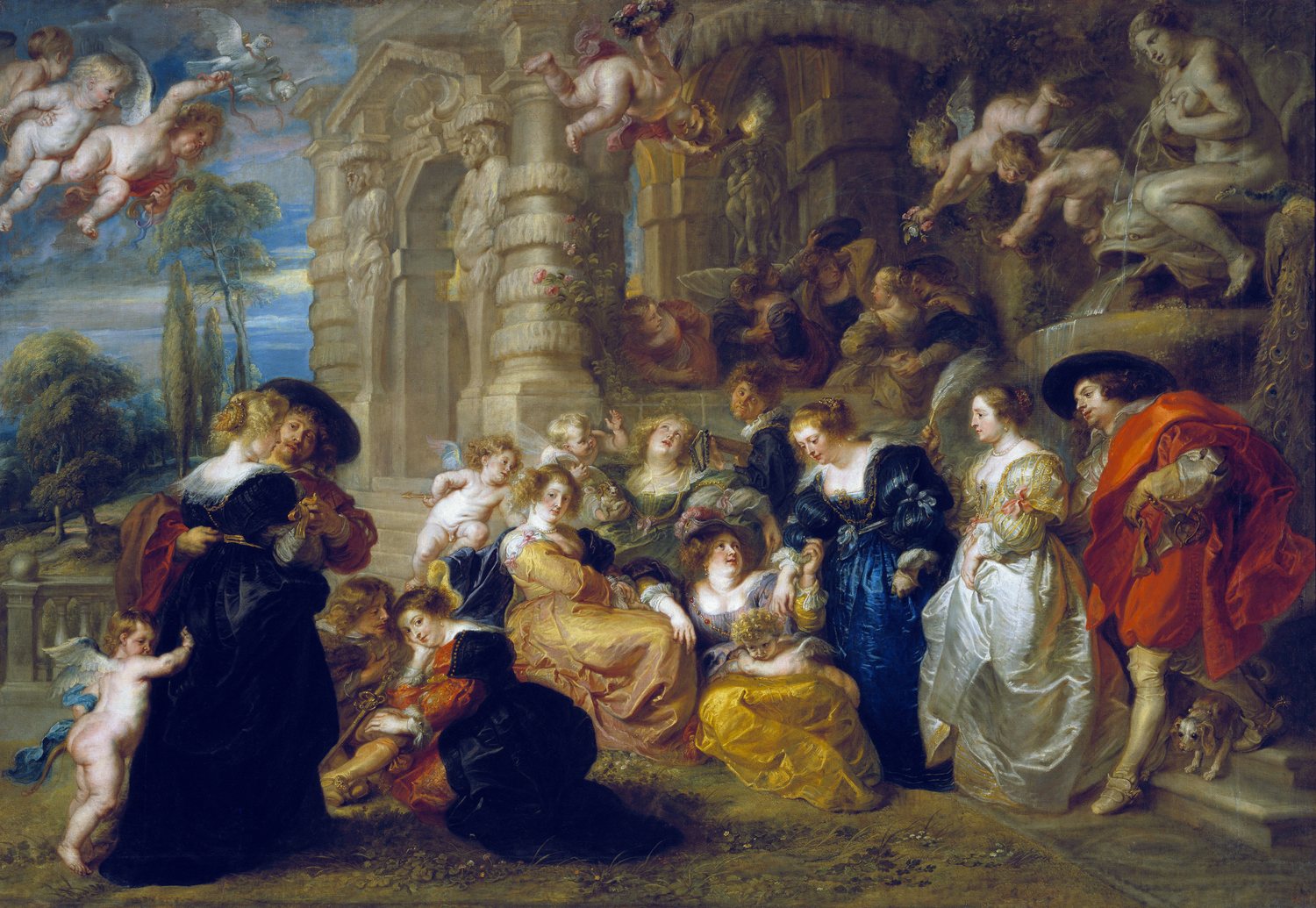
Lovers in silk drift toward a temple of Juno, goddess of marriage, while cupids gently push the hesitant forward. It is Rubens's own second marriage turned into a whole society — the painter and Hélène among the company, courtship painted as a garden party at golden hour.
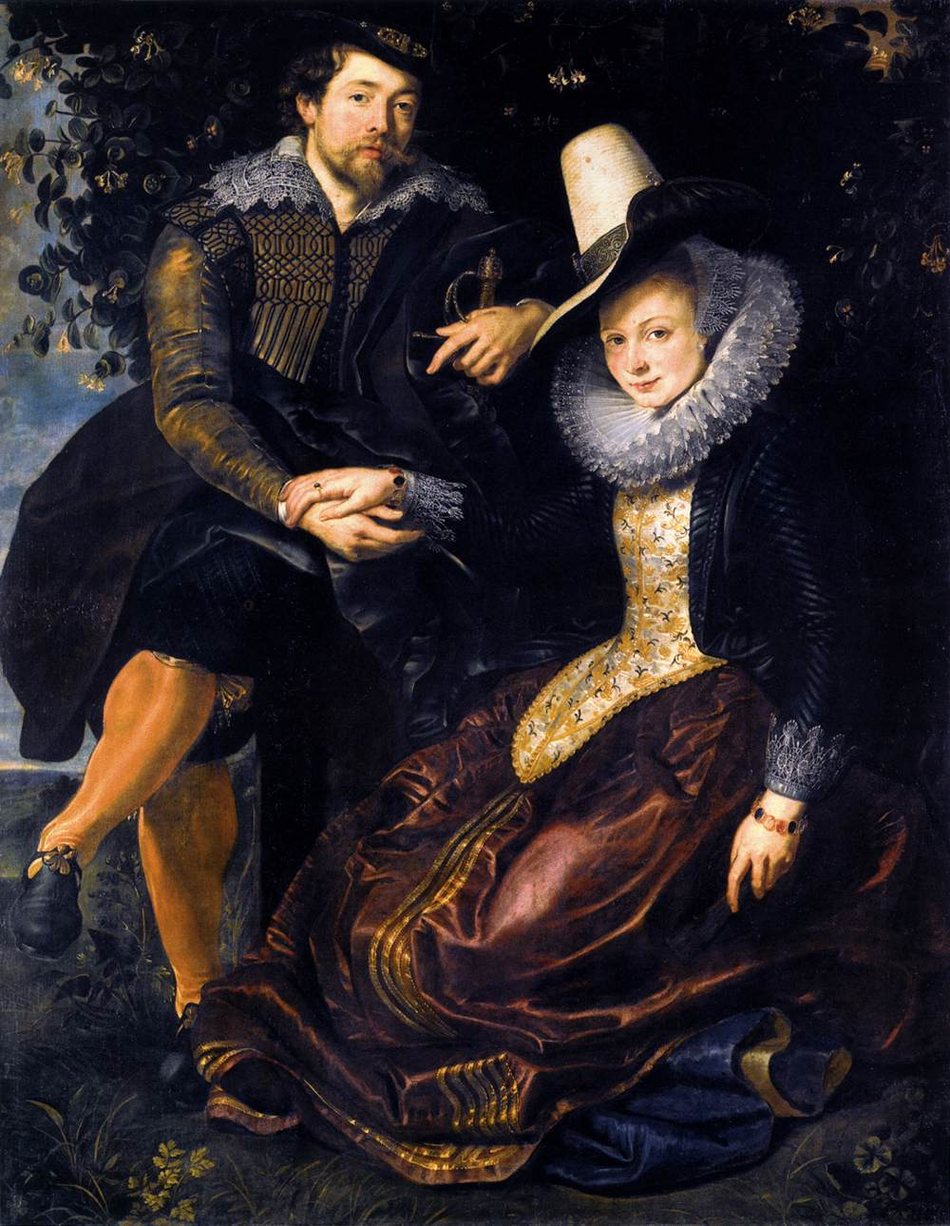
His first marriage portrait, painted at thirty-two: the two of them under a honeysuckle bower, right hands joined, his other hand on his sword. He presents himself as a gentleman, not a craftsman — no brush, no palette. Isabella died of the plague in 1626, at thirty-four.
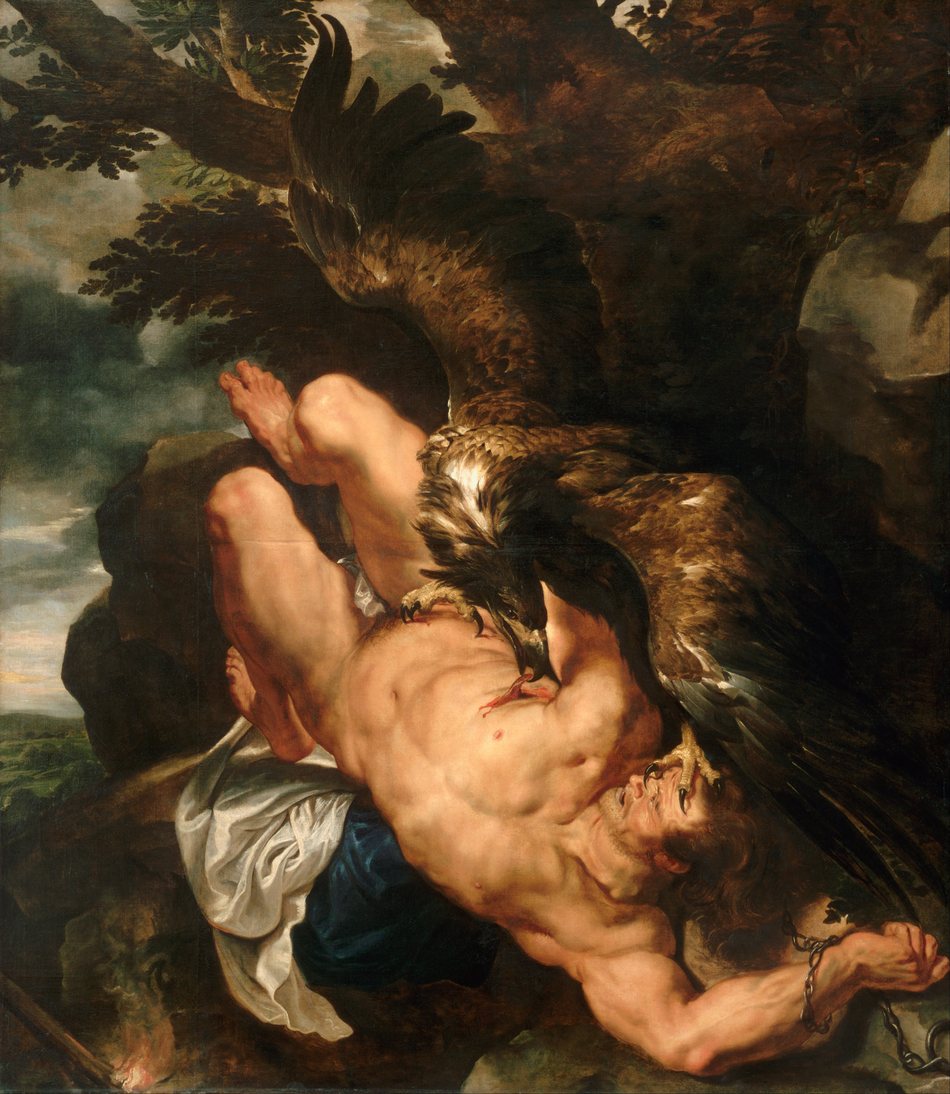
Two masters in one canvas: Rubens painted Prometheus, and Frans Snyders — the workshop's animal specialist — painted the eagle tearing at the liver, the largest eagle in European painting. The seam between the two hands is invisible, because the whole thing was planned from one sketch.
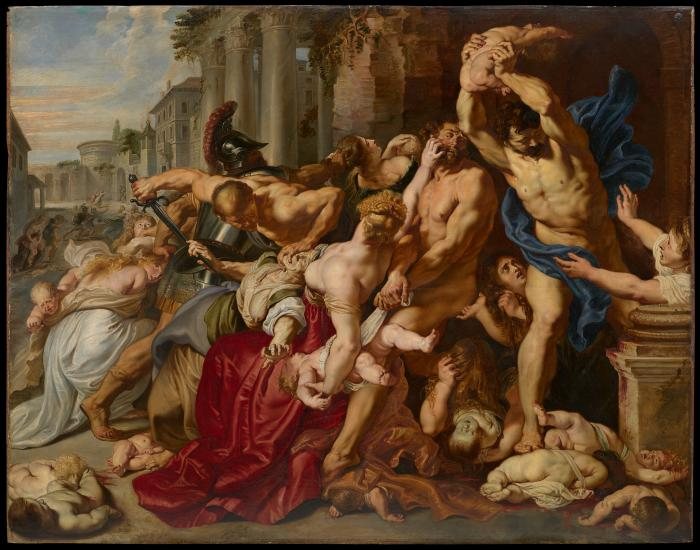
Painted when he was thirty-four, in the middle of another war of religion. In 2002 this very panel — long dismissed as a mere copy — was recognised as Rubens's own shortly before auction and sold for £49.5 million, then a record for an Old Master painting. The buyer, Ken Thomson, gave it to Toronto.
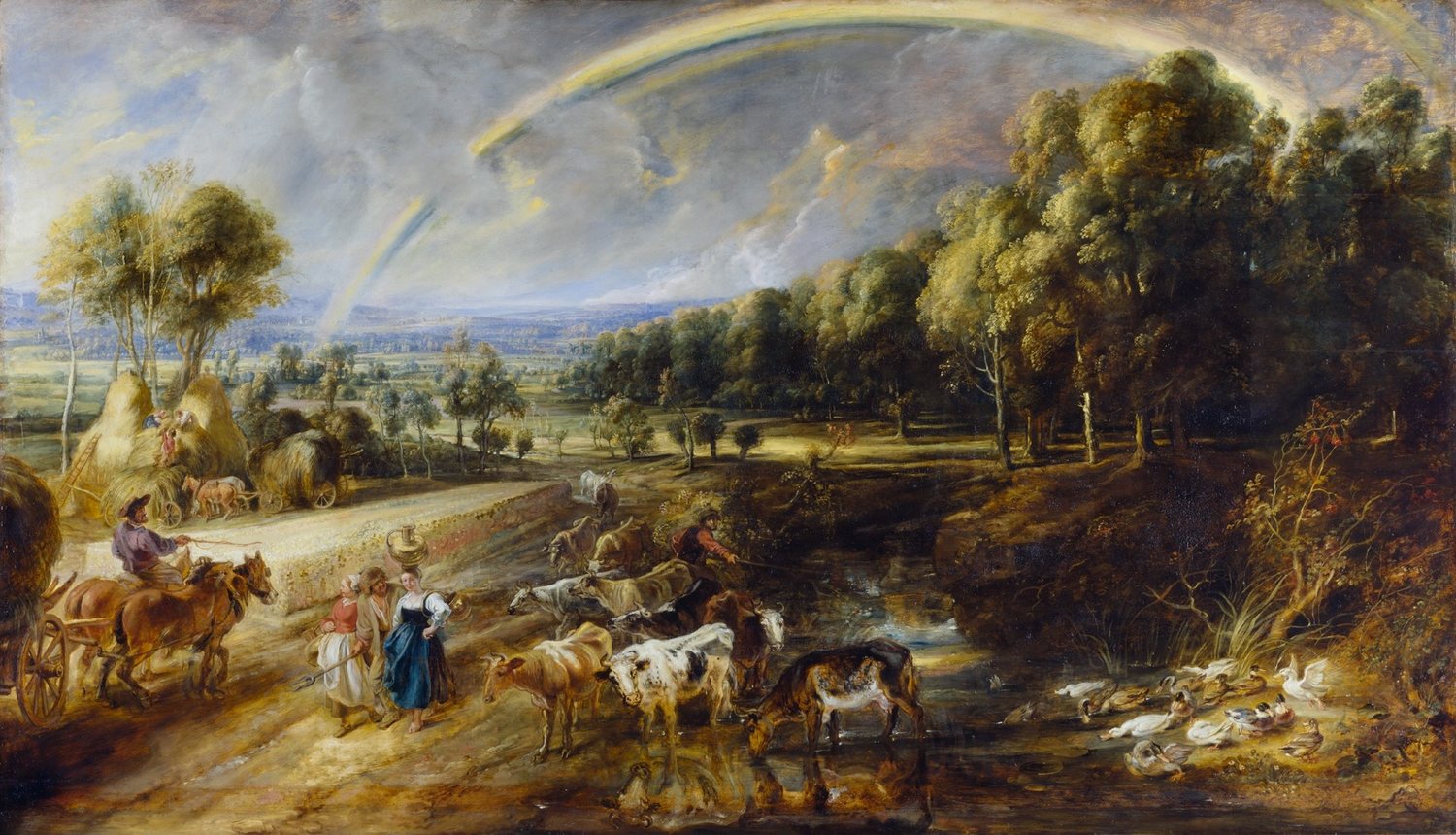
Late Rubens, retired to the castle of Steen he had bought with a diplomat-painter's fortune: his own land under a rainbow, haymakers and a wagon small beneath an enormous Flemish sky. The battles are over; the drama has become weather, and the weather is magnificent.
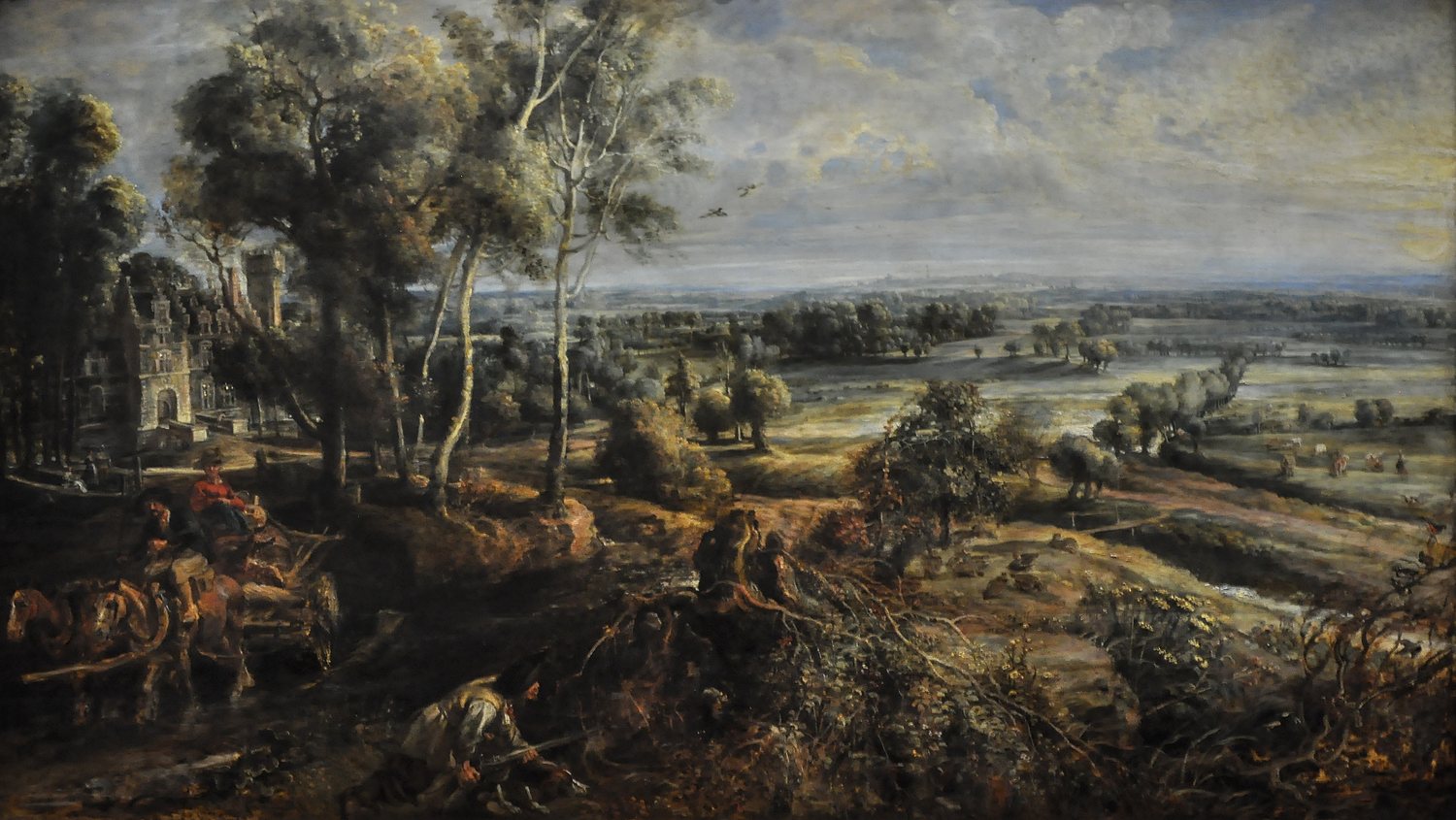
His own manor at dawn — a hunter setting out with his dogs, a cart rolling to market, a woman with a basket — and the low sun gilding everything the painter owned. It is the companion to the Rainbow Landscape: the two panels of a man surveying, at last, his own ground.
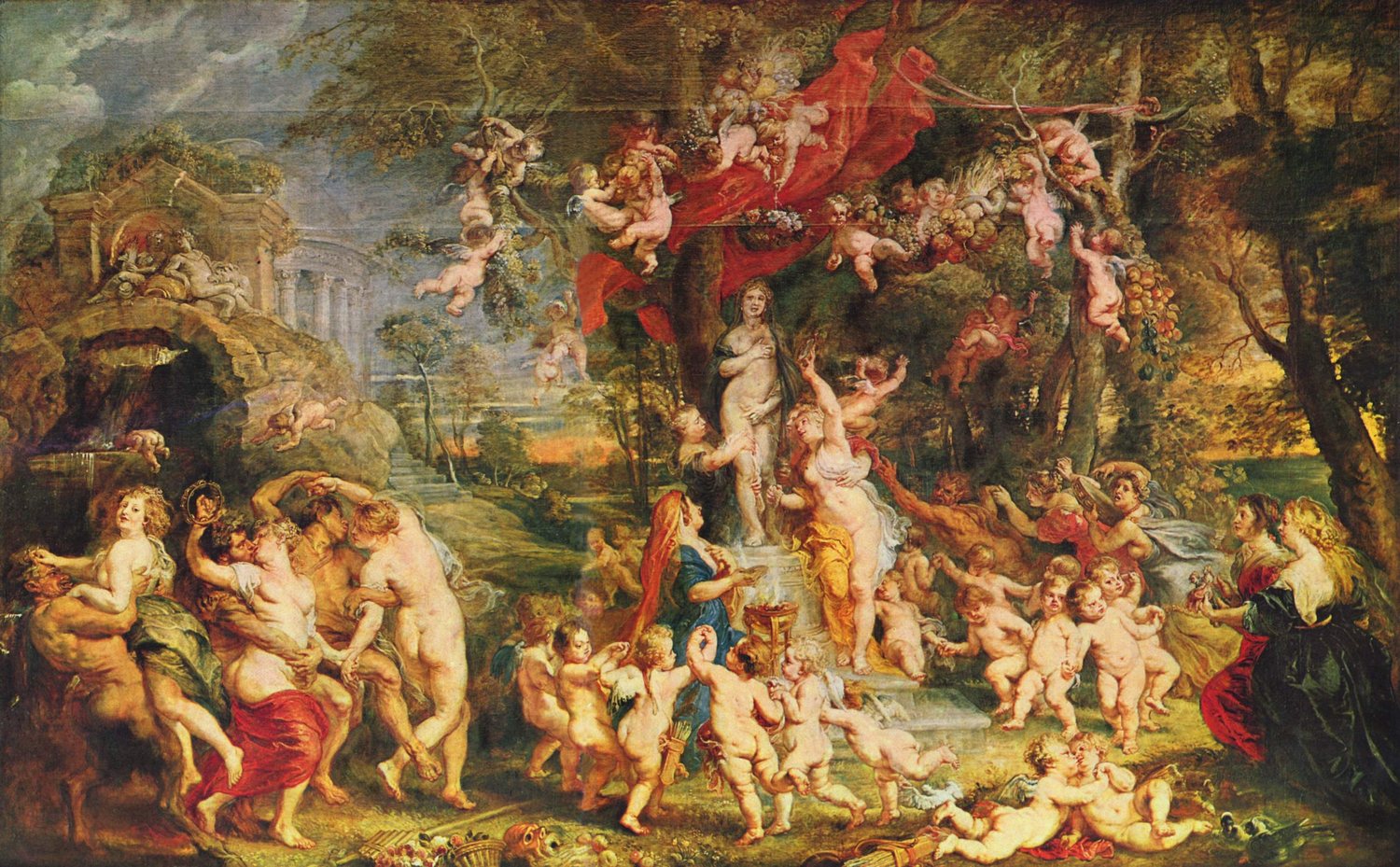
Built on Titian's Worship of Venus, which Rubens had copied brush-to-canvas in Madrid years before: nymphs, satyrs and a crowd of children offer fruit and garlands to the goddess's statue. An antique festival rebuilt from memory — his memory of another master's painting, worn like his own.
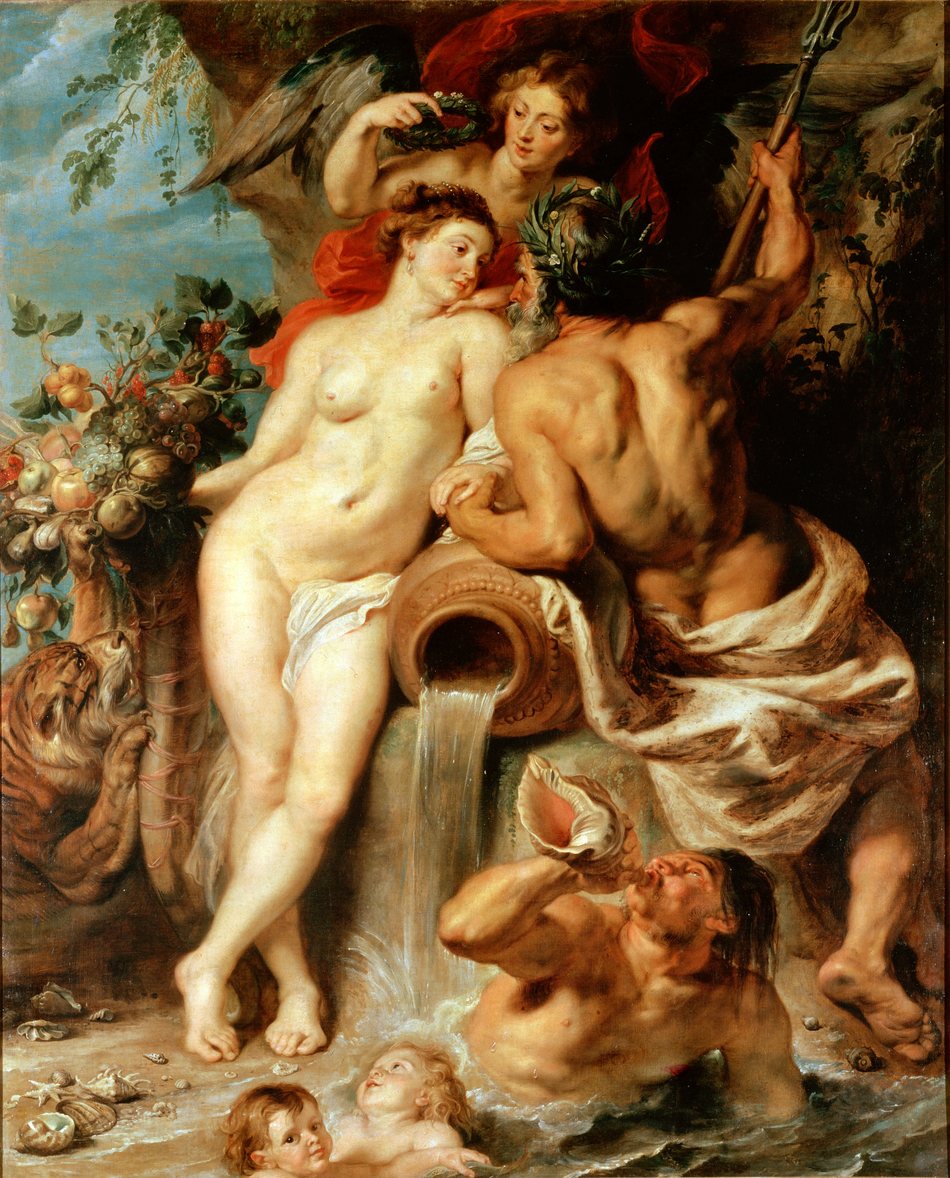
Cybele, earth, and Neptune, water, join hands over a cornucopia — Antwerp and its river the Scheldt painted as a marriage. The city's wealth came from exactly this union, and Rubens gives the allegory two of the most splendid bodies he ever painted.
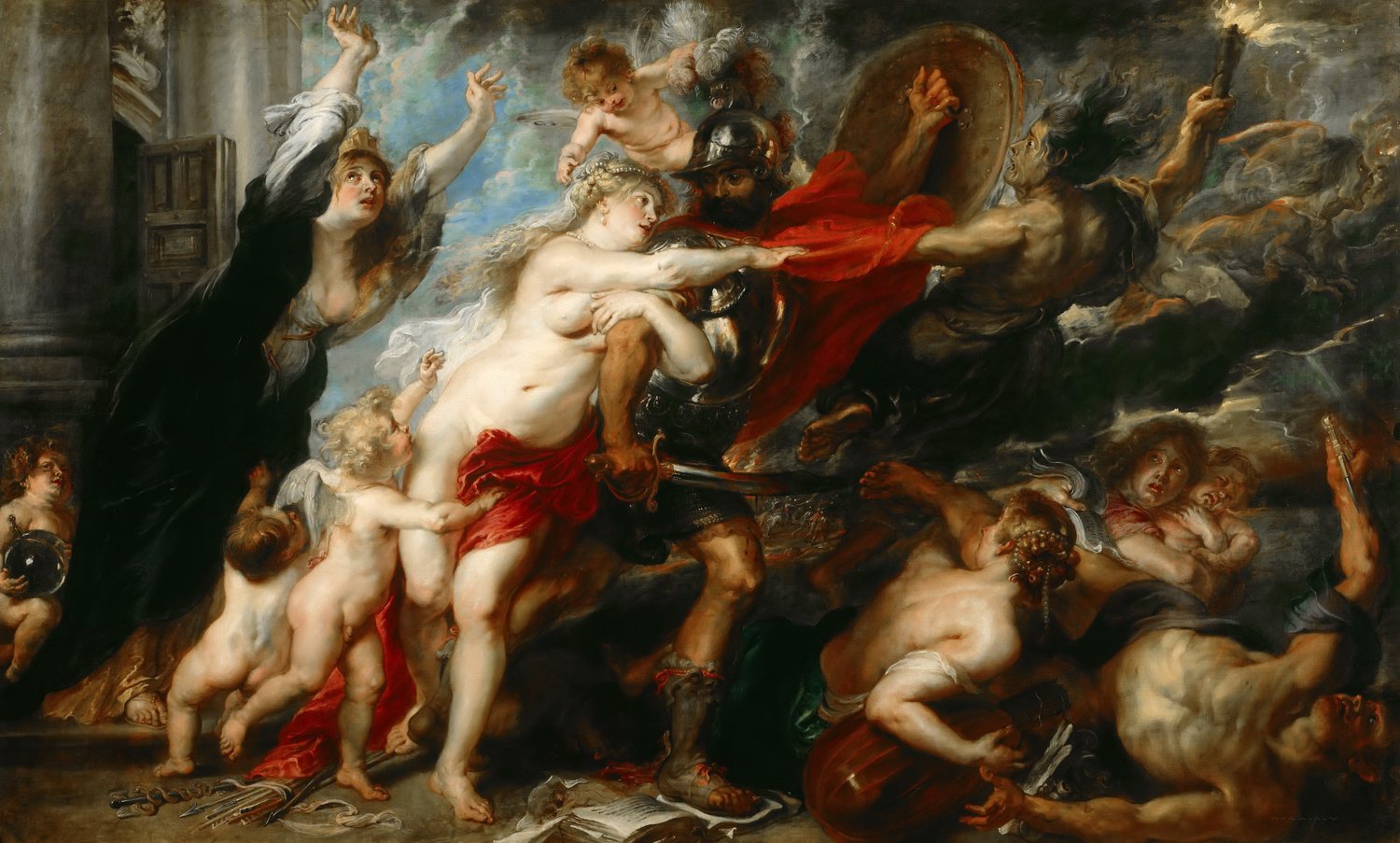
He explained this picture himself in a famous letter: Mars storms forward dragging ruin, Venus pulls at his arm in vain, a woman in black — Europe — mourns beside them, and books and paintings are trampled underfoot. The diplomat who read war's paperwork painted what the paperwork meant.
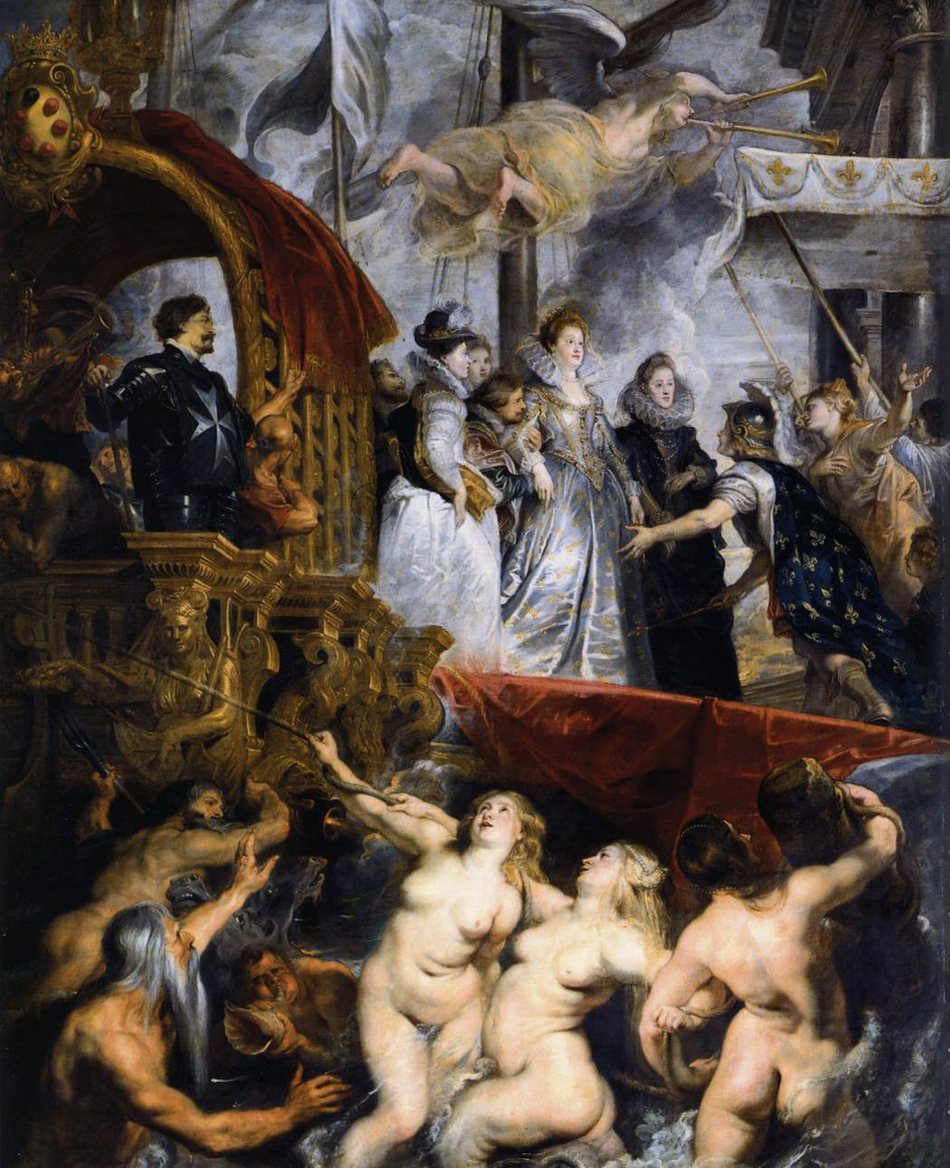
From the cycle of twenty-four enormous canvases Rubens painted for the Queen Mother of France — a whole life in allegory, produced in about three years by the master and his workshop. Sea-gods and nereids rise from the harbour water of Marseilles to welcome a formidably political queen.
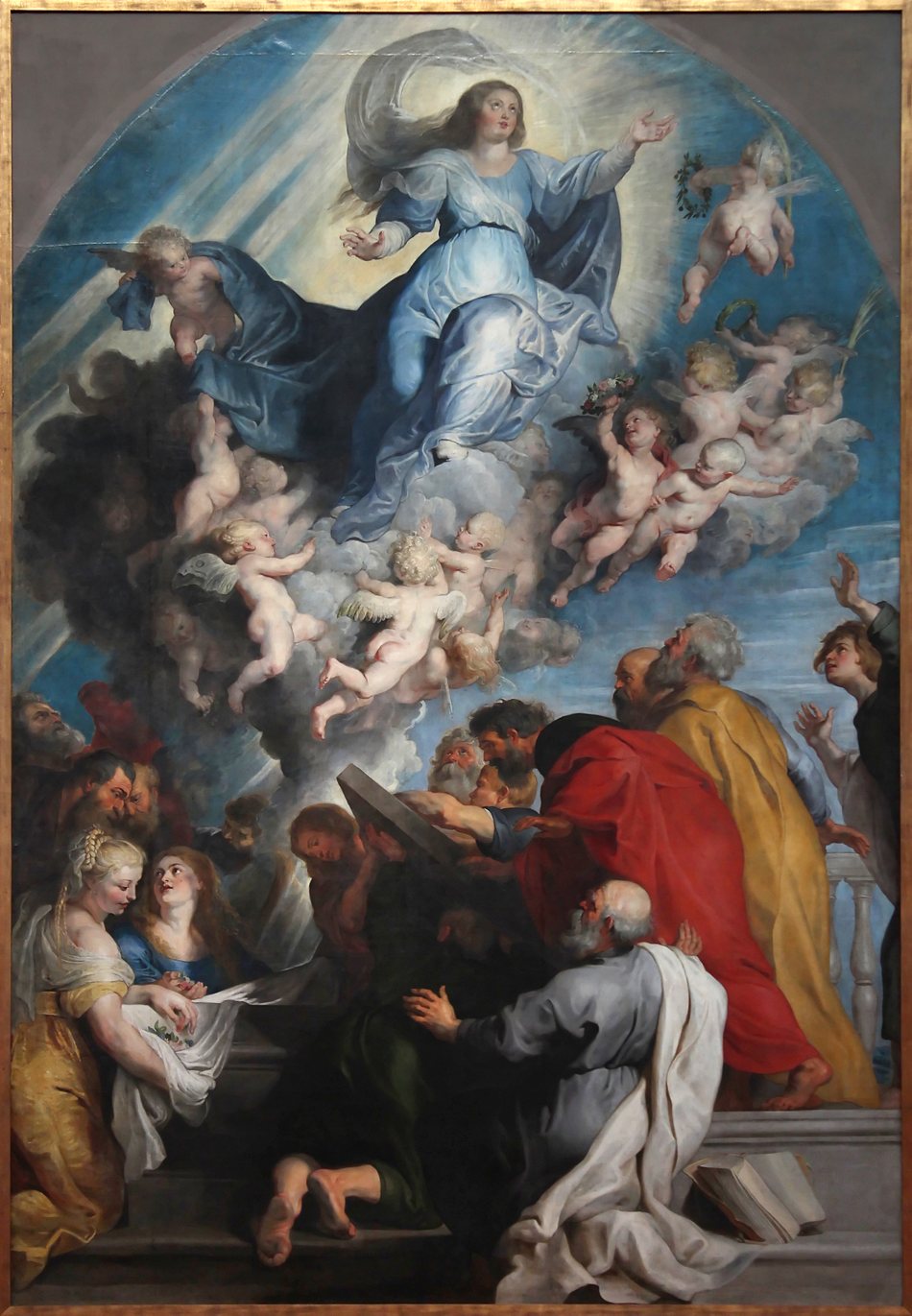
The high altarpiece of Antwerp Cathedral: Mary whirls upward in a spiral of angels, calculated to be seen from far below, by candlelight, over the heads of a congregation. Rubens worked out the foreshortening for a kneeling viewer — the picture is aimed at your neck, and it hits.