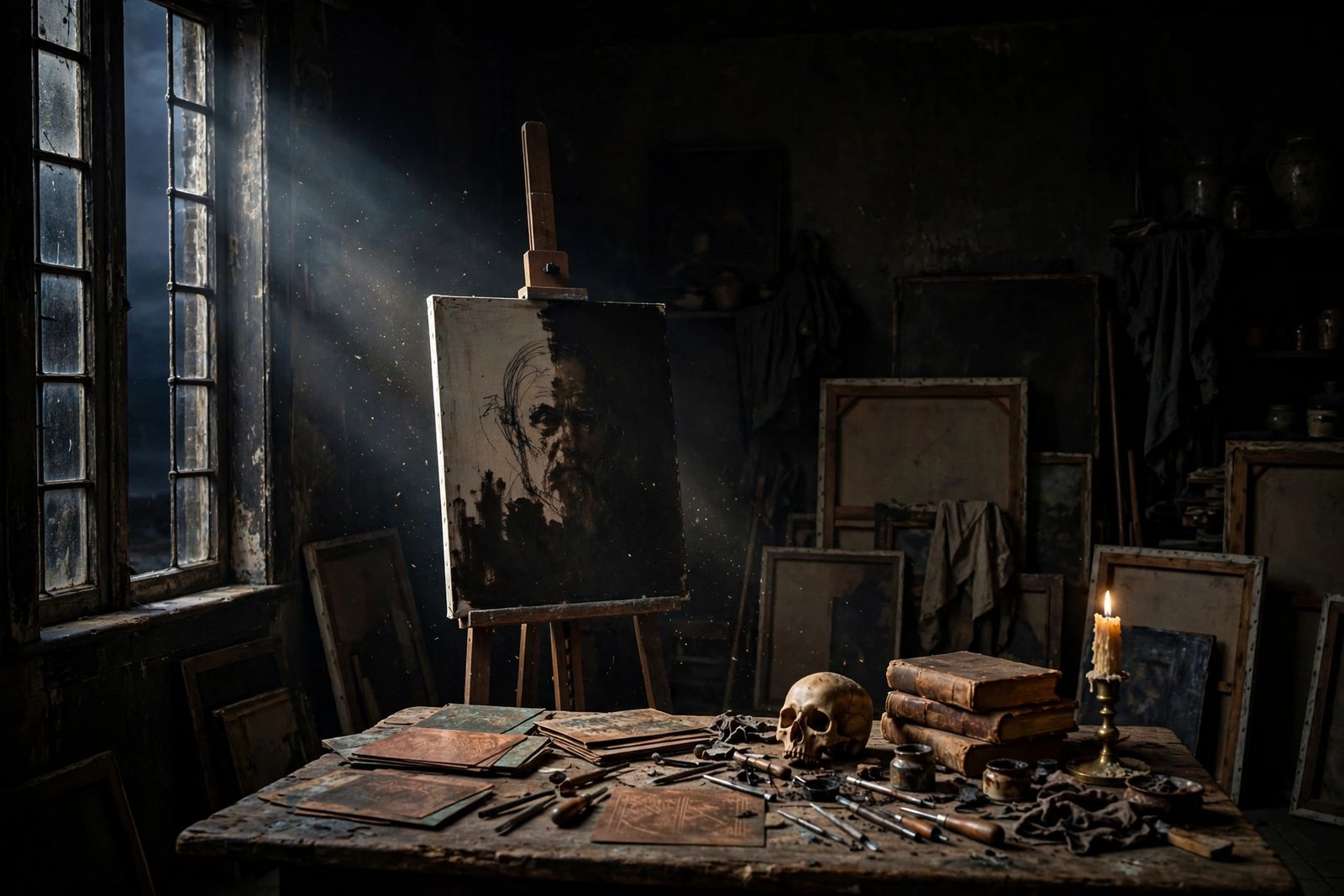
No one else painted light like this — one shaft from a high window, and out of the blackness, faces. This room is about how he did it: paint laid on like mortar, a mirror for a model, earth pigments instead of gold, and a knife that scraped the paint back into light.
In the late paintings the highlights are not drawn — they are built. Lead white stands on the canvas in ridges, troweled and knifed on, so the sleeve of the Jewish Bride catches real light in the room, not painted light. Run your eye along it: the paint has become sculpture.
His studio light came from a single high window, and he hoarded it like money. Most of every canvas is given to darkness; the light is spent only where it matters — a face, two hands, the edge of a collar. The black around his figures is not emptiness. It is the budget the light was saved from.
He painted, drew and etched his own face some eighty times — the cheapest model in Amsterdam, always in, never late, and willing to hold any expression. Grief, pride, bewilderment, age: he rehearsed them all on himself first, and the self-portraits became the diary he never wrote in words.
He never quite finished a canvas — he returned to it. Susanna and the Elders occupied him for ten years: X-rays show bodies turned, shifted, painted out and begun again. A Rembrandt is often three paintings deep, and the one on top is simply the one that won.
His palette was mostly the cheapest stuff in the shop: yellow ochre, raw umber, bone black, lead white. Costly ultramarine barely appears. The splendour was not bought — it was manufactured, out of layering, patience, and knowing exactly how dark the dark had to be before a cheek would glow.
Into paint still wet he scratched with the wooden butt of the brush — curls of hair, the glint on a jewel, lace at a cuff. Conservators call it sgraffito and find it all over the late work: highlights not painted on, but dug out of the darkness with the wrong end of his own tool.
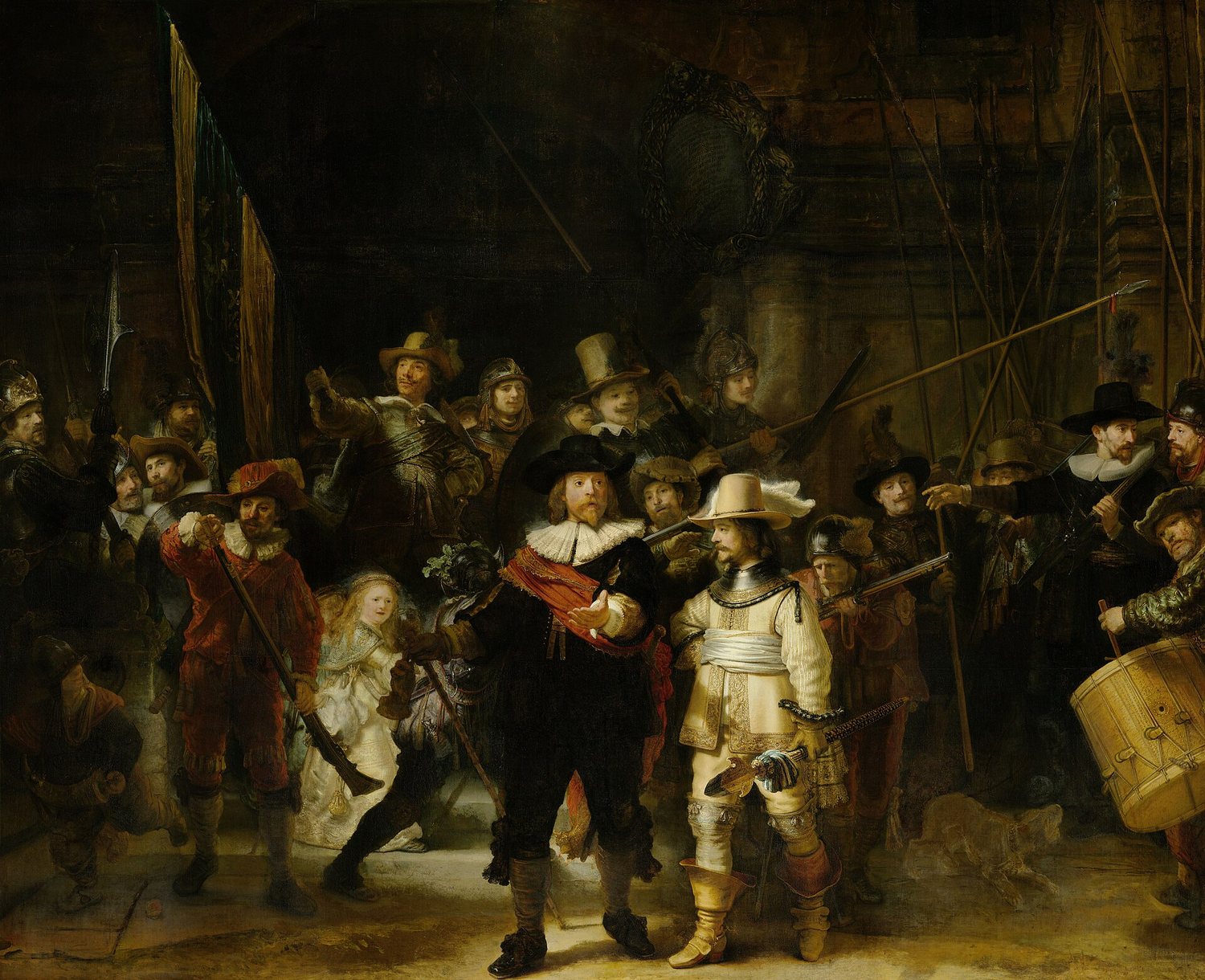
It is neither night nor a parade — daylight darkened by old varnish earned it the false name, and in 1715 the canvas was cut down on all four sides to fit a wall in Amsterdam's Town Hall. The lost strips, with two more figures, survive only in a small watercolour copy. What remains is still the largest stage he ever built: a company of guardsmen spilling out of shadow into one pool of light.
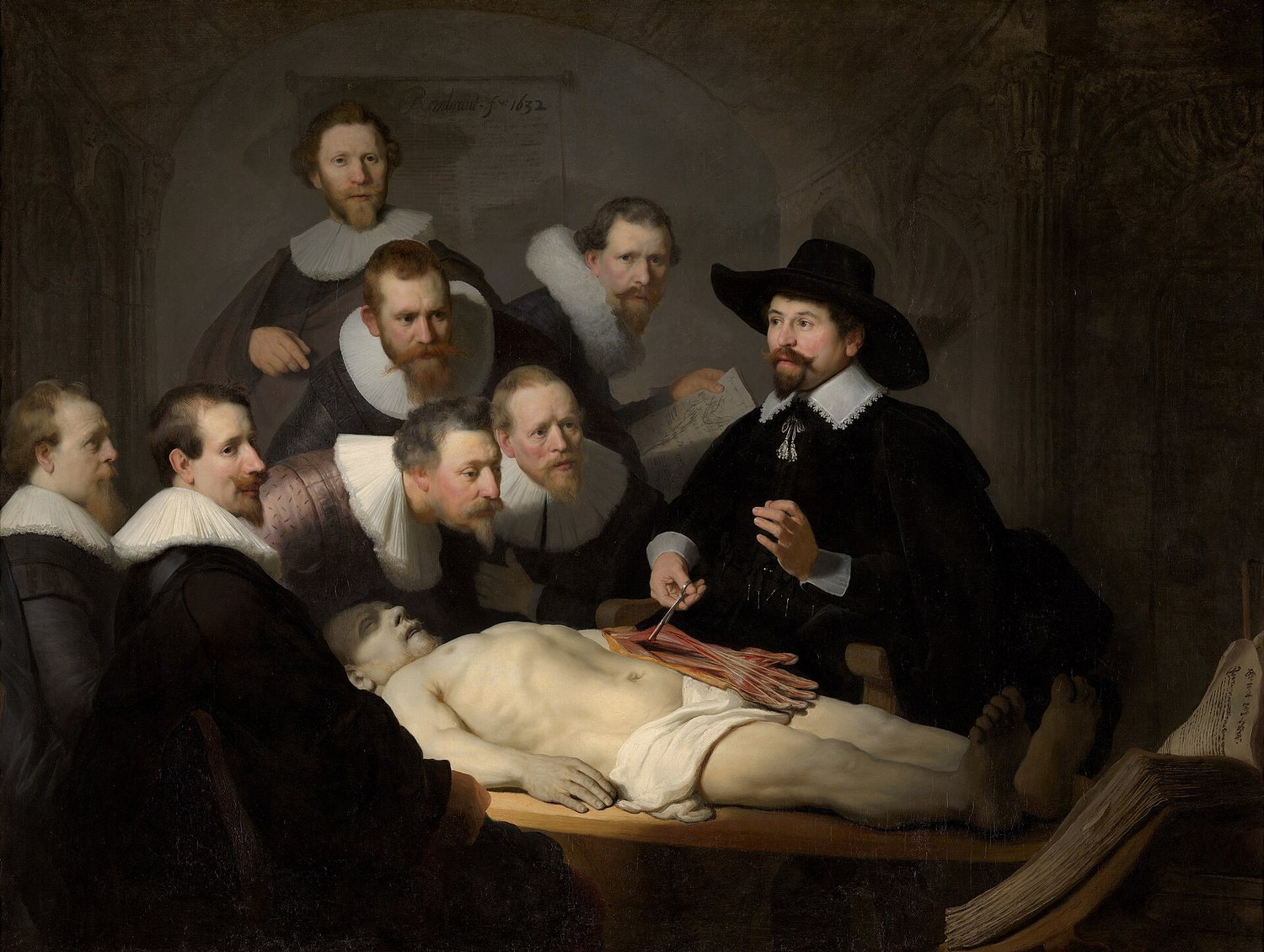
He was twenty-six, and this was the commission that made him in Amsterdam. The corpse is an executed thief, dissected in public over three January days. Look at the hand the doctor lifts: the tendons on display belong to the opposite hand — Rembrandt copied them from an anatomy book's engraving, and no one in the front row of surgeons noticed.
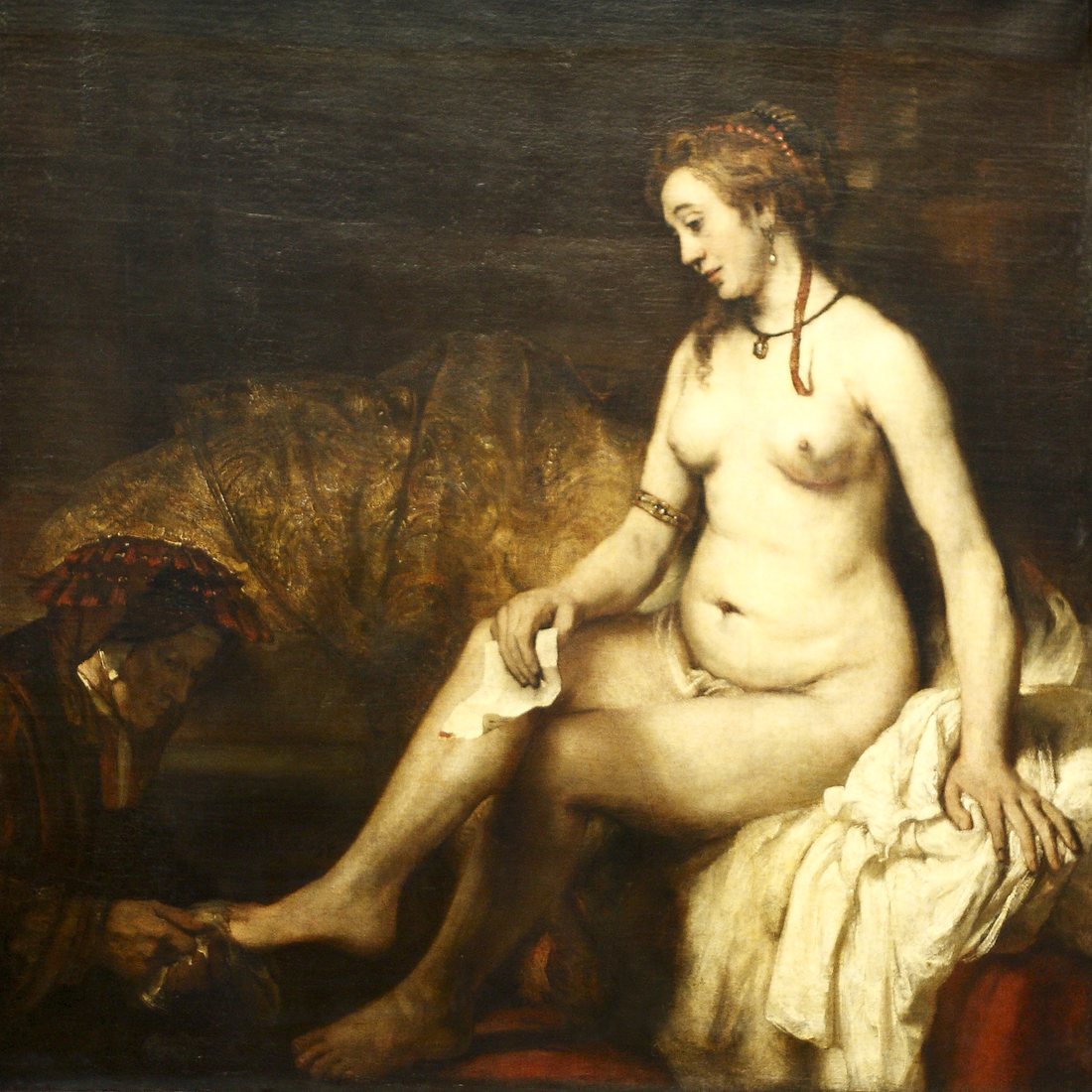
No palace, no messenger, no drama — a woman with a letter in her hand and a decision already made. The letter is King David's summons, and Rembrandt paints the moment before everything changes, giving her body nearly all the light in the picture and the maid at her feet almost none. The model is believed to be Hendrickje, the woman he lived with.
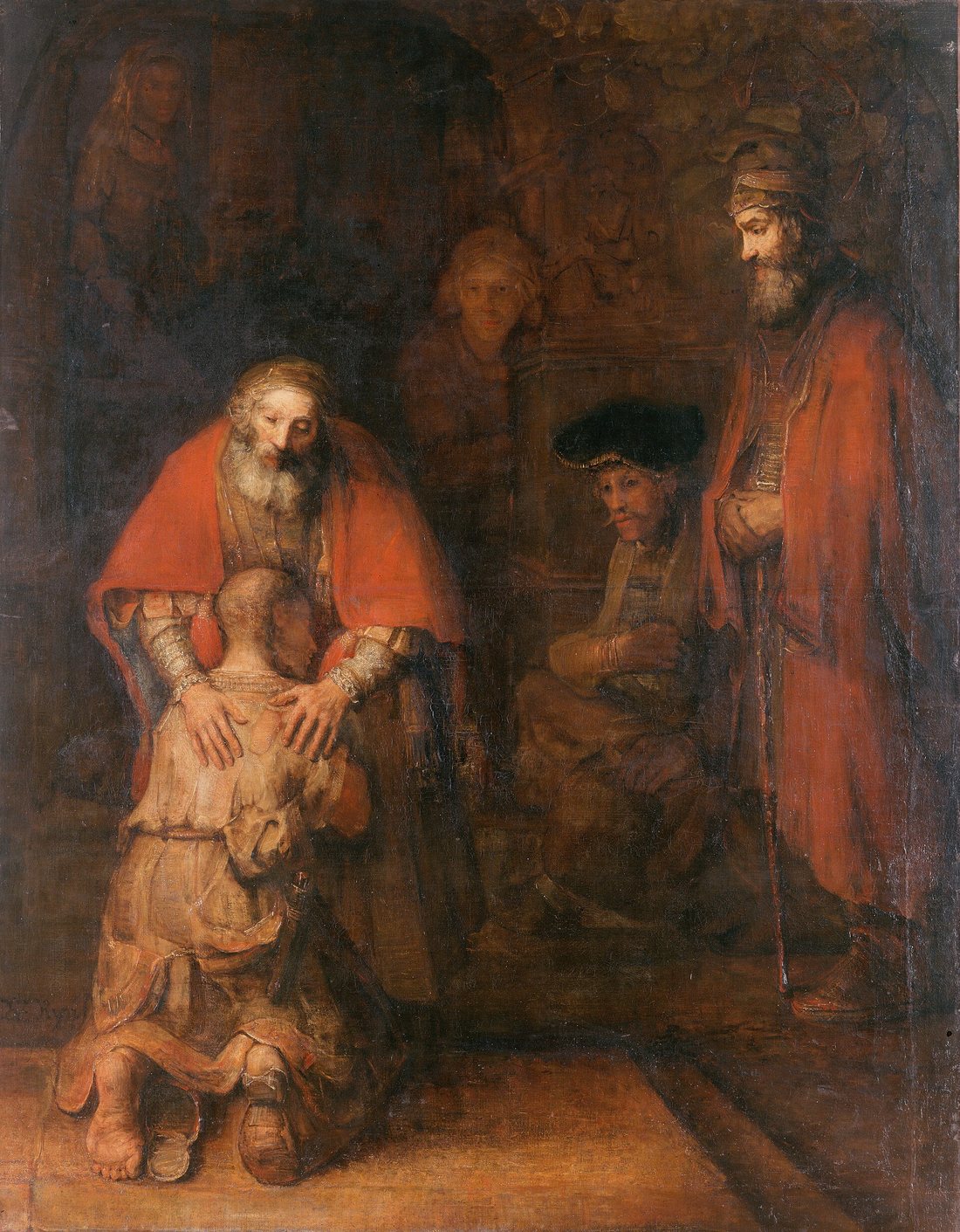
Painted in the last year of his life, when he was poor, widowed twice over and nearly forgotten. The paint in the shadows is thin as breath; on the father's hands it is laid on thick, and the two hands are not a pair — one broader and stronger, one finer — a difference viewers have pondered for three centuries. He signed nothing else with so much mercy.
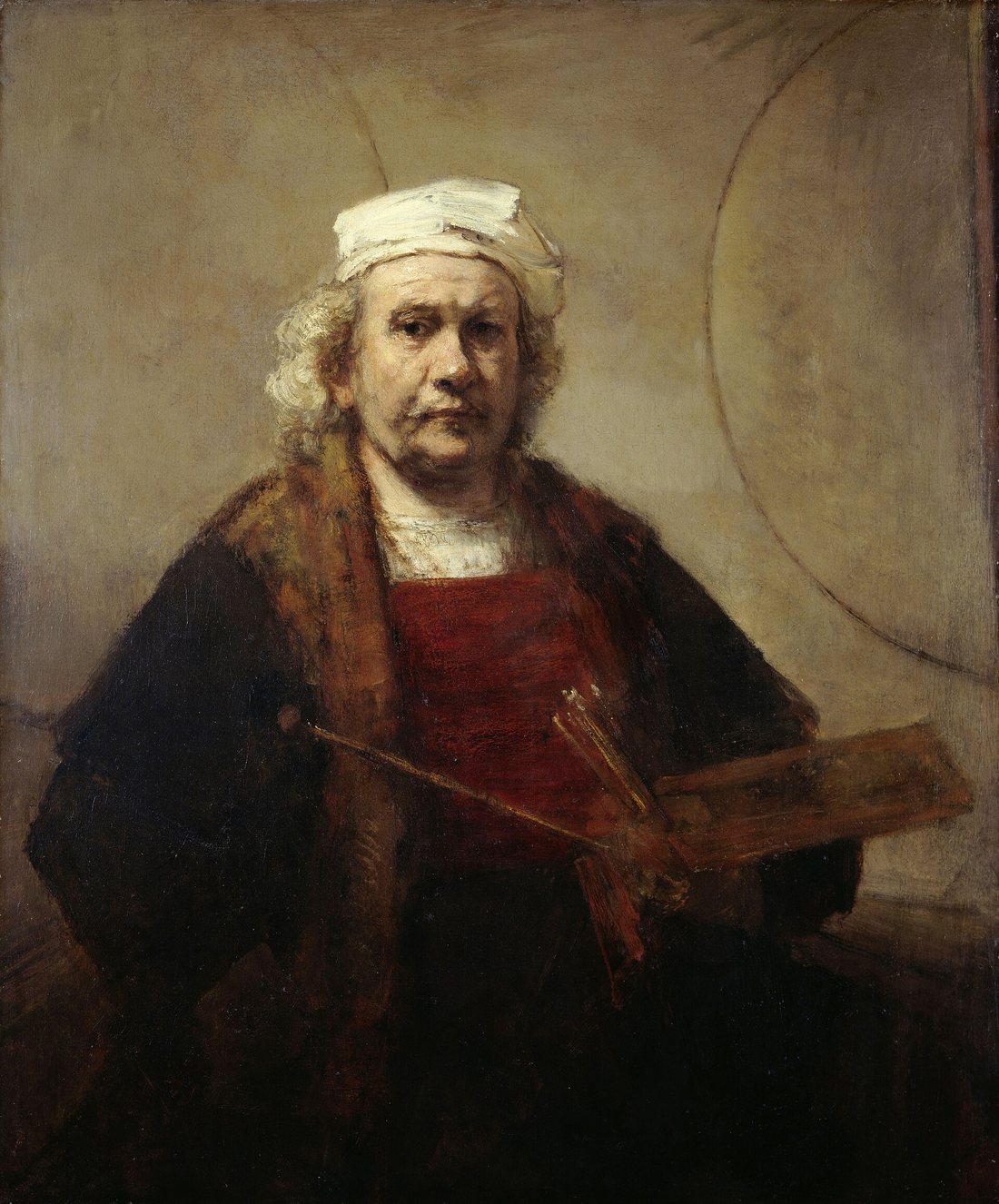
The old master stands with his brushes, maulstick and palette, and behind him on the wall two perfect circles that nobody has ever explained — maps of the world, a signature in geometry, a riddle left on purpose. X-rays show an earlier, abandoned painting buried under this one: even at the end he was painting over his own past.
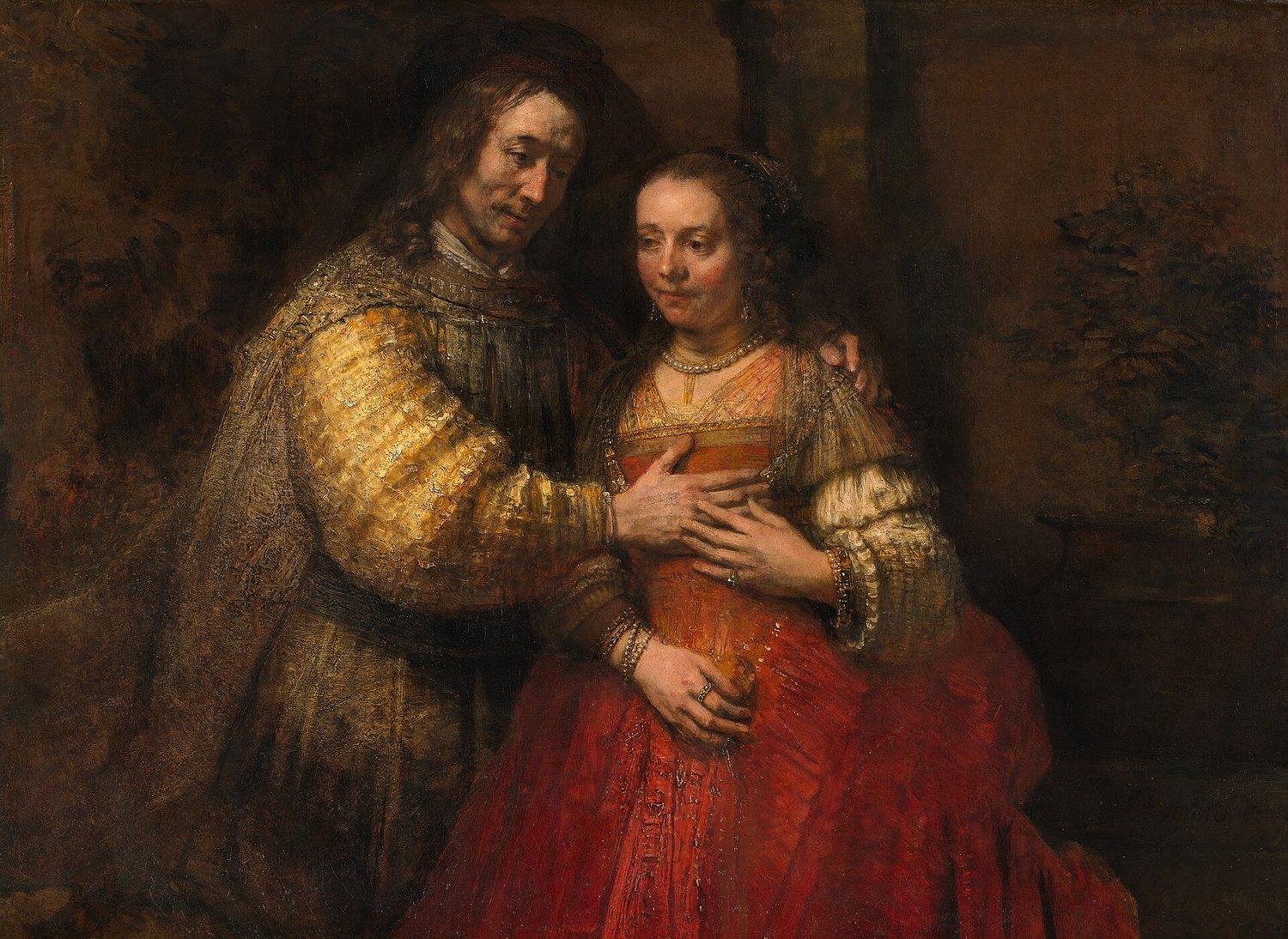
Look at the man's sleeve: it is not painted so much as built — gold paint troweled on in ridges that catch the light of the room itself. Van Gogh, standing before this canvas two centuries later, wrote that he would gladly give ten years of his life to sit in front of it for a fortnight with nothing but a crust of bread.
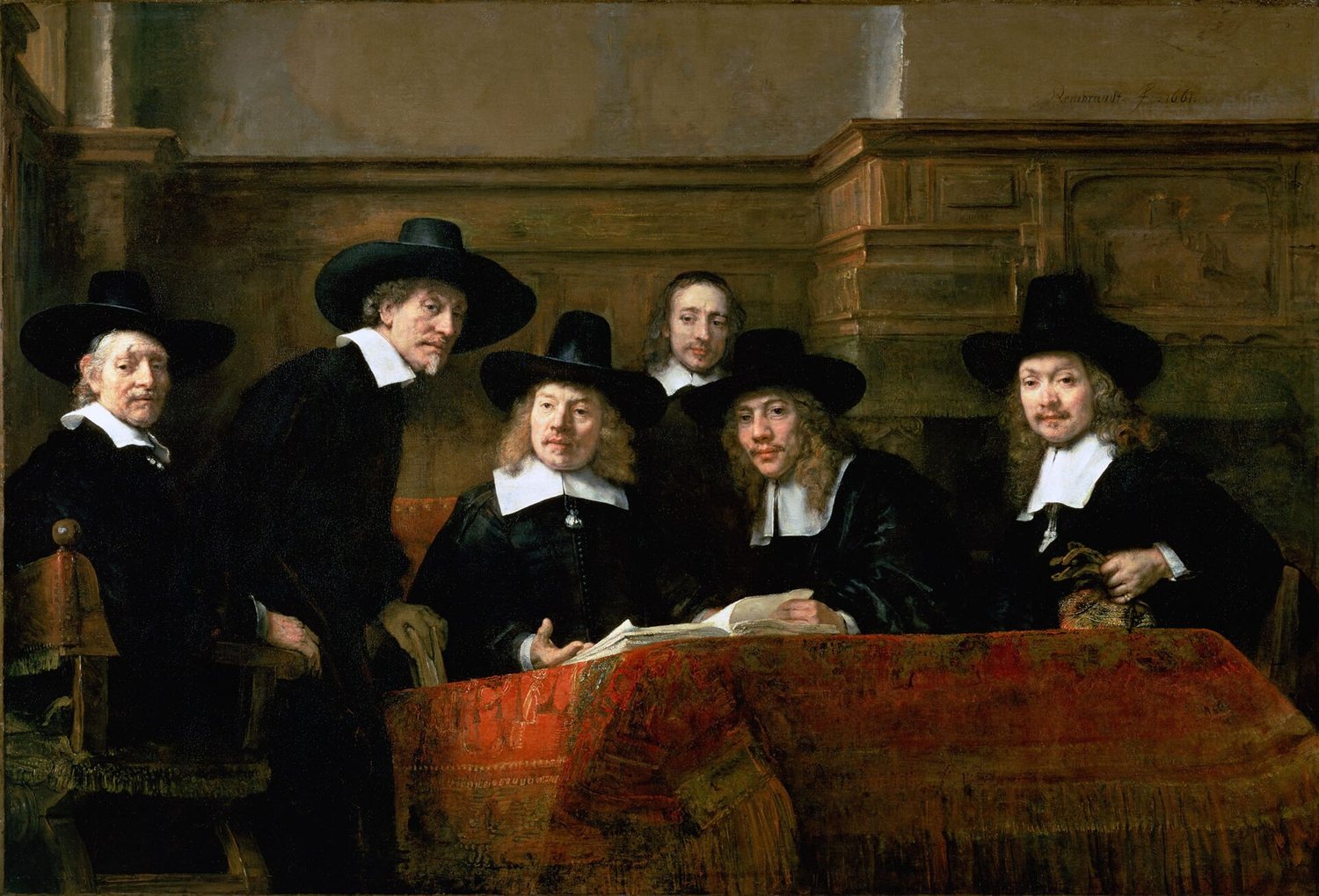
His last group portrait: five cloth-drapers and their servant, caught mid-meeting — and every face turned up toward you. The trick is the interruption. You have just walked into the room with a question about the accounts, and the whole board of the guild has paused to hear it. Nobody before him had dared to make the viewer the event.
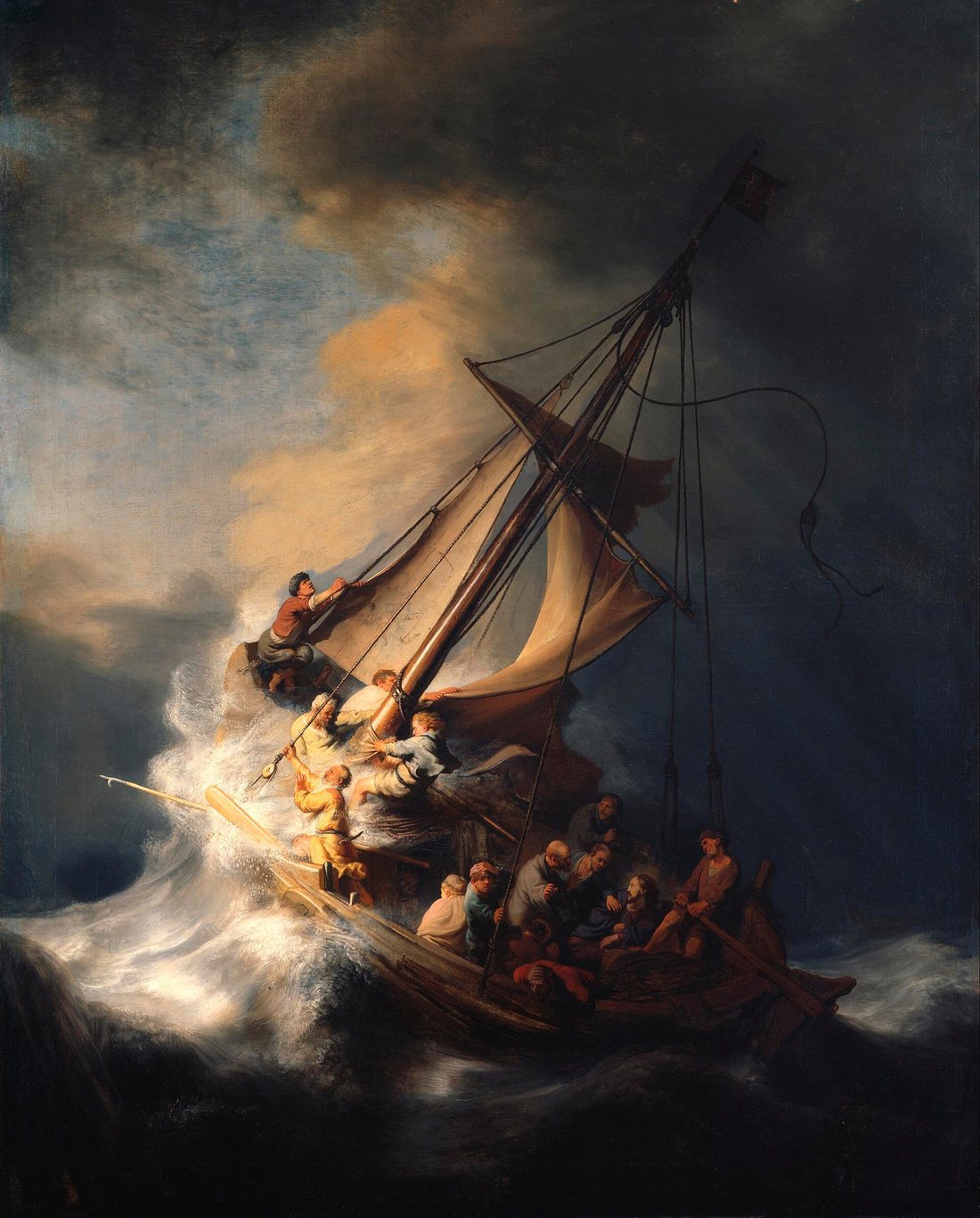
Count the figures in the boat: fourteen, not thirteen. The extra man, in a beret, gripping his hat against the wind and looking straight at you, is Rembrandt — he climbed into the storm with the apostles. In 1990 thieves cut the canvas from its frame; the empty frame still hangs in Boston, waiting.
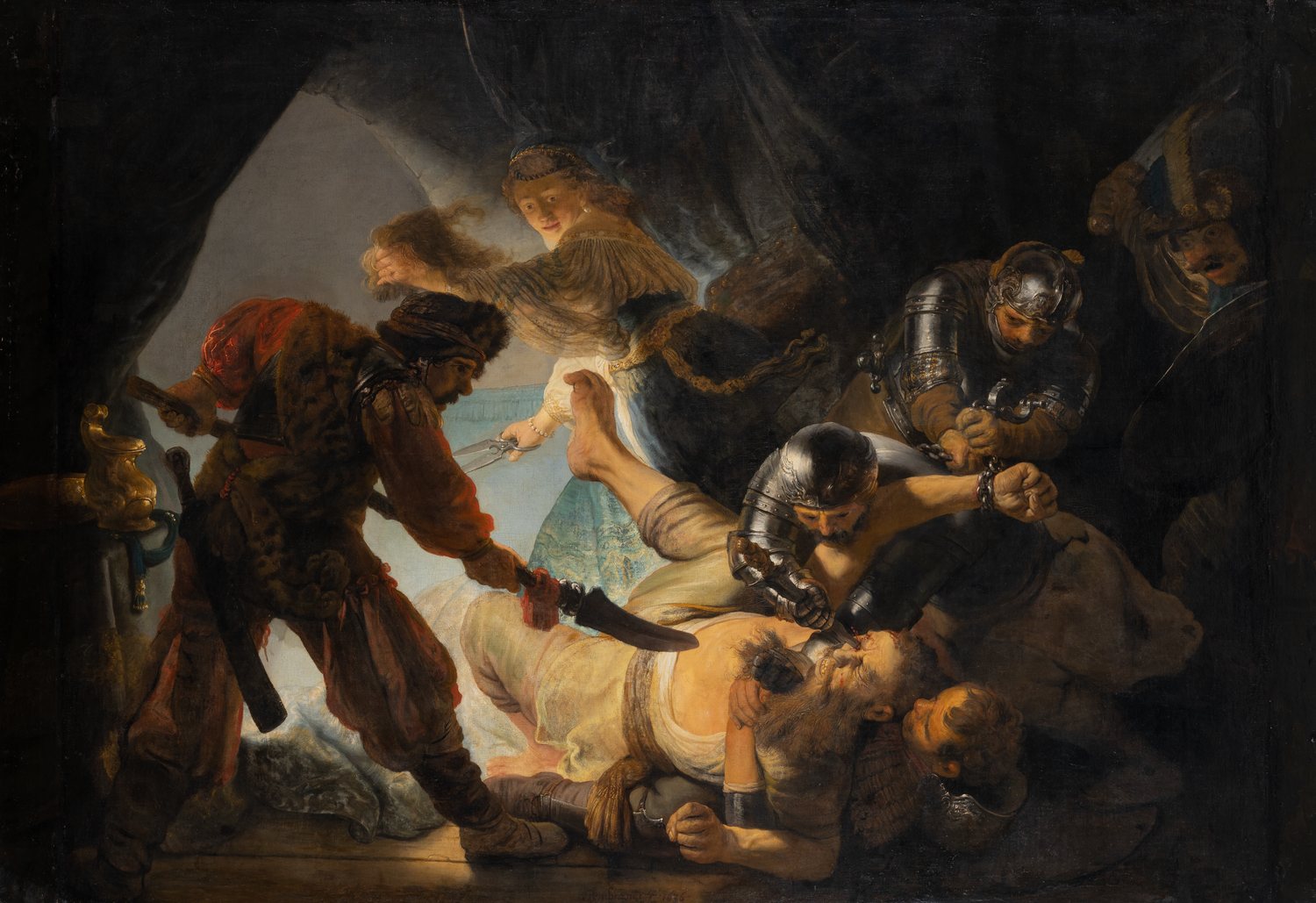
The most violent canvas he ever painted — a soldier drives the dagger home while the others pin Samson down like butchers at work. Rembrandt lights it like a stage at its worst second, and does not look away.
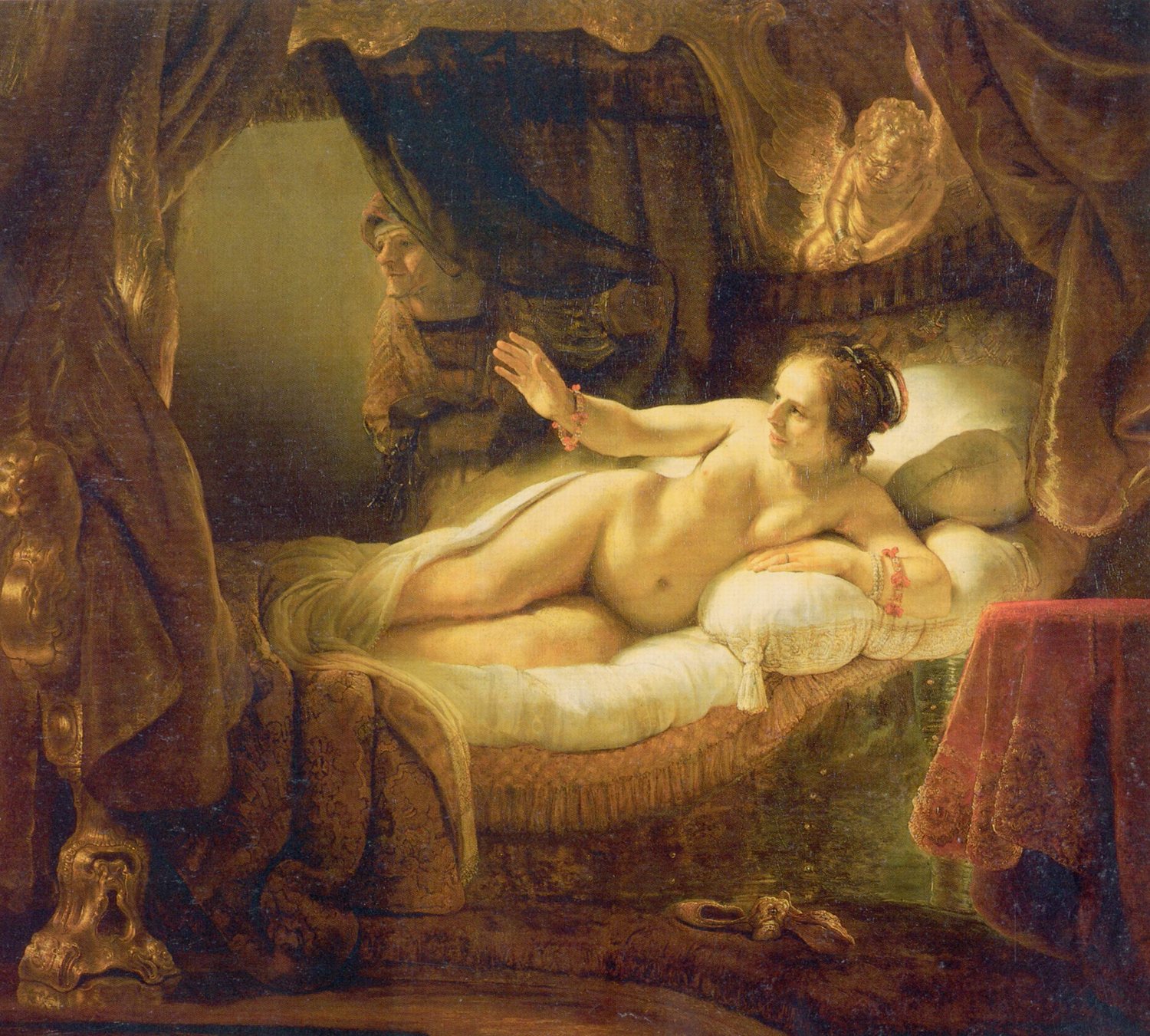
In 1985 a vandal slashed this canvas and threw acid over it; the restoration took twelve years. X-rays found another face beneath Danaë’s: he had first painted his wife Saskia, and after her death repainted the face toward Geertje. The shower of gold never appears — the light does Zeus’s work alone.
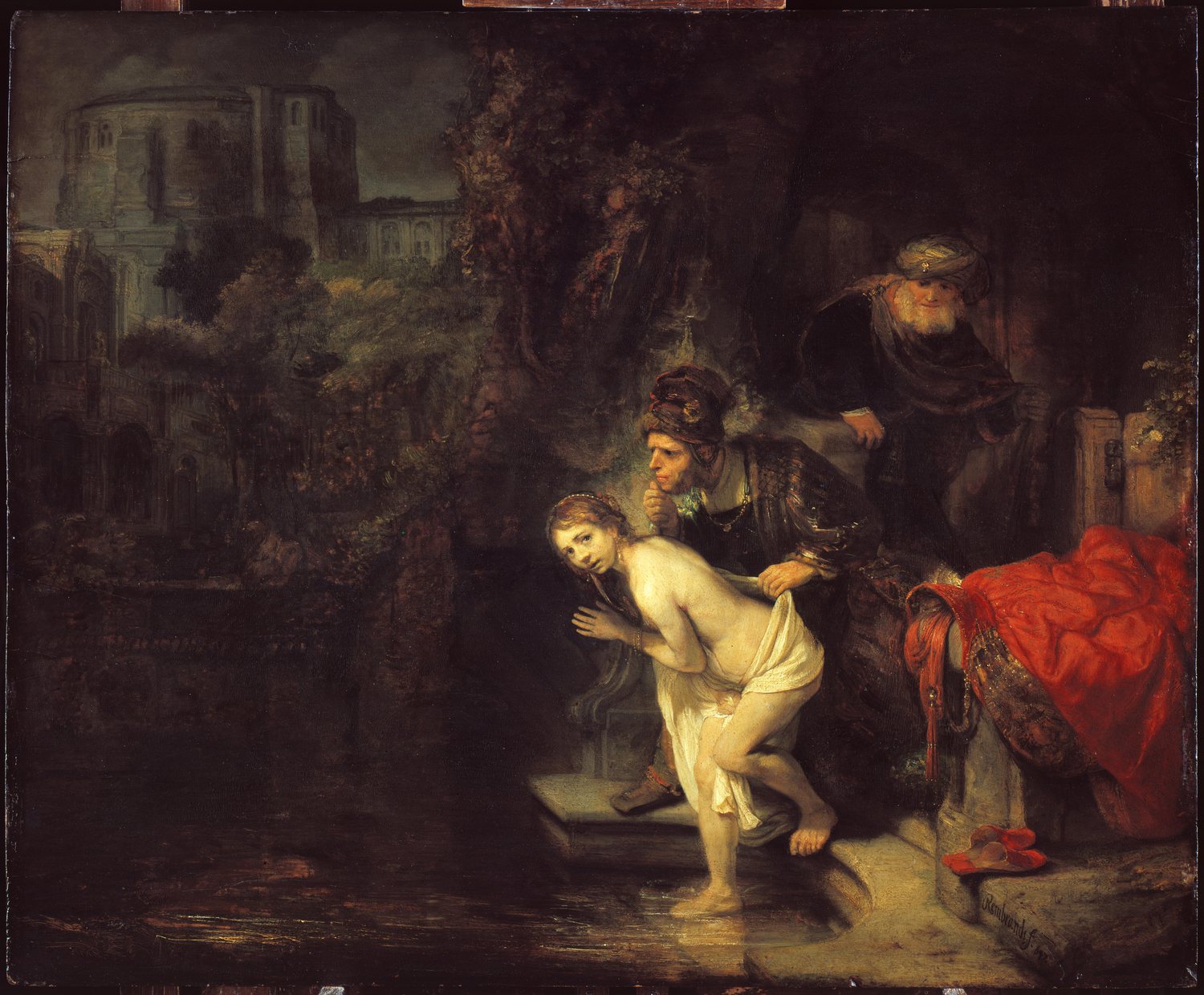
He painted Susanna for ten years, scraping down and beginning again — X-rays show her body turned and turned under the surface. What remains is not an erotic scene but a cornered woman, and two old men it is uncomfortable to stand beside.
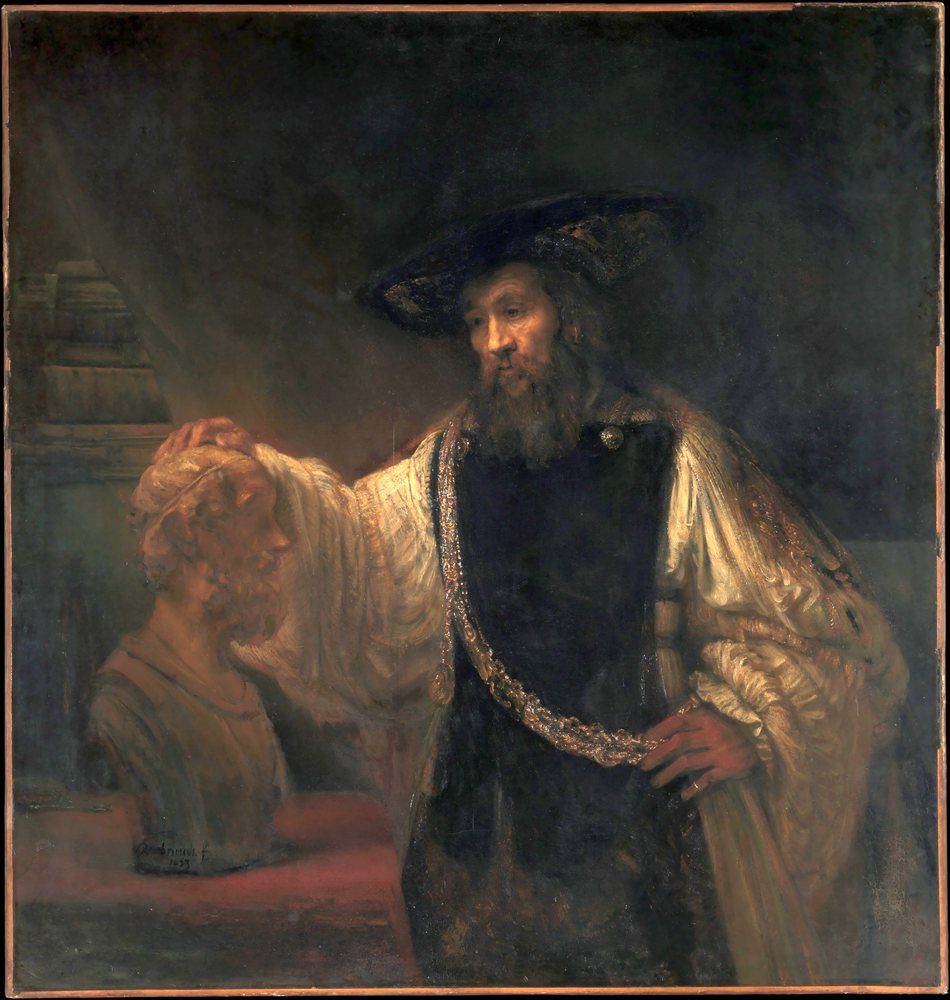
Painted for a Sicilian collector who would not see it until it crossed the sea. Aristotle’s hand rests on the bust of Homer — the thinker touching the poet — and the gold chain across his chest is laid on so thick it casts a real shadow of paint.
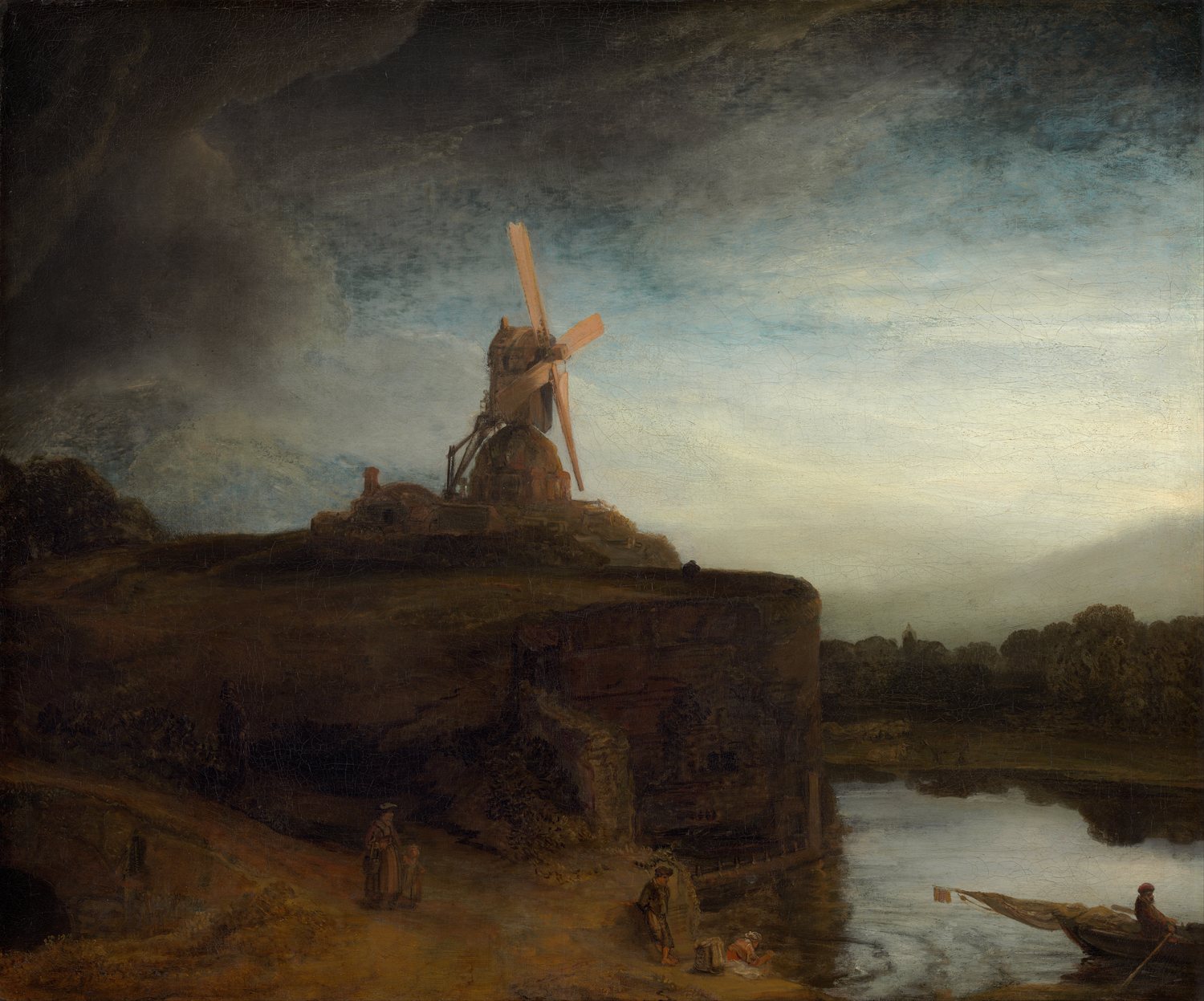
A windmill on a bastion against a storm sky — half the canvas is weather. For two centuries it was accounted the greatest landscape in the world; the mill itself is built from a few loaded strokes of ochre and shadow.
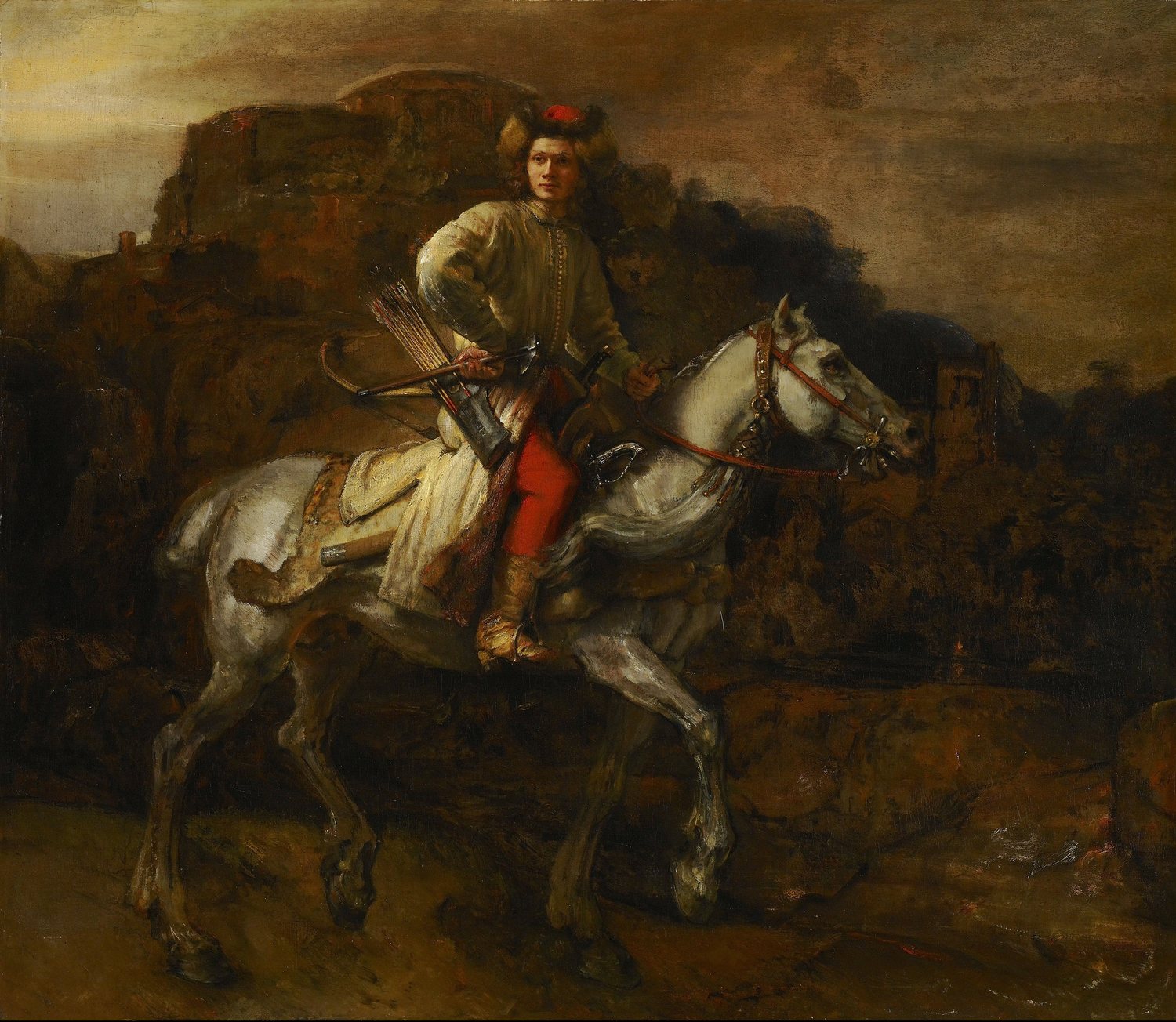
A young cavalryman in Polish dress riding out of a burnt landscape. Who he was, nobody knows — even the painting’s authorship was disputed for a century. Poland claims him for a lisowczyk; the horse, painted in a few broad strokes, claims nothing and convinces everyone.
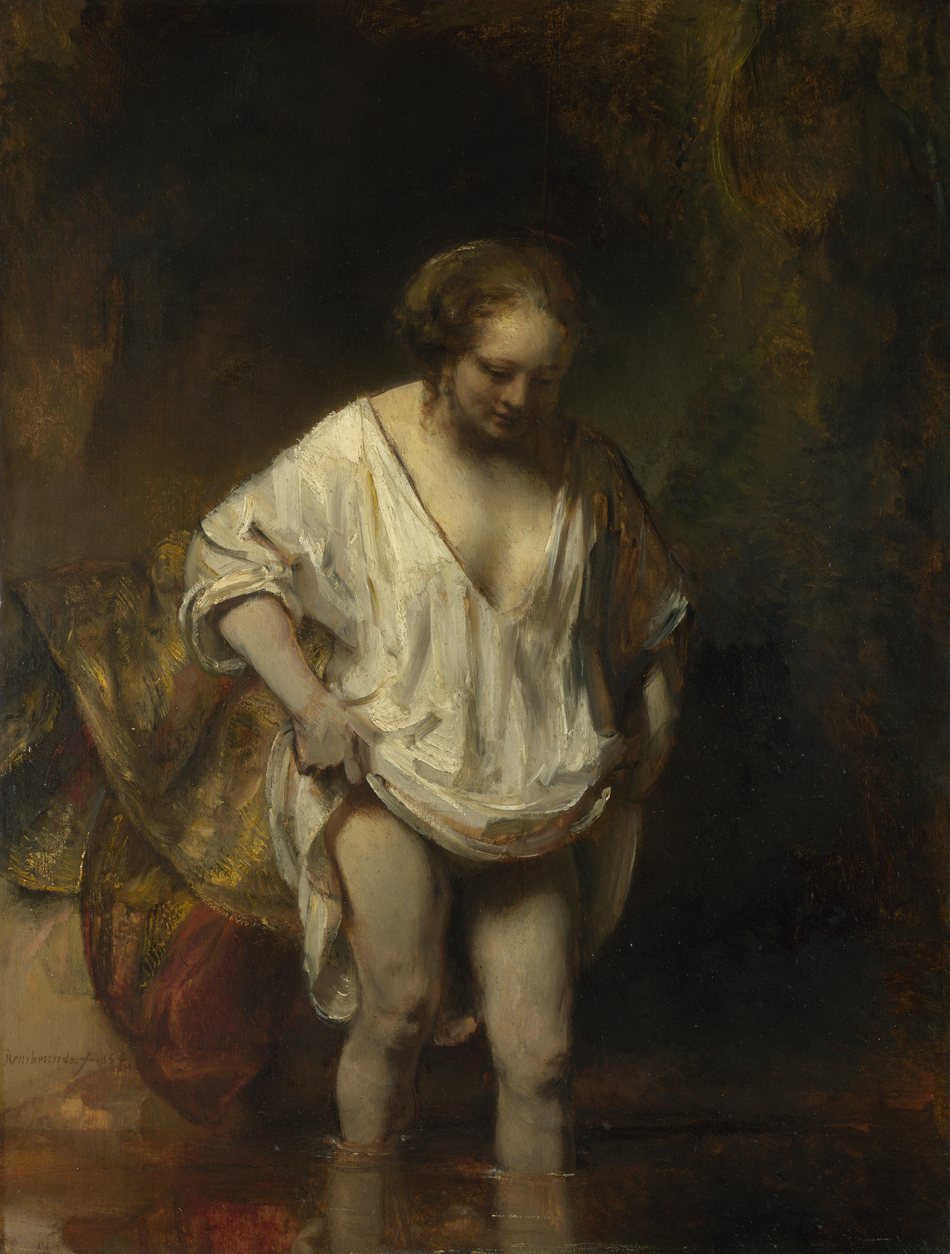
Hendrickje, his partner, lifts her shift and steps into the water, smiling at something outside the picture. The paint is thinnest where the water is — in places the bare wood of the panel does the shining for him.
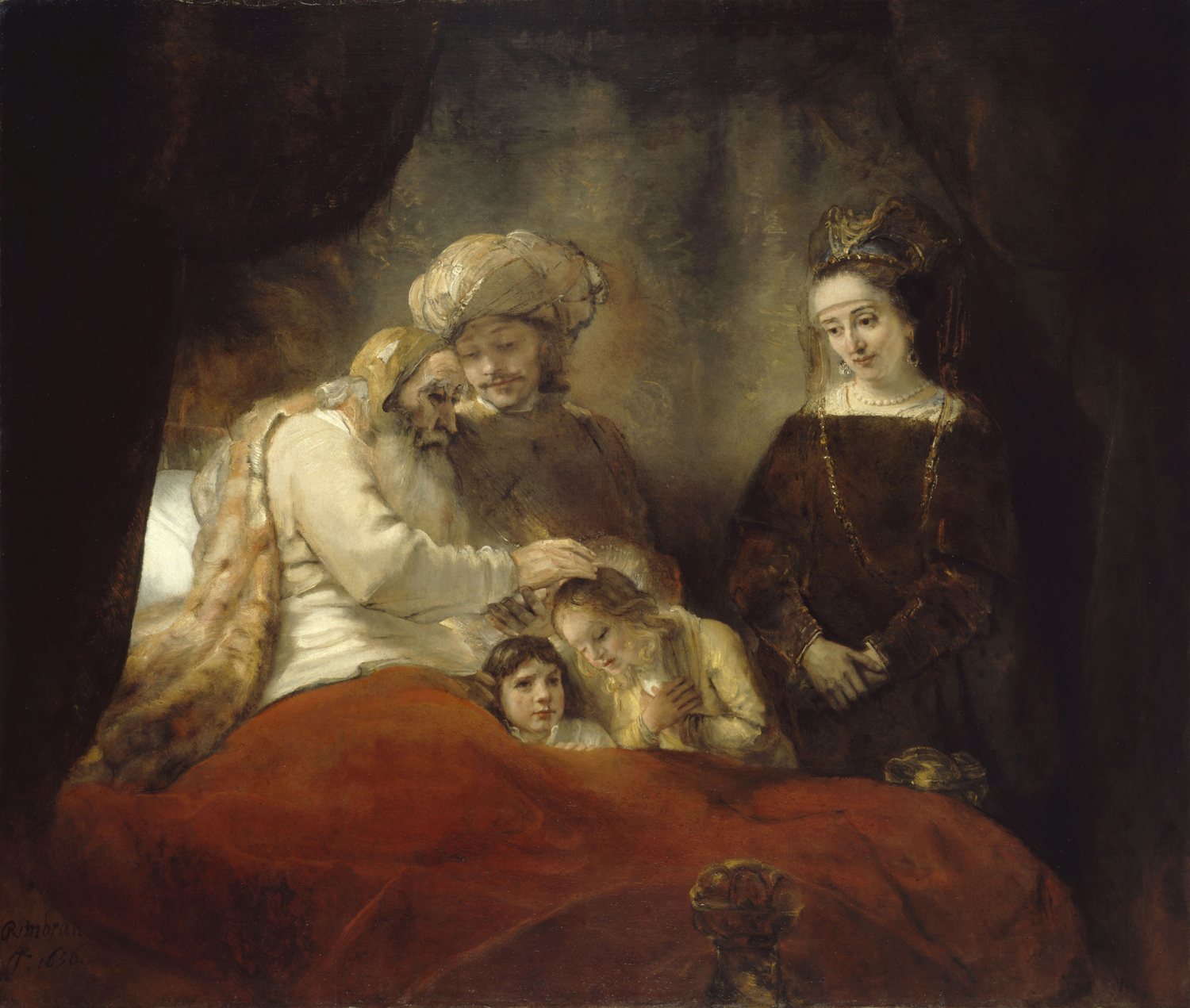
The dying Jacob crosses his hands to bless the younger grandson before the elder — painted in the year Rembrandt’s possessions were listed for bankruptcy. The blessing glows; everything around it is already dusk.
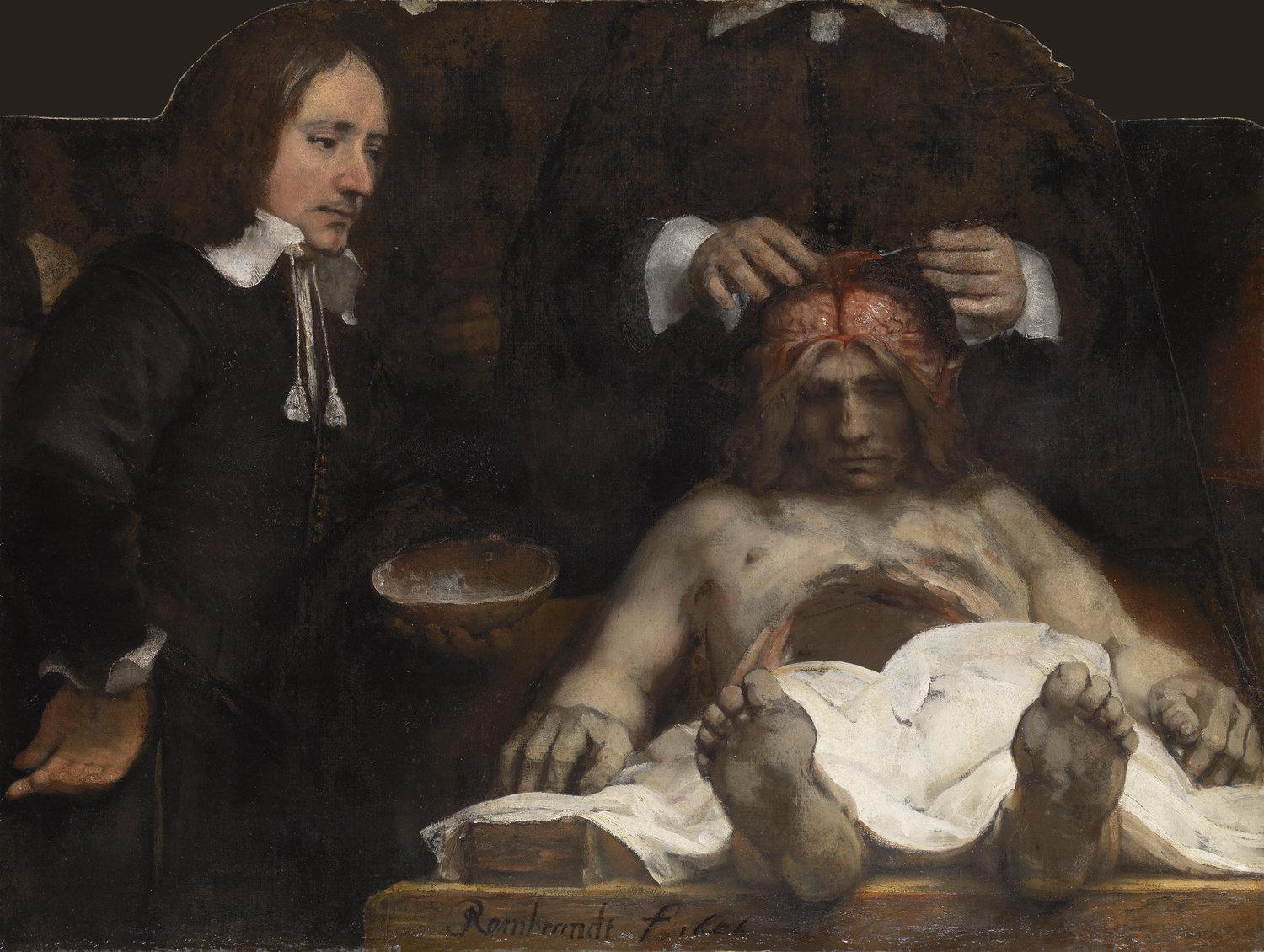
Only a fragment survives — fire took the rest in 1723. The corpse’s brain is being opened, and the body lies foreshortened, feet toward us, exactly as Mantegna had laid out his dead Christ two centuries before.
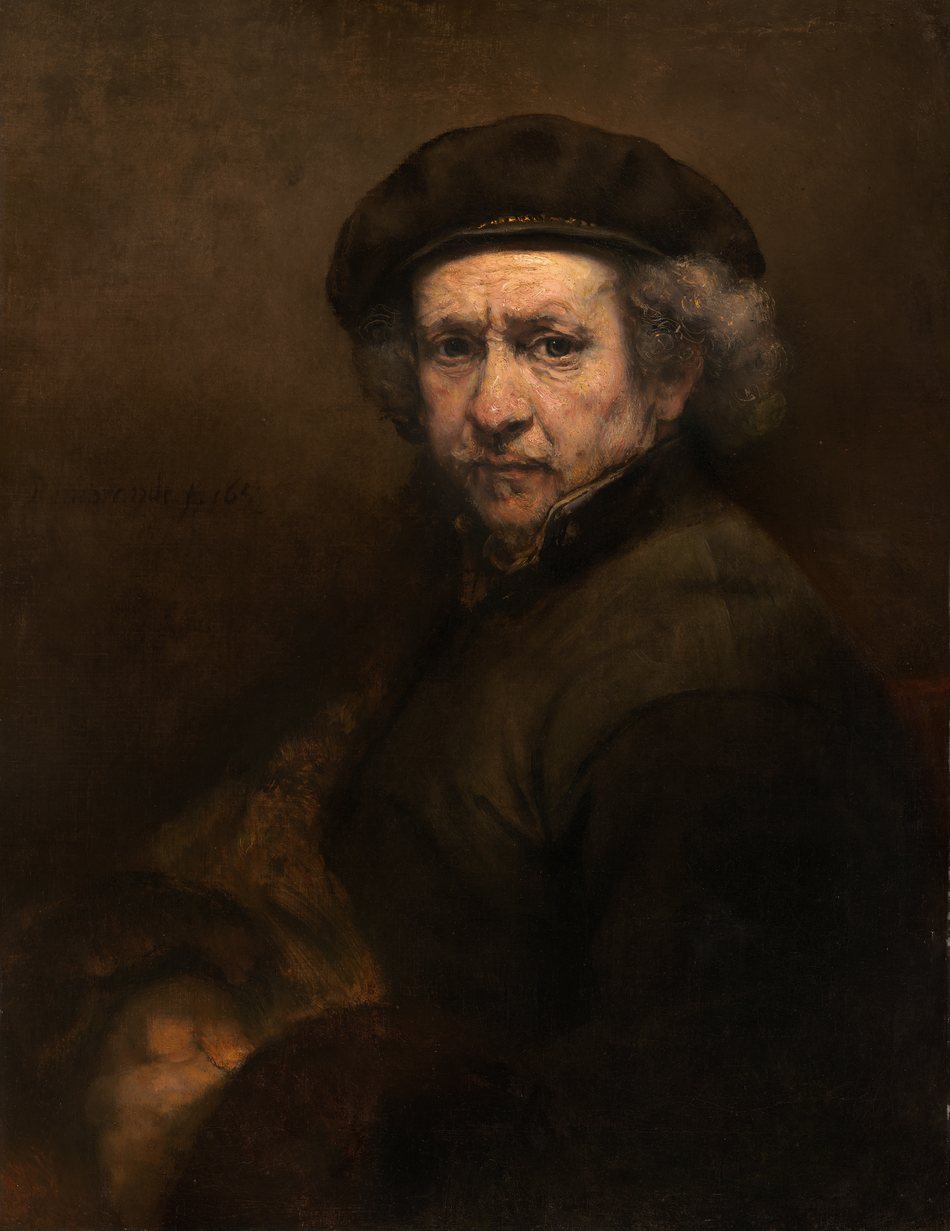
Ten years before his death, bankrupt and out of fashion, he paints himself like a king enthroned — beret, staff, and that level, unbothered stare. The face is not so much painted as sculpted: knuckles and the palette knife did this work.
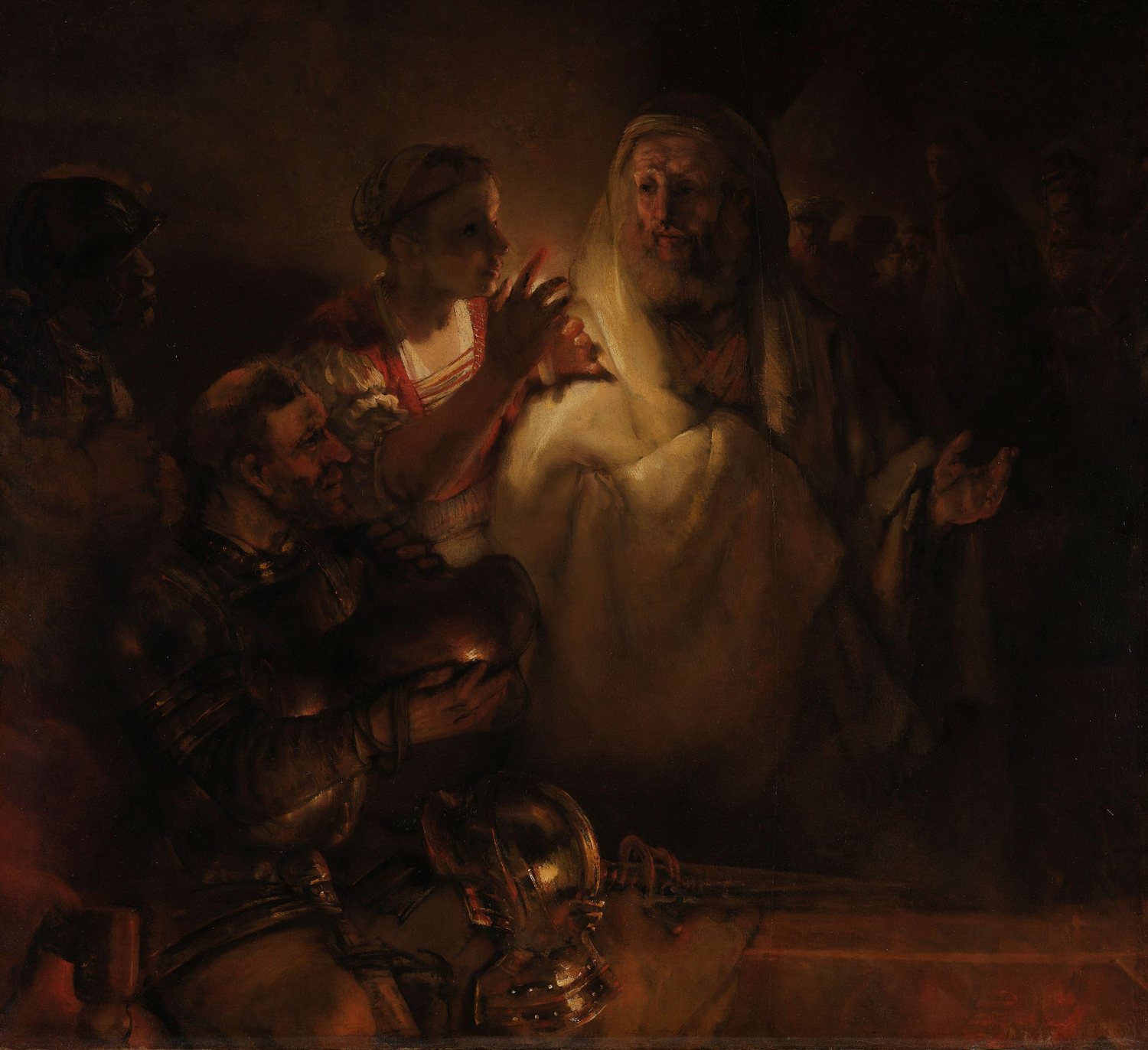
Peter warms his hands and lies — I know not the man — while the serving girl holds a candle close to his face. That candle is the only honest light in the picture, and it is aimed at the liar.
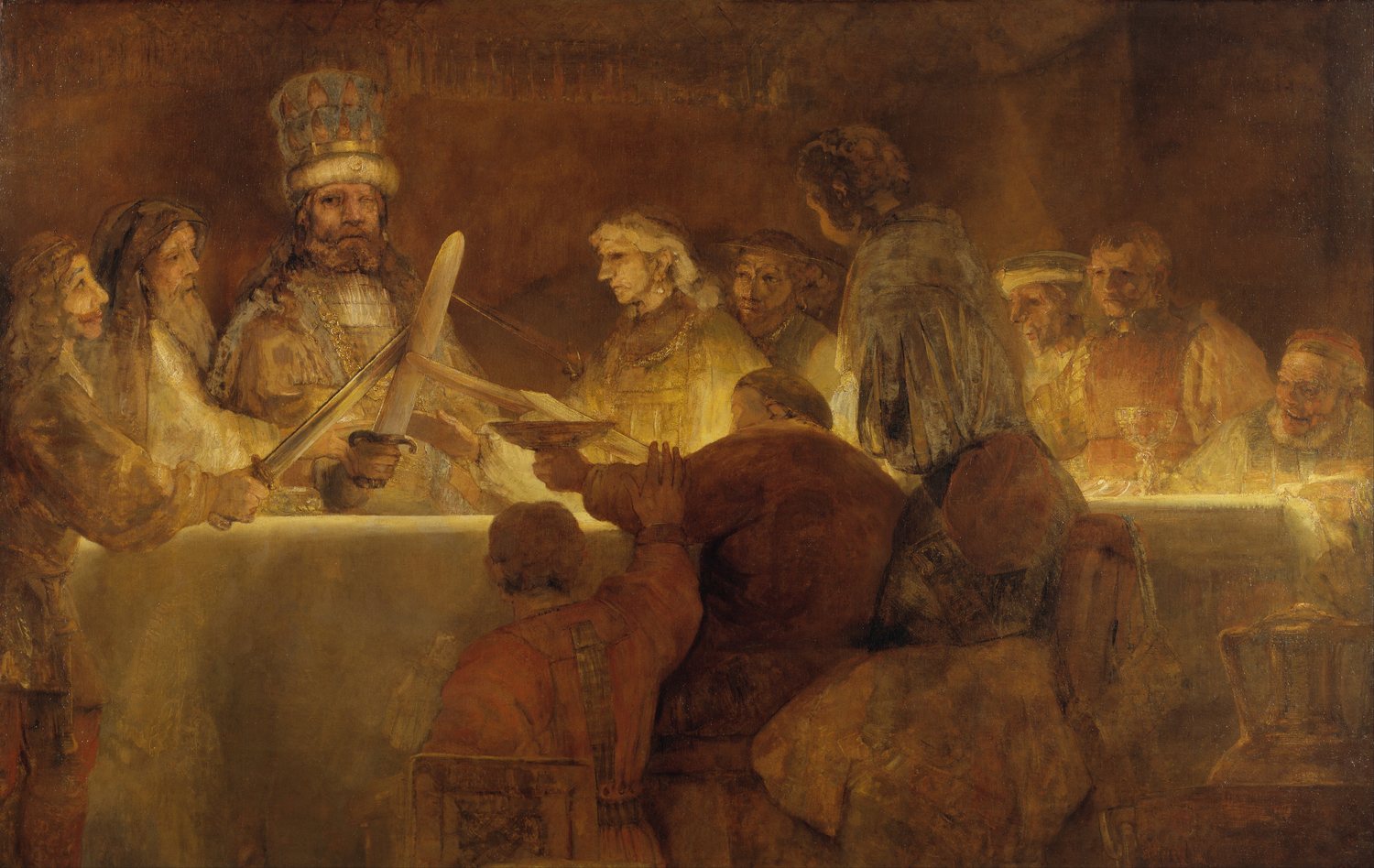
His largest commission ever — a wall for Amsterdam’s new Town Hall, more than five metres across. The city hung it, then took it down within the year; Rembrandt cut the canvas up himself, and this glowing centre is all that survives of the giant.