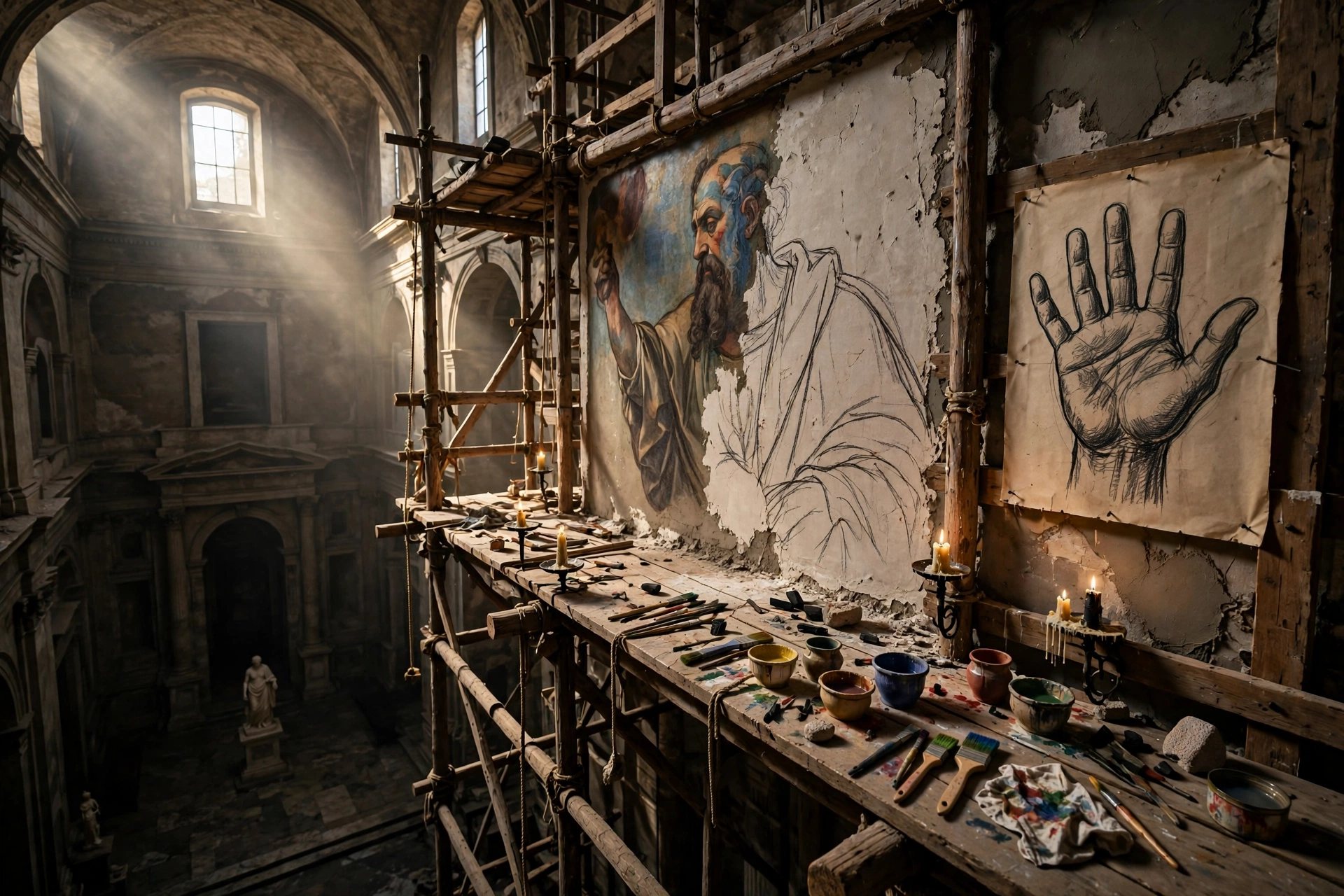
He insisted he was a sculptor, and then painted the two most famous walls in the world. Michelangelo's frescoes are marble thinking done in plaster and pigment: bodies built like statues, laid into wet intonaco at terrifying speed, on scaffolds of his own design, mostly alone. This room holds the ceiling, the Judgment, and the panels — painting as an act of strength.
True fresco is a deadline in plaster: pigment in water goes onto wet intonaco and must be finished before it dries — a matter of hours. The ceiling is a mosaic of giornate, one day's patches; restorers can still read the joins and count, almost day by day, how the work advanced across four years.
Every figure existed first at full size on paper. The cartoon's outline was pricked with holes and charcoal dust pounced through them onto the wet plaster — spolvero — or the lines were incised with a stylus. Hundreds of sheets of drawings fed the ceiling; almost all were burned or lost, which is why the surviving studies are treasures.
He did not lie on his back. Michelangelo painted standing on his scaffold, head bent back, brush above him — and wrote a comic poem about it: his beard pointing at the ceiling, the paint dripping onto his face, his body bent like a Syrian bow. Four years of it permanently wrecked his ease of reading at arm's length.
The painting thinks in carved masses: contour first, then the body modelled like marble turning in light, drapery treated as architecture. He signed letters 'Michelangelo, sculptor' even while painting the ceiling, and the figures prove the claim — every one of them could be translated into stone without changing its logic.
After the first trial section he dismissed the Florentine assistants Julius II had foisted on him — the plasterers and a small crew remained, but the painting hand on the ceiling is essentially one man's. Assistants ground pigments and mixed intonaco; the brushwork, at that scale and speed, is his alone.
Fresco tolerates only alkali-proof pigments; the great blues had to go on dry, a secco, after the plaster set — ultramarine bound in glue or egg, sitting on the surface rather than in it. That is why the vast blue mantle of the Last Judgment has suffered more than any other passage: the most expensive colour is the most fragile one.
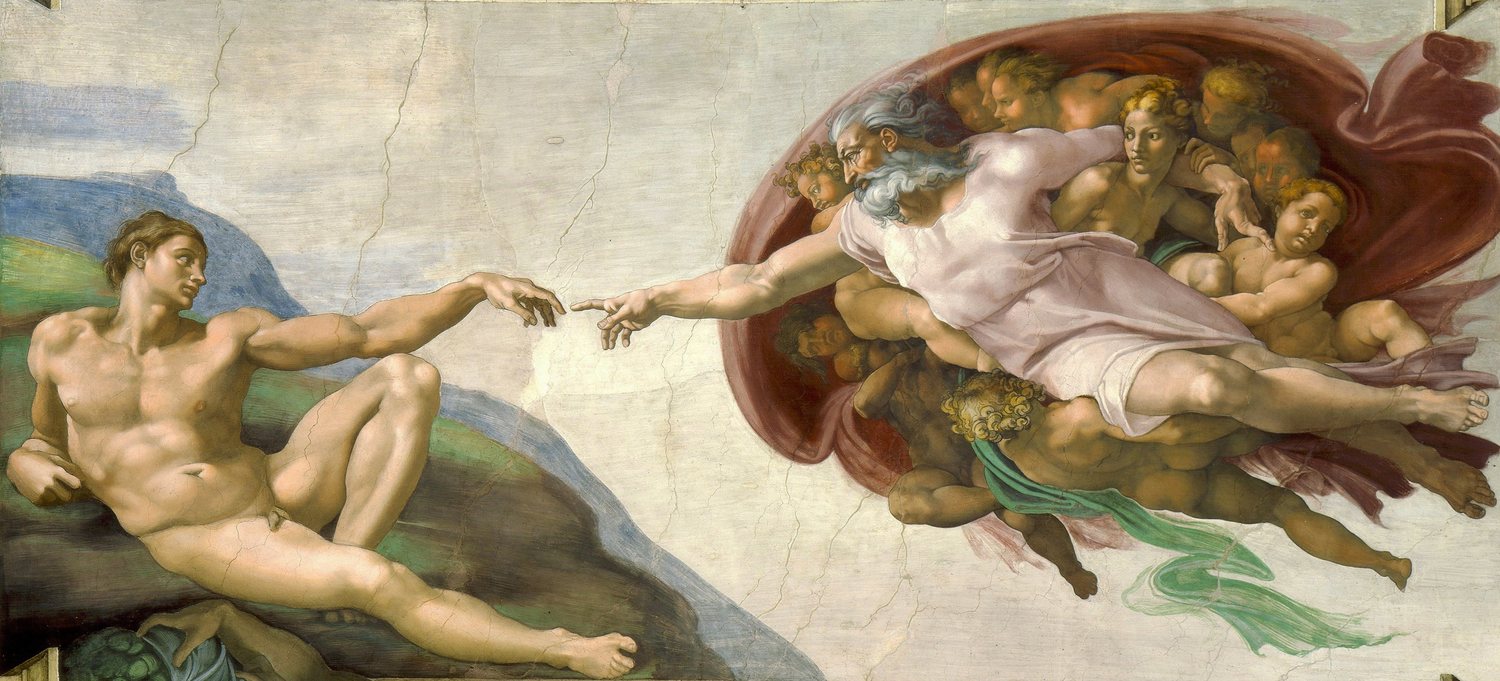
The most reproduced touch in art: God's hand reaching with energy, Adam's answering with languor, life crossing the small gap between the fingers. It is one panel of the ceiling's Genesis cycle, painted in a handful of giornate — and the gap, not the contact, is the whole invention.
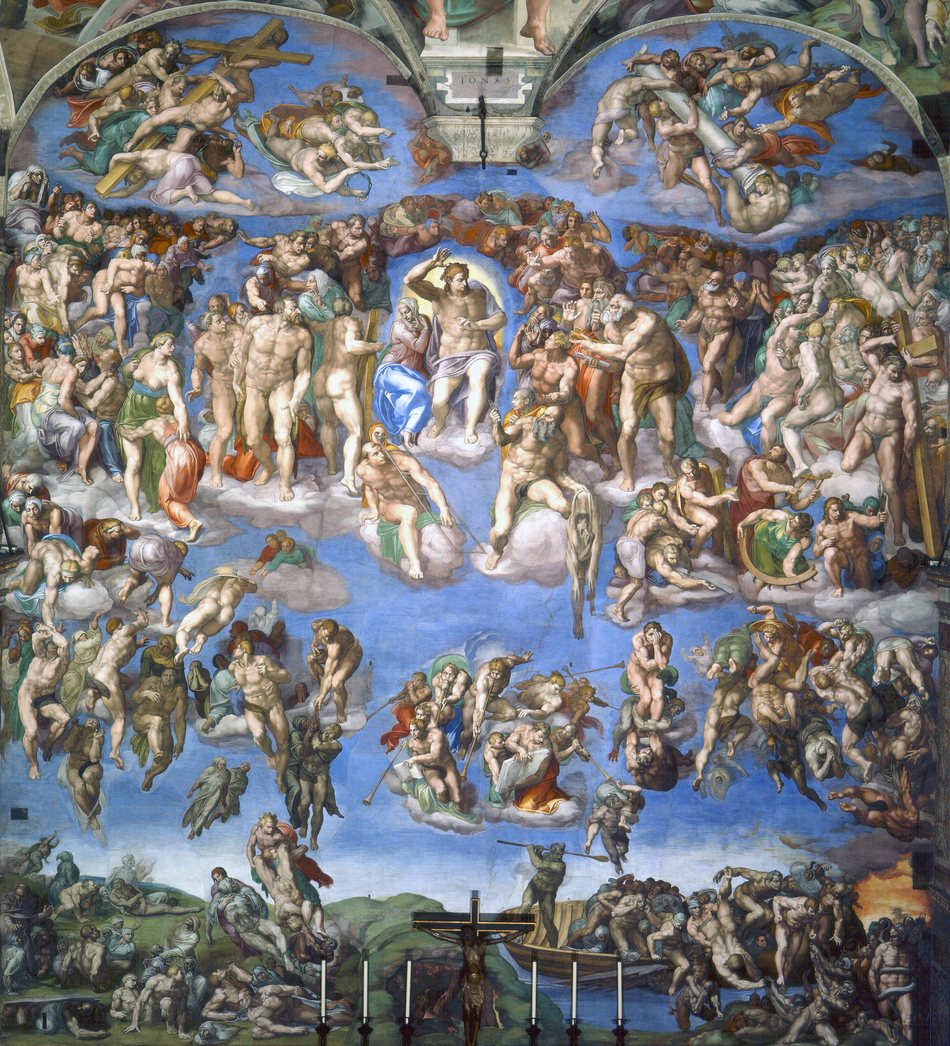
Twenty-five years after the ceiling, he returned to the chapel's altar wall with a darker world: over three hundred figures spiralling around a beardless, thundering Christ, the saved rising on one side, the damned dragged down on the other. Michelangelo put his own face on the flayed skin held by St Bartholomew — the painter inside his own judgment.
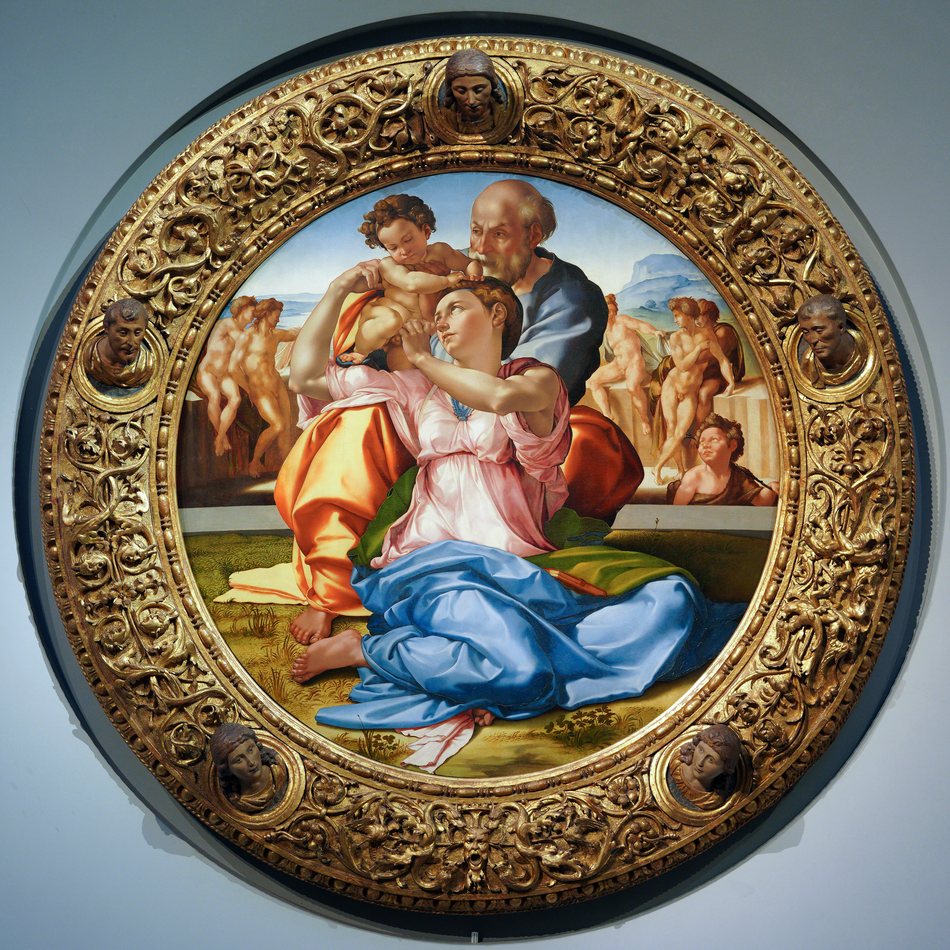
His only finished panel painting: the Holy Family in a round frame, the Virgin twisting like a figure carved from a single block, with naked youths lounging behind a parapet for reasons scholars still argue about. Painted just before the Sistine ceiling, it is the ceiling in miniature — sculpture that happens to be flat.
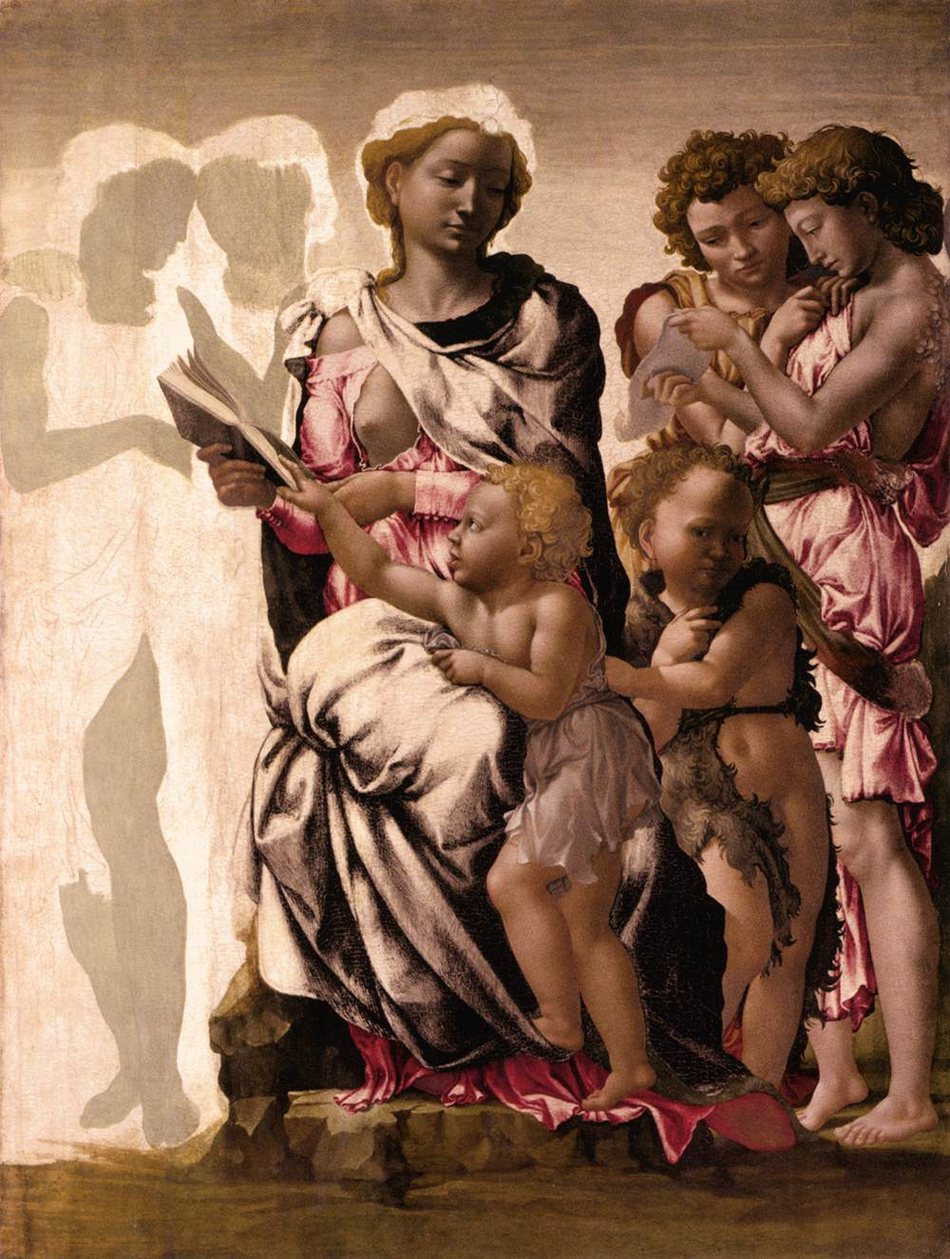
An unfinished panel from his early twenties — and the unfinishedness is the lesson: passages of bare underdrawing and ghostly first paint show exactly how he built a picture, figure by figure. The angels reading a scroll at the left were never more than a beautiful intention.
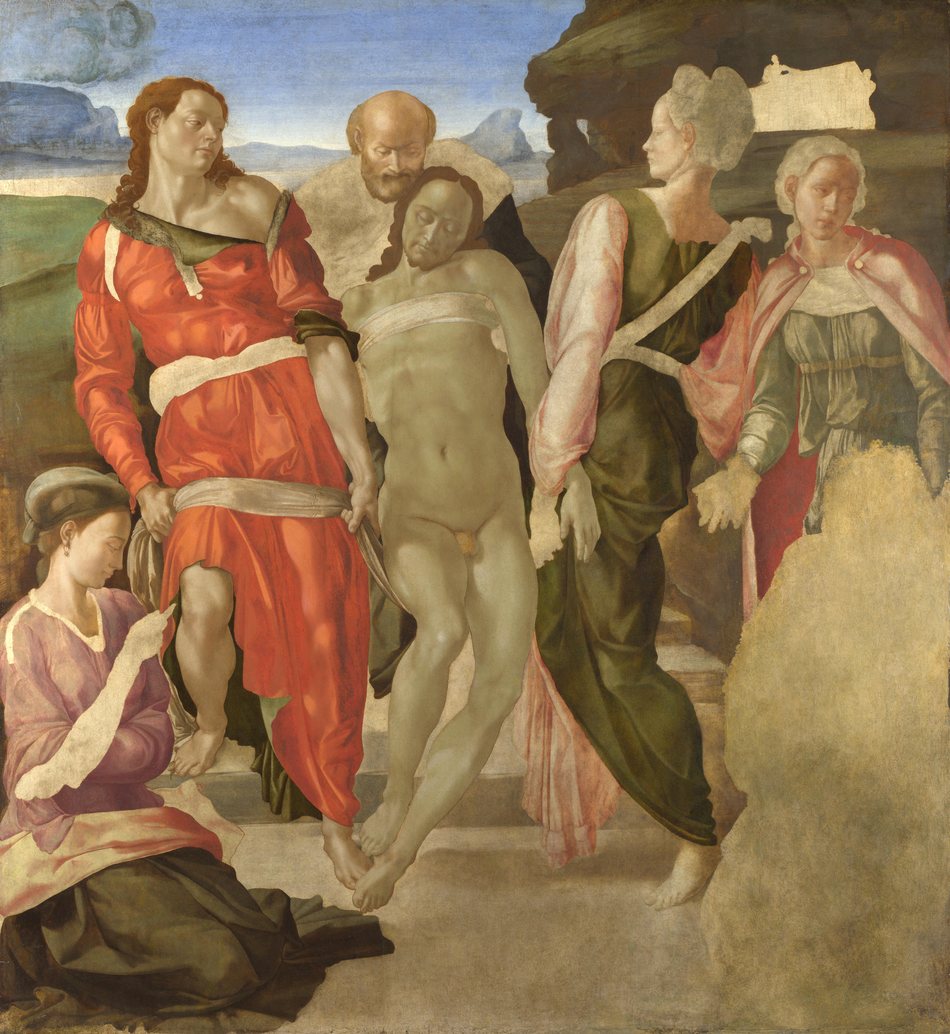
Also unfinished, also fascinating: Christ's body carried upright like a statue being moved — which, in Michelangelo's mind, it essentially was. The empty spaces were meant for figures he never painted; the picture survives as a half-built monument.
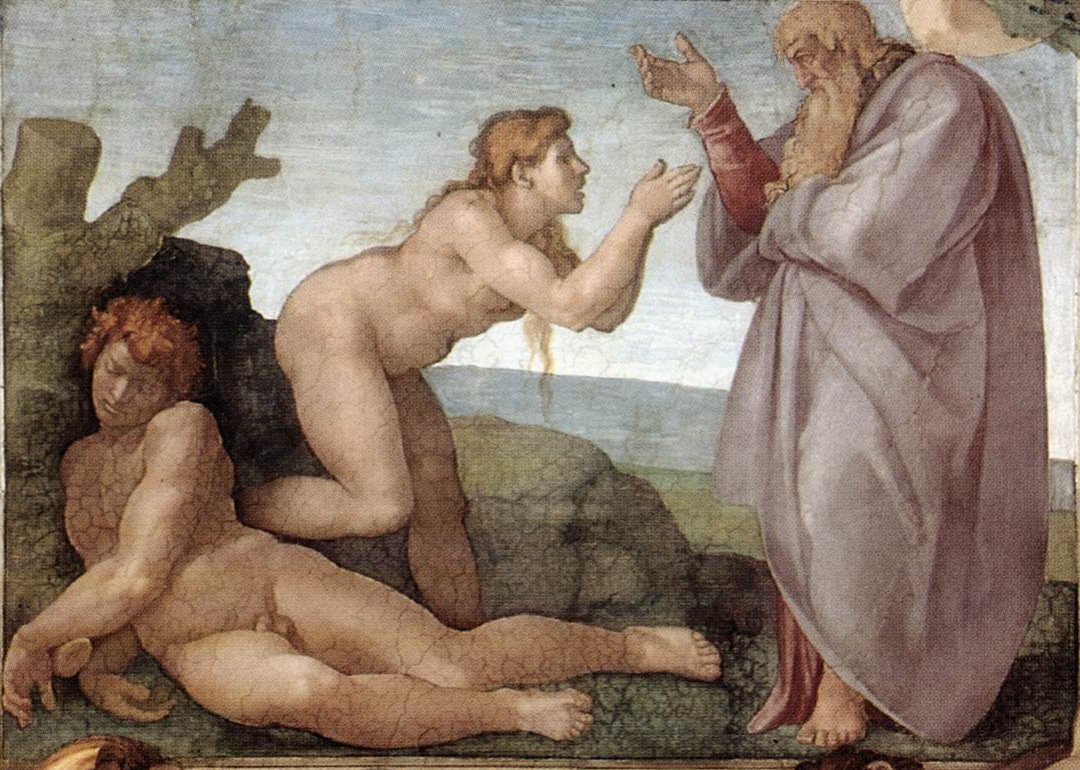
Eve rises from Adam's side already turning toward God with folded hands, while Adam sleeps on in the foreground, oblivious. In the ceiling's sequence this quiet panel sits between the thunder of the Creation of Adam and the violence of the Fall — a held breath.
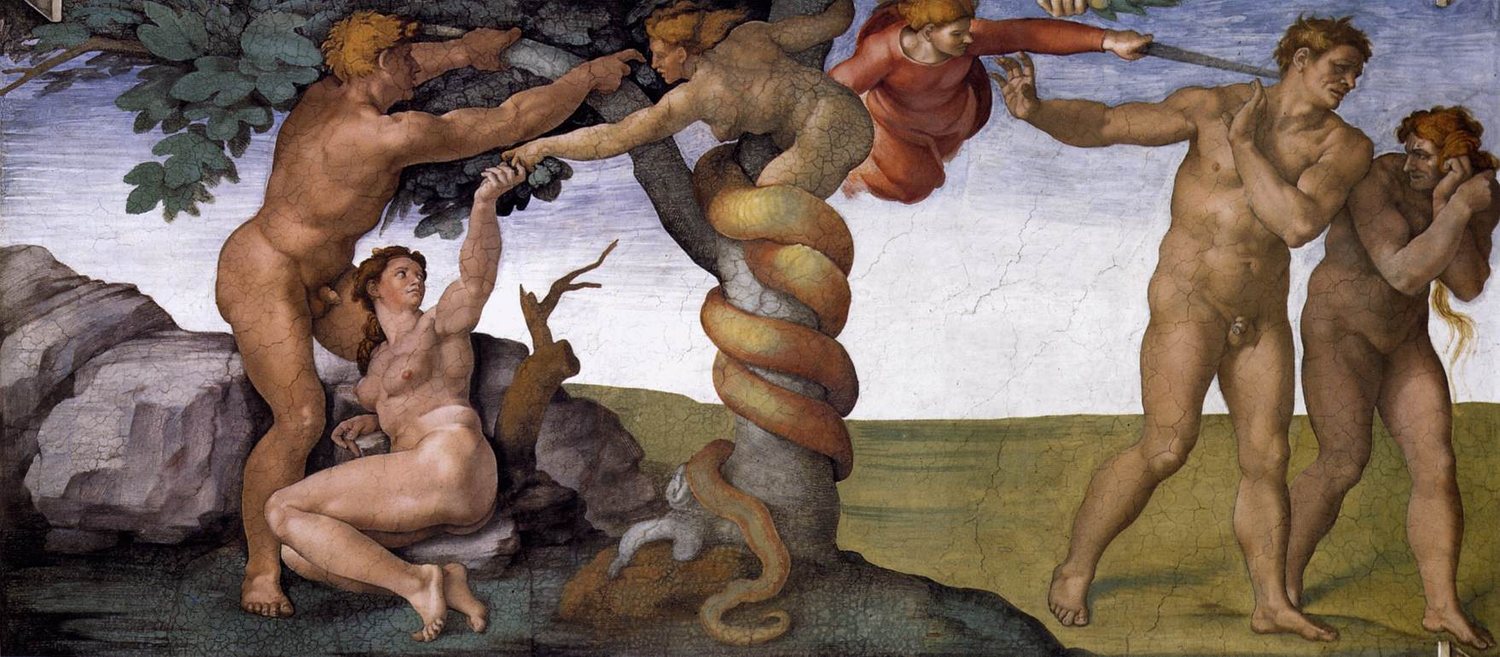
Two moments in one field: at the tree, Eve takes the fruit with a serpent wound around the trunk; a few feet to the right the angel's sword drives the same pair, now aged by shame, out of paradise. Michelangelo paints cause and consequence in a single glance.
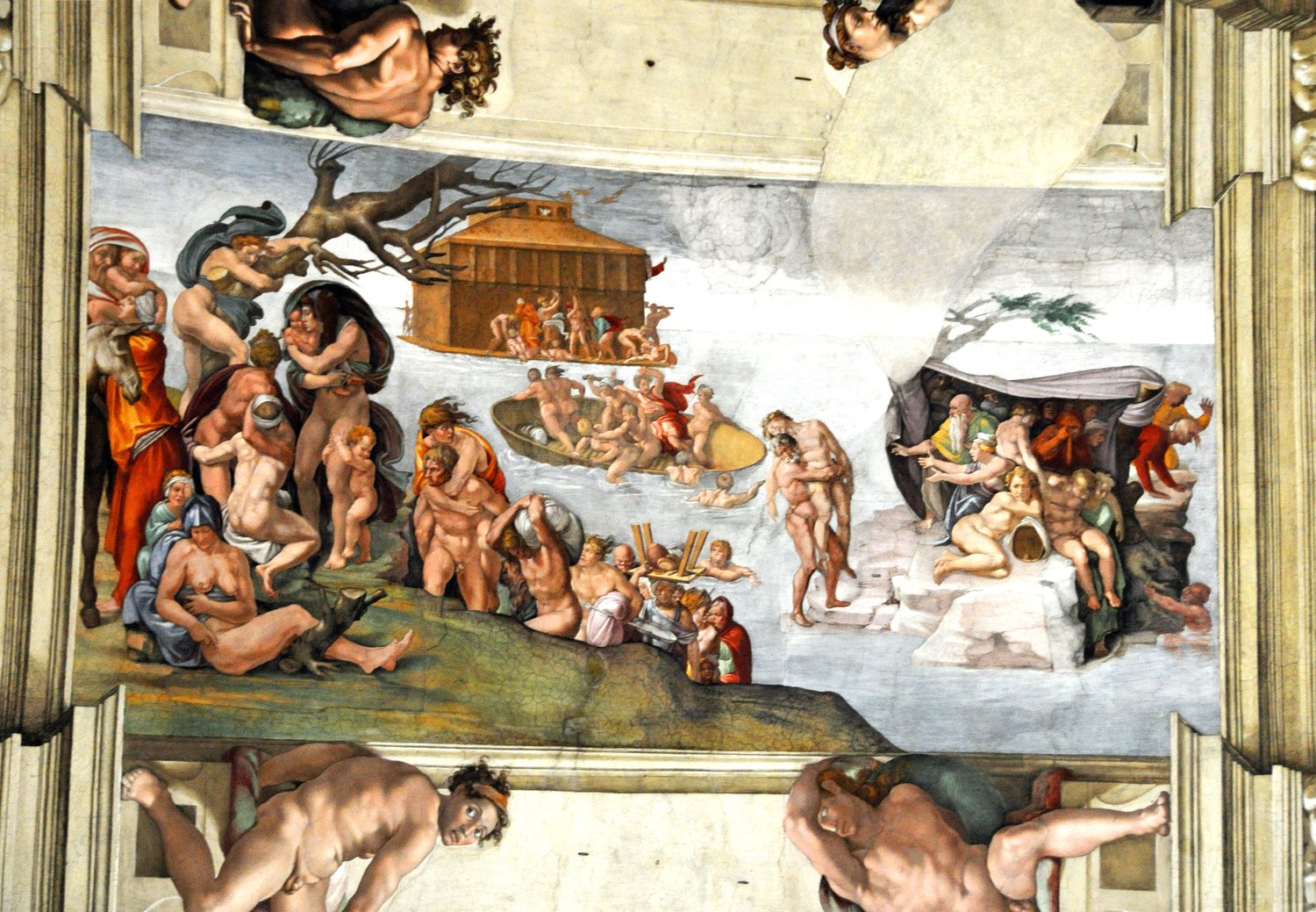
The first Genesis scene he painted — and the one that went wrong: mould bloomed in the fresh plaster and the panel had to be hacked off and redone once he had learned Roman intonaco the hard way. The crowded, desperate figures climbing to drown last are a beginner's fresco and a master's composition at once.
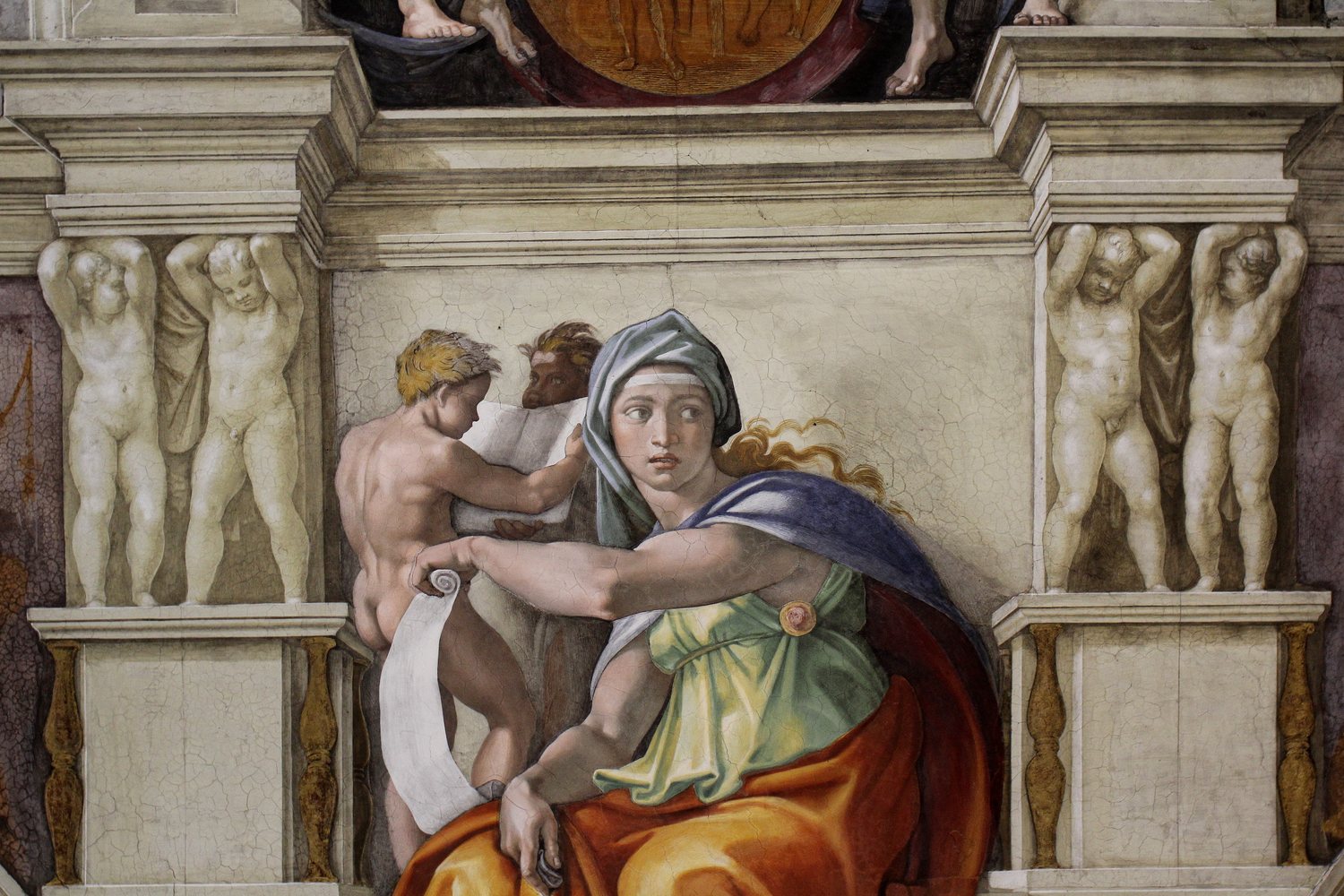
The youngest and freshest of the five sibyls, turning from her scroll with the startled clarity of someone who has just seen the future. Her scarf catches a wind that exists only in paint; the two putti behind her hold the book of prophecy like stagehands.
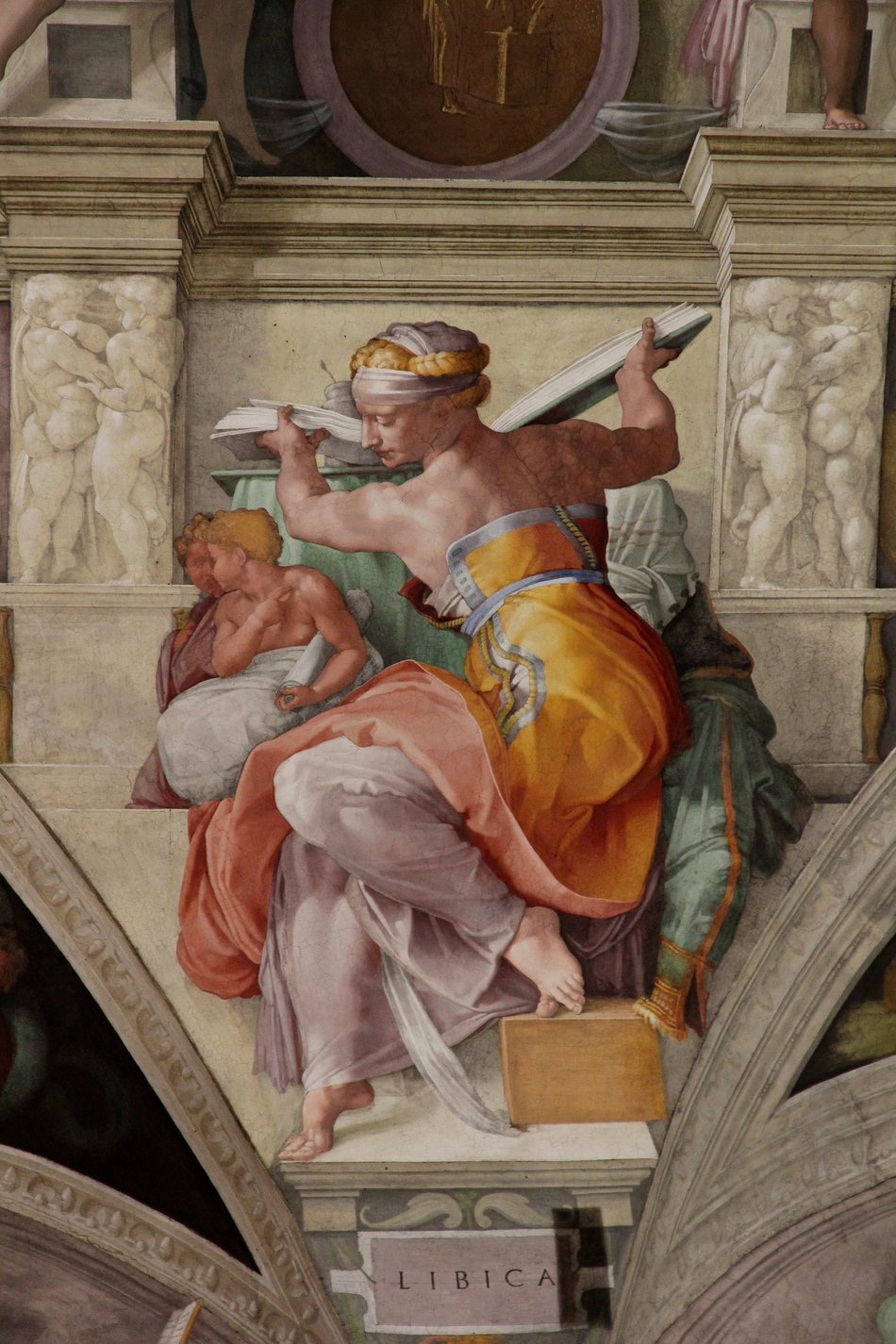
The most sculptural sibyl: she twists to set down her enormous book, one foot still on the step, the movement caught mid-turn like a statue rotating on its plinth. Michelangelo made studies of a male model for her — the body underneath the brocade is a wrestler's.
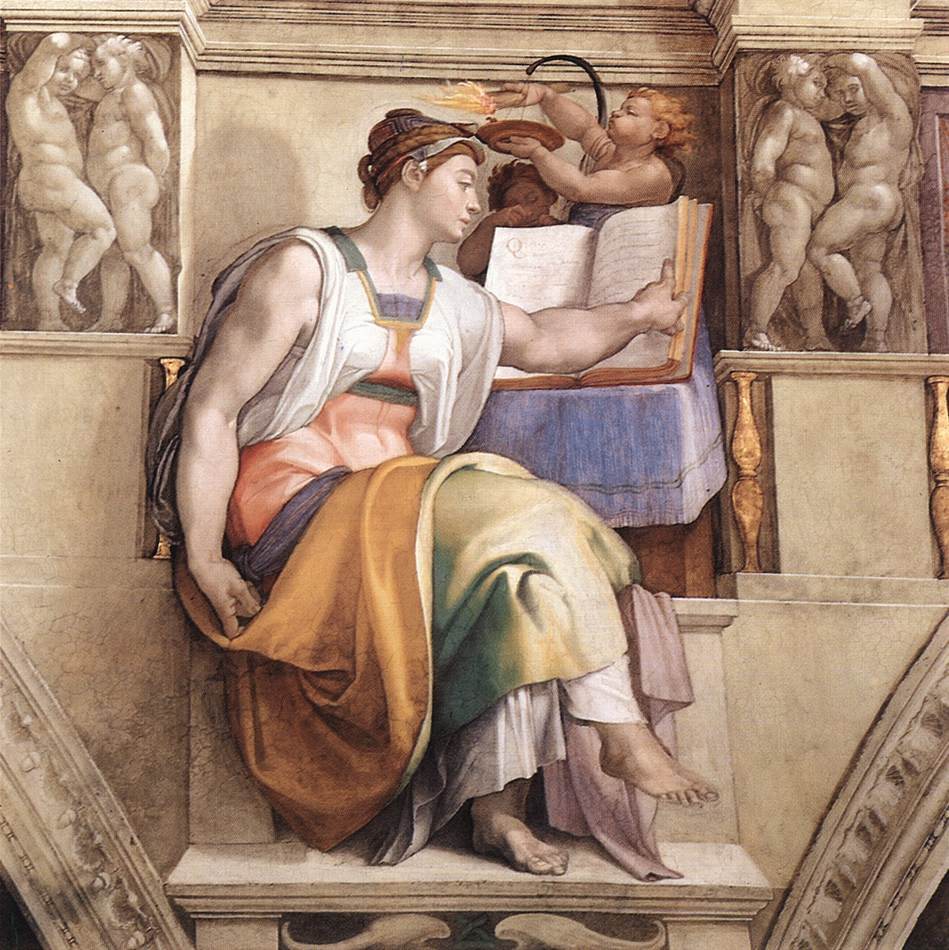
She reads by lamplight, turning a page with monumental calm, while a putto behind her blows the lamp alight. Of all the ceiling's giants she is the quietest — prophecy as an evening's study, painted on a ceiling that gave its painter no quiet evenings at all.
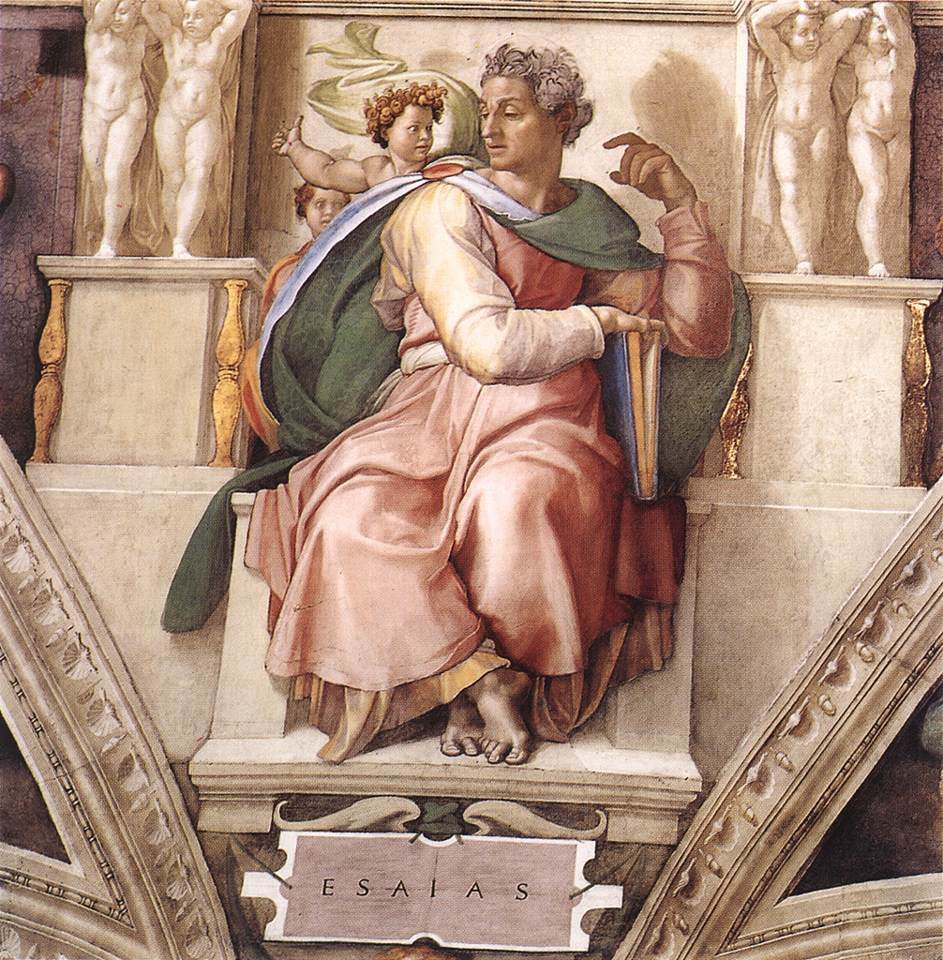
Isaiah pauses mid-reading, a finger keeping his place, head lifted as if the voice had just arrived; a putto holds the curtain, another the book. The name tablet below — ESAIAS — is part of the fiction: the whole ceiling is built as architecture that painting pretends is stone.
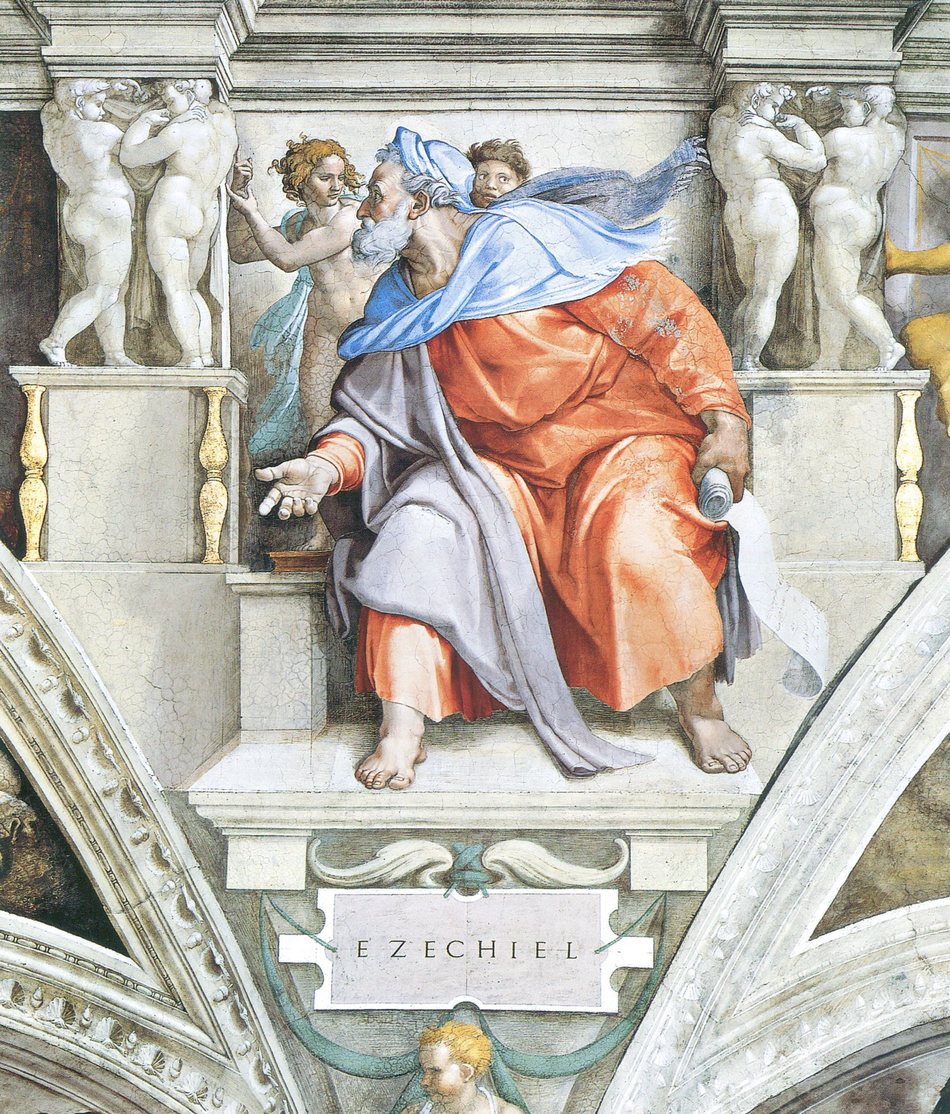
Ezekiel twists sharply toward the voice only he can hear, scroll in hand, his whole body a question mark. Painted early in the campaign, he already has the ceiling's signature move: a seated figure made dramatic purely by rotation.
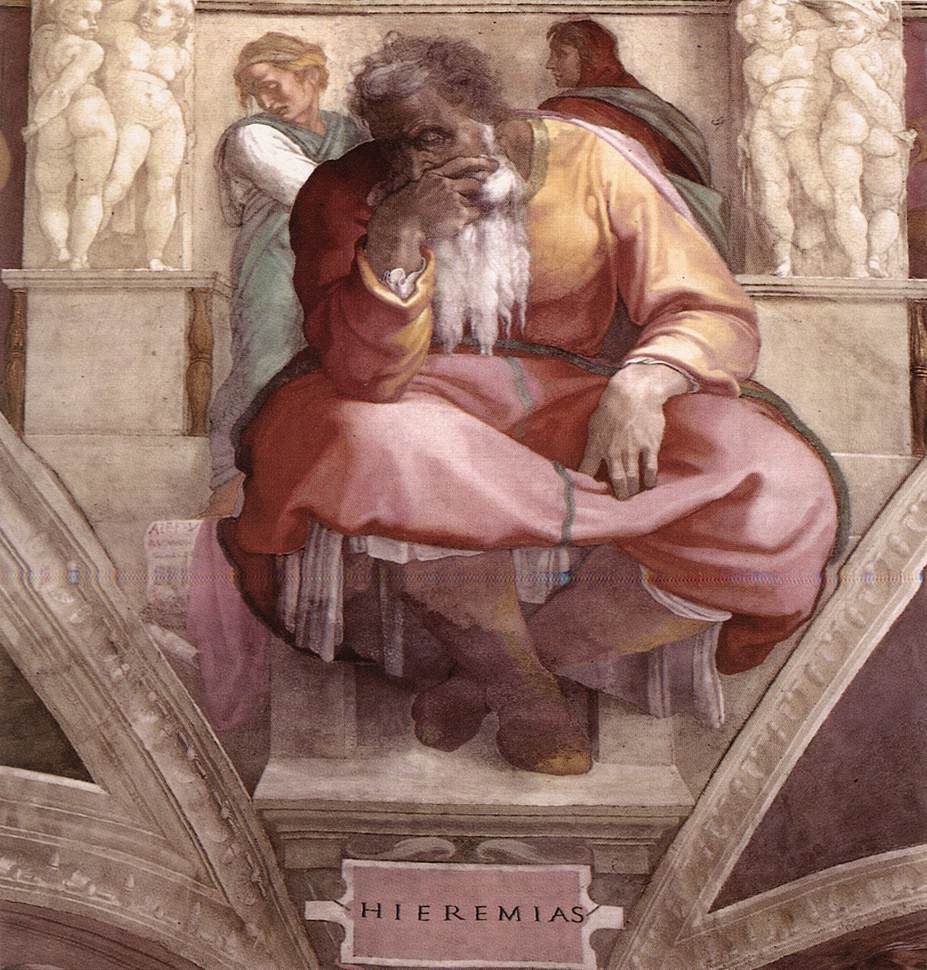
The weeping prophet sunk in thought, head on hand, the picture of grief at monumental scale — tradition says Michelangelo gave him something of his own features and more of his own temper. The two mourning figures behind him are among the ceiling's saddest inventions.
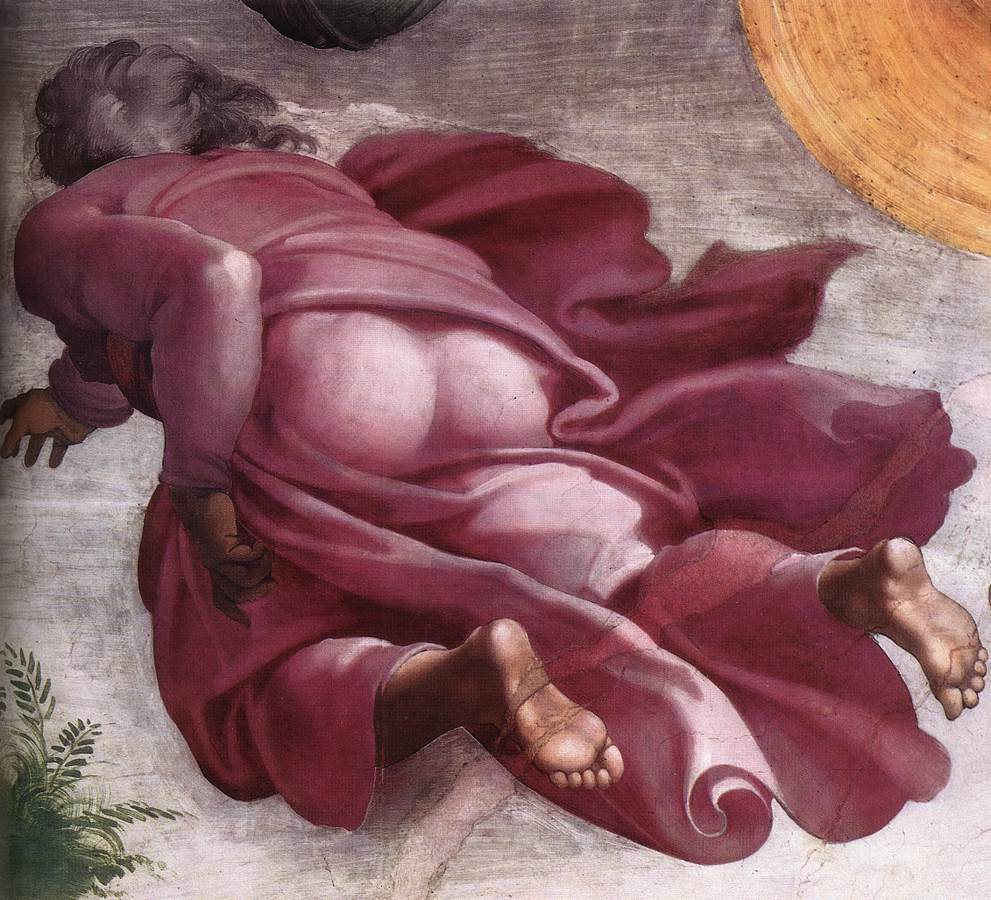
God appears twice in this one panel: facing us, arms flung wide to set the sun and moon in place — and again from behind, in the famous passage shown here, thrusting vegetation onto the earth. No painter before him had dared show the Creator's back; the audacity is the theology.
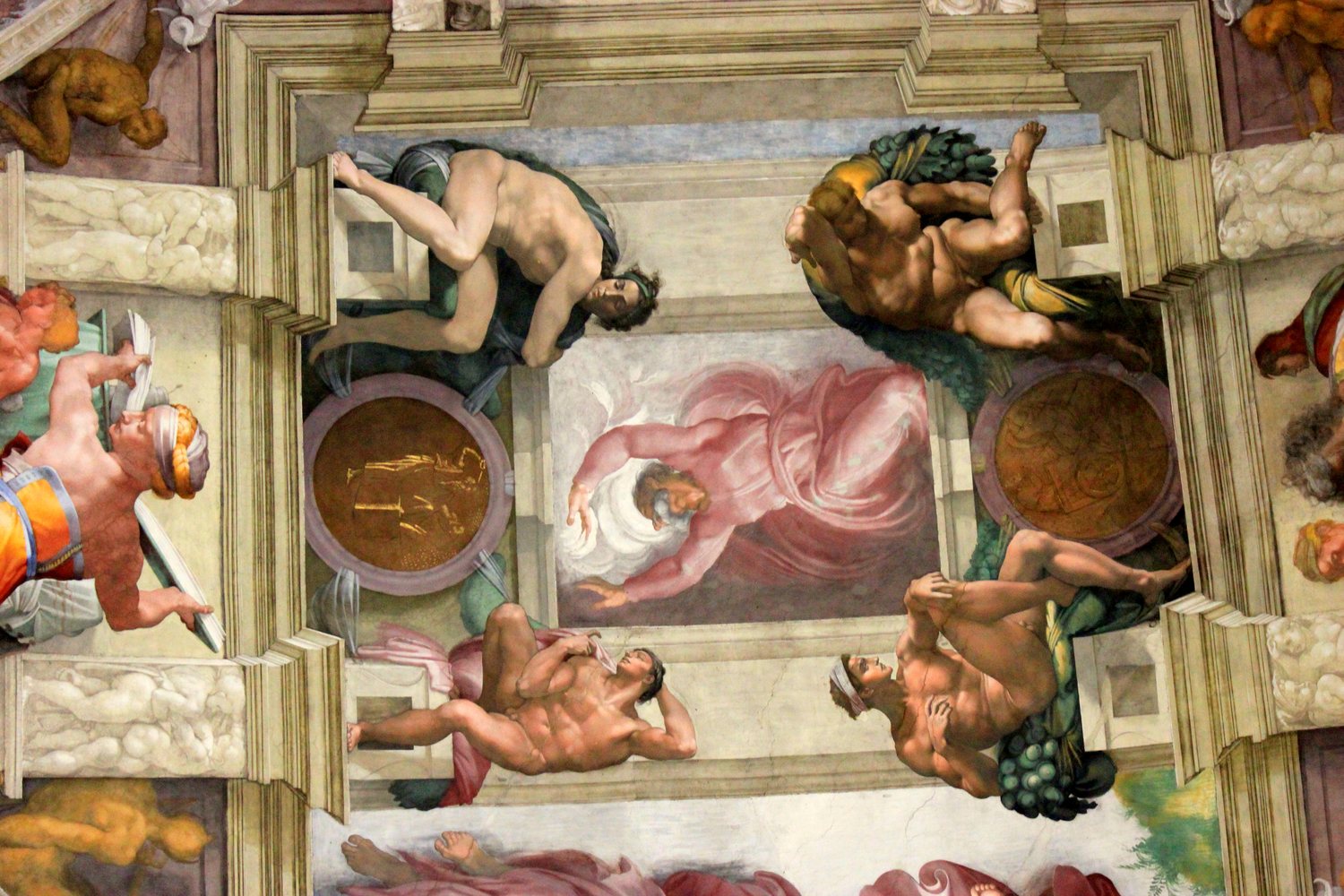
The first scene of Genesis and the last he painted in the sequence — God swirling upward through darkness, arms raised to divide light from its opposite. By this final bay Michelangelo's figures had grown so large and rapid that the whole panel took about three giornate: the speed of creation, literally.
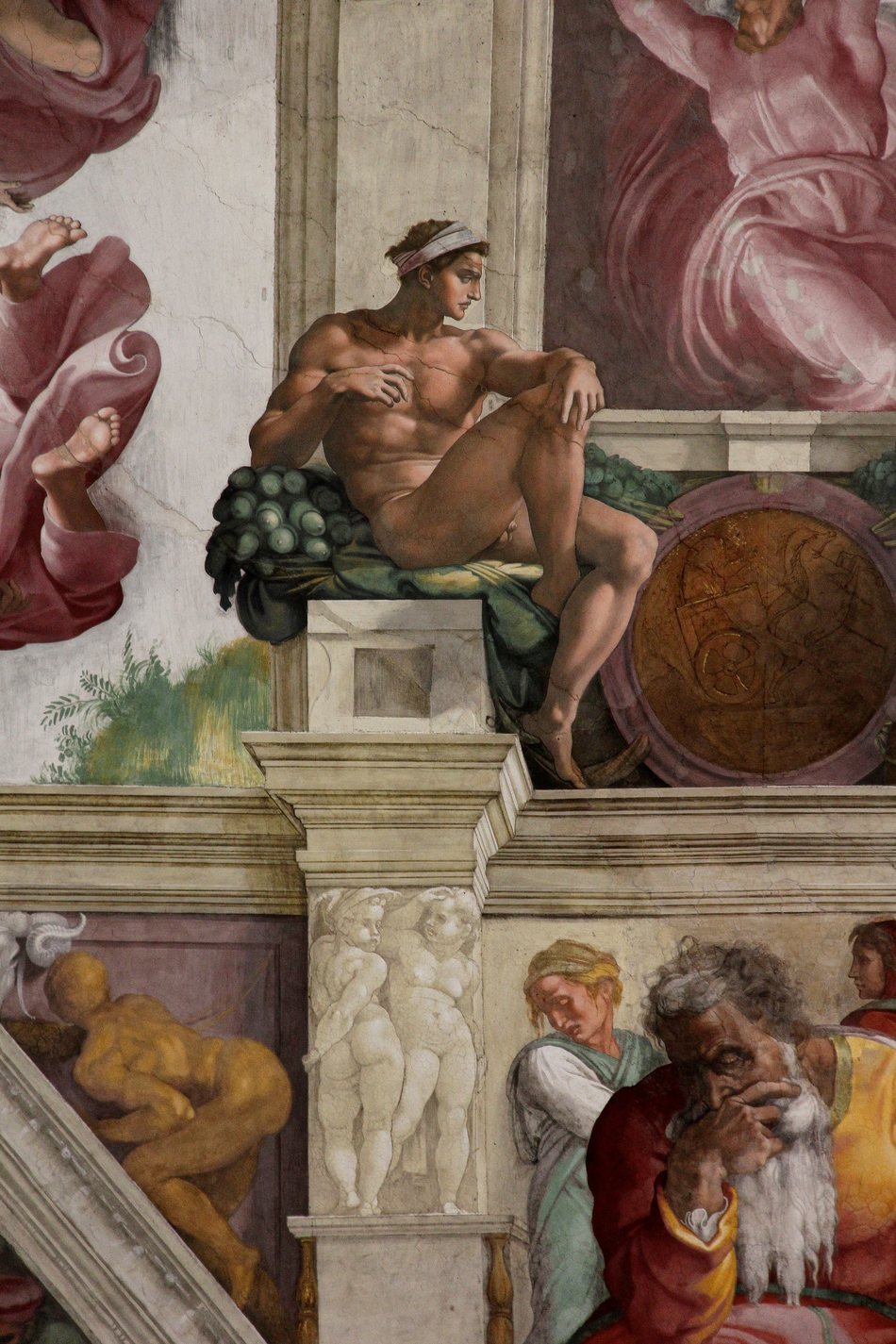
Twenty nude youths sit at the corners of the Genesis scenes, holding garlands and medallions, belonging to no story at all. They are the ceiling's pure sculpture — the human body celebrated for its own sake, and the figures later centuries copied most greedily.
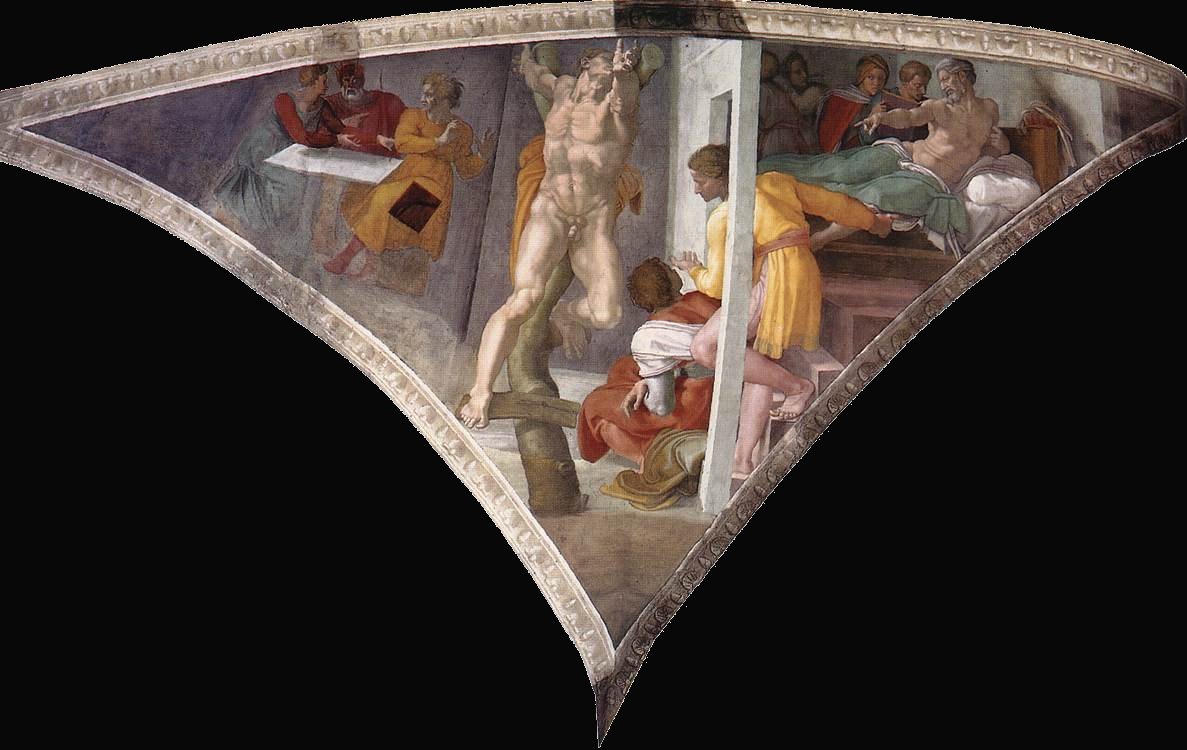
In a corner pendentive of the ceiling, Haman hangs on his gallows in a pose borrowed from the crucified Christ — a whole theology of types compressed into a triangle of wall. The spandrel's awkward shape is exactly what Michelangelo turns into the drama.
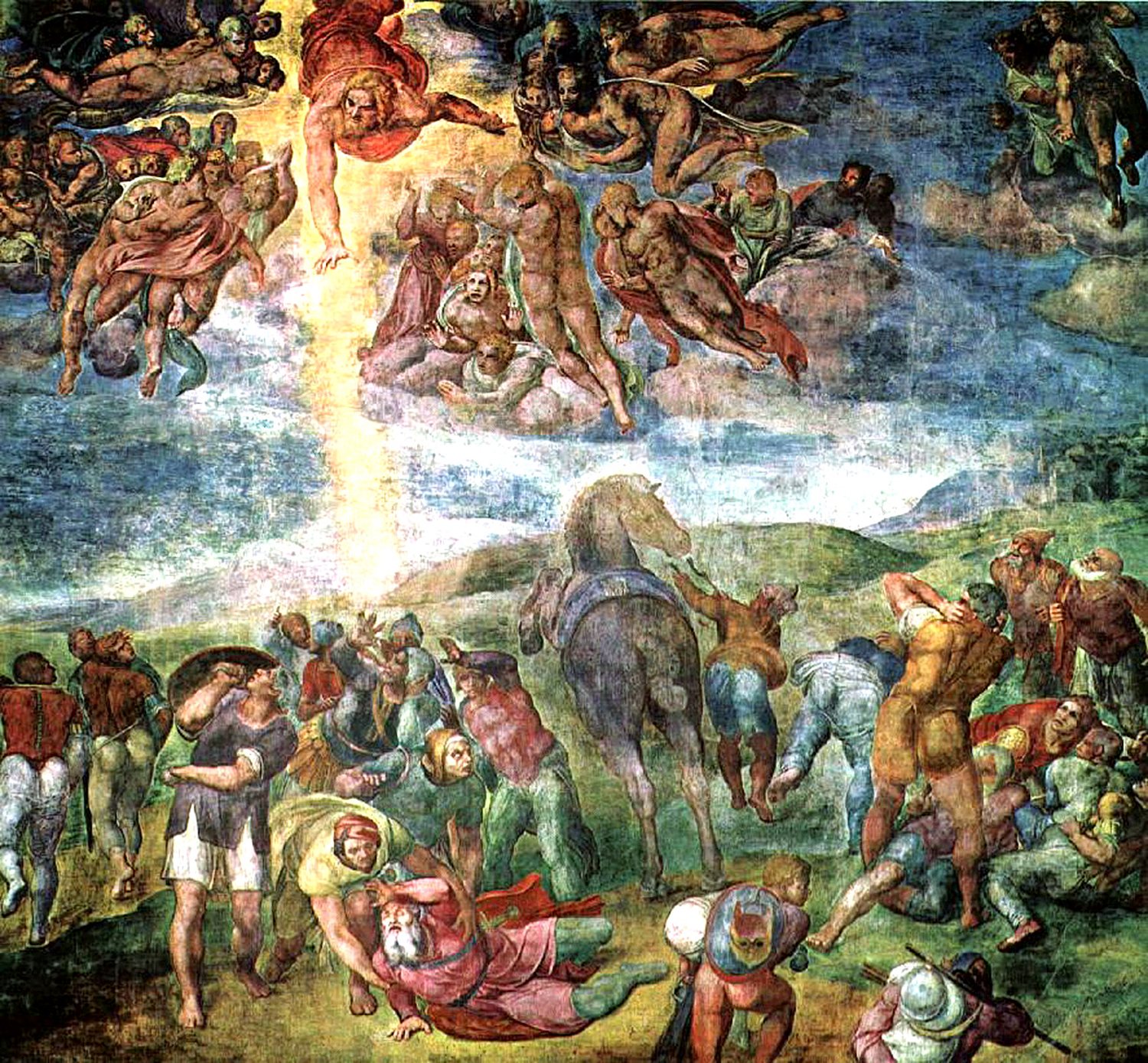
Painted in his late sixties for the Pope's private chapel: Christ bursts from the clouds in glory, Saul lies blinded among panicking horses and soldiers, and heaven's light does the violence. Nothing here is youthful ease — it is power painted by an old man who still had it.
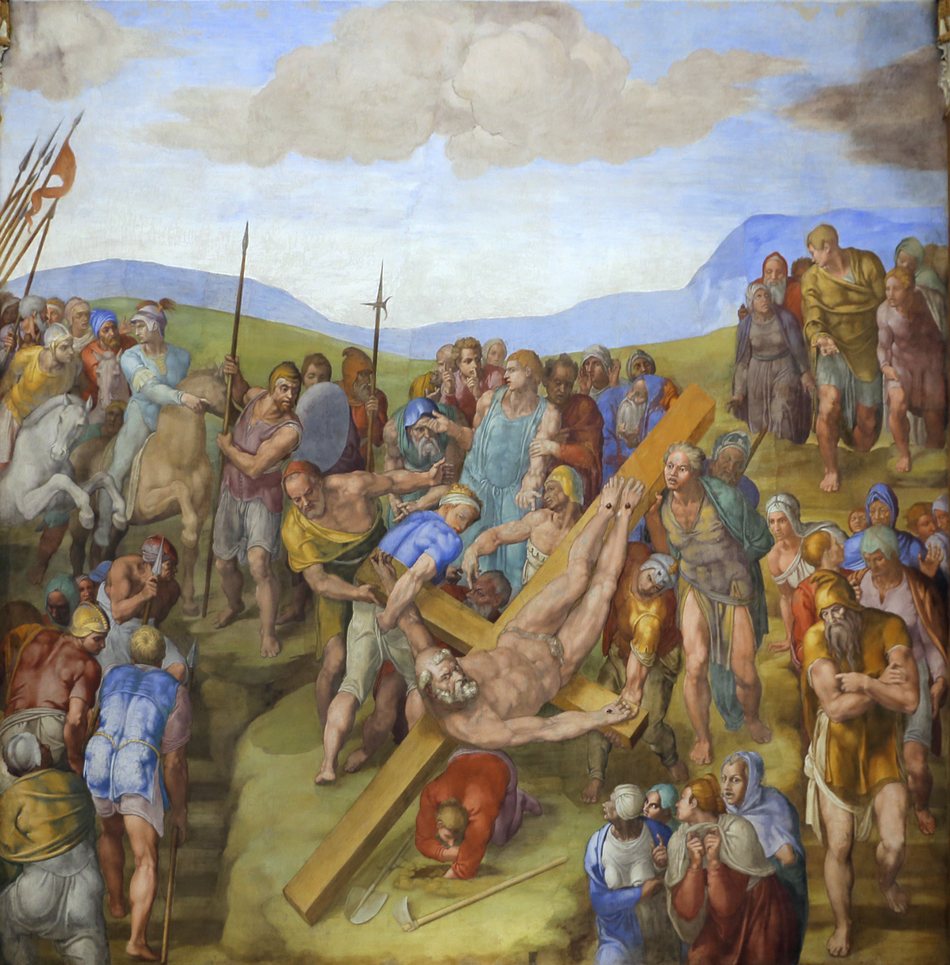
His last fresco, finished at seventy-five: Peter, crucified head-downward, twists on the half-raised cross to glare out at us while the executioners work and the crowd mills. The old sculptor-painter ends his fresco career with a body defying gravity and death at once.