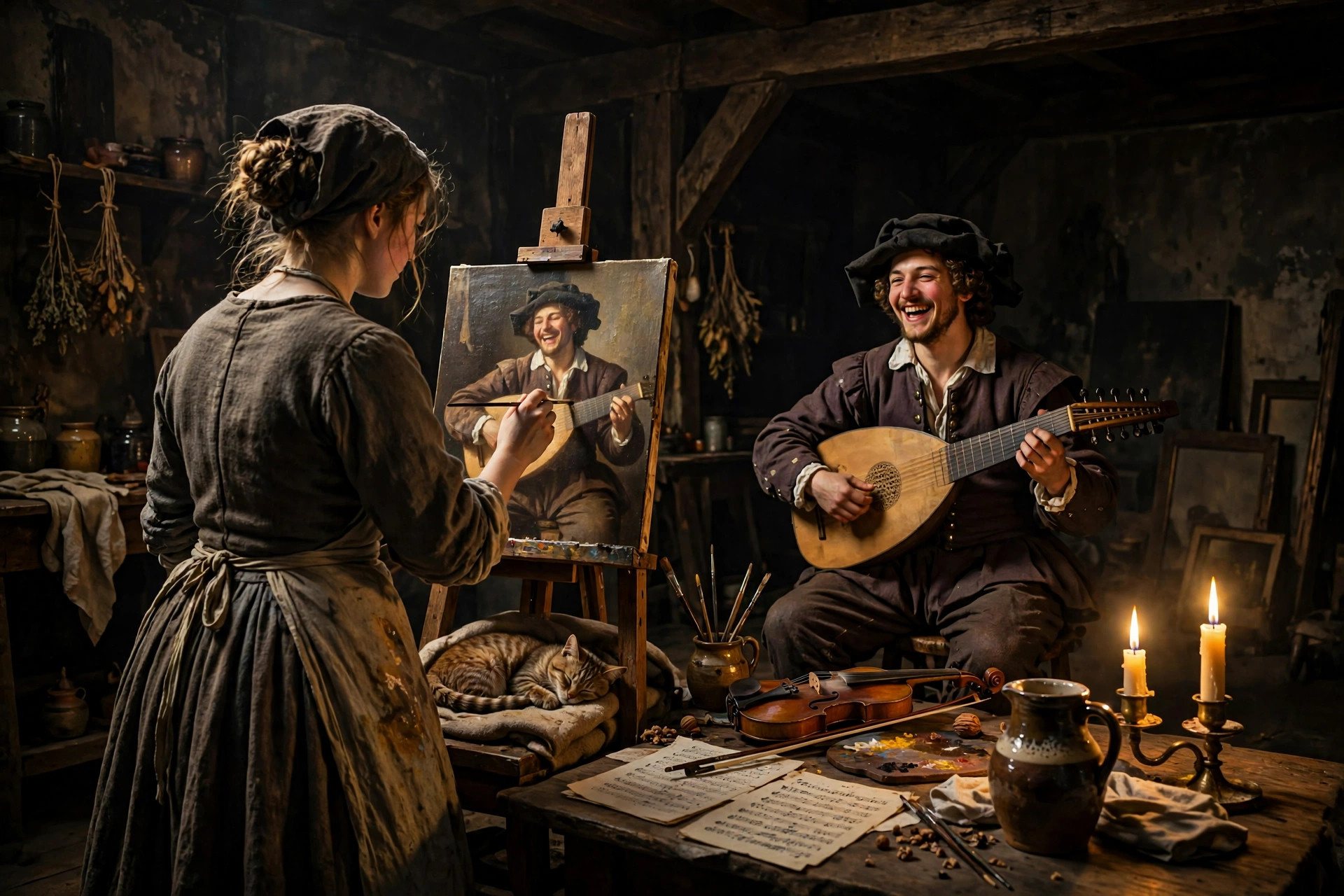
Haarlem laughed in her pictures — and then forgot her name for two hundred years, selling her work as Frans Hals. Leyster painted the tavern's bright side: serenades, drinkers, children teasing a cat. But her most famous picture is the quiet one, where a man offers money by candlelight and a woman goes on sewing. The laugh, in her hands, always has a second face.
She signed with a monogram — JL crossed by a star. Leyster means 'lodestar' in Dutch, the guiding star, and the signature is a pun she clearly enjoyed. That small star is how we know her work at all: again and again it has been found hiding under later, grander signatures, waiting out the centuries on pictures sold under other names.
For two centuries her paintings hung as works by Frans Hals, her Haarlem contemporary — the brushwork was close enough to fool everyone. In 1893 the Louvre's 'Joyeuse Compagnie', bought as a Hals, was examined and her monogram found beneath a false signature. A lawsuit followed, and then, slowly, an oeuvre: scholars went through the 'Hals' pictures and gave the star-signed ones back to her.
In 1633, aged twenty-four, she was admitted to Haarlem's Guild of St Luke as a master painter — one of very few women ever enrolled — and ran her own workshop with apprentices. When Frans Hals poached one of her pupils in 1635, she complained to the guild and won: Hals was fined, though allowed to keep the boy. She was, by every record, a professional among professionals.
Her brush is Hals's gift to Haarlem: paint loaded and flicked on, a grin caught in three strokes, nothing laboured. But the subjects are hers. Where Hals paints the laugh itself, Leyster paints the second around it — the offer being made, the last drop falling, the eel about to bite the cat's tail. Her pictures have plots.
Lutes, viols, flutes, citterns: her people are always making music. Music in her world is courtship, celebration and temptation at once — the serenader sings under a window, the drinker sings over his jug, the boy practises his flute with a violin waiting on the wall. She paints the sound track of Haarlem's evenings, and her brush keeps the tempo.
In 1643, six years after tulipmania ruined half of Holland, Leyster painted watercolour tulips for a florilegium — a tulip book, the catalogue of a grower's treasures. The broken red-and-white bloom on its tall stem is drawn with a botanist's patience and a painter's eye: the same hand that caught a grin in three strokes, slowing down for a flower.
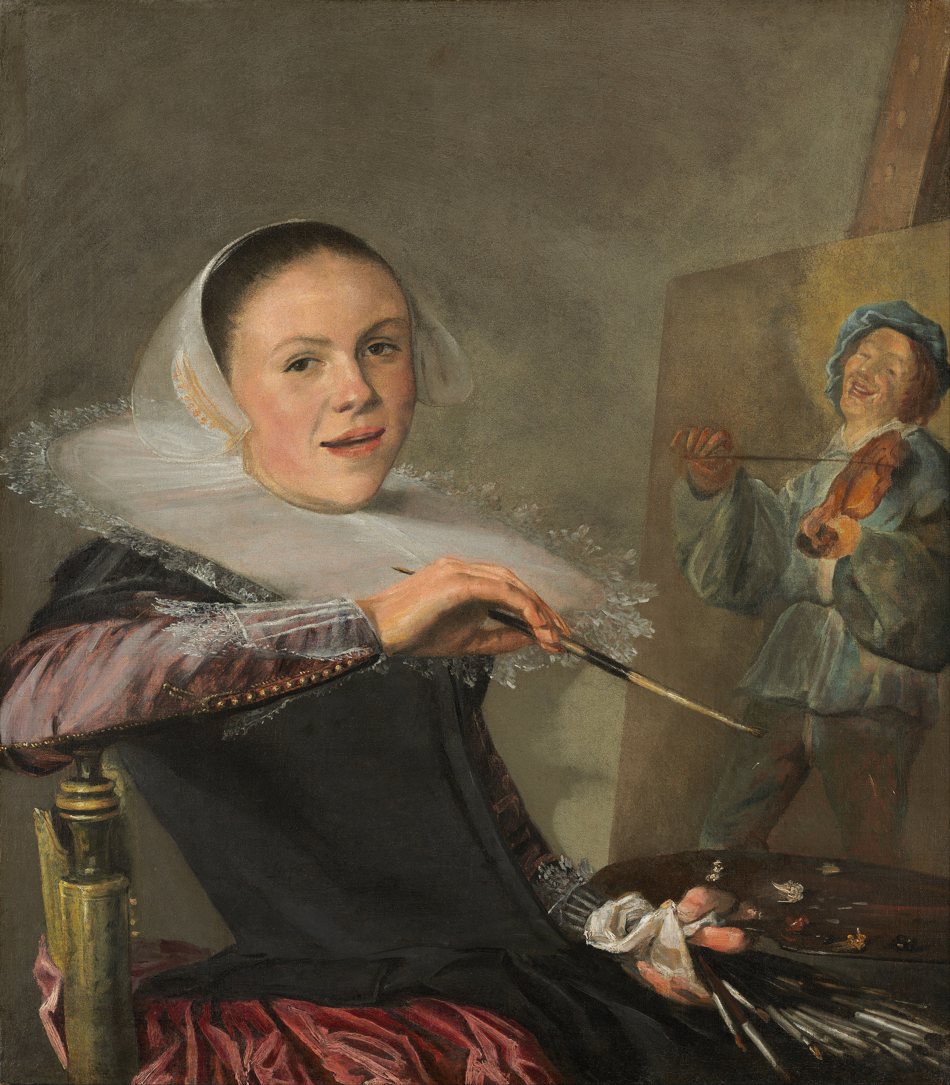
She turns from her easel to meet us, brush and palette in hand, a violinist taking shape on the canvas behind her brush. She is twenty-one, dressed in her portrait best — lace collar, silk sleeves — and entirely in command. It may have been the piece she presented to the Haarlem guild: a young master introducing herself, mid-stroke.
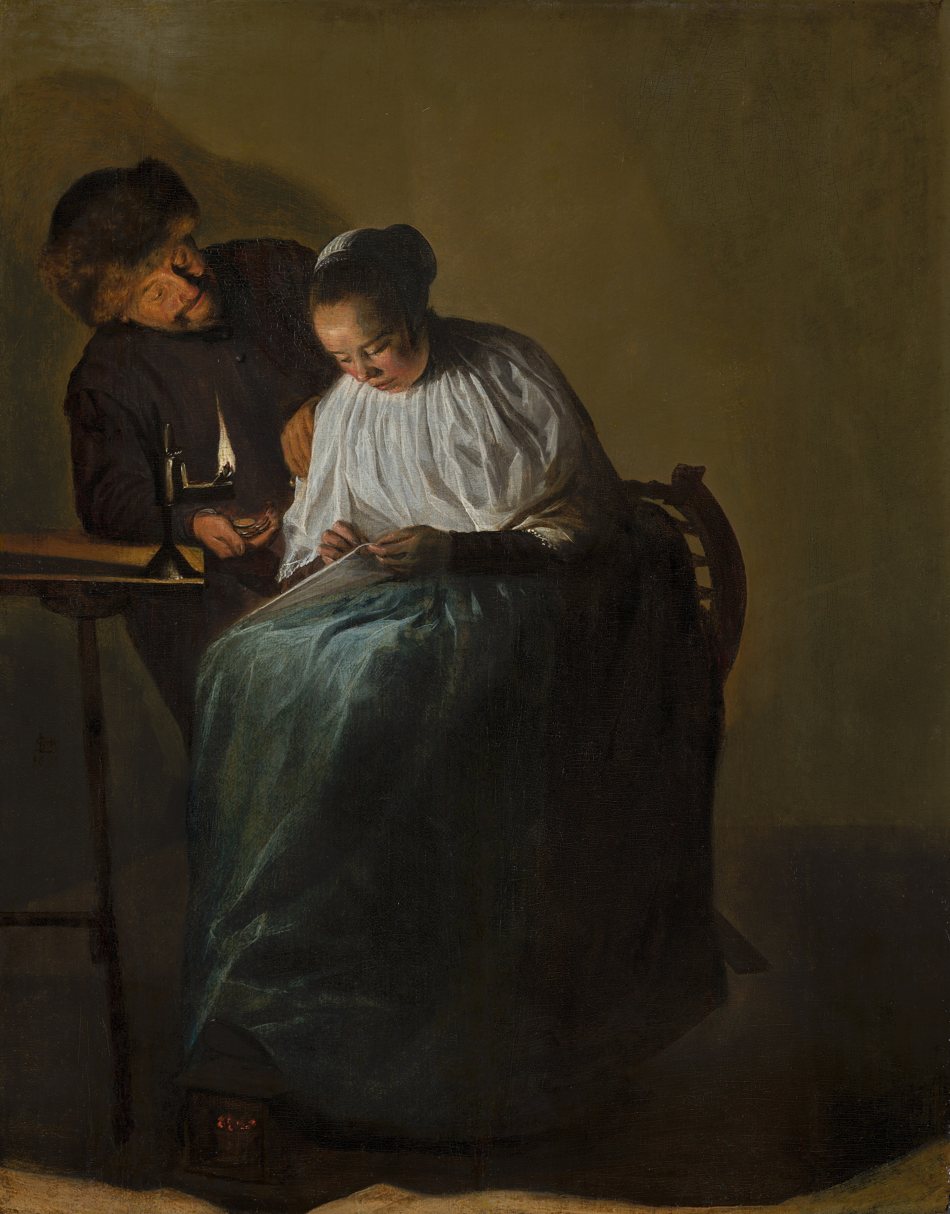
By candlelight a man leans over a woman's sewing, holding out coins; she does not look up, her needle goes on, her foot rests on a warmer. Nothing is decided and everything is said. In a century of bawdy propositions played for laughs, Leyster paints the woman's side of the moment — the refusal performed as simple, absorbed work.
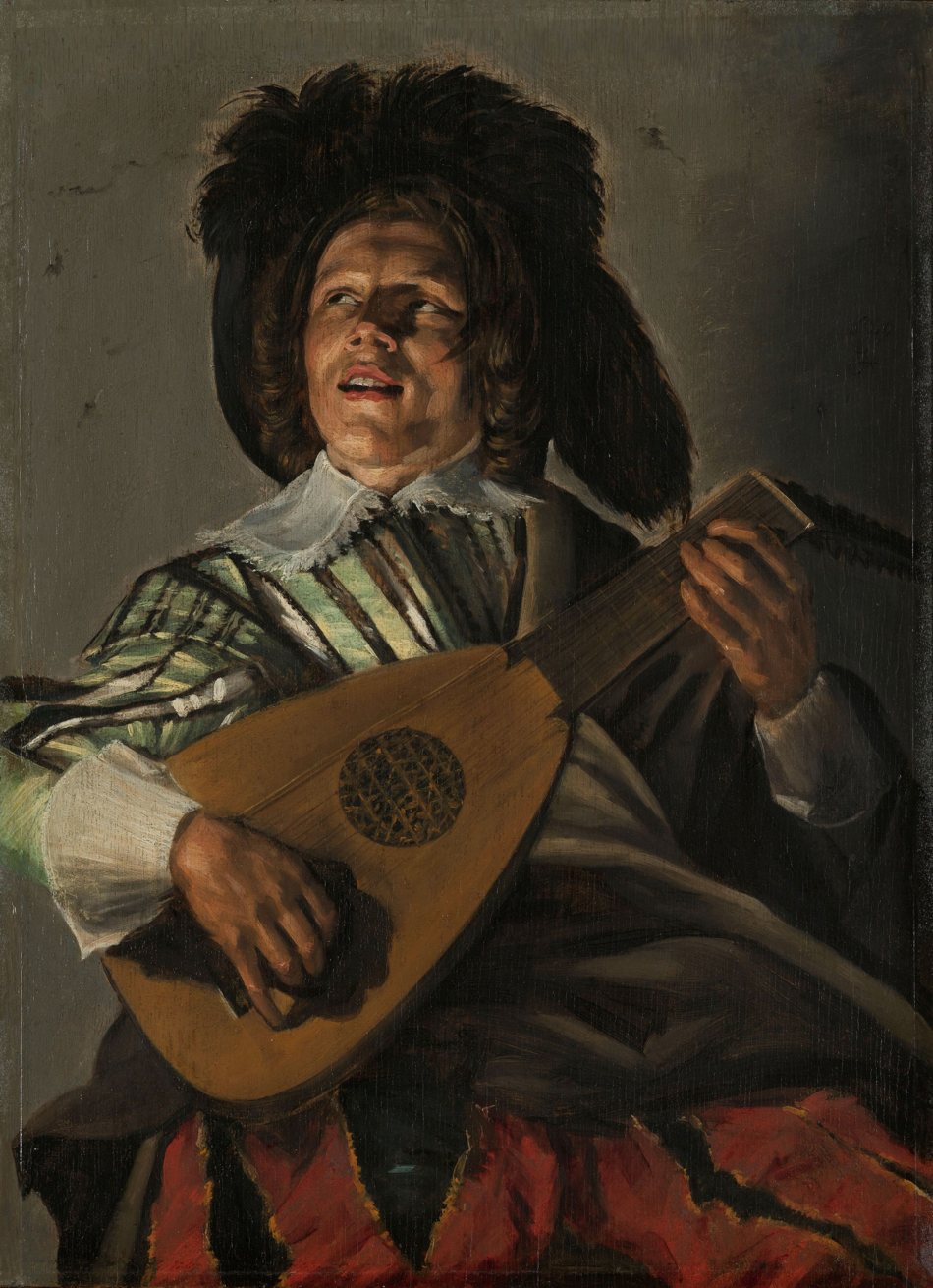
A young man in a great feathered beret sings to his own lute, eyes lifted, mouth open mid-phrase. Painted when she was twenty, it is pure performance — the plucked string and the sung note held in one flickering brushstroke each. Haarlem's evenings were full of such music; this is its portrait.
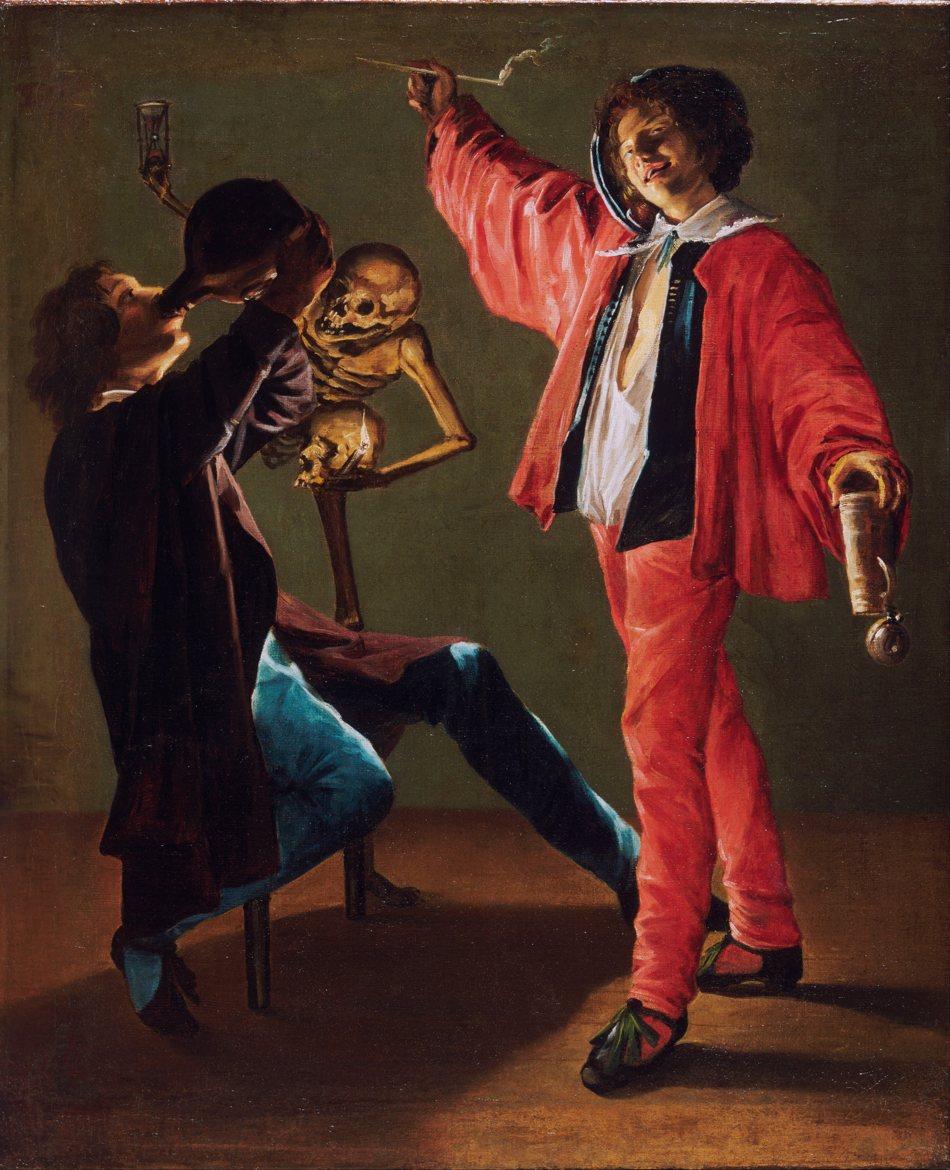
A drinker in a red suit tips his glass for the last drop, dancing — and behind him a skeleton raises an hourglass and a skull, keeping time. It is the tavern's oldest joke told straight: drink, for the glass and the life empty together. Leyster paints the reveller's joy and its shadow in the same red-and-bone picture, neither cancelling the other.
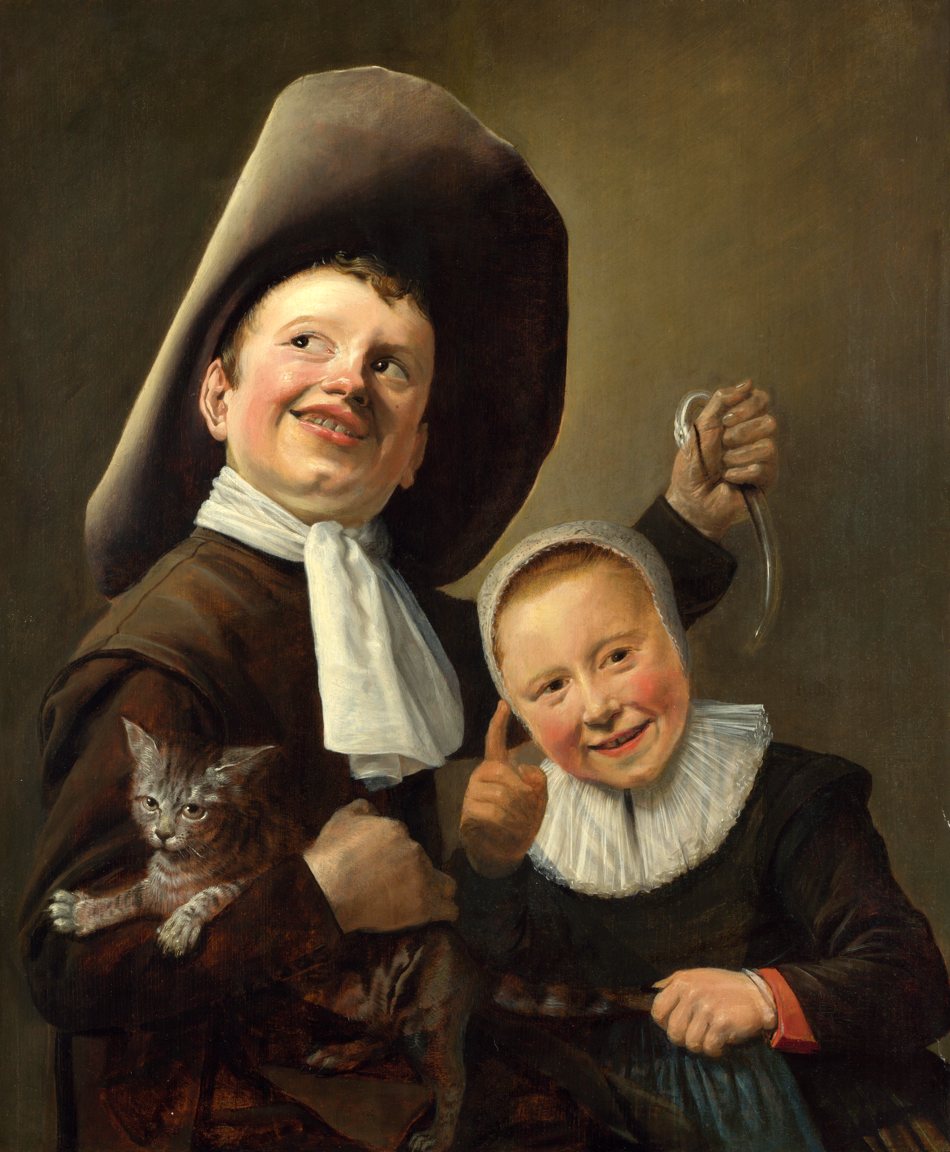
Two children grin straight at us: the boy hugging a cat, the girl holding up an eel — which is about to bite the cat's tail and end the joke in chaos. It is a painting about a prank one second before it explodes, and about childhood itself in Leyster's Haarlem: mischievous, theatrical, and painted with obvious delight.
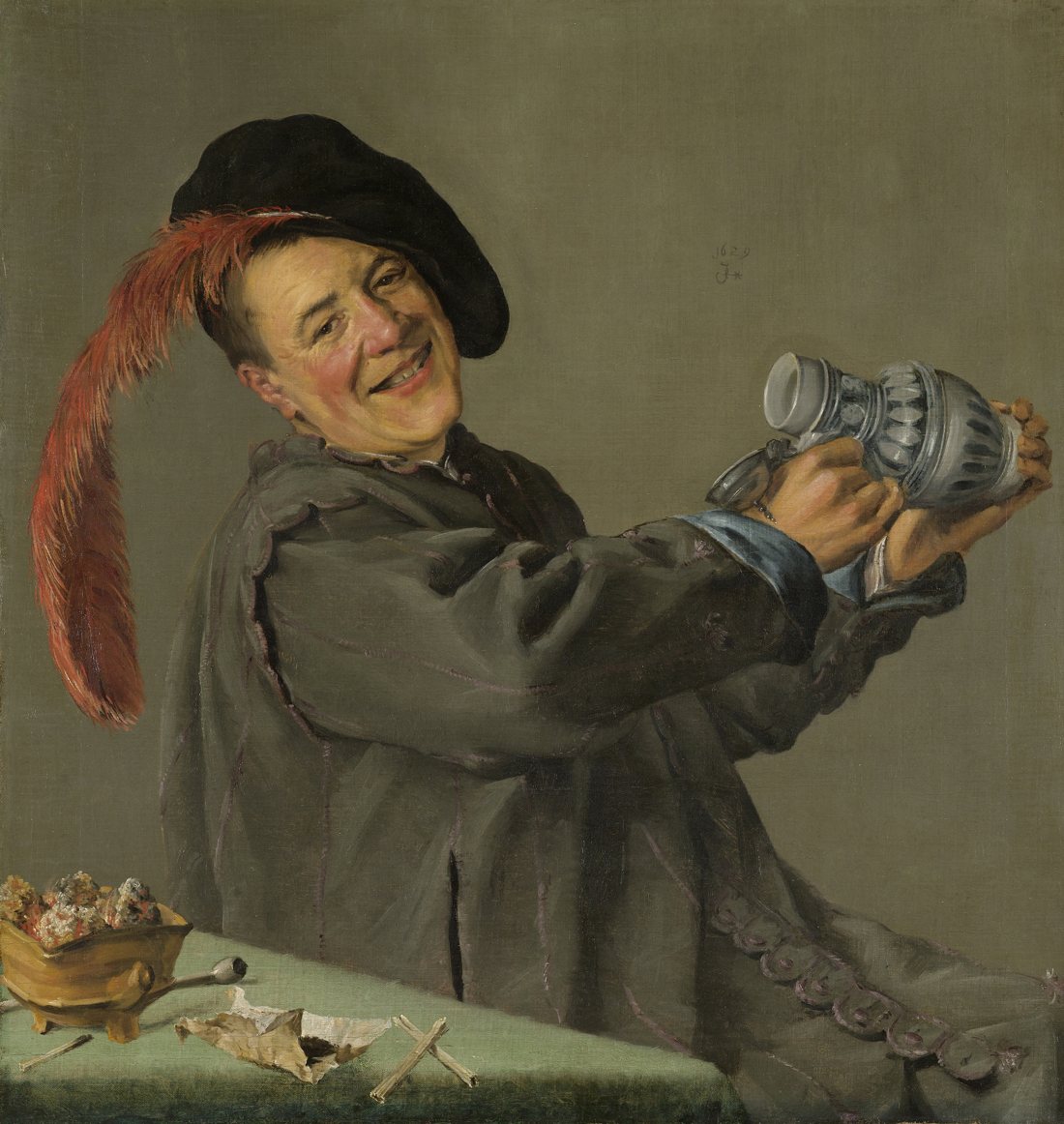
A drinker leans toward us, laughing, holding out his stoneware jug as if offering the viewer a round; his cap's red feather is painted with the same flourish as his grin. This is Leyster's most Hals-like picture — and the one that spent longest under Hals's name, until her star was found on it.
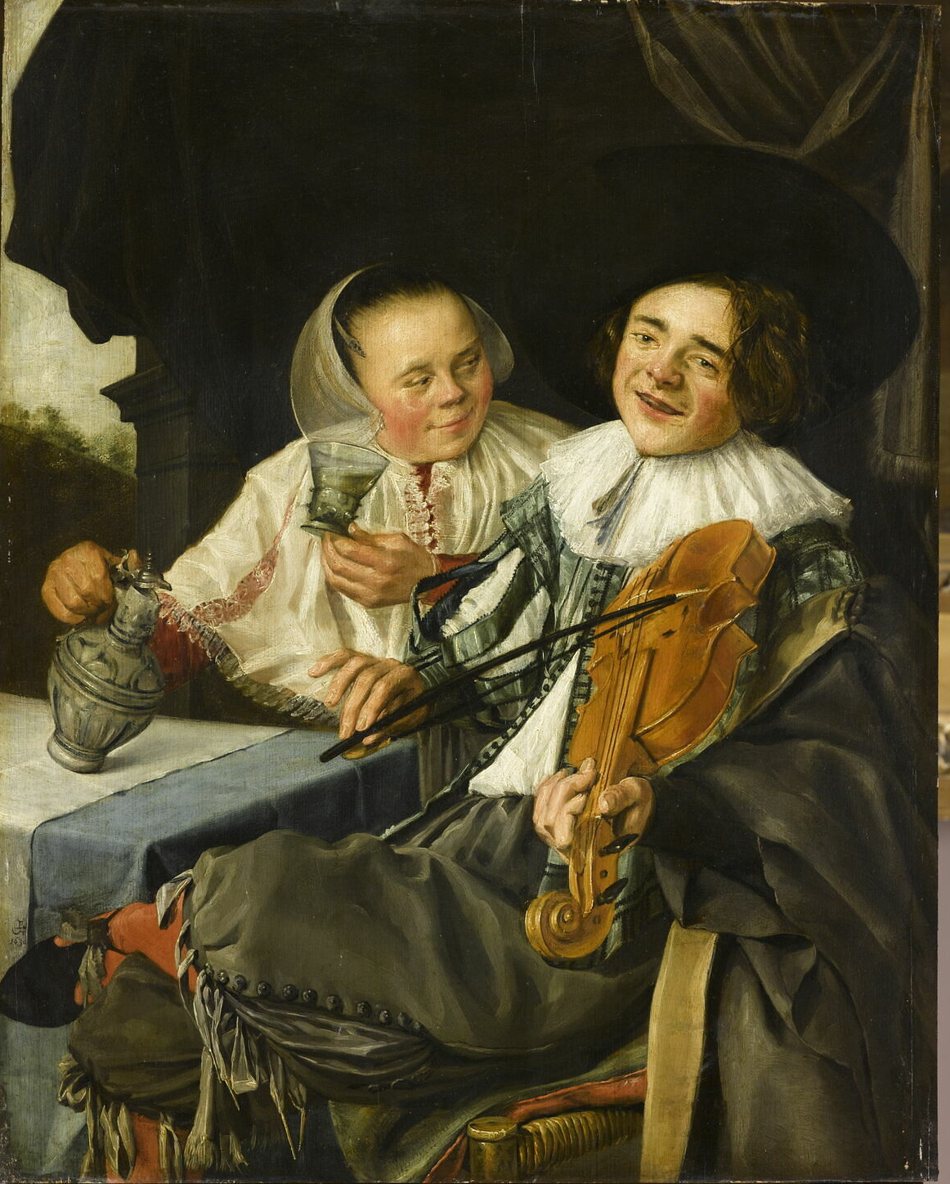
A fiddler and his companion at a tavern table, both turned to us with glasses raised — the 'Joyeuse Compagnie' whose examination in 1893 uncovered Leyster's monogram under a false Hals signature and gave her back her name. The picture that started her resurrection is itself a toast: raise a glass to the woman who painted it.
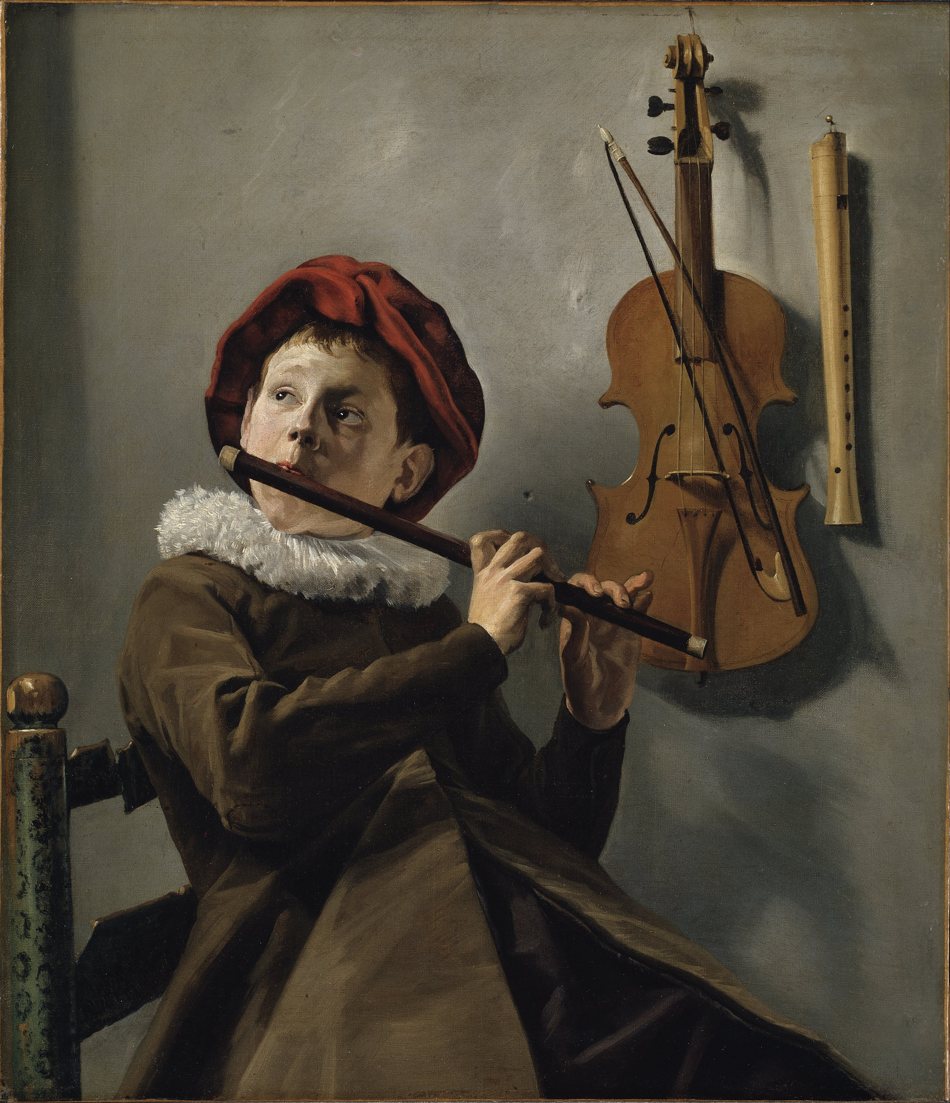
A boy in a red beret plays a transverse flute, cheeks puffed, while a violin and bow hang on the wall behind him — one instrument in use, one in waiting. Leyster's children are never sentimental: this one is working, concentrating, a small professional at his practice, painted by a woman who had been exactly that.
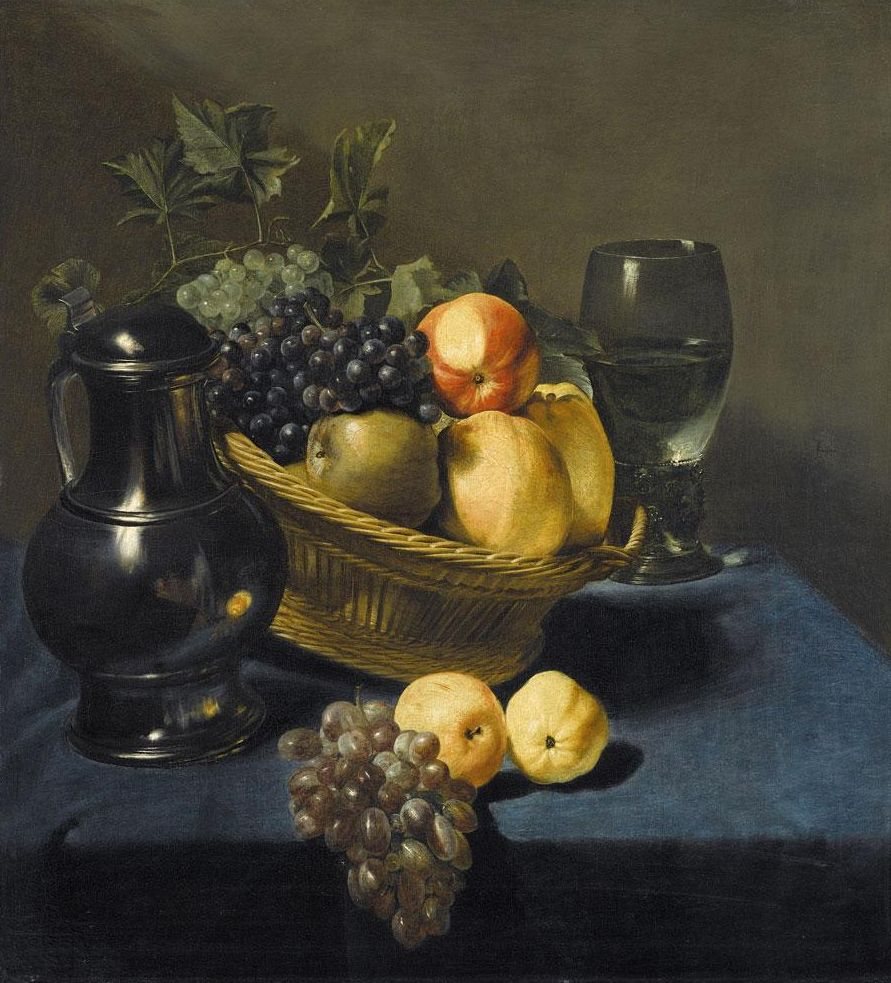
Her rare excursion into still life: apples and grapes in a wicker basket, a black ewer and a tall roemer on a blue-draped table. The brush is looser, the mood quieter than the taverns — the same eye for a gleam on glass and a bloom on fruit that she brought to faces, turned for once on things.
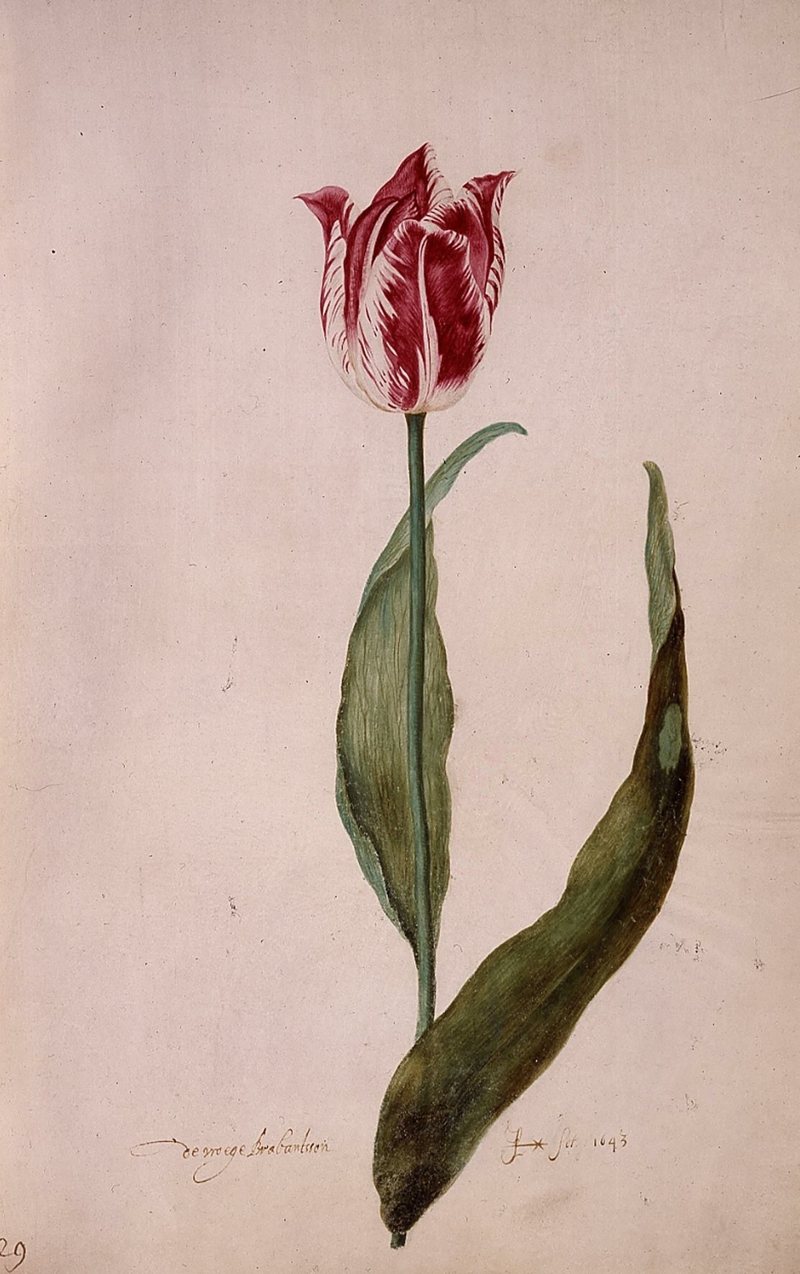
A single broken tulip, red flamed on white, drawn for a grower's tulip book in 1643 and signed at the foot of the page. Six years after the mania, a tulip was again just a flower — and Leyster, who painted the fastest grins in Haarlem, gives it the slowest, most patient page in her whole work.