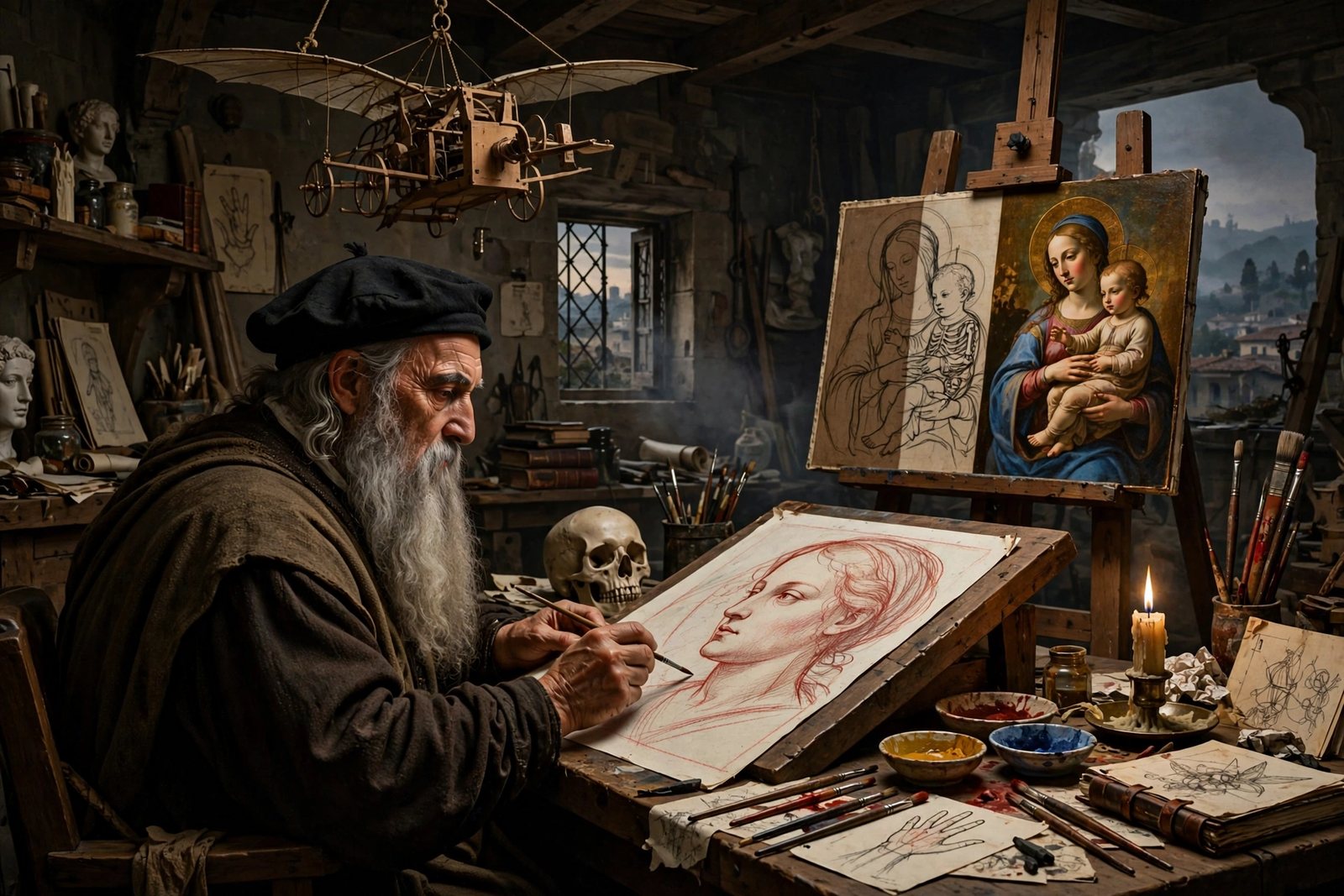

Forget the life for a moment — look at the hands. This room is about how the paintings were made: smoke instead of lines, paint laid thinner than breath, blue worth more than gold, and a left hand that wrote backwards. The works hang below, each with the secret of its making.
Leonardo forbade outlines. A face, he wrote, must pass from light to shadow the way smoke dissolves into air. He built cheeks and eyelids from dozens of translucent veils of paint, until no edge could be found anywhere — look for a line on the Mona Lisa and you will not find one.
X-ray fluorescence in the Louvre laboratory measured the Mona Lisa's shadow layers: some are two to five micrometres thick — a fiftieth of a hair. Layer upon layer, perhaps thirty of them, each left to dry before the next. The painting took years because the paint itself demanded patience.
His deepest blue was ultramarine, ground from lapis lazuli hauled overland from mines in Afghanistan — 'oltremare', from beyond the sea. It cost more than gold leaf, so contracts spelled out exactly how much of it a patron was paying for, and where it could be spent: usually the Virgin's mantle, and almost nothing else.
He painted and drew left-handed. You can still catch him at it: his hatch lines lean the way only a left hand pulls them, and the shading on his drawings runs against the habit of every right-handed master of his age. Restorers read the stroke direction like a signature he never had to write.
His notebooks run right to left, readable in a mirror. It was no cipher and no secret code — a left hand dragging a pen across wet ink smudges the page, while writing backwards keeps the hand clear of its own words. Seven thousand pages of it survive: anatomy, rivers, flying machines, shopping lists.
To paint a shoulder he first had to own one. Leonardo dissected some thirty corpses, working at night in hospital mortuaries, peeling muscle from bone layer by layer and drawing each stage. The smile muscles of the Mona Lisa were mapped in dead men's faces years before they were painted in hers.
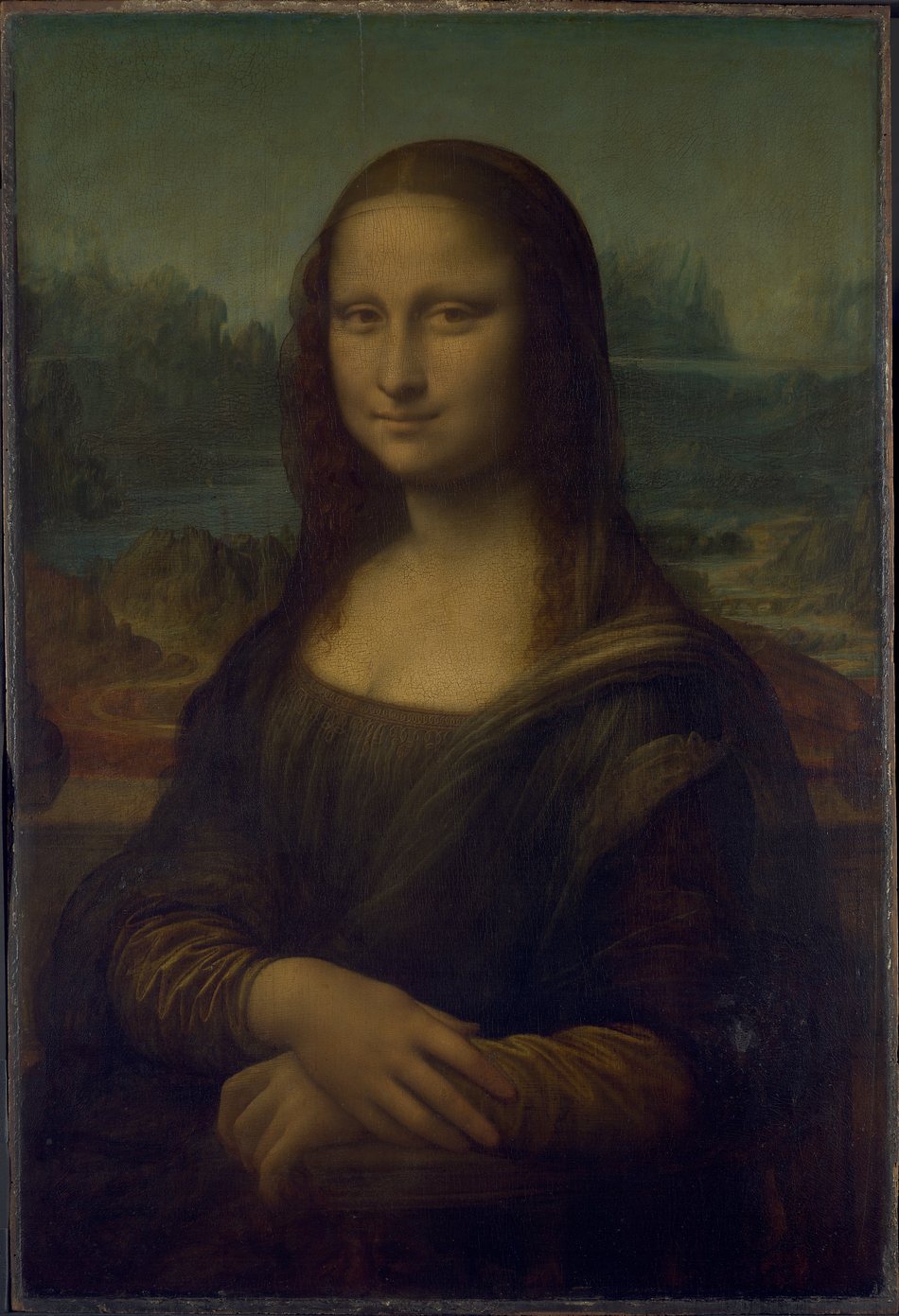
The smile is an optical instrument. Leonardo blurred the mouth's corners into pure sfumato, so you see the smile clearly only when you look away — in direct gaze it fades, from the corner of your eye it returns. He carried the panel with him for years, adding veils of glaze until the end of his life.
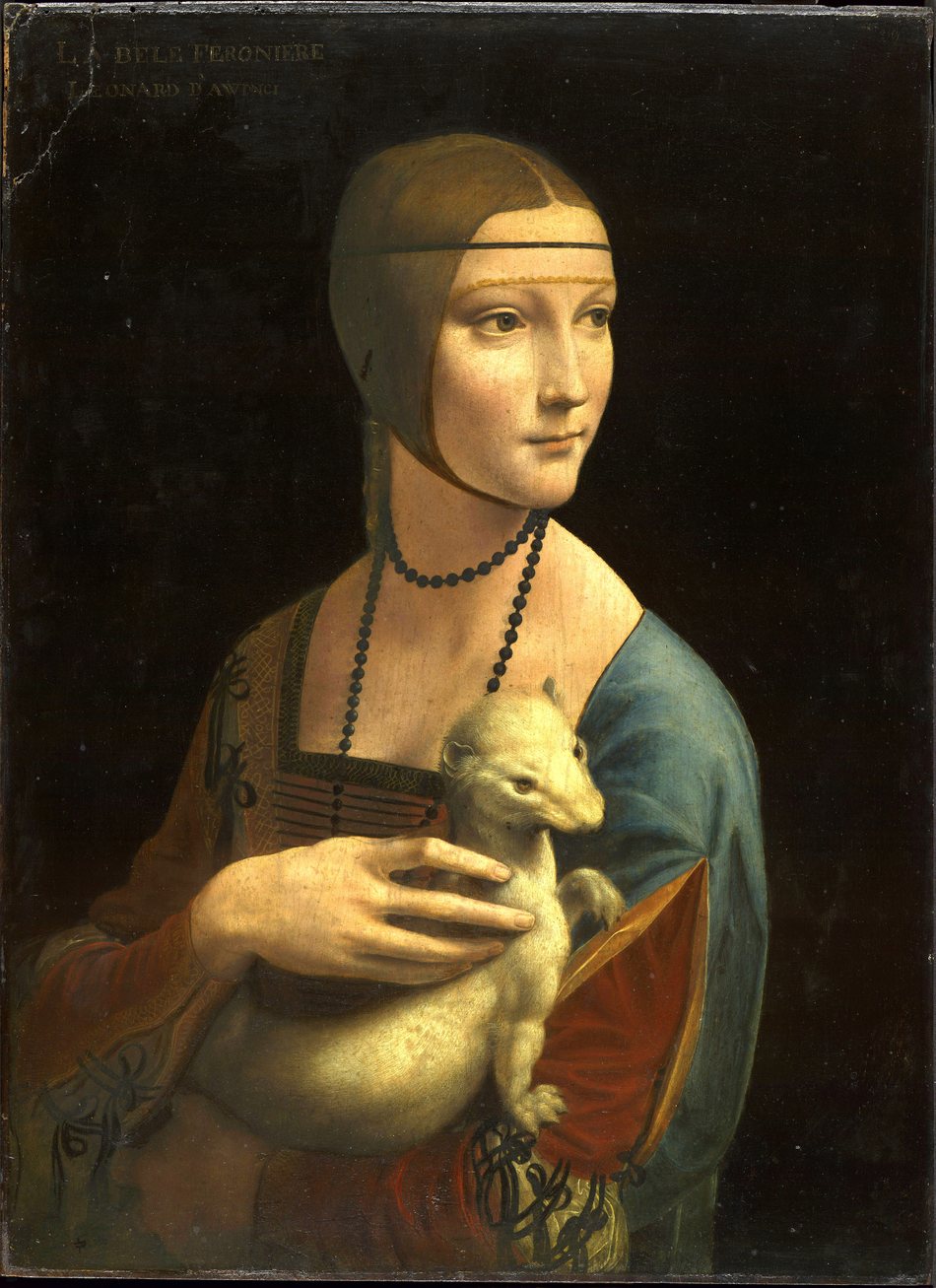
The ermine was painted three times. Light-based analysis in Paris peeled the picture apart: first the lady held nothing at all, then a small grey beast, and only at last the white ermine with its sharp black eyes. The portrait of Cecilia Gallerani changed under Leonardo's own hand.
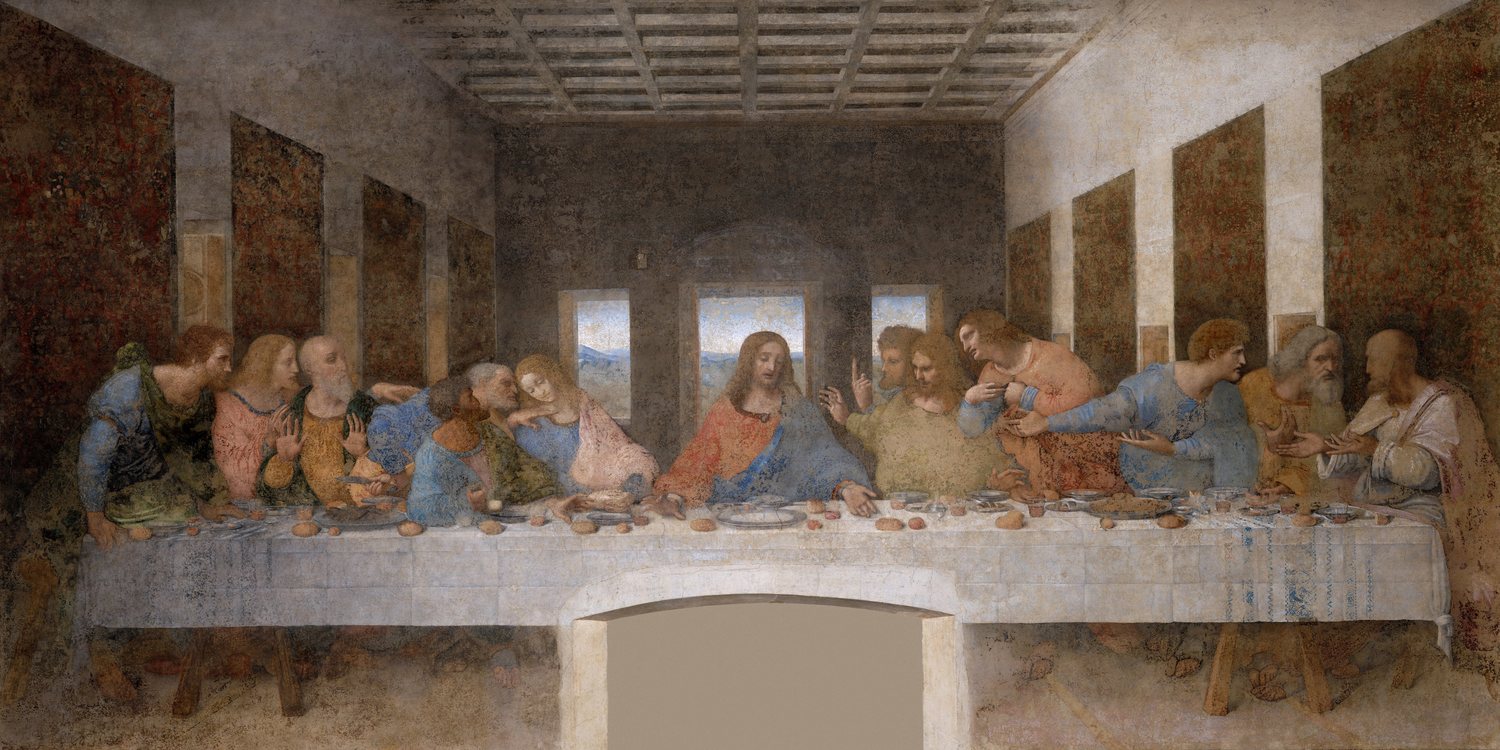
It is not a fresco, and that was its doom. True fresco forced a painter to finish each patch before the plaster dried; Leonardo wanted time to think, so he sealed the dry wall and painted in tempera and oil, like a panel. The experiment gave him three years of slow, perfect work — and the wall began to flake within his own lifetime.
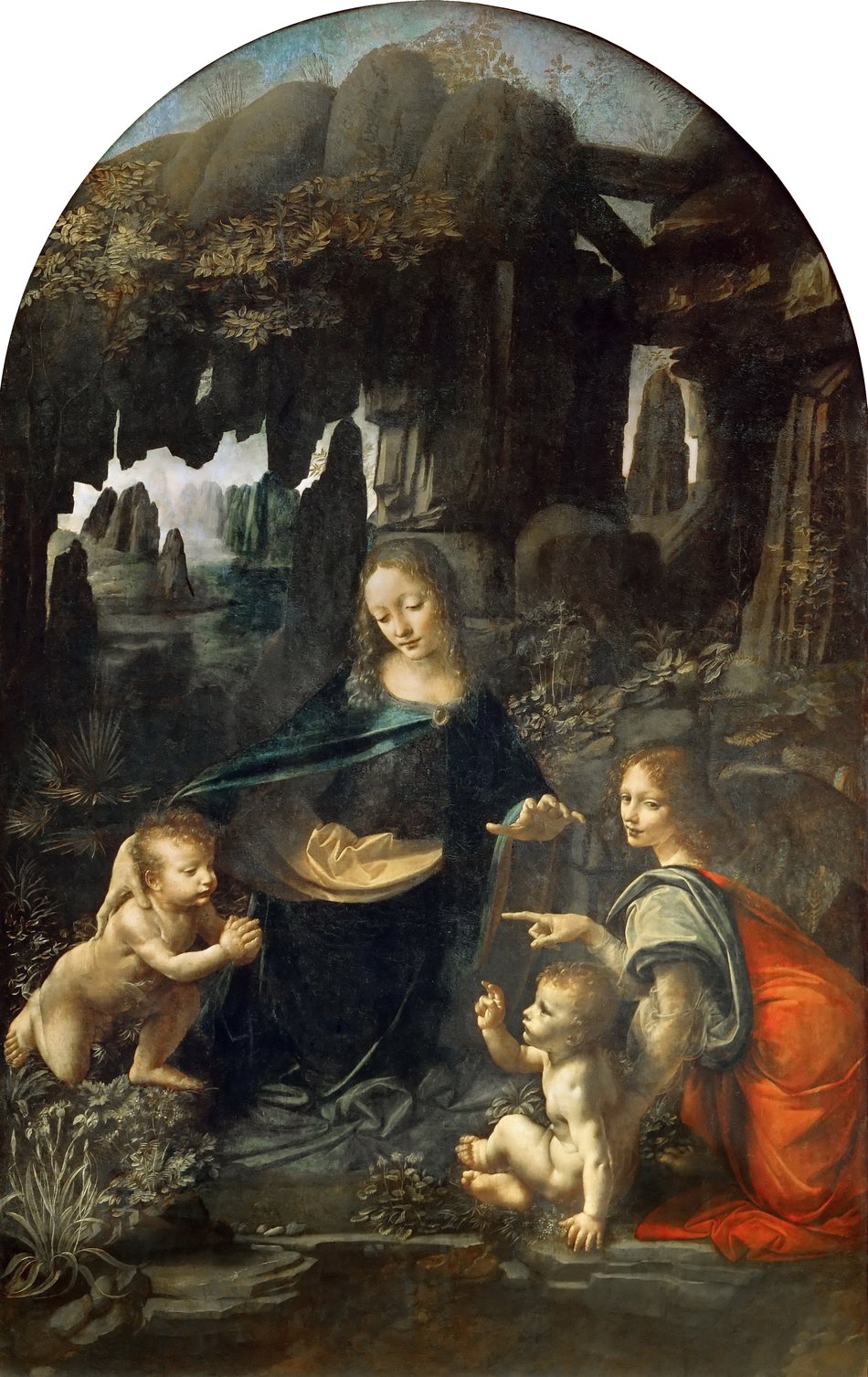
He painted it twice — a second version hangs in London. The grotto never existed, but every plant in it is drawn like a botanical plate: Leonardo studied leaves the way other men studied faces. The blue distance behind the rocks is his aerial perspective, air itself mixed into the paint.
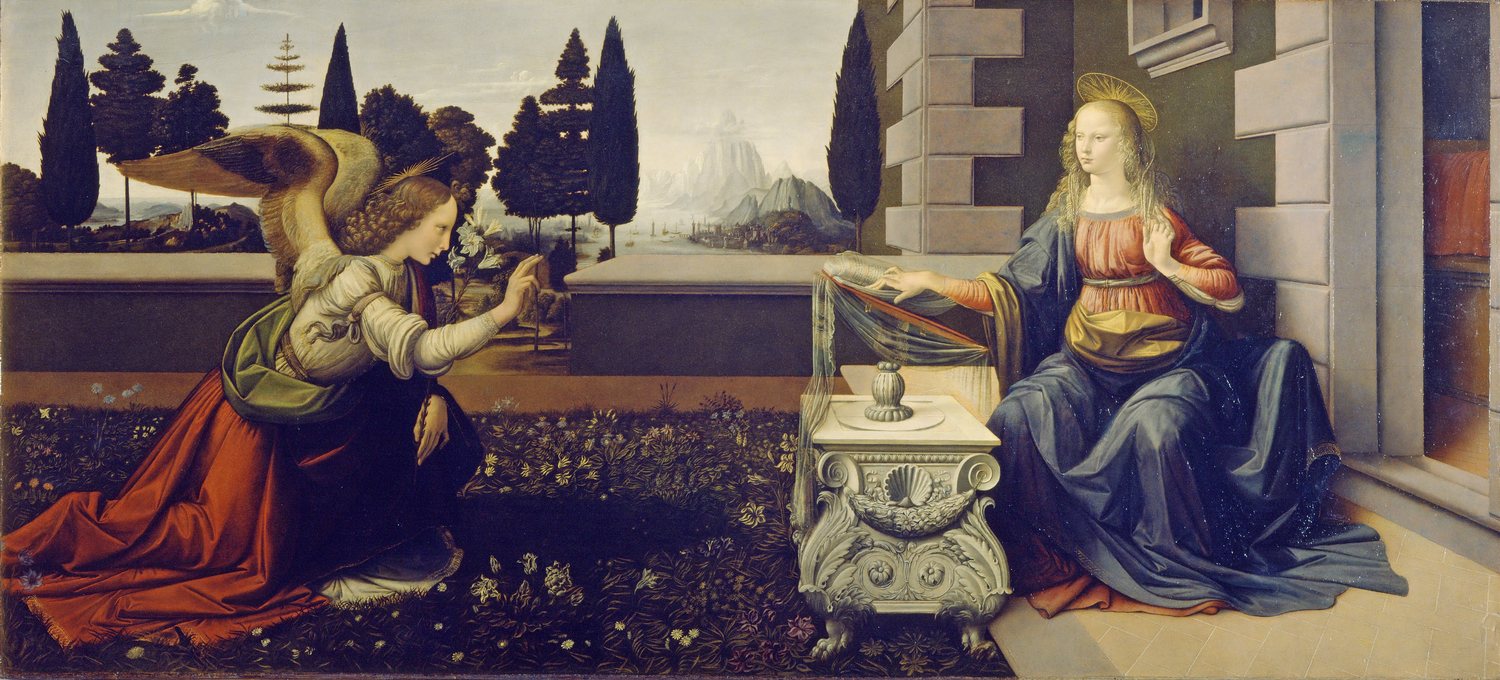
A teenager's work, painted in Verrocchio's workshop — the angel and the landscape are his. The marble lectern looks wrongly built from the front; step to the right and lower your eye, the way the panel was first seen from below, and the perspective suddenly locks into place. He was already painting for a moving viewer, not a standing one.
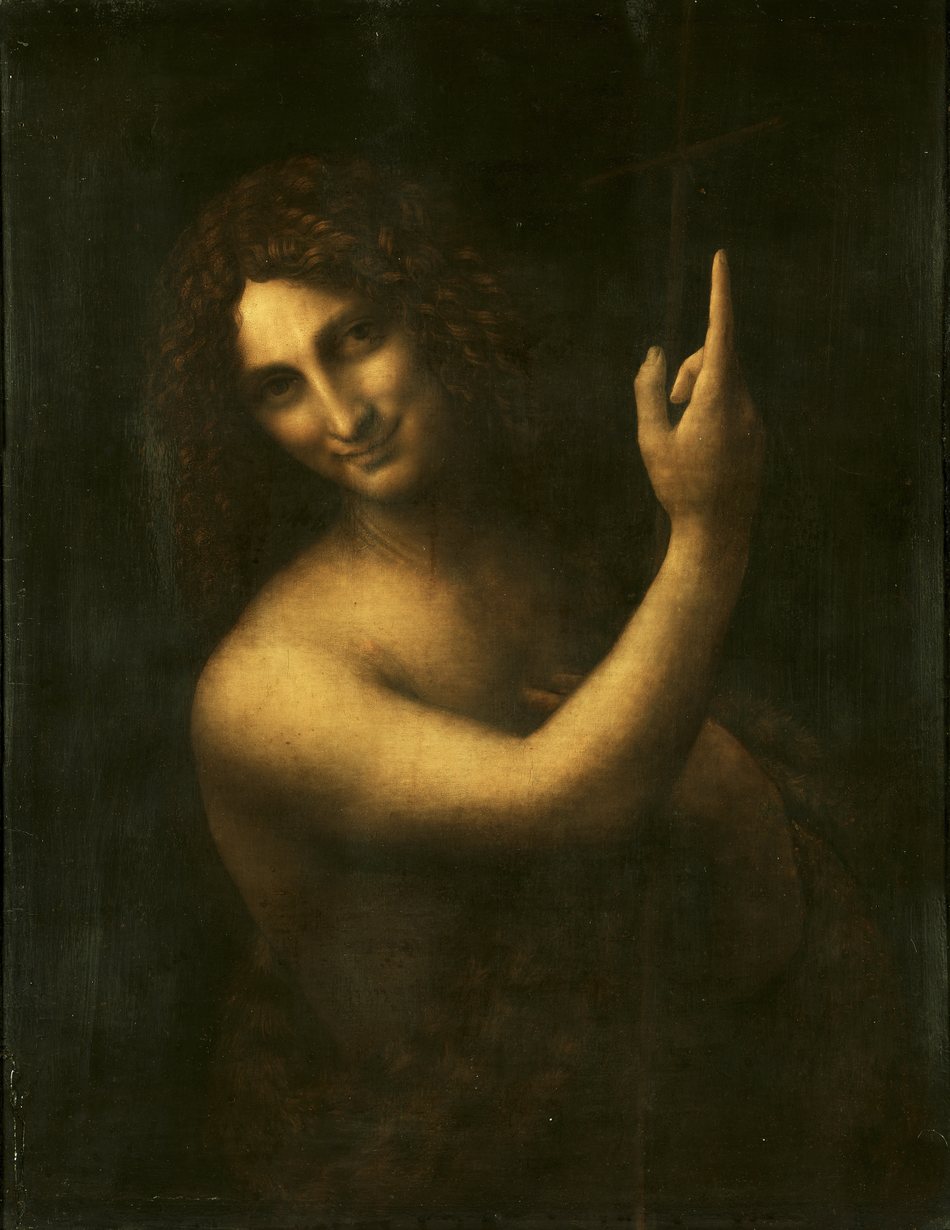
His last painting, and the darkest: a face and a hand rising out of near-total blackness. There is almost no drawing left in it at all — only glaze over glaze, the figure conjured out of shadow the way his notebooks said light behaves at the edge of a candle's reach.
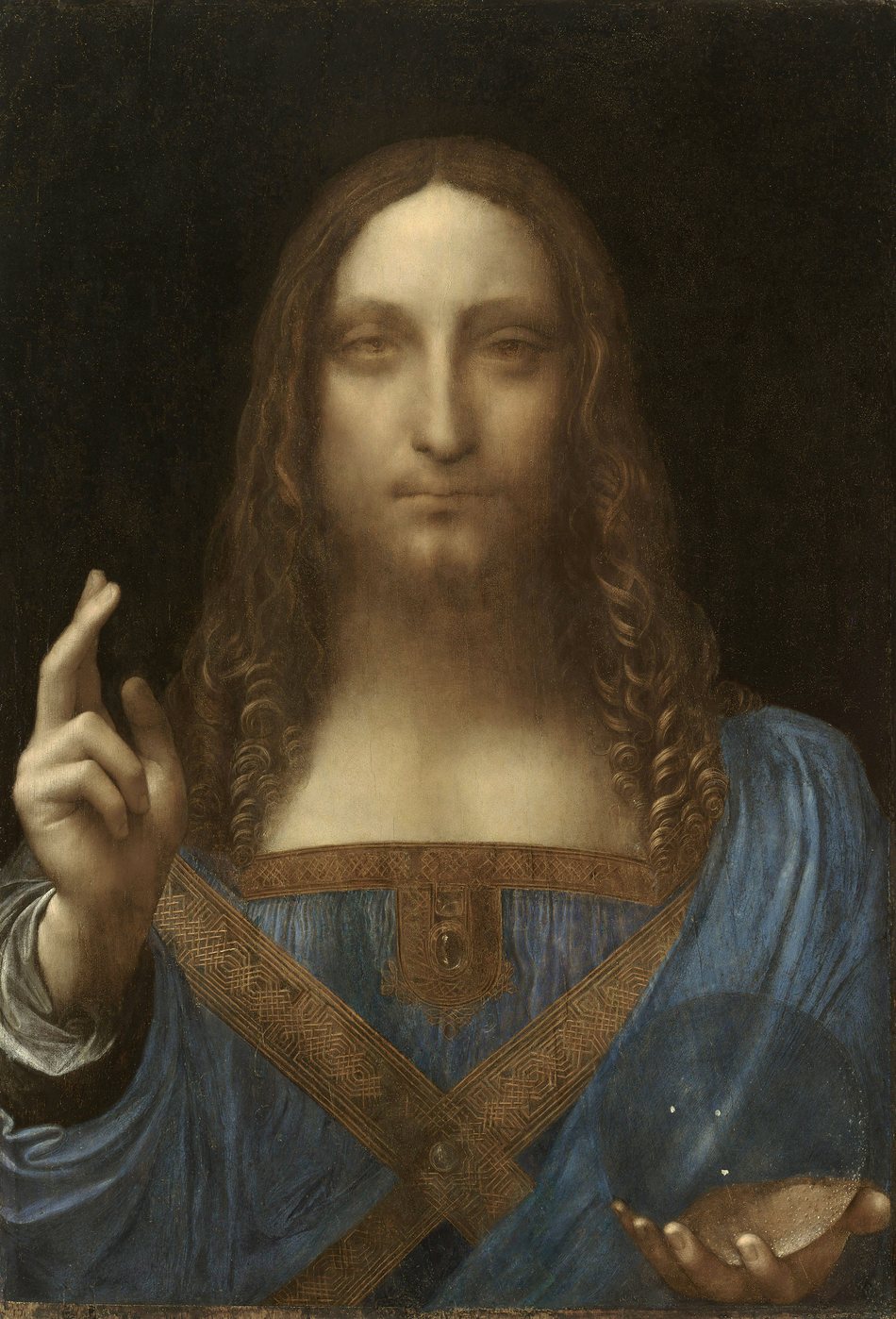
Look at the crystal orb. A real sphere of rock crystal bends and inverts the light behind it — this one does not; the robe passes through undistorted. Scholars still argue whether Leonardo, who studied optics all his life, made an error, or painted a hollow glass sphere on purpose. The most expensive painting ever sold carries an unsolved puzzle in its centre.
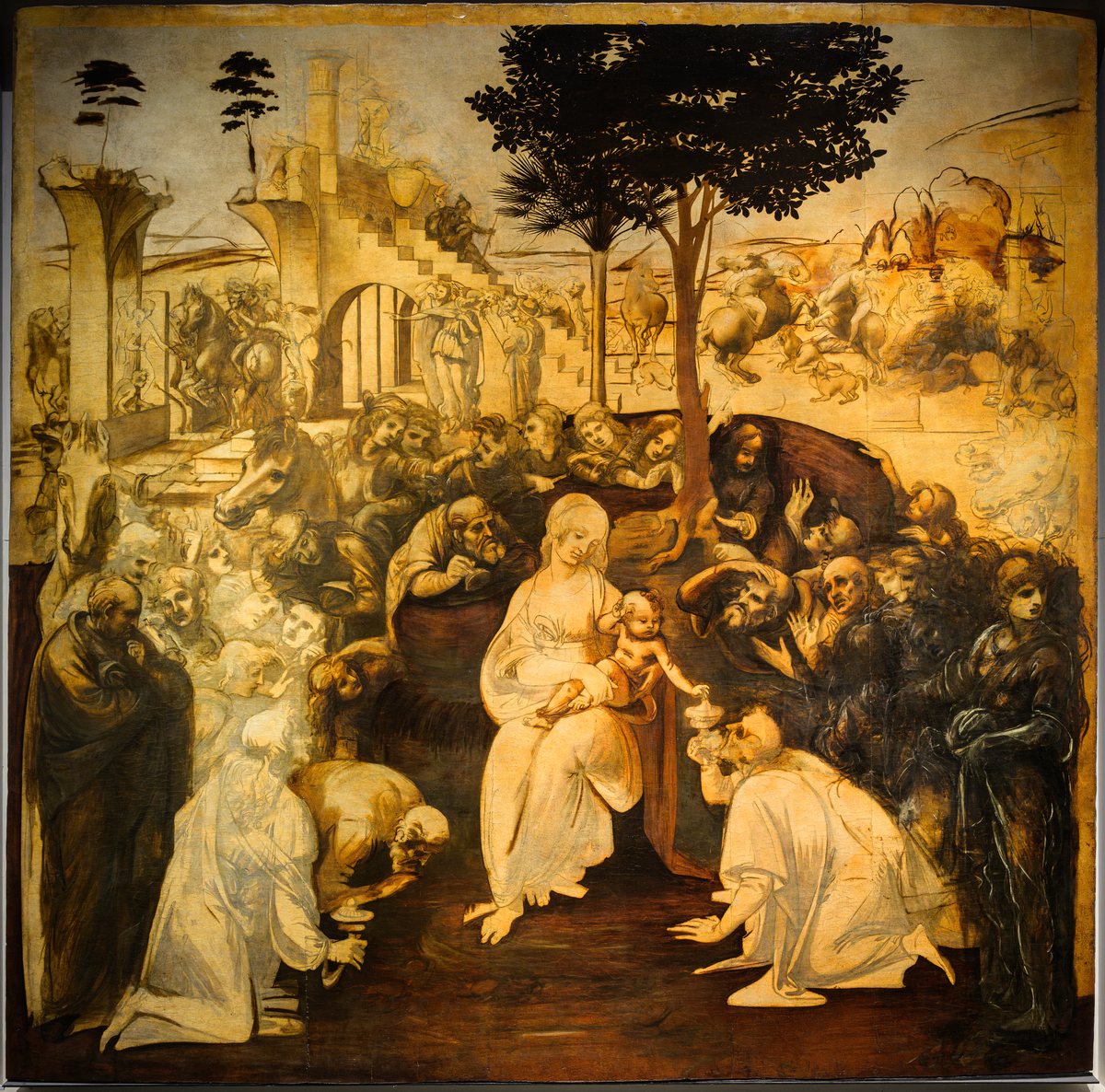
Never finished — and priceless for it. What you see is the skeleton of a Leonardo painting: the whole crowd built in sepia monochrome over the drawing, before a single colour was laid. He left Florence for Milan and never came back to it; the monks gave the altar to another painter.
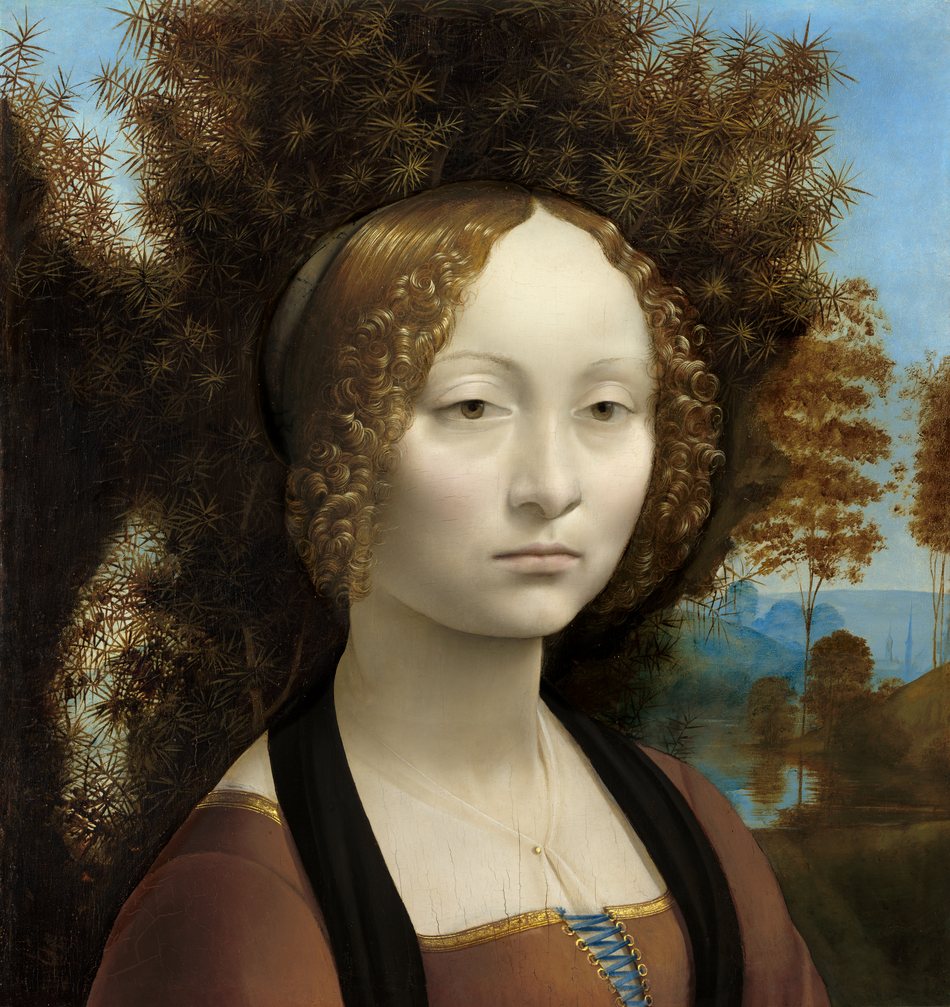
The panel was cut down at some point — her hands are gone. A drawing at Windsor shows how they were: holding a ring. The juniper hedge behind her — ginepro in Italian — is her name turned into a plant.
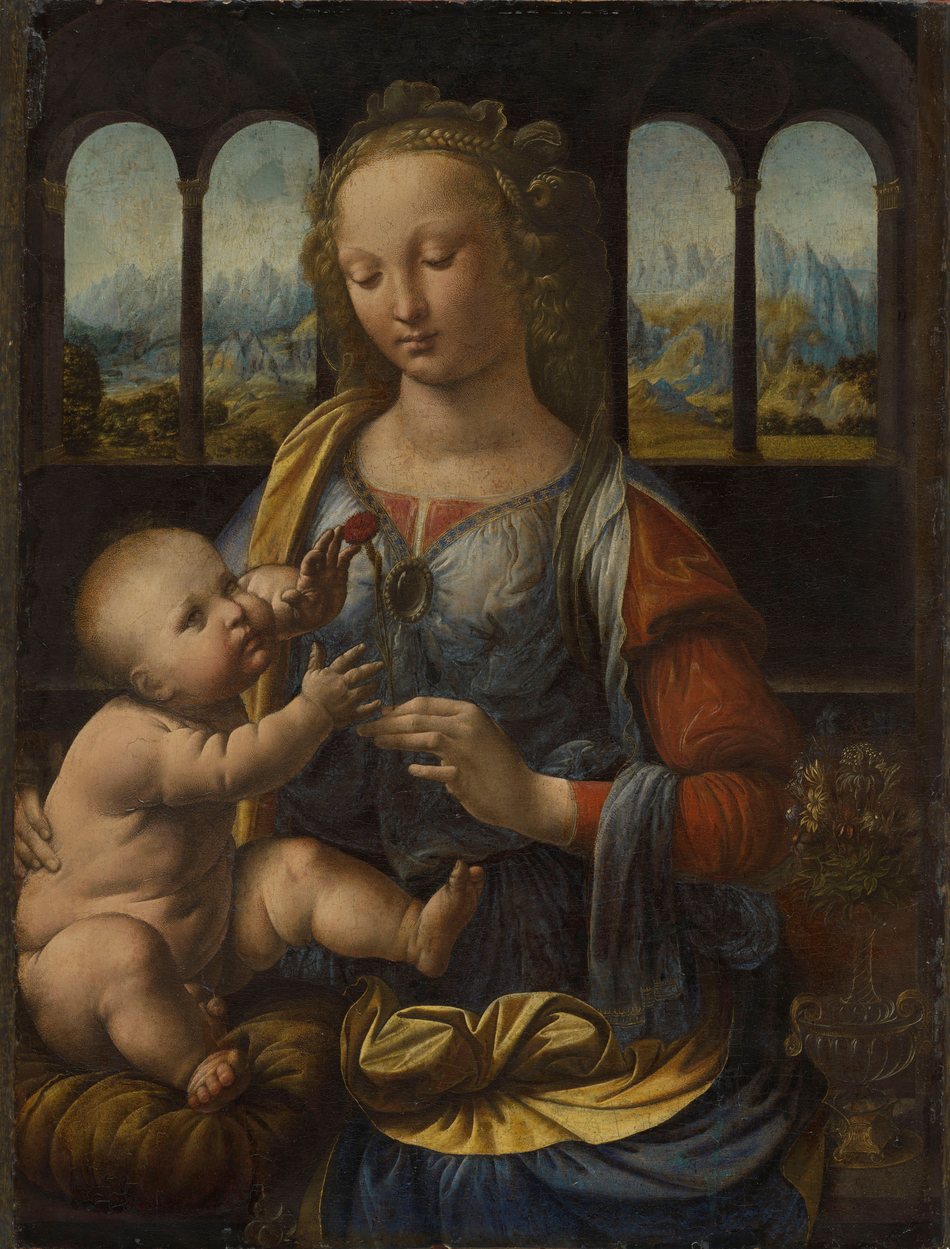
One of his first panels, from Verrocchio’s workshop — the mountains already dissolve into blue, but the fingers are still a pupil’s: too long, too eager. The carnation in the Child’s hand foretells the Passion.
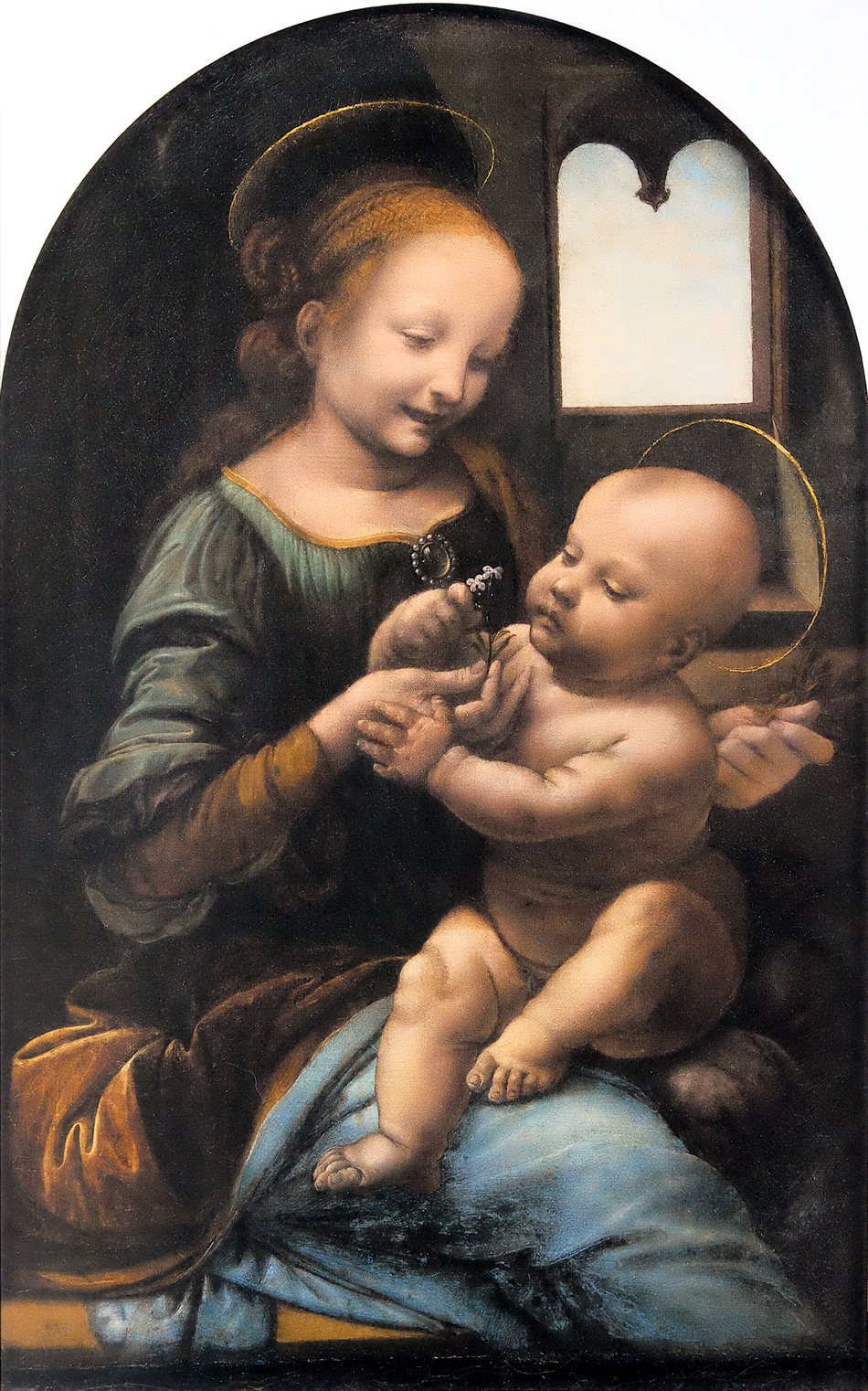
The young Leonardo paints loosely, almost sketching with the brush — look how free the shadows are. The flower the Child reaches for is shaped, not by accident, like a small cross.
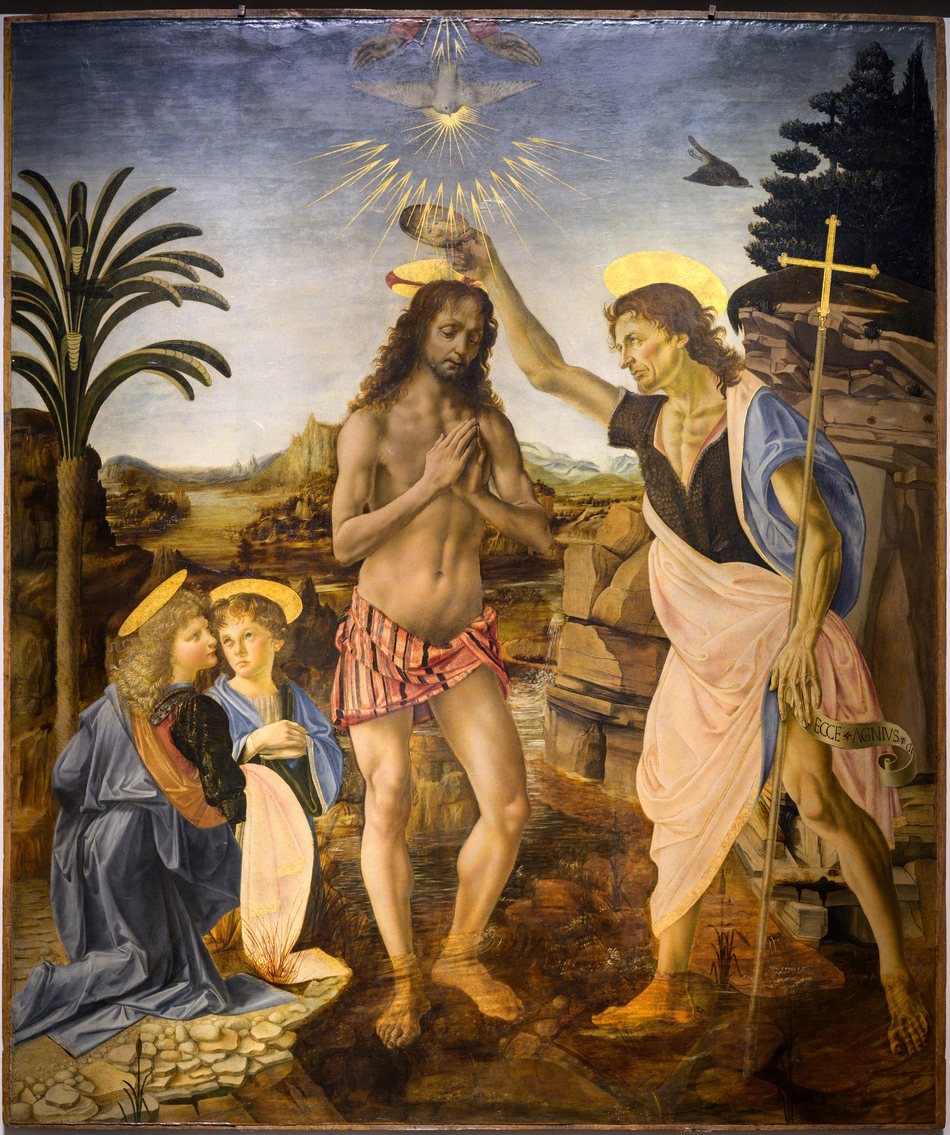
The kneeling angel on the left is the teenage Leonardo’s work inside his master’s painting. Vasari claimed Verrocchio, seeing it, laid down his brush for good — a legend, but it tells you what that angel looked like to contemporaries.
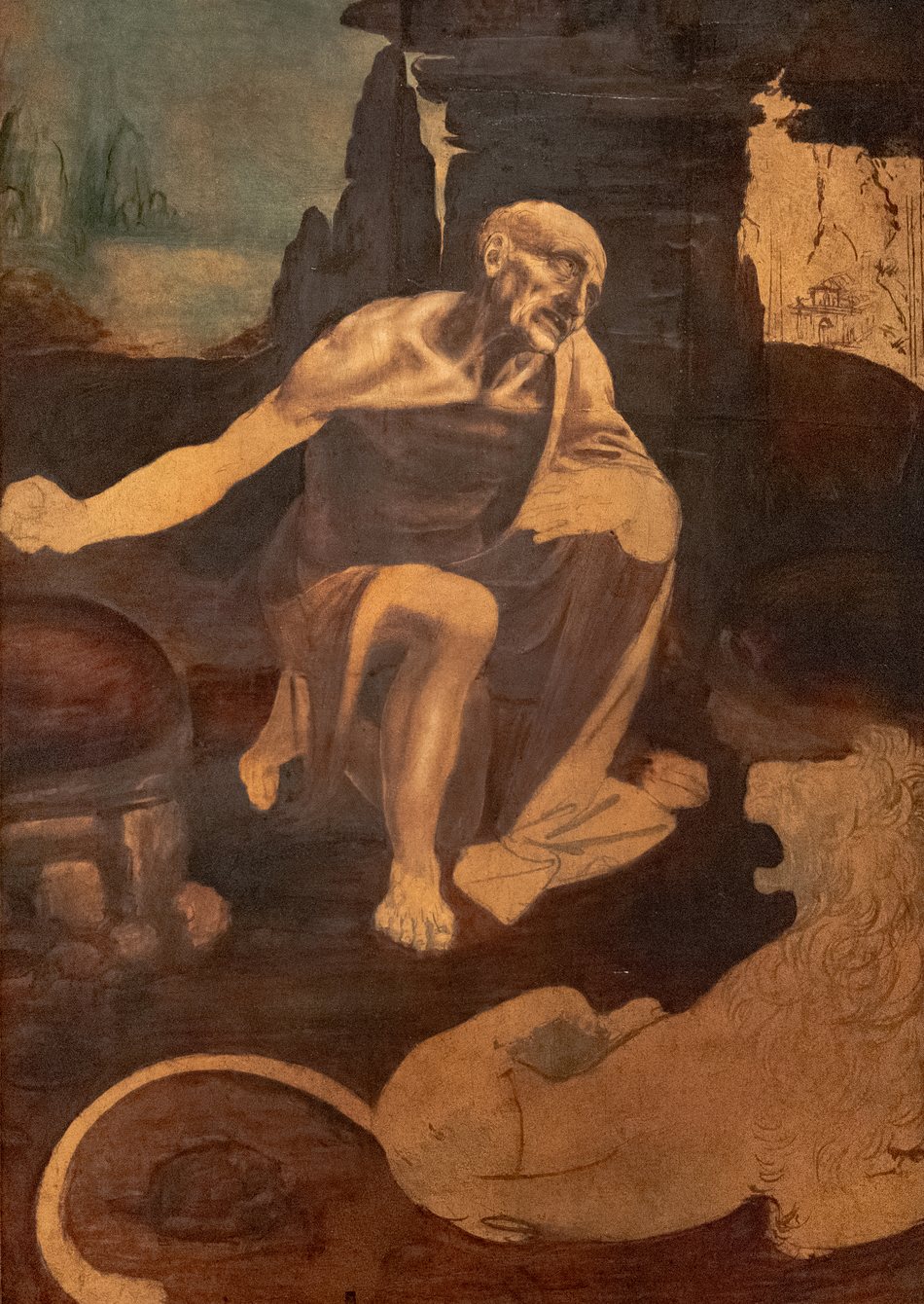
Abandoned in brown underpaint — the most honest page of his workshop diary. Saint, lion and rocks are still half drawing; you watch him think in two media at once.
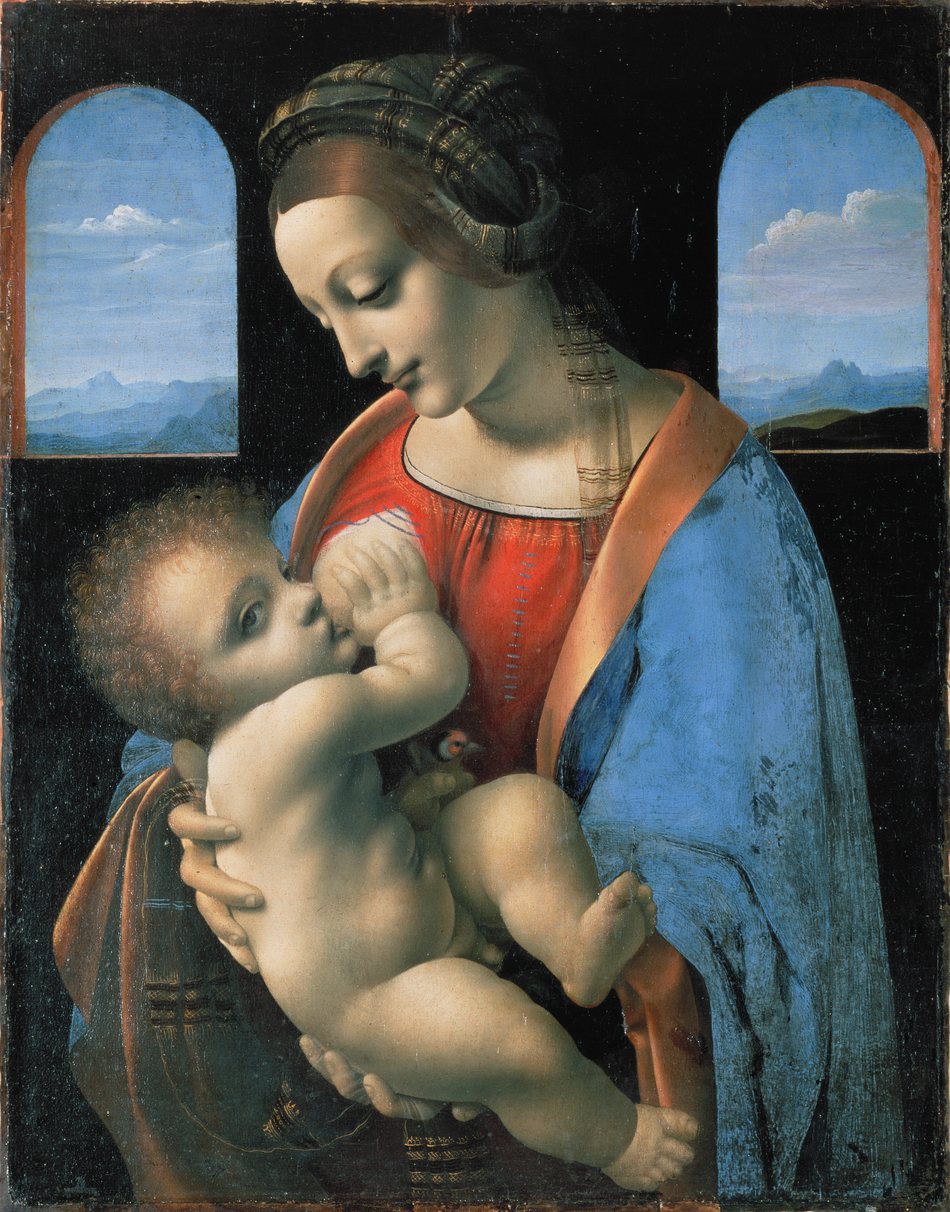
Through the two arched windows, mountains dissolve into his blue distance. The finish probably owes much to his pupil Boltraffio — the attribution is shared to this day, and honestly so.
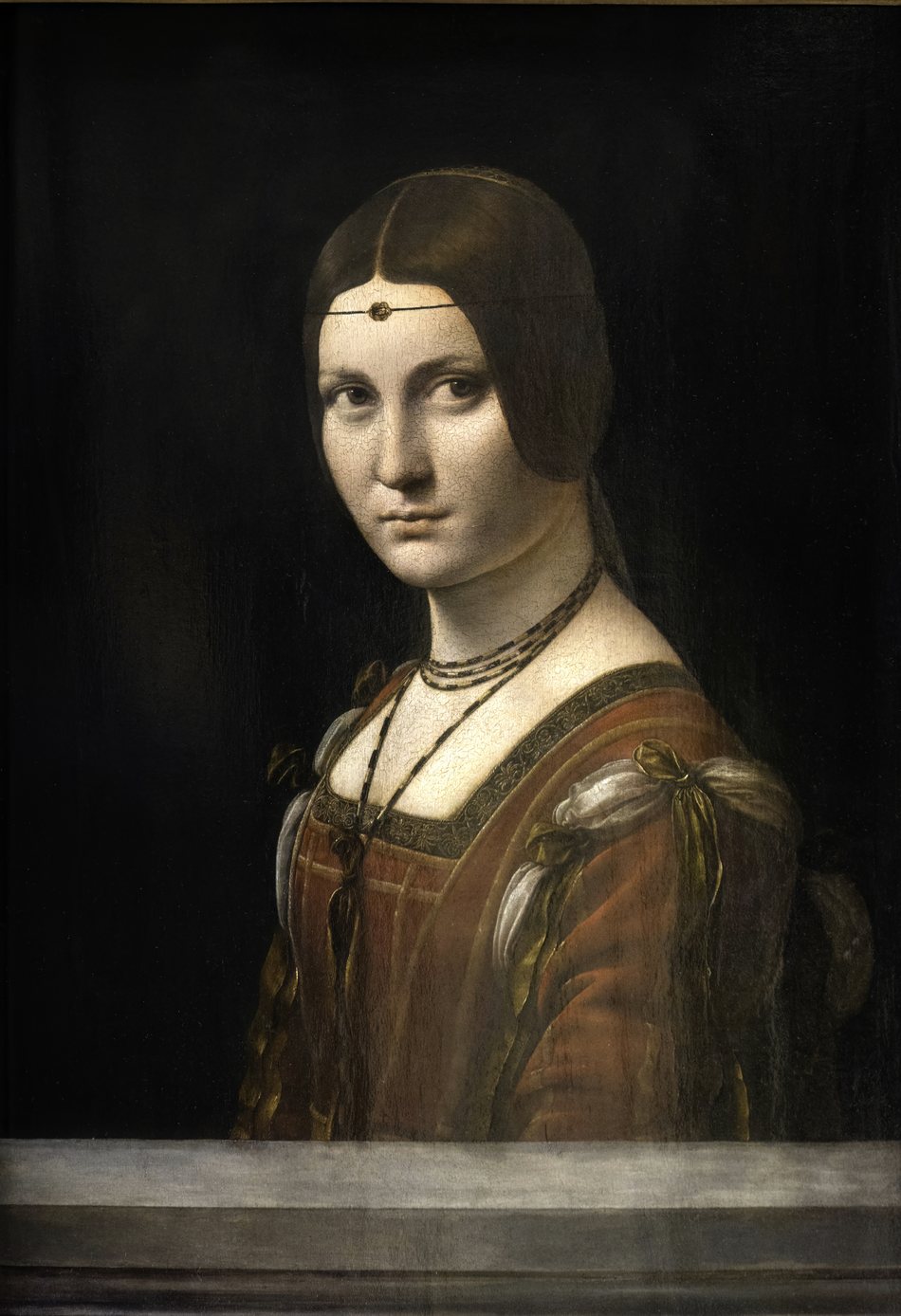
She is named after the jewel on the chain across her forehead — the ferronnière. Who she was, nobody knows for certain; the face is modelled in his softest sfumato.
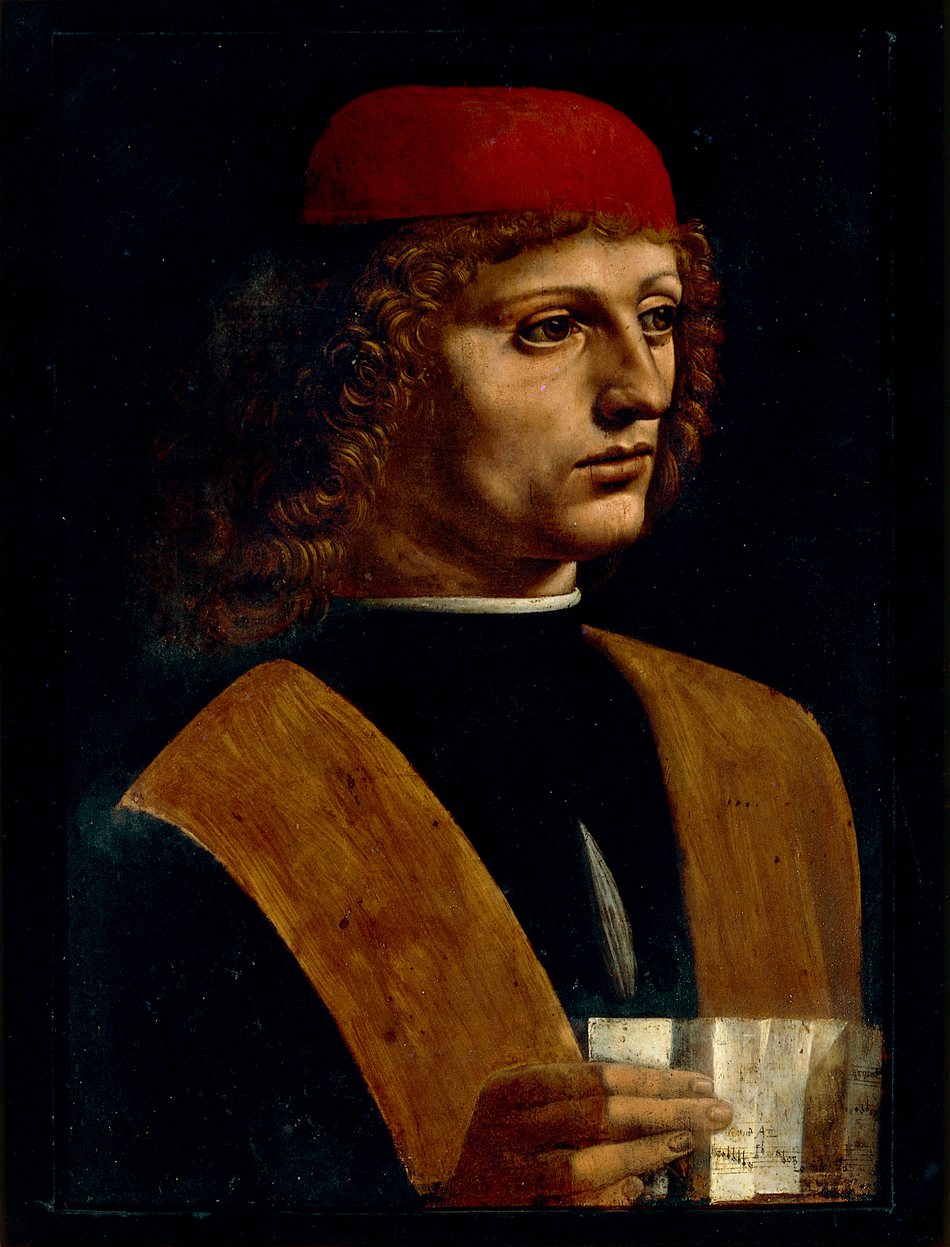
Unfinished — only the face is fully painted. The sheet in his hand carries drawn notes: that is how we know his trade. The rest was left as bare preparation, like a sentence stopped mid-word.
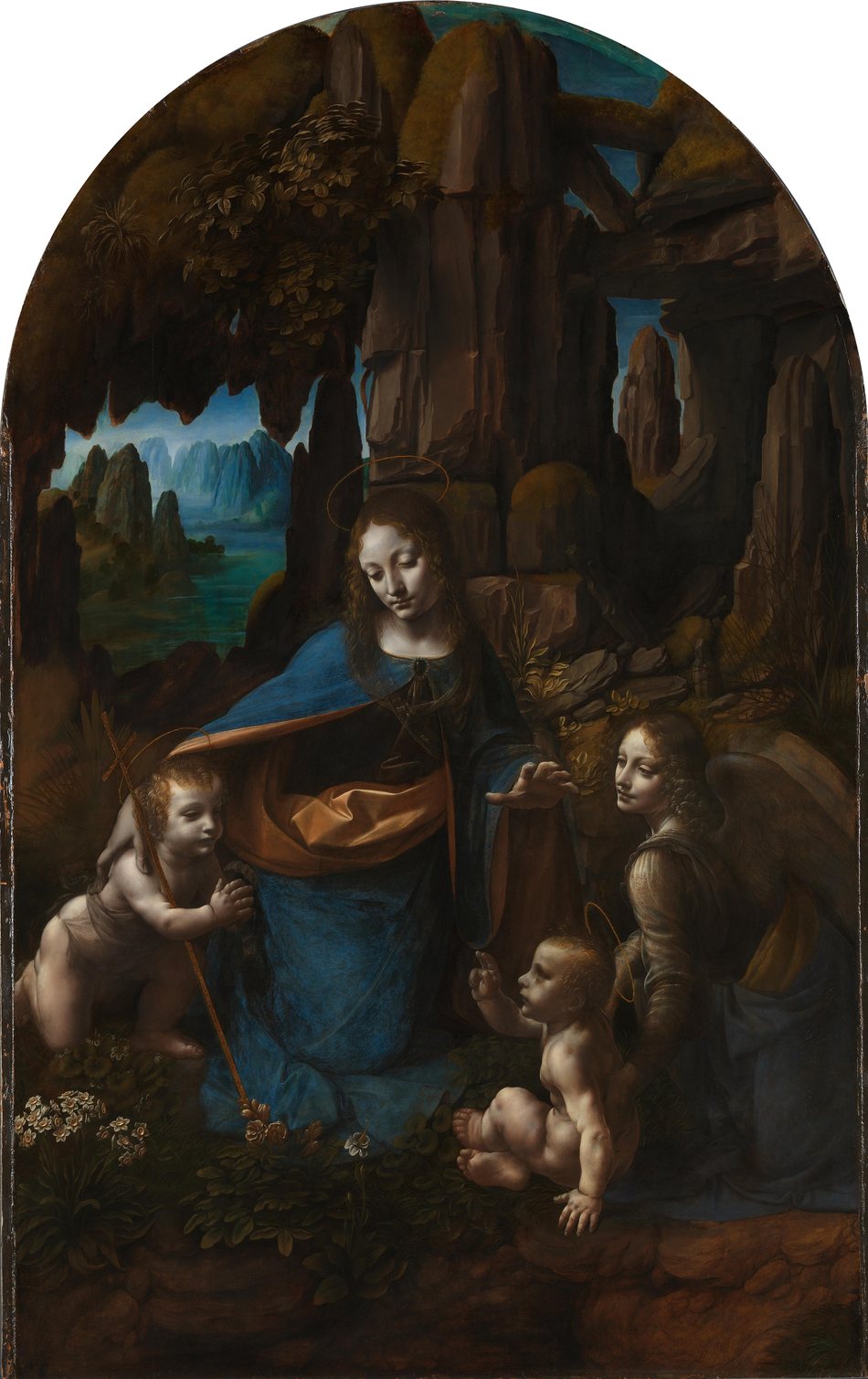
The second version of the grotto, painted with his workshop. X-rays found a different painting underneath: a kneeling woman with downcast eyes, abandoned. Even Leonardo painted over his own ideas.
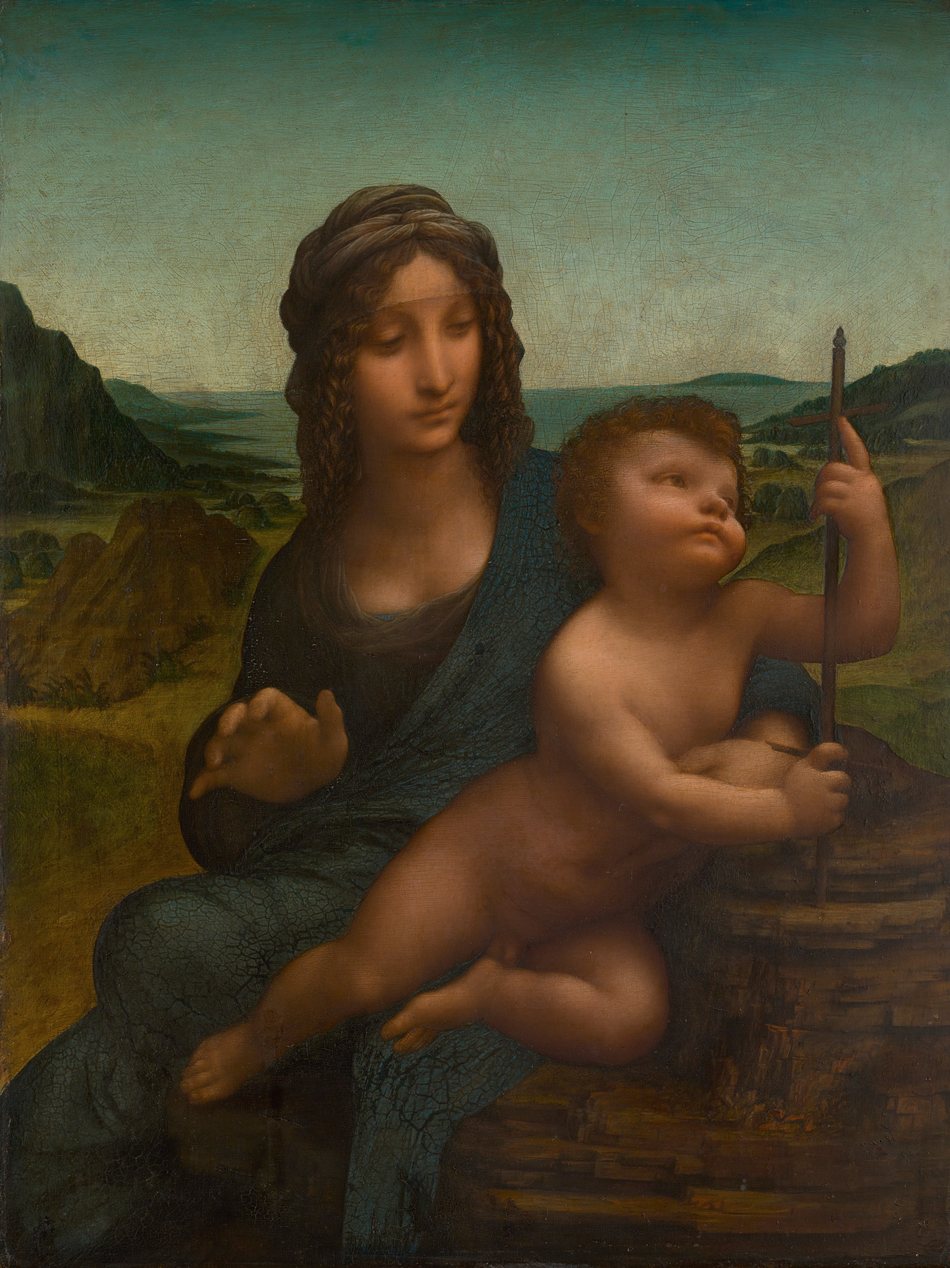
The Child twists in his mother’s arms toward the yarnwinder — a frame for winding yarn, shaped pointedly like a cross. Two early versions survive, both painted from his design.
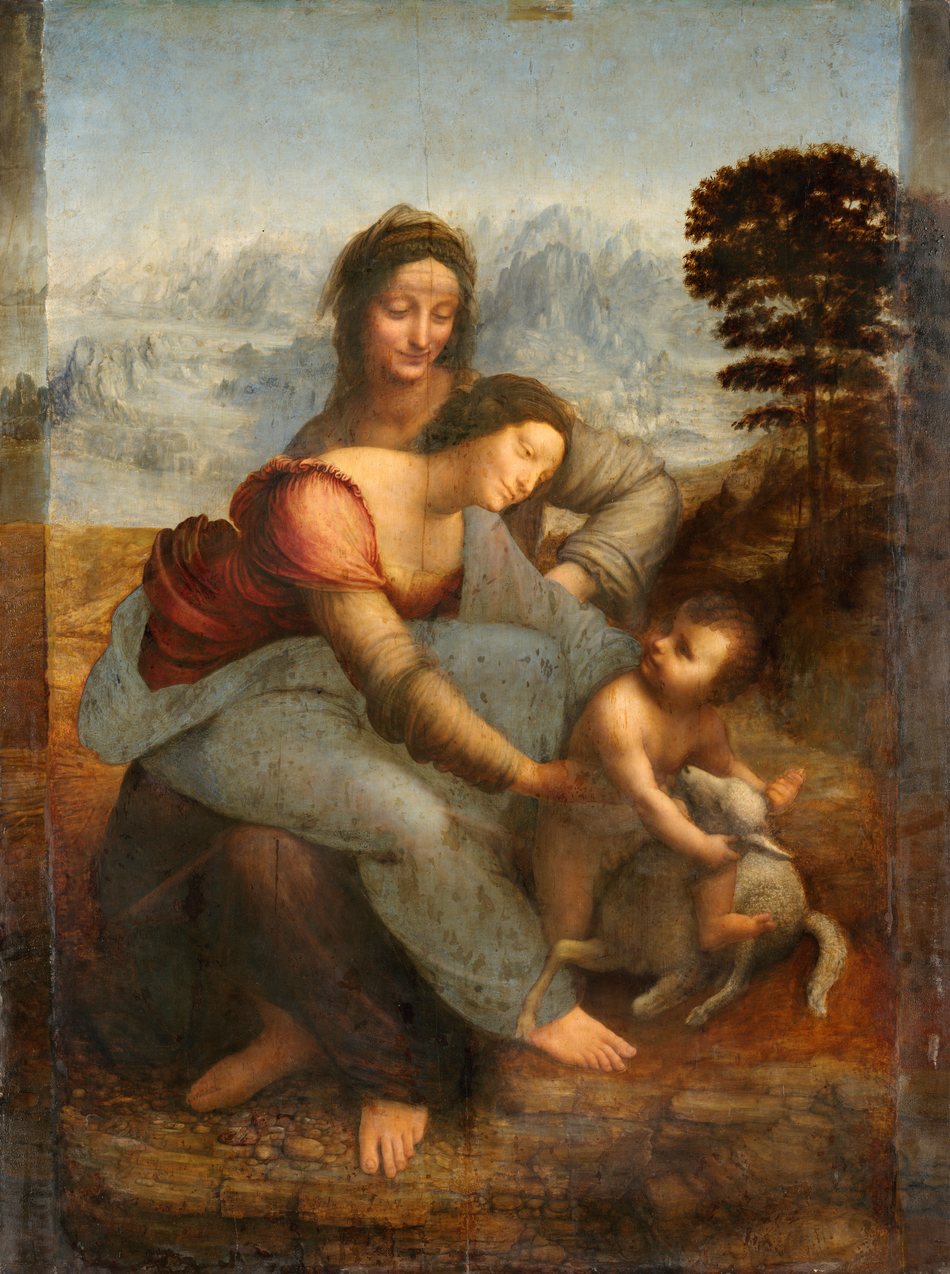
Three generations folded into one pyramid — Anne, Mary and the Child with a lamb. He carried this panel with him for years and never delivered it; the blue mountains behind are aerial perspective at its purest.
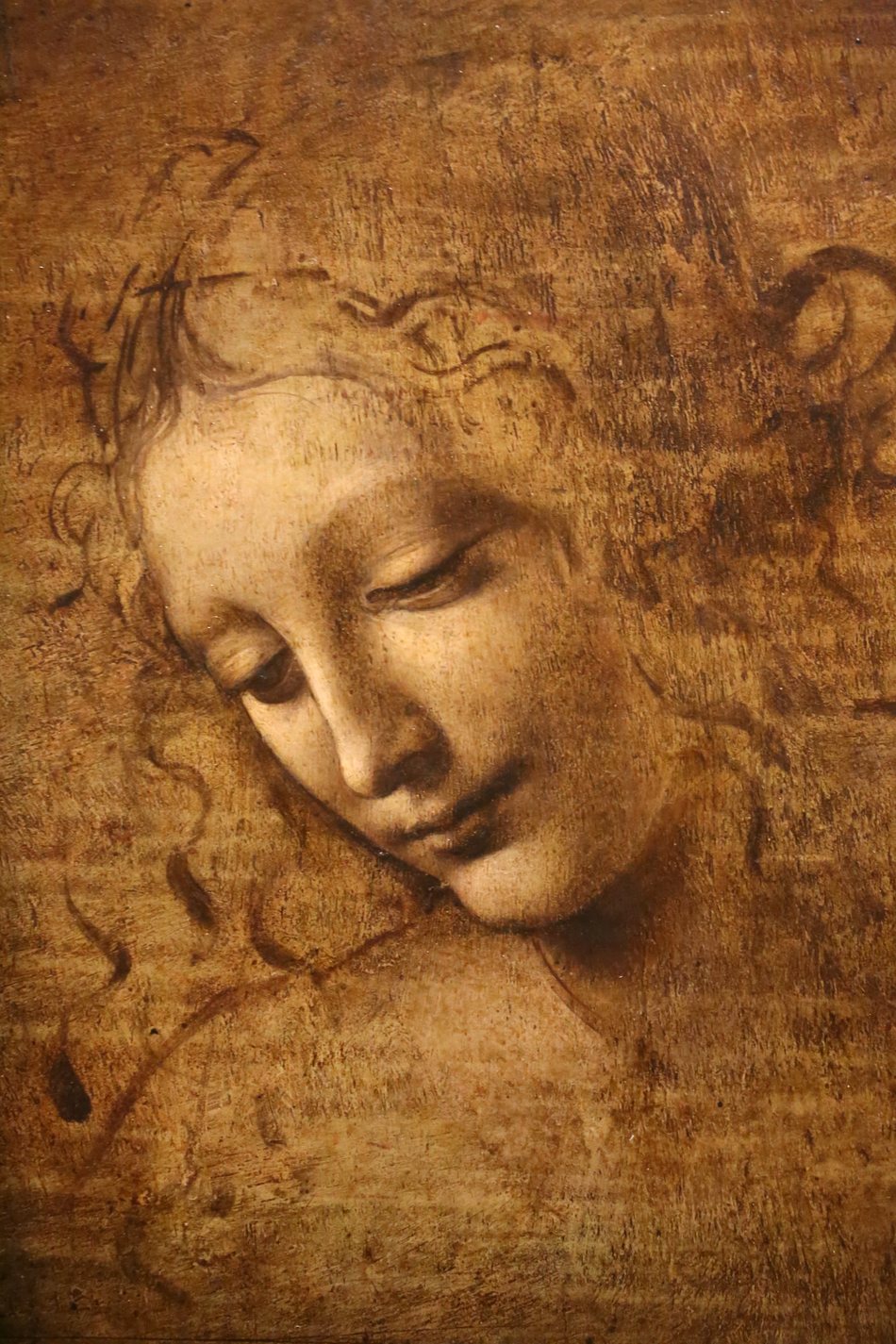
A painting that is almost a drawing: one earth colour, and light dug out of it with the tip of the brush. Her name means the lady with the dishevelled hair.
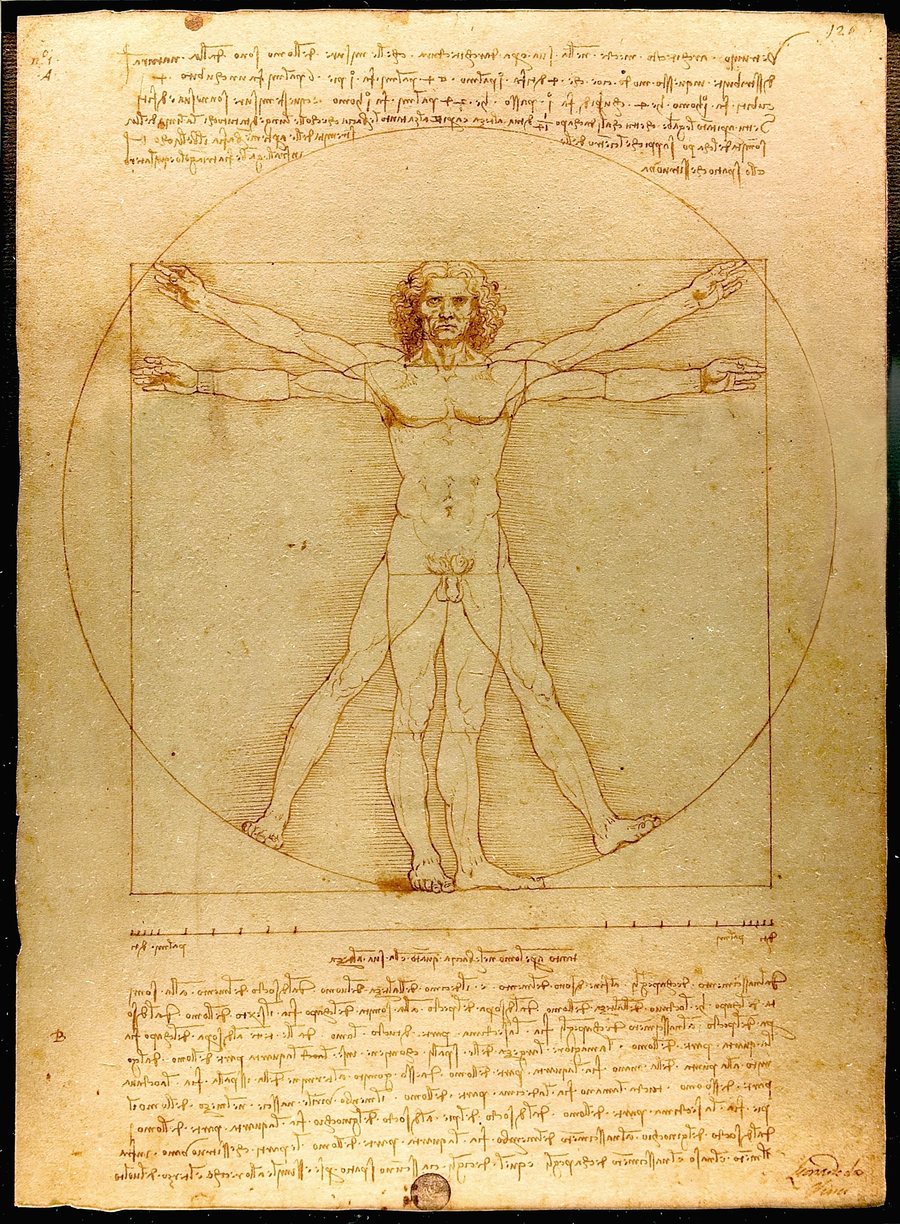
c. 1490 · Pen and ink. The body as geometry: a circle, a square, and a man who fits them both.
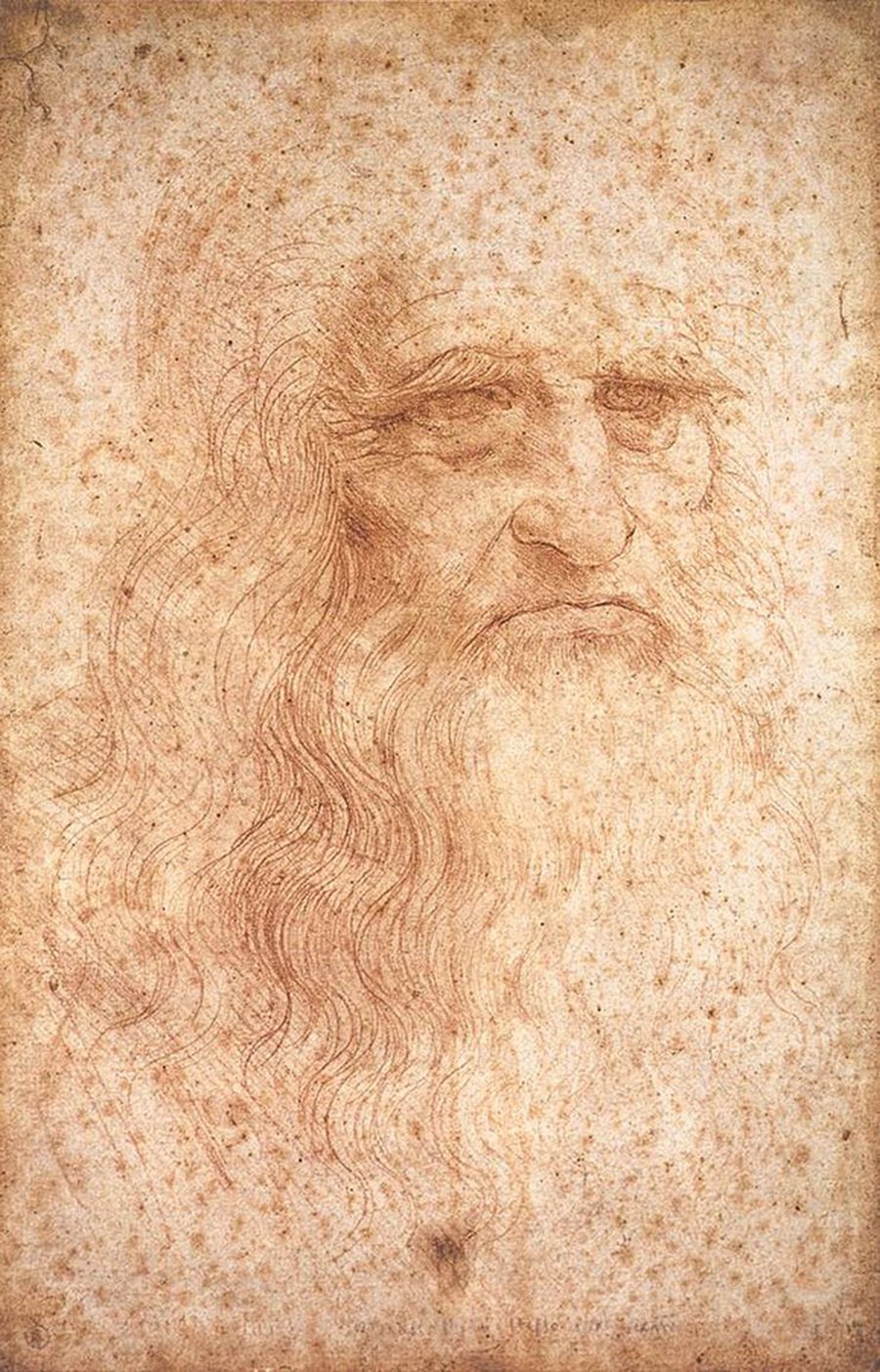
c. 1512 · Red chalk. He drew himself as an old man in sanguine — powdered red stone, the colour of dried blood and earth.
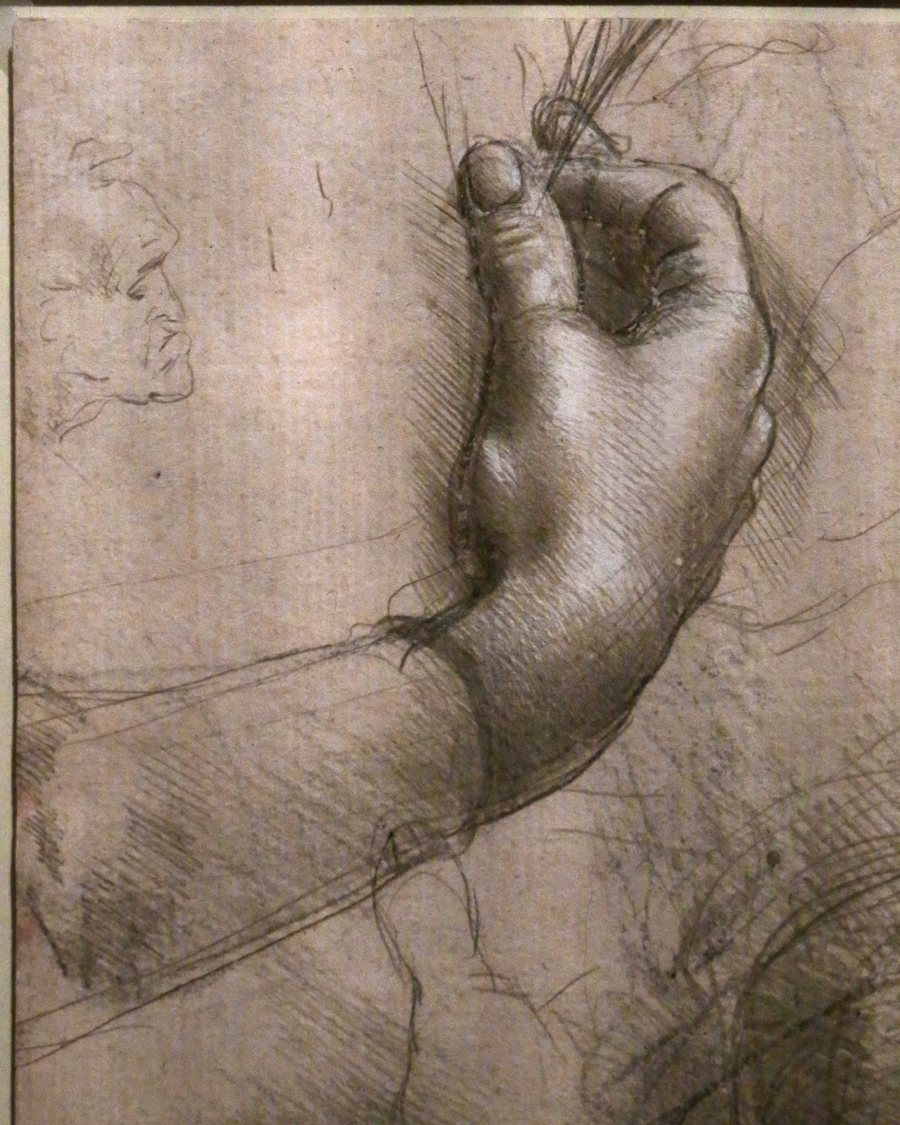
c. 1490 · Metalpoint and chalk. Hands rehearsed like actors before they were allowed into a painting.
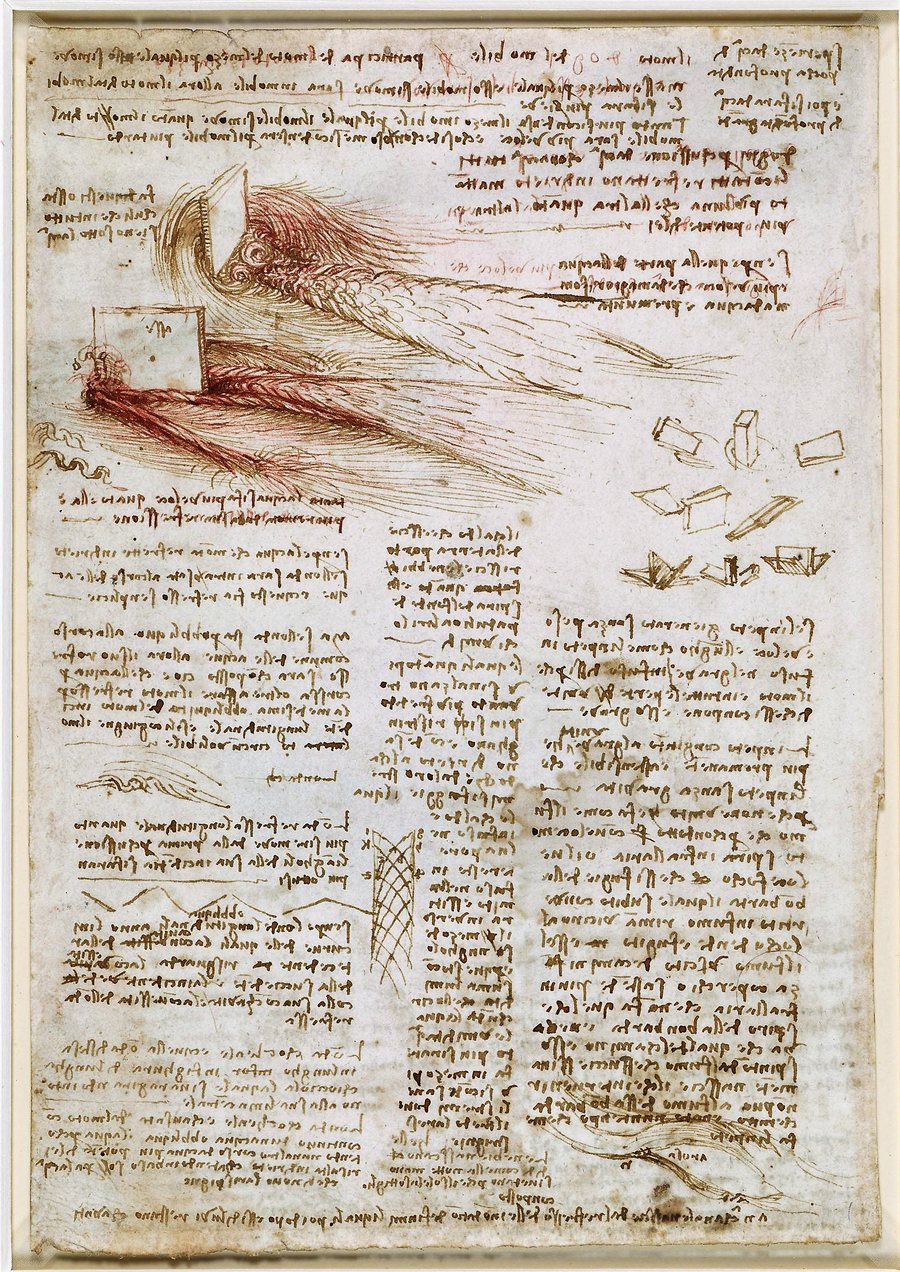
c. 1510–1513 · Pen and ink. He drew flowing water the way he drew hair — the same curling law governs both, he said.
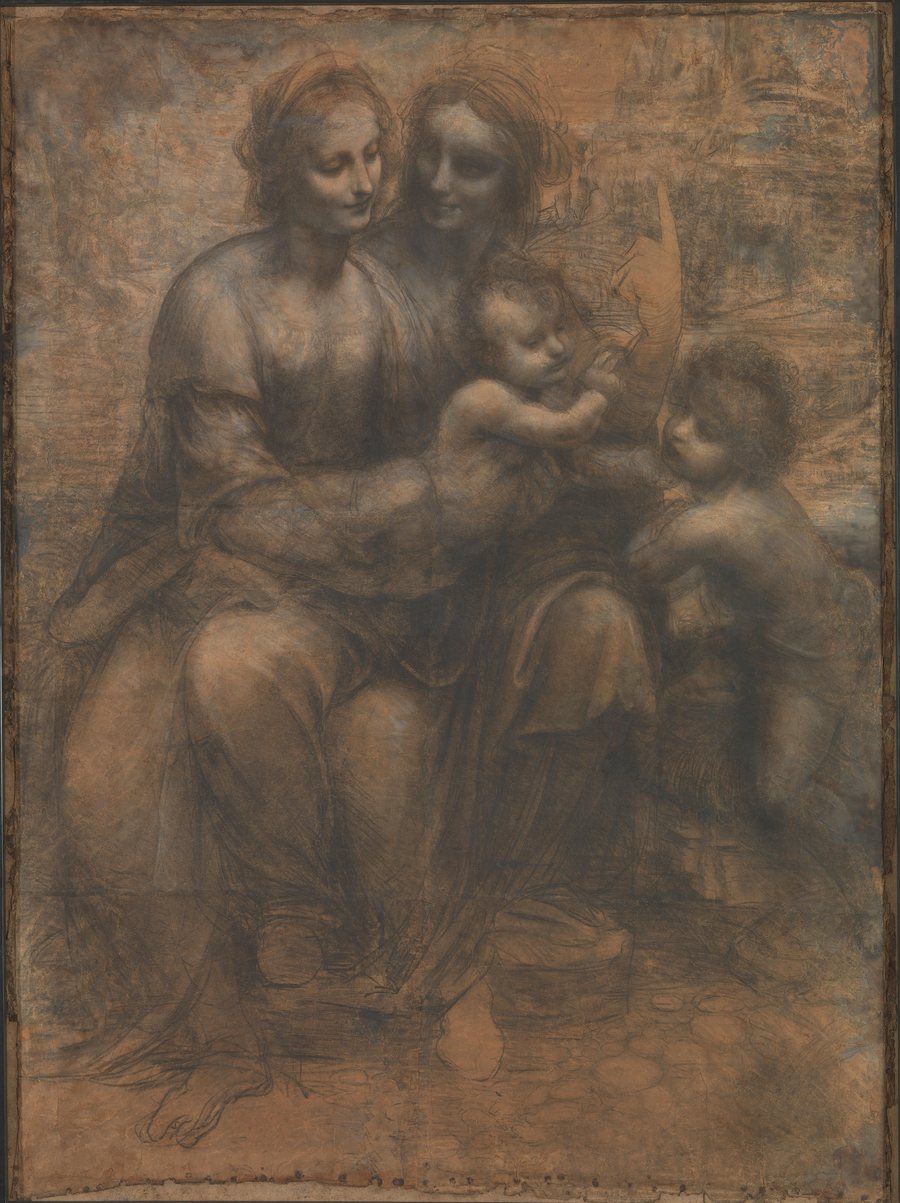
c. 1499–1500 · Charcoal and chalk. A full-size drawing for a painting he never made — the cartoon itself became the masterpiece: the stage between thought and paint.
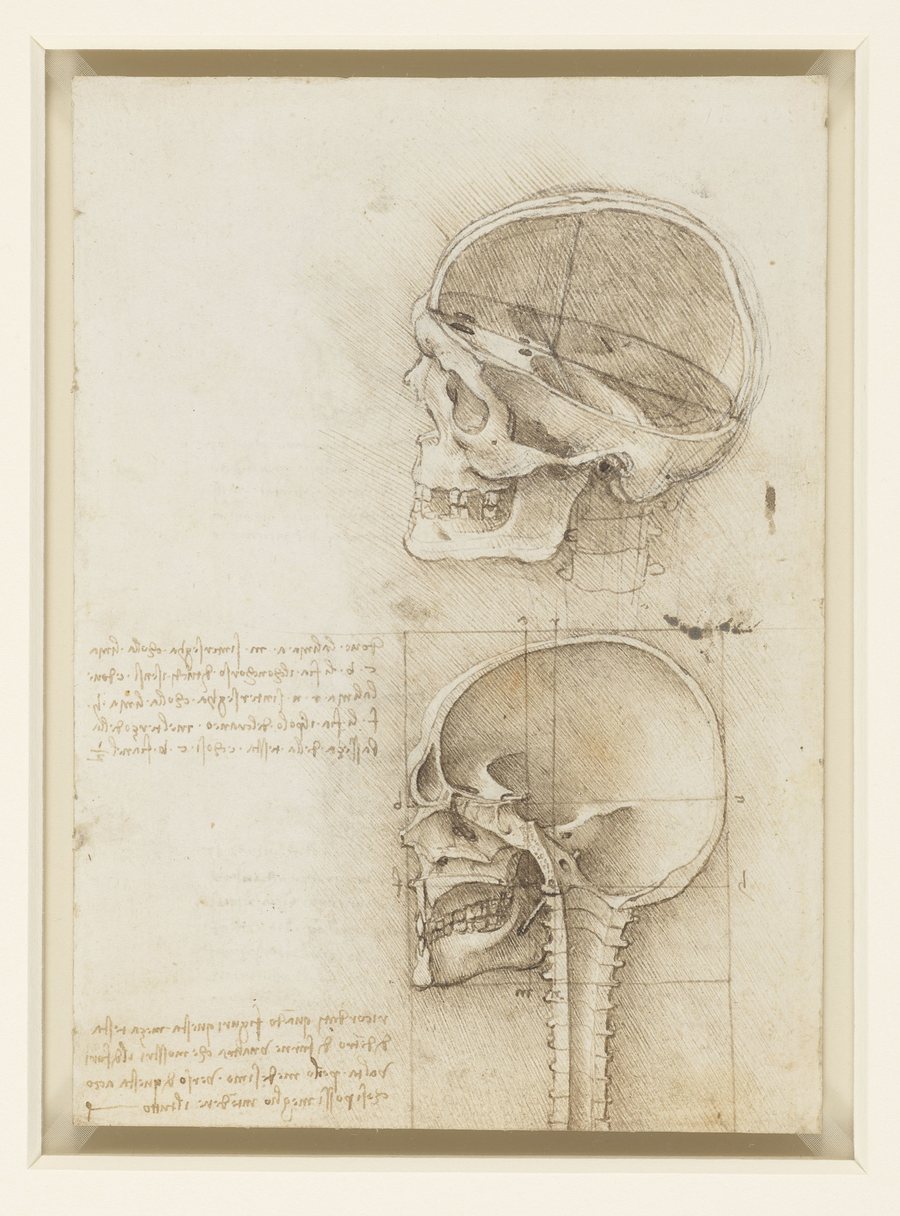
c. 1489 · Pen and ink. He sawed a skull in half and drew the cavities inside — looking for the seat of the soul, he mapped the chambers of the head like rooms of a house.
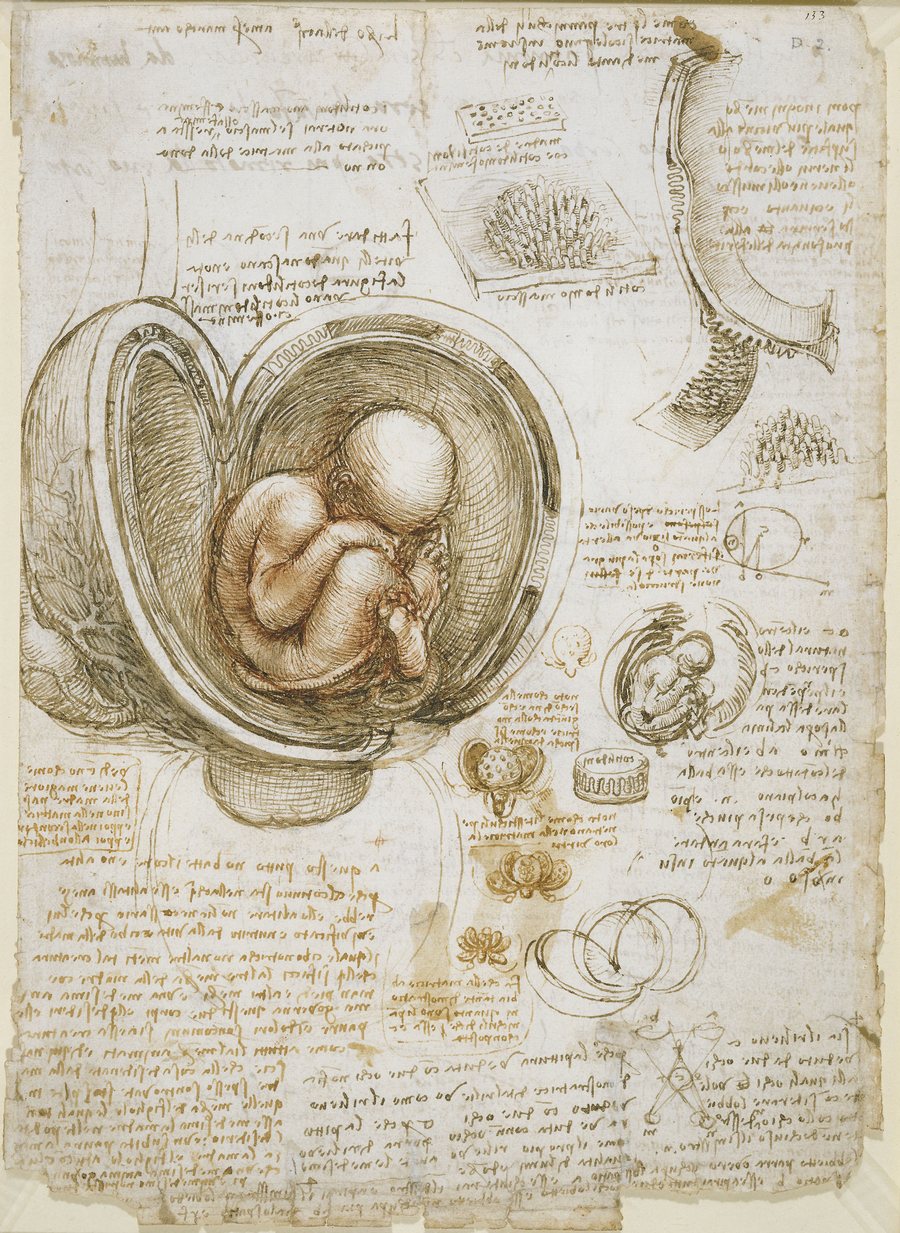
c. 1511 · Red chalk and ink. Drawn from dissection: the child in the womb, rendered with a tenderness no anatomist before him had managed. Science and drawing are one hand here.
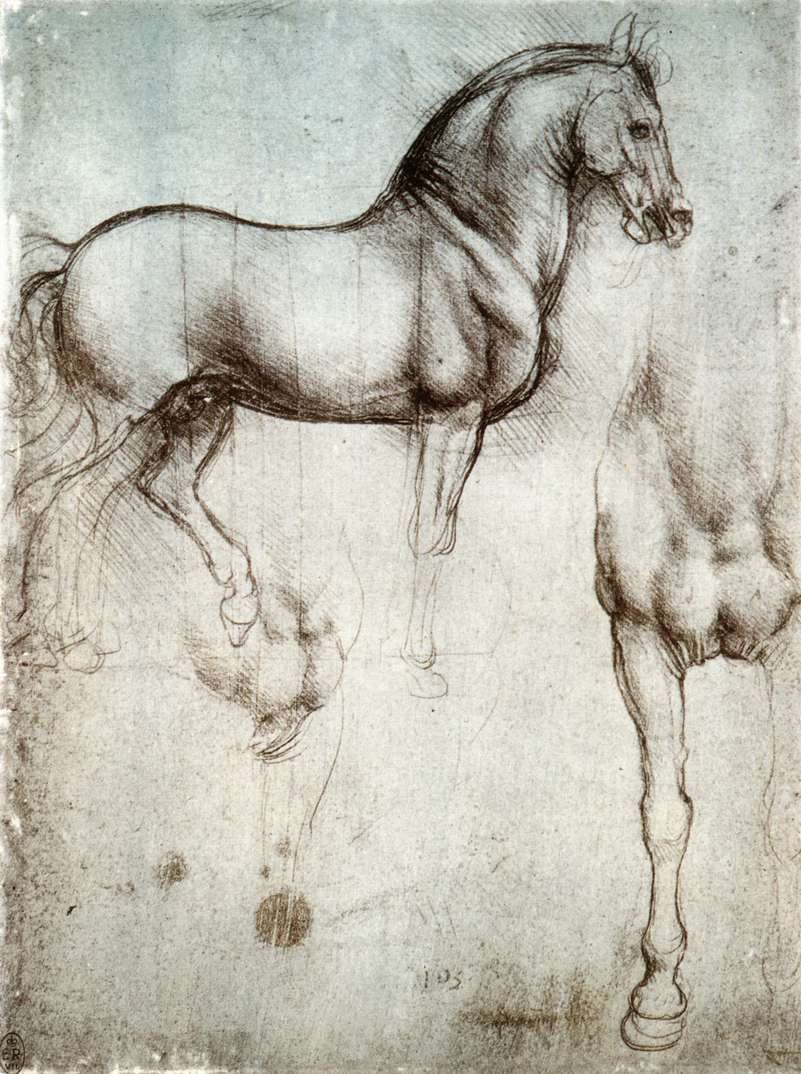
c. 1490 · Metalpoint. For the great bronze horse of Milan — modelled in clay, never cast. The studies outlived the statue that never was.
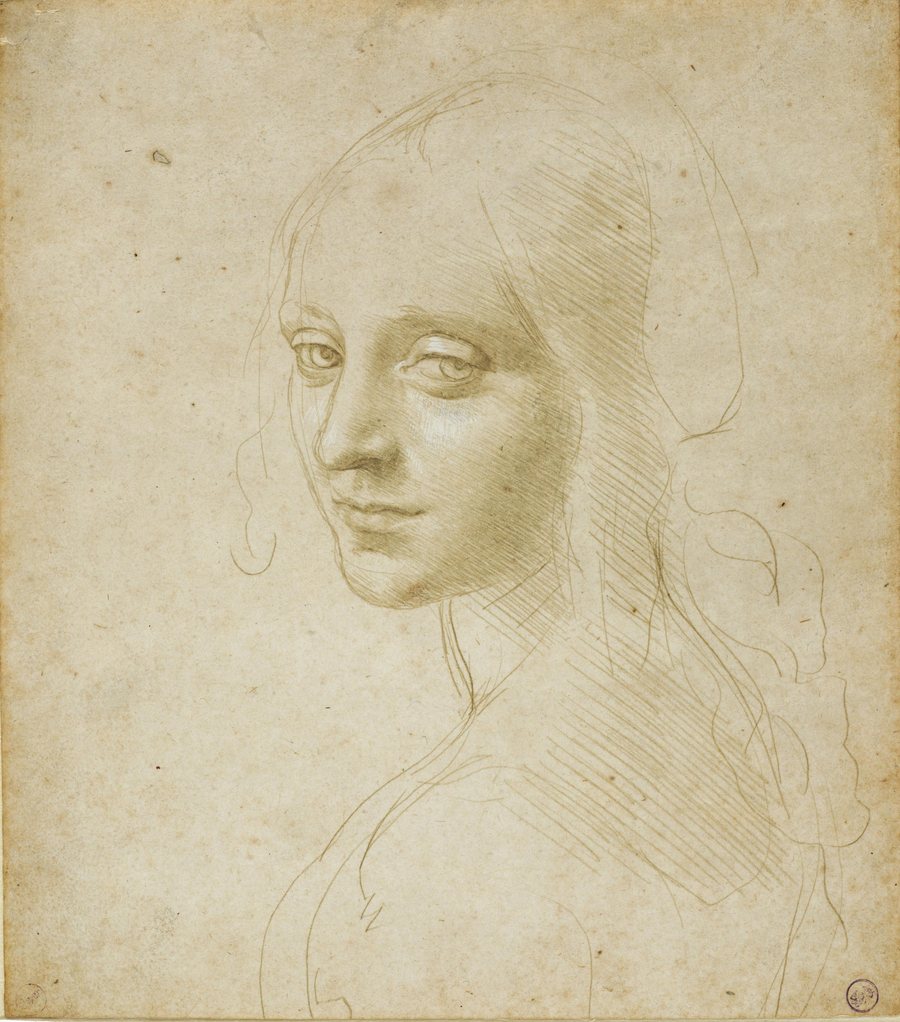
c. 1483–1485 · Metalpoint on coated paper — a line that cannot be erased, only drawn right. The downcast eyes of the angel of the grotto were rehearsed here.
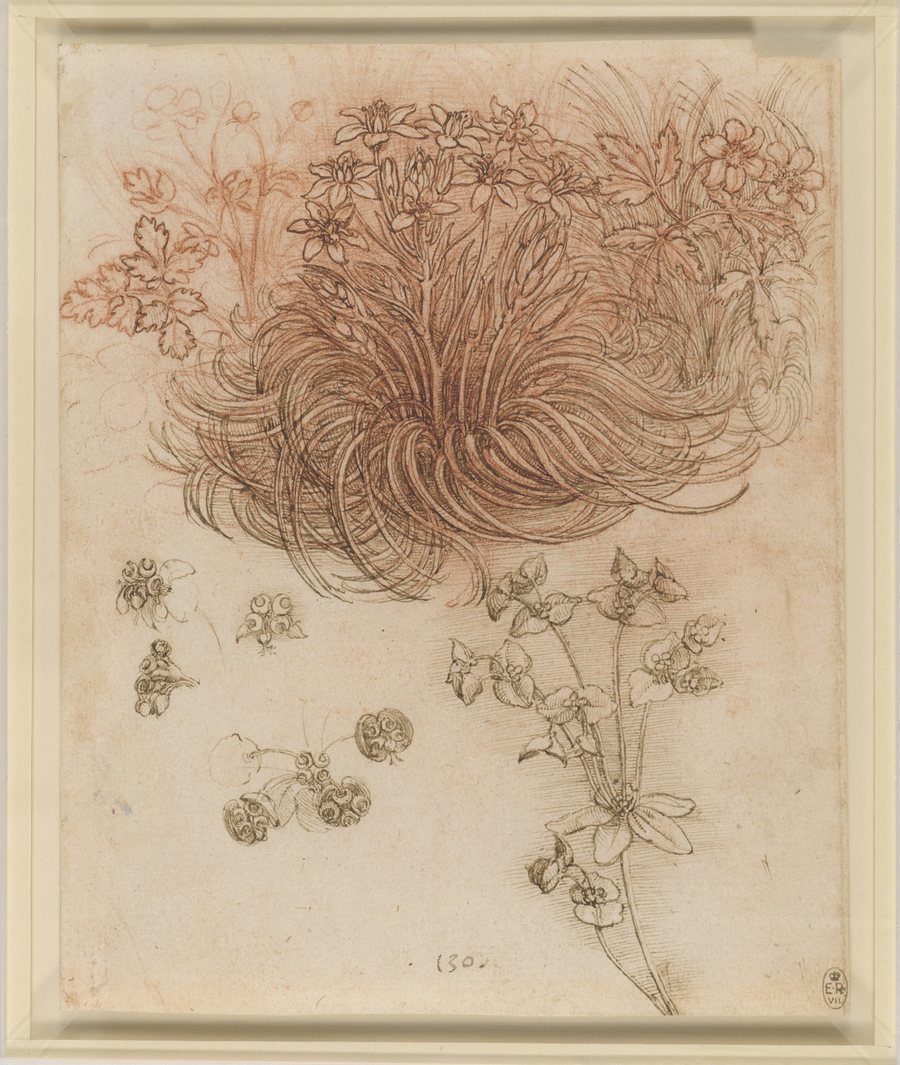
c. 1506–1512 · Pen and ink. He drew plants the way he drew water — as systems of movement, every leaf placed by the same spiral arithmetic he found in shells and rivers.
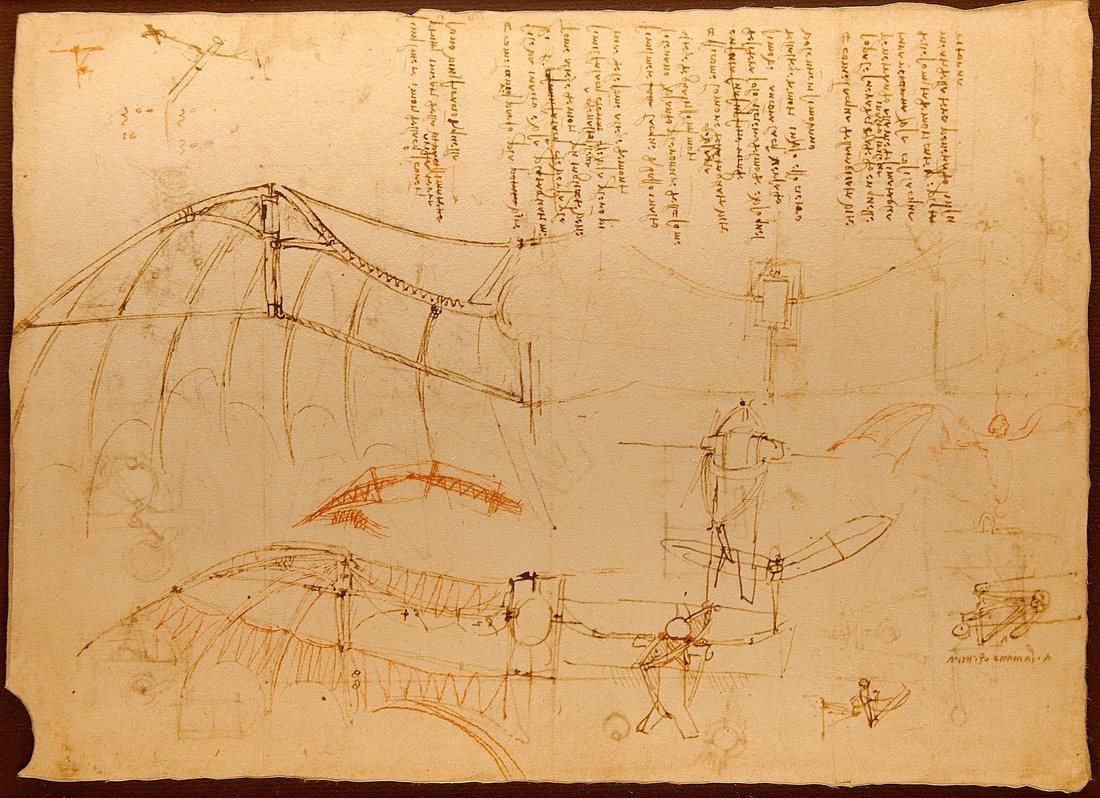
He watched birds for thirty years before he dared the drawing. The wings were to beat by the strength of a man's arms and legs — not enough, as he half-knew; the idea had to wait four centuries for an engine.
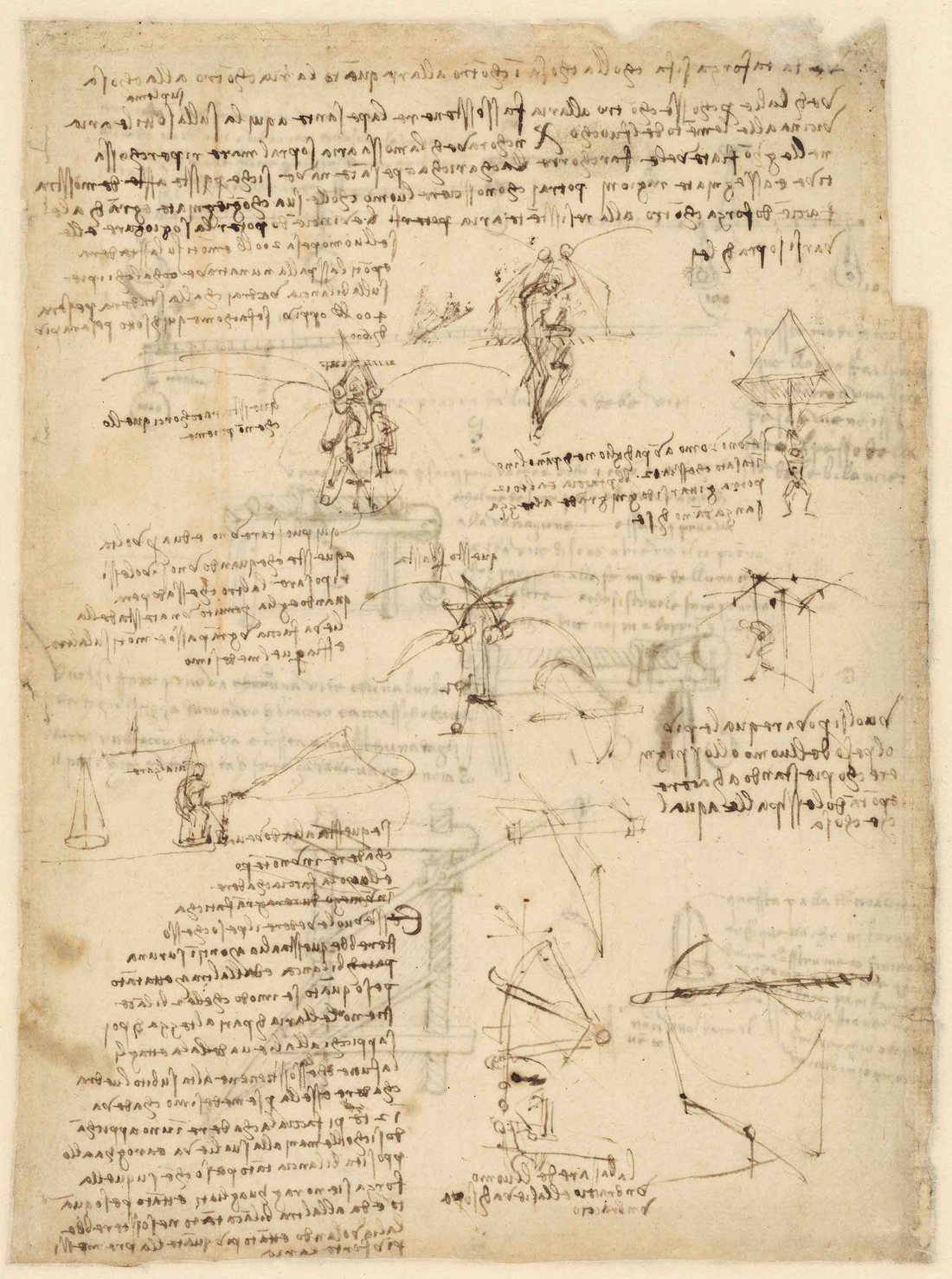
A pyramid of linen, twelve yards across, its seams sealed. Beside it he wrote that a man beneath such a tent could throw himself from any height without harm. Tested in the year 2000 with his exact design — it worked.
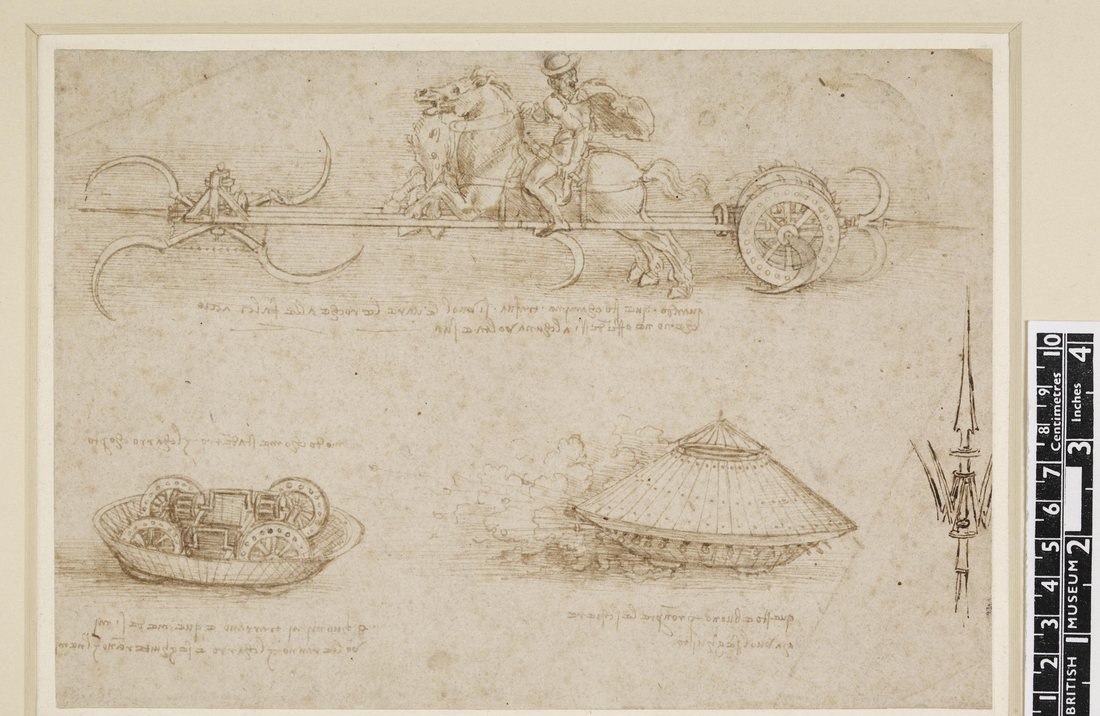
A turtle of wood and metal plate, ringed with cannon, cranked forward by men inside. In the drawing the gears are set to tear the machine apart — some believe the flaw was deliberate, so the sheet could never be built by an enemy who stole it.
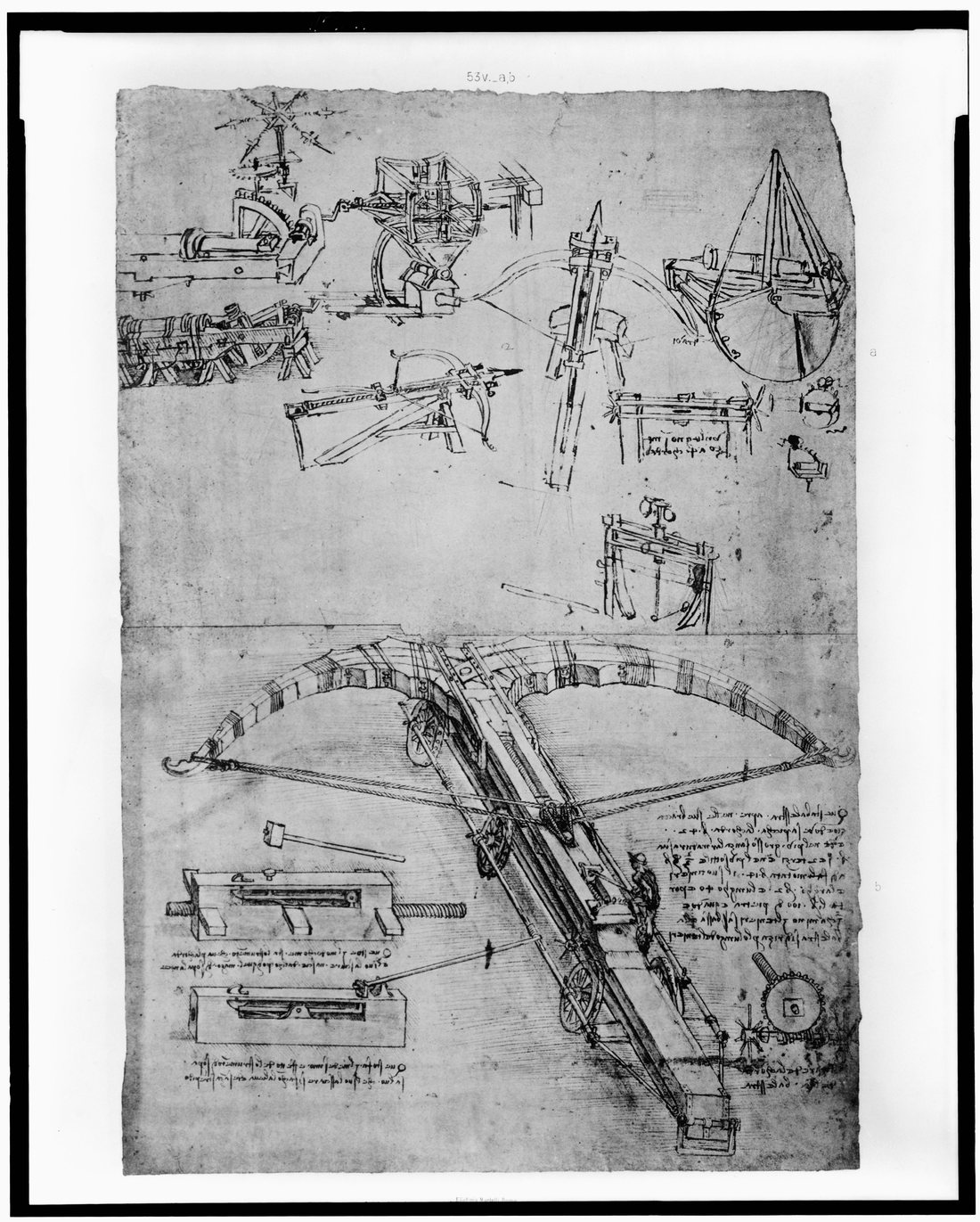
Twenty-four metres of bow, meant to hurl stones and fire over a fortress wall. It was drawn for the Duke of Milan — less a weapon to build than a drawing to frighten with, and to prove the engineer was worth his salary.
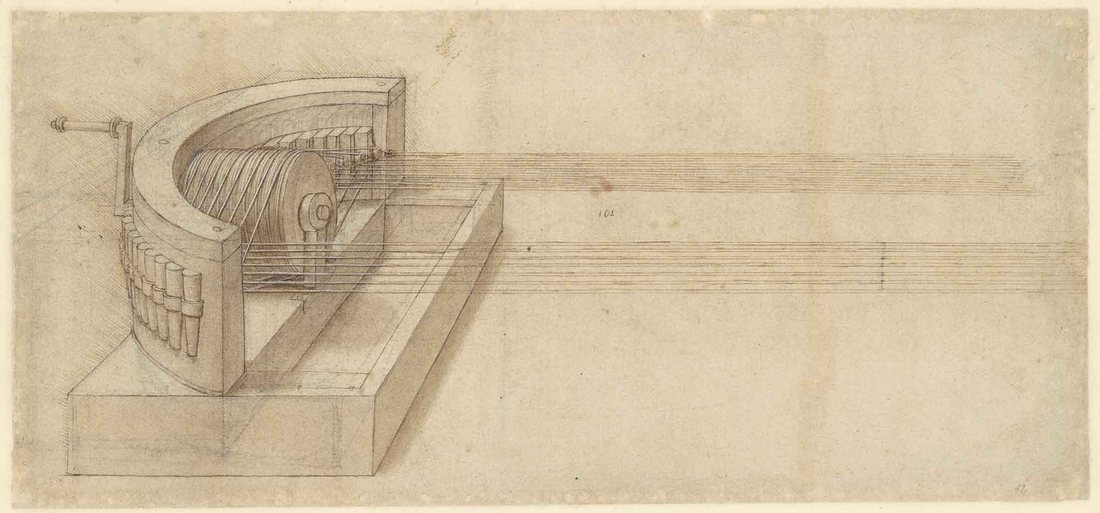
Codex Atlanticus. Racks of barrels that could be loaded while another rack fired — firepower by rotation, three centuries before the machine gun made it ordinary.
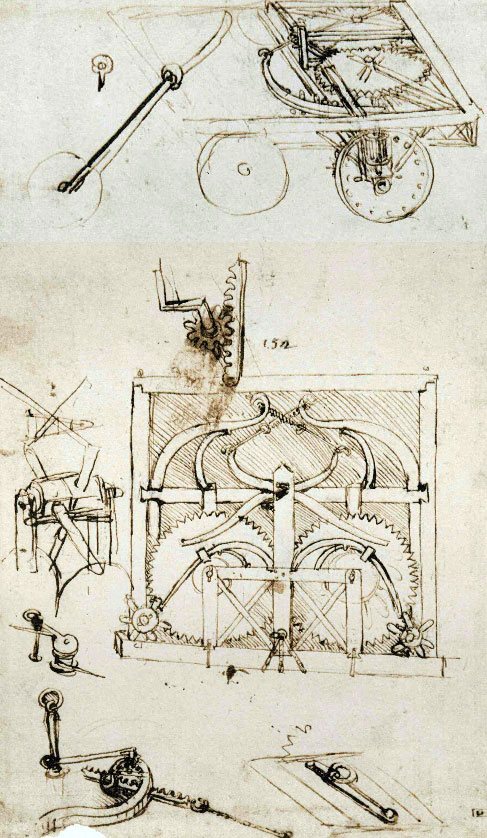
Codex Atlanticus. Driven by wound springs, its path set by pegs and cams — some call it the first robot, others the first car. Either way, it moves by stored patience.
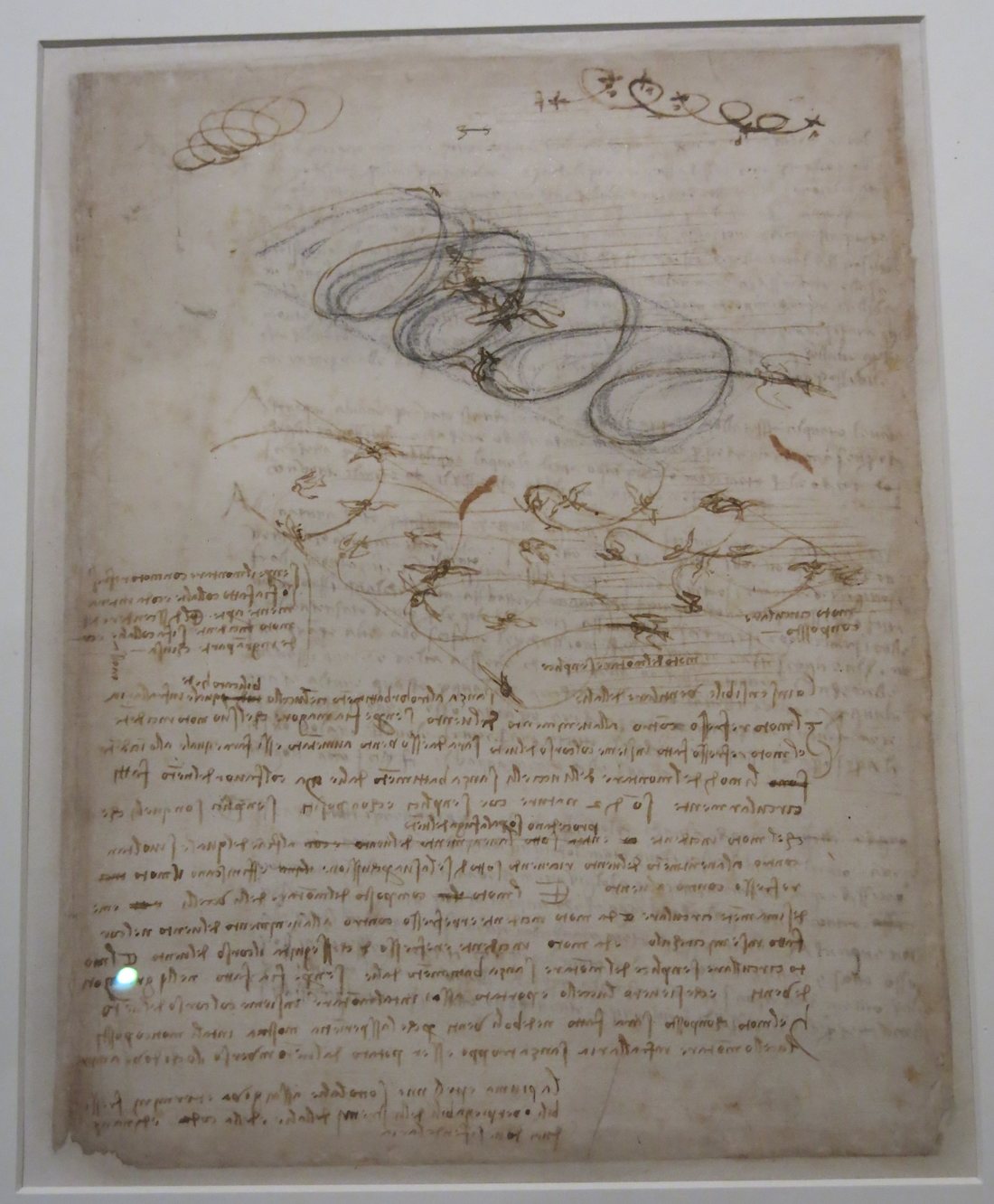
Codex Atlanticus. A hang-glider of cane, linen and raw silk, steered by the pilot’s own shifting weight — drawn after years of watching how birds lean into the wind.
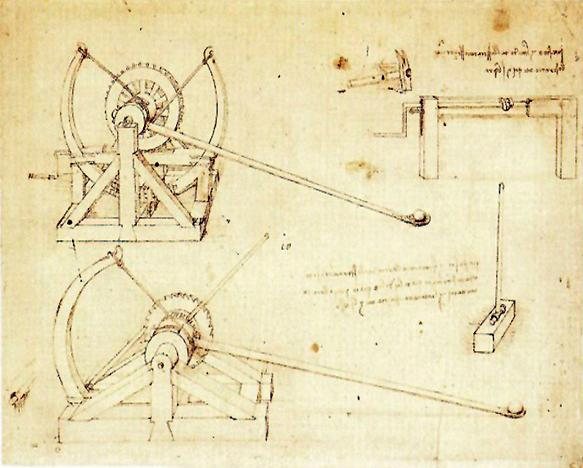
Codex Atlanticus. Bent wood storing the blow like a drawn bow the size of a house — and the release gear drawn tooth by tooth.
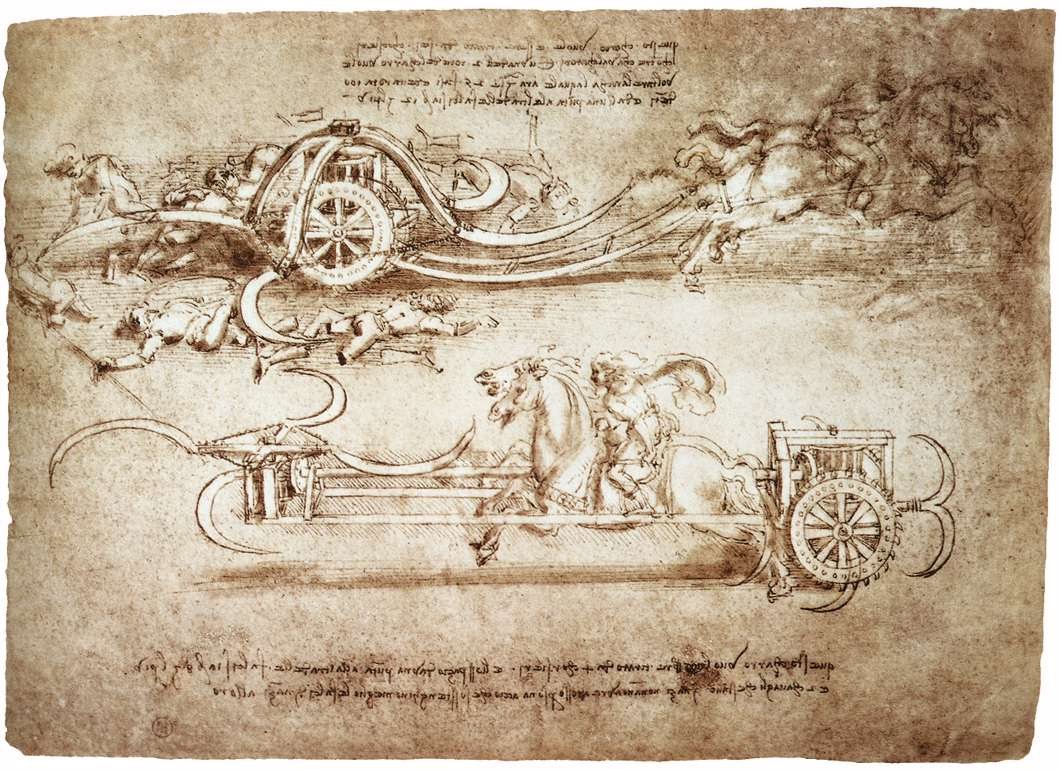
c. 1485. War carts with whirling scythe blades — drawn beautifully, and probably meant to horrify. Even his weapons are choreography first.
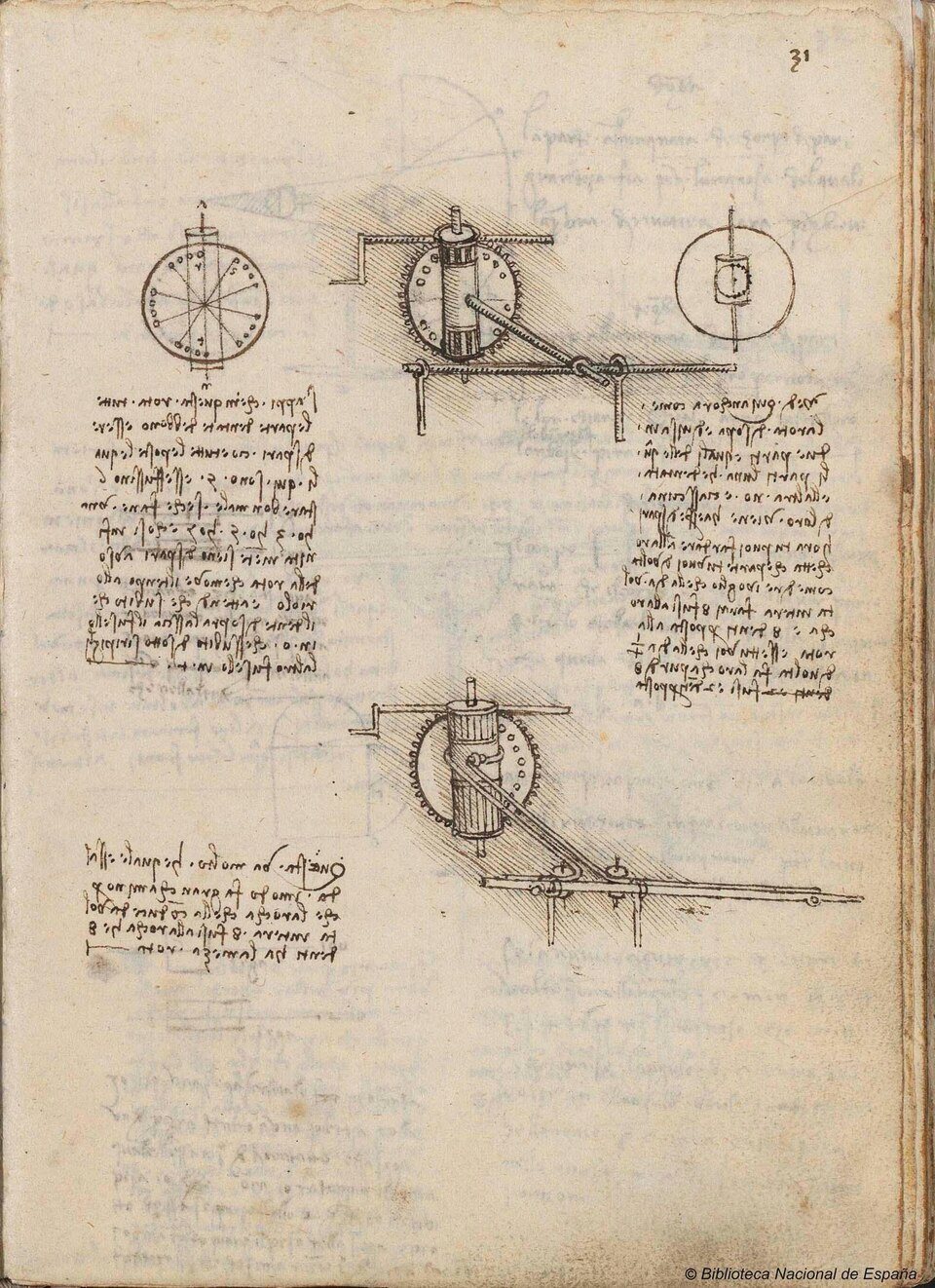
Codex Atlanticus. Pages of springs, ratchets and escapements — the small iron grammar from which all his machines are built. He thought in springs the way others think in words.