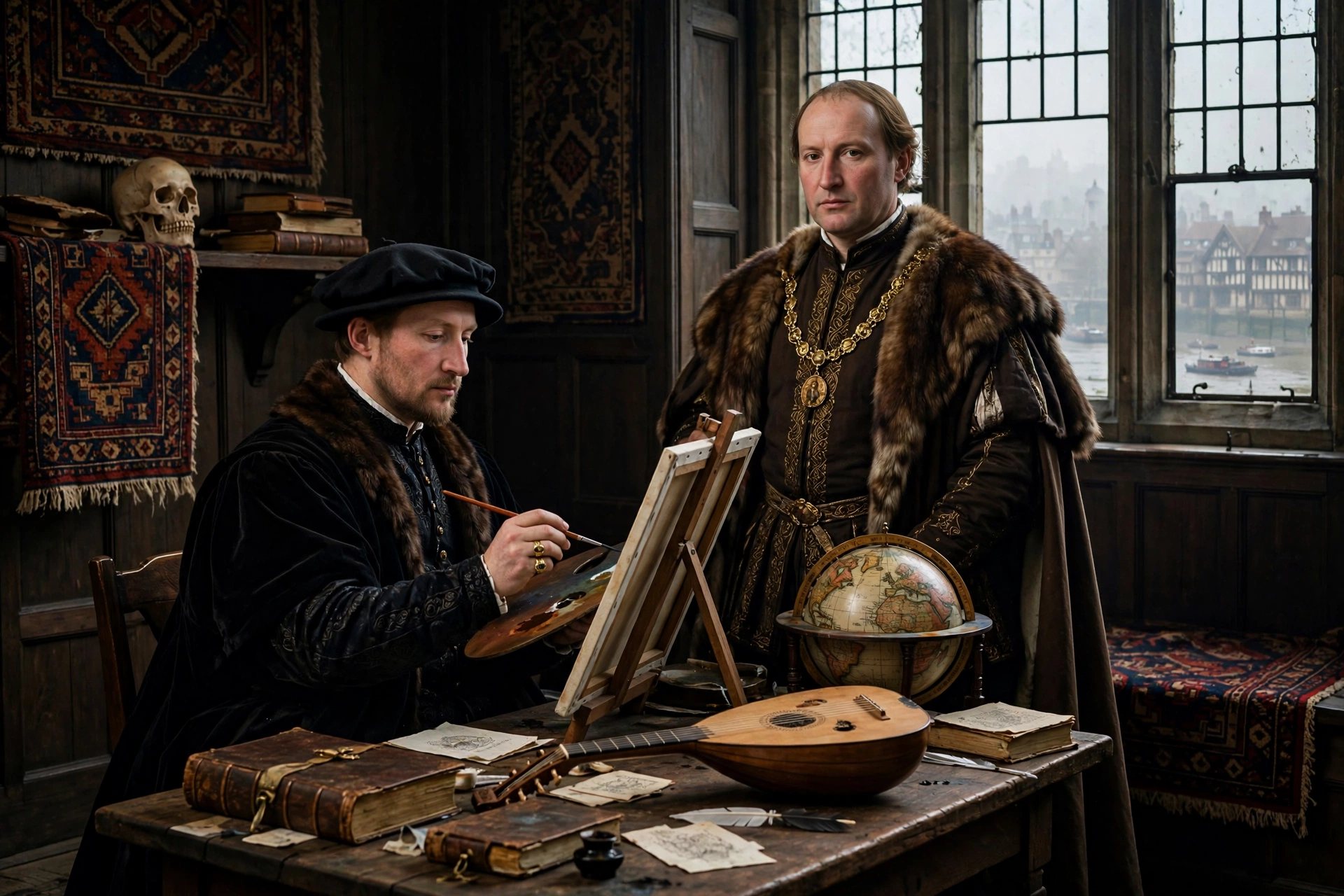
An Augsburg goldsmith's son who became the eye of Henry VIII's court: Holbein painted kings, merchants, scholars and queens with the same cool, exact attention, and filled their portraits with objects that testify about them. Nothing in his pictures is decoration — every letter, instrument and jewel is evidence.
Before the paint, the chalk: Holbein's portraits begin as drawings — coloured chalks on prepared paper, the face taken in a single sitting, notes on colour and detail written beside it. The great cache of these drawings at Windsor is the studio's working archive: the paintings could be finished, copied and sent abroad from them without the sitter.
In Basel he painted on limewood, in London on oak, in thin oil layers over a light ground — and set his sitters against flat fields of blue or green that behave like the wall of a room in a manuscript. The flatness is deliberate: everything the paint describes — fur, damask, chain, skin — stands out from that silence at full volume.
A Holbein portrait is a dossier: the merchant Gisze stands among his scales, scissors, letters and a vase of carnations, every paper inscribed and legible; the Ambassadors lean on two shelves of instruments for measuring heaven and earth. Read the objects and you have read the man's office, learning and ambitions — the face is only the first document.
Across the floor of the Ambassadors floats a long grey smear that resolves, only when you stand at the picture's right edge and look back along it, into a grinning skull. Anamorphosis — a picture drawn in correct perspective for one wrong viewpoint — was a courtly game of geometry; Holbein made it a sermon: all this learning and splendour, seen rightly, is death.
The same hand that painted the king designed his jewels, his goldsmiths' cups, book title-pages, stained glass and the woodcuts of the Dance of Death — cut by Hans Lützelburger with a fineness no block-cutter matched. Holbein was not only a portraitist for hire; he was the Tudor and Basel workshops' draughtsman of first resort.
Courtiers complained that Holbein's faces spared no one, and kept commissioning them anyway: the record was the point. When Henry VIII sent him to paint prospective brides abroad, the portraits were intelligence reports — Christina of Denmark, painted in three hours, is a widow of sixteen in mourning black, presented exactly as she was, which is to say, unforgettably.
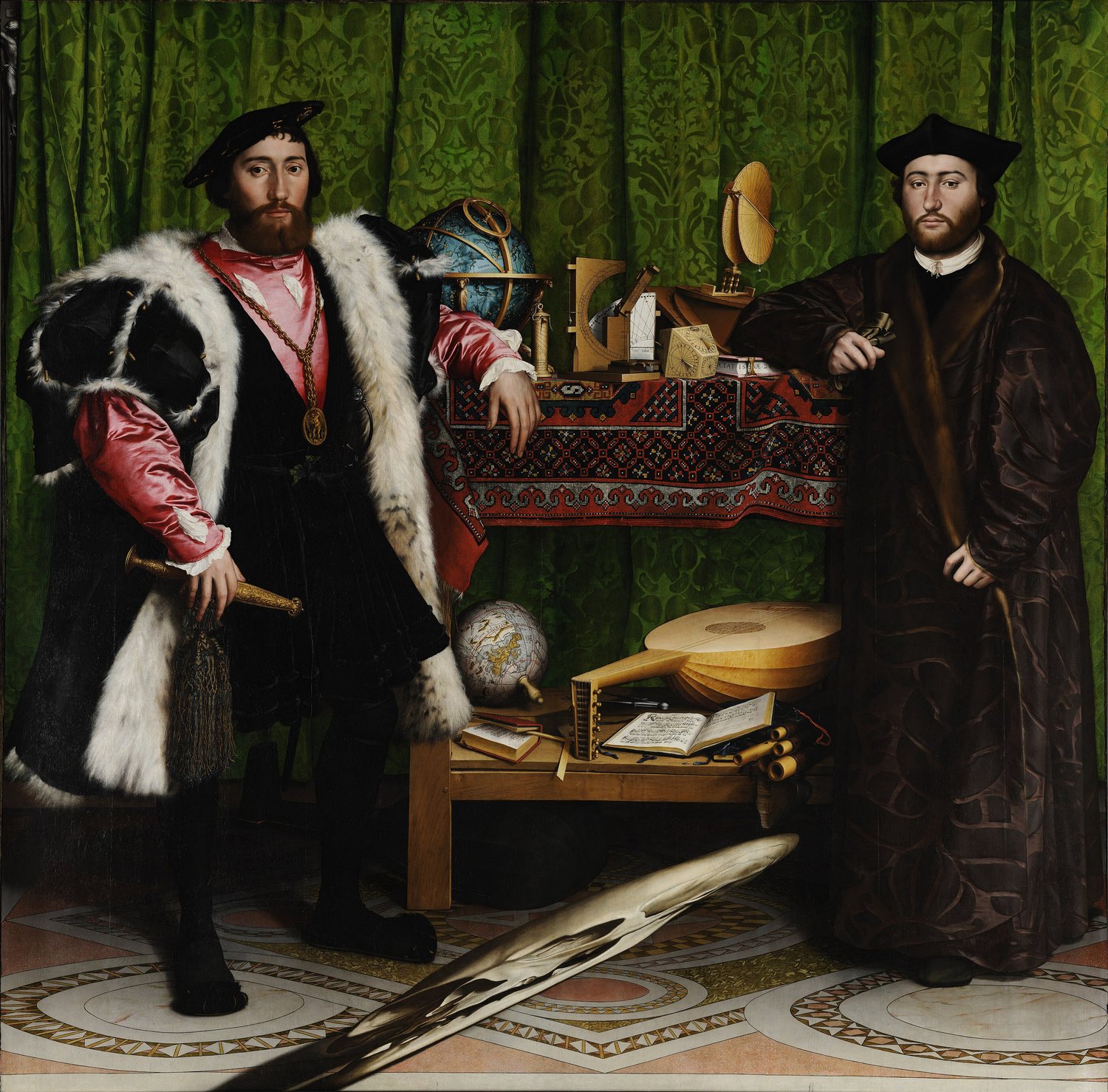
Two French envoys flank a still life of learning: globes, a sundial, a Lutheran hymnal, a lute with a broken string — and across the floor, the stretched skull that only one viewpoint can read. It is the most intellectual portrait of the century, and the coldest: everything these men know is laid out, and death is laid out with it.
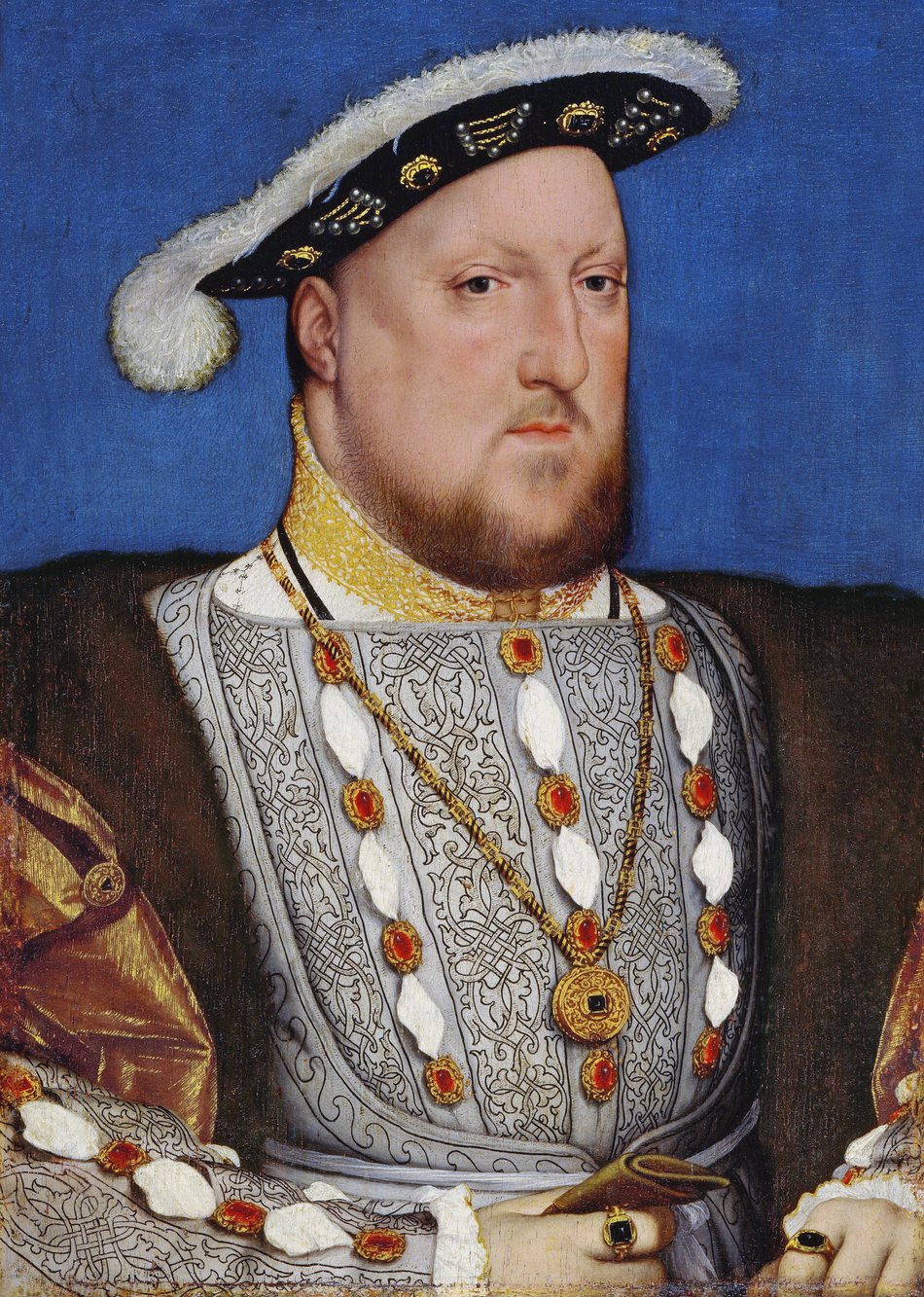
The image of a king that outlived the king: broad, frontal, jewelled, the codpiece and the stance of a man who expects obedience from the paint itself. Holbein's full-length original is lost in a fire; this panel and the copies after his pattern carried the face of Henry VIII into every court in Europe.
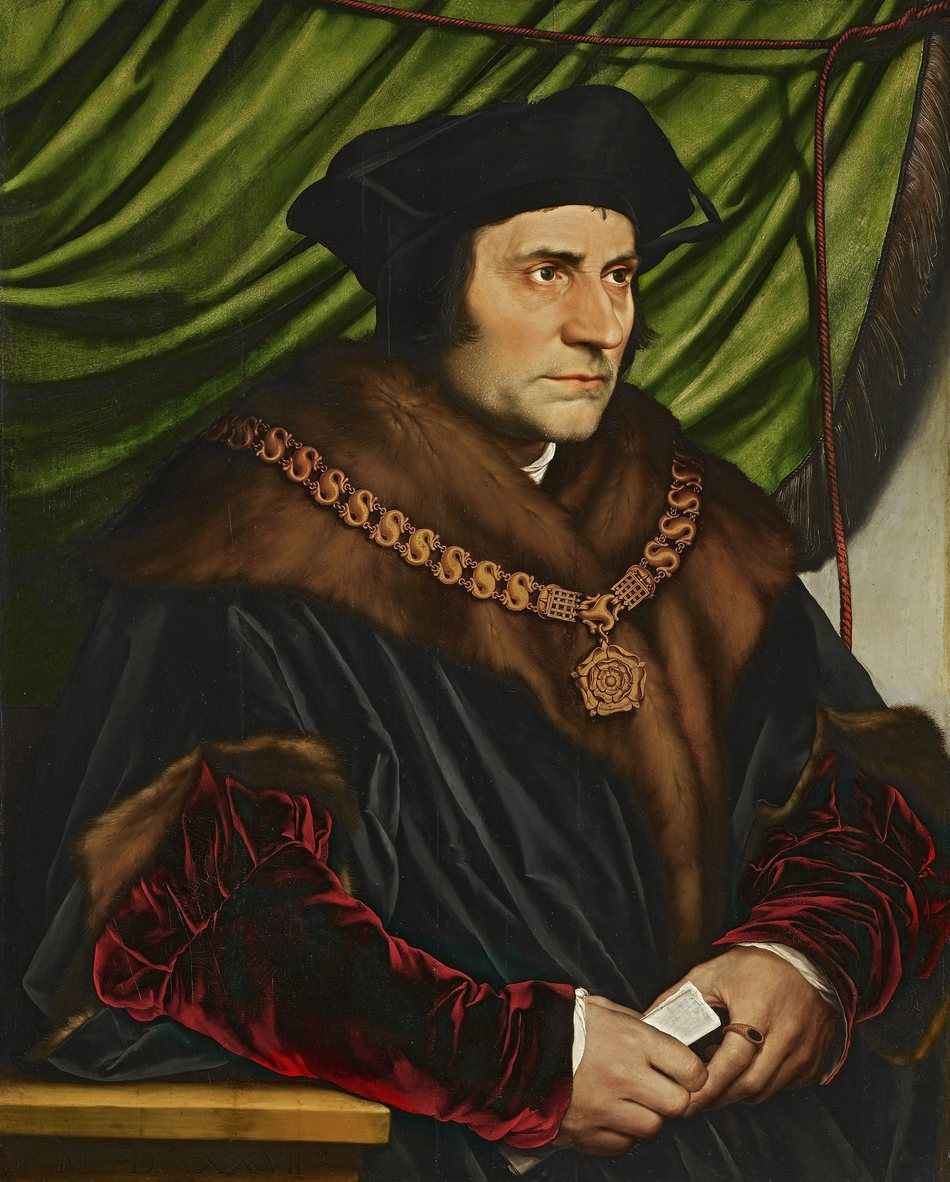
The Lord Chancellor in his chain of esses, a letter in his hand, sleeves of crimson velvet painted thread by thread — and a face that has already decided what it will not do. Eight years later More went to the scaffold rather than sign; Holbein's portrait is the record of the resolve, made before the test came.
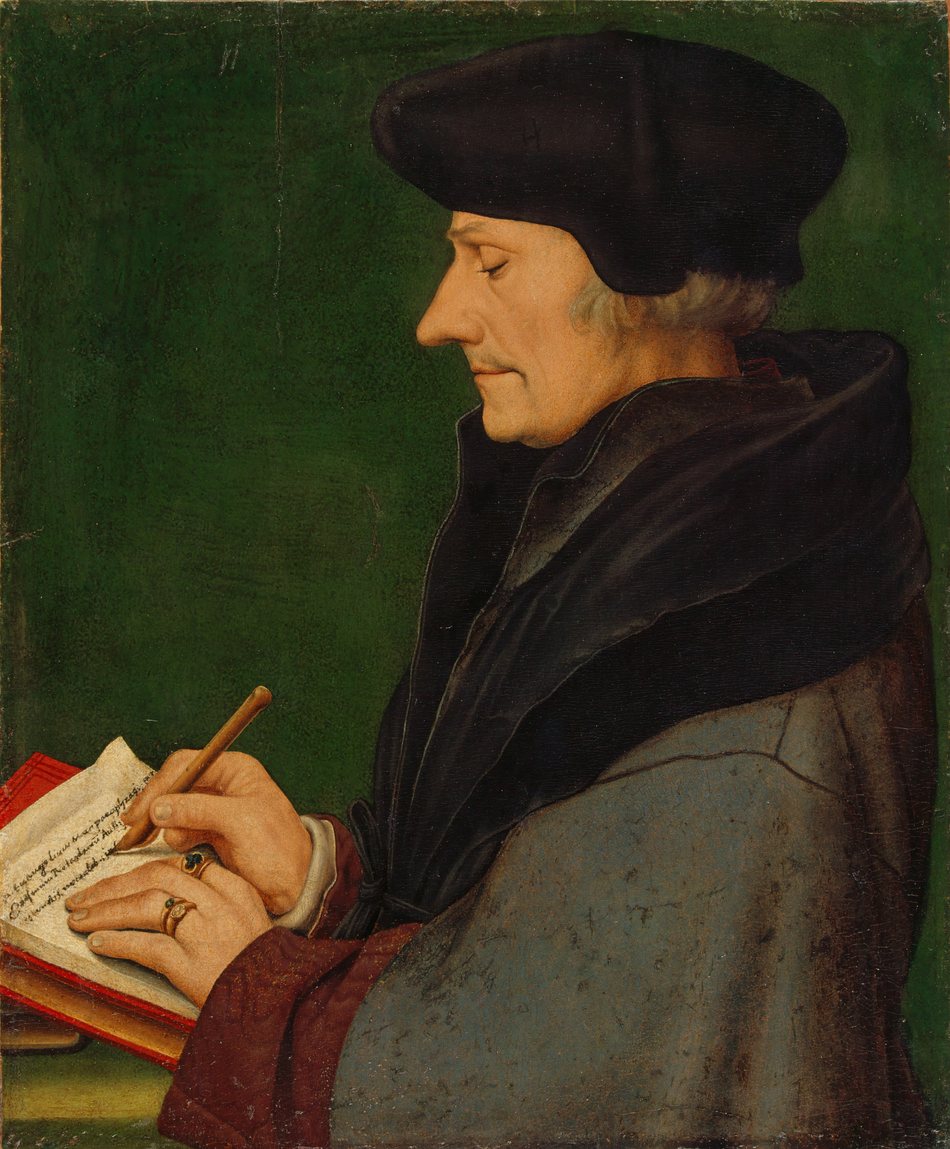
The prince of humanists caught at work, in profile like a figure on a medal: pen in hand, a commentary on the Gospel of Mark open before him, the scholar's cap pulled down against the world. Holbein painted Erasmus again and again — the images were the friendship's currency, sent as gifts to More and to England.
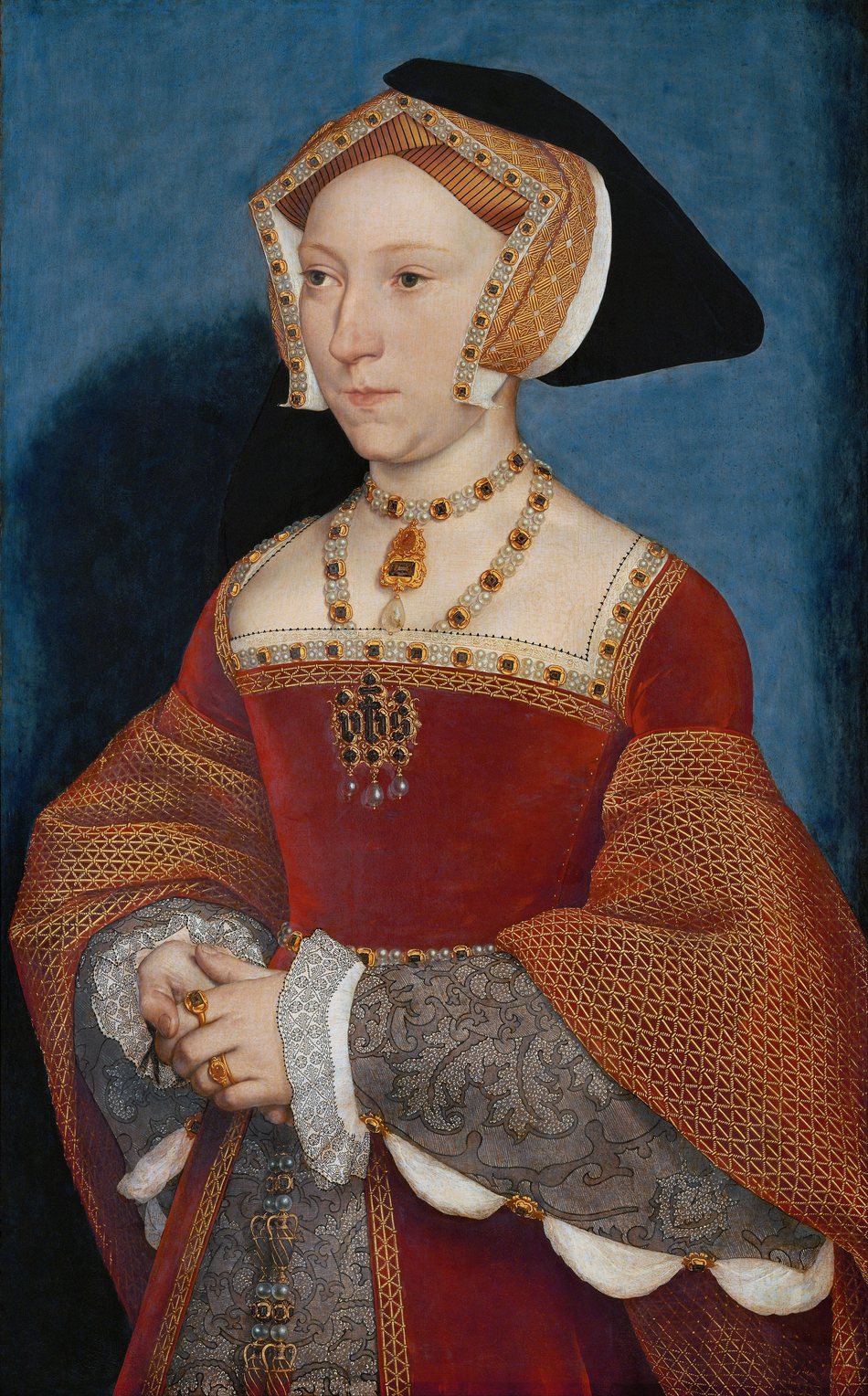
Henry's third queen, in a red velvet gown with brocaded sleeves, her hands folded over the jewel at her waist — painted with the court's full ceremonial and none of its warmth. She gave the king his son and died of the birth within the year; this grave, still face is nearly all that survives of her.
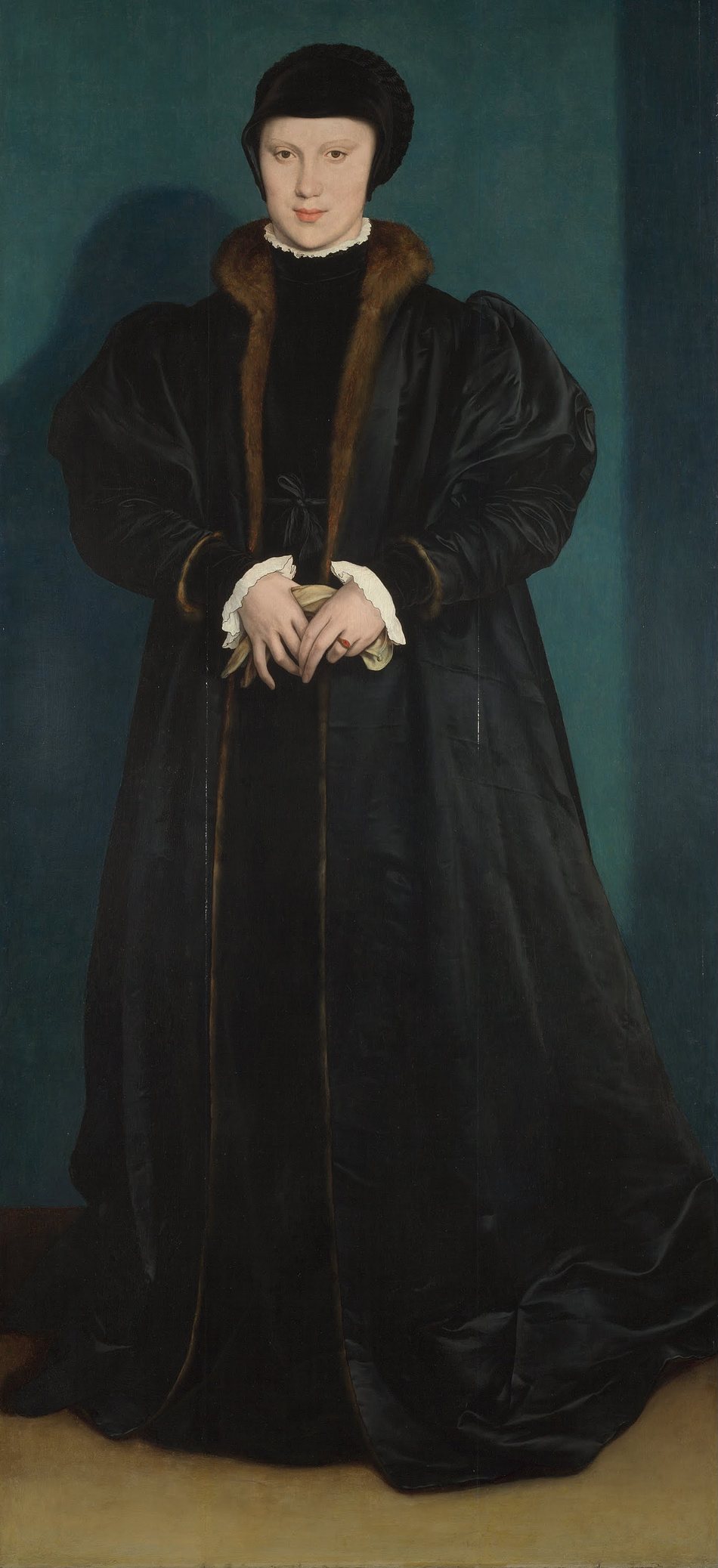
A bride inspected by proxy: the sixteen-year-old widowed Duchess of Milan, painted in Brussels in a single sitting of three hours for Henry VIII's decision. She stands in mourning black against the blue, hands quiet, gaze level — and the famous answer she is said to have given, that she had only one head, ended the negotiation the picture began.
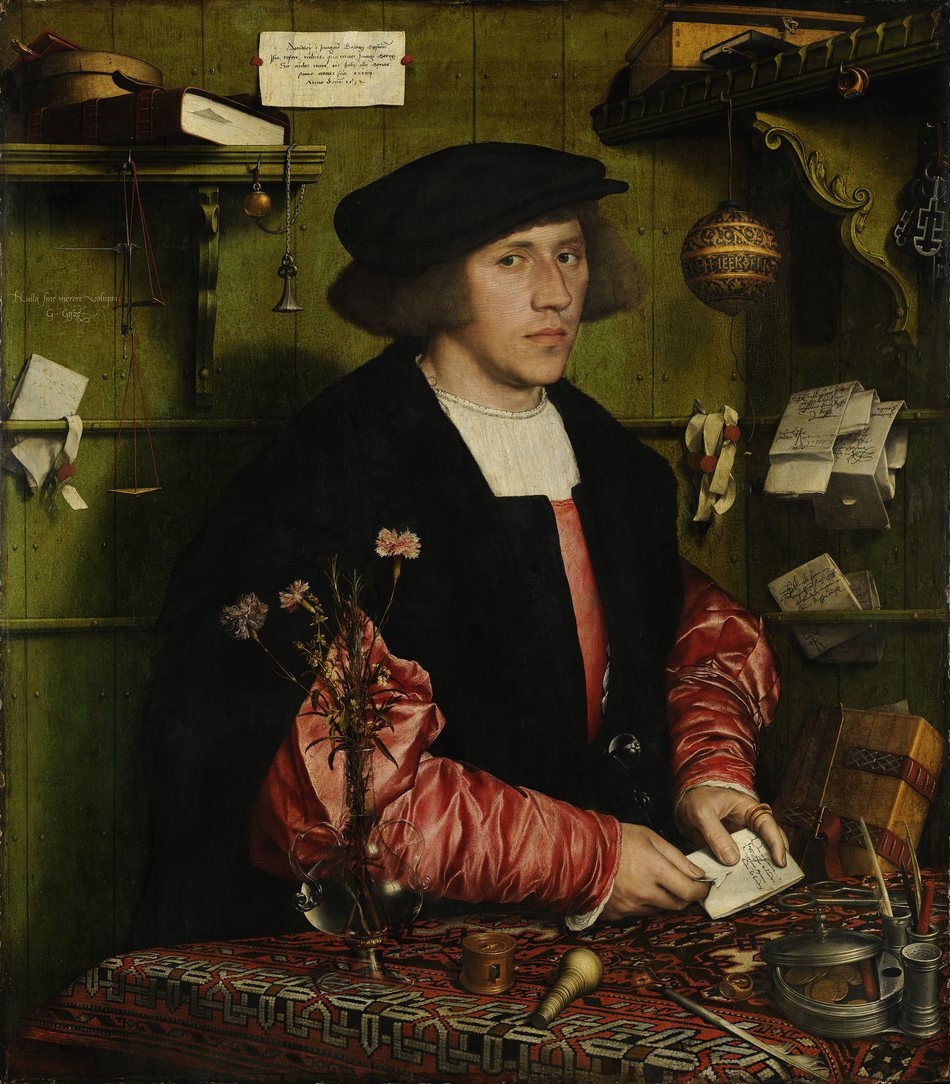
A Danzig merchant in the London Steelyard, painted among the instruments of his trade — scales, seal, scissors, a Turkish carpet, letters addressed to him in a real hand. The portrait is a business card in oil paint: everything in it says this man is exact, connected and good for the money.
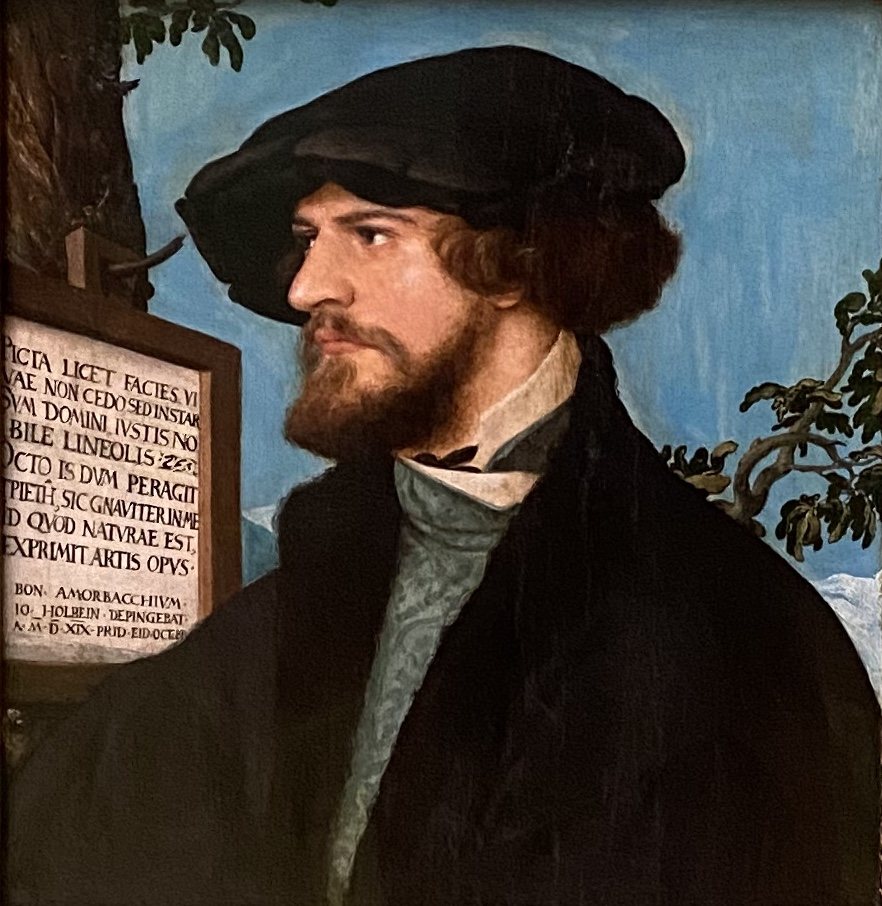
Painted when Holbein was twenty-one: the young Basel lawyer in profile before a fig tree, a tablet of Latin verse pinned to the trunk beside him praising the portrait's own likeness. It is a debut and a manifesto at once — the sitter commending the painter, inside the painting, in writing.
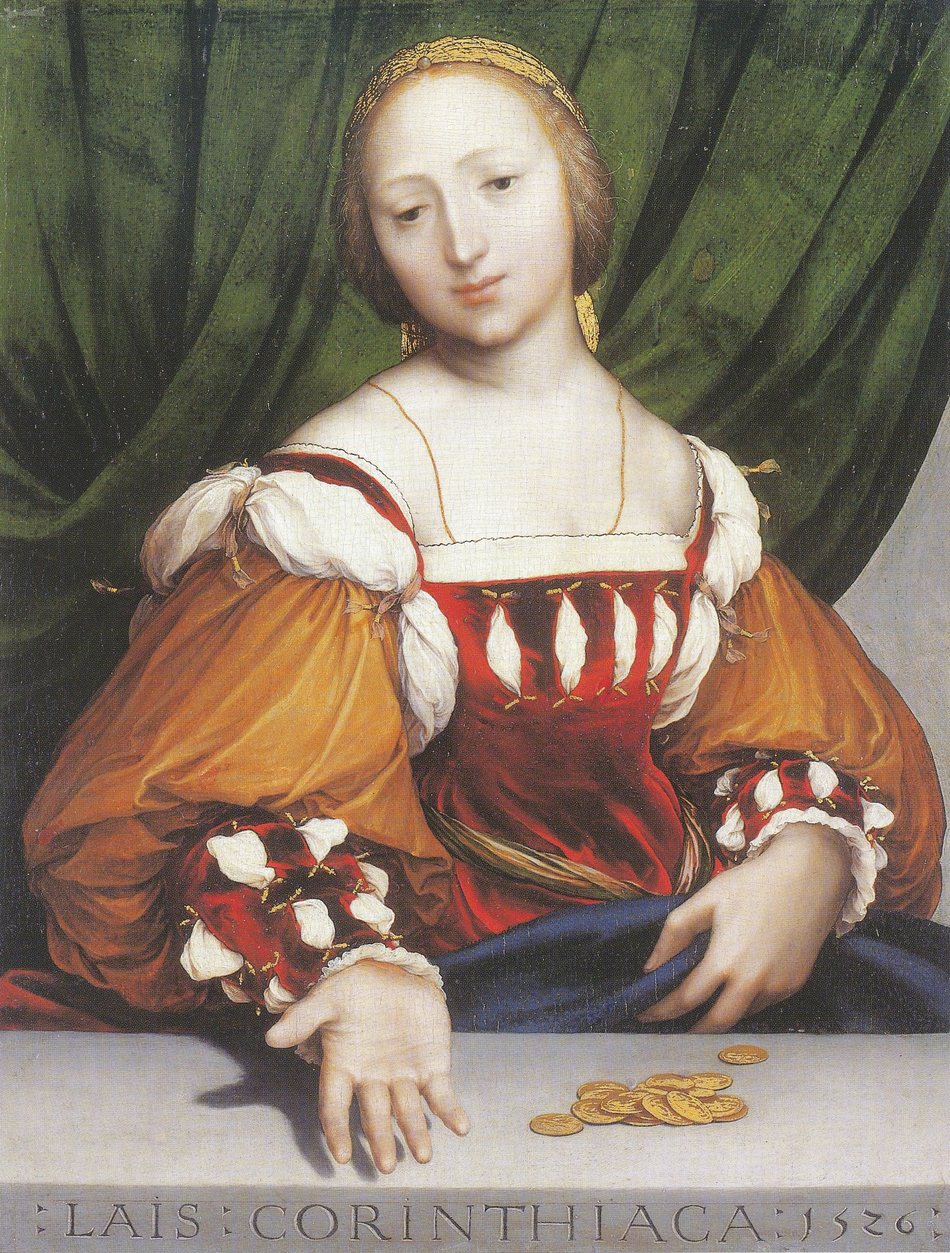
The most famous courtesan of antiquity, painted as a Basel lady in slashed sleeves, counting her gold pieces on a ledge inscribed with her name and the date. The joke is scholarly and a little cold: beauty priced, in a picture that was itself bought — a companion piece to his Venus, and the sharper of the two.

The most unflinching picture of the Northern Renaissance: a corpse laid in a stone slot barely wider than itself, the flesh already greening, the mouth and eyes open. Dostoyevsky saw it in Basel and put it into The Idiot — a painting, he wrote, that could make a man lose his faith. It was probably painted as the predella of an altarpiece; nothing like it had been seen before.