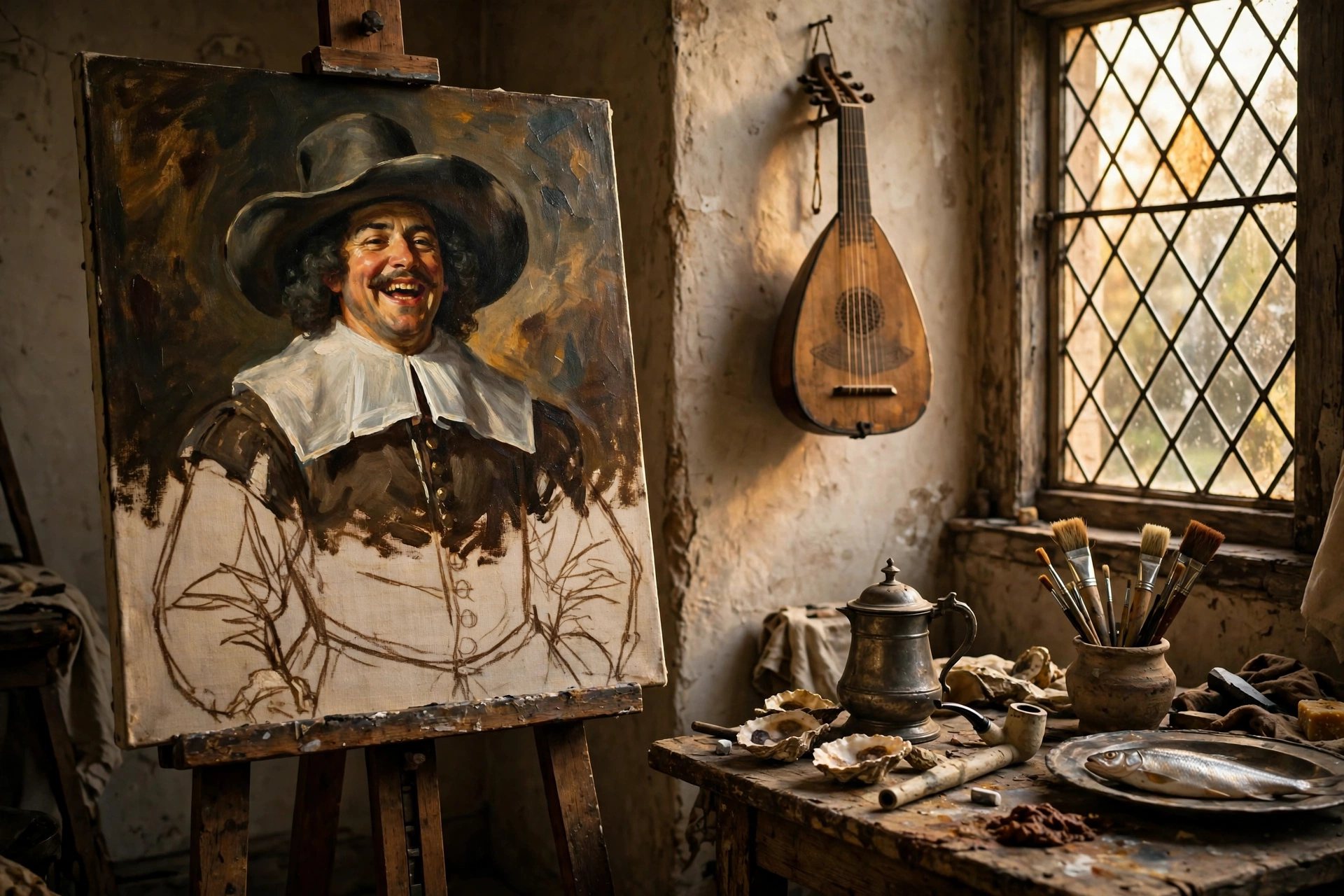
Haarlem's painter of laughter. Hals worked without underdrawing, straight into wet paint, at a speed you can still see in every stroke — and he used that speed for the one thing painting was not supposed to catch: a face in mid-expression, laughing, drinking, mid-sentence, before it has time to compose itself. This room is about the hand that could do that — and about the black silk in which it dressed an entire city.
X-rays of his canvases find no chalk drawing underneath, no careful plan — Hals began with the brush, blocking in the face in broad tones and finding the likeness inside the paint itself. It is the method of a man utterly sure of his eye: the drawing and the painting are the same act, and a mistake has nowhere to hide.
He painted alla prima — straight onto the canvas in wet paint, finishing most portraits in one or two sittings while lesser painters were still preparing their grounds. The brushstrokes sit on the surface undisguised, each one a decision. Stand close and a cuff is three slashes of white; step back and it is lace, light and movement at once.
His signature touch is the fleck — a single loaded stroke, dragged and lifted, that lands as a highlight on a nose, a sparkle in an eye, the edge of a collar. Nothing is blended; everything is placed. Velázquez painted this way in Madrid, Manet learned it two centuries later in front of Hals's own canvases, and modern painting has never quite given it back.
Haarlem's civic guards wore black silk, and Hals painted black like nobody before or since — never flat, never dead: built from greys, blues, browns and greenish half-tones, with the weave, the sheen and the folds all alive. A black costume in his hands is a whole orchestra pretending to be a single note.
Decorum said a portrait should be composed and grave; Hals painted people laughing with their mouths open, mid-gesture, mid-drink, caught between one second and the next. Scholars call the small ones tronies — studies of expression rather than portraits of persons. He made the passing expression the most permanent thing in Dutch art.
He was Haarlem's most wanted portraitist for fifty years — and chronically in debt, hauled before the court by his baker, his landlord, his frame-maker. The town eventually pensioned its genius with loads of peat for his stove. He painted the great group portraits of the regents at about eighty-four, with the loosest, freest brushwork of his life, and died two years later.
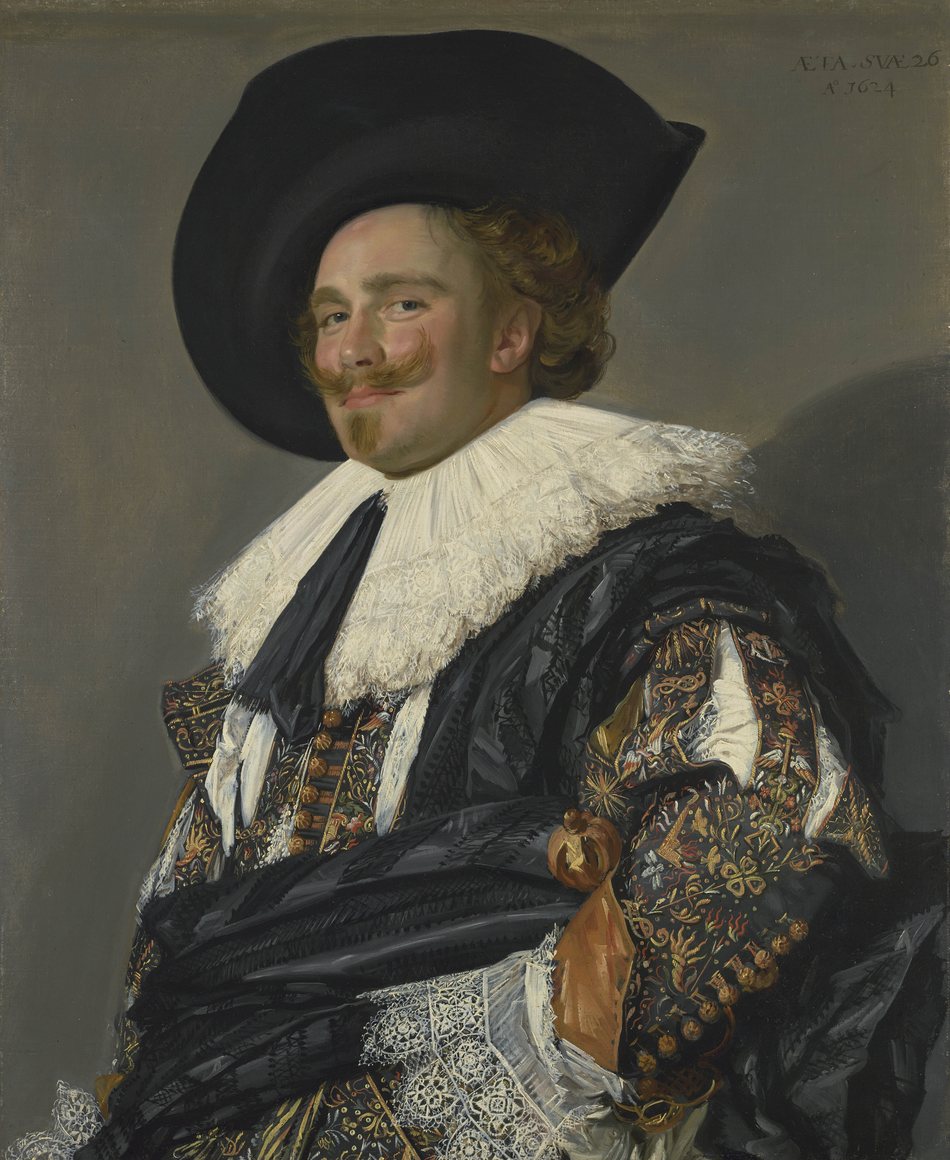
He is not laughing, and he was probably not a cavalier — the title is a Victorian invention — but the smirk, the elbow and the embroidered sleeve full of love-knots and arrows made him the most famous portrait in England. Look at the sleeve: a whole emblem book of love painted at the speed of handwriting.
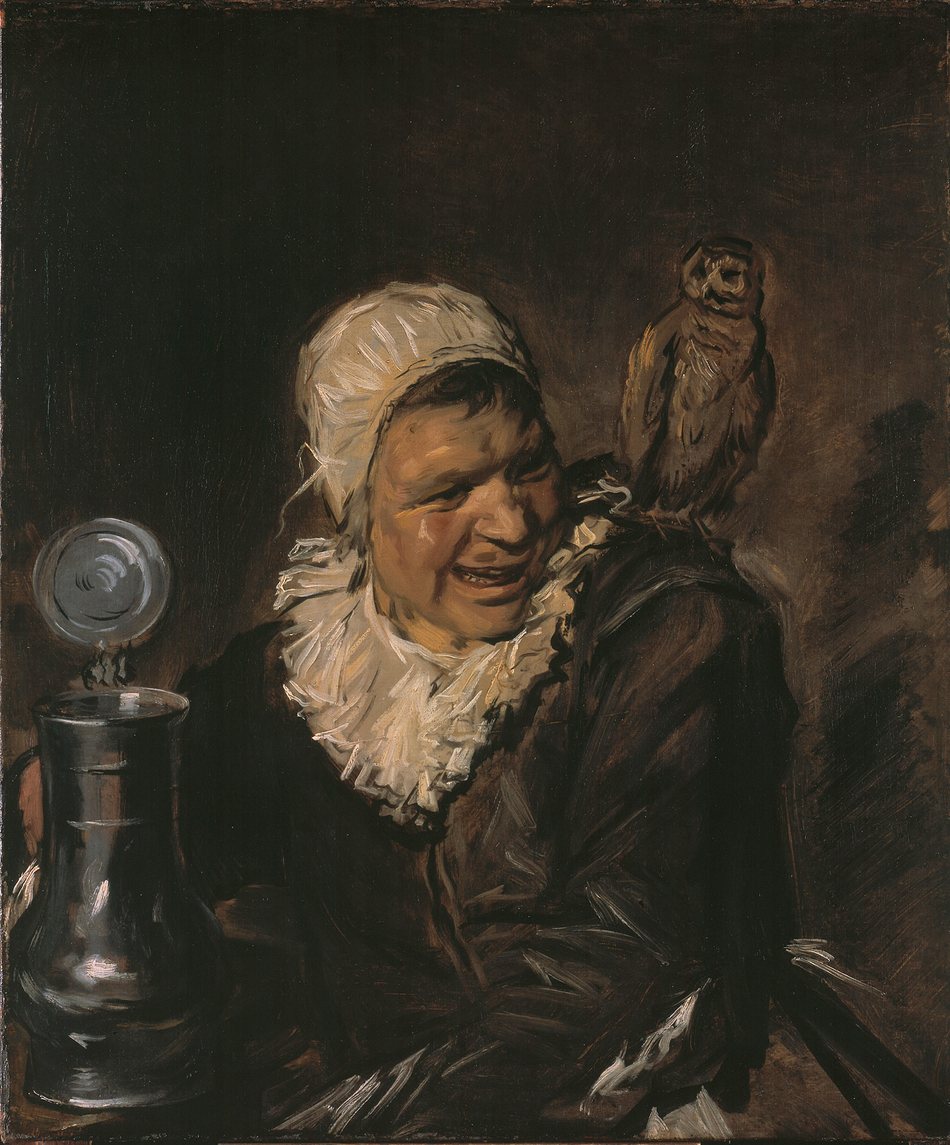
Mad Barbara, a real Haarlem character, sits with her pewter tankard and an owl on her shoulder, caught mid-cackle — the loosest, wildest brushwork Hals ever allowed himself, paint dragged and slapped like the laugh itself. She ended her days in the workhouse; her painter was himself never far from the debtors' court.
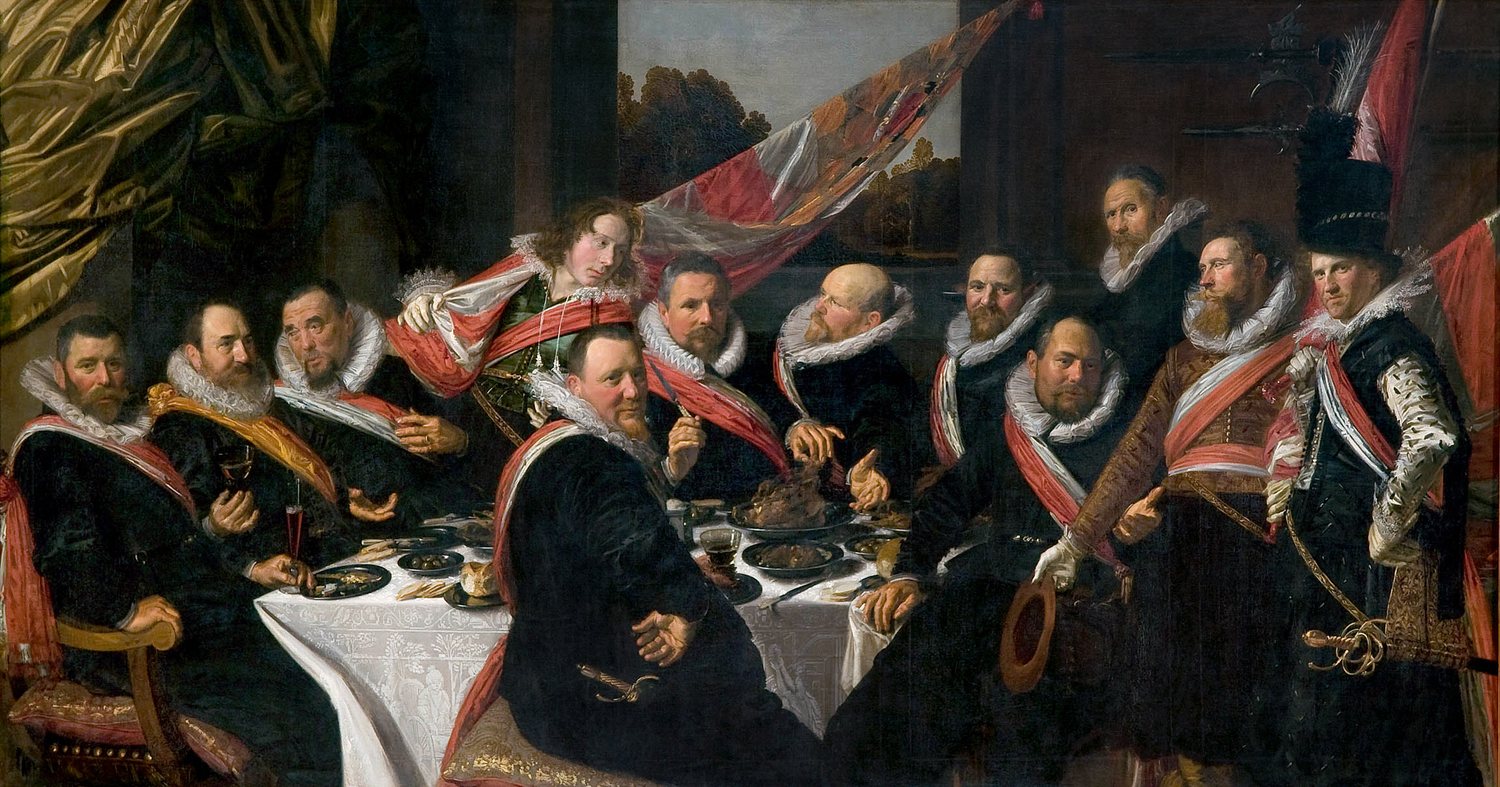
His first great commission, at about thirty-four: eleven officers of Haarlem's civic guard around their banquet table, each face a separate portrait, each sash and banner placed like notes in a score. The young painter had to satisfy eleven paying sitters in one canvas — and founded a genre doing it.
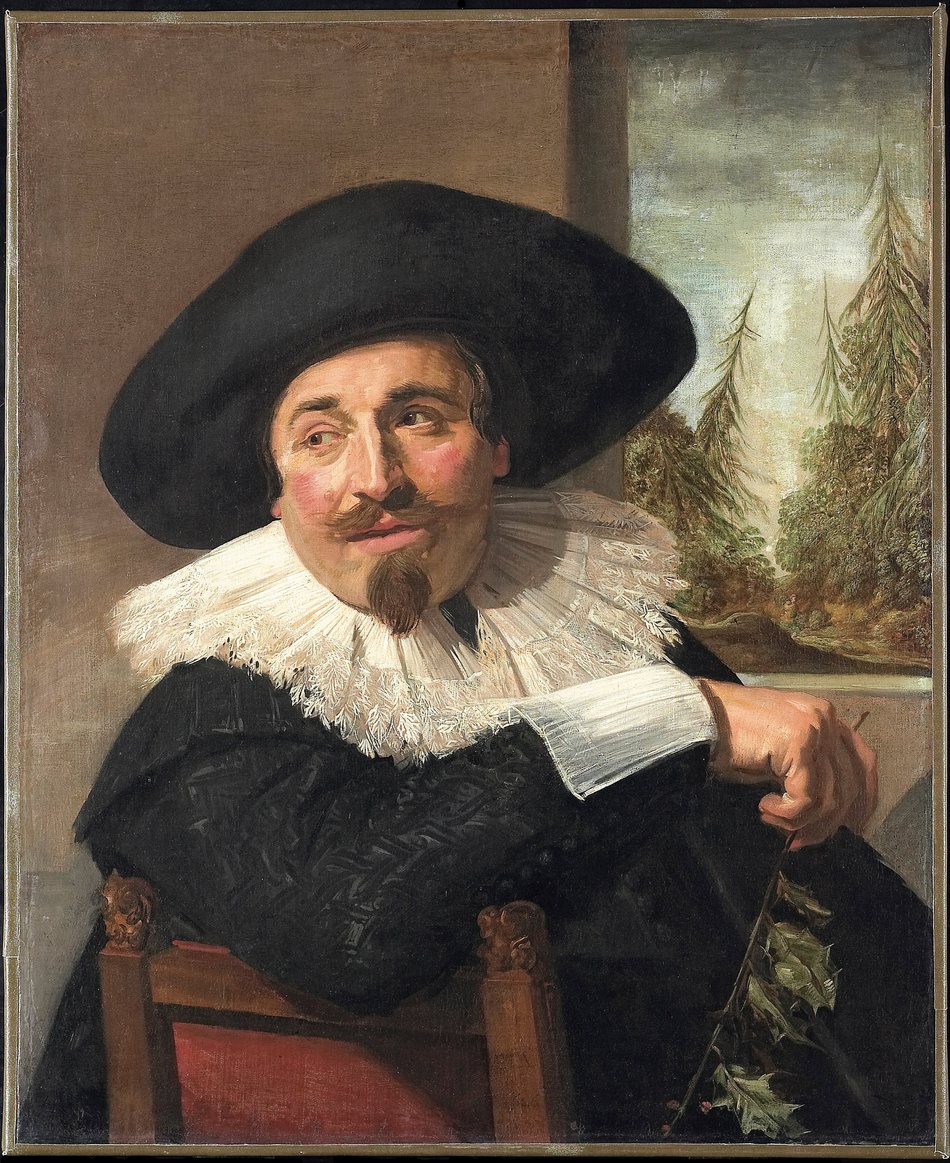
His friend Massa — a merchant who traded with Russia and wrote books about it — sits turned in his chair, half-smiling at something outside the frame, with an arctic-looking landscape of firs and a river behind him: the sitter's whole biography hidden in the background. The two men painted and drank together for decades.
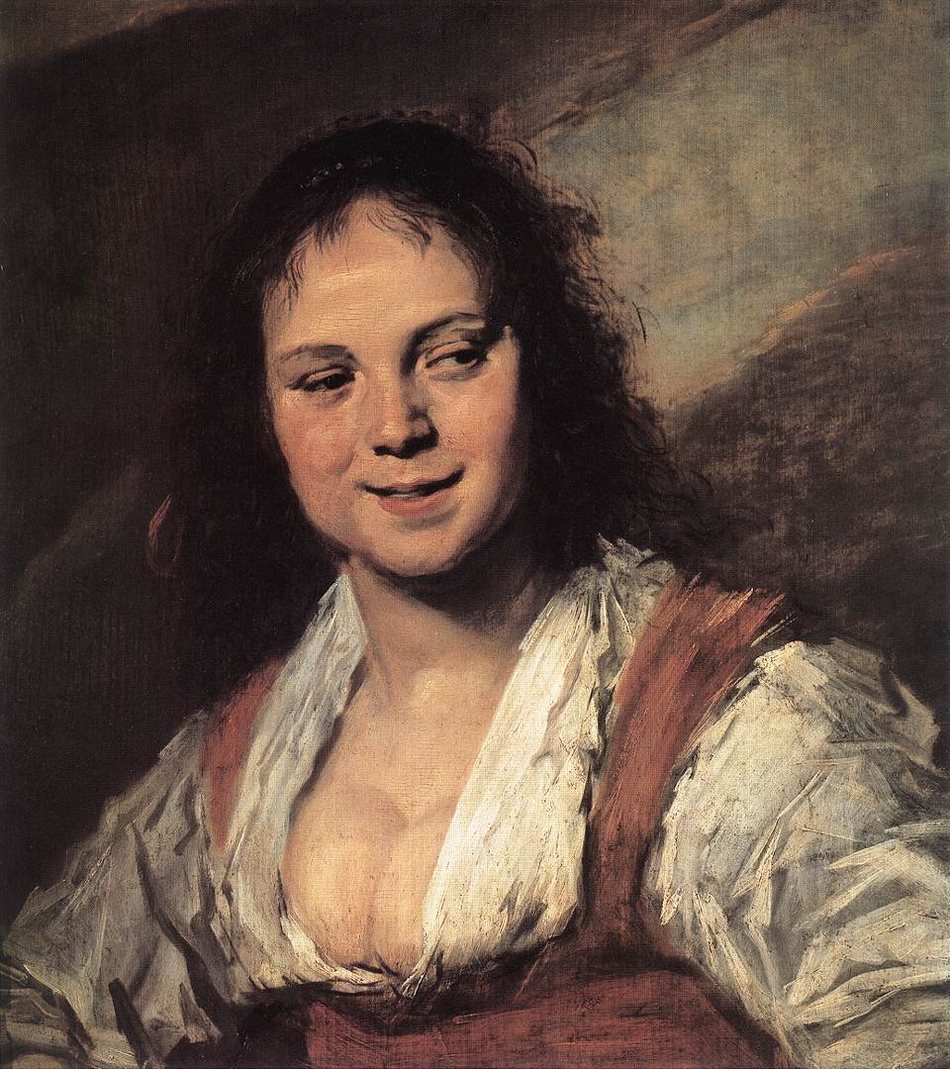
Not a portrait commission but a tronie — a study of a type and an expression: the sidelong smile, the loosened bodice, the paint in the hair as free as the sitter is supposed to be. Hals painted her on a small oak panel, quickly, the way you catch something before it flies away.
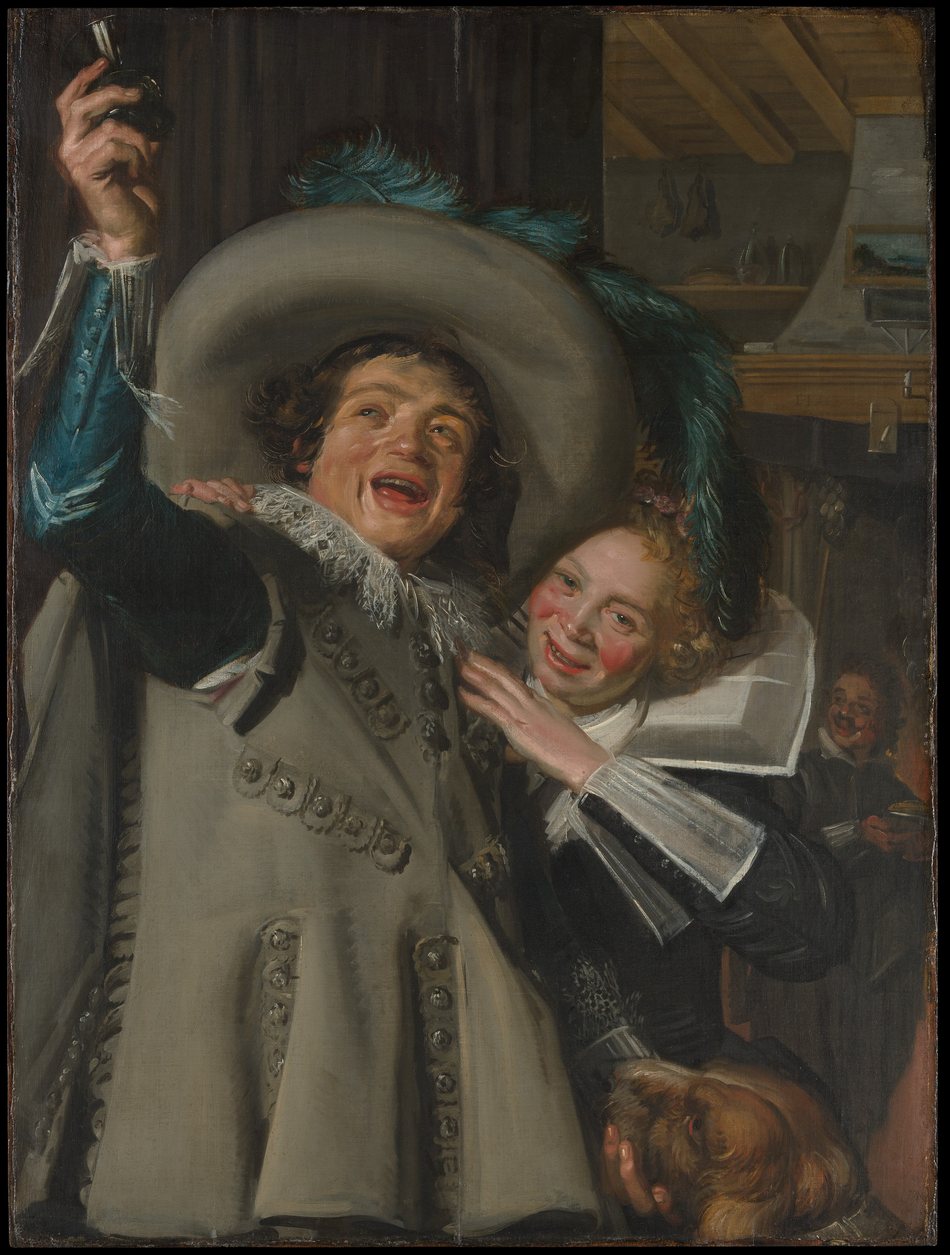
A young blade in an inn, raising his glass and his other hand in a toast, his girl laughing beside him — an early Hals, already drunk on speed. The inn setting, the wine, the grin: moralists read a warning against pleasure into it, which is exactly the pleasure it was painted to give.
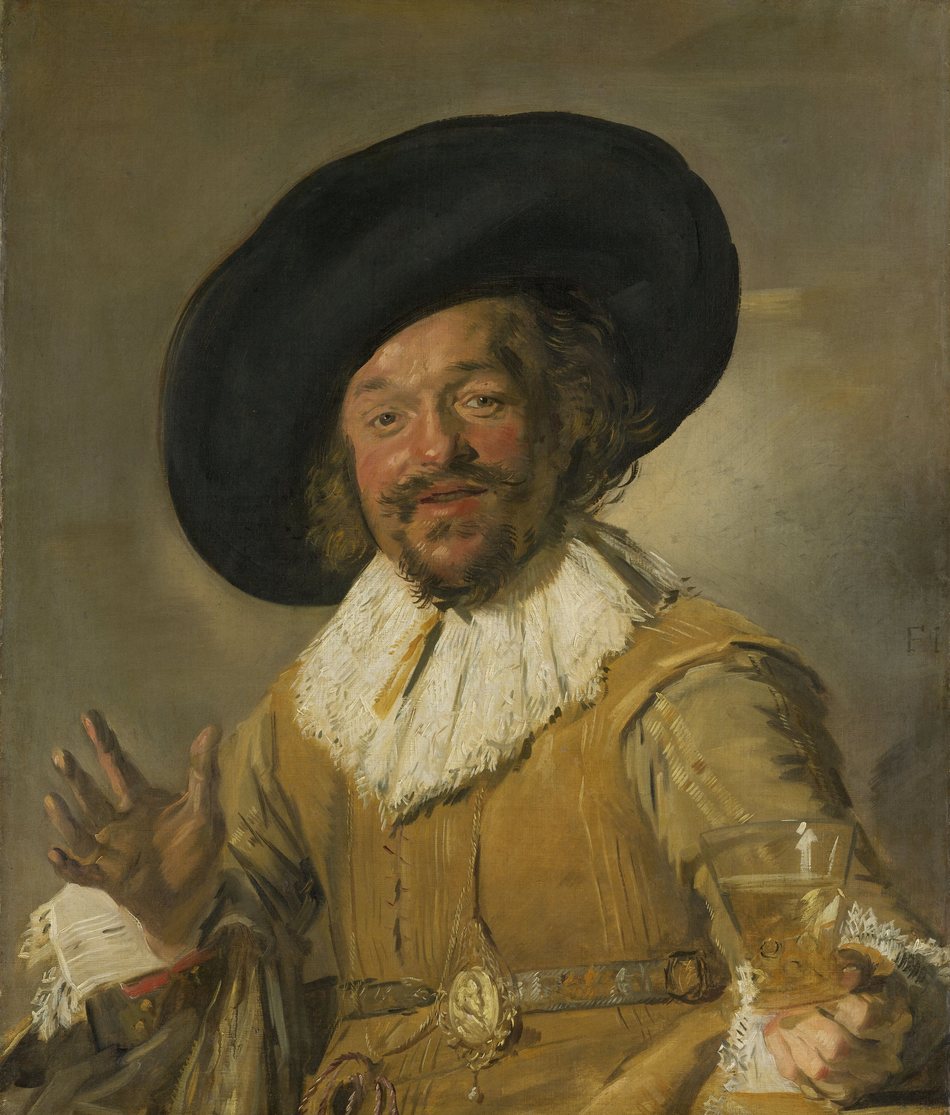
He turns to us with his glass raised, caught in the middle of a sentence — perhaps the middle of a song. The whole picture is the famous Hals touch at full stretch: the face modelled in a dozen strokes, the medallion, the cuff, the glass all flicked in wet paint before the moment could cool.
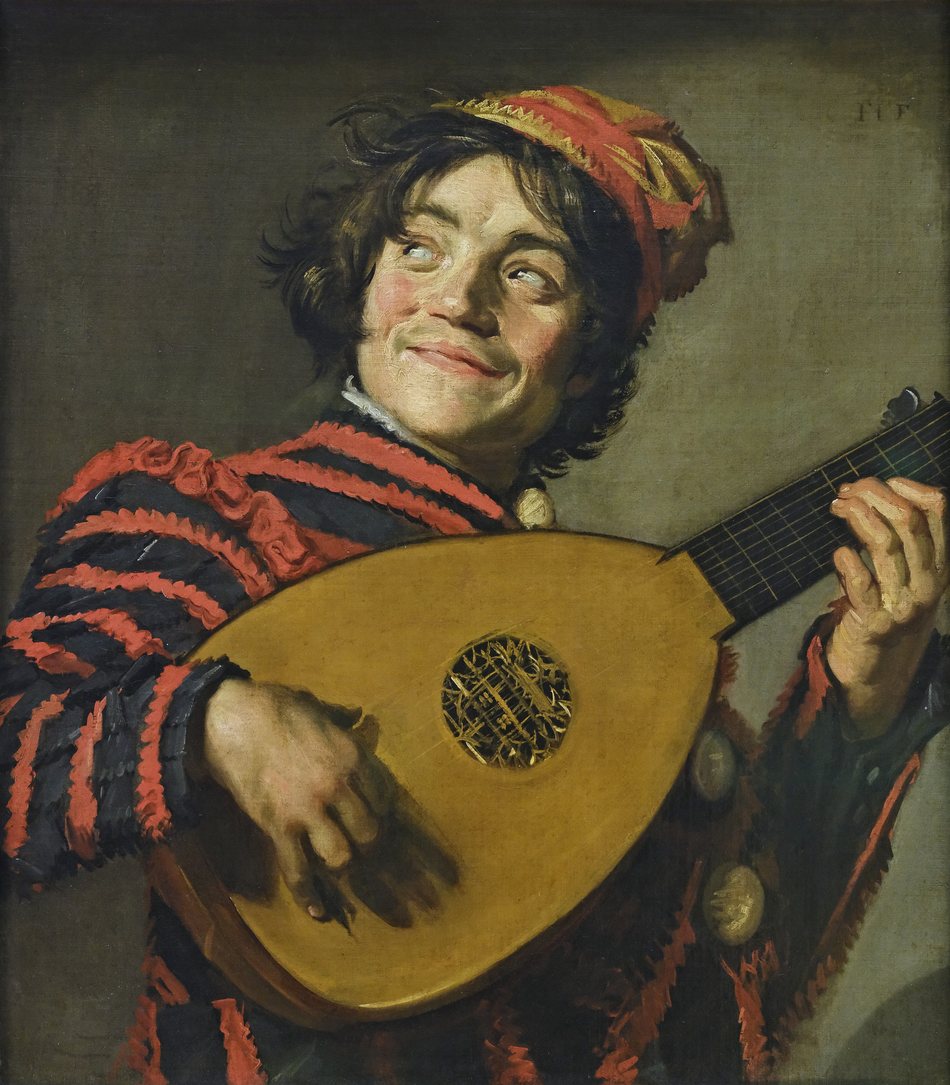
A fool in a red-and-black costume, grinning up from his lute — one of a family of laughing musicians Hals painted in the 1620s. The costume's stripes are painted with the same swagger as the grin: nothing laboured, everything swung. Music, in Hals, is always about to become laughter.
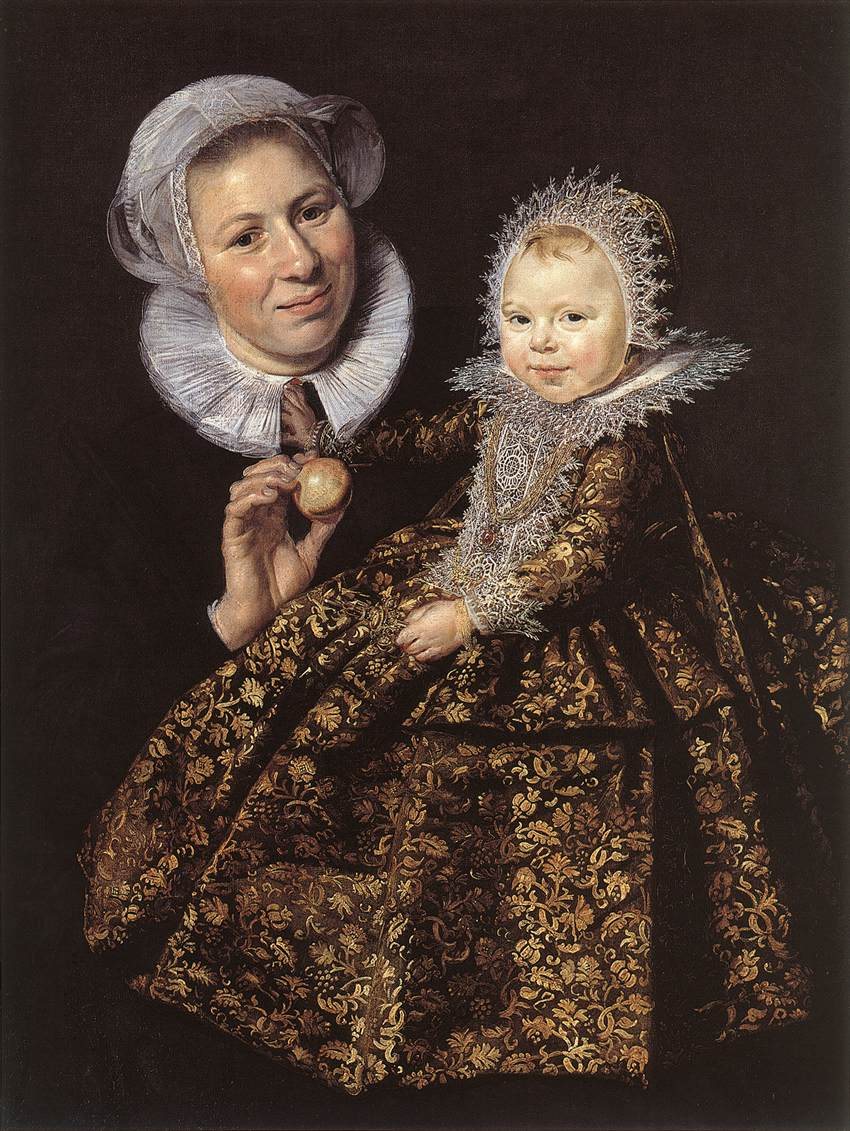
The baby in the most expensive lace in Haarlem was the heiress Catharina Hooft, held up by her nurse like a small queen — her dress a fortune in gold brocade, painted stroke by stroke. She grew up to marry into the De Graeff family, Amsterdam's ruling clan. The portrait is a bank statement with a baby in it.
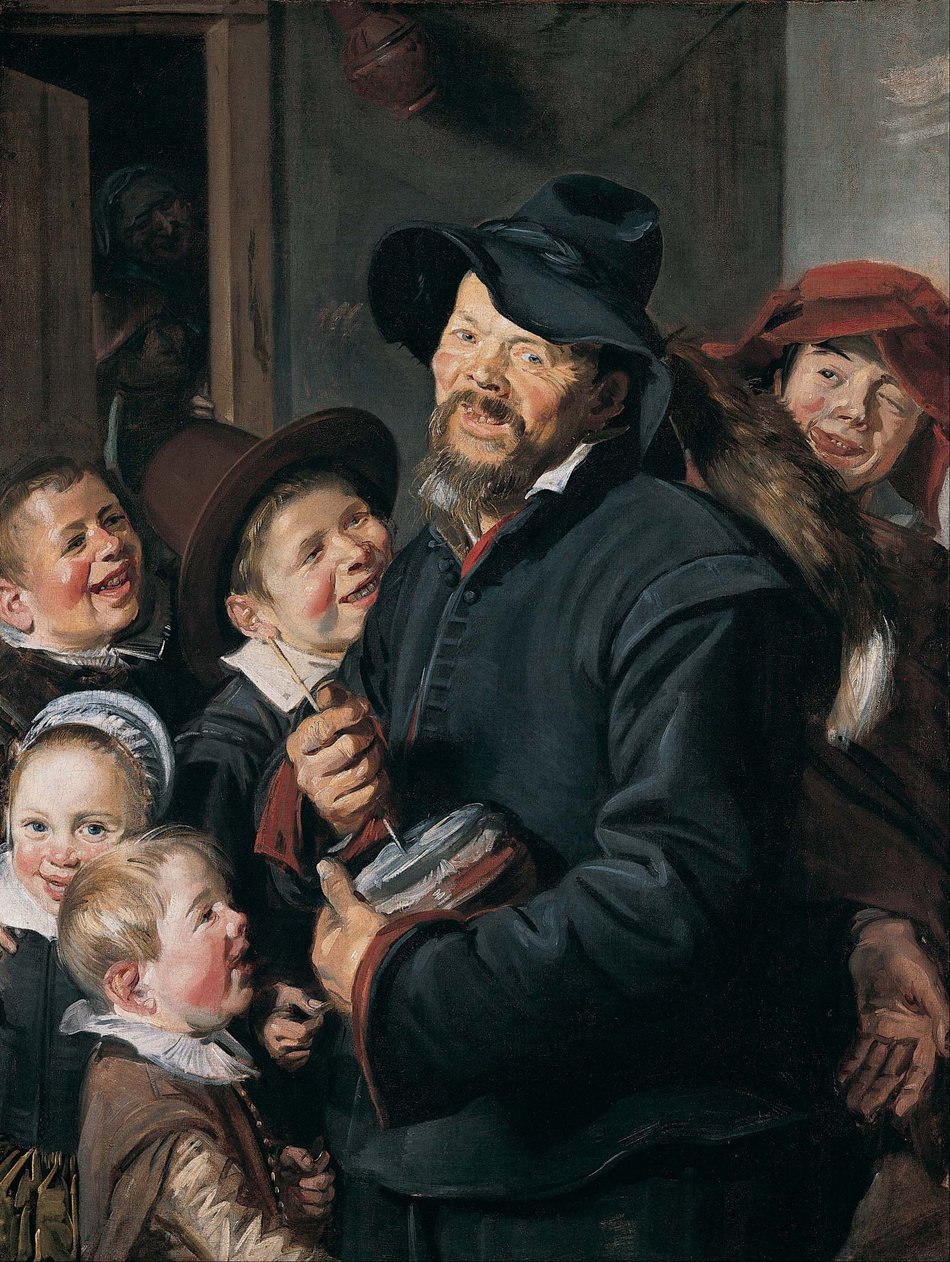
A street musician works the rommelpot — a pig's bladder on a pot, played with a stick for a buzzing drone — while children crowd round, laughing and covering their ears. It is one of Hals's earliest surviving pictures, and the whole career is already in it: noise, children, laughter, and paint that will not sit still.