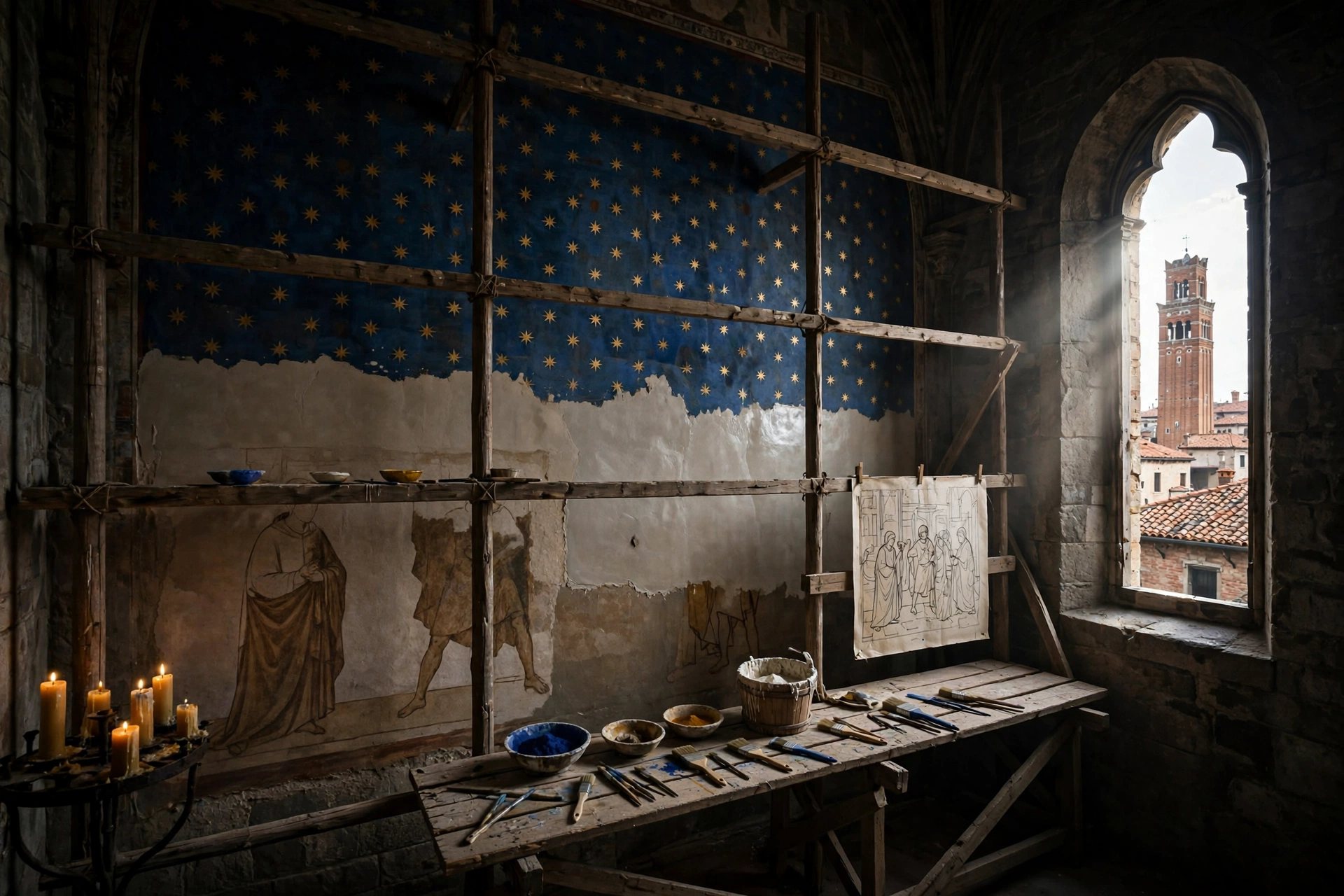
Giotto rebuilt painting from the wall outward: bodies with weight, grief with a face, blue sky where gold leaf used to be. Dante was already writing about his fame while the plaster of the Arena Chapel was barely dry — and every painter in this gallery, from Masaccio to Michelangelo, is his debtor.
A fresco is painted into wet lime plaster, so the painter works in patches of one day's reach — the giornate. When the plaster dries the colour is locked into the wall itself; a mistake means chiselling off the day. In the Arena Chapel you can still trace the seams of those days, curving around heads and haloes.
The deep blue of these walls is ultramarine, ground from lapis lazuli carried from mines in Afghanistan — 'from beyond the sea', and priced above gold. Patrons wrote the quantity of it into contracts. Giotto spends it like a banker: whole skies of the stuff, where his teachers had used cheap blue-grey.
Before the final plaster, the composition was drawn on the rough coat in a red earth pigment from Sinope — the sinopia. When restorers detach frescoes, these red underdrawings appear, and they show Giotto thinking: figures shifted, gestures tried twice. The wall keeps its own sketchbook underneath.
Byzantine painting gave heaven figures of gold and pattern. Giotto gives them backs, knees and grief: mourners turn away from us, a saint's body sags in the arms that hold it, drapery falls because there is a leg beneath it. It looks simple. Nobody in Europe had done it for a thousand years.
The story the Florentines told: Cimabue, the master of the age, found a shepherd boy drawing a sheep on a flat rock and took him into his workshop. True or not, Dante fixed the moral within Giotto's lifetime — Cimabue thought he held the field in painting, 'and now Giotto has the cry'.
His chapels, thrones and towns are tilted, doll's-house constructions — not perspective as the next century would prove it, but a stage carpenter's clarity: every actor visible, every gesture readable from the floor below. The Renaissance would add the mathematics; the storytelling grammar is already complete.
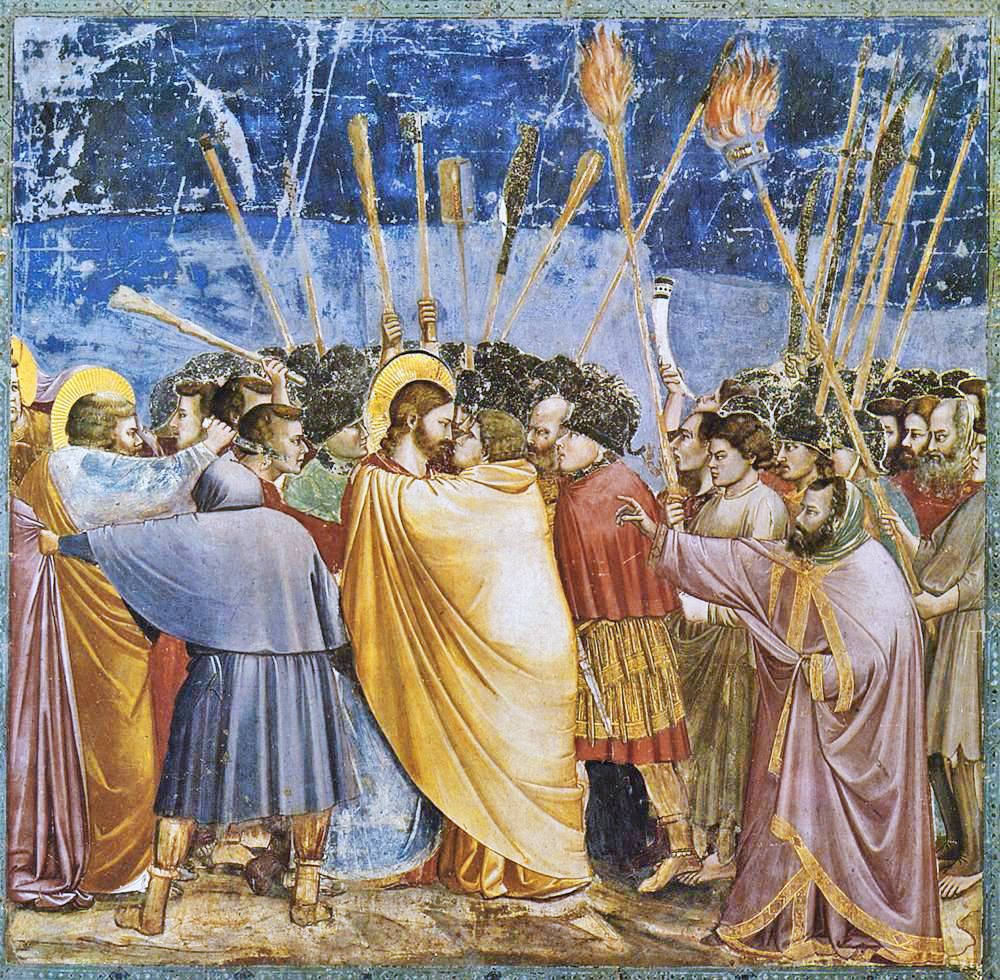
Judas's yellow cloak swallows Christ whole in an embrace that is an arrest; around them a thicket of spears, clubs and torches presses against the blue night. The two faces, profile to profile, are inches apart — the traitor calm, Christ looking past him at everything that follows.
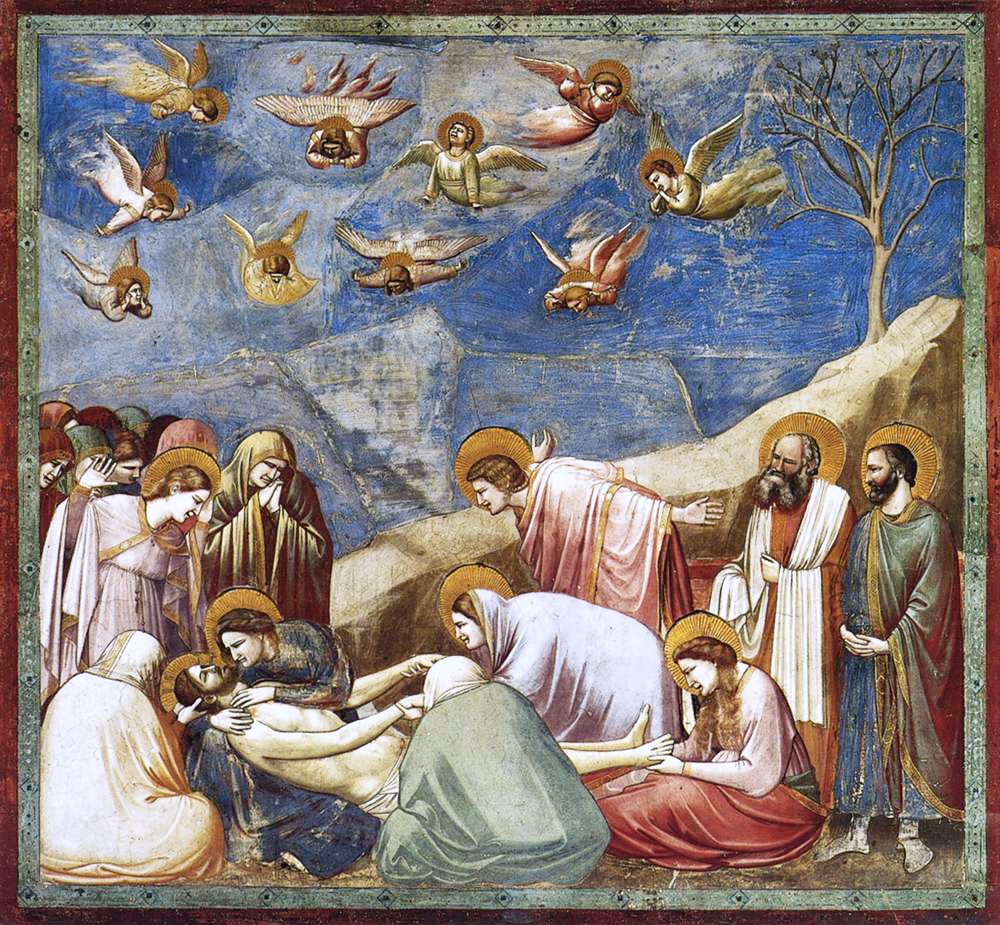
The most famous grief in Western painting: a bare diagonal of rock drives the eye down to the dead Christ's face, held by his mother face-to-face; behind, John flings his arms wide in a gesture nobody had painted before, and the little angels in the sky tear at themselves like birds in a storm.
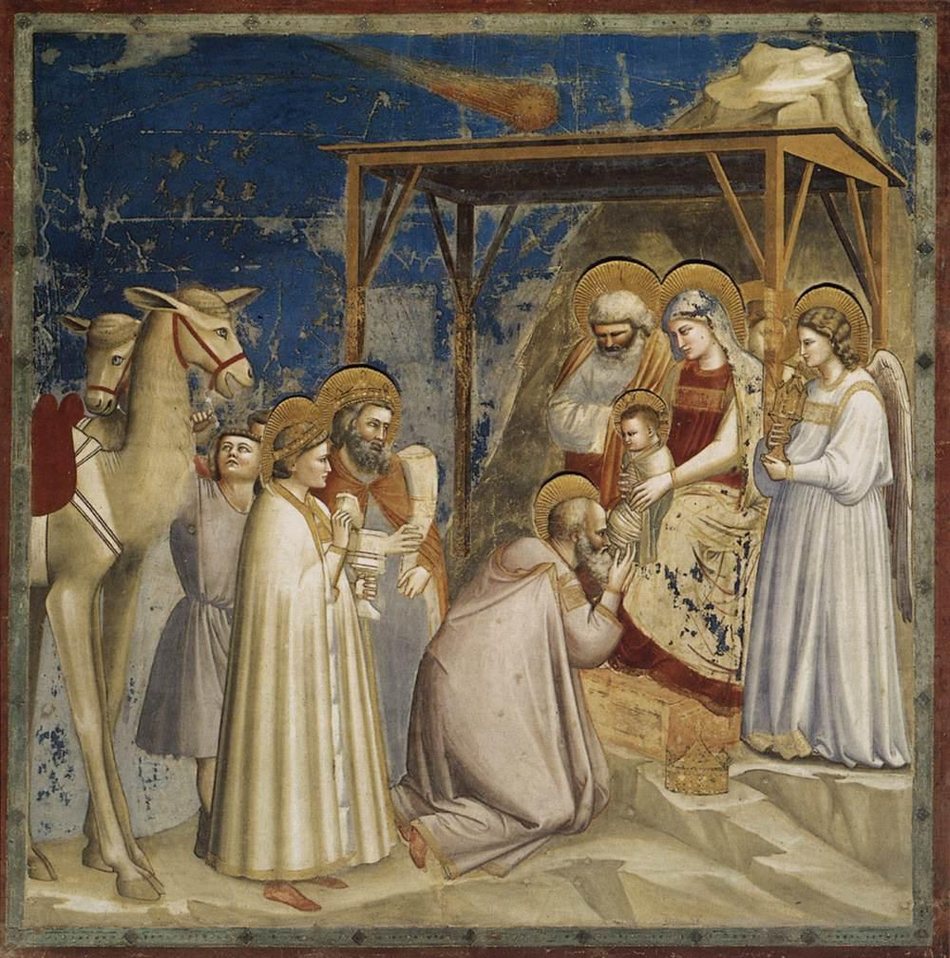
The eldest king kneels to kiss the Child's foot under a wooden shed — and above the roof burns a star with a tail of fire. Giotto had seen Halley's Comet blaze over Italy in 1301; he painted not the tidy star of tradition but the thing he had actually seen in the sky.
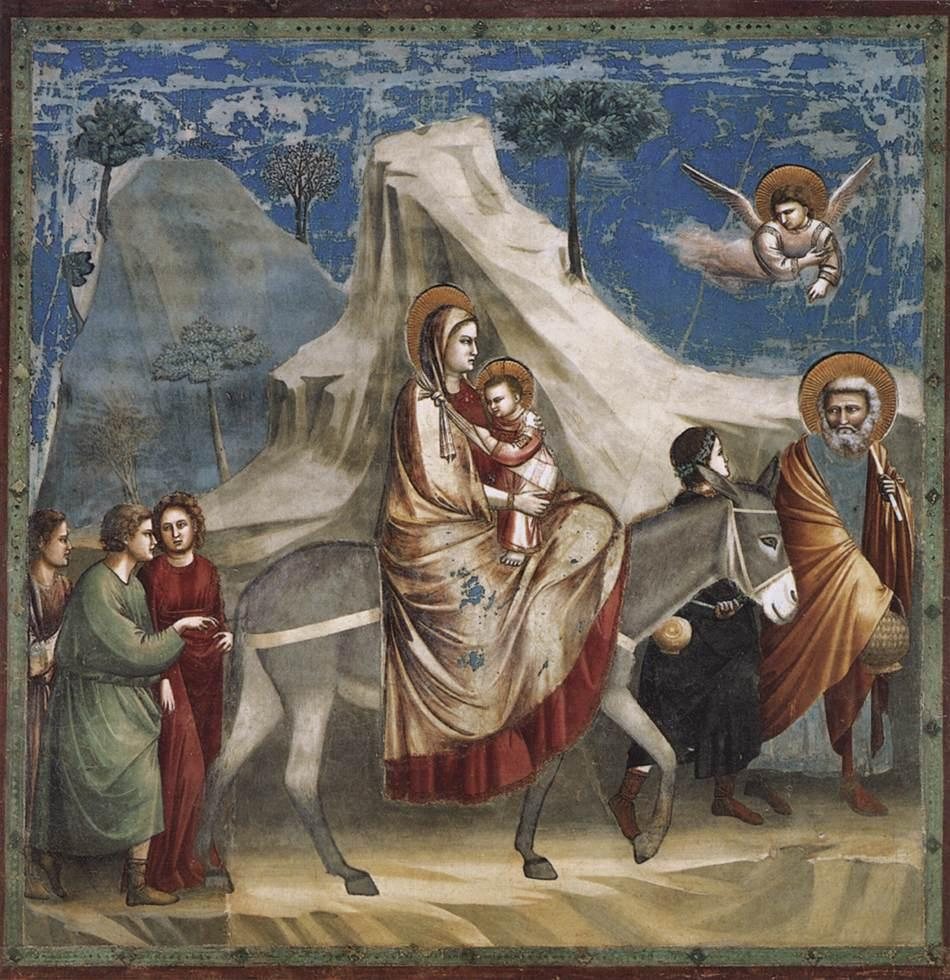
Mary rides side-saddle into exile, clutching the Child and turning to speak, while Joseph leads the donkey and the young servants chatter behind — a family on a road, set against a single great wedge of barren rock. An angel hovers ahead like a guide who knows the way through the desert.
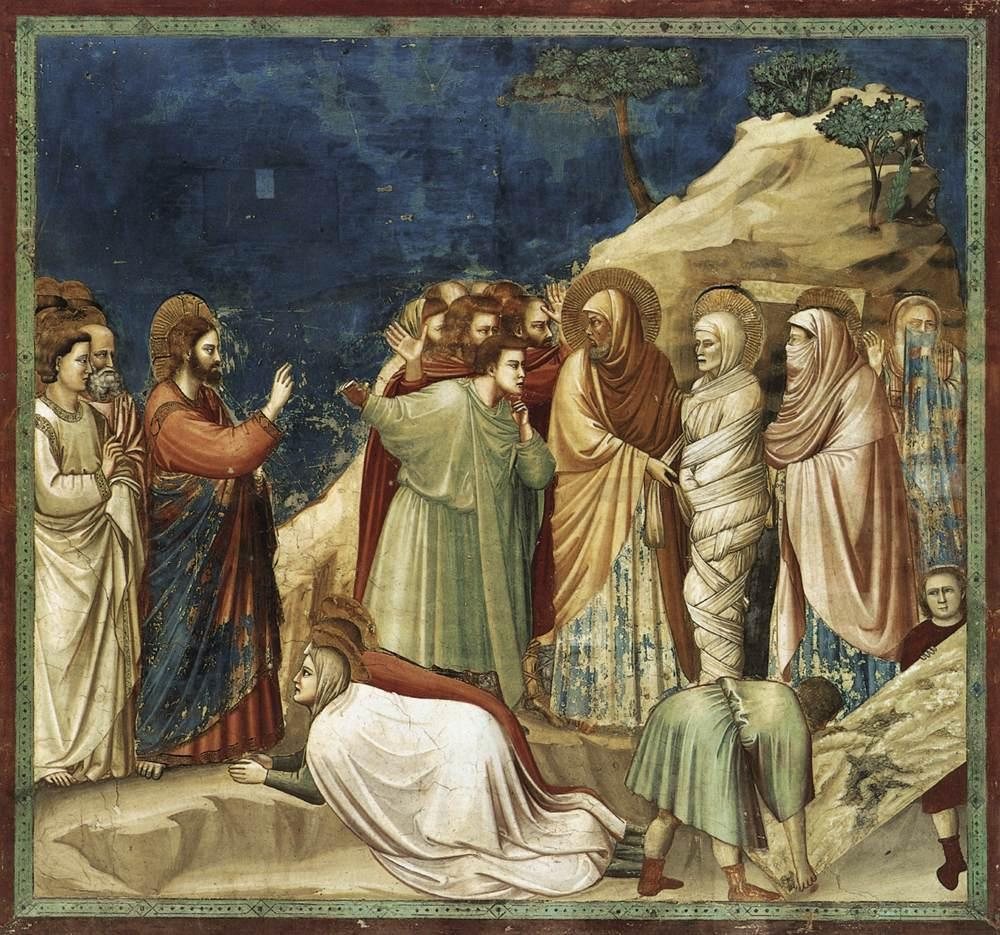
Lazarus stands upright in his grave-clothes like a parcel, the stone rolled away, Christ commanding — and at the edges the bystanders cover their noses against the smell of a four-days-dead man. A miracle with the stench left in: that is Giotto's realism in a single detail.
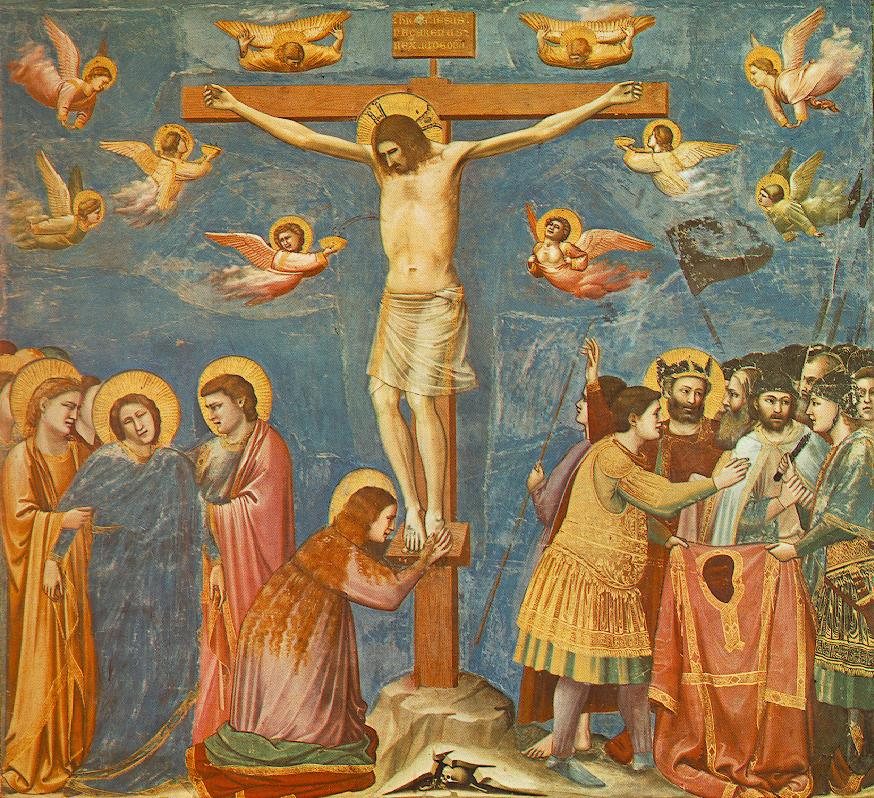
Below the cross the soldiers gamble and tug at Christ's robe while Mary Magdalene clings to the foot of the cross and the Virgin swoons into the women's arms; above, ten angels wheel and grieve in the blue. The whole of heaven and the whole of a crowd, in one field of plaster.
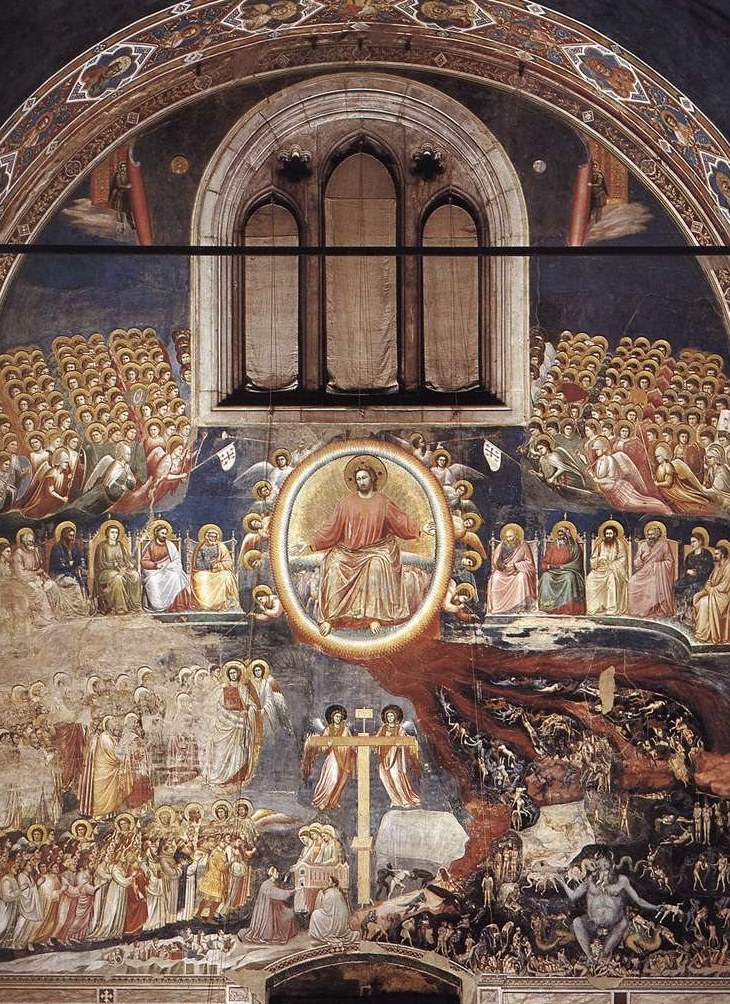
The whole west wall of the chapel is one vision: Christ in a mandorla of rainbow, the blessed processing to paradise, hell boiling at the lower right — and at the foot of the cross, in the saved, kneels Enrico Scrovegni himself, presenting a model of this very chapel to the Virgin. The banker who built the chapel as penance for usury painted himself into the front row of heaven.
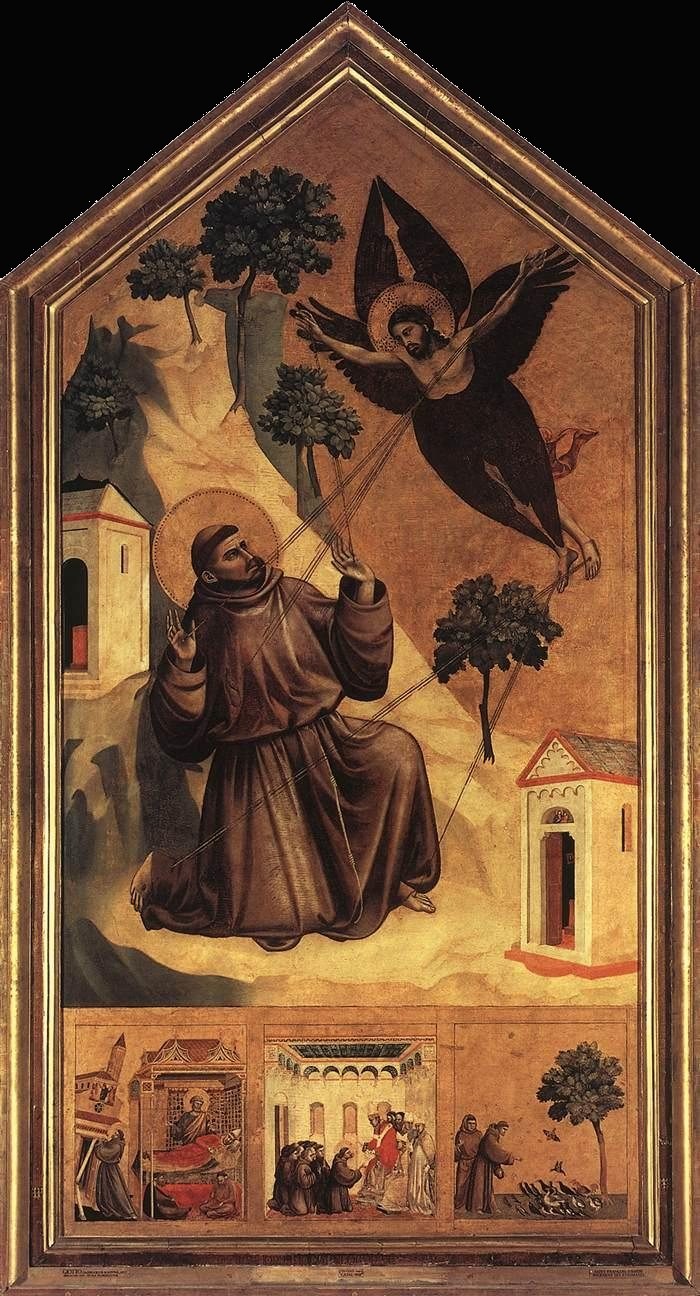
From the church of San Francesco in Pisa, a panel that carries Giotto's signature: on Mount La Verna the seraph on its cross sends rays to the kneeling Francis like lines drawn between two points — the miracle diagrammed. Below, in small scenes, the saint's life runs on like a strip of story.
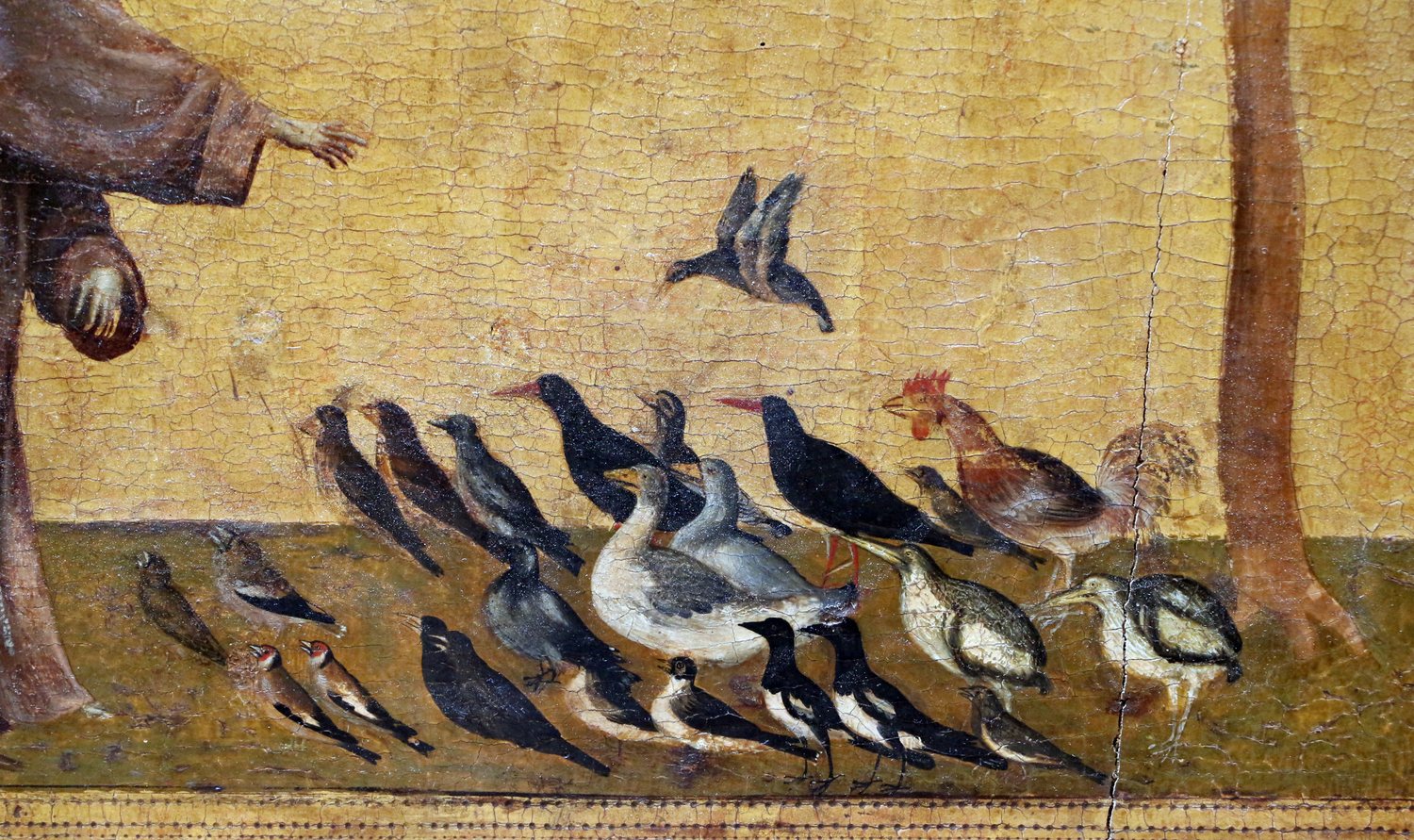
In the great Assisi cycle of the saint's life, Francis bends toward a congregation of birds, who sit in rows like citizens at a sermon — some already flying off, as audiences do. The Assisi frescoes' authorship has been debated for a century; the tenderness of this scene is not in doubt.
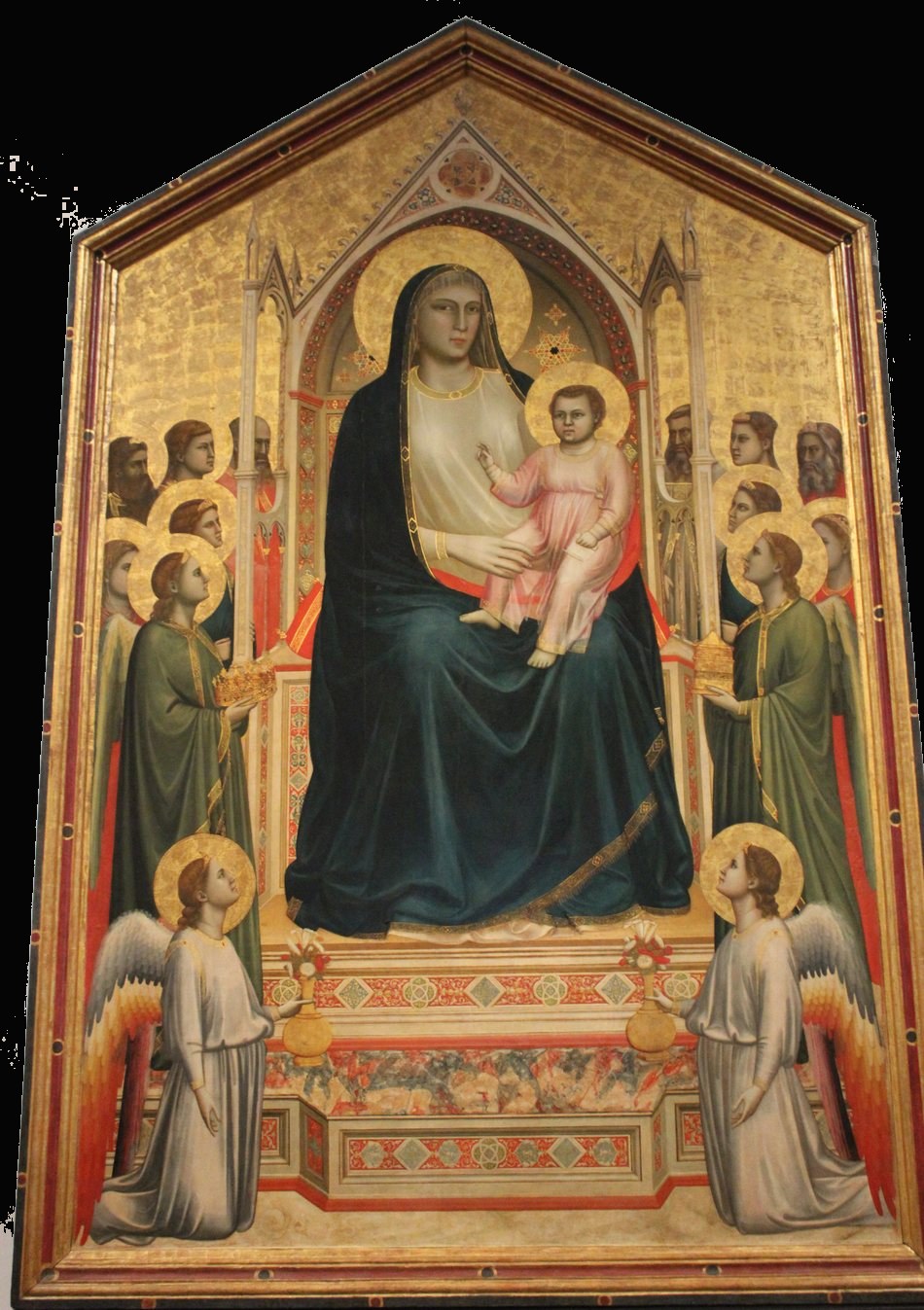
A Madonna you could climb steps to: the Virgin sits on a real throne, in a real space, with the Child's weight on her knee, angels and saints ranked beside her like courtiers measured for depth. Hung in the Uffizi between Cimabue's and Duccio's Madonnas, it shows in one glance what Giotto changed — the figures have come down off the gold and into the room.