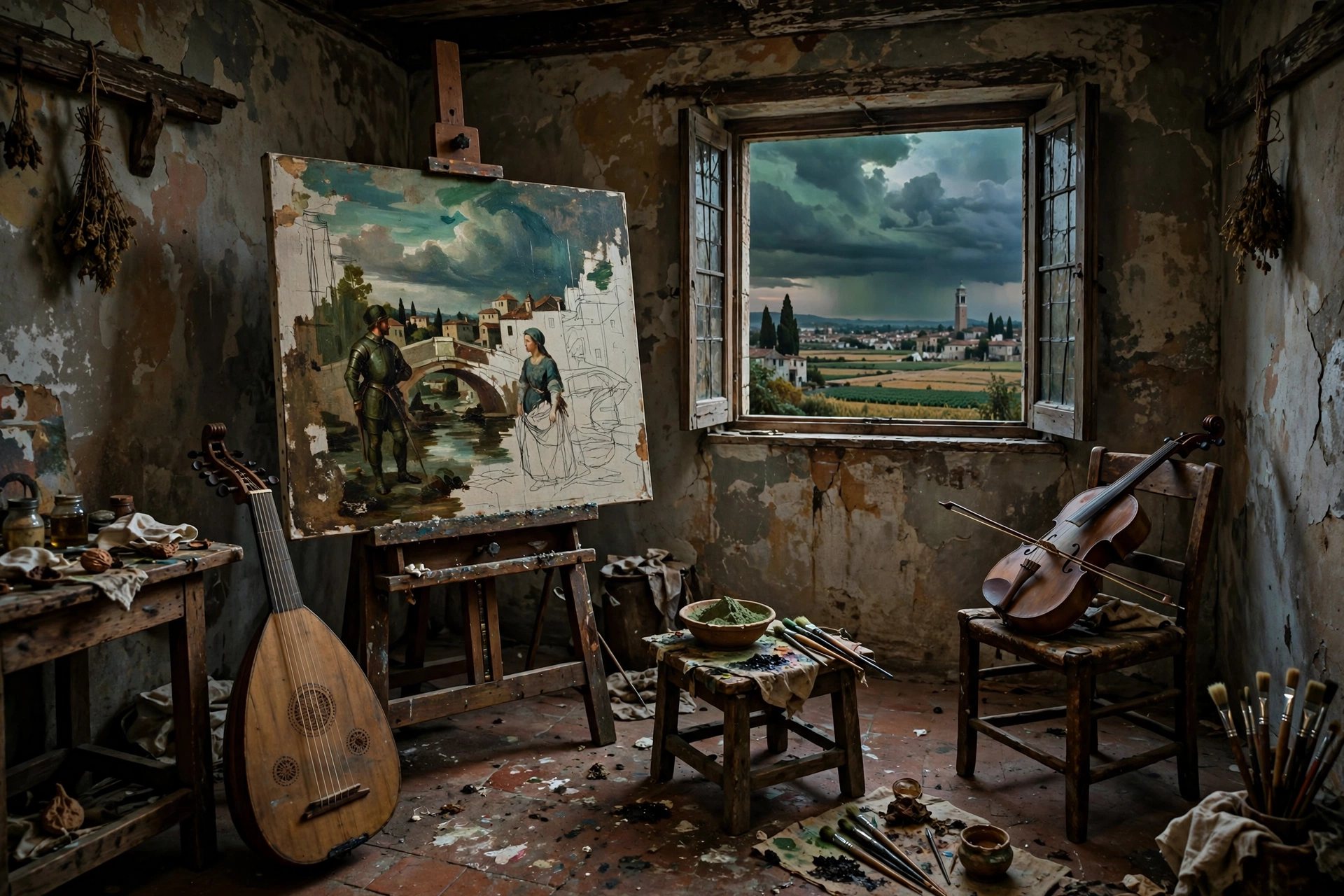
Almost nothing is known, and almost everything begins here: in a career of perhaps ten years Giorgione turned painting into poetry — pictures that do not tell you their story, only their weather. He died of plague at about thirty-three, leaving a handful of canvases and a century of painters in his debt.
Before Giorgione, a picture illustrated something: a saint, a myth, a text. His Tempest illustrates nothing anyone has ever identified — a soldier, a nursing woman, a storm coming. The subject is the mood itself. Five hundred years of scholars have proposed readings; the painting keeps its weather and its counsel.
Vasari says Giorgione worked without the scaffolding of careful drawing, building form directly in colour — soft transitions, edges lost in shadow and air, flesh that seems lit from inside a landscape's dusk. The technique is called tonal painting, and Venetian art after him is unthinkable without it.
Vasari remembers him singing and playing the lute so beautifully that the great houses of Venice wanted him at their gatherings — and the paintings agree: music is everywhere in them, shepherds with pipes, concerts in meadows. He painted the way a song feels from inside: the Pastoral Concert is practically audible.
Plague cut the career at its height, and two of his greatest canvases were completed by others: Titian finished the Sleeping Venus's landscape, Sebastiano del Piombo the Three Philosophers. The attributions in this room are given as the museums give them — with his name, and with the debates attached, because with Giorgione the debate is part of the work.
His revolution was partly a matter of size: not altarpieces for churches but small, dense canvases for collectors' studies — pictures to be lived with, looked at by lamplight, argued over by friends. The easel painting as a private pleasure, the cabinet picture, begins with these quiet panels.
His name is an augmentative — Giorgione, 'big George' — whether for his stature or his spirit, nobody recorded. Vasari places him among the founders of the modern manner, beside Leonardo. He left perhaps twenty-five genuine works; the room you are in holds ten of the most certain, and even 'certain', with Giorgione, is a word to use gently.
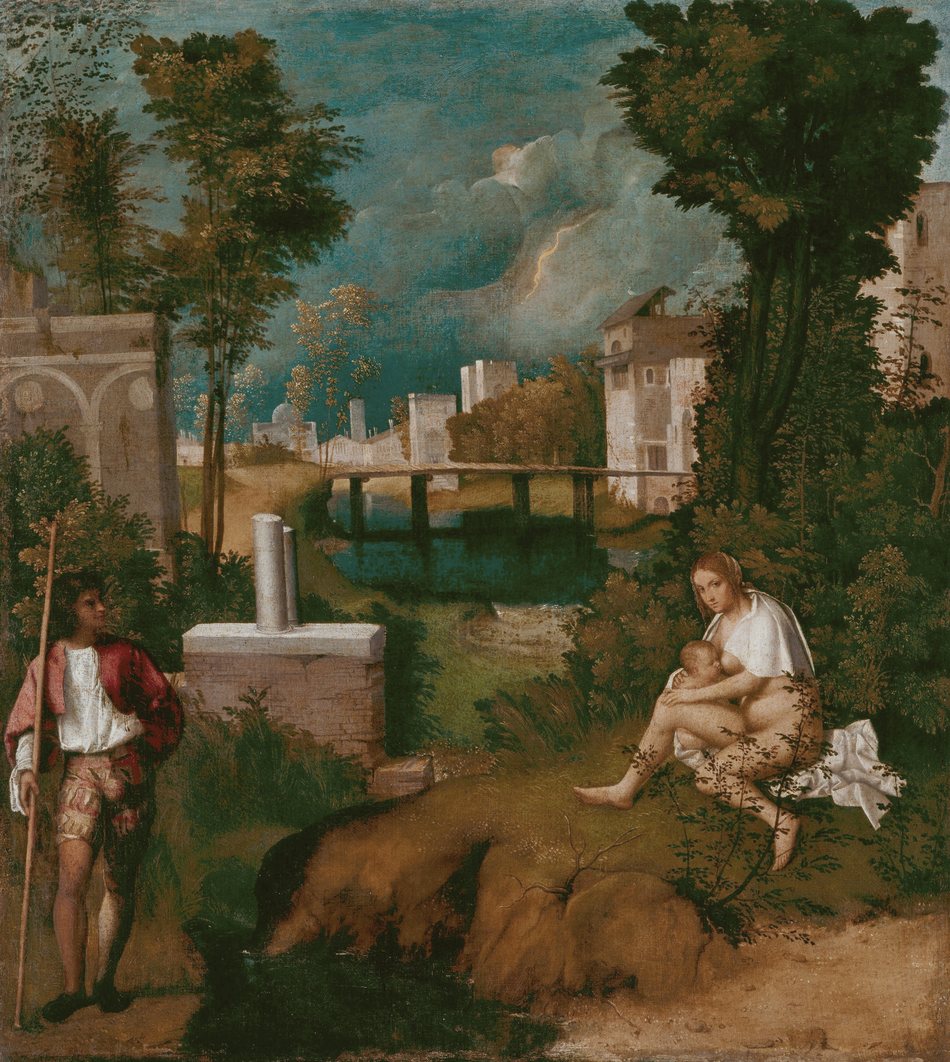
A soldier stands watching; a woman sits nursing a child; between them a stream, a bridge, a walled town — and a storm arriving over everything, the lightning already in the sky. X-rays show Giorgione first painted a nude woman in the soldier's place. What it means, nobody knows; that it is one of the most famous small paintings in the world, everybody knows.
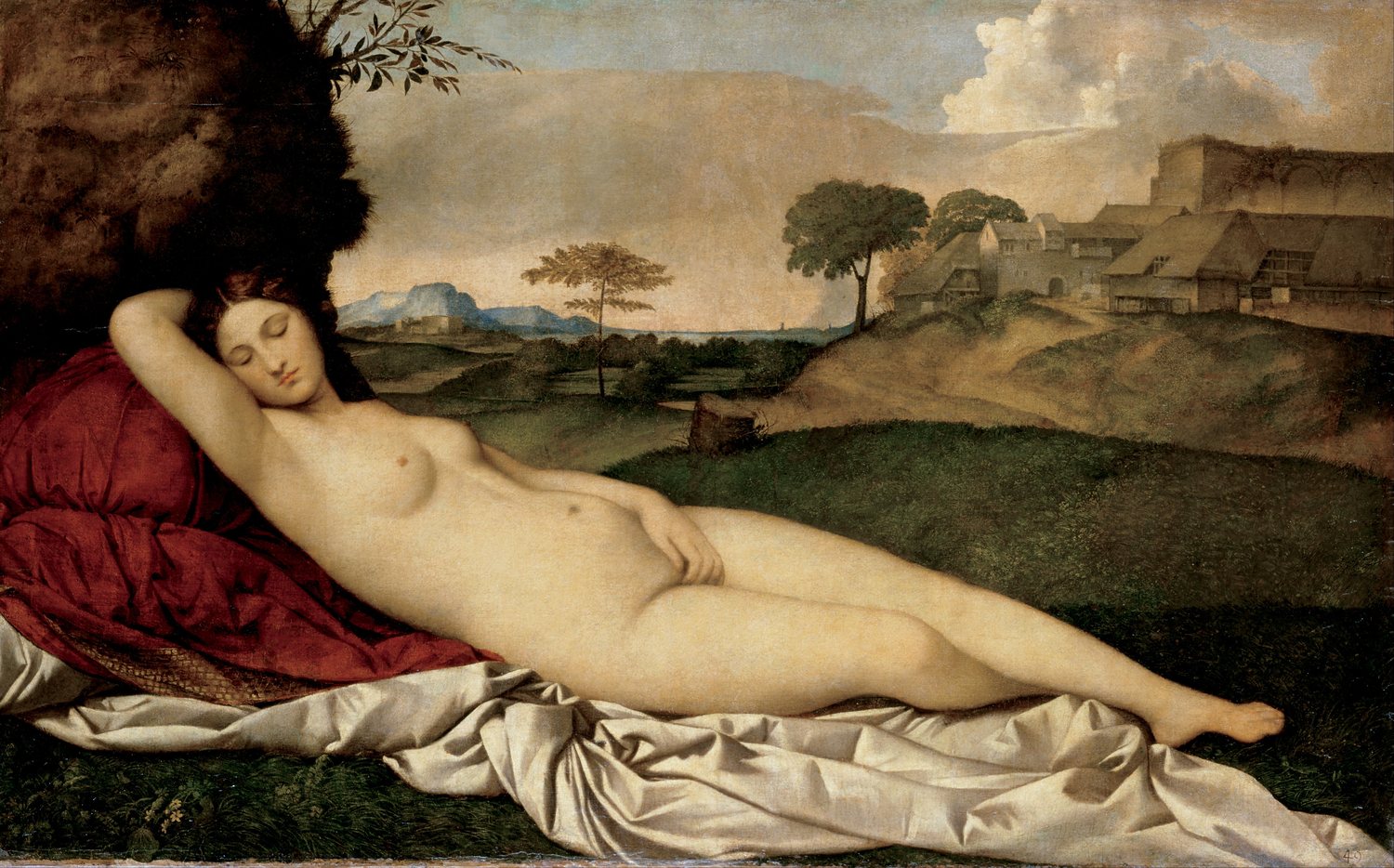
Venus sleeps in a meadow as if the landscape were dreaming her: her body's long curve rhymes with the hills, and the world is quiet enough to hear her breathe. Giorgione died with the picture unfinished; Titian, who had been his fellow pupil, completed the landscape — and spent the rest of his life answering it.
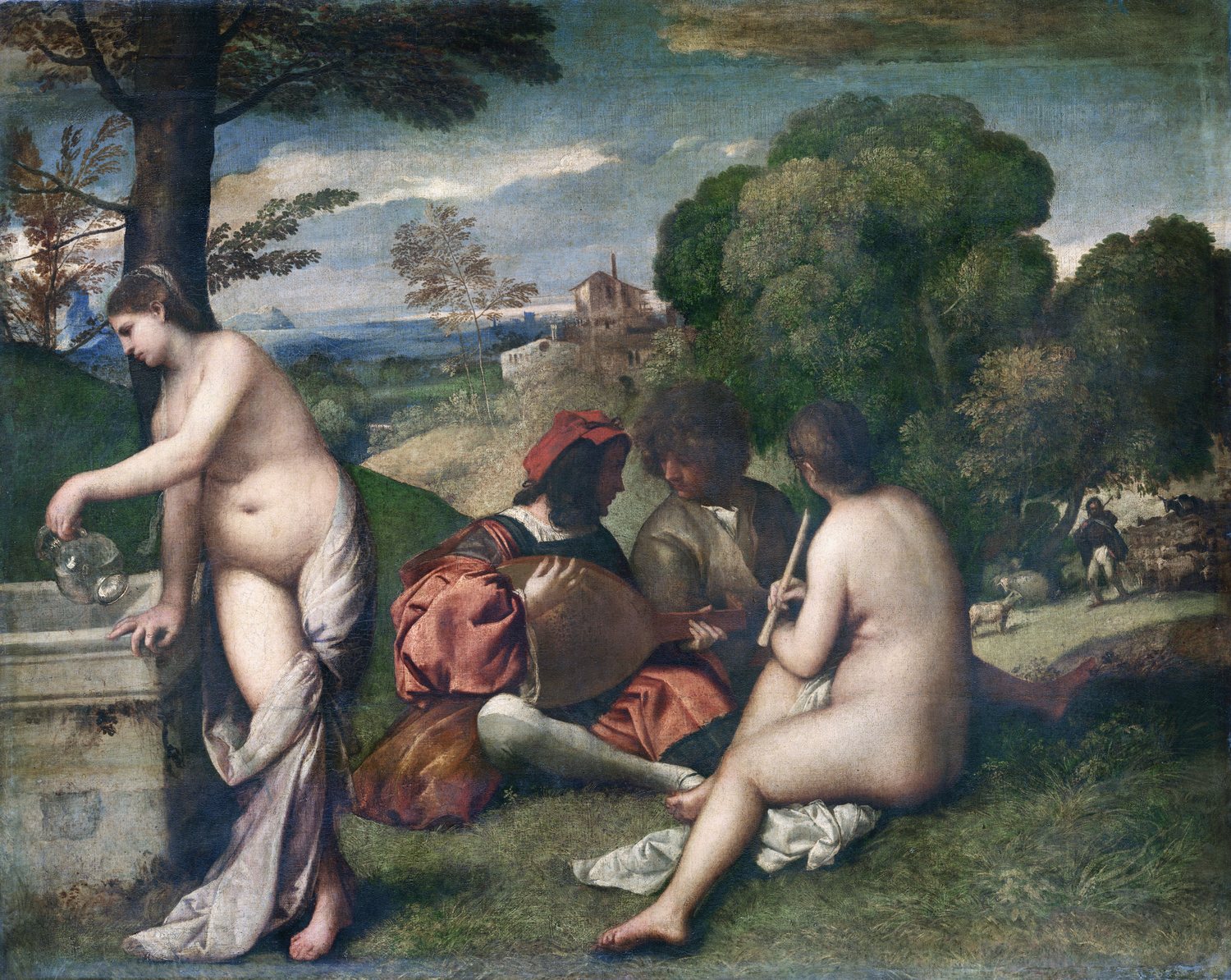
Two clothed men with a lute sit in a meadow with two nude women who seem to belong to another order of being — muses, perhaps, visible only to music; a shepherd pipes in the distance. Whether Giorgione or the young Titian painted it is still argued; the argument itself is the picture's second subject.
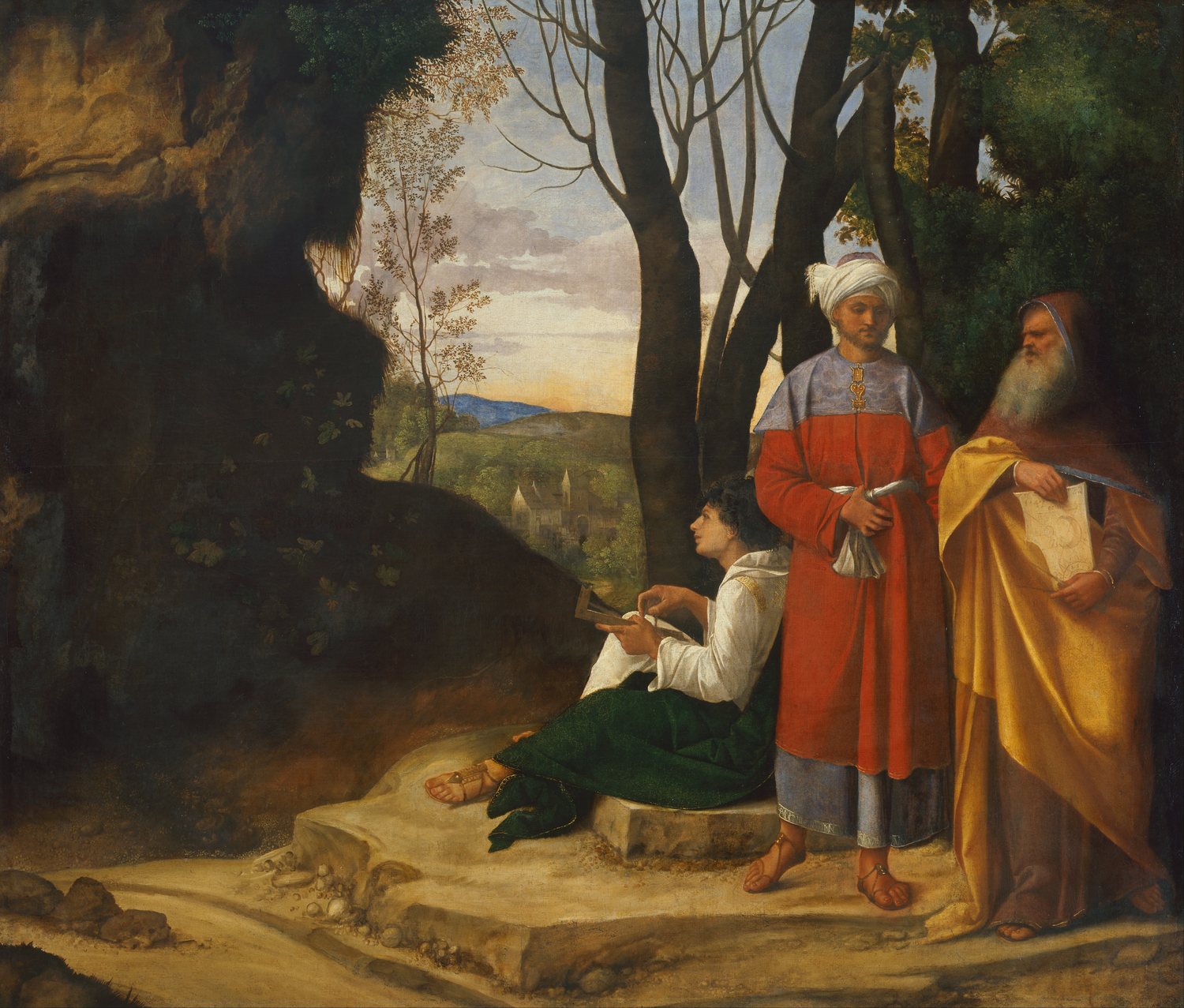
An old man with a compass and a diagram, a young man seated in thought, a figure in Eastern dress standing between them at the mouth of a dark cave: the three ages of man, the three faiths, the Magi, astronomers — the guesses are endless, and the sunset light on the leaves is finer than any of them.
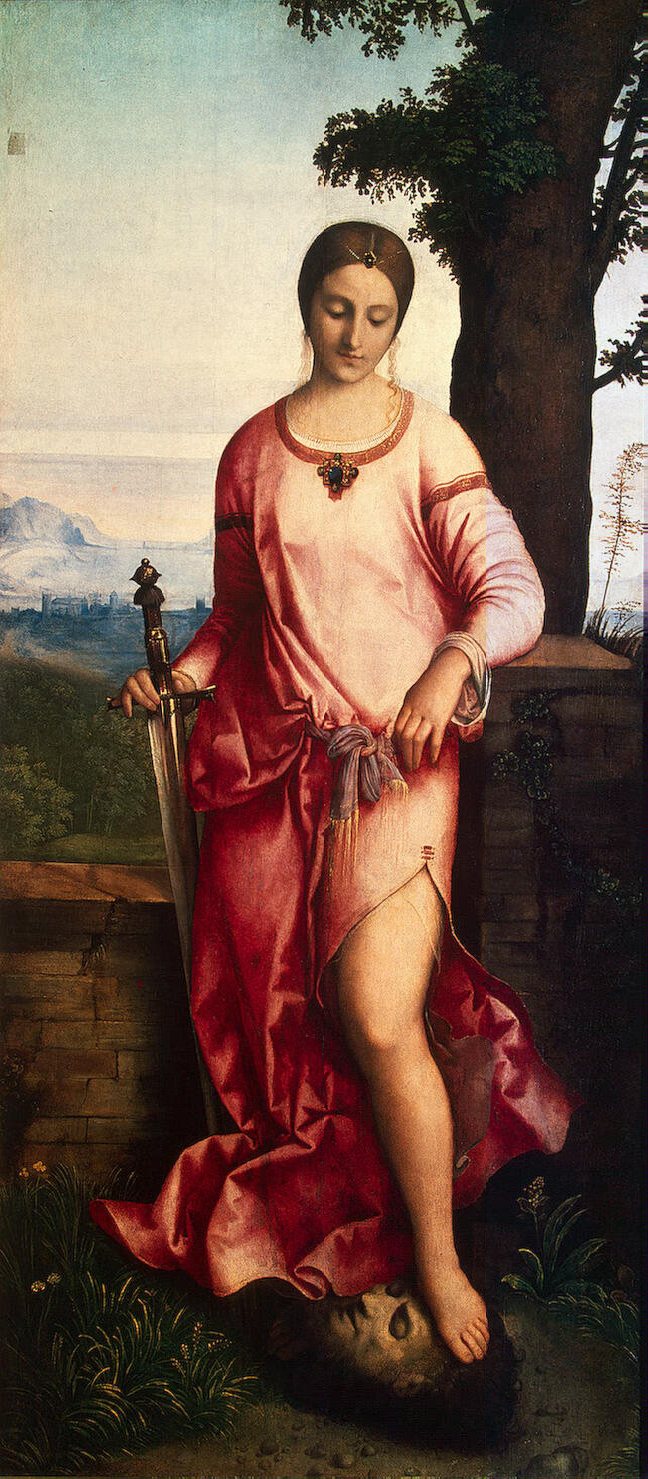
Judith stands in a rose dress at the parapet, Holofernes' head beneath her foot, her sword lowered, her face turned toward the light with an expression no heroine had worn before — not triumph, but a grave, distant calm, as if she were listening to something beyond the picture.
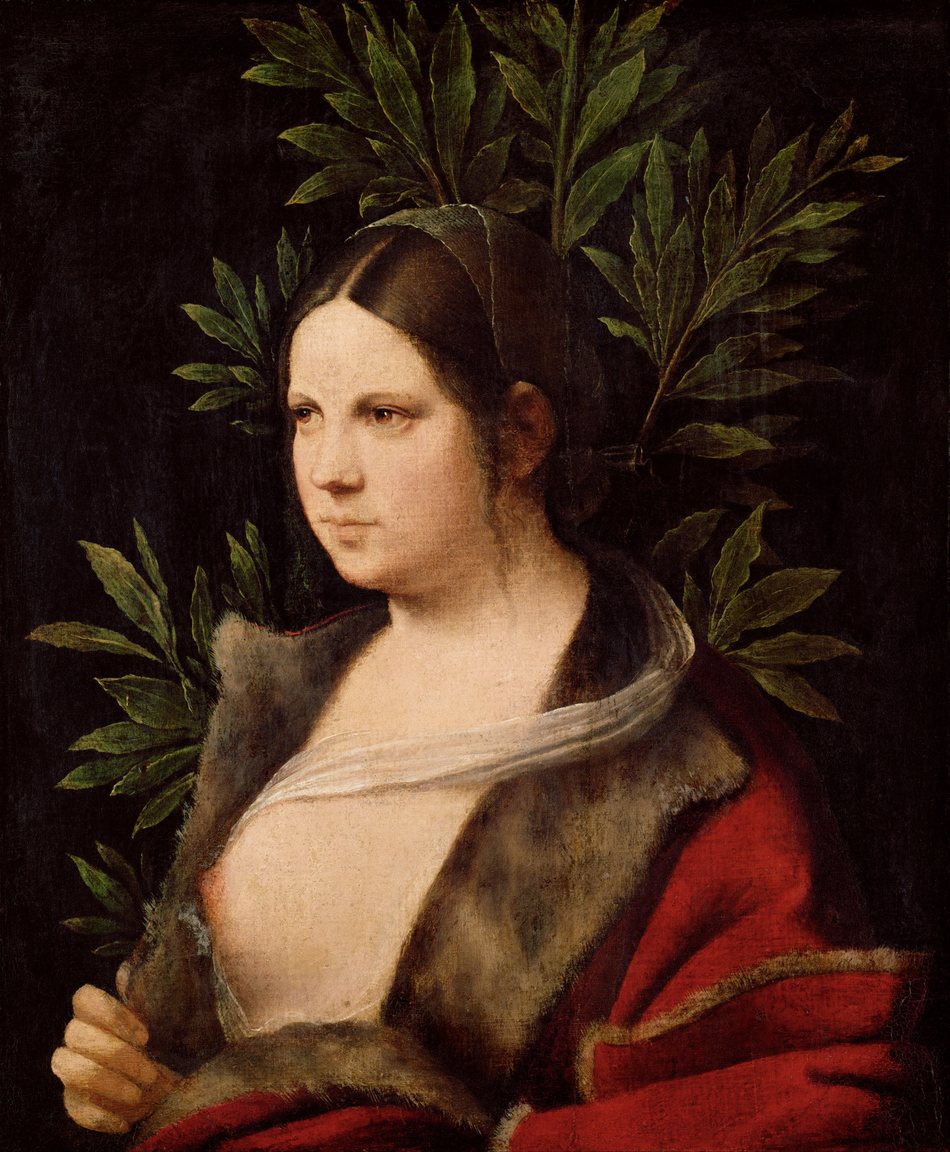
A young woman against laurel leaves — laura, the laurel, and Petrarch's beloved's name — in fur and crimson, one breast bared, looking out with complete self-possession. It is signed and dated on the back, one of the very few Giorgiones that documents itself: 'Giorgio of Castelfranco, pupil of Giovanni Bellini'.
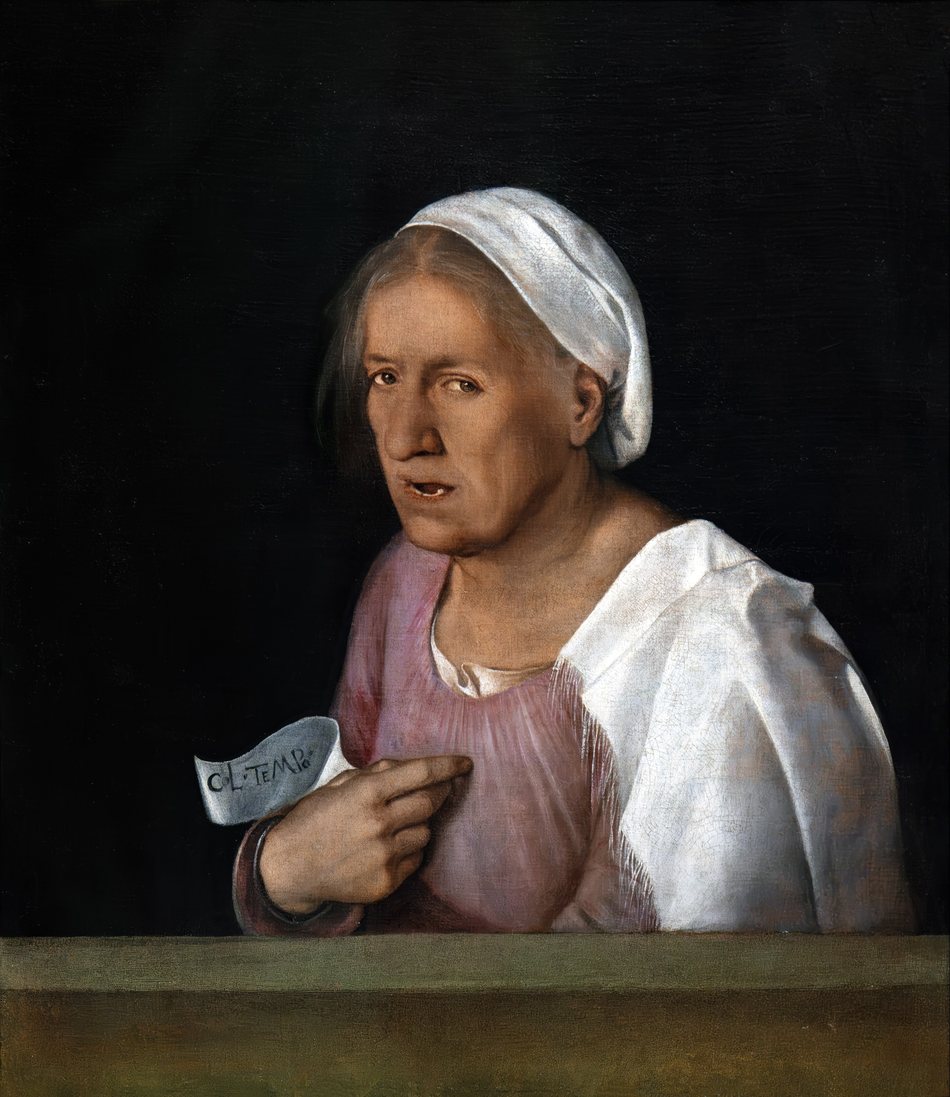
An old woman points at her own breast, holding a scroll that reads Col Tempo — 'with time'. She may once have faced a portrait of her young self, a pair about beauty and its lease. Alone, she is more powerful: the most unsparing image of age in Renaissance art, painted by a man who would not see thirty-five.
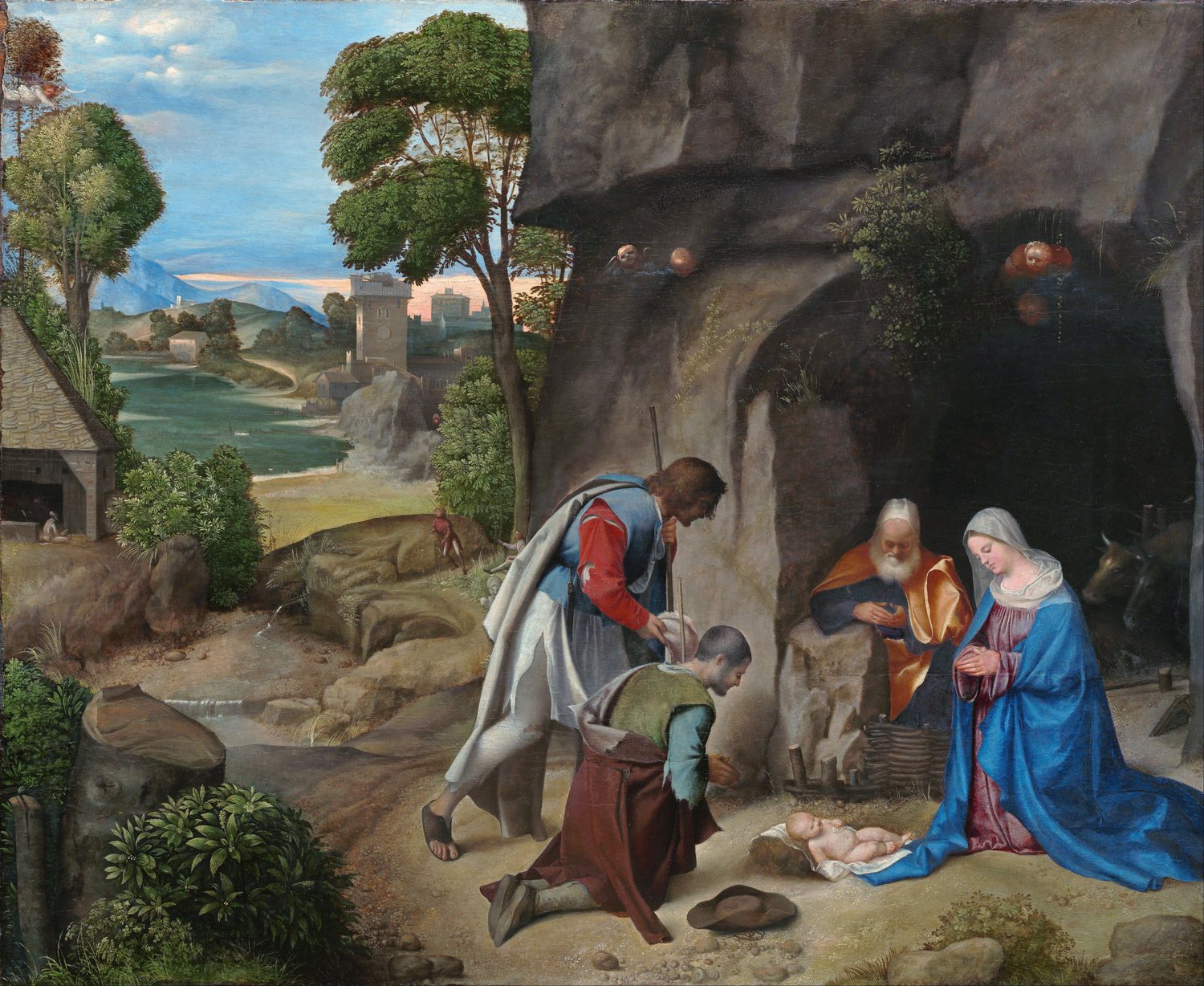
The shepherds kneel in a rocky grotto's mouth, in a landscape that opens away to blue distances on the left — the holy family small, the world immense and luminous around them. It is the Nativity as Giorgione understood everything: a quiet event, overheard by nature.
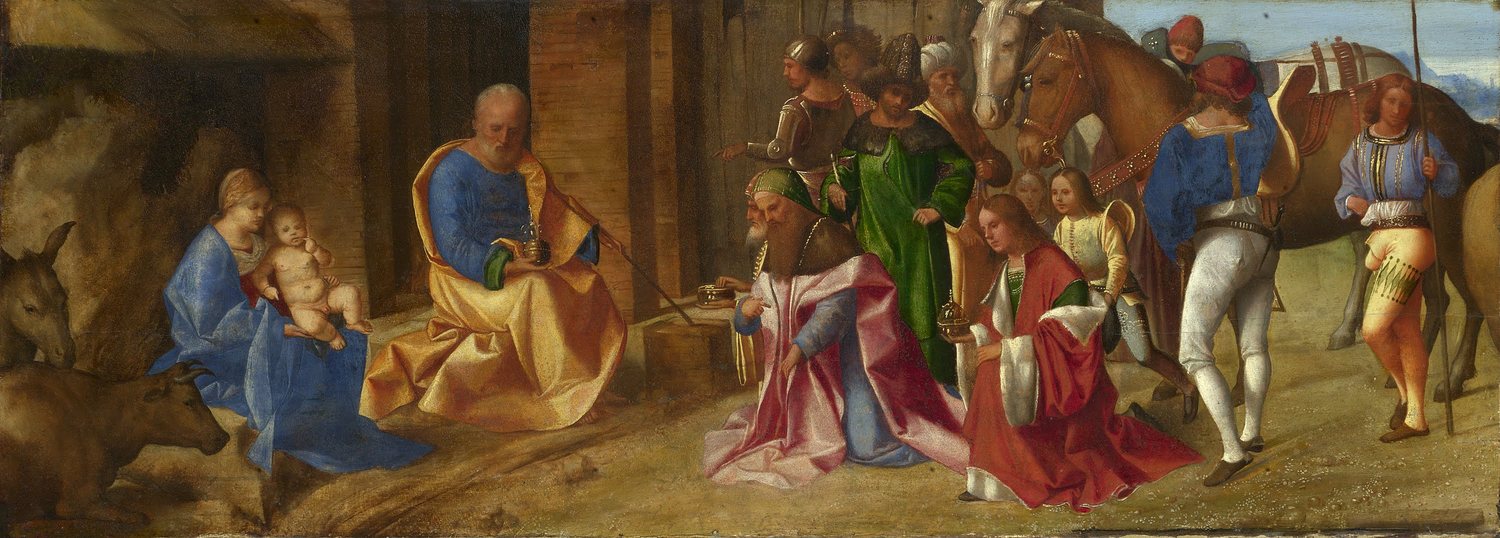
A small, wide panel like a scene glimpsed through a window: the kings and their retinue crowd the little stable yard in jewel colours, horses shifting, servants busy — the whole sacred arrival treated as a moment of Venetian street life, observed rather than staged.
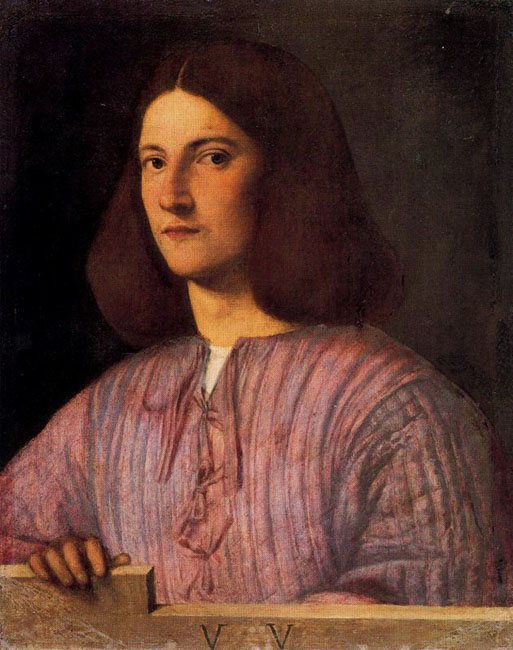
He rests his hand on a parapet carved with letters, in a striped silk shirt, and looks out with the new Giorgionesque inwardness — not a likeness to show off, but a state of mind to keep. The Renaissance portrait changes here: from document to reverie.