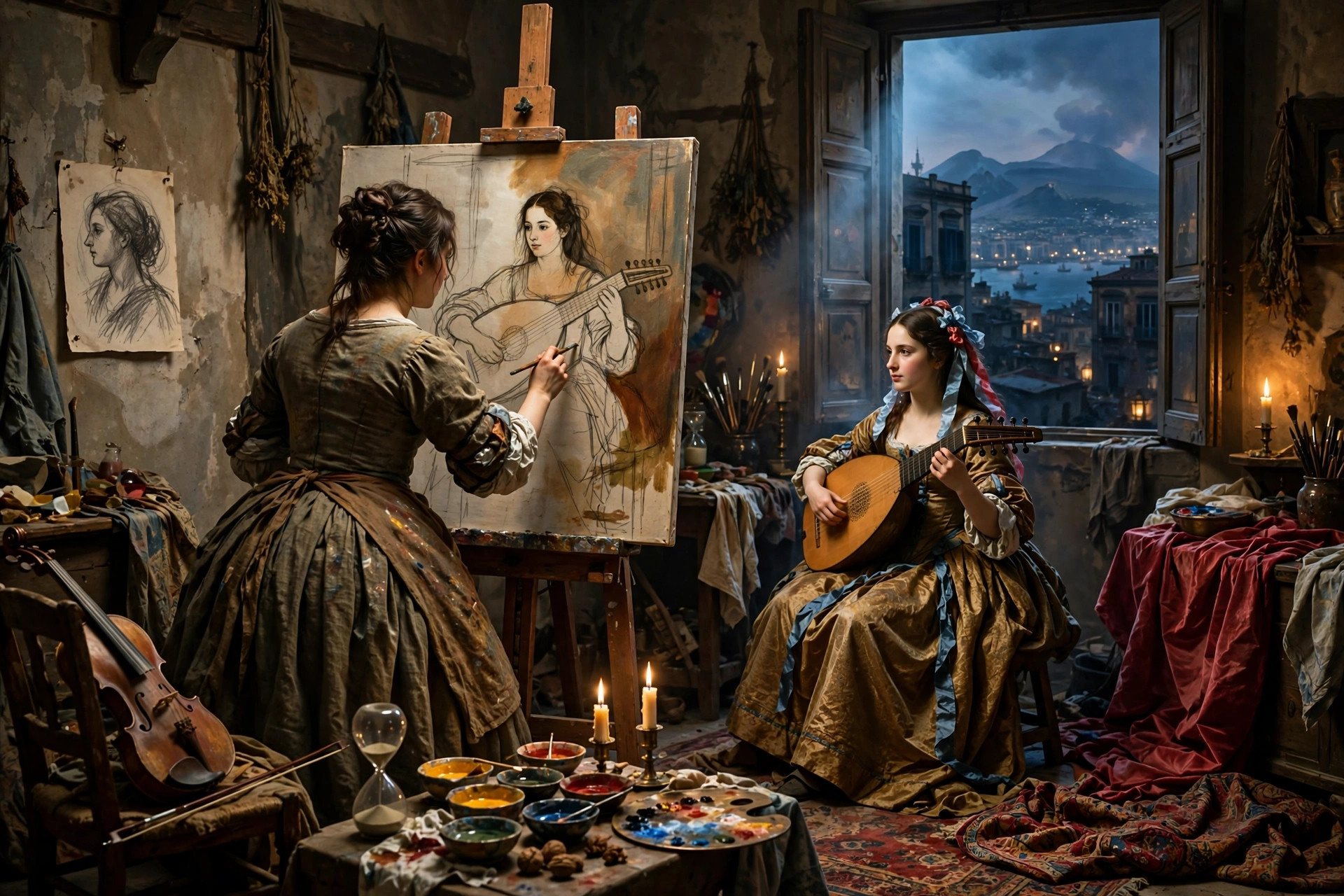
The most famous woman painter of the Baroque — and for two centuries, nearly erased from its history. Artemisia learned in her father Orazio's workshop, surpassed the Caravaggisti at their own game of darkness and flesh, and painted heroines who act: her women do not swoon, they work. Europe's courts bought her canvases; posterity mislaid her name. It has it back now.
Orazio Gentileschi, a follower of Caravaggio, trained his daughter in his Roman workshop — grinding pigments, preparing canvases, painting beside him. At seventeen she signed the Susanna: the first Susanna in art painted from the woman's side of the story, twisting away from the whispering elders in real distress, not displayed for the viewer. The signature, and the difference, were announcements.
In 1612 her perspective teacher Agostino Tassi was tried for her rape; Artemisia, nineteen, testified under the sibille — cords tightened around her fingers, a painter's fingers — and did not retract. Tassi was convicted. In the same years she painted the Naples Judith: two women doing hard, coordinated physical work, sleeves rolled, no theatrics. Biography is not required to see the painting's force — but the century that forgot her needed reminding who held the brush.
She inherited Caravaggism through her father and pushed it further: bodies emerge from blackness lit by a single candle or a shaft of light, fabrics and flesh modelled with sensual exactness. But where Caravaggio's Judith recoils from her own act, Artemisia's leans in with her whole weight, and her maidservant is no bystander but a strong second pair of arms. The tenebrism is the same; the centre of gravity has moved.
The allegory of Painting was female — Pittura, a woman with brush and palette — and only a woman painter could portray her from life: herself. Artemisia's Self-Portrait as the Allegory of Painting, painted in London, is the Baroque's great professional manifesto: the painter at work, leaning into the canvas, sleeve pushed up, the gold chain of honour at her neck. Her heroines repeatedly carry her own features. She is not illustrating their stories; she is standing in them.
Her surviving letters are a professional's: negotiating prices, promising deadlines, reminding dukes that her work commanded what it commanded — 'you will find the spirit of Caesar in the soul of a woman', she wrote to one patron. Settled in Naples, she ran a workshop with assistants, sold to Spain, France and England, and in 1616 became the first woman admitted to Florence's Accademia del Disegno. The craft was art; it was also a living, and she charged for it properly.
After her death her paintings drifted into attributions to her father and other men; the name faded for two hundred years. Roberto Longhi's 1916 essay began the recovery; feminist scholarship and the great exhibitions of the last decades completed it — a National Gallery retrospective in 2020 put her where the seventeenth century had already put her: among the most powerful painters of the Baroque. The pictures had not changed. The labels had.
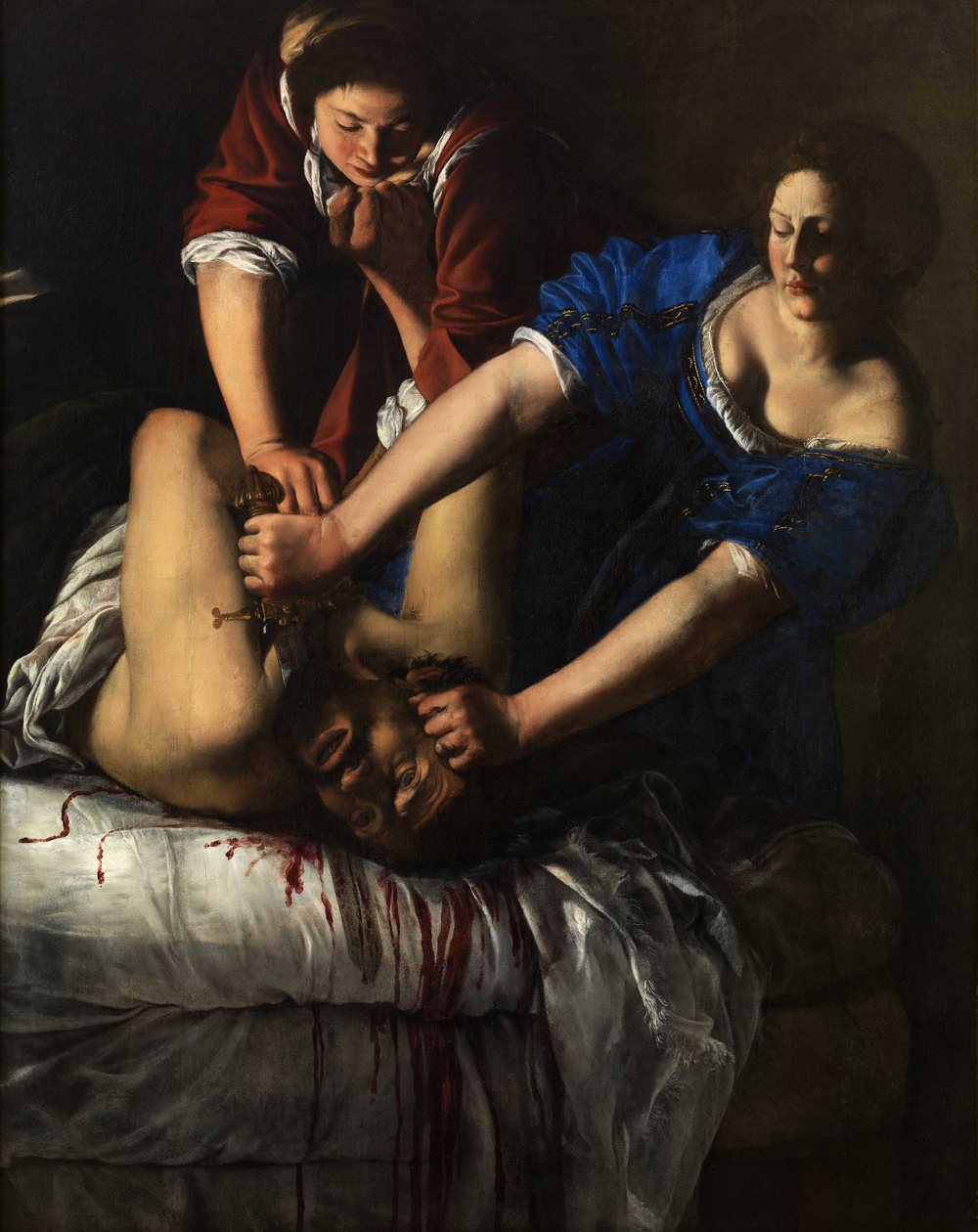
The most famous Judith of the Baroque: no swooning heroine but two working women — Judith sawing with her whole body's weight, her maidservant Abra pinning the struggling general down with strong arms. Caravaggio had painted the same moment as horror; Artemisia paints it as labour. A second, even grander version hangs in the Uffizi. She returned to the subject all her life, and no one has matched the physical truth of this first attempt.
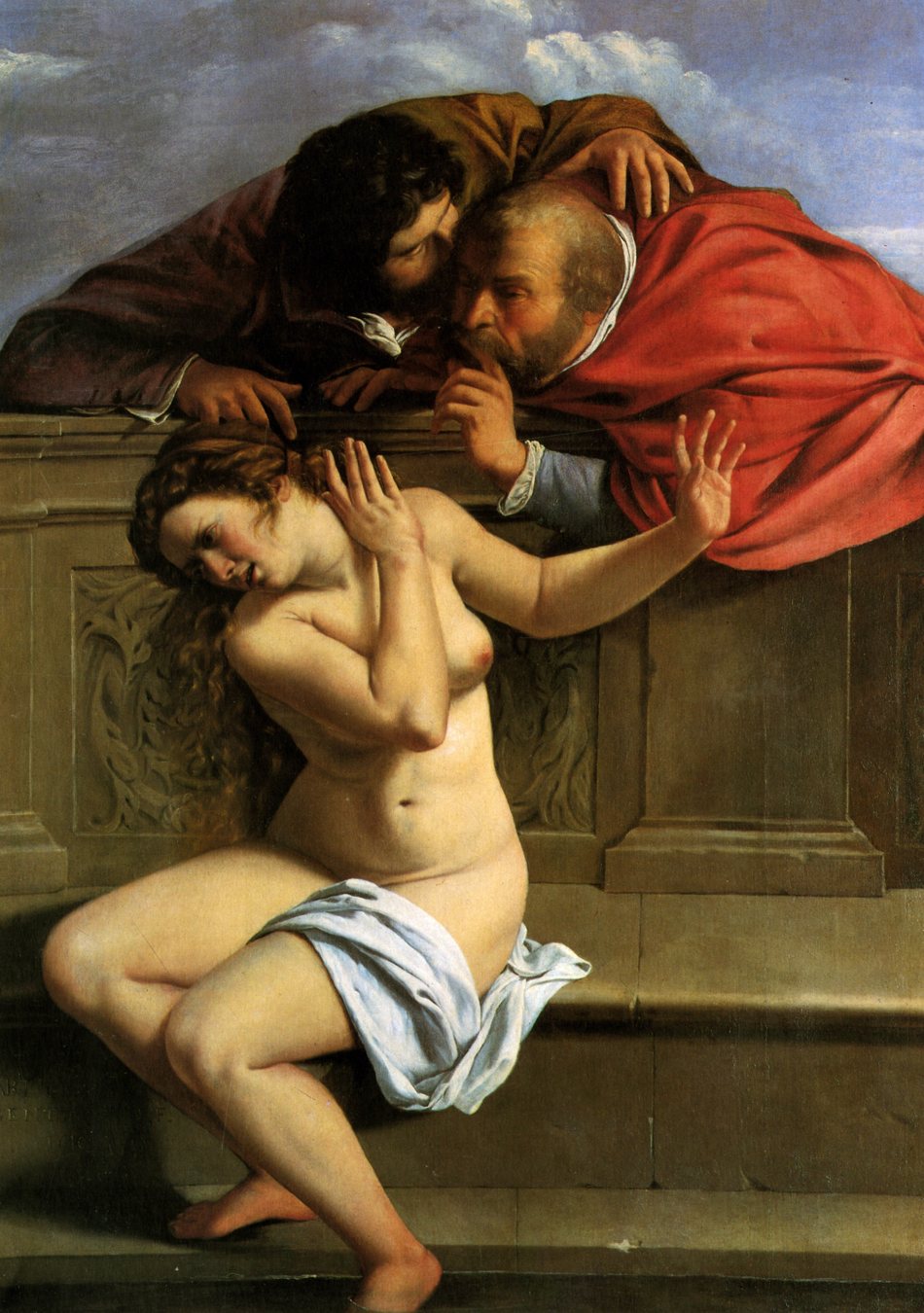
Painted at seventeen and signed along the step: Susanna twists away from the two old men leaning over the parapet, her face turned in genuine anguish, one hand raised to ward them off. Male painters had made the scene an excuse for a nude; the seventeen-year-old girl painted what it actually is — harassment, witnessed from inside. It is the earliest surviving work by a woman that takes a heroine's side so completely.
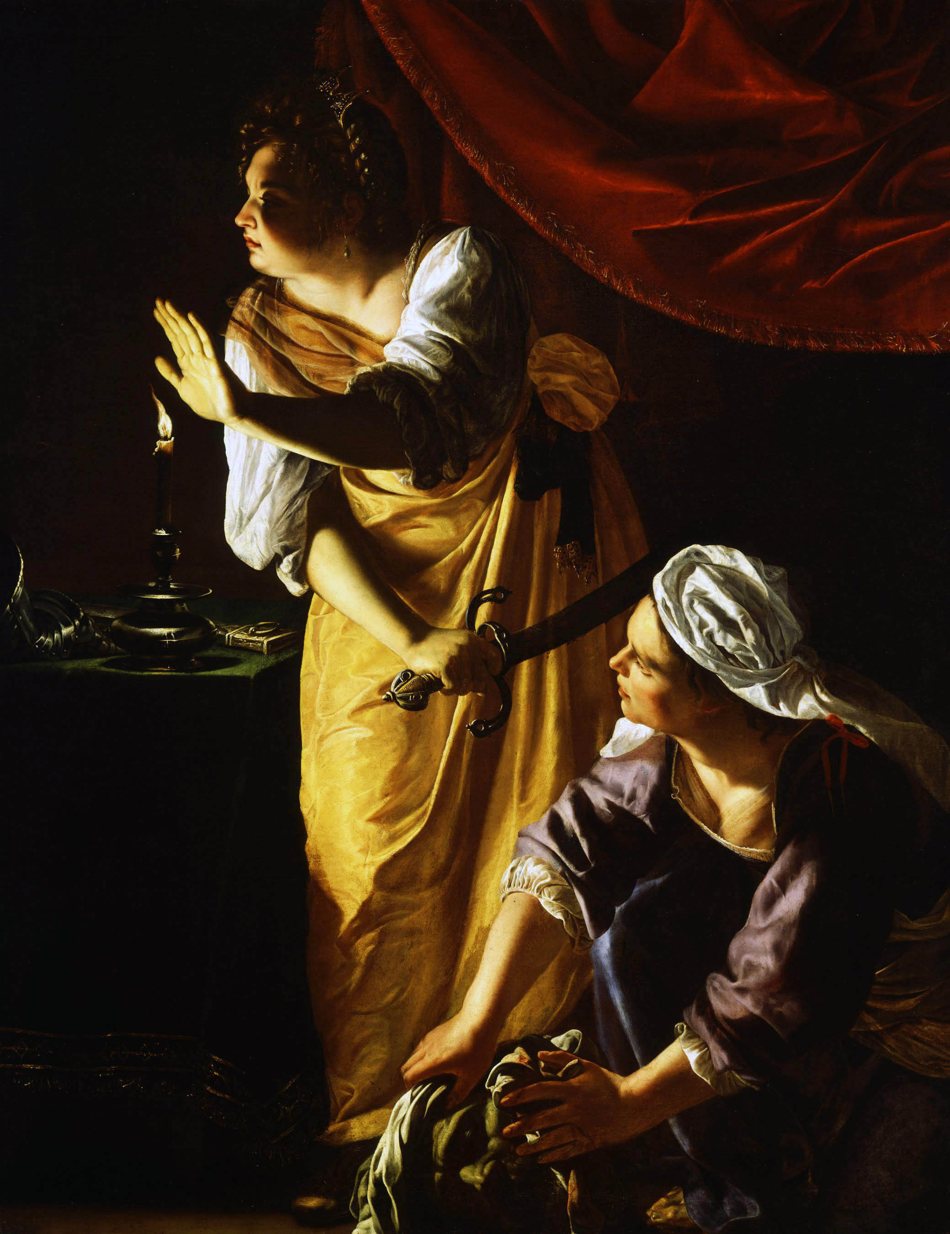
After the deed: Judith, sword still in hand, raises a finger for silence and shades the candle with her palm while Abra wraps the head in a cloth. The whole picture is lit by that one shielded flame — a masterclass in painting darkness, the women's faces emerging from it in profile and half-light. Suspense, not violence: the moment when listening matters more than looking.
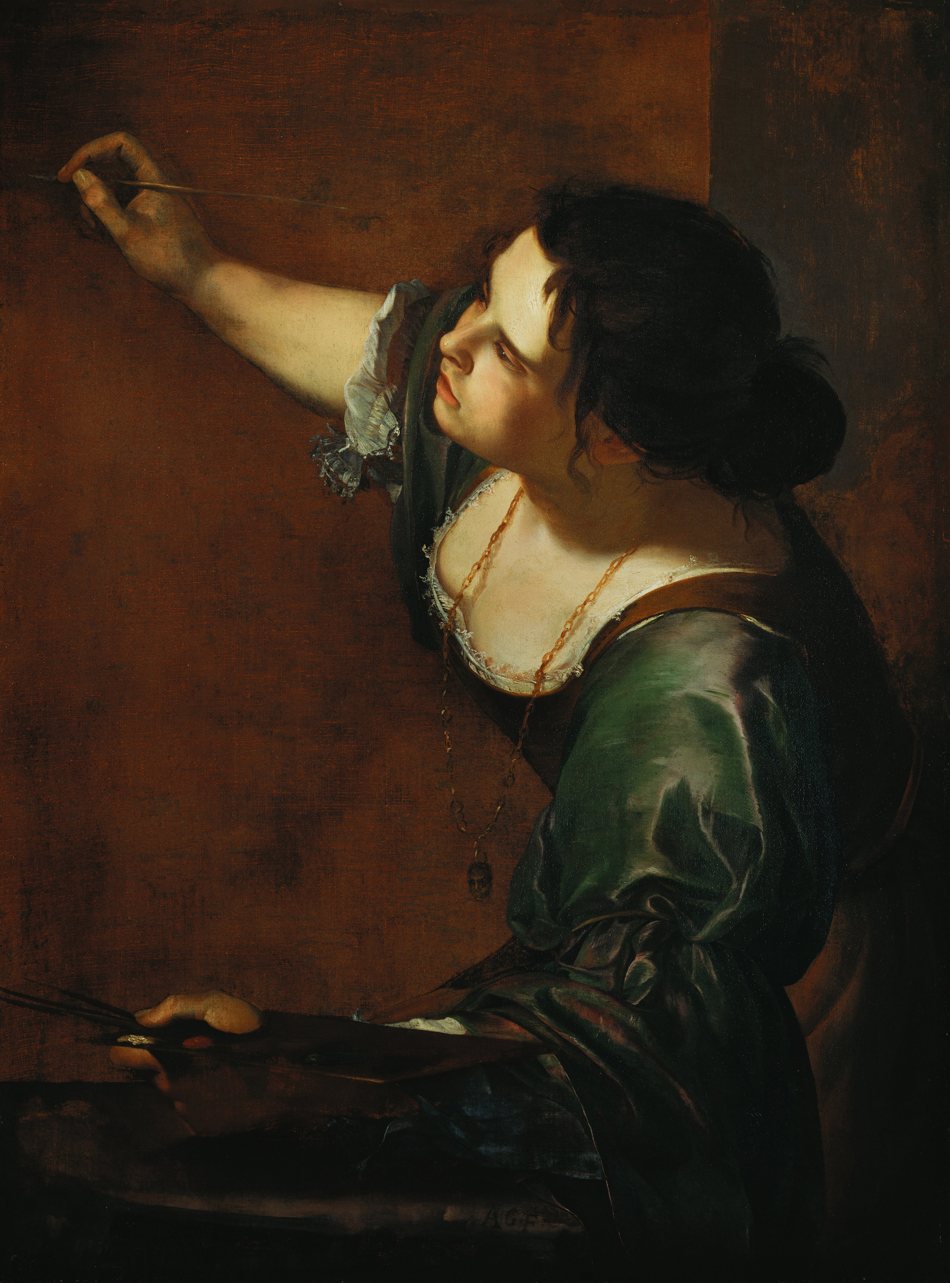
Painted in London for Charles I: the allegory of Painting herself, caught mid-stroke — body leaning into the work, brush raised, palette in hand, a gold chain with a mask pendant at her throat, her dress of shot silk changing colour as it turns. Only Artemisia could paint this from life, because only she was both the allegory and the artist. It is less a self-portrait than a claim: painting, in person, is a woman at work.
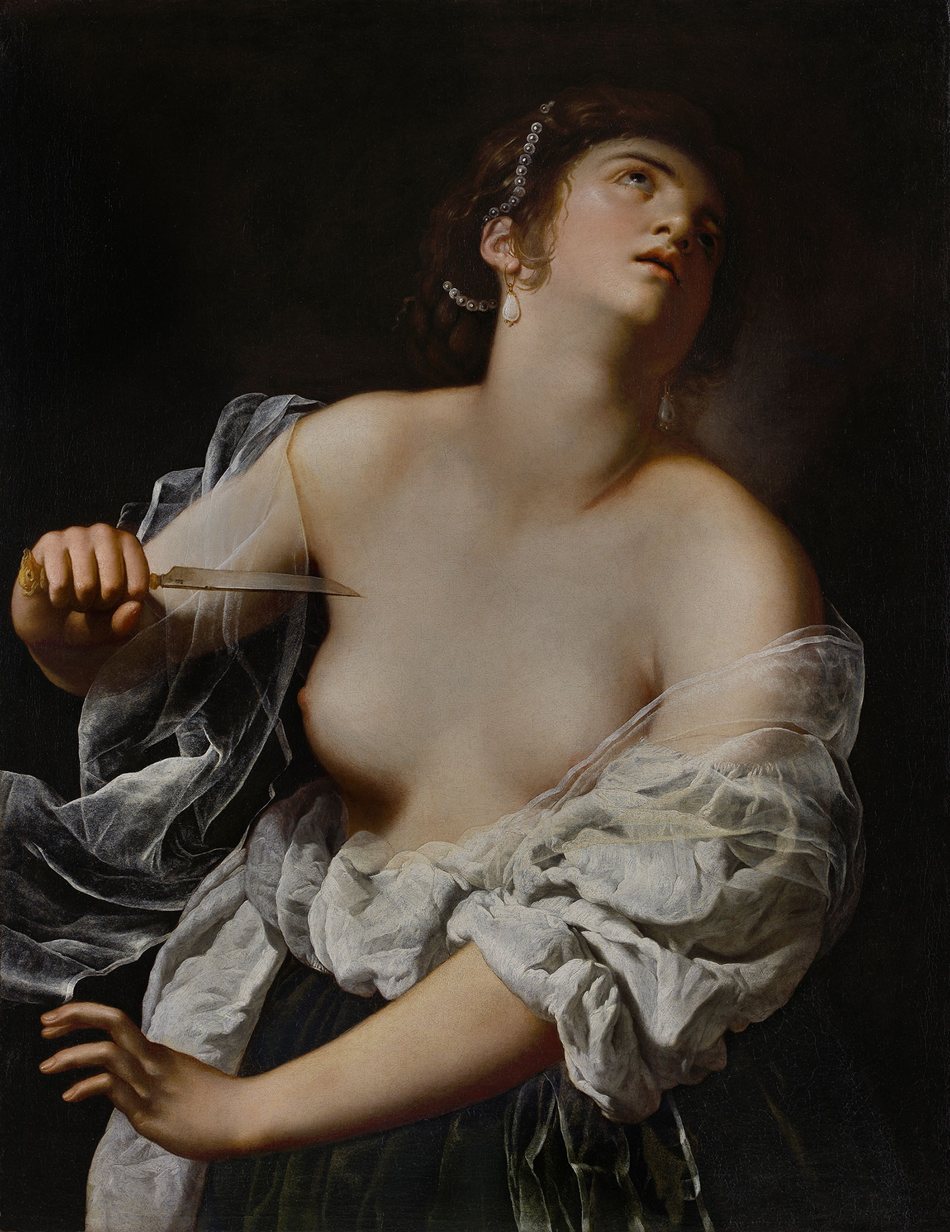
Lucretia at the instant of decision, dagger in hand, her face lifted and already elsewhere. Artemisia paints her not as a victim displayed but as a Roman matron performing a terrible act of honour with full consciousness — the body monumental, the drapery slipping like a classical statue's. She painted Lucretia several times; this is the most inward of them, all the drama behind the eyes.
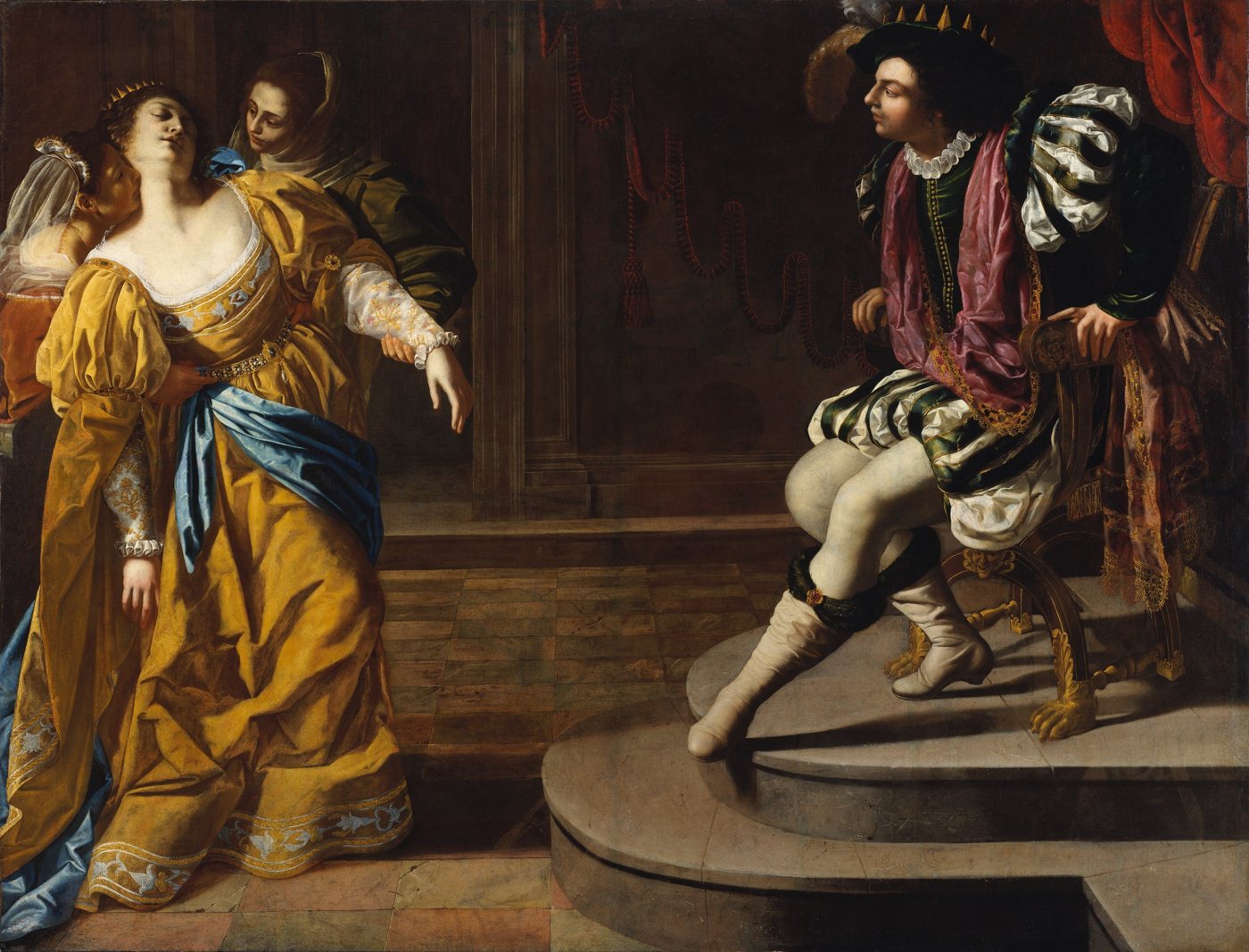
Esther, come unsummoned before the Persian king to plead for her people, faints at the foot of his throne and is caught by her maids; the king, in Baroque plumes and silk, half-rises in alarm. The vast canvas stages the collision of two kinds of power — his, all costume and elevation; hers, which arrives unconscious and still wins the room. Artemisia paints the swoon as strategy and collapse at once.
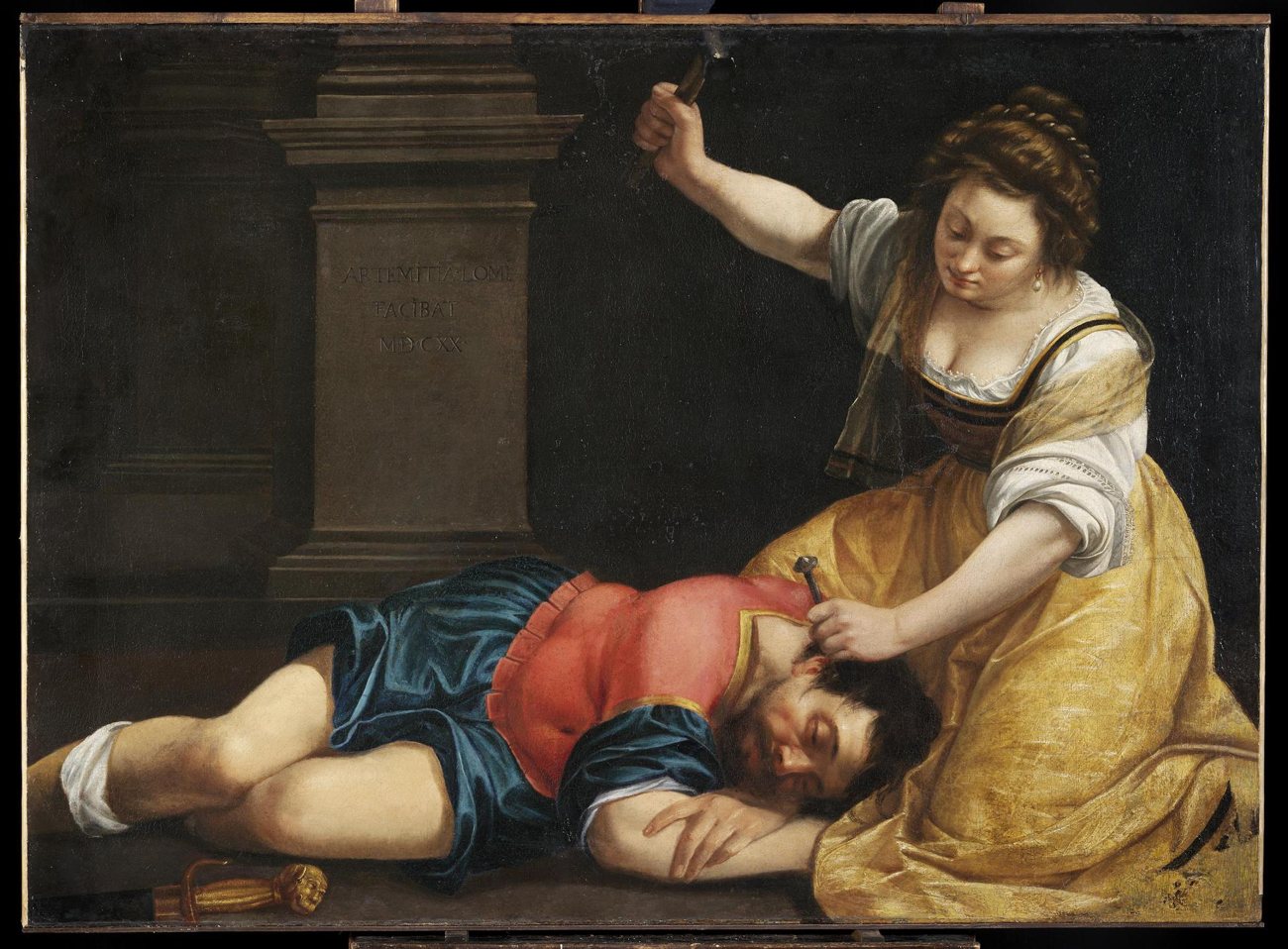
Jael kneels over the sleeping Sisera with a tent peg and hammer, her face a study in concentration — lips parted, gaze fixed on the exact point of entry. No drama, no raised arms: a woman doing a dreadful job of work precisely. Of all her heroines Jael is the calmest, and somehow the most unsettling. The picture's quiet is its violence.
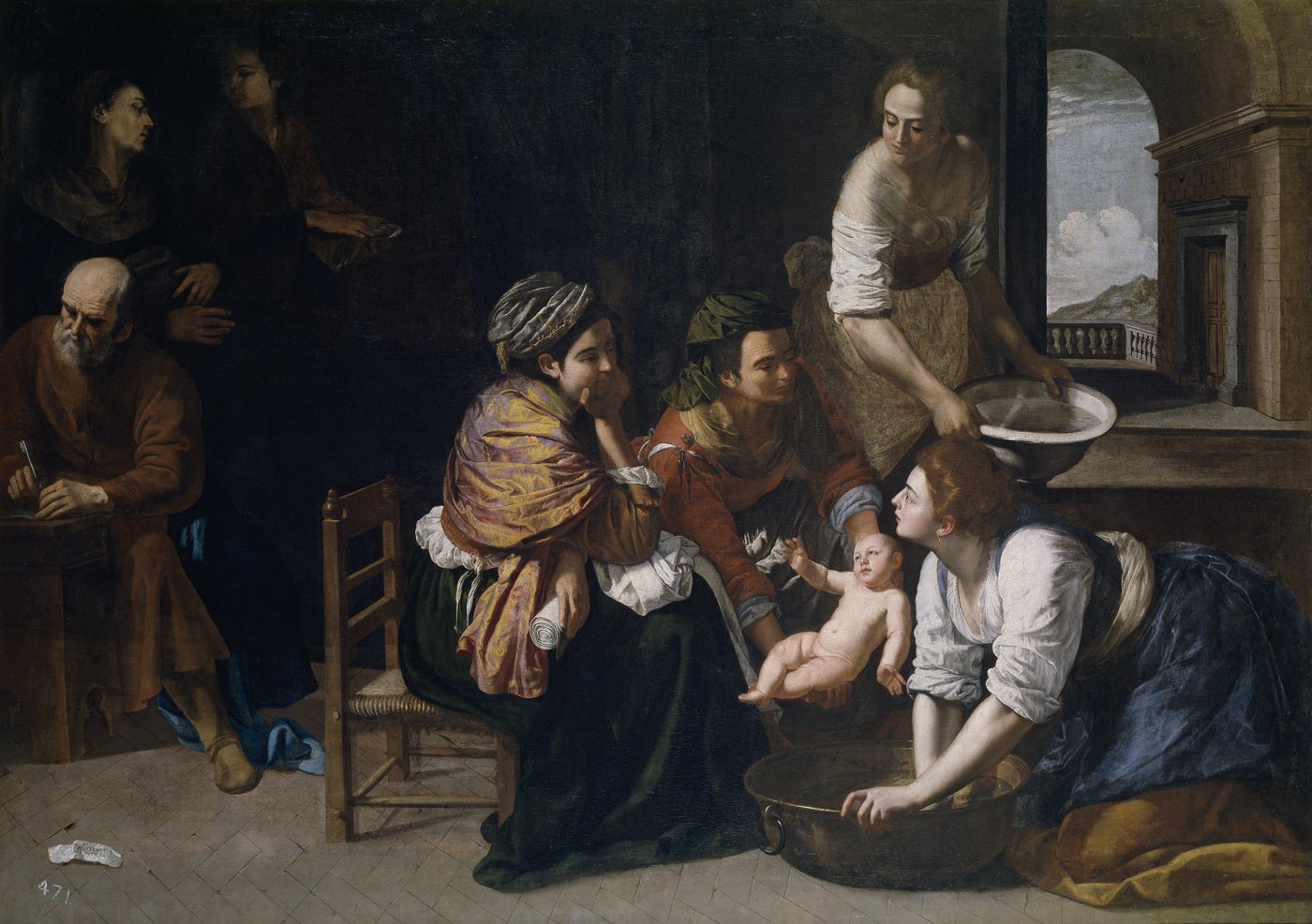
A women's world, painted from inside: the newborn Baptist is bathed by midwives in a shadowed room while Saint Elizabeth rests and old Zacharias, struck dumb, writes the child's name at a table by the window. One of a series of six canvases on the Baptist's life for the Spanish court. No heroics — childbirth as a room full of competent hands, in the warm dark of a Neapolitan interior.
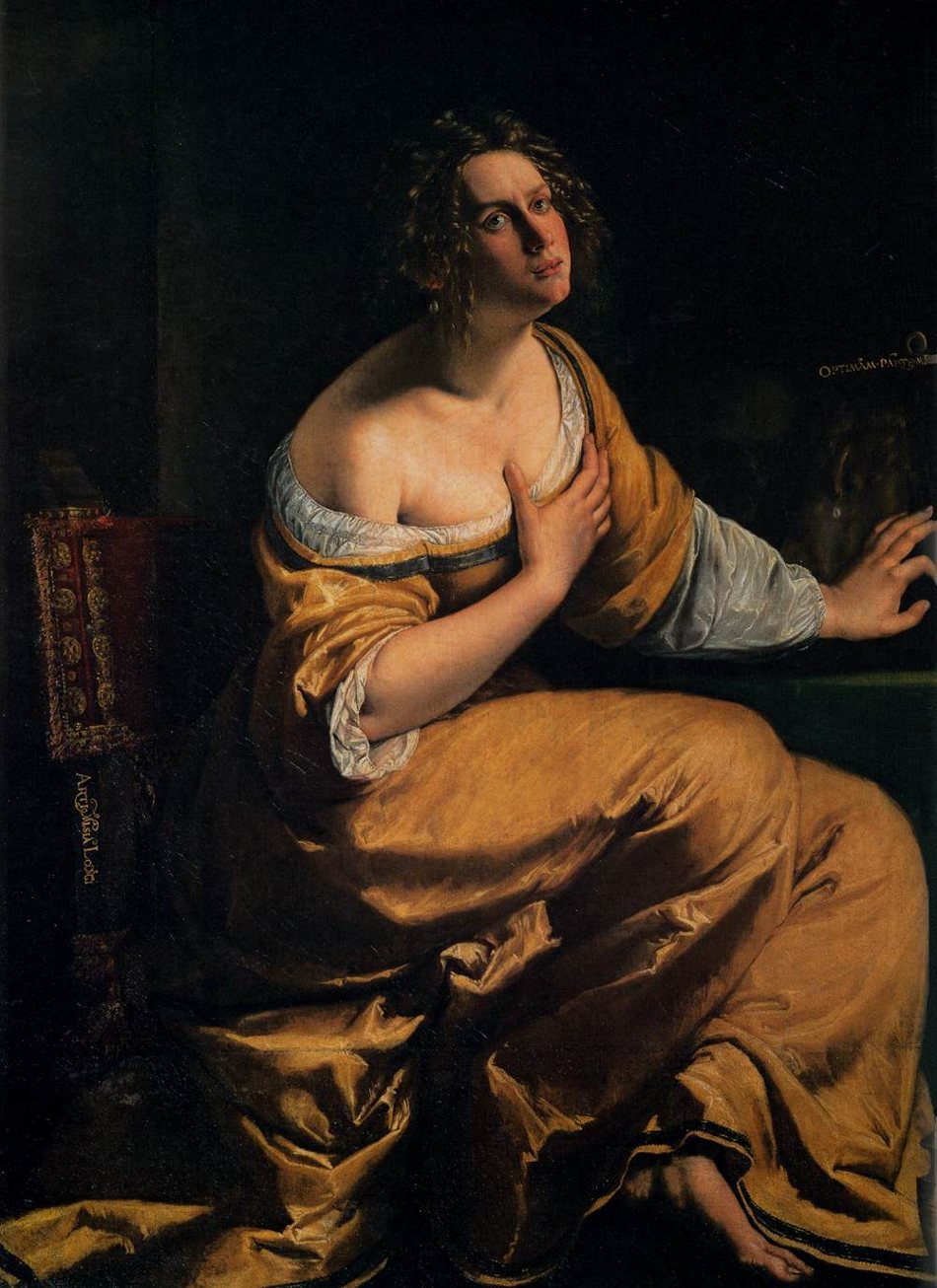
The Magdalene in a gown of gold, seated in the dark, one hand pressed to her heart, the other pushing away the mirror of her former vanities. She is not weeping for the viewer; she is deciding something, mid-gesture, with the weariness of a woman who has actually lived the life she is renouncing. The signature runs along the chair's edge — Artemisia claiming the saint, and the canvas, as her own.
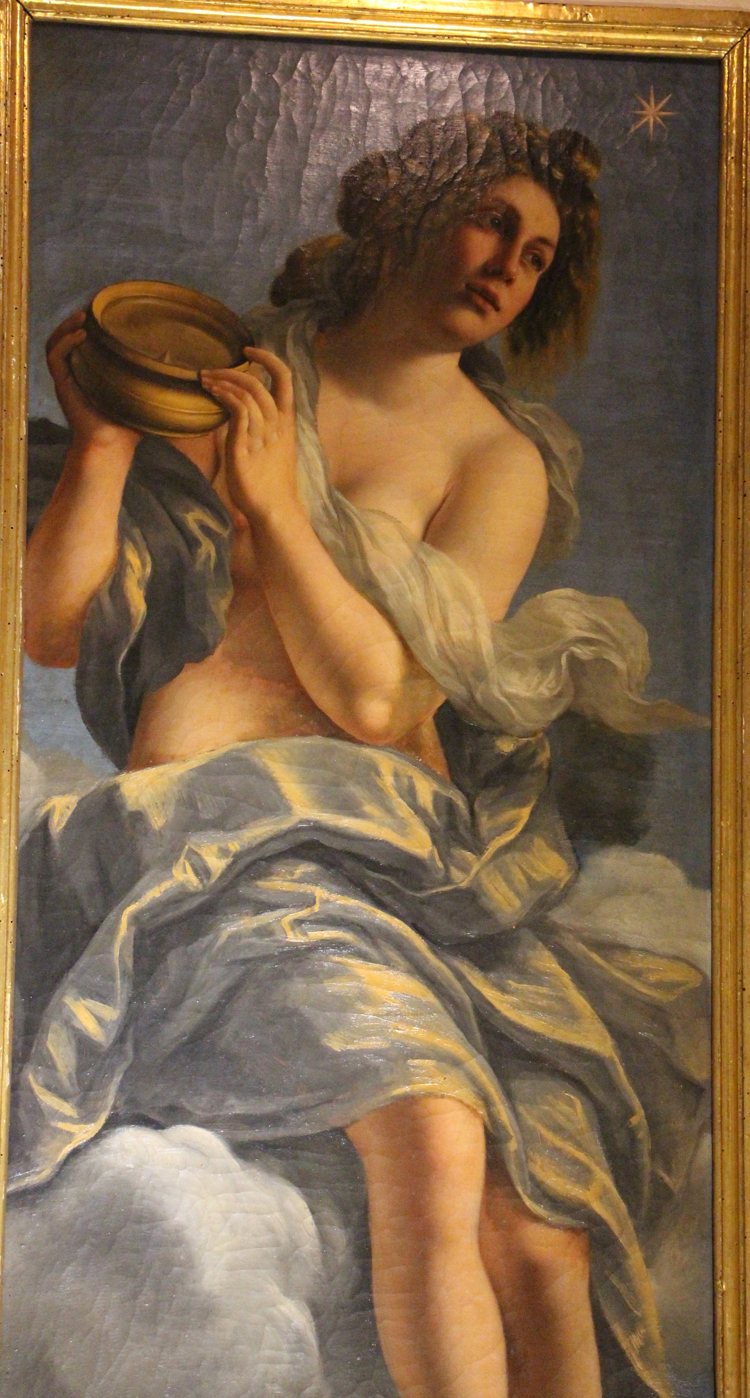
Painted at twenty-two for the ceiling of Michelangelo's family house in Florence: Inclination, the inborn talent, a young woman holding a compass and guided by a star. A later hand, embarrassed, painted drapery over her nudity — the swirls of cloth are by another artist, and conservators have left them as part of the picture's history. Even her allegory of talent had to be modestly dressed by the century.