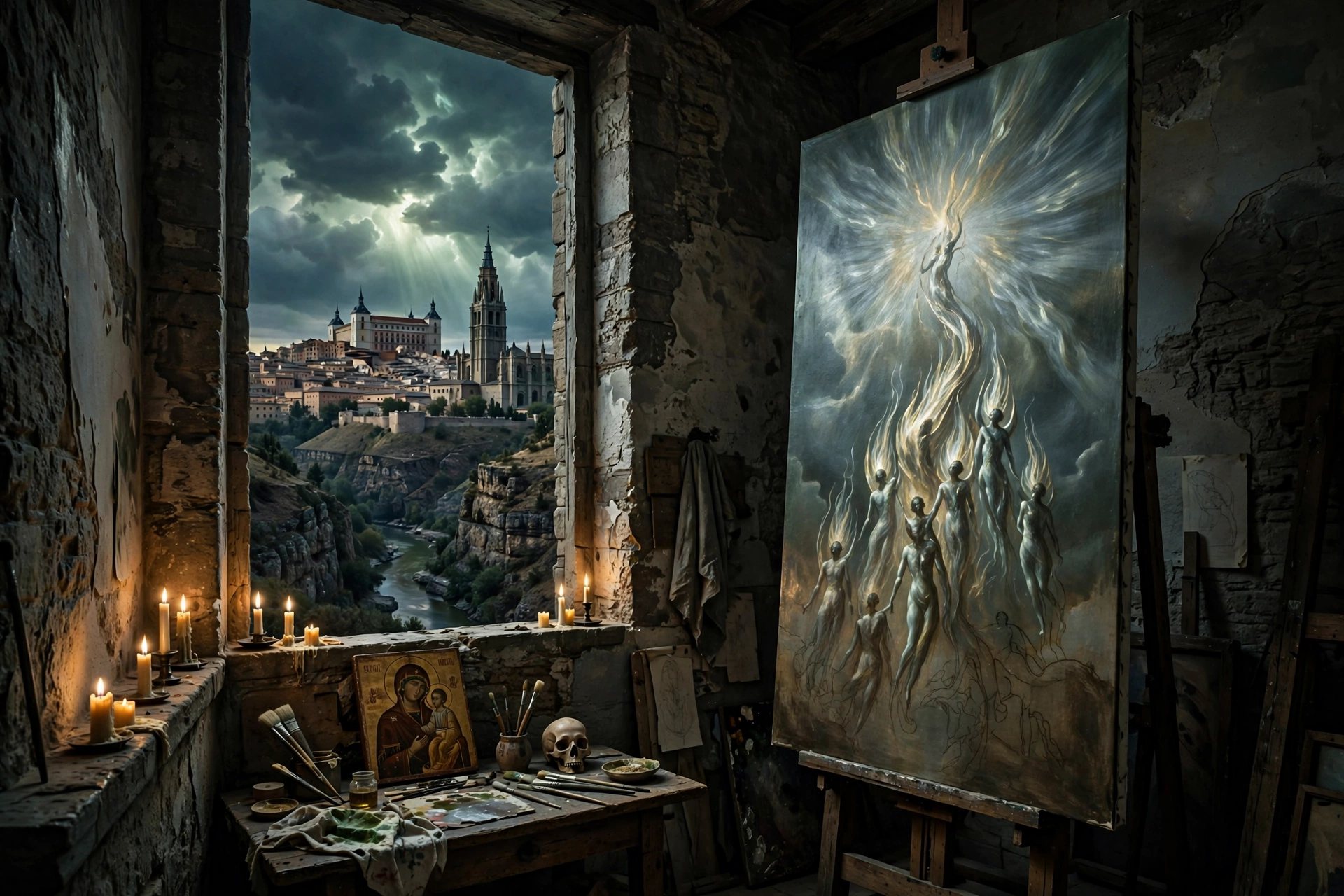
A Greek from Crete who painted icons, learned oil painting in Venice, failed to conquer Rome and the court of Madrid — and in Toledo became the strangest great painter of his century: figures like flames, colour like cold lightning, saints spiralling up into silver light. Spain filed him away as an eccentric; three hundred years later the modern painters recognised a brother.
He began in Heraklion, in Venetian-ruled Crete, as a master of the post-Byzantine icon — documents call him a master painter by his early twenties. The icon taught him the deepest lesson of his art: a picture is not a window onto the world but a presence, and its light does not come from any sun. He signed in Greek all his life, and the gold of the icons became, in Spain, his storms of silver.
The elongation is real, and it grows across his career — late bodies are nine, ten heads tall, drawn upward like candle flames. An old theory blamed an eye defect, astigmatism; it cannot survive his portraits, which are exact likenesses painted in the same years. The stretch is a choice: Mannerist artifice raised to theology, flesh dematerialised, matter turning back into fire and air as it rises toward God.
His palette runs on lead white, blue, acid greens, carmine lake and sulphur yellows, laid over dark undermodelling so that flesh seems lit by lightning rather than by day. Highlights of nearly pure white are dragged across the forms until they flicker. Contemporaries already noticed the strangeness: flesh the colour of ash and pearl, reds — the robe of the Disrobing above all — that glow like embers in a dark room.
Francisco Pacheco, who visited the Toledo studio in 1611, recorded the method: El Greco kept small figures of clay and wax, arranged them in a box-like space and studied how the light fell before he painted. A sculptor's way of thinking inside painting — the compositions turn like reliefs, figures grouped and lit as if modelled in the round, then stretched by the brush into flame.
He worked thinly and fast, often letting a warm reddish ground breathe through the shadows, the brushstrokes long, broken and wet-into-wet, so that contours dissolve and bodies are built of light rather than line. It is the opposite of the polished, enamelled finish Spain expected — and one reason the court of Philip II, offered Saint Maurice in 1582, sent the painter away unsatisfied.
He signed his pictures in Greek characters — δομήνικος θεοτοκόπουλος, Doménikos Theotokópoulos — slipped onto a step, a sheet of paper, a scroll at the edge of the scene, as if the painting itself were a document from another world. Spain called him simply el Greco, the Greek. The inventory made after his death lists a learned man's library — Greek and Italian books, Vitruvius, Vasari — and a studio full of his own small modelli, kept ready for future versions.
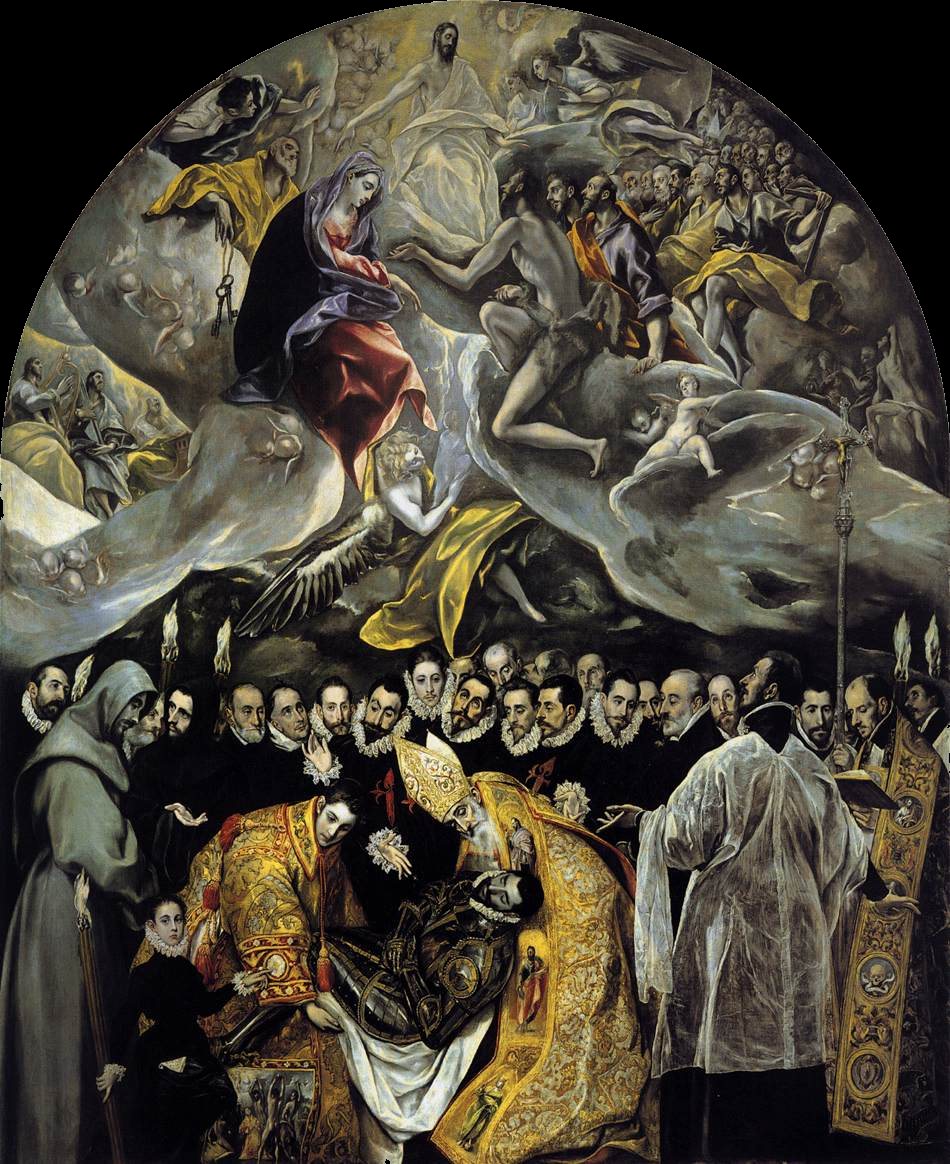
Two worlds in one canvas. Below, the noblemen of Toledo in black — painted from life, face by face — watch Saints Stephen and Augustine lower the Count's body into the tomb; above, heaven opens in a spiral of silver cloud. The little page at the left is the painter's son Jorge Manuel, and among the grave heads behind the bier El Greco painted his own face, looking out at us across four centuries.
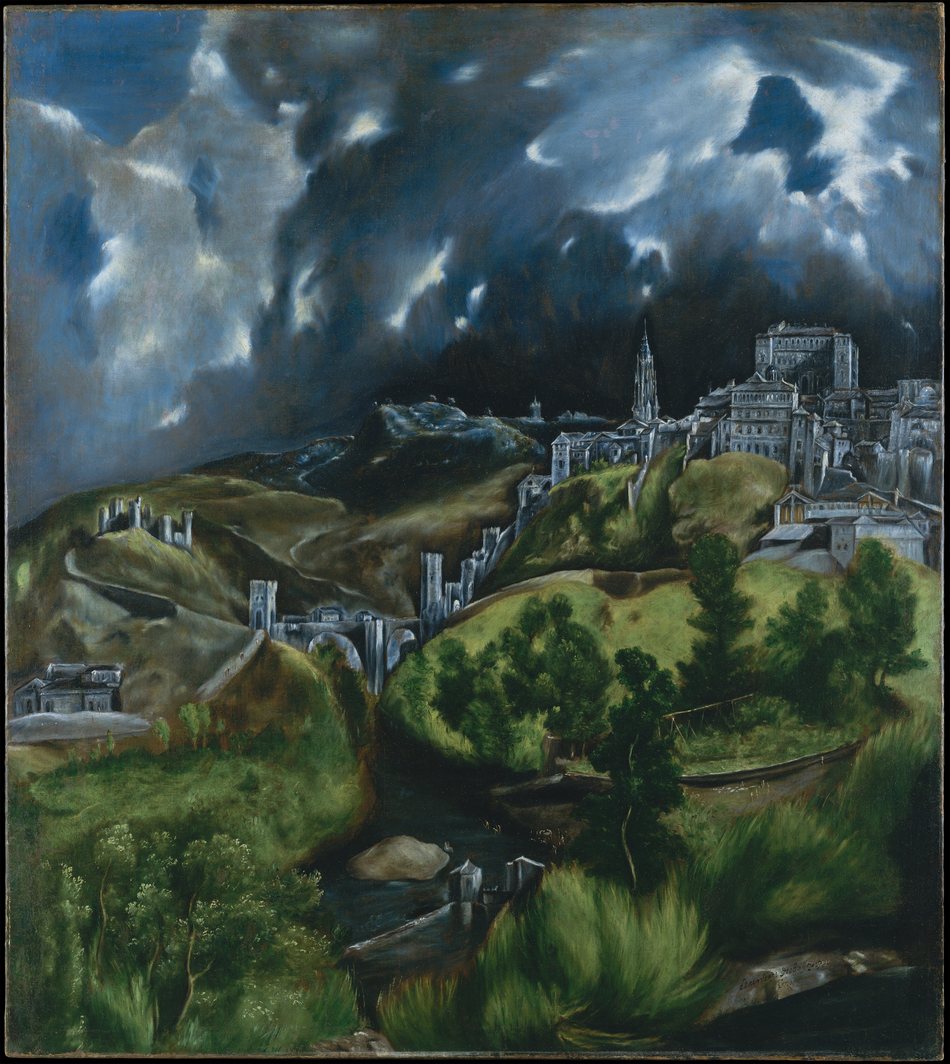
One of the first pure landscapes in Western painting — and the city is rearranged like a vision: the hospital moved, the Alcázar riding high, the cathedral tower shifted, the Tagus winding below under a sky of green-black storm light. Nobody commissioned it for an altar. It is a portrait of a city as an apparition, and painters from the Romantics onward have stood before it as before a prophecy.
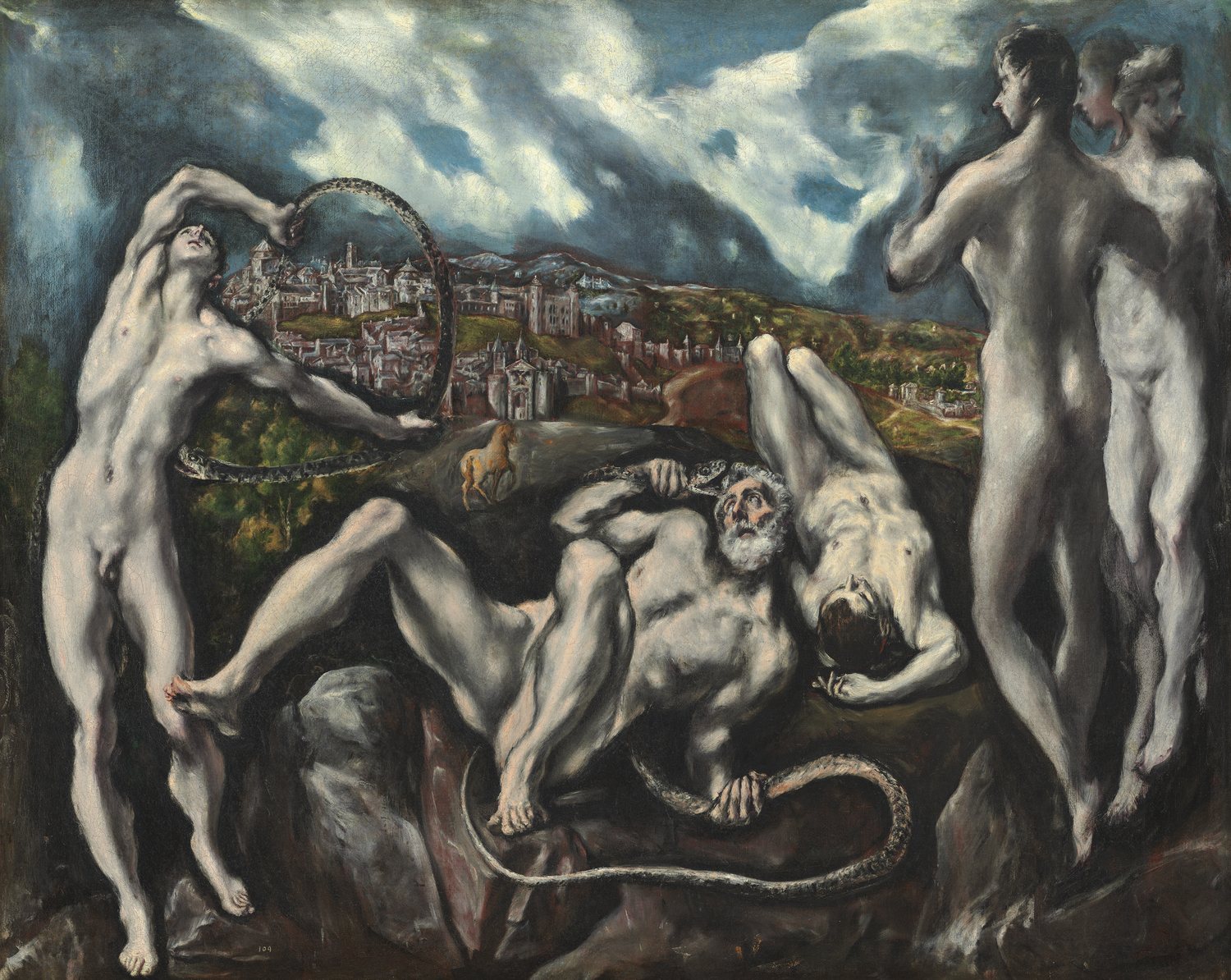
His only mythological picture, painted at the very end of his life: the Trojan priest and his sons writhe in the serpents' coils, their bodies grey as ash — but the city behind them is not Troy. It is Toledo, with the Hospital of Saint John the Baptist on its hill, and three tall figures at the right watch like gods who have decided not to interfere.
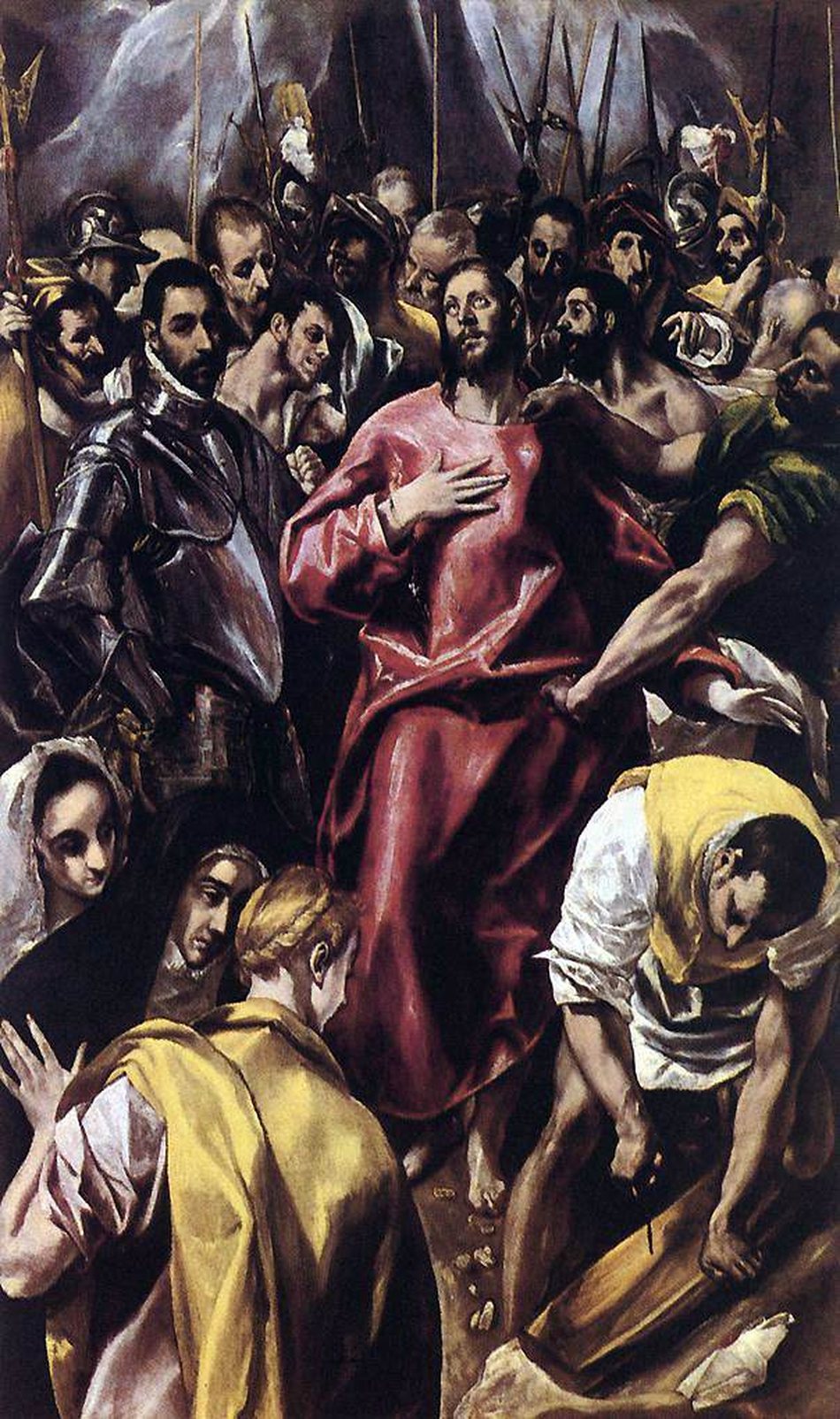
His first Spanish masterpiece, painted for the sacristy of Toledo Cathedral. Christ stands in a robe of glowing, impossible red, calm in the crush of the crowd, while below a carpenter bores the cross and the three Marys look on. The cathedral chapter haggled over the price and objected to the composition — and then kept the picture. The red alone would have made his name.
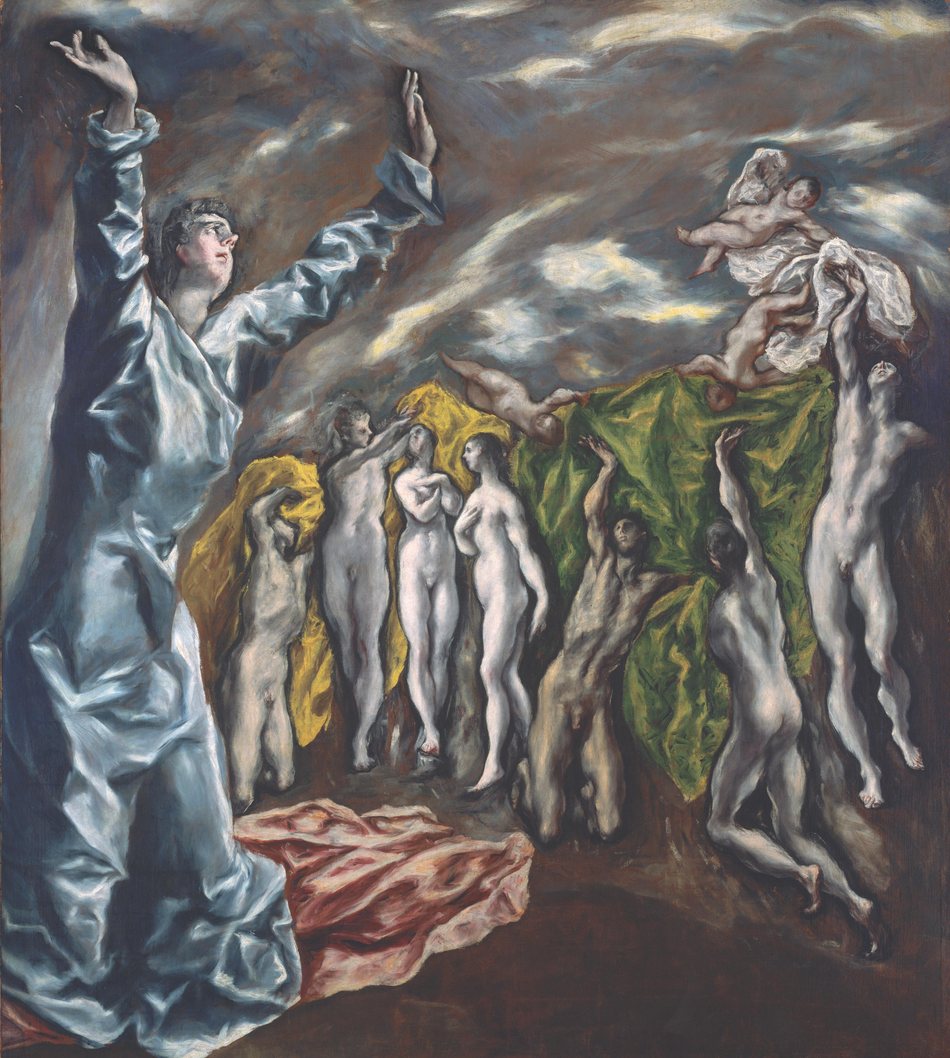
Saint John kneels with his arms flung to heaven as the naked souls of the martyrs receive the white robes of salvation — bodies stretched to the very limit of the human, painted in the last, most feverish years. The canvas was cut down in the nineteenth century: a glory of Christ that once crowned the composition is lost, and the picture ends, as it now hangs, in mid-ecstasy.
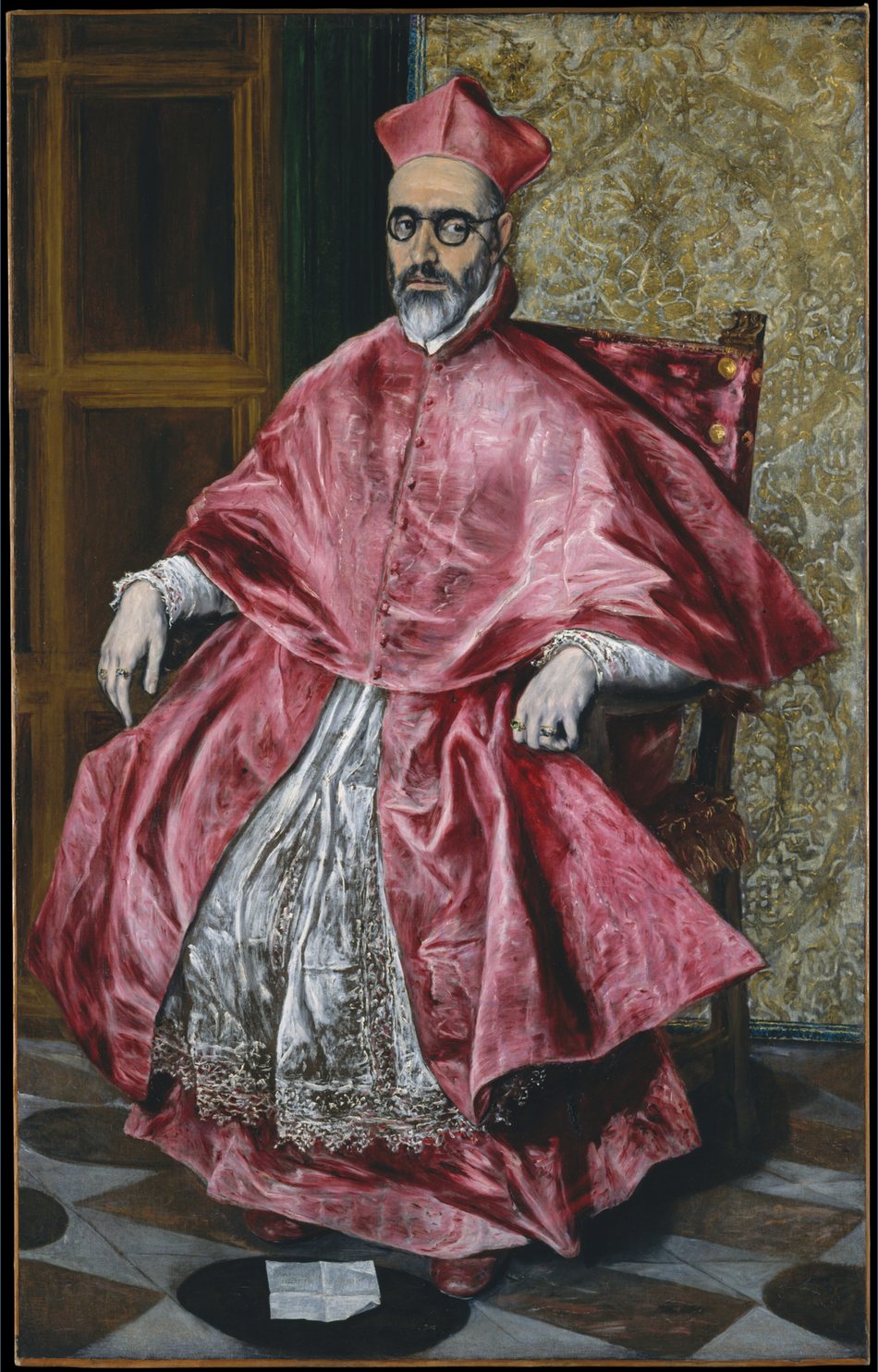
The Grand Inquisitor of Spain, seated in crimson silk and lace, behind spectacles — one of the great portraits of the European seventeenth century. Everything is exact: the brocade, the rings, the paper on the floor bearing the painter's Greek signature. Everything except the gaze, which the glasses hide, and which four centuries of viewers have tried and failed to read.
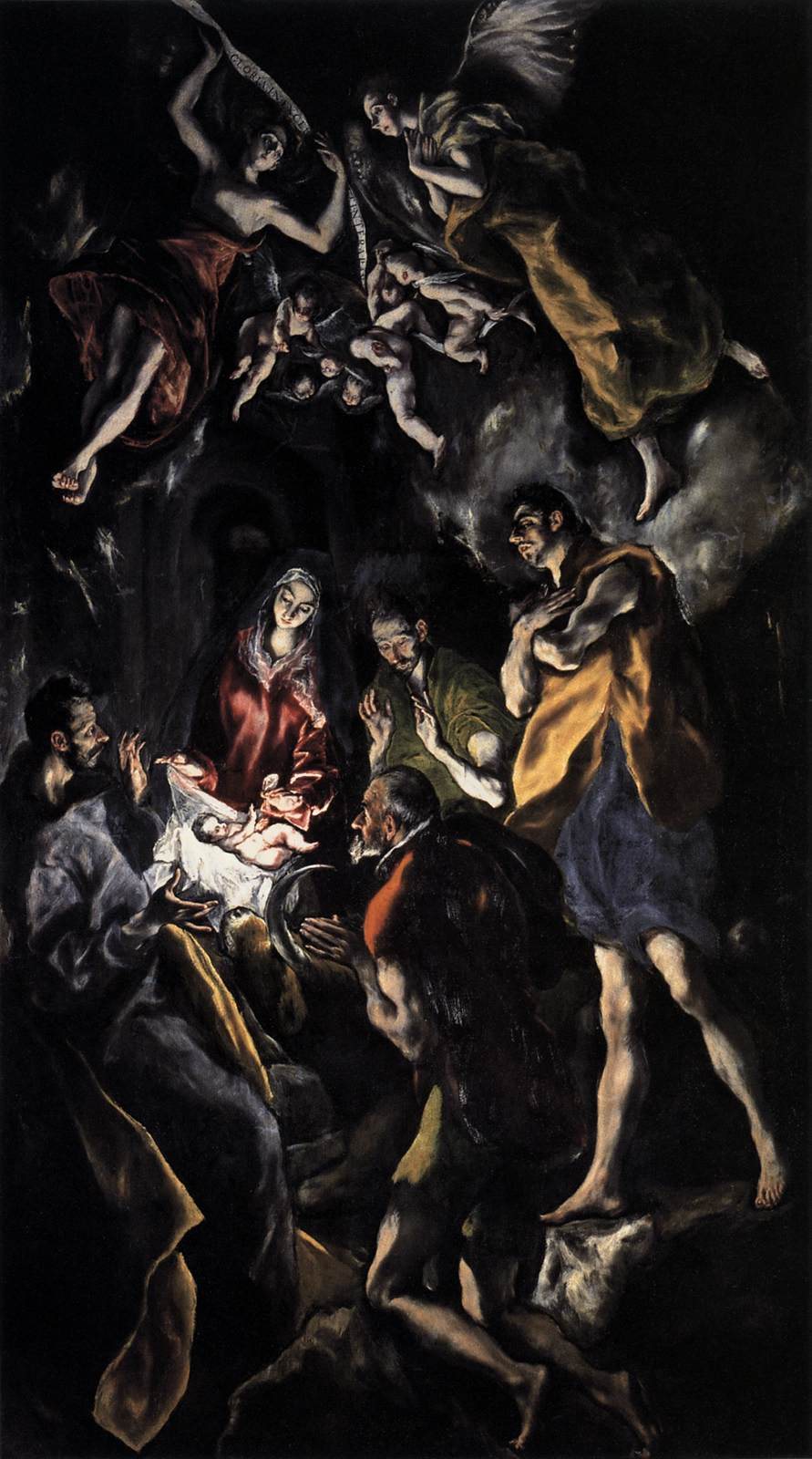
His last Adoration, painted in the final two years of his life for the chapel where he expected to be buried. The shepherds crowd upward around the Child, whose small body is the source of the picture's light; above, angels tumble through the dark like sparks. It is less a Nativity than an ascension that has not yet happened.
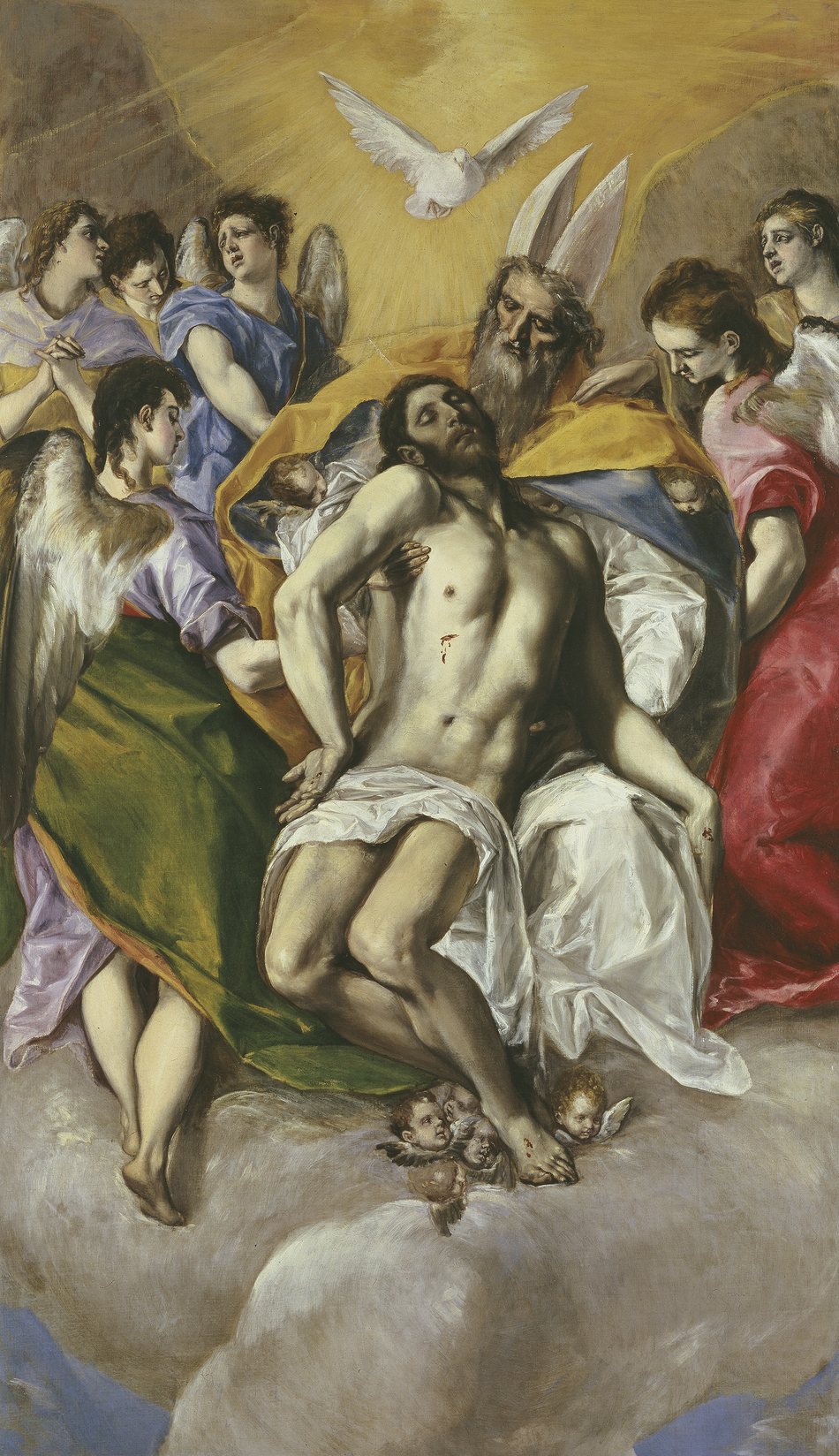
From the high altarpiece of Santo Domingo el Antiguo, the commission that opened Spain to him: God the Father, robed like an emperor of heaven, holds the dead Christ across his knees while the dove descends through golden light. Michelangelo's Pietà still echoes in the body — but the angel at the left, in a robe of impossible pink, is already pure El Greco.
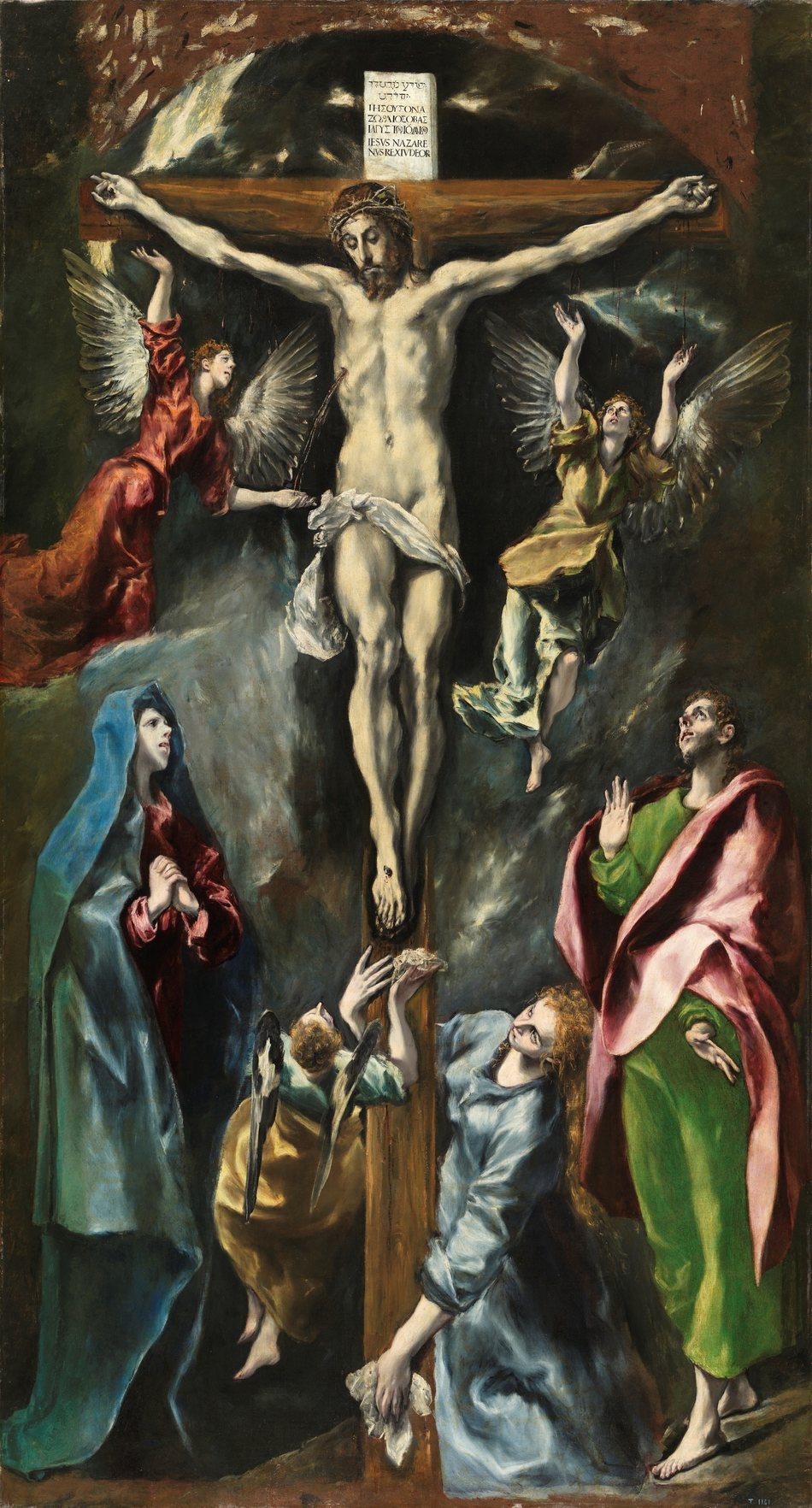
Christ on the cross against a sky of storm, his long body lit like a candle flame; angels swoop to catch the blood in chalices, the Magdalene clasps the foot of the cross, and below — small, dark, unmistakable — lies Toledo. The grief is not shouted. It hovers, weightless, in the cold light between heaven and the city.
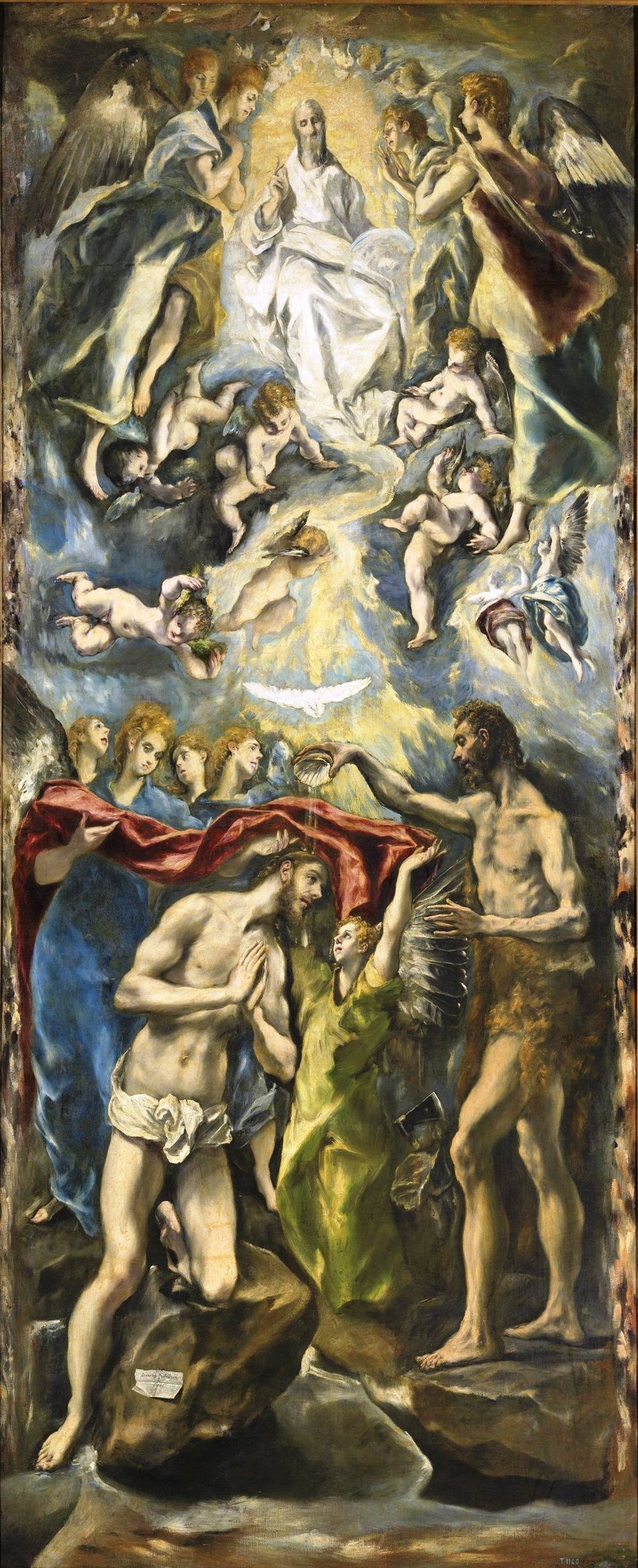
From the altarpiece of the Augustinian college of Doña María de Aragón in Madrid: two worlds stacked in one tall flame of a picture — below, John pours the water of the Jordan; above, God the Father leans out of a whirlwind of angels to acknowledge his Son. Earth and heaven mirror each other, and the river of light runs through both.
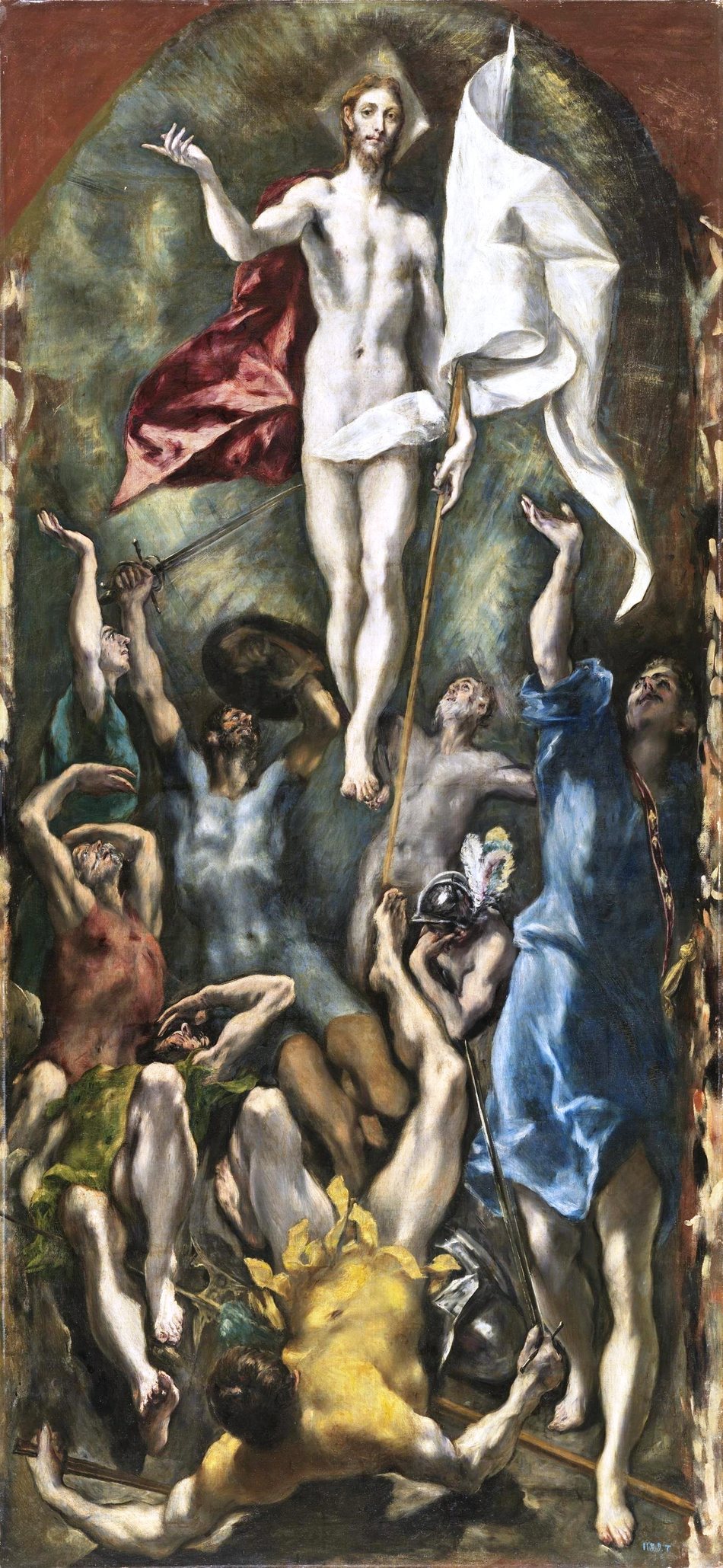
Also from the Doña María de Aragón altarpiece. Christ rises out of the tomb weightless, wrapped in white and crimson, blessing the world with an almost absent-minded calm — while below him the soldiers tumble like a hand of cards thrown into the air, all foreshortened limbs and astonishment. Nobody in Spanish painting had ever moved figures like this.
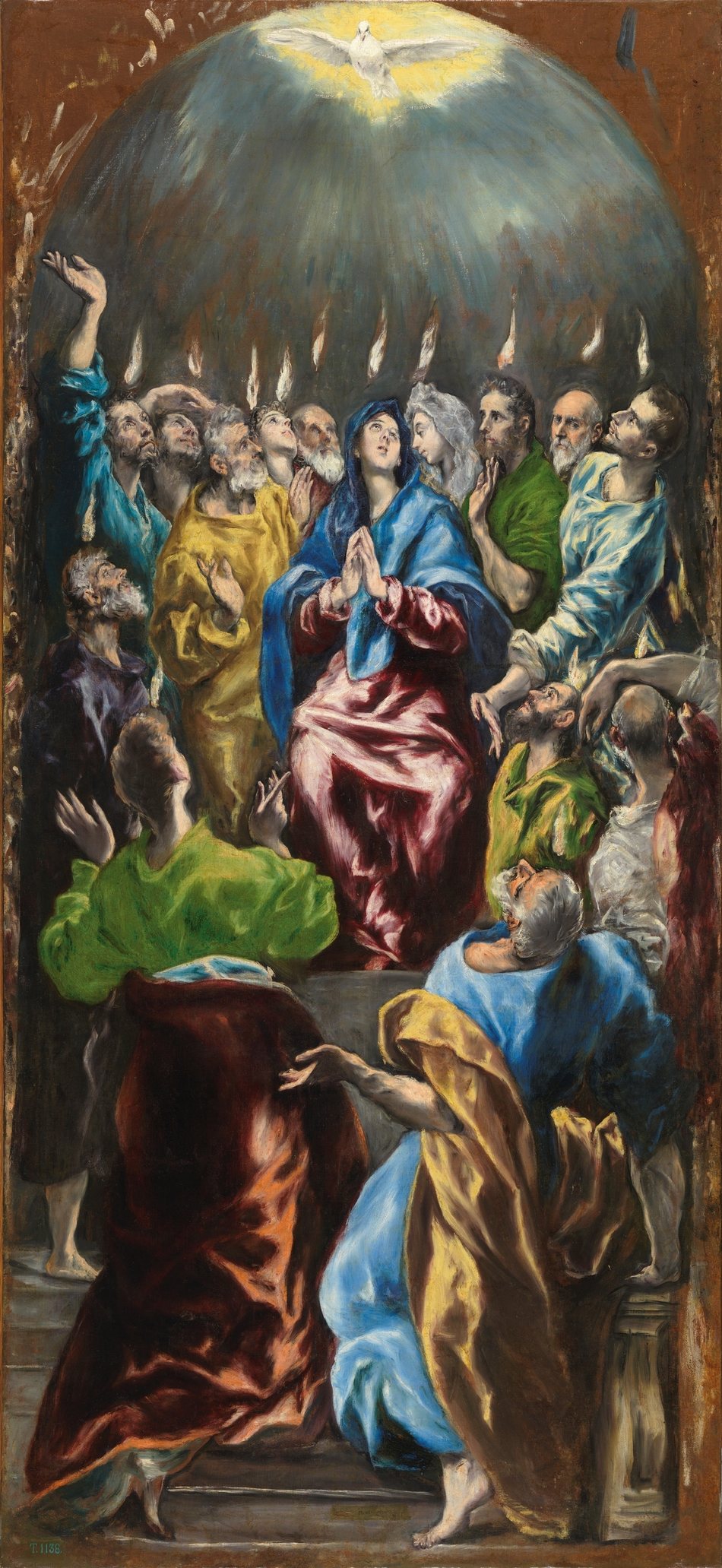
Tongues of fire descend in a dark upper room: the Virgin at the still centre, the apostles whirling around her like leaves in an updraft, hands flying, faces tipped to the light. Painted around 1600, it is the late manner at full blaze — a picture less composed than ignited.
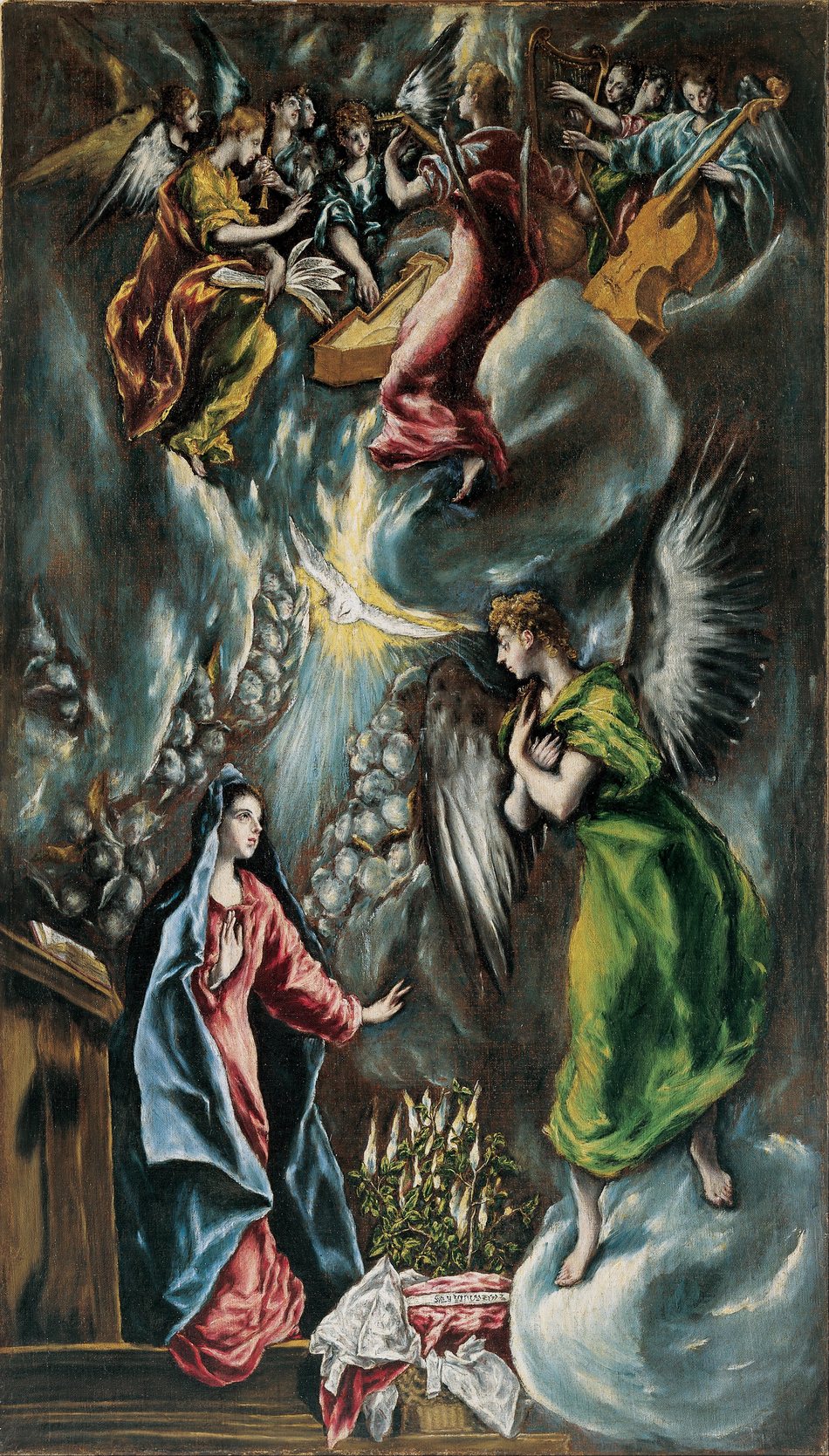
The angel arrives like a gust of wind made visible, and above the two figures heaven opens with its whole orchestra — angels with lutes and viols, music made paint. The Virgin turns from her book, one hand raised, not in fear but in attention. Another panel of the Doña María de Aragón altarpiece, and one of the most joyful pictures he ever painted.
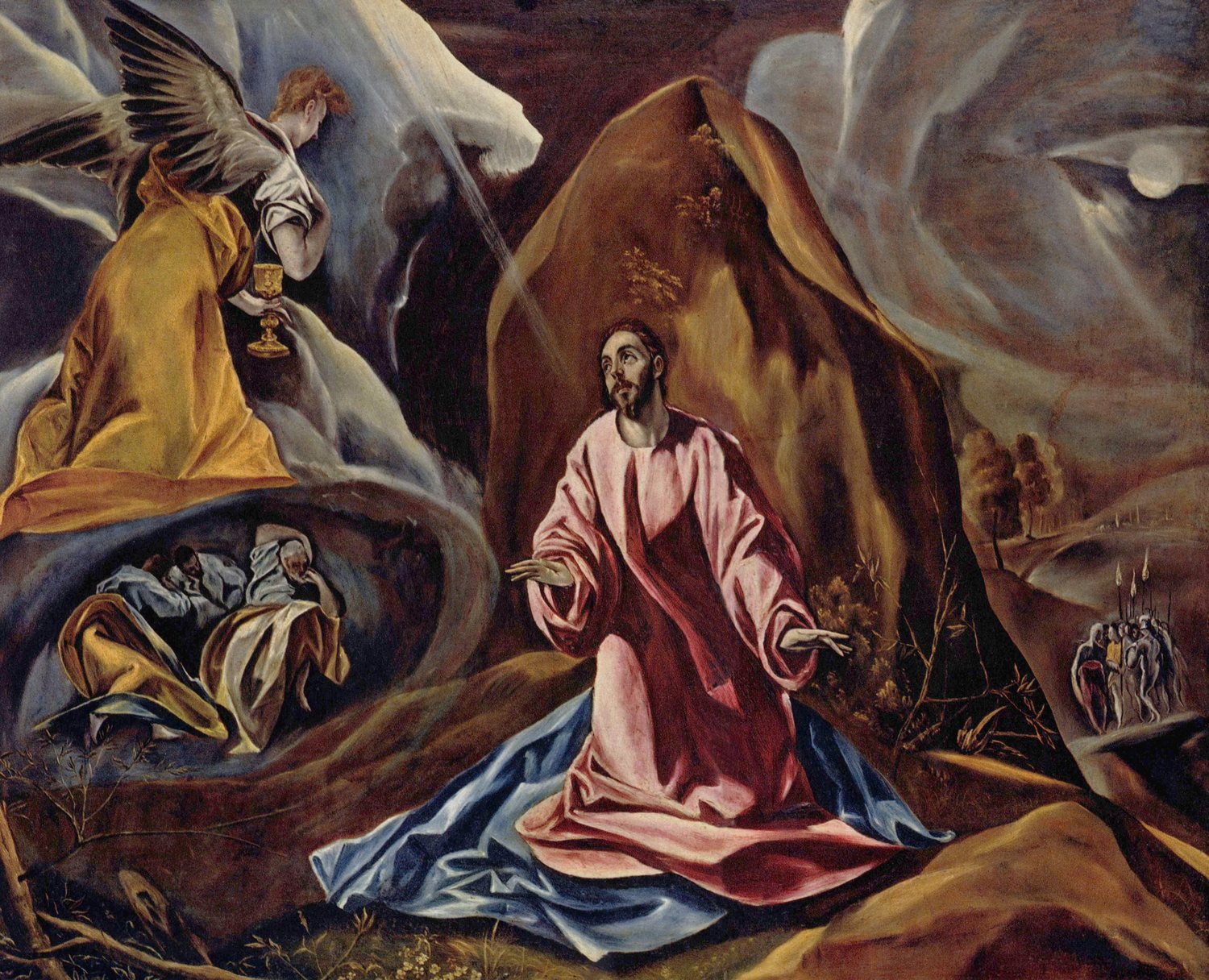
Christ kneels in a robe of rose-red on a rock that rears like a wave, and the angel descends with the chalice of the Passion; below, in a hollow of rock shaped almost like a shell, the three apostles sleep the sleep of those who do not know what is coming. The landscape is the hills of Toledo turned into the scenery of a dream.
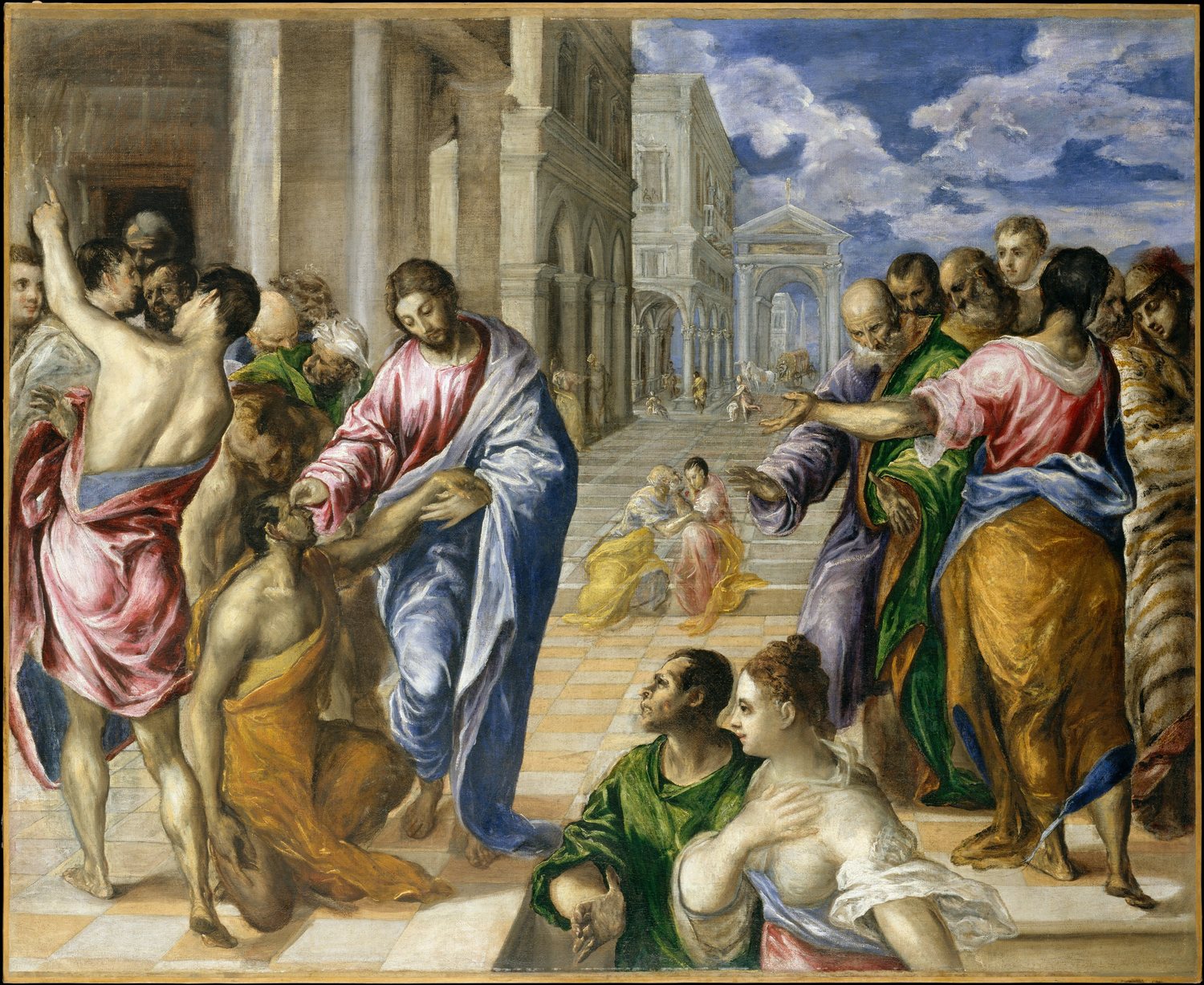
Painted in Italy, before Spain: Christ touches the blind man's eyes on a classical piazza of perfect Renaissance perspective, and the little dog in the foreground and the man with the sack show off everything the young Greek had learned in Venice and Rome. The same miracle happens again, tiny, in the background — an Italian habit he would soon leave behind for the single, burning moment.
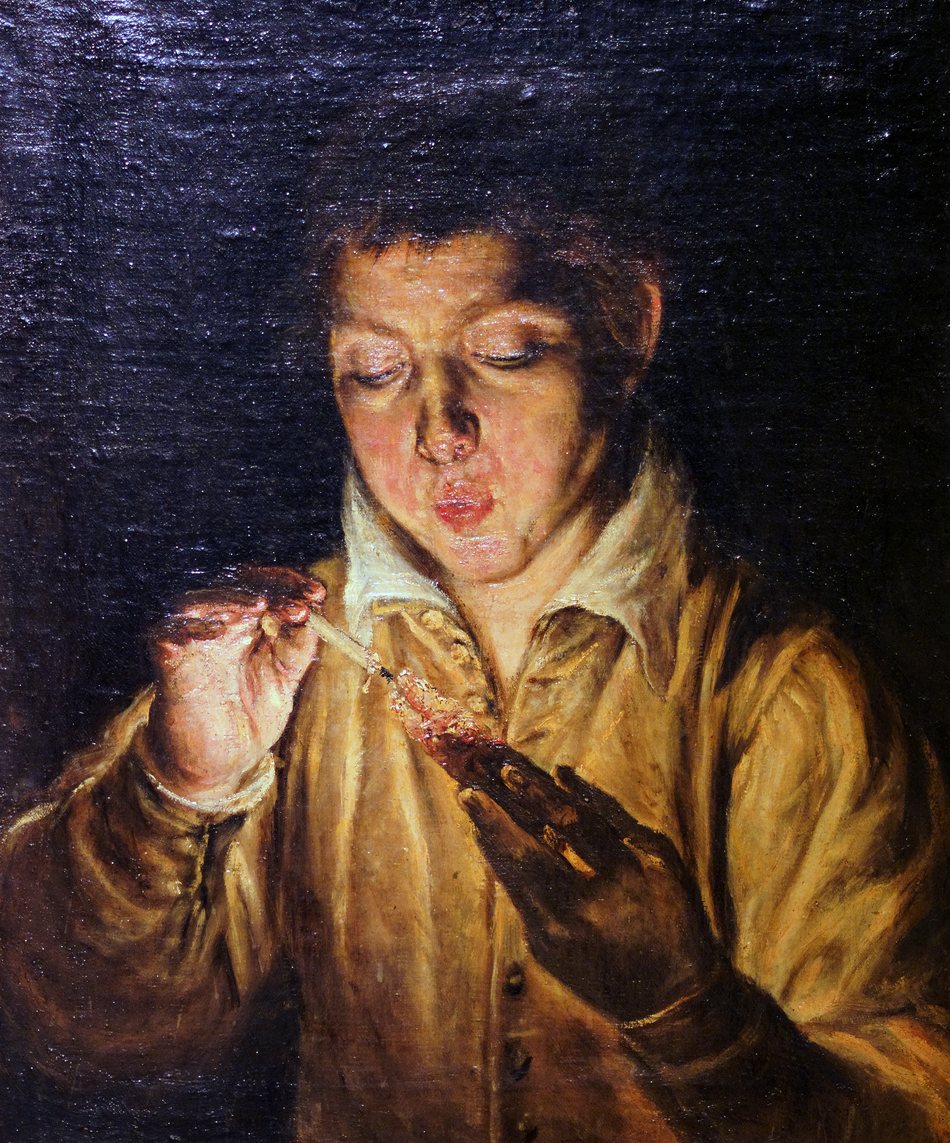
A boy blows on a glowing ember to light a candle, his face lit from below by the small fire he is making — a nocturne in miniature from the Italian years. The subject came from Pliny's account of a celebrated antique painting, and the young El Greco took it as a licence to study what would possess him for life: light that is born inside the picture.
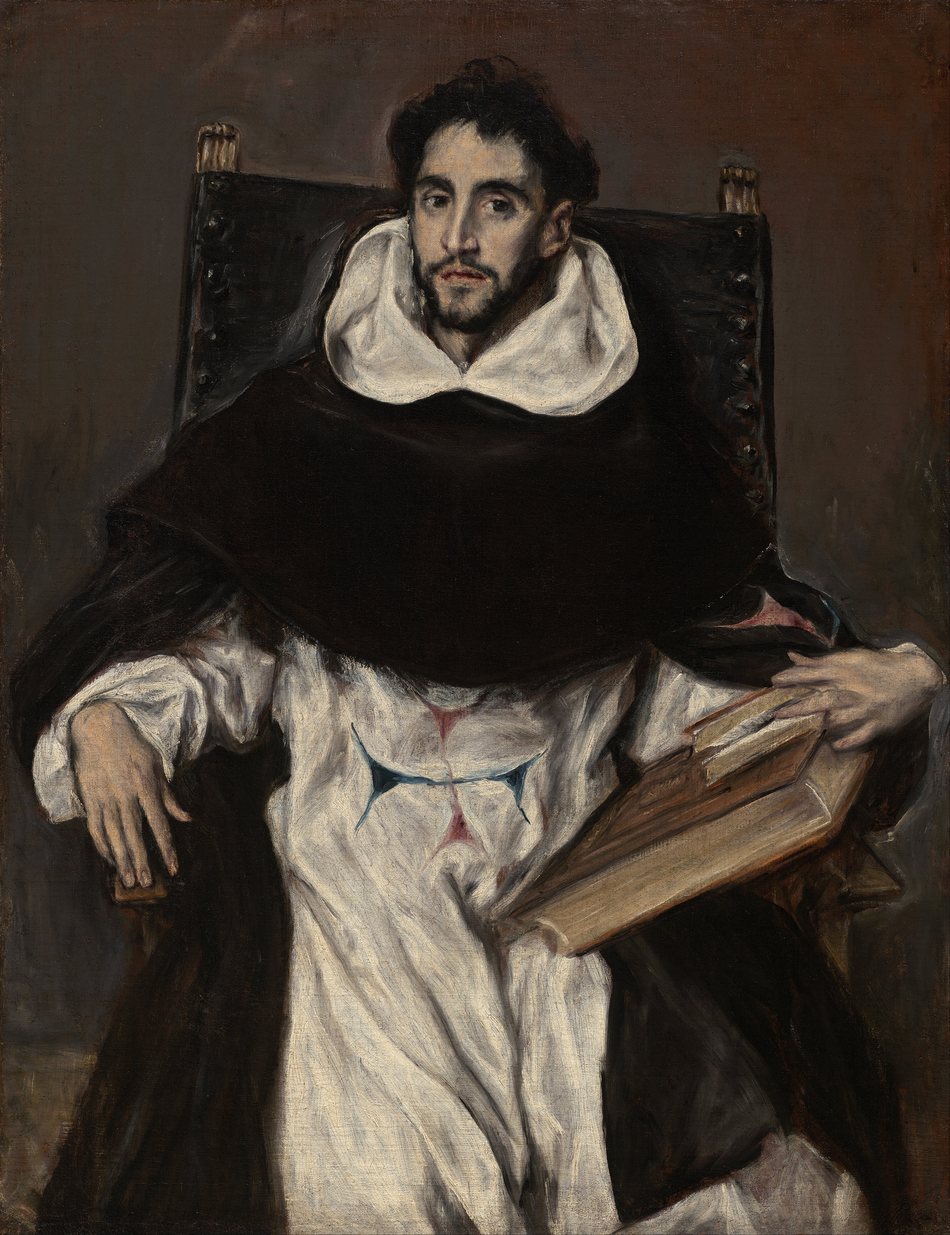
The Trinitarian friar Paravicino — preacher, poet and the painter's friend — sits in his white habit and black cloak, a book in his hand, his young face lit with an intelligence that seems about to speak. He repaid the portrait in verse: his sonnets to El Greco are among the few great poems ever addressed to a painter by the man he painted.
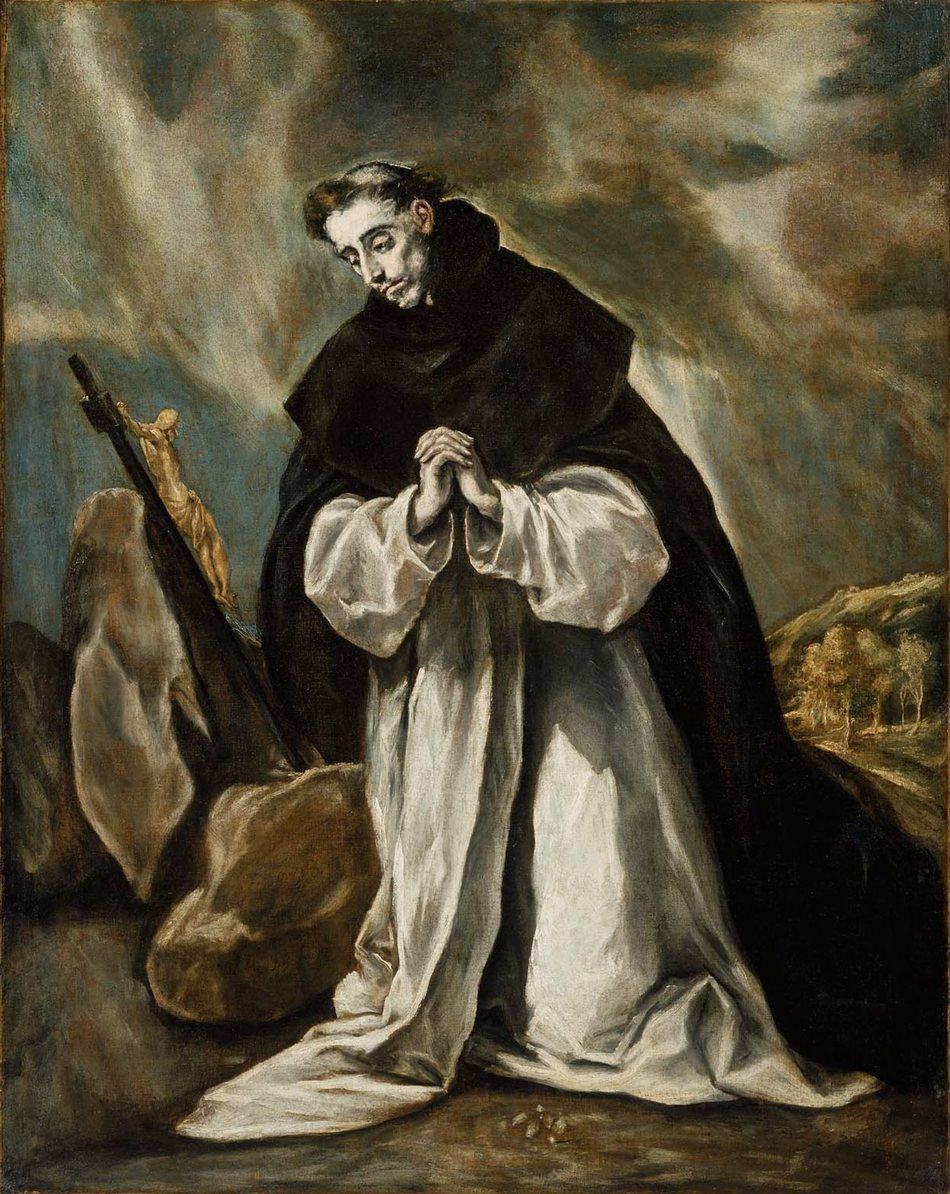
The founder of the Dominicans kneels in a rocky wilderness, hands clasped before a small crucifix, his black-and-white habit turned into a study of what black and white paint can do — the white falling in folds like carved stone, the black swallowing the light. A picture about prayer painted as if prayer were a kind of weather.
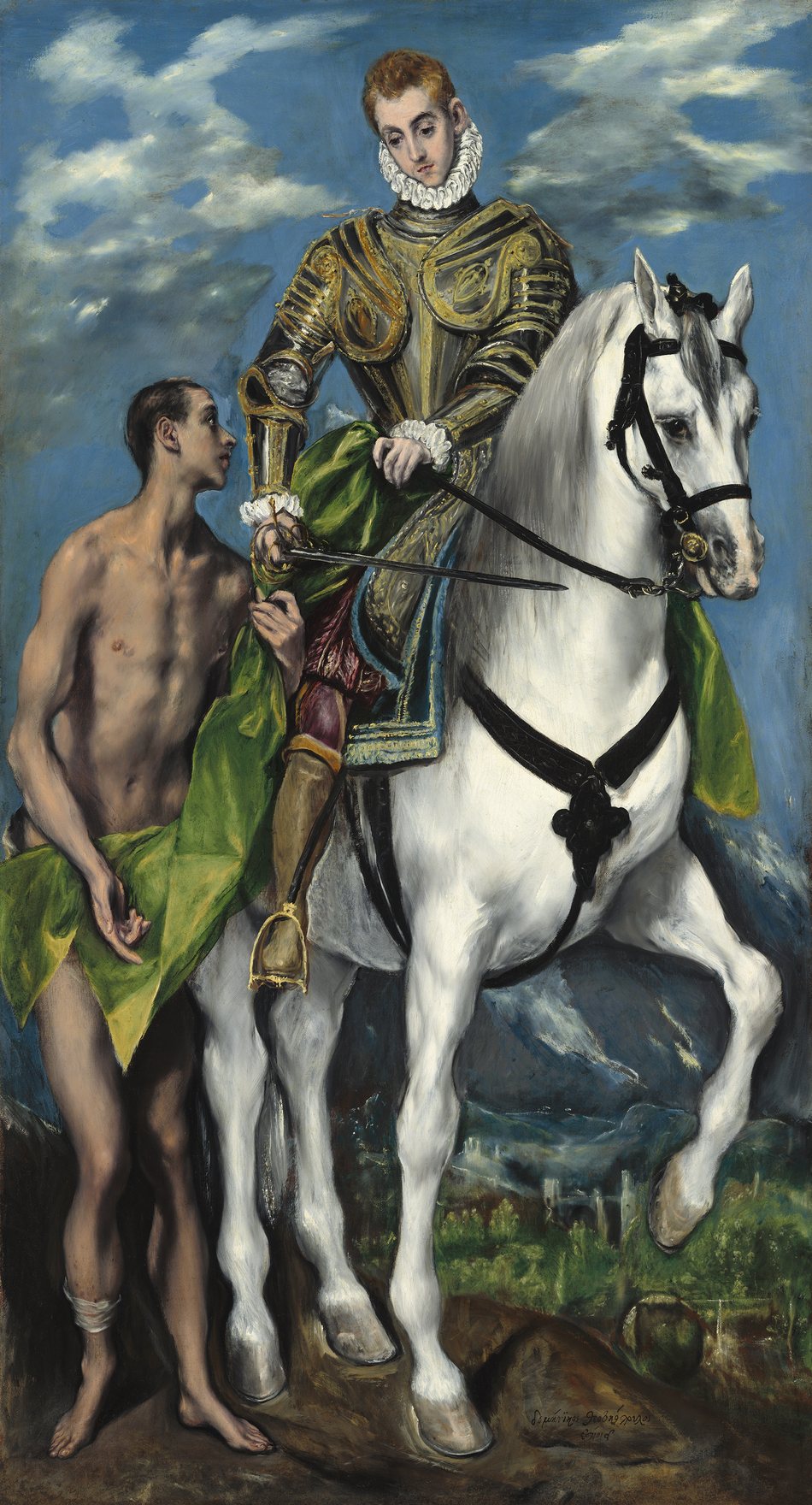
Saint Martin, in gilded armour on a white horse that steps straight out of the picture toward us, cuts his green cloak in two for the naked beggar at his side; behind them the Tagus winds below Toledo. The composition was made for the chapel of San José in Toledo — Washington holds the second autograph version, painted by the master himself.
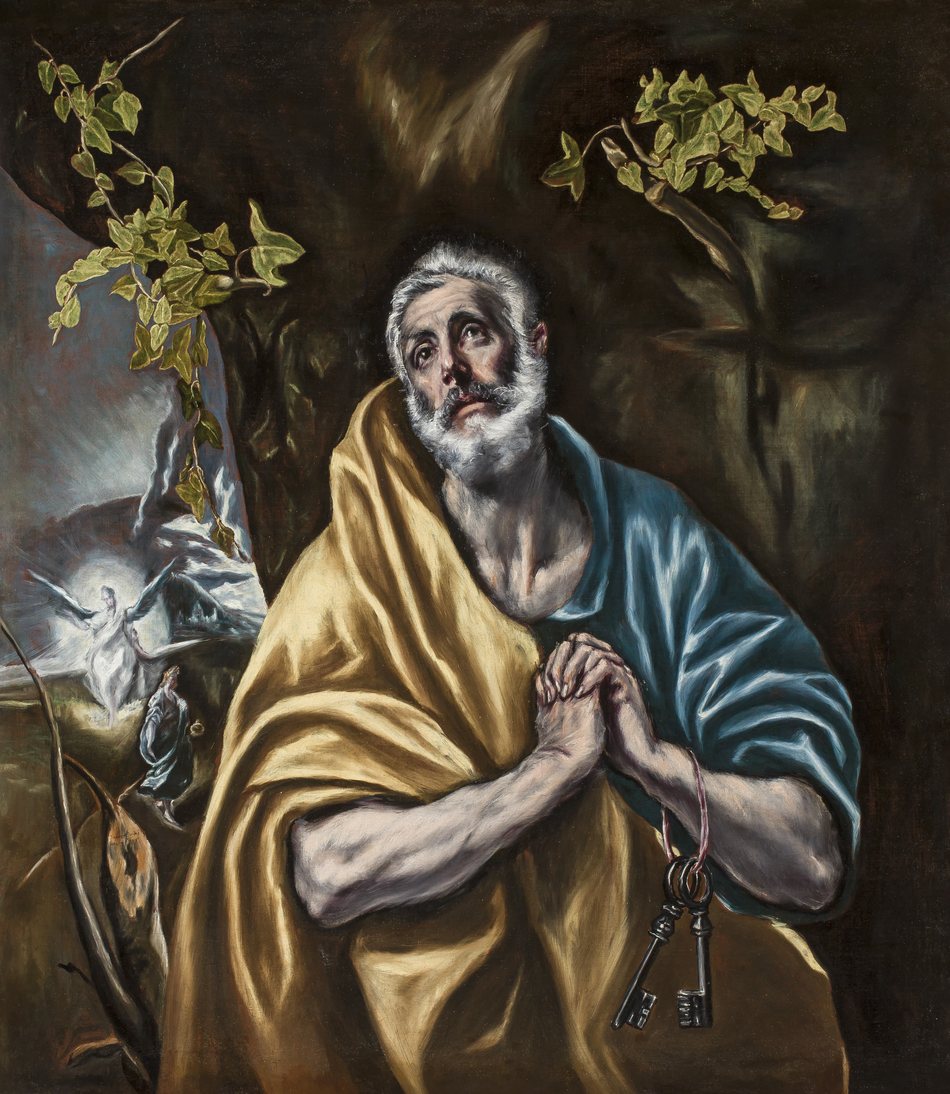
Peter after the denial: an old man in a golden cloak, weeping, his folded hands still holding the keys of the kingdom he has just betrayed. Behind him, small in the dawn light, the angel sits at the empty tomb and the Magdalene hurries away — the whole story folded into one half-length figure and one far-off glimmer of forgiveness.