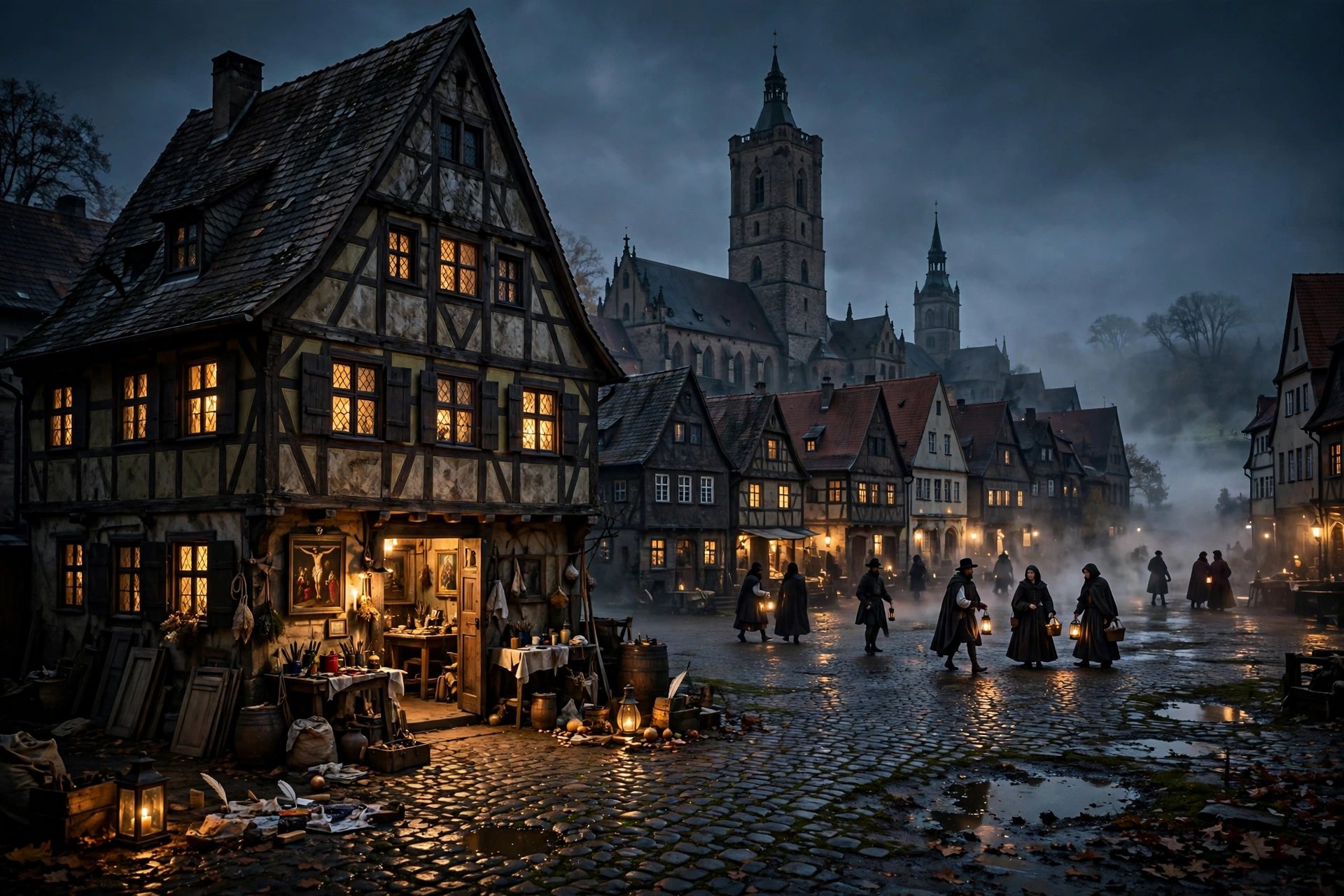
Court painter to the Saxon electors, mayor of Wittenberg, printer, apothecary and Martin Luther's friend: Cranach ran the most productive workshop of the German Renaissance and signed it all with a winged serpent. His slender Venuses, Lucretias and Judiths went out by the dozen — and beneath the elegance, the same hand fixed the face of the Reformation.
In 1508 the Elector gave Cranach a coat of arms — a winged serpent with a ruby ring in its mouth — and the painter turned it into his signature, stamped on panel after panel. After about 1537 the serpent's wing changes from a bat's to a bird's: connoisseurs date workshop pictures by that wing, and read in it the hand of the father or of his son, Lucas the Younger.
Cranach's Wittenberg house was an industry: dozens of assistants, panels prepared in standard sizes, compositions repeated from patterns, and the master's hand reserved for faces and finishing. Over a thousand paintings survive from the firm. It was not fraud but business — the court wanted Cranachs, and the workshop made sure Saxony was full of them.
His contemporaries marvelled at how fast he painted, and the speed is in the pictures: thin paint, forms drawn with a few loaded strokes, flesh modelled in a handful of tones. Where Dürer built a face from a thousand lines, Cranach catches it in twenty — the elegance of his nudes is the elegance of shorthand.
Cranach was Luther's friend, witness at his wedding, godfather to his children — and his image-maker. The portraits of Luther, his wife Katharina von Bora and the reformers were printed, copied and distributed as the visual identity of a movement; Cranach also printed Luther's September Testament and supplied its woodcuts. No painter has ever been so close to a revolution's centre.
Lucretia, Judith, Venus, the ill-matched lovers, the Saxon princesses — the workshop kept its best inventions in stock and varied them: a pose turned, a costume changed, a landscape exchanged for a dark ground. Collectors today own dozens of near-identical Lucretias. In Cranach's century that was not a weakness of the art; it was the art's distribution.
He served three electors, sat on Wittenberg's council, was mayor three times, owned houses, a printing shop and an apothecary's licence — and at seventy-five followed his captured elector into exile in Augsburg and Weimar, still painting. The Self-Portrait of 1550, inscribed with his age of seventy-seven, is the firm's last advertisement: the old man, white-bearded, looking out as if still taking commissions.
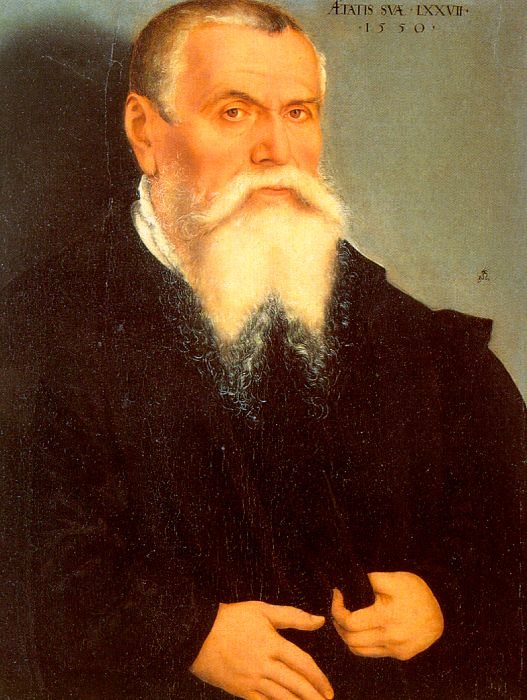
The inscription at the upper right does the arithmetic for you: aetatis suae LXXVII, 1550 — in his seventy-seventh year. The white beard, the black coat, the gaze still steady: Cranach painted his own age without softening a line of it, three years before his death in Weimar.
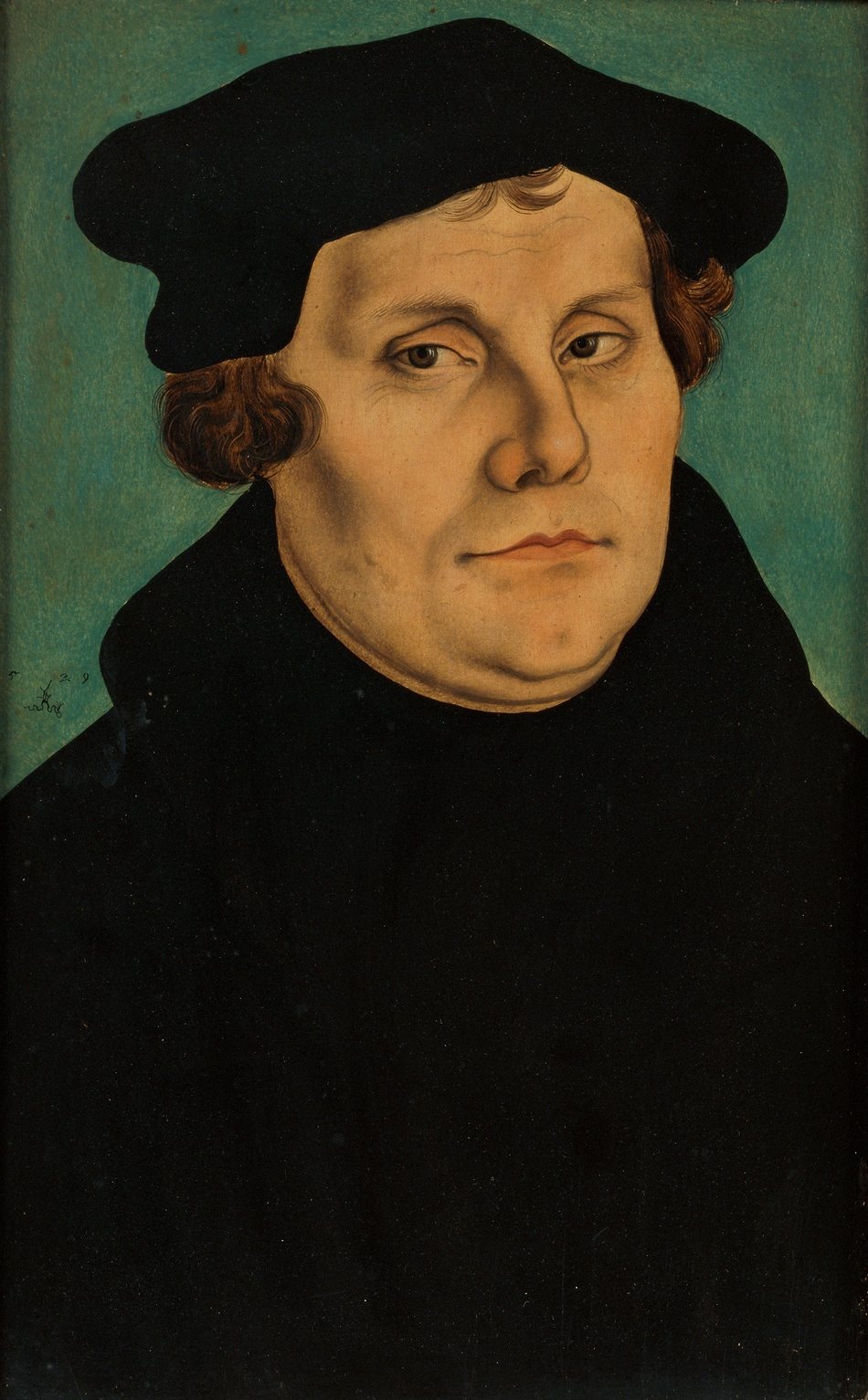
Half of a wedding diptych — Katharina von Bora hangs on the other panel. This is the Luther the world still pictures: the black beret, the heavy jaw, the level stare, painted by the man who had stood witness at the marriage four years before and would print the reformer's books in his own shop.
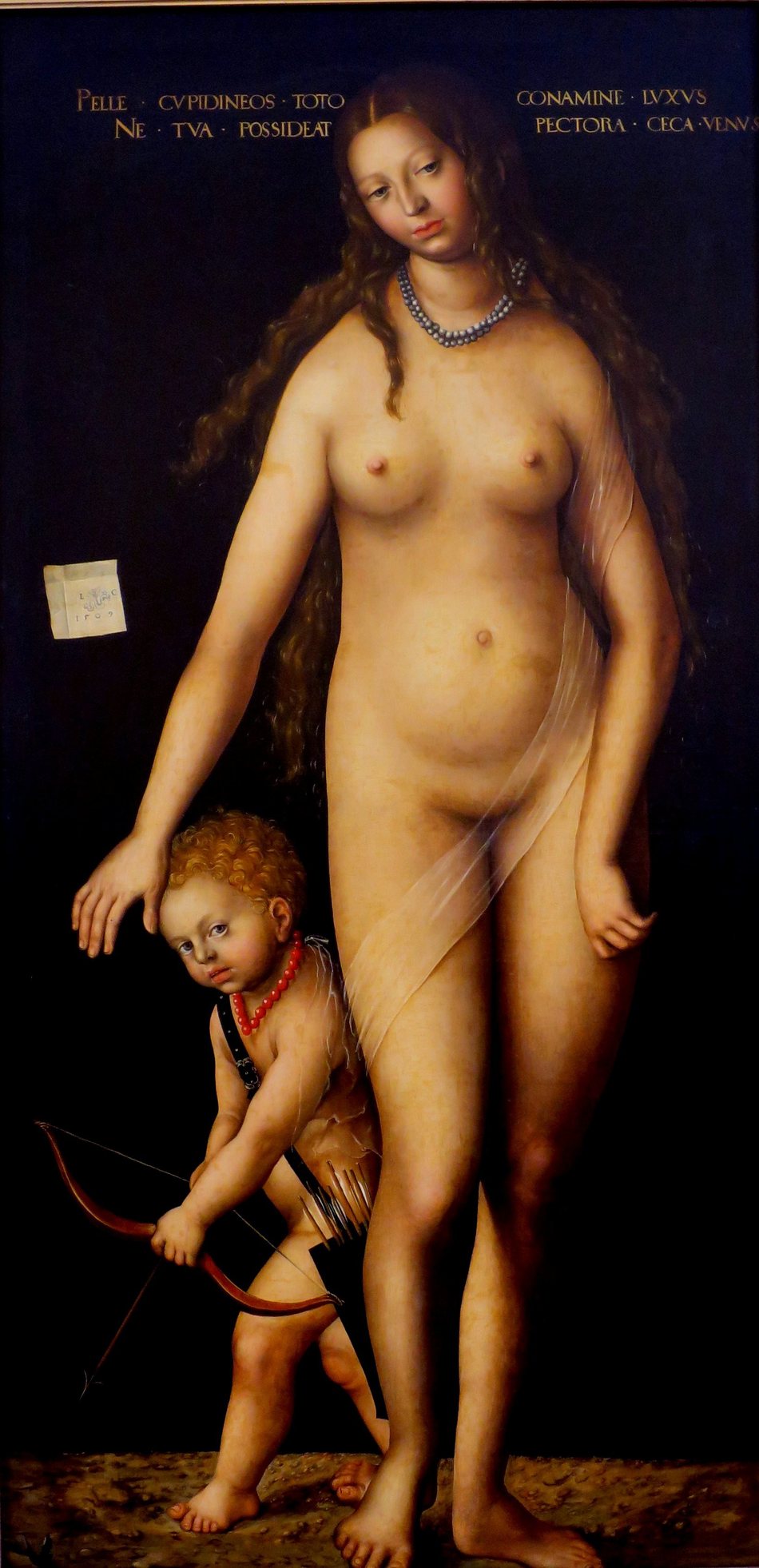
The first nude Venus painted north of the Alps since antiquity, and she arrived with a Latin inscription warning that Cupid's honey leads to pain. Cranach's Venus is no Italian goddess — tall, narrow, small-headed, she is a Saxon court lady undressed by mythology, and she founded a type his workshop sold for forty years.
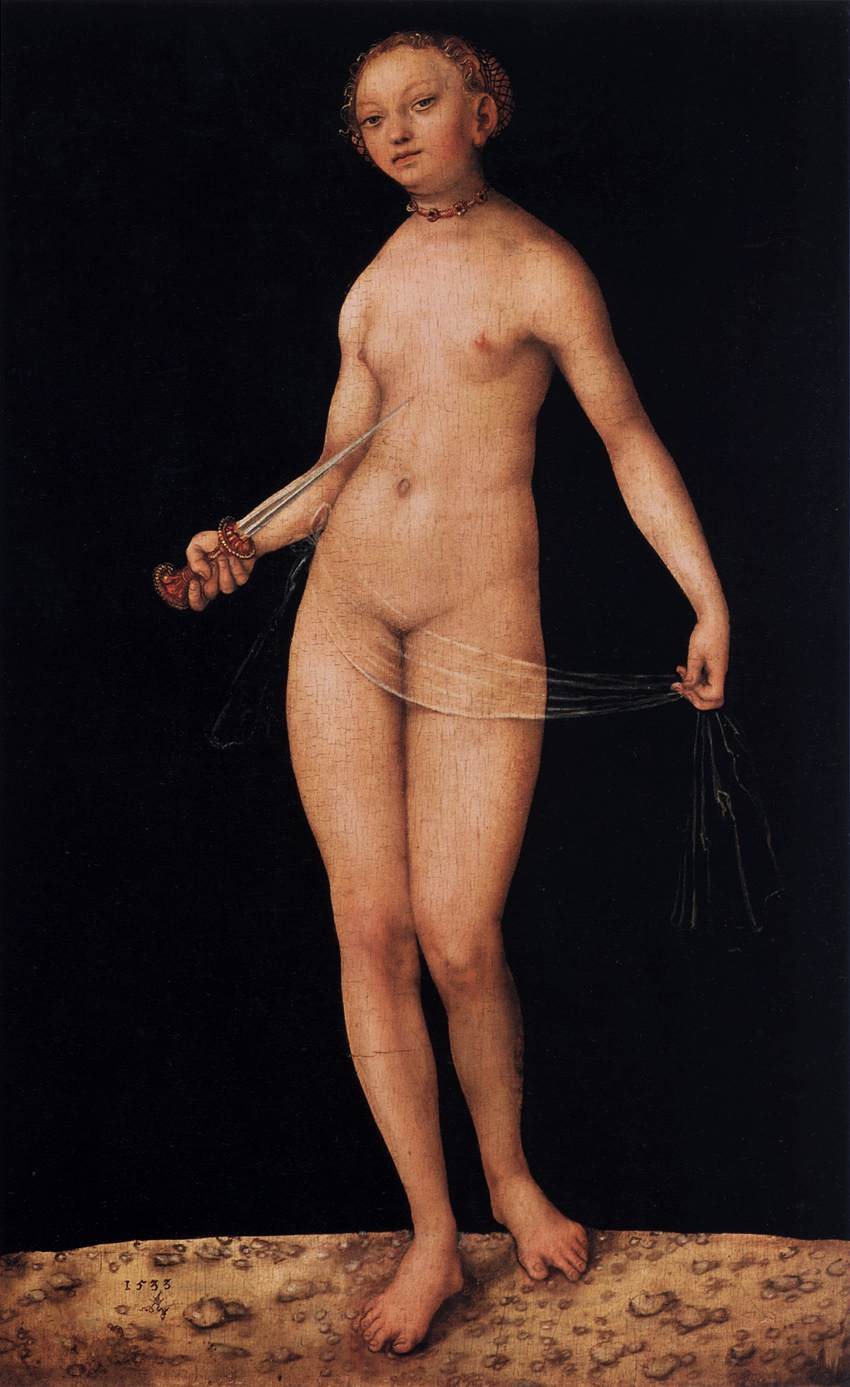
The Roman matron with the dagger at her breast, painted so often by the workshop that Lucretia became a Cranach product line — tall, jewelled, veiled in a transparent shift, her suicide presented as an ornament for a humanist's study. The type is identical and the pictures are all different: that was the workshop's art in one figure.
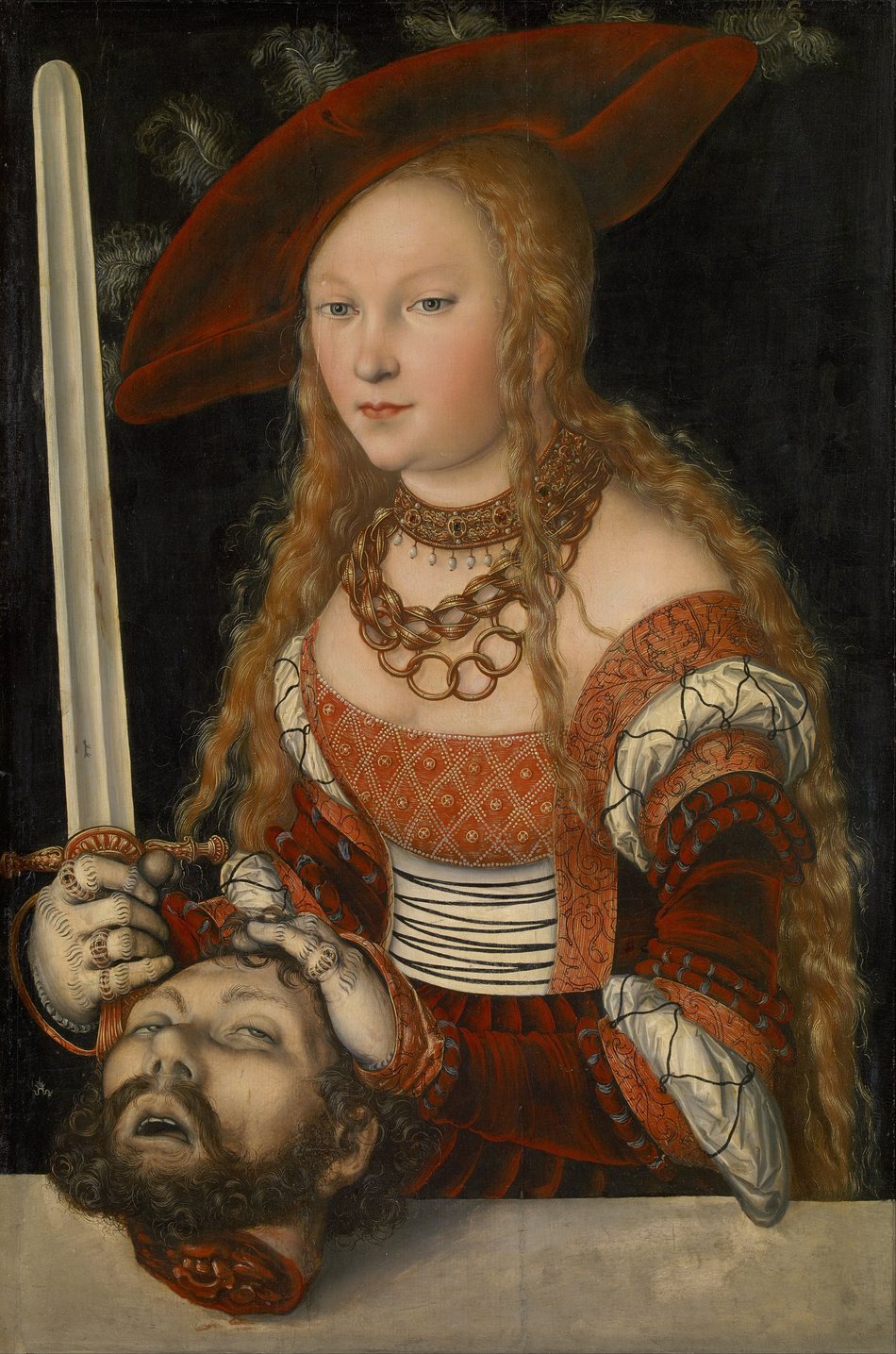
Judith in Saxon court dress — slashed sleeves, gold chains, a great red hat — holding Holofernes' head by the hair with the mild expression of a lady at a dance. The violence is all in the props. Cranach's heroines never strain; that coolness, half fashion plate and half threat, is exactly what his patrons collected.
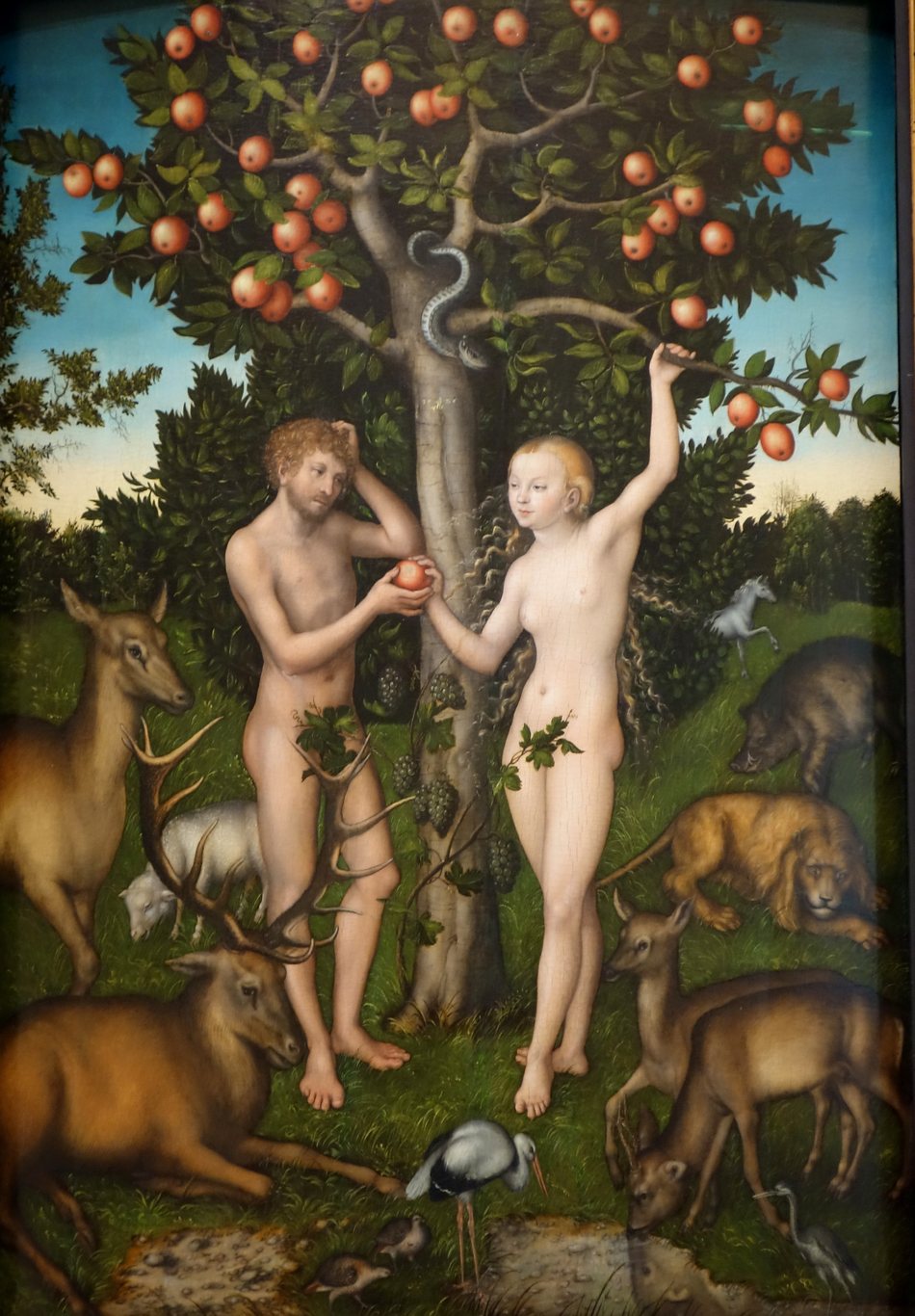
Eden as a Saxon forest clearing: the apple tree at the centre, deer, a lion, a stork and a boar standing peaceably around the first couple, who are sampling the fruit with courtly calm. Cranach painted the subject more than fifty times; this is the fullest version of his Paradise — a hunting park on the last morning before the Fall.
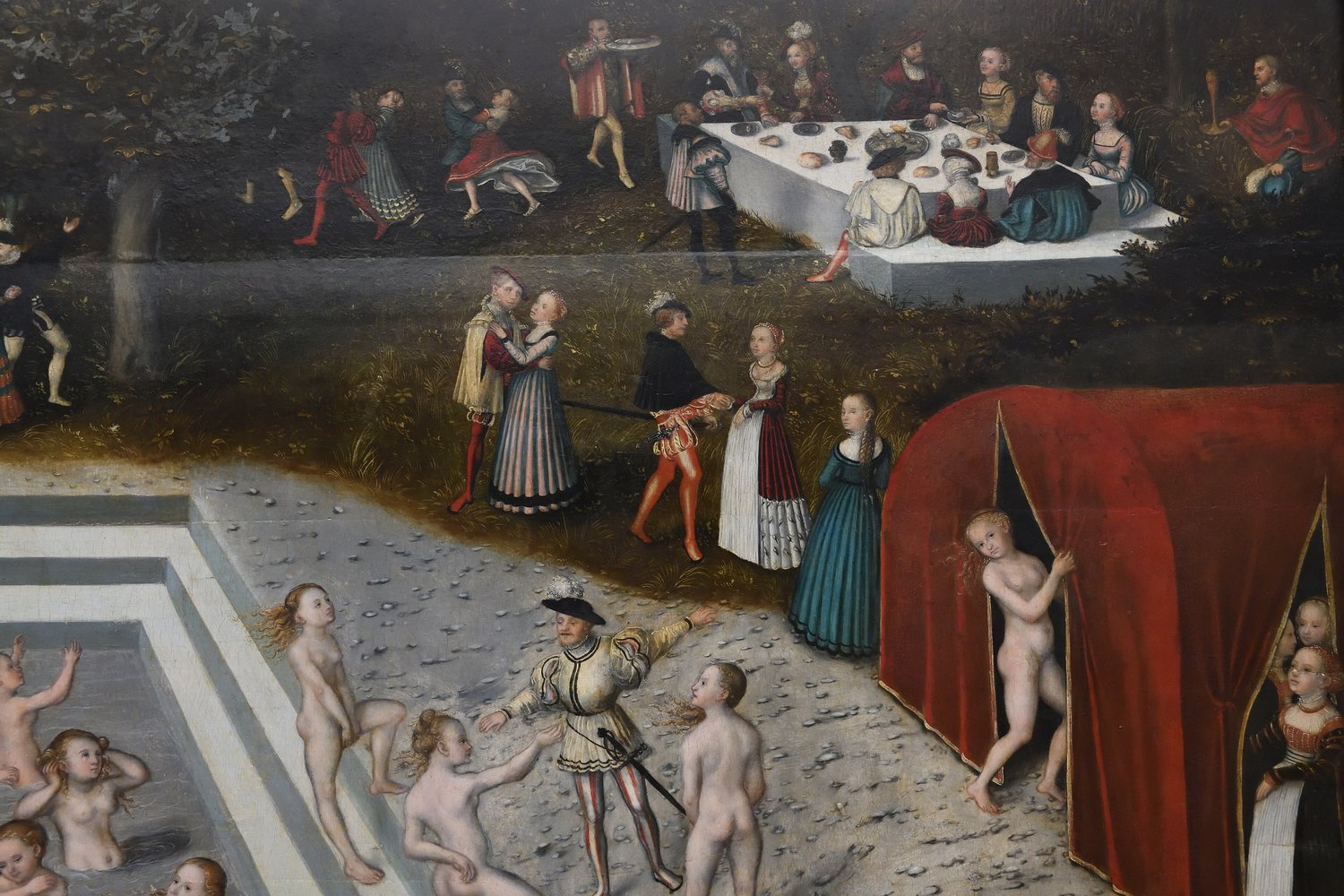
Old women are carried in at the left, helped into the water, and climb out at the right young — into a world of tents, music and feasting. Painted when Cranach was seventy-four, it is a joke told by an old man who ran the busiest workshop in Germany: the fountain works, the picture says, but only in paint.
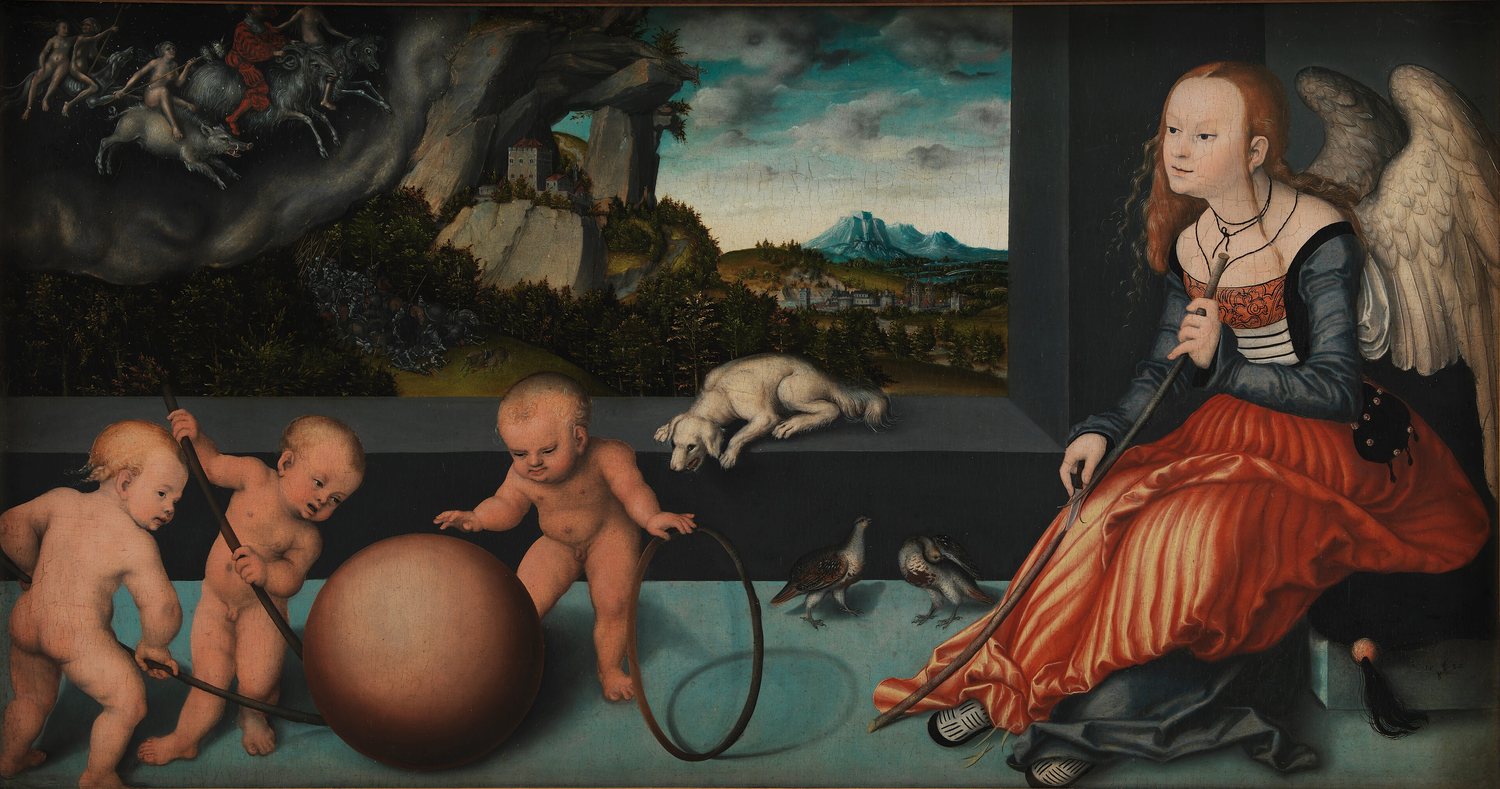
Cranach's answer to Dürer's famous engraving, and how different: his winged Melancholy sits in a landscape whittling a stick while putti wrestle with a sphere and a dog sleeps — a witch-like figure at the edge of a stormy world, with a procession of riders winding through the hills behind. Where Dürer brooded, Cranach narrates.
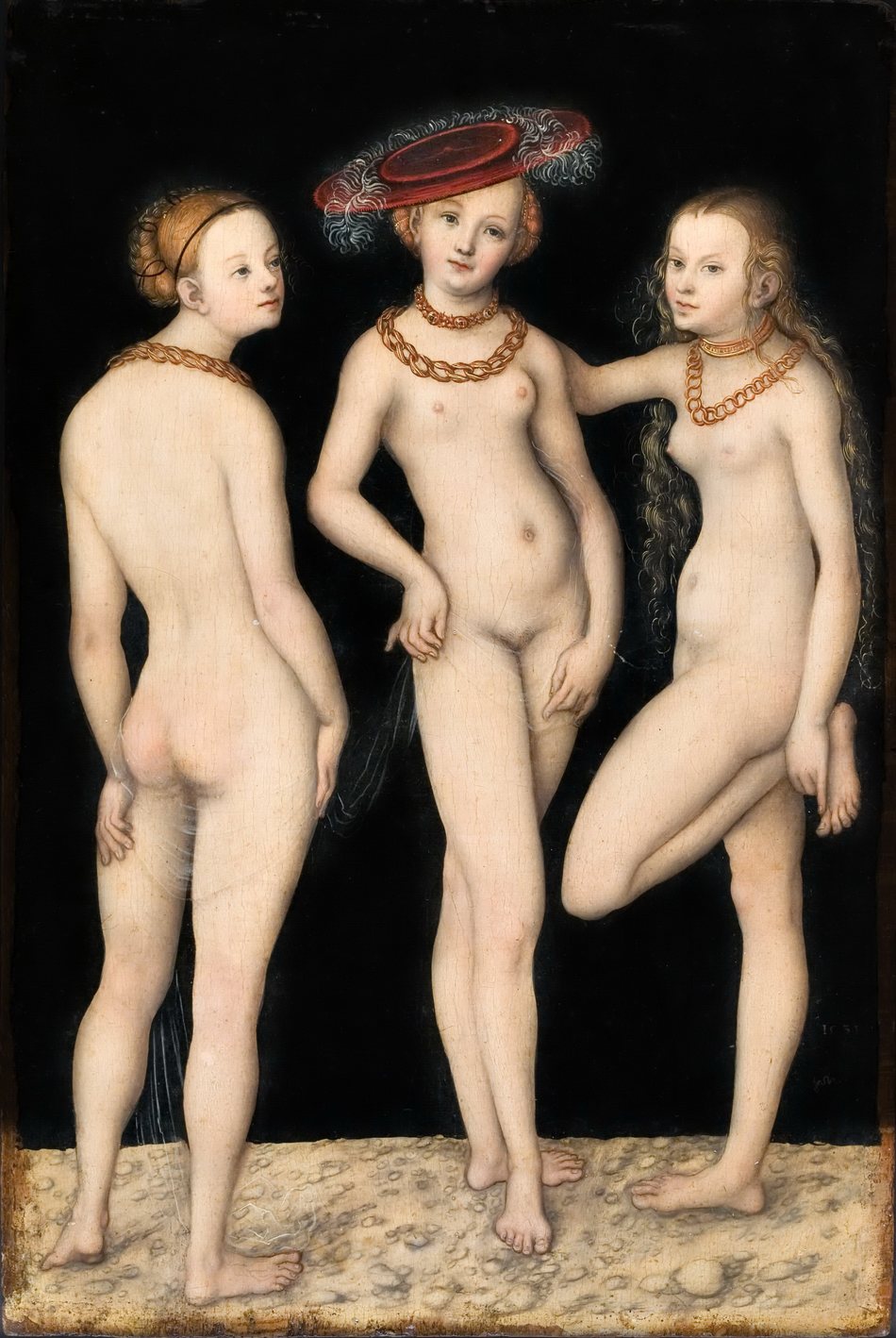
A cabinet picture barely thirty-seven centimetres high, painted for a connoisseur's private room: the three sisters in their linked pose, wearing nothing but gold chains and one magnificent red hat. The Louvre bought it in 2009 after a public appeal — France's most wanted Cranach, small enough to hold in two hands.
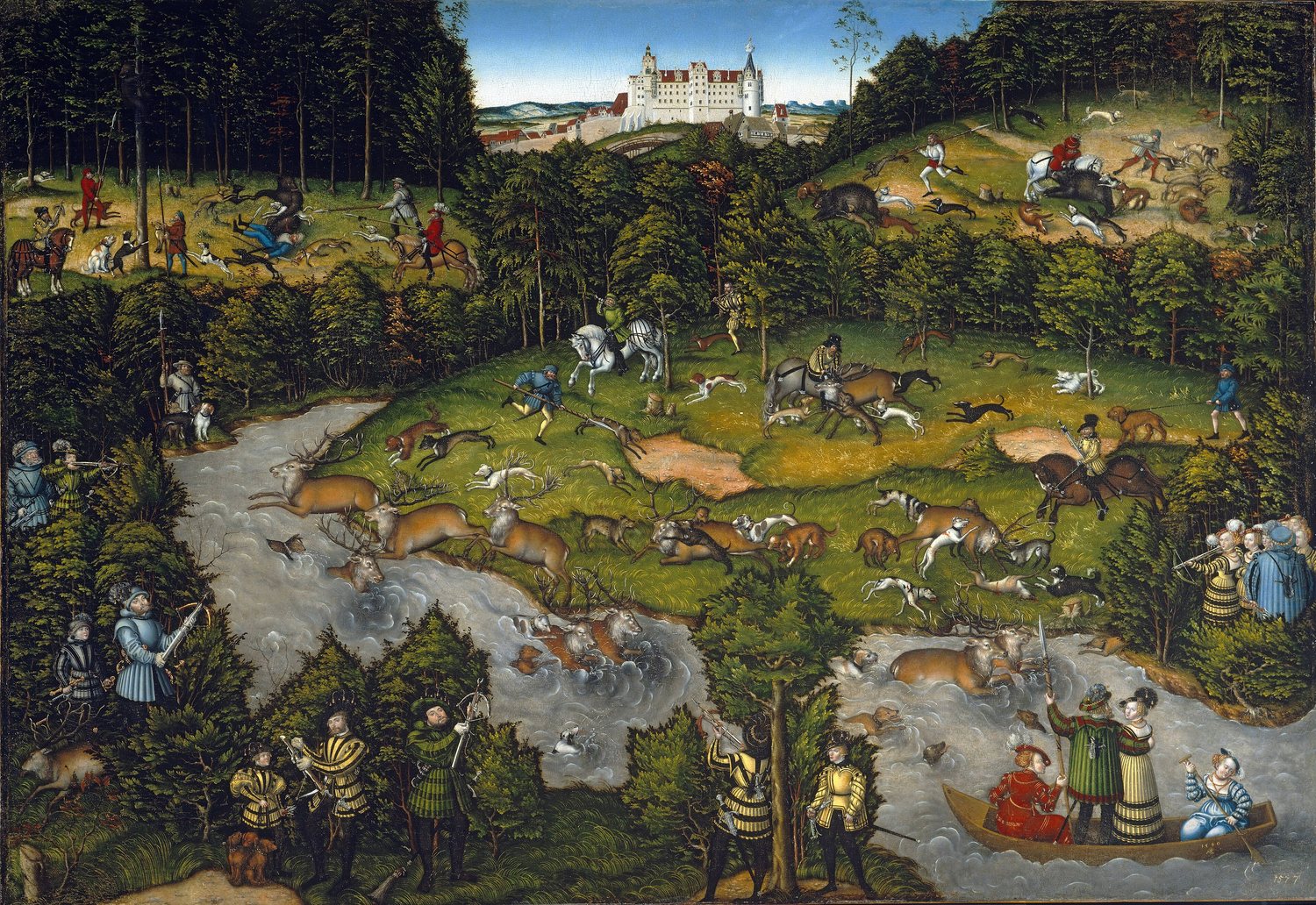
The electoral hunt laid out like a map: beaters driving deer and boar down to the river, the Elector's party waiting with crossbows, Hartenfels Castle on its hill above it all. Cranach painted these hunts as state documents — the prince's sport, his land and his power surveyed in a single view, down to the last dog.