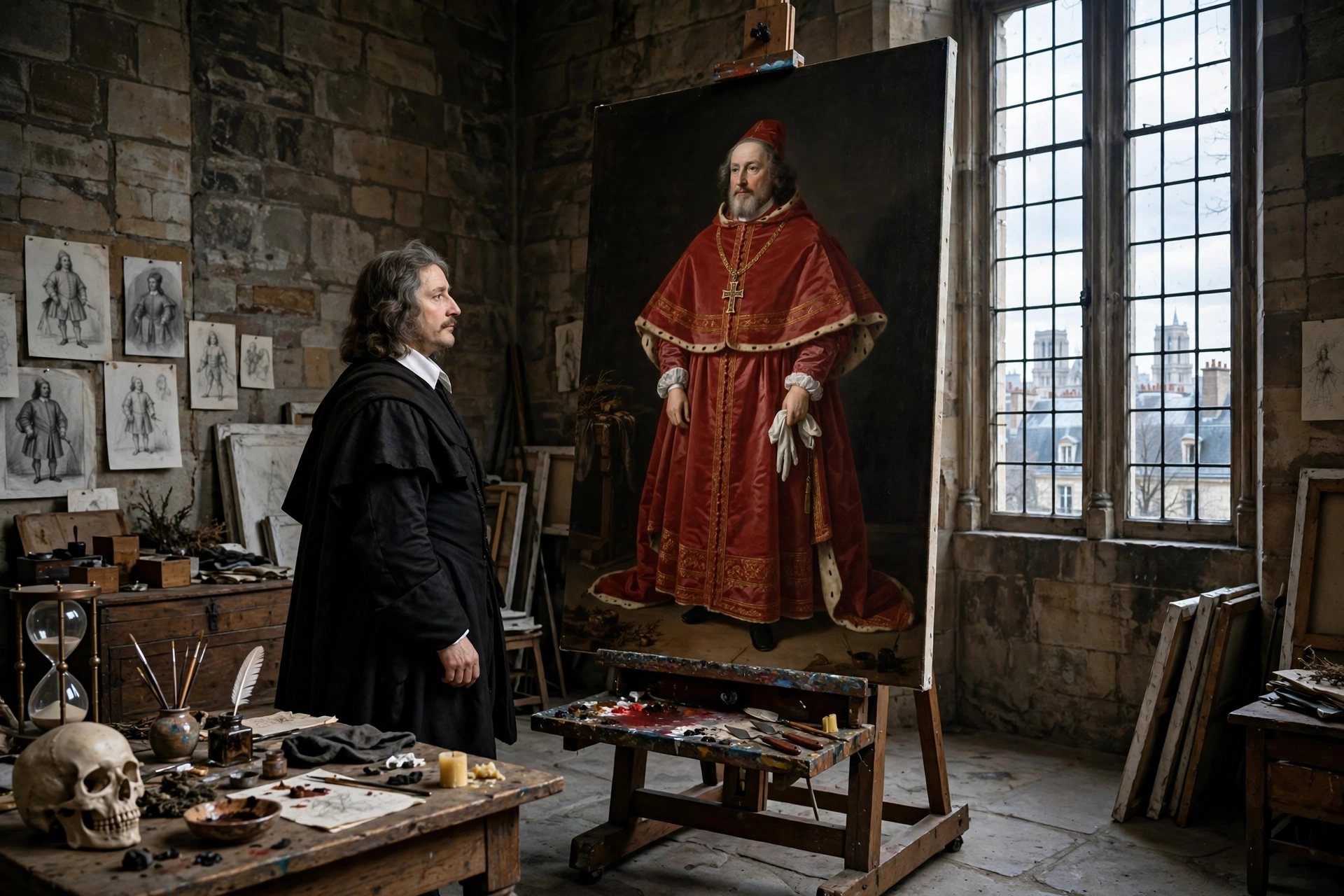
A Brussels boy who became the painter of French power — and then of French conscience. Philippe de Champaigne portrayed Richelieu eleven times and defined how authority looks; then, drawn to the austere faith of Port-Royal, he turned the same unflinching clarity on nuns, saints and a single skull with a tulip. His is the most honest brush of the Grand Siècle.
Richelieu sat to him again and again — eleven portraits — because Champaigne gave the Cardinal what no other painter could: presence without theatre. The full-length state portraits build authority from cloth, posture and a level gaze, the famous red rendered in a dozen tones. Every official portrait since negotiates with these pictures.
The Triple Portrait of Richelieu was a tool, not a vanity: front and both profiles on one canvas, sent to Rome so that Bernini could carve the Cardinal's bust without the sitter travelling. It is a painting that behaves like a technical drawing — and still breathes. Few works show so plainly how art served the machinery of state.
His wife's death and his daughter's life at Port-Royal drew him to the Jansenists — austere, inward Catholics whom the king would persecute. His painting changed with his soul: cooler light, plainer faces, no ornament that does not mean. The portraits of the nuns and theologians of Port-Royal are French painting's conscience, kept in grey and white.
When his daughter Catherine, paralysed at Port-Royal, rose and walked after a novena, Champaigne painted the miracle as a document: the two nuns in their cell, the moment of prayer, and a long Latin inscription across the wall recording exactly what happened, like a notary's act. Faith presented as evidence — the most Jansenist picture ever painted.
He was trained in Brussels in the Flemish craft — oil paint handled with a jeweller's patience, textures you can feel: ermine, damask, parchment, skin. Paris gave him scale and rhetoric. The union is his signature: Flemish truth of surface in the service of French grandeur of design, and neither cancelling the other.
Late in life he painted the whole of human time in three things on a stone ledge: a tulip (life, brief and gaudy), a skull (death), an hourglass (time). Nothing else — no landscape, no figure, no story. After forty years of cardinals and Christs, it is his smallest canvas and his largest statement: the painter of power ends by painting its opposite.
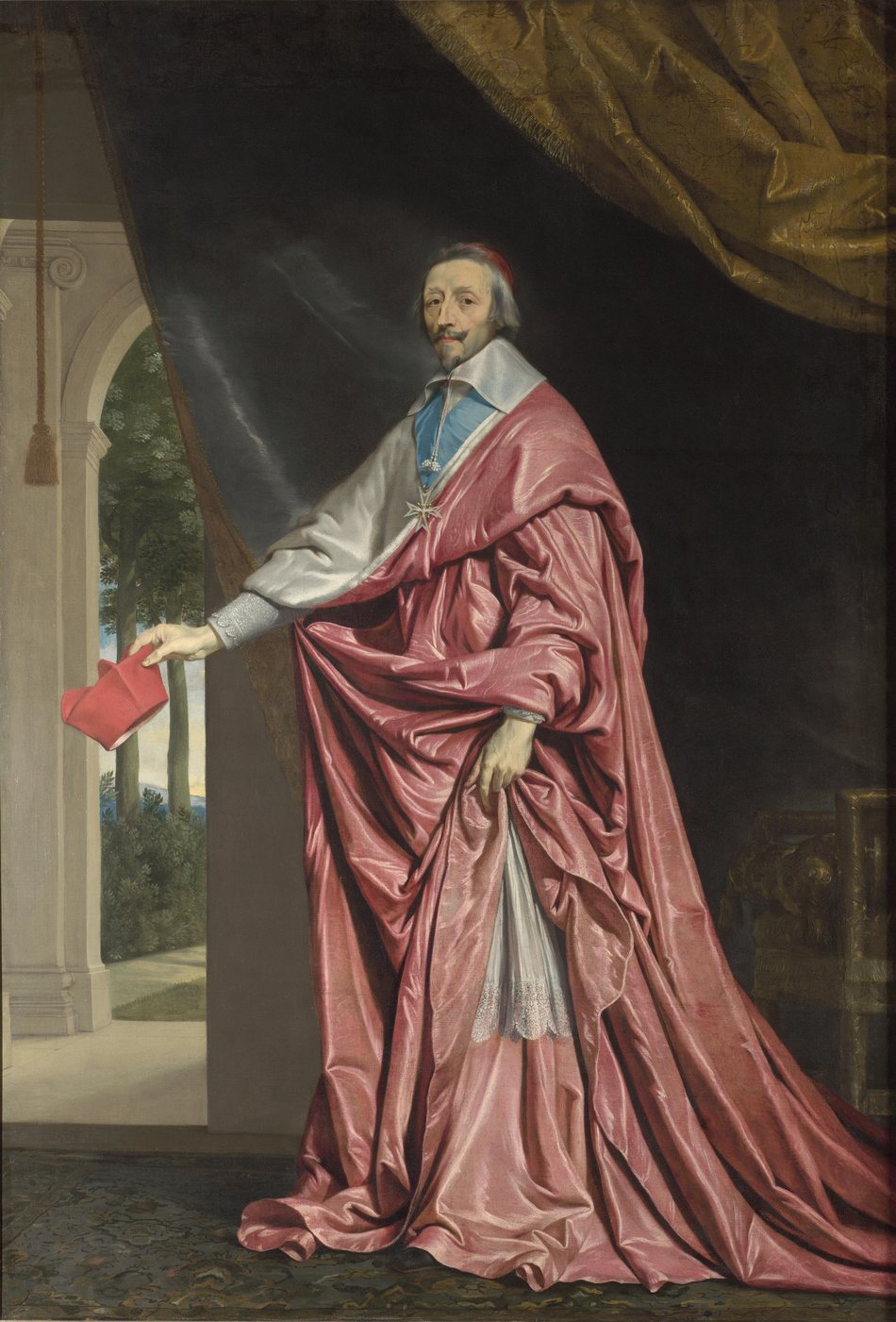
The most famous image of the most powerful man in Europe: the Cardinal in his rose-red robes of state, holding a despatch, one hand at his waist, regarding us with cool appraisal. Champaigne painted him eleven times; this full-length became the template of the state portrait — authority as stillness, silk and certainty.
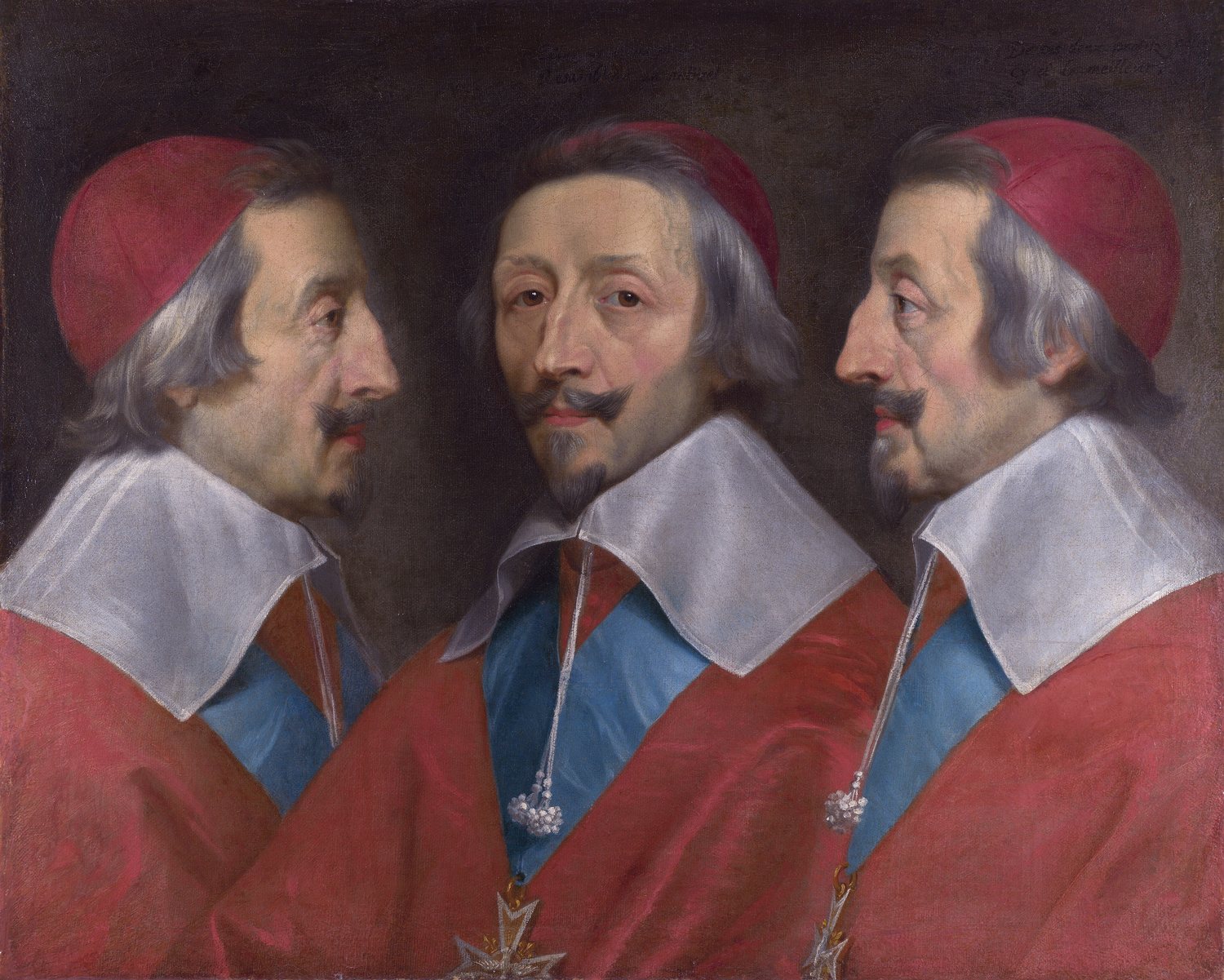
Front, left profile, right profile — one head three times on a single canvas, painted so that Bernini in Rome could sculpt the Cardinal's bust true to life. The inscriptions on the back record the commission like a shipping note. It is the coldest of the Richelieu portraits and, in its way, the most intimate: power measured from every side.
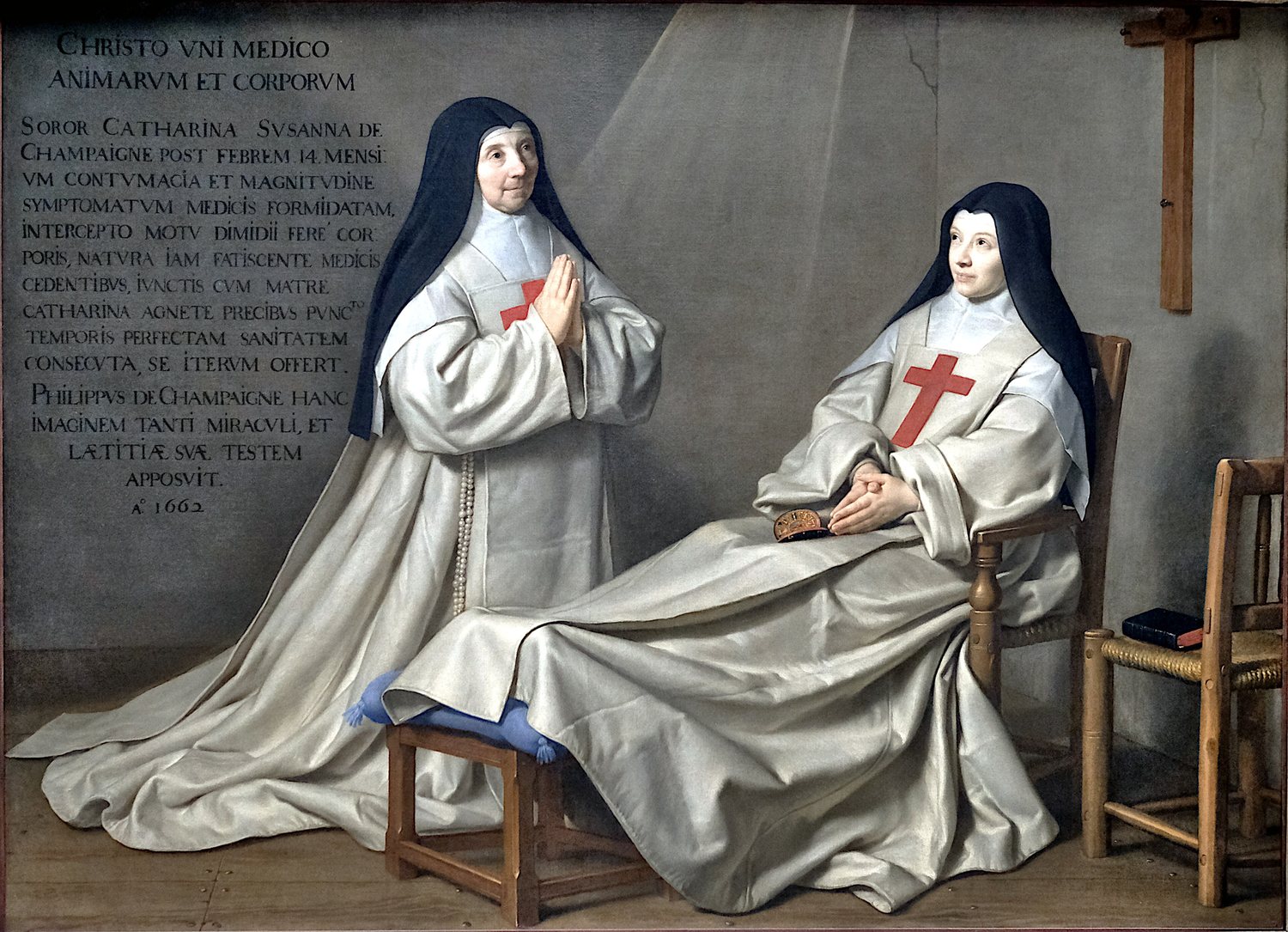
His daughter Catherine, a nun at Port-Royal, lies cured of her paralysis, praying with Mother Agnès Arnauld in a bare cell, while the wall behind them fills with the Latin record of the miracle. Champaigne signed it as a thanksgiving — a painting that is also a legal document of grace, in the plainest light he ever used.
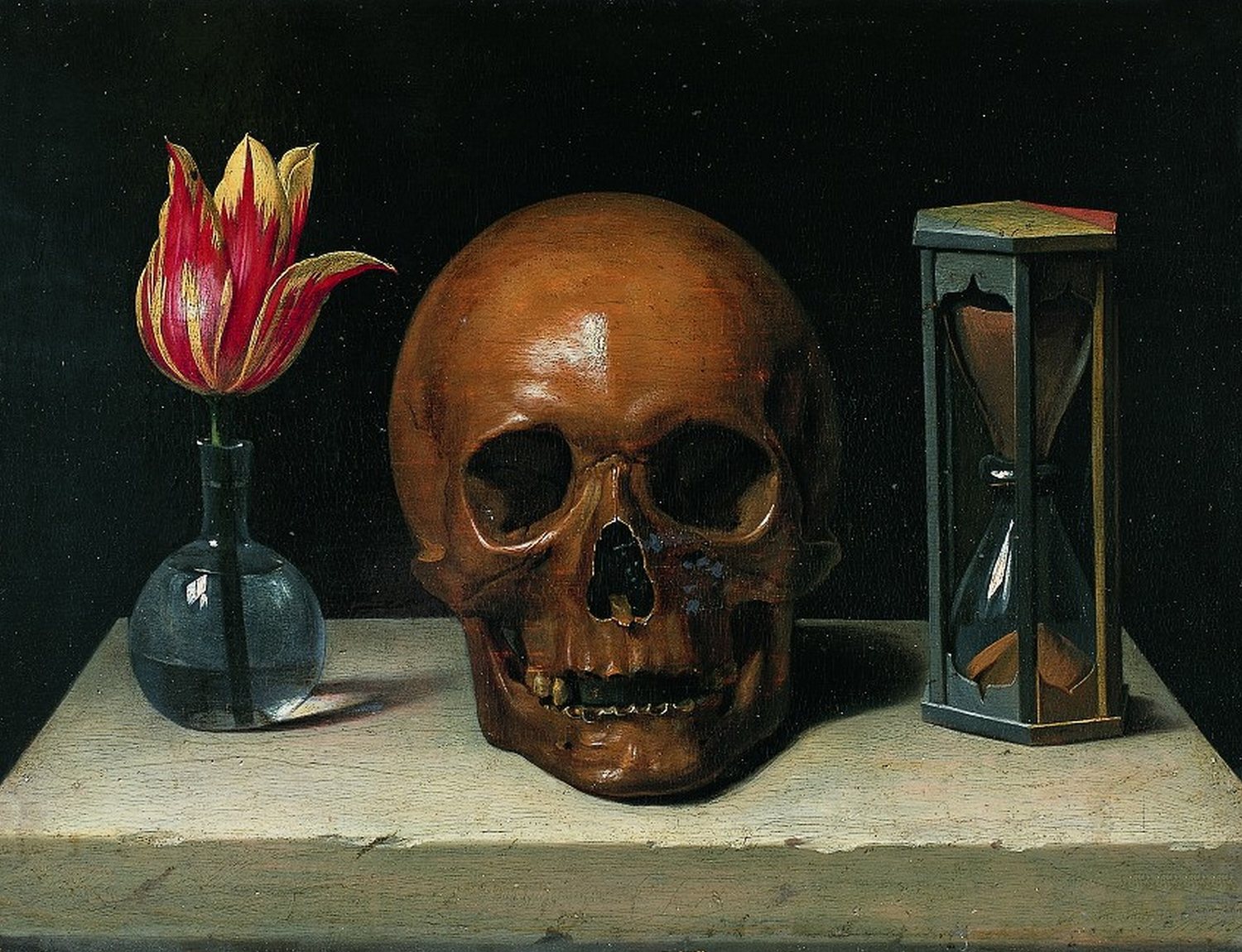
A tulip in a glass, a skull, an hourglass on a stone ledge: flower, death and time, and nothing else at all. Painted three years before his own death, it is the smallest and starkest of his works — the court painter's farewell, in which all the silk and ceremony of his career are reduced to three objects and a shadow.
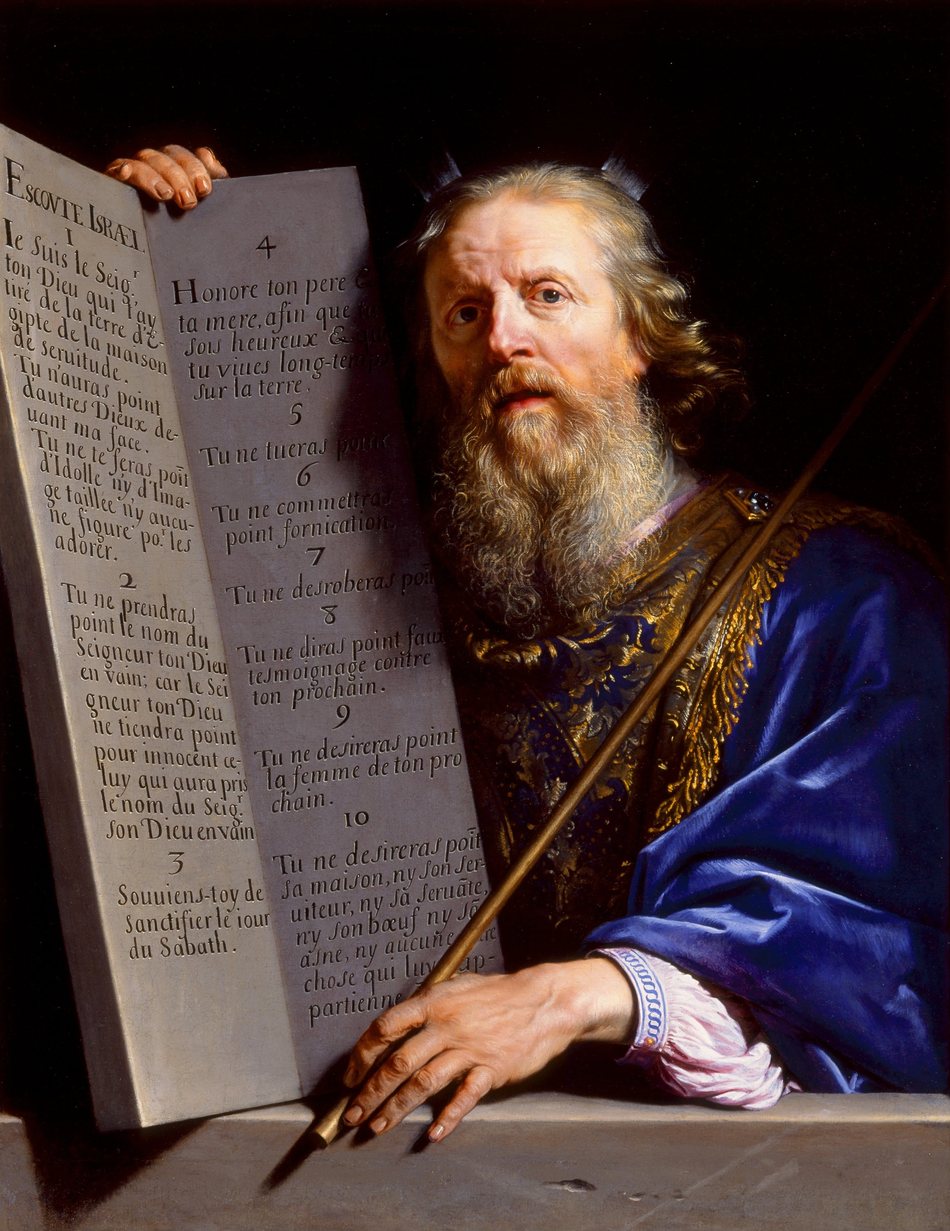
Moses turns from the tablets to face us, his finger running down the commandments written out in French — a Protestant plainness inside a Catholic picture, typical of Champaigne's Port-Royal sympathies. The old prophet's weathered face is a portrait study in itself: law delivered by a man, not a thunderbolt.
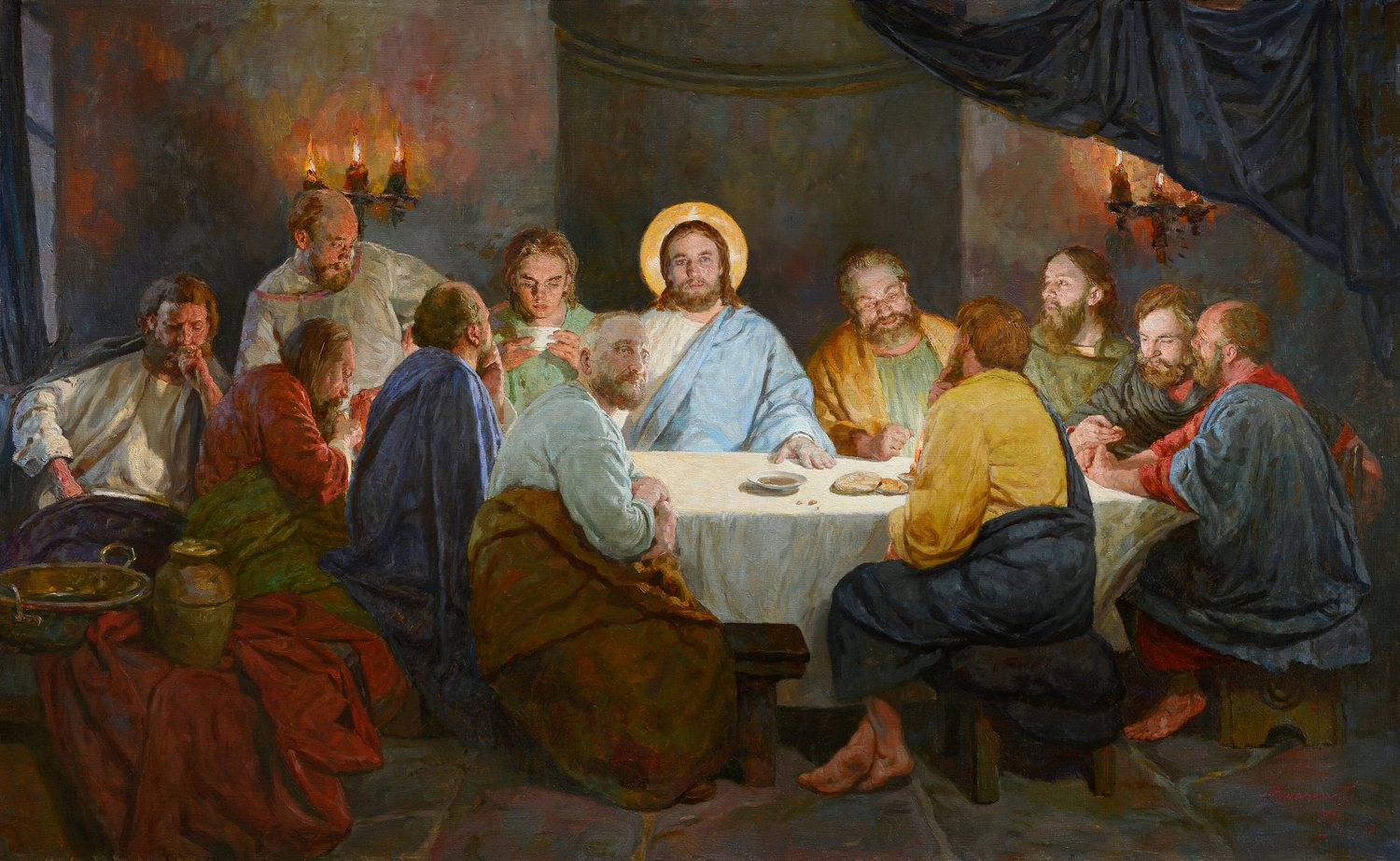
Painted for the high altar of Port-Royal: the apostles gathered in a vaulted room, Christ at the centre in blue, the moment held at the institution of the Eucharist. No swooning, no drama — a sacrament administered with the order of a royal ceremony, and the more moving for its restraint.
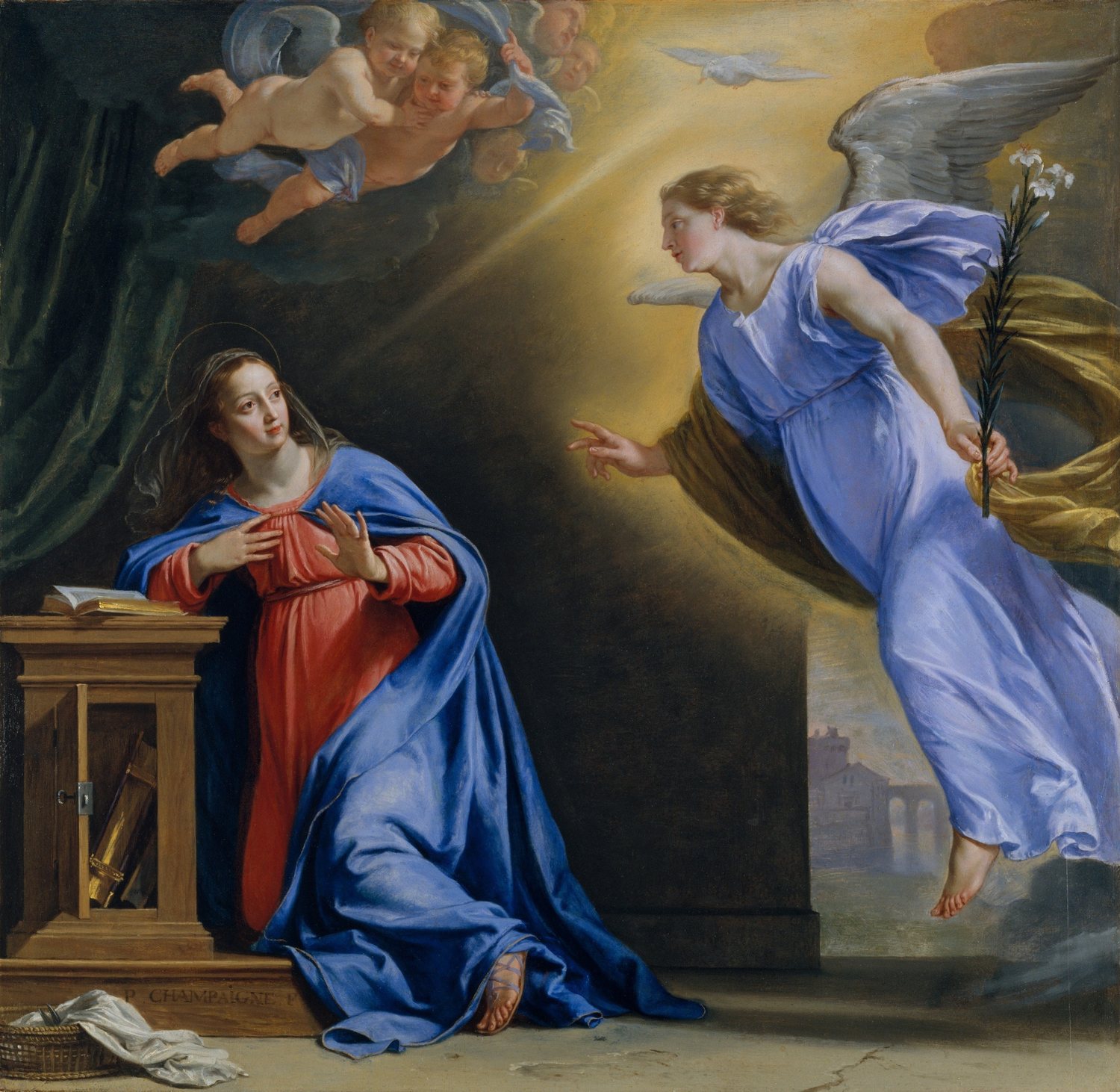
Gabriel descends in a robe of impossible blue while the Virgin, at her prie-dieu, receives the news with bowed head and folded hands — the drama all in the draperies and the light. A putto above holds back the curtain of heaven. Champaigne's religious painting at its most sumptuous, before Port-Royal taught him plainness.
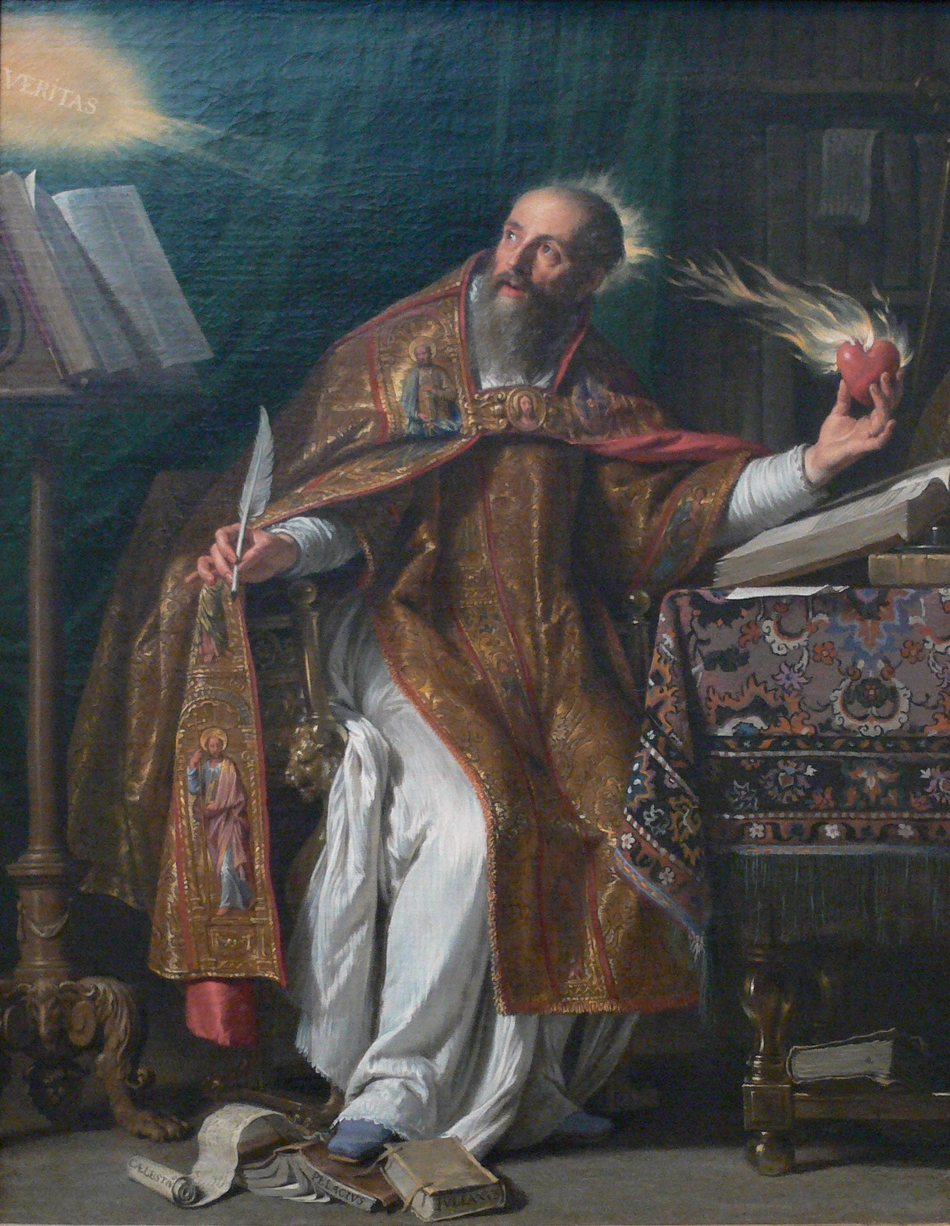
The great Doctor of the Church at his desk, interrupted in his writing, holding his flaming heart while divine light breaks over his books. Augustine was the Jansenists' master, and Champaigne paints him as Port-Royal read him: intellect aflame, in a study where every object — mitre, crozier, hourglass — is weighed like an argument.
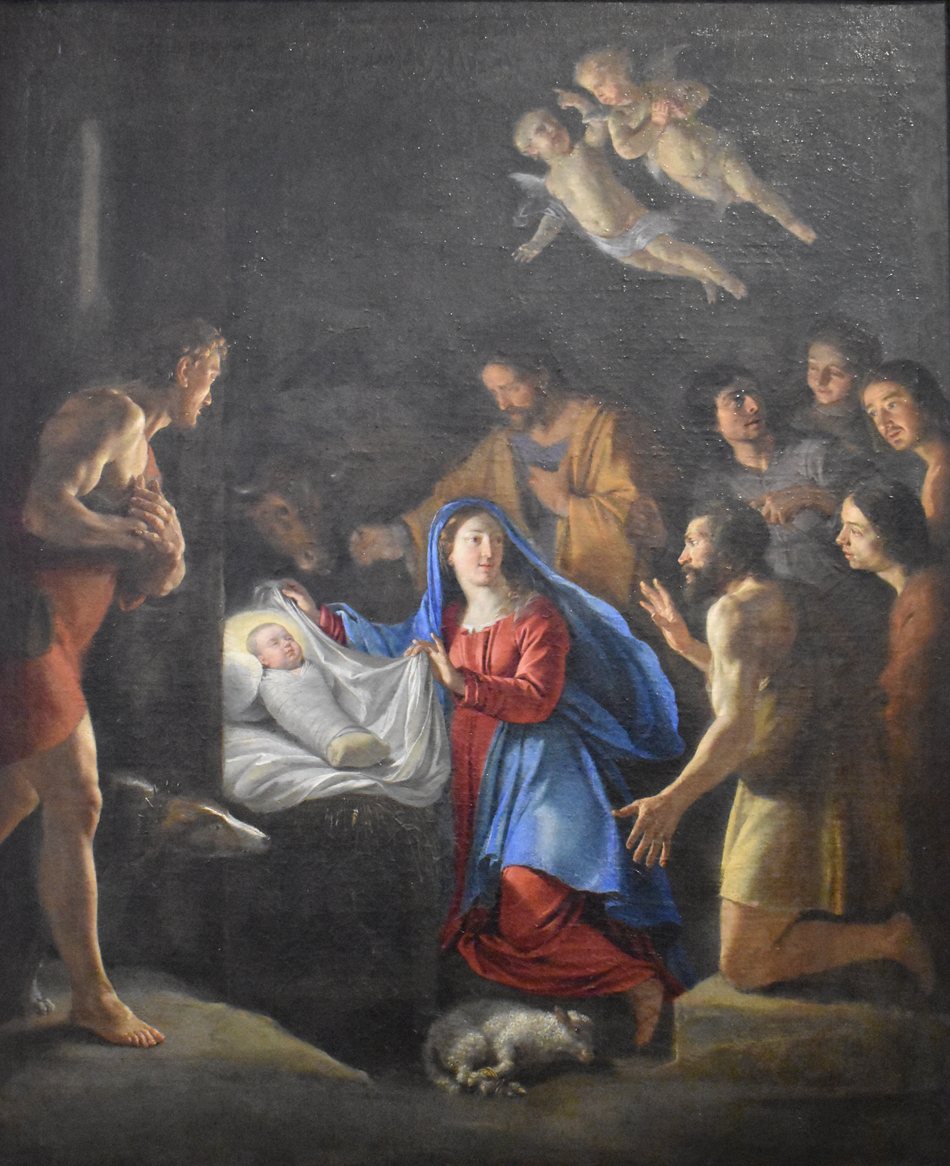
An early nocturne: the shepherds crowd into the stable's darkness around the lit Virgin and Child, angels tumbling above with the Gloria. The young Champaigne, fresh from Brussels, already commands the great dark and the single radiance that his Port-Royal pictures would later make severe.
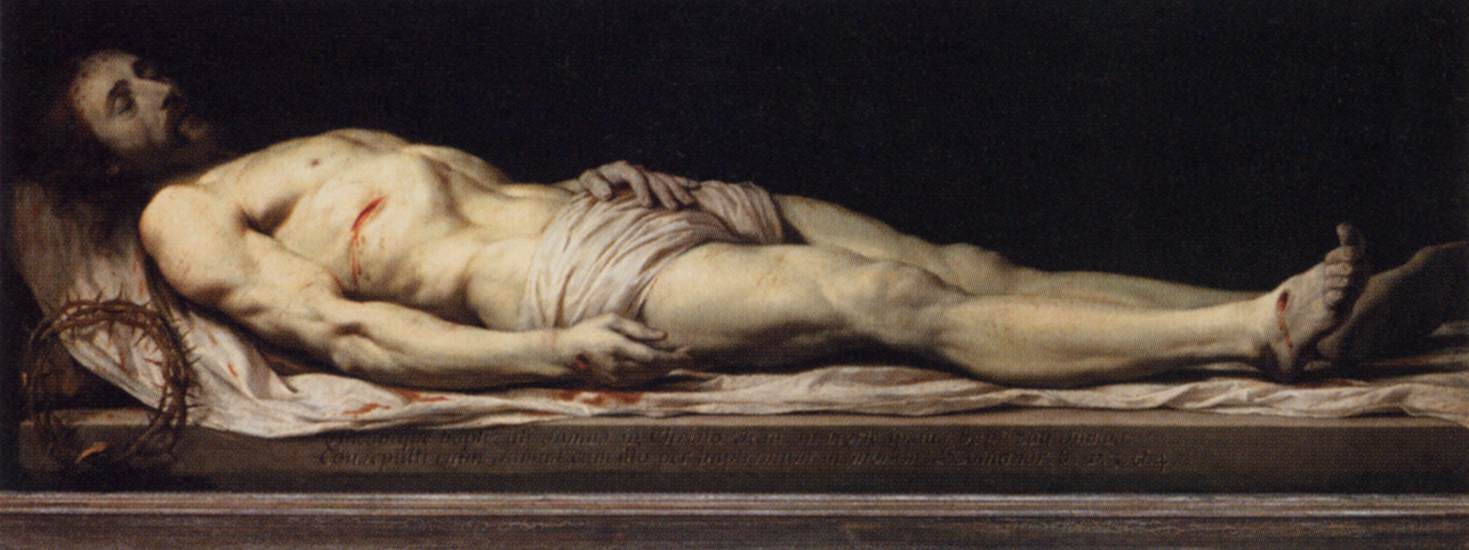
Christ's body stretched full-length on the shroud, the crown of thorns beside his head, painted at the exact scale of a corpse on a slab. No angels, no mourners, no landscape — the most uncompromising picture of his career, and one of the great images of death in French art. Port-Royal owned its theology; the Louvre owns its silence.