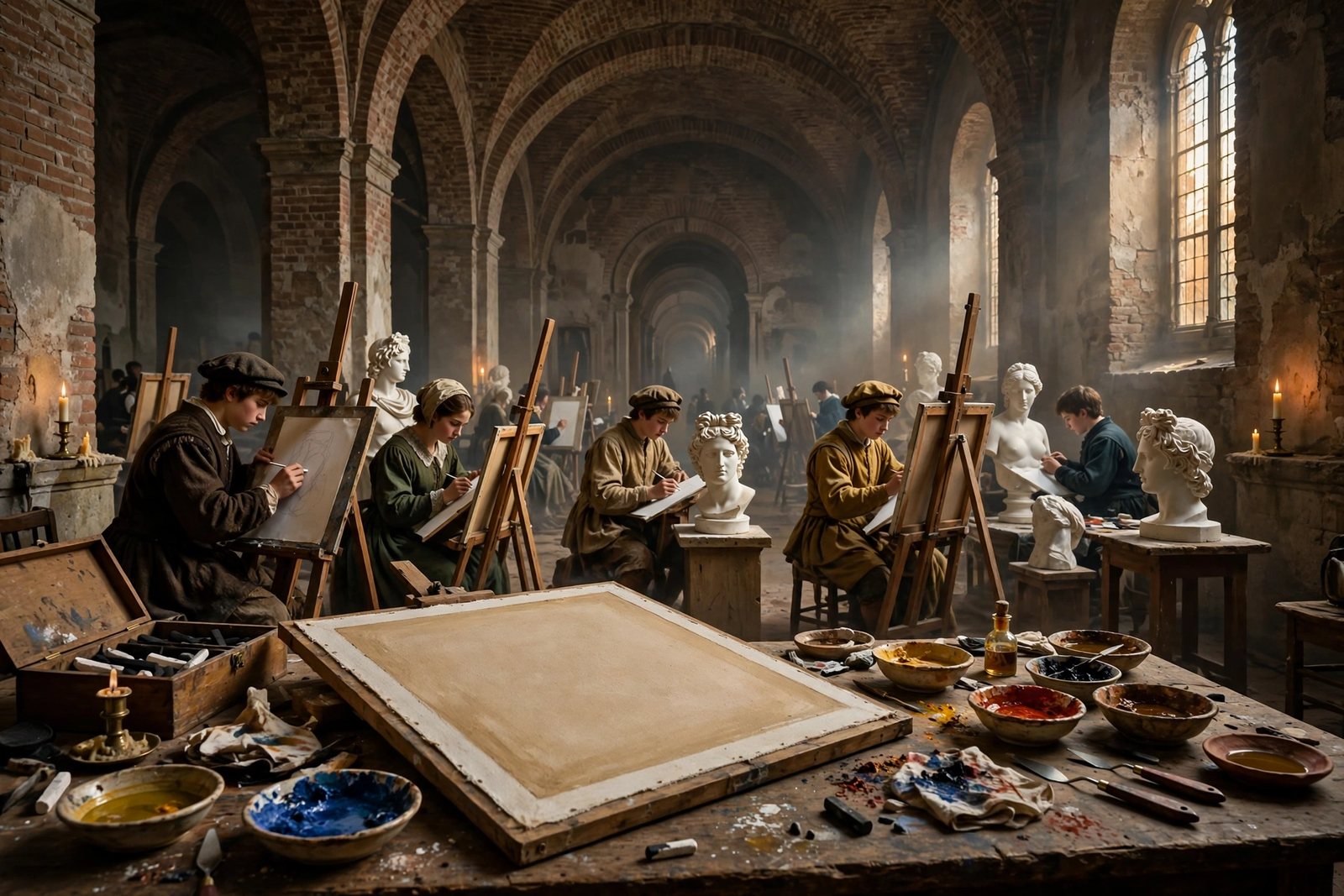
The schoolmaster who rebooted painting. In Bologna, Annibale Carracci and his family ran an academy where art was relearned from the body outward — draw the model, study the cast, sketch the landscape — and then rebuilt into ideal form. The Farnese Gallery in Rome is his diploma piece: a ceiling that taught the next two centuries how to paint.
The Accademia degli Incamminati — 'those who set out on the road' — put drawing from the living model at the centre of training, with anatomy lectures, perspective and casts of antique statues. Annibale's own studies in black and red chalk show the method: the same hand or head drawn again and again until it could be invented, not copied.
For heads and single figures Annibale made quick oil studies on paper, later mounted on canvas or panel — a Bolognese habit that fixed a model's exact light and flesh tone before the big composition was touched. Their freshness survives because the paper kept the paint thin and unbitten by dark grounds.
The Farnese ceiling was engineered like a building: full-size cartoons for every figure, transferred to the wet plaster, each day's section — giornata — planned so seams hide along contours. Annibale executed the central scenes largely himself, with his brother Agostino and pupils taking the framework and ornament.
The Gallery's fictive architecture — bronze medallions, marble terms, framed quadri riportati — is all paint pretending to be other crafts. Annibale graded each false material with its own handling: metal in hard highlights, stone in cool half-tones, flesh warmest of all, so the eye sorts the illusion by touch.
The Carracci circle is credited with inventing portrait caricature — the ritrattini carichi, 'loaded portraits', dashed off in pen: a nose lengthened, a belly swollen, the likeness sharpened by exaggeration. It was a studio game with a serious purpose: training the eye to seize character in a few lines.
Annibale's landscapes are built, not found: a dark repoussoir of trees at the side, a lit middle distance, blue hills to close — three measured zones with a tiny sacred story as staffage. Painted in the studio from drawings, this recipe became the classical landscape of the next century.
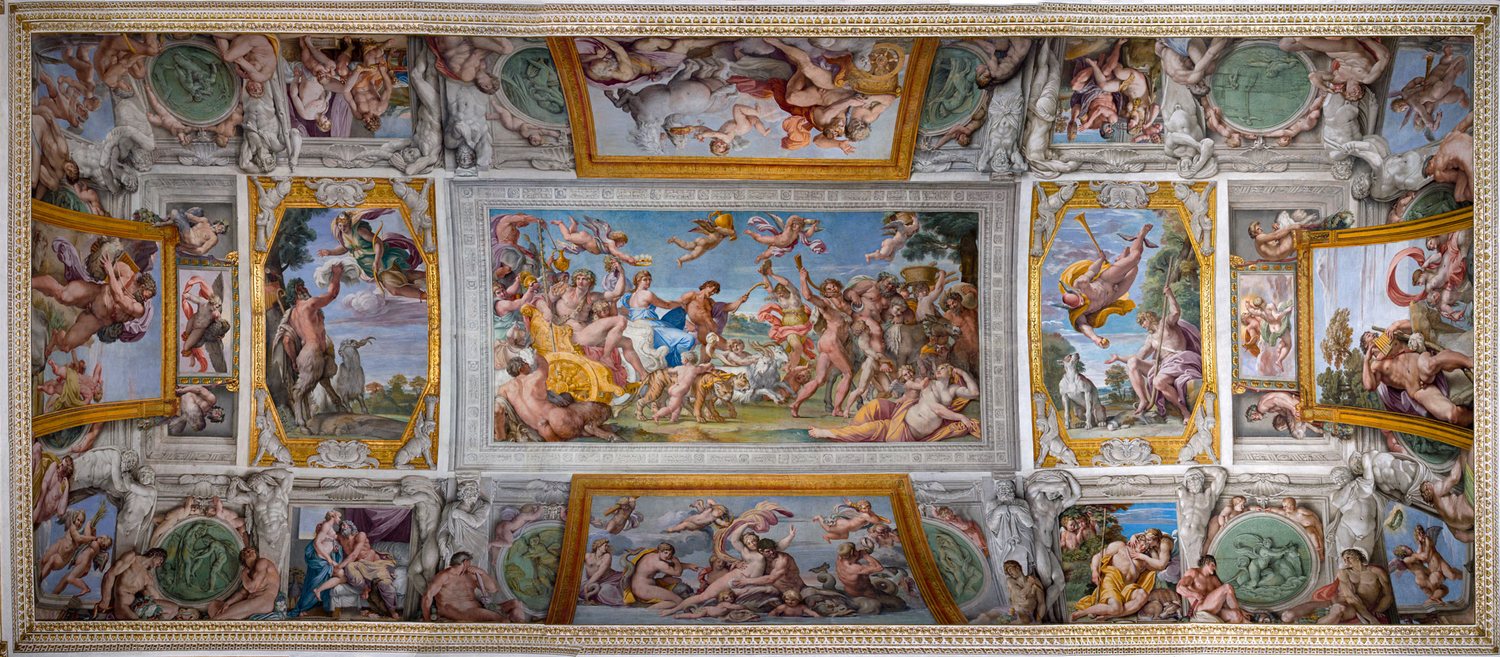
The ceiling that restarted European painting: the loves of the gods in framed scenes along a barrel vault, joined by feigned bronze, marble and flesh — Bacchus and Ariadne's wedding procession runs down the centre like a river of celebration.
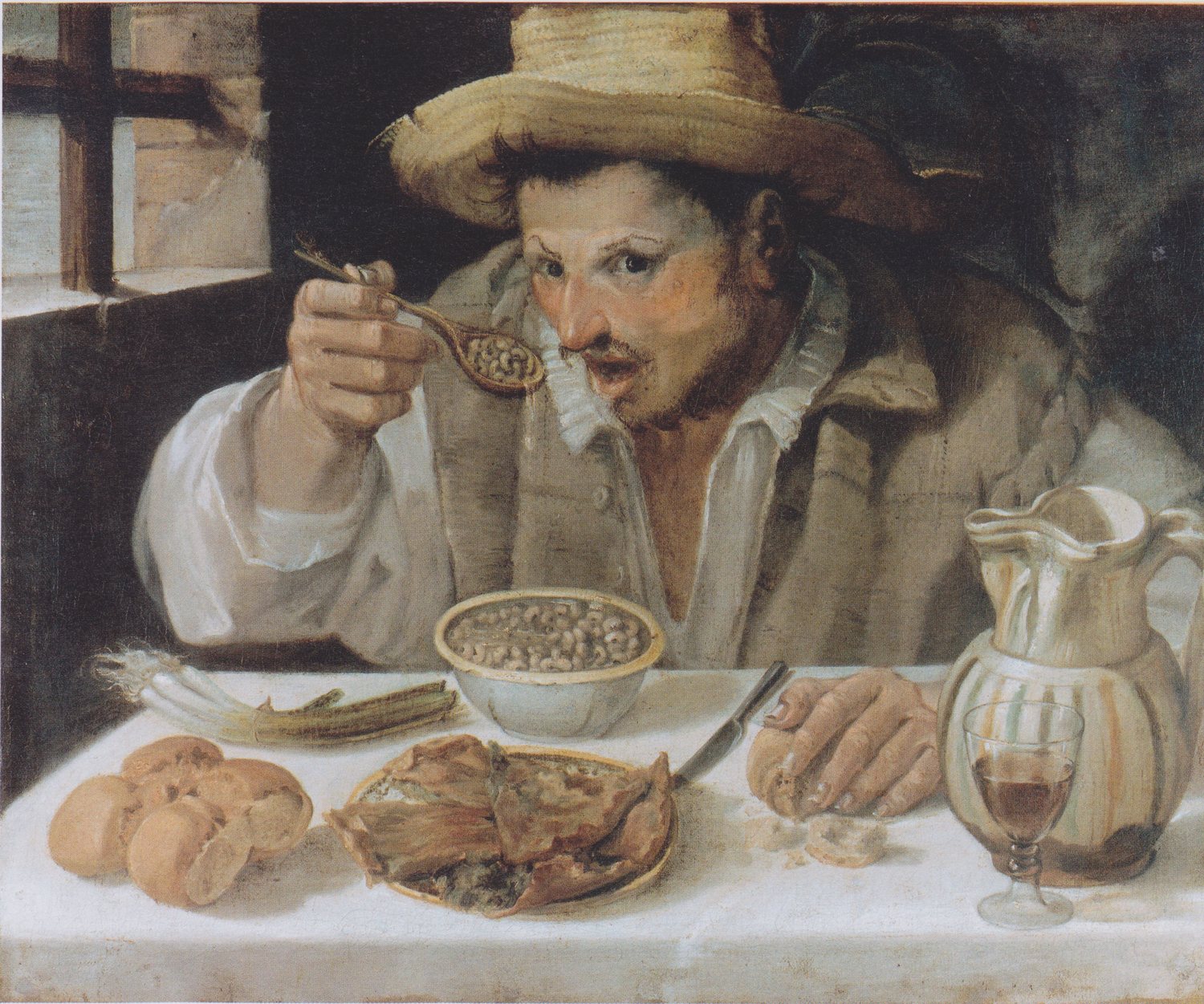
A peasant pauses mid-spoonful and stares straight at us — one of the first great 'slice of life' canvases in European art, painted by a butcher's son who had clearly watched men eat, closely and often.
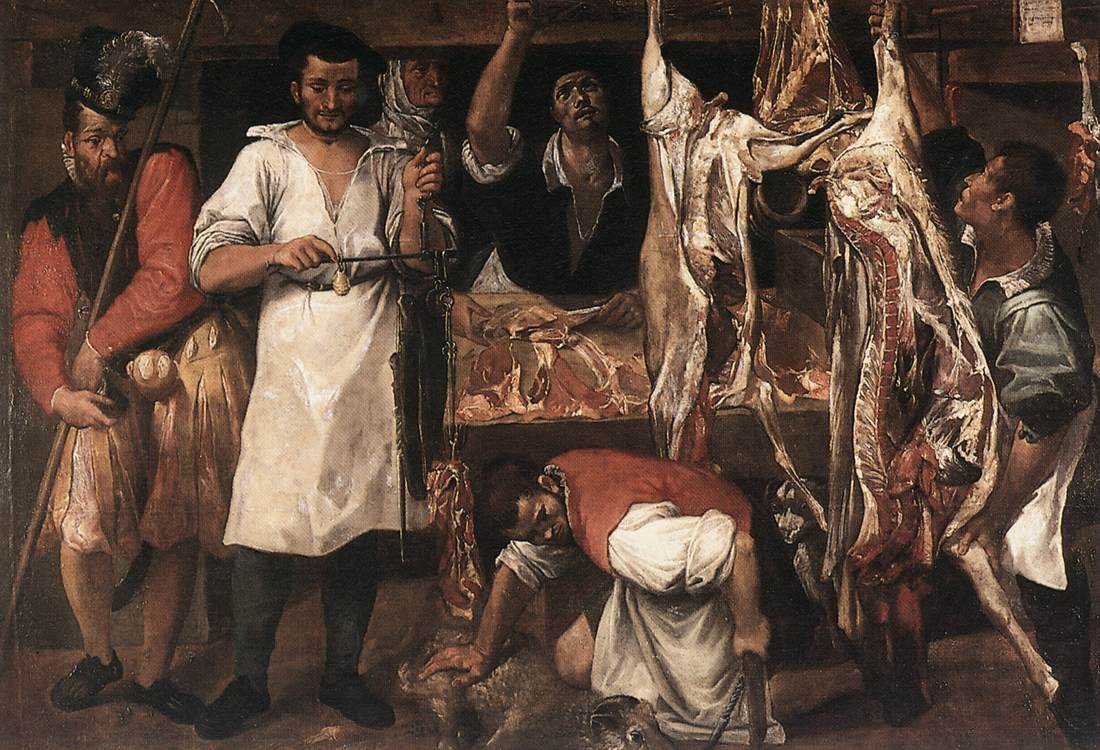
Annibale grew up above a butcher's shop, and here the family trade becomes monumental painting: carcasses, scales and working men composed with the gravity of an altarpiece. The young painter's manifesto — dignity is where you find it.
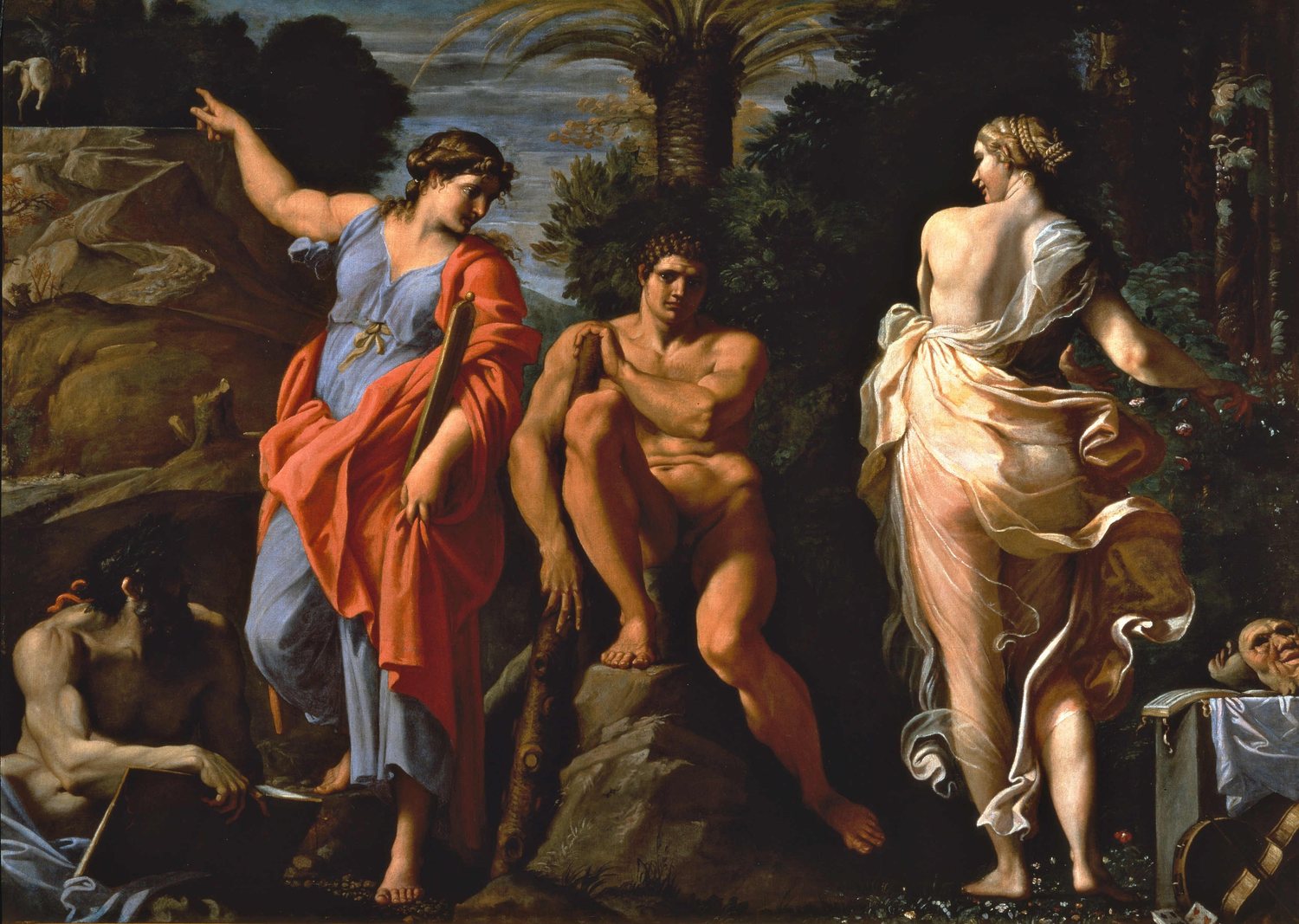
Painted for Cardinal Odoardo Farnese's study in Rome: young Hercules sits between Virtue, pointing up the hard road, and Vice, offering flowers and music. The picture that won Annibale the Farnese Gallery itself.
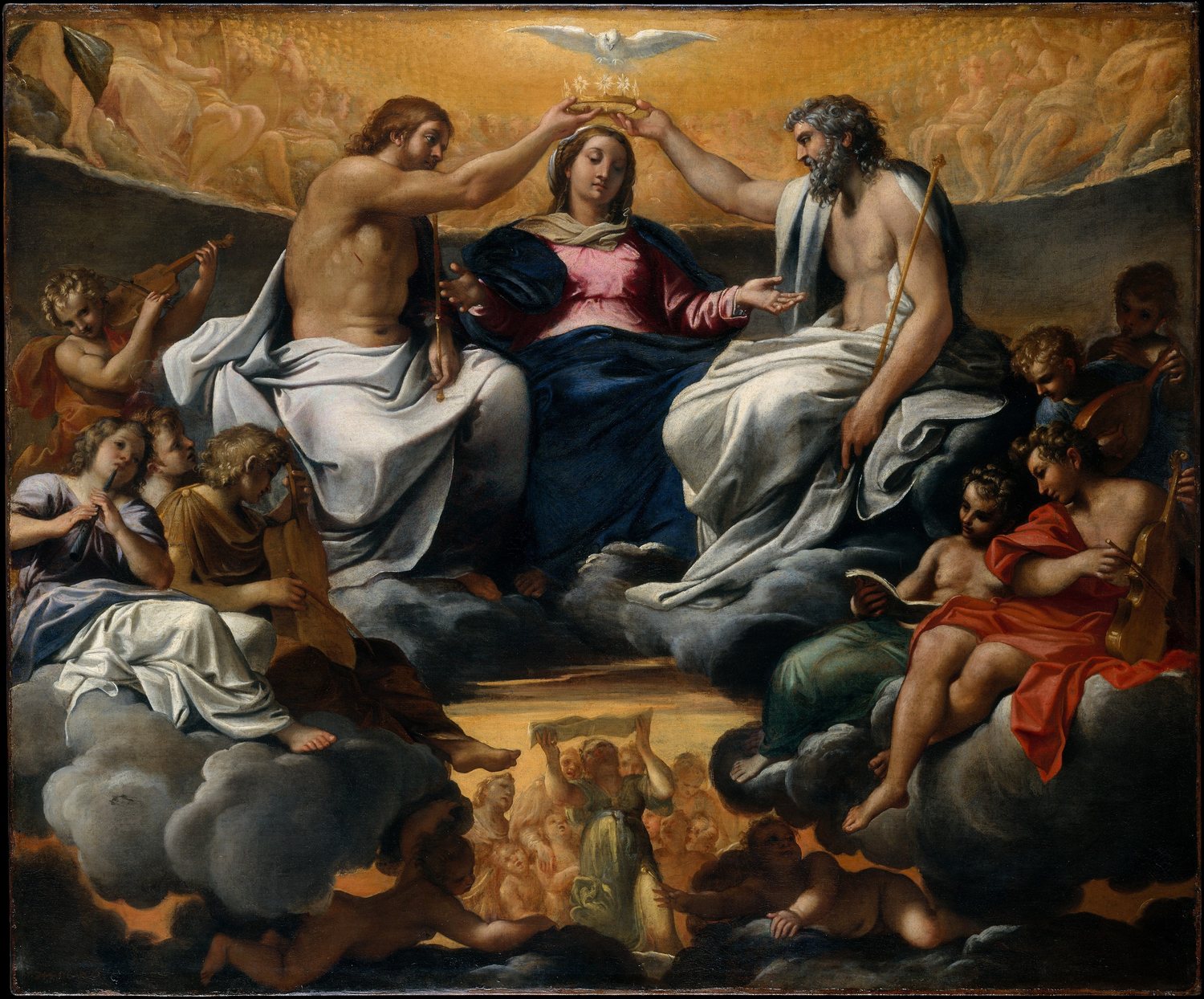
Christ and God the Father crown the Virgin together, the dove descending between them — a Trinitarian coronation painted just before the Farnese years, its clouds already rehearsing the ceiling to come.
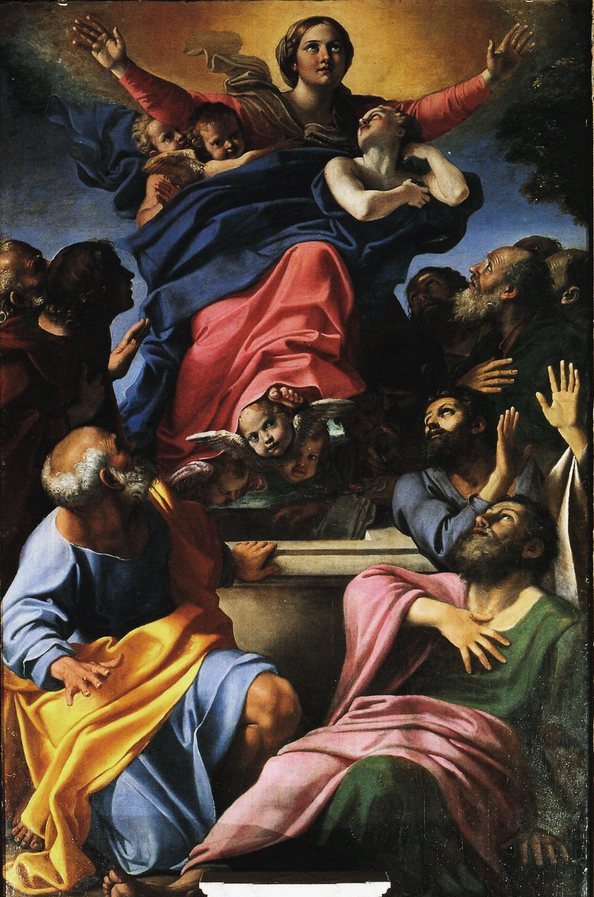
For the Cerasi Chapel, facing Caravaggio's canvases across the altar: the Virgin rises from the tomb as the apostles gesture below. Two revolutions of painting hung in one small chapel, arguing in silence.
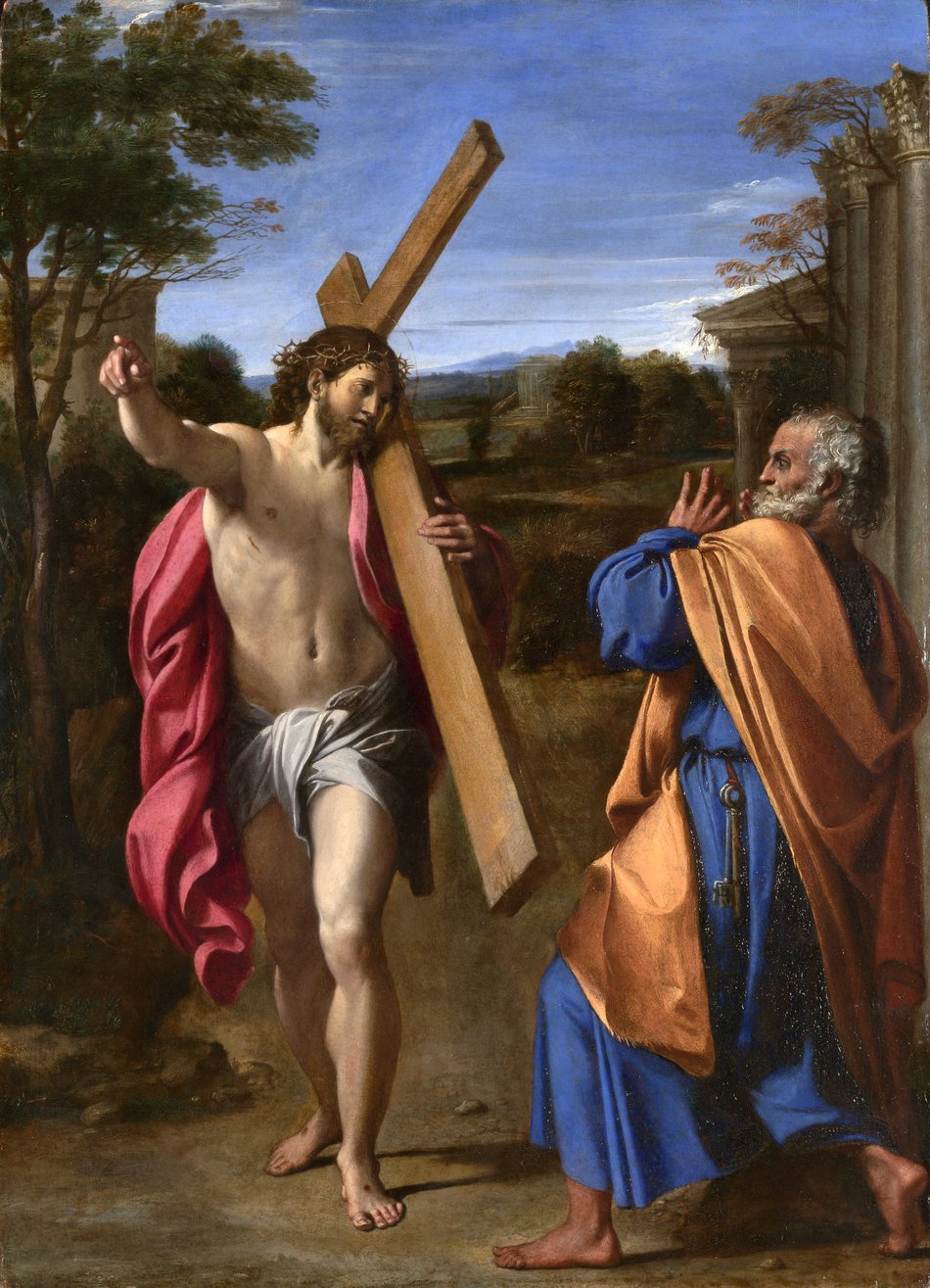
On the Appian Way, the fleeing Peter meets Christ carrying his cross the other way — 'Lord, where are you going?' A small panel painted with a fresco painter's breadth: two figures, one road, all of church history turning on a question.
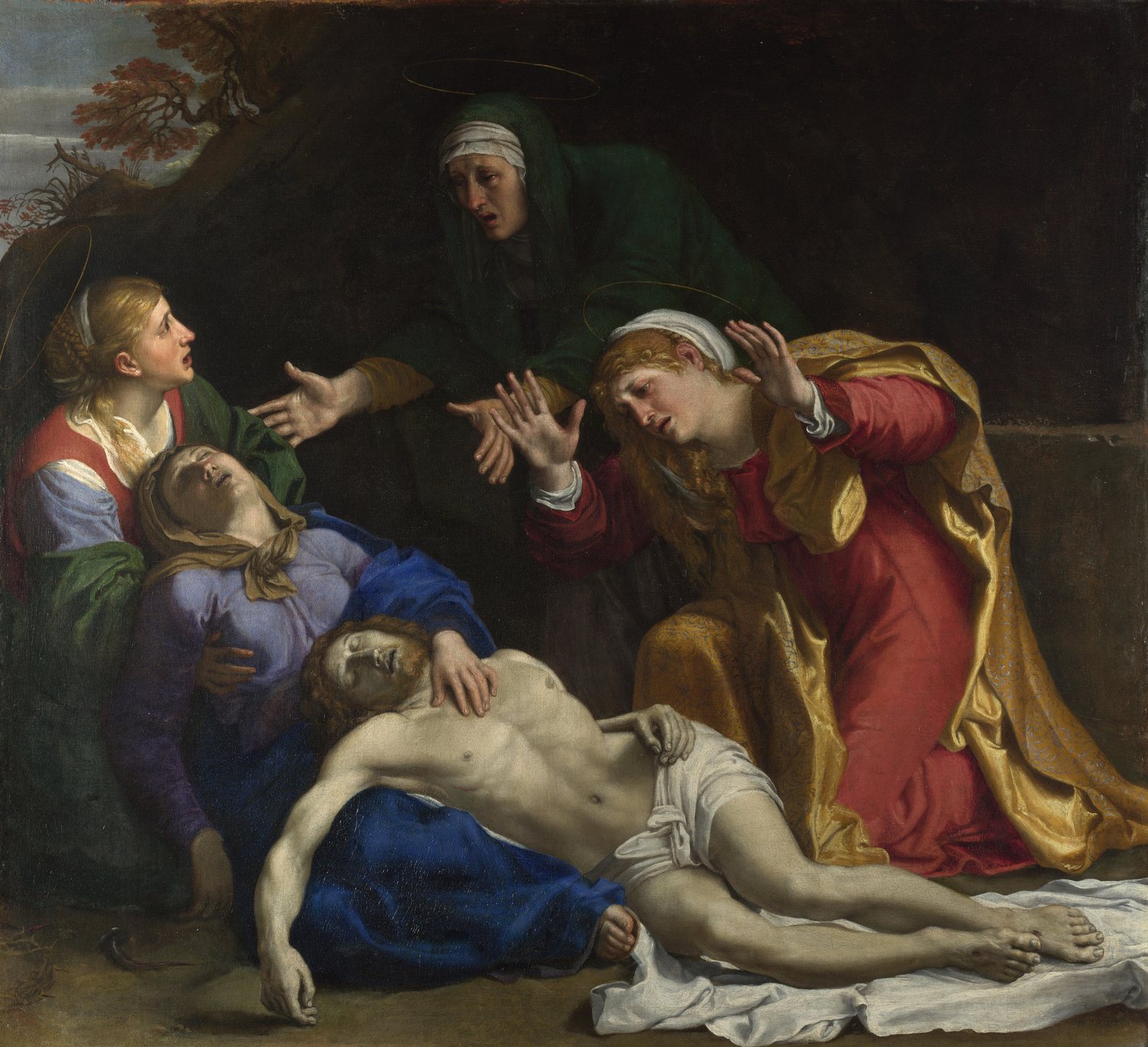
An early, Correggio-haunted canvas: the dead Christ across the Virgin's knees, the Maries' grief arranged in a slow spiral of hands and faces — Annibale learning pathos from the Emilian masters he would soon surpass.
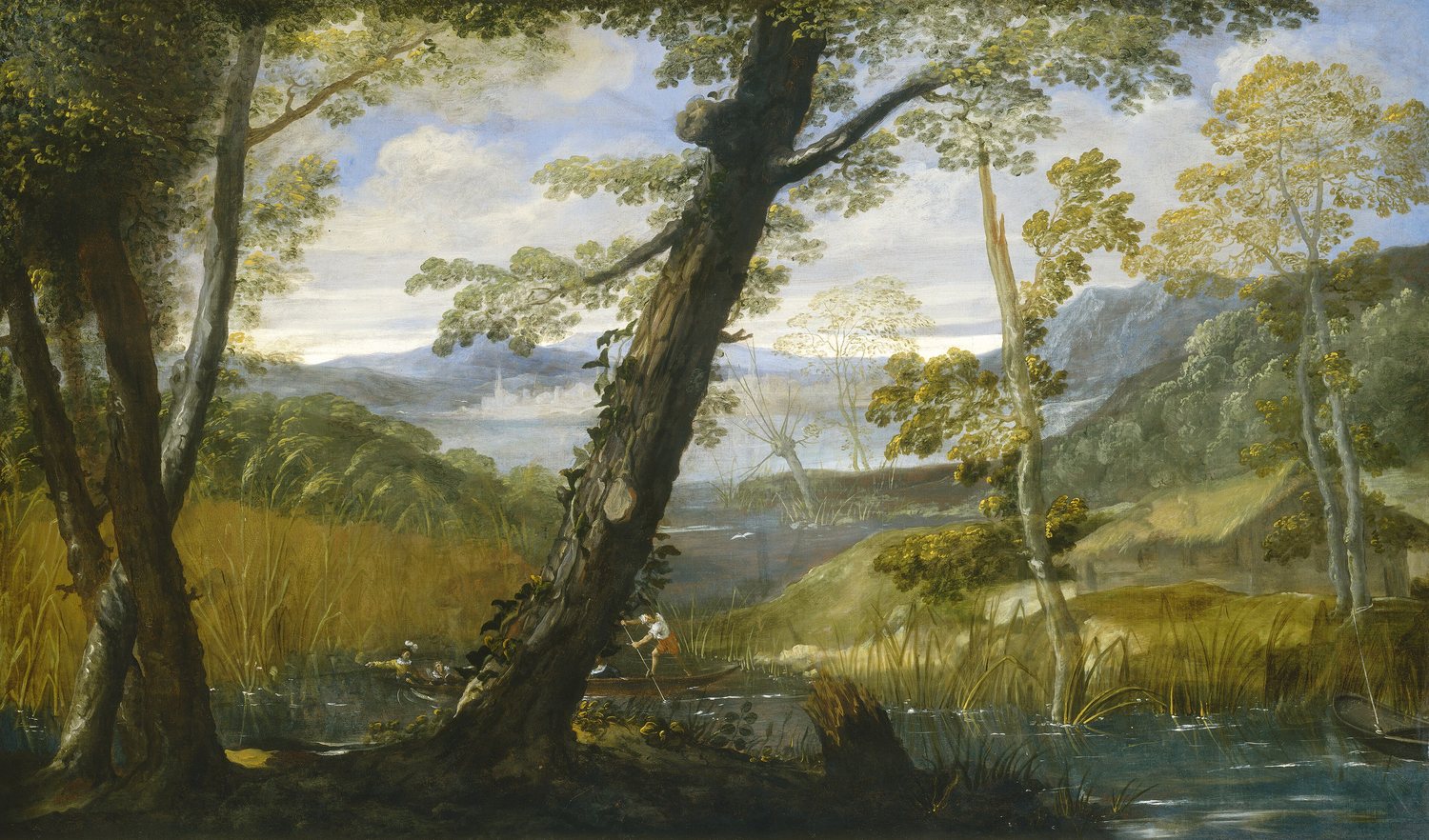
No story at all — just a river, boats, trees and measured distances. One of the first pure landscapes of the Italian school, and the seed of the classical landscape tradition that runs through Domenichino to Claude.
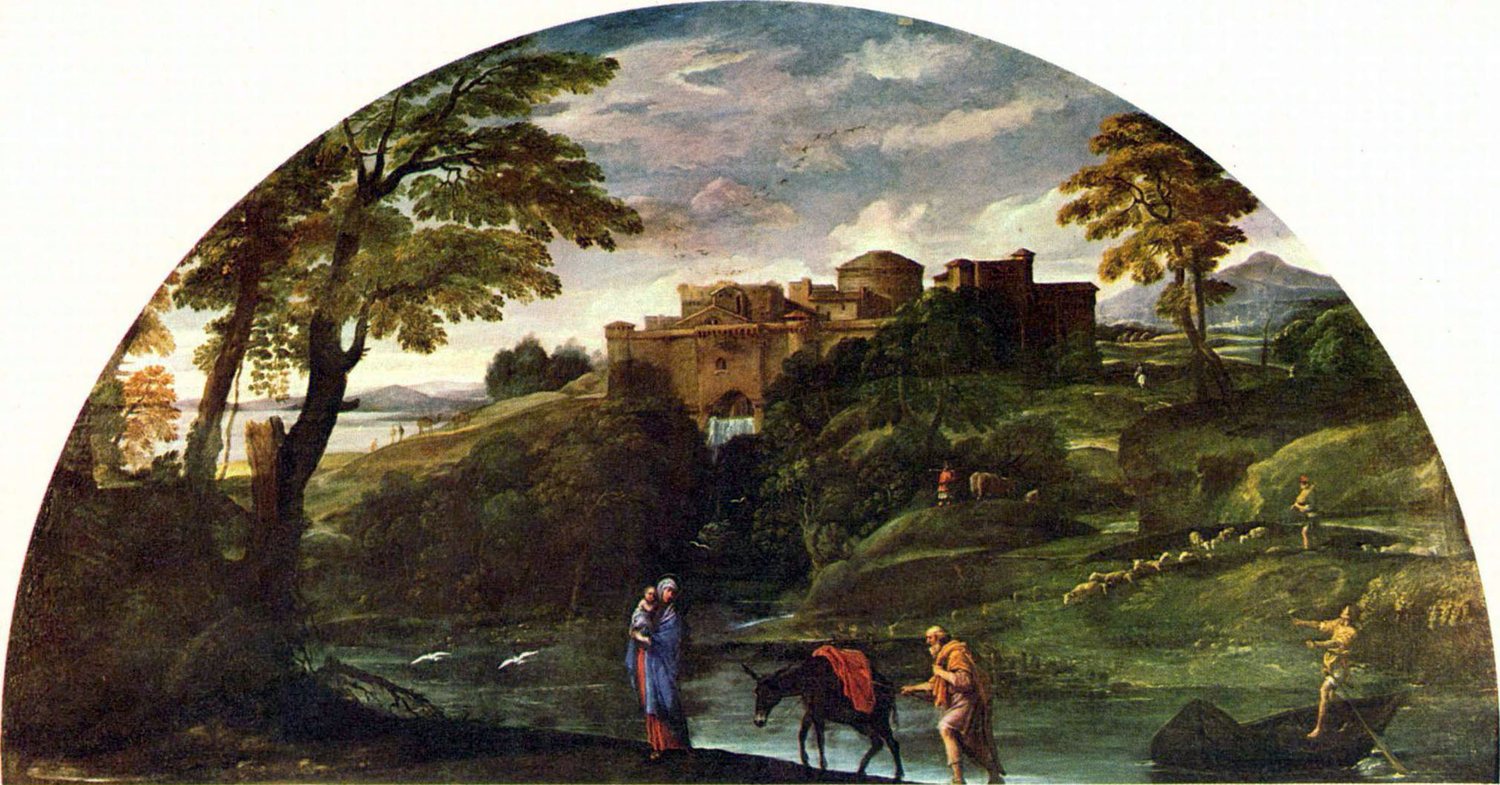
One of six lunettes painted for a Roman palace chapel: the Holy Family crosses a river in the foreground while the landscape — castle, waterfall, shepherds — carries the picture. The story is small; the world it travels through is the subject.