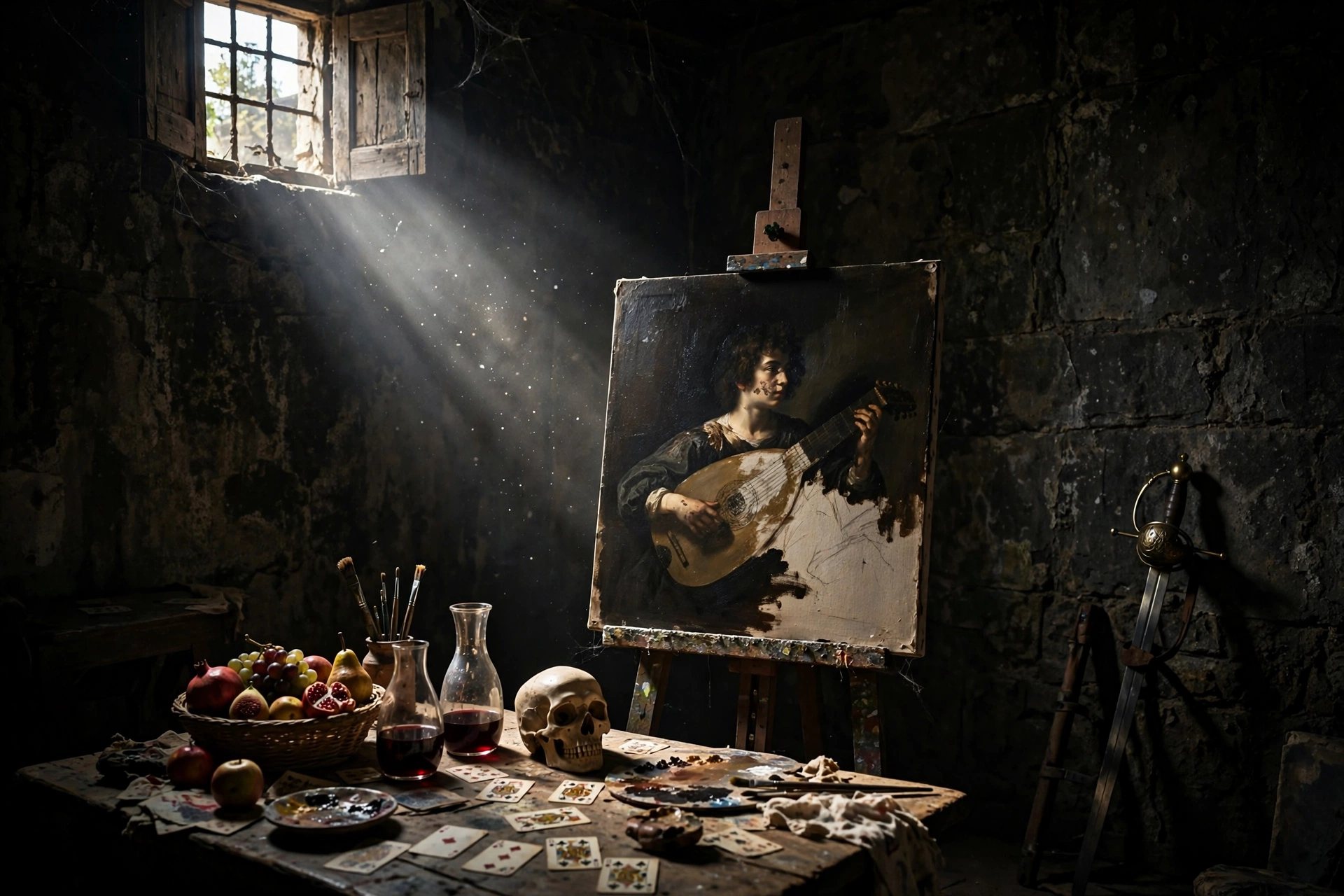
Caravaggio took his models from the street, his light from a single high window, and his compositions from no drawings at all — he incised the outlines straight into the wet paint. In twelve Roman years he changed painting forever; then he killed a man in a brawl and spent his last four years running, painting masterpieces in flight.
Not one drawing by Caravaggio survives, and X-rays suggest there never were any: he composed directly on the canvas, scratching key lines into the wet ground with the handle of his brush — the incisions are still visible in the paint of the London Supper at Emmaus. The sketch was the painting, from the first hour.
His studio light was a single source placed high, raking down through darkness — in the studio, tradition says, a lantern or a shaft from one shuttered window; in the picture, a darkness that is not empty but charged. The technique has a name now, tenebrism, and a thousand imitators across Europe.
His apostles have swollen feet, his Madonnas were tavern girls, his saints are dockers and cardsharps — contemporaries complained that he painted 'from life' too literally, and a Sicilian courtesan's drowned body was said to be the model for the Death of the Virgin. Rome had never seen holiness with dirt under its nails.
Caravaggio cast himself relentlessly: the sick Bacchus, the musician, the screaming Medusa, a bystander in the Taking of Christ — and finally David's trophy, Goliath's head, painted as his own severed head and sent to Rome as a plea for pardon. The self-portrait as confession runs through the whole work.
He worked at speed, laying in the dark ground first — the shadow is the canvas's own colour, the light added on top — and finishing altarpieces in weeks where others took years. The speed is in the paint: broad, loaded, unblended strokes that still look wet four centuries later.
Within a decade, painters from Utrecht to Seville were imitating the Roman revolution: candlelit taverns, half-length saints, darkness as drama. The Caravaggisti carried his manner across Europe before his body was cold — and the original canvases, many lost or rejected in his lifetime, became the most hunted pictures on earth.
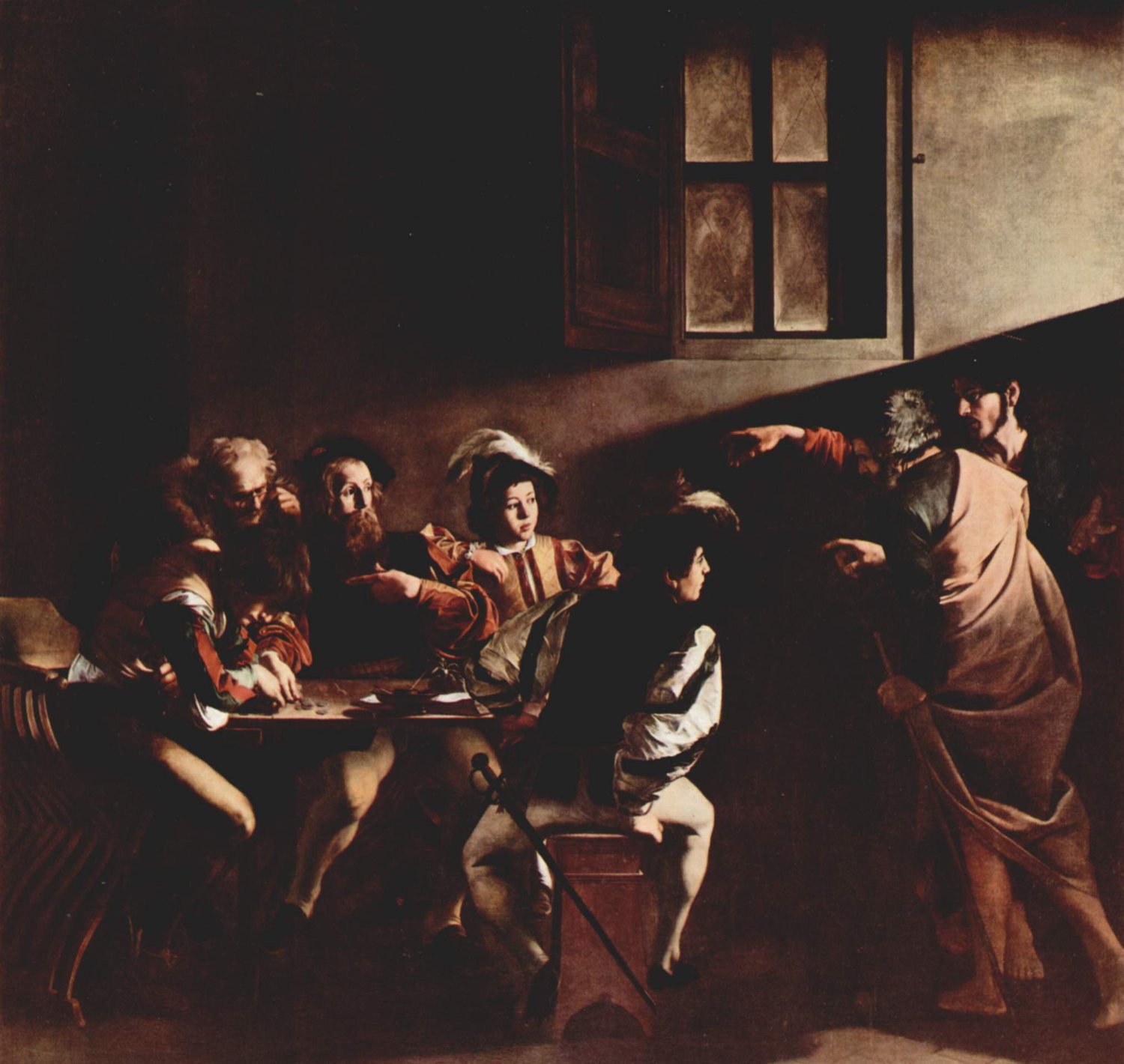
A beam of light enters with Christ into a dingy tax office and picks out Matthew at his coins — 'Me?' his gesture asks, pointing at his own chest. It is the picture that announced a new age: scripture staged in a Roman tavern, holiness arriving like a man walking in off the street.
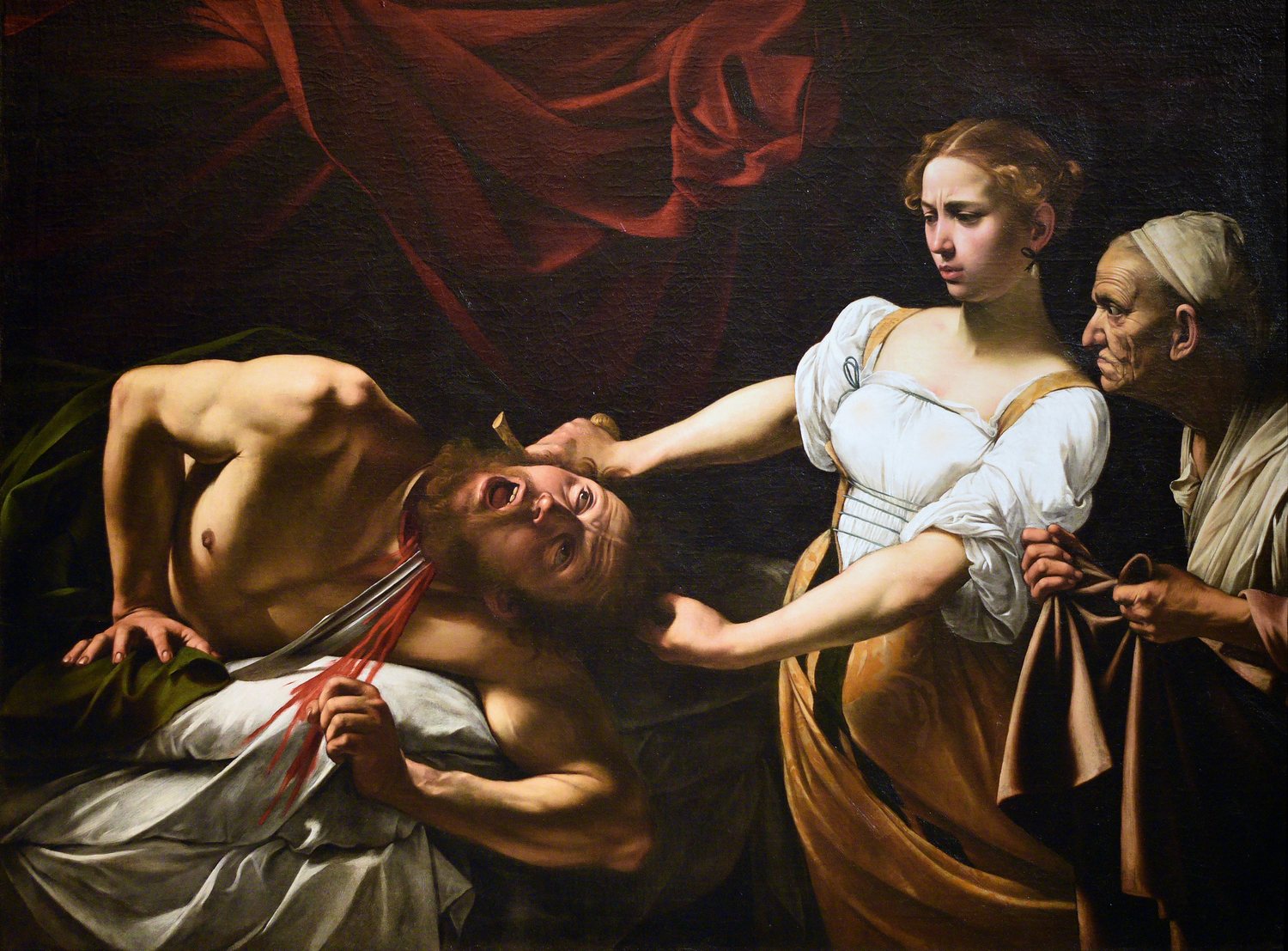
Judith saws at the general's neck with a look of cold distaste, her old maidservant gripping the bedsheet like an accomplice in a kitchen. No heroics, no beauty — a murder at arm's length, lit like an interrogation. Rediscovered in a Roman attic of art history only in 1950, it has never left the mind since.
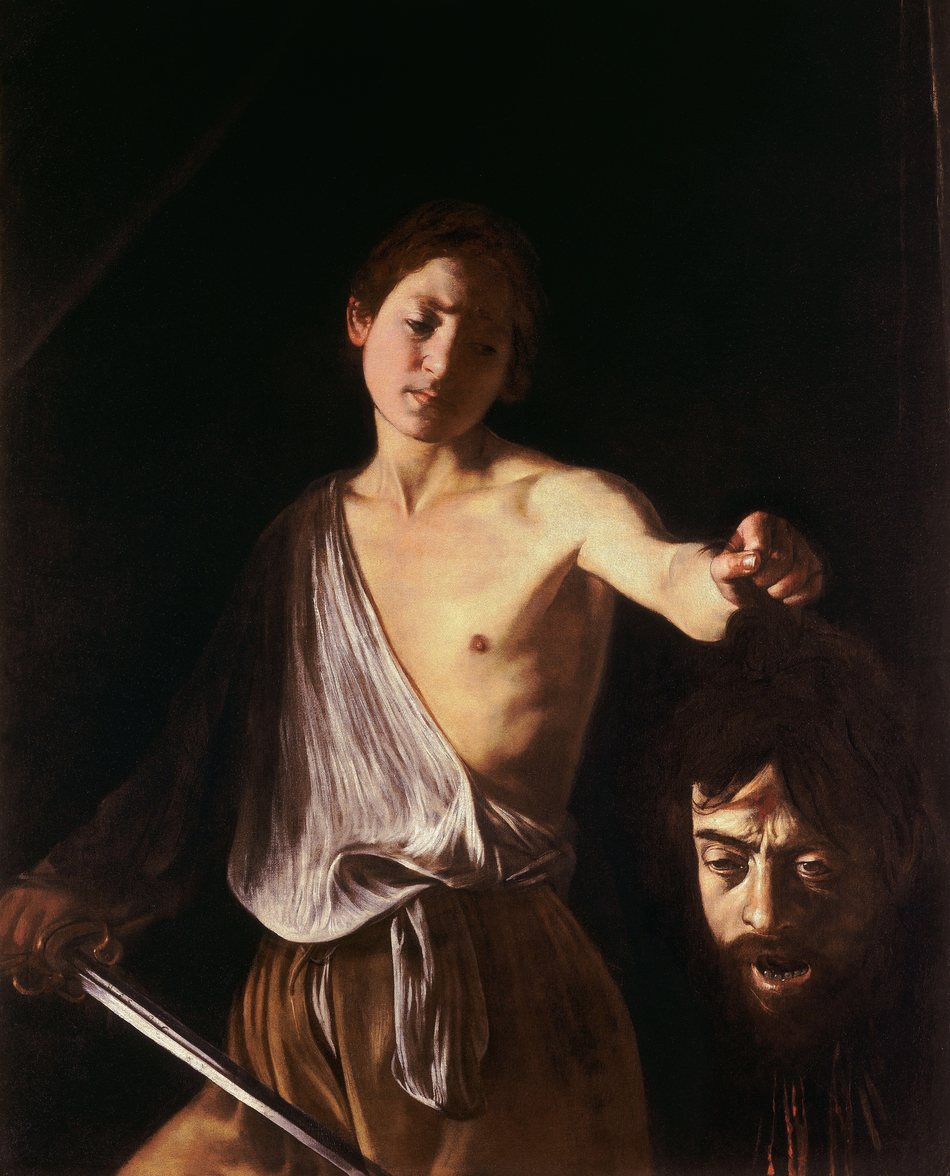
David holds the giant's head out toward us, and the head is Caravaggio's own — painted in exile, a wanted murderer, and sent to Rome in the hope of a papal pardon. The sword bears an inscription: humility kills pride. It is less a history painting than a signed confession.
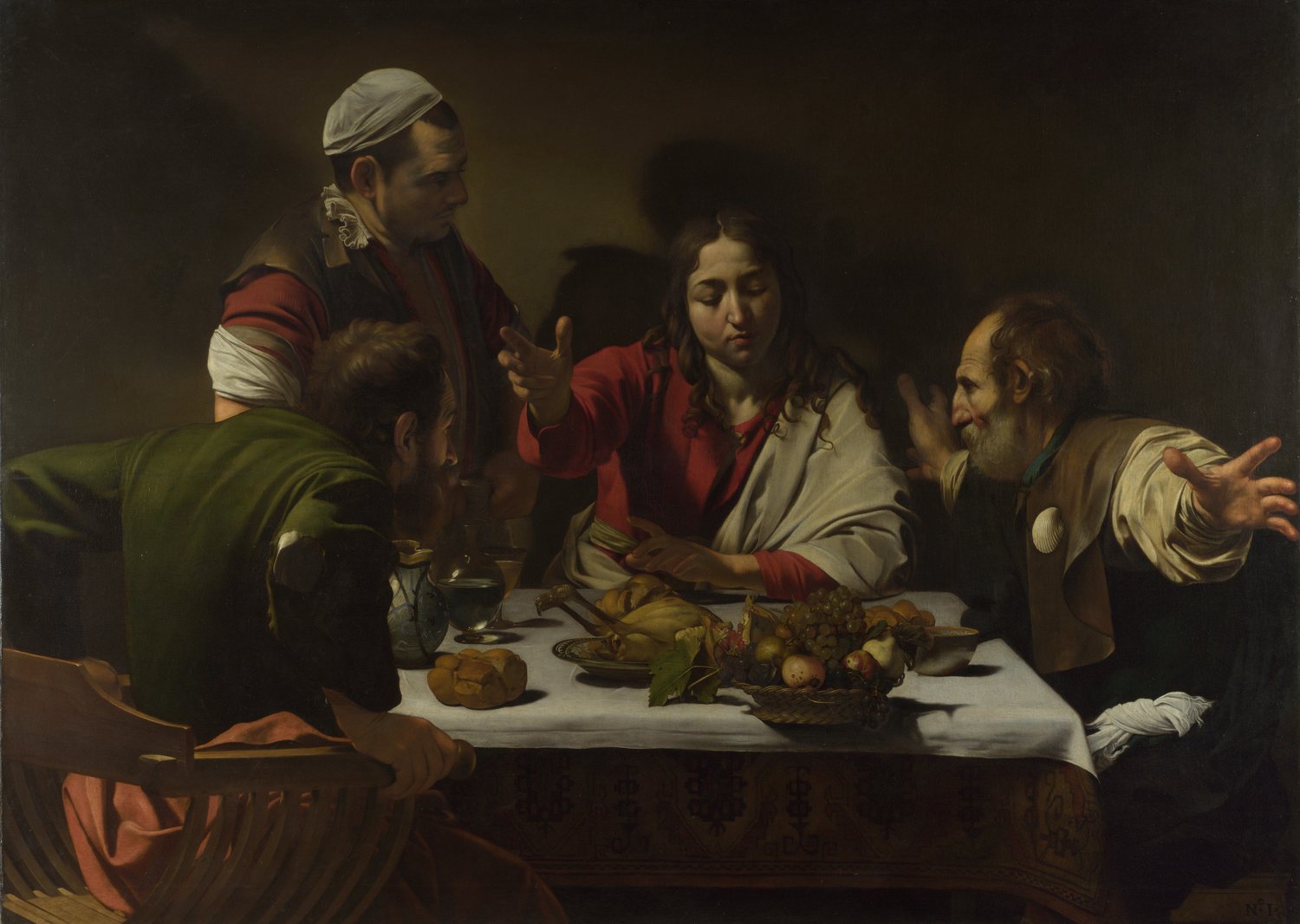
The risen Christ blesses the bread and the inn erupts in recognition: one apostle flings his arms wide, the other grips his chair, the fruit basket teeters on the table's edge toward us. Every object leans into our space — the miracle is happening at our table.
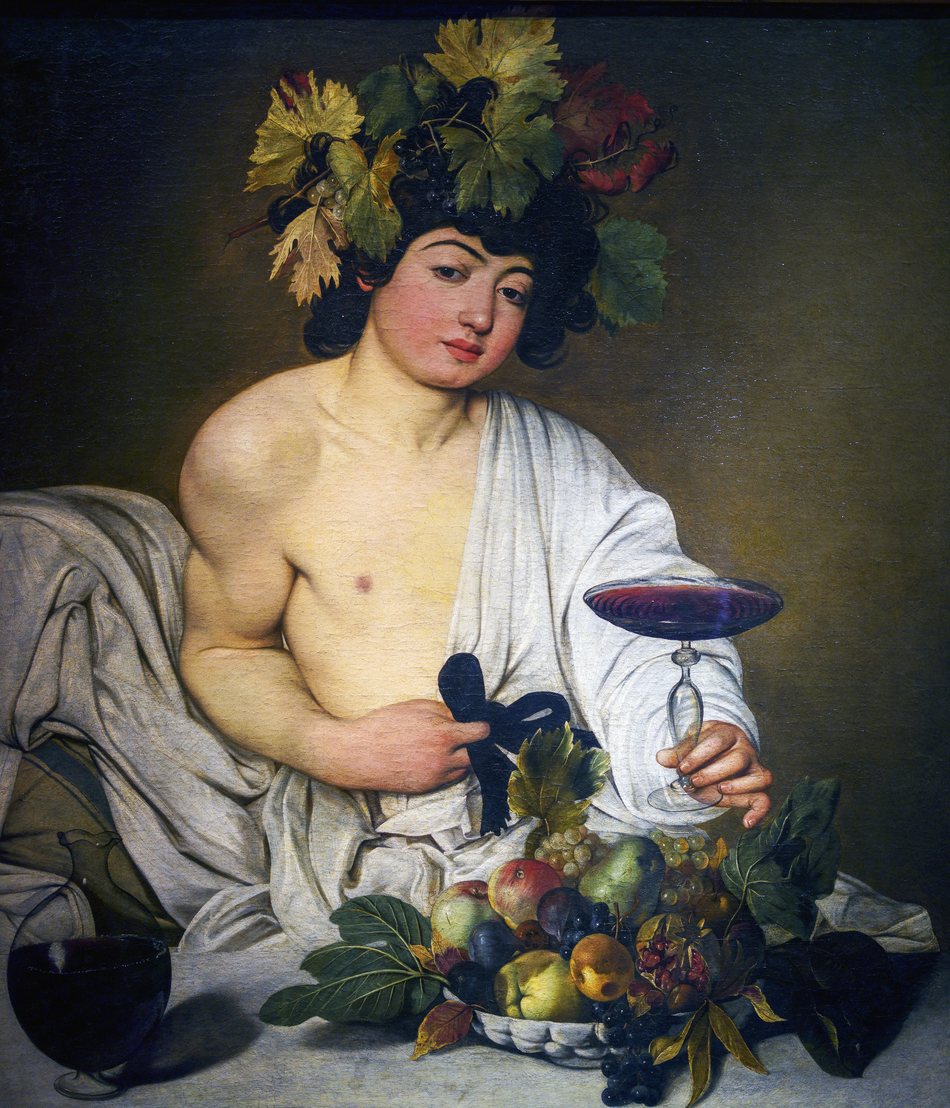
A flushed youth in a sheet offers us his wine, a fruit bowl rotting almost imperceptibly at his elbow — the god of wine as a tavern boy with a hangover coming. Tradition says the face is Caravaggio's own, painted from a mirror, the morning after written into the god.
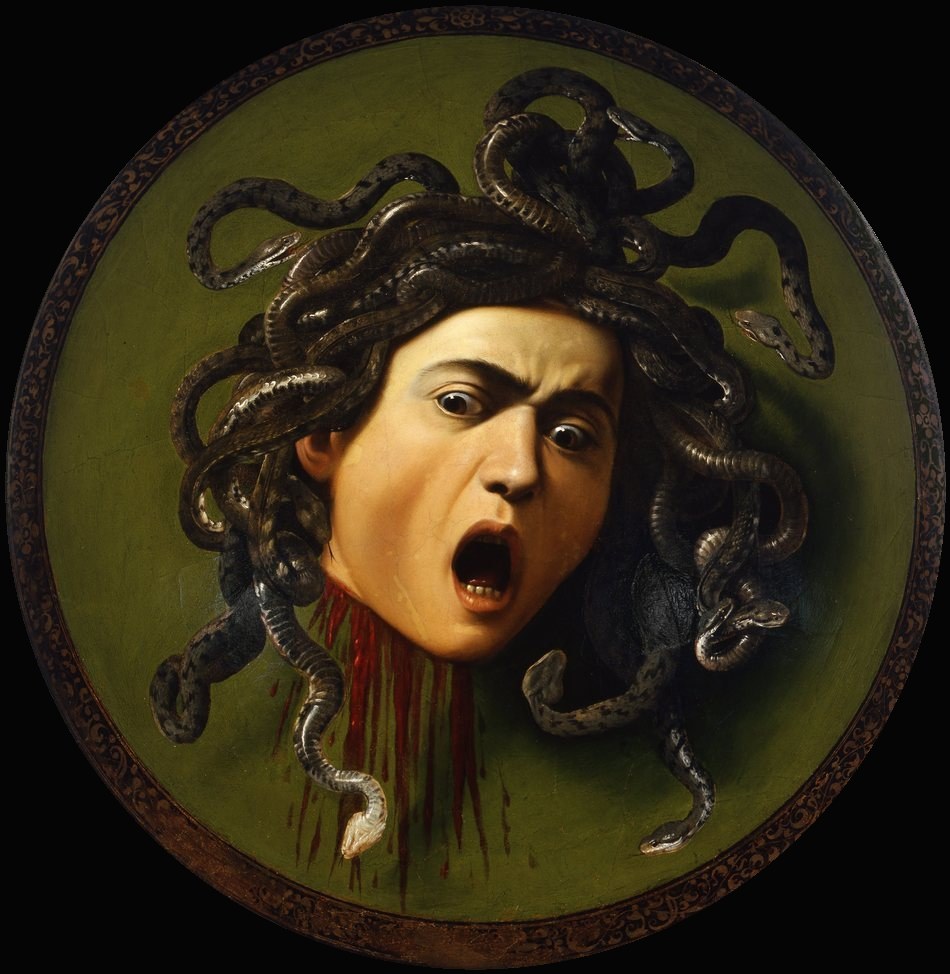
Painted on a real parade shield, the Gorgon's head screams at the instant of its own beheading — and the face, once again, is the painter's. It was a Medici gift, a joke about petrifying the viewer, executed with terrifying seriousness.
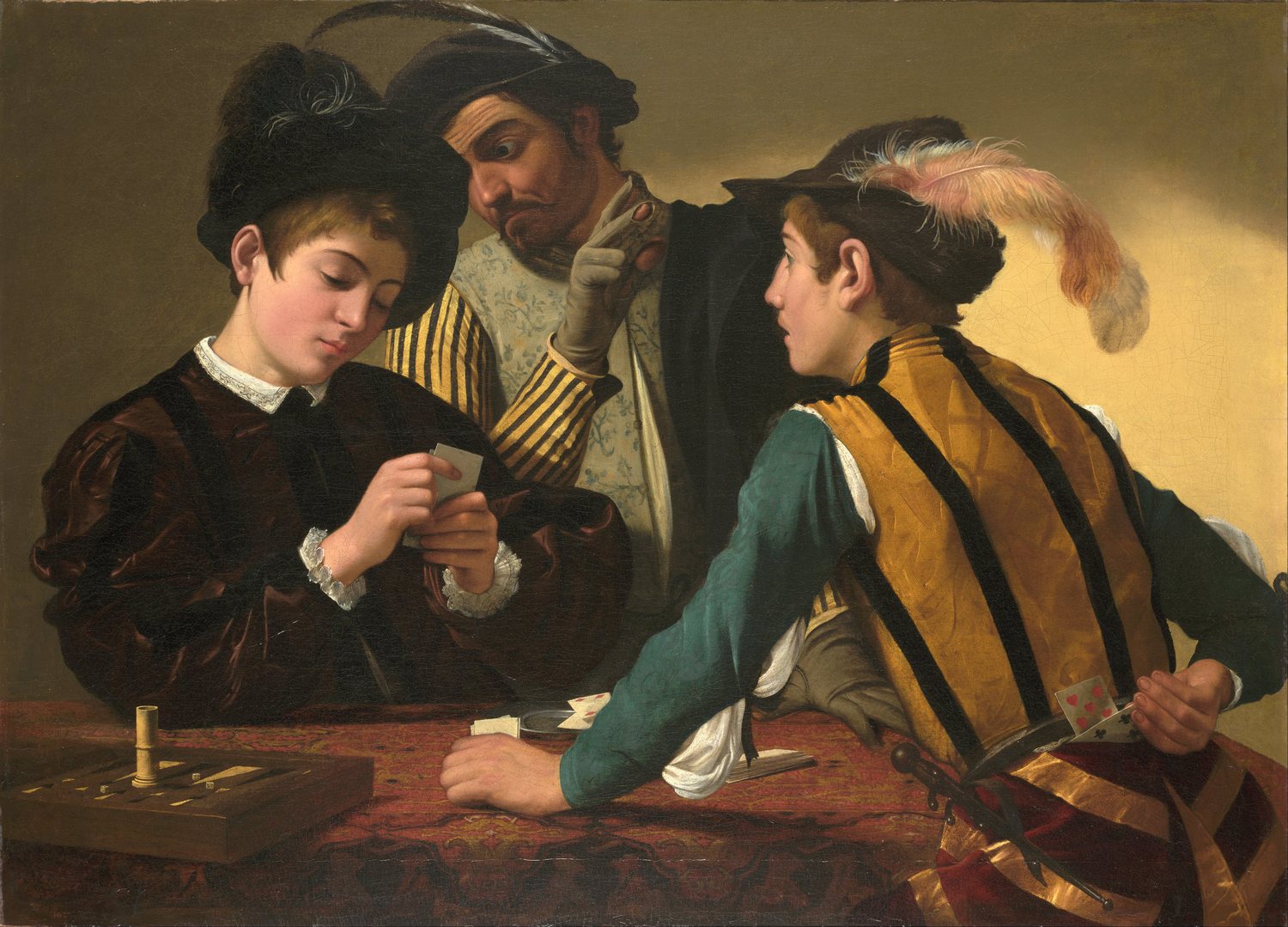
A rich boy in brocade is being fleeced at cards: the older cheat signals the hidden card to his accomplice, whose glove is torn at the fingertips for feeling the marked deck. It made Caravaggio's name in Rome — a whole novel of greed and innocence in three figures and daylight.
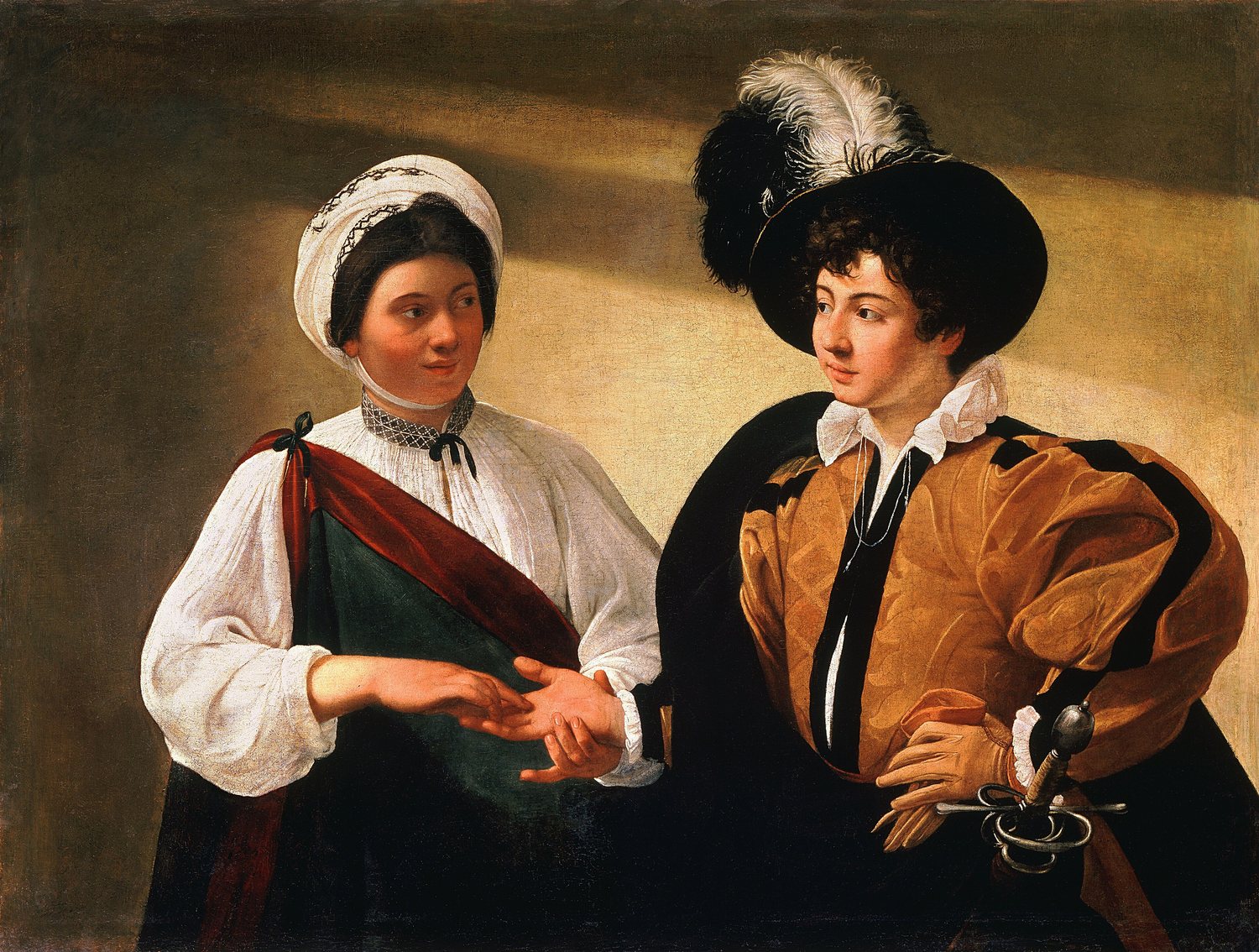
A gypsy girl reads a young dandy's palm — and slides the ring off his finger while she reads his future. He smiles at the fortune; we see the theft. Caravaggio painted the scene twice, and Rome's artists, Vasari's heirs said, learned more from it than from a hundred altarpieces.
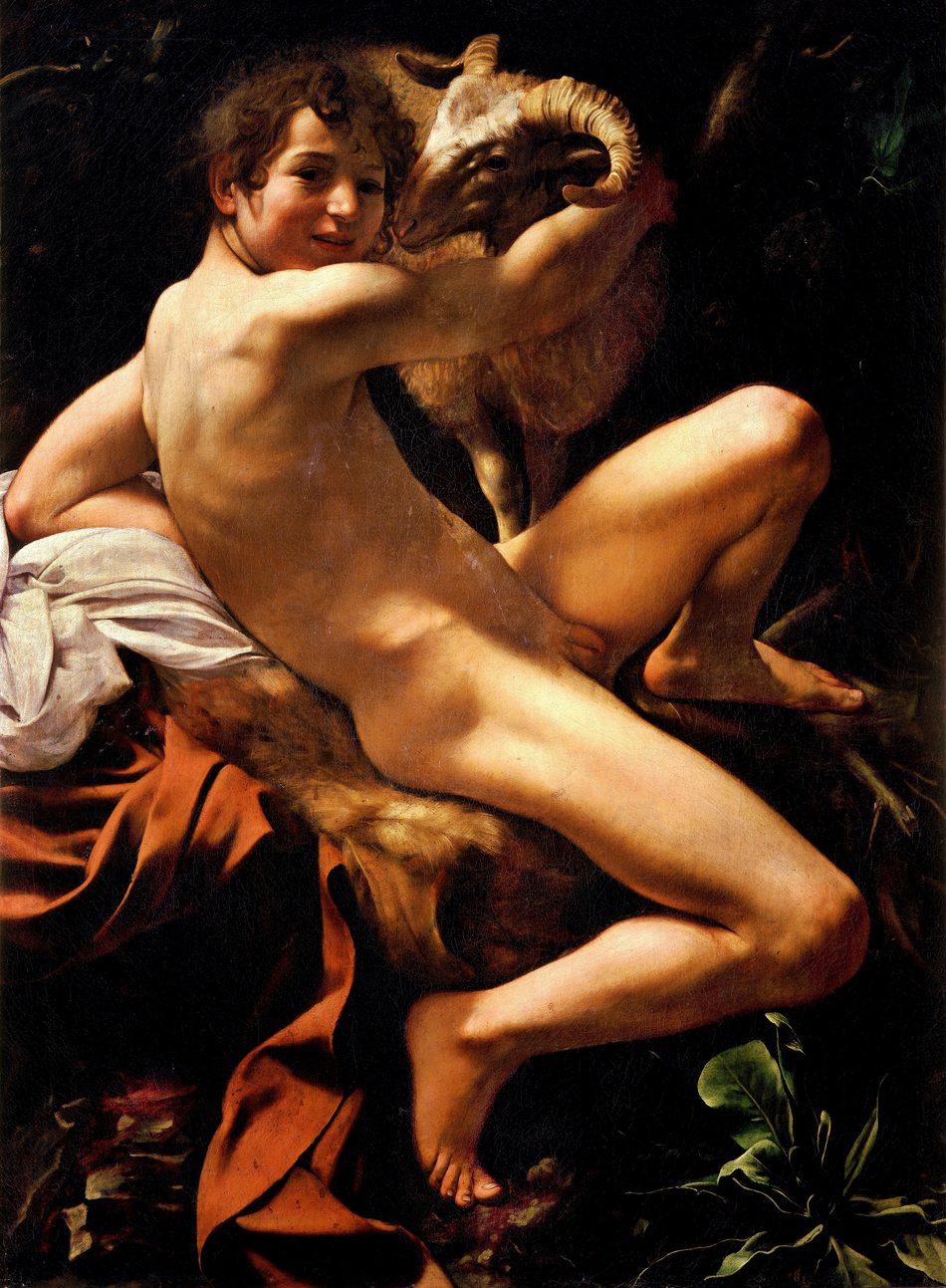
A naked street boy hugs a ram and grins out at us from the wilderness — the Baptist as a Roman urchin, theology entirely replaced by presence. The model, some say, was Cecco, the painter's apprentice and companion; the ram was certainly painted from life.
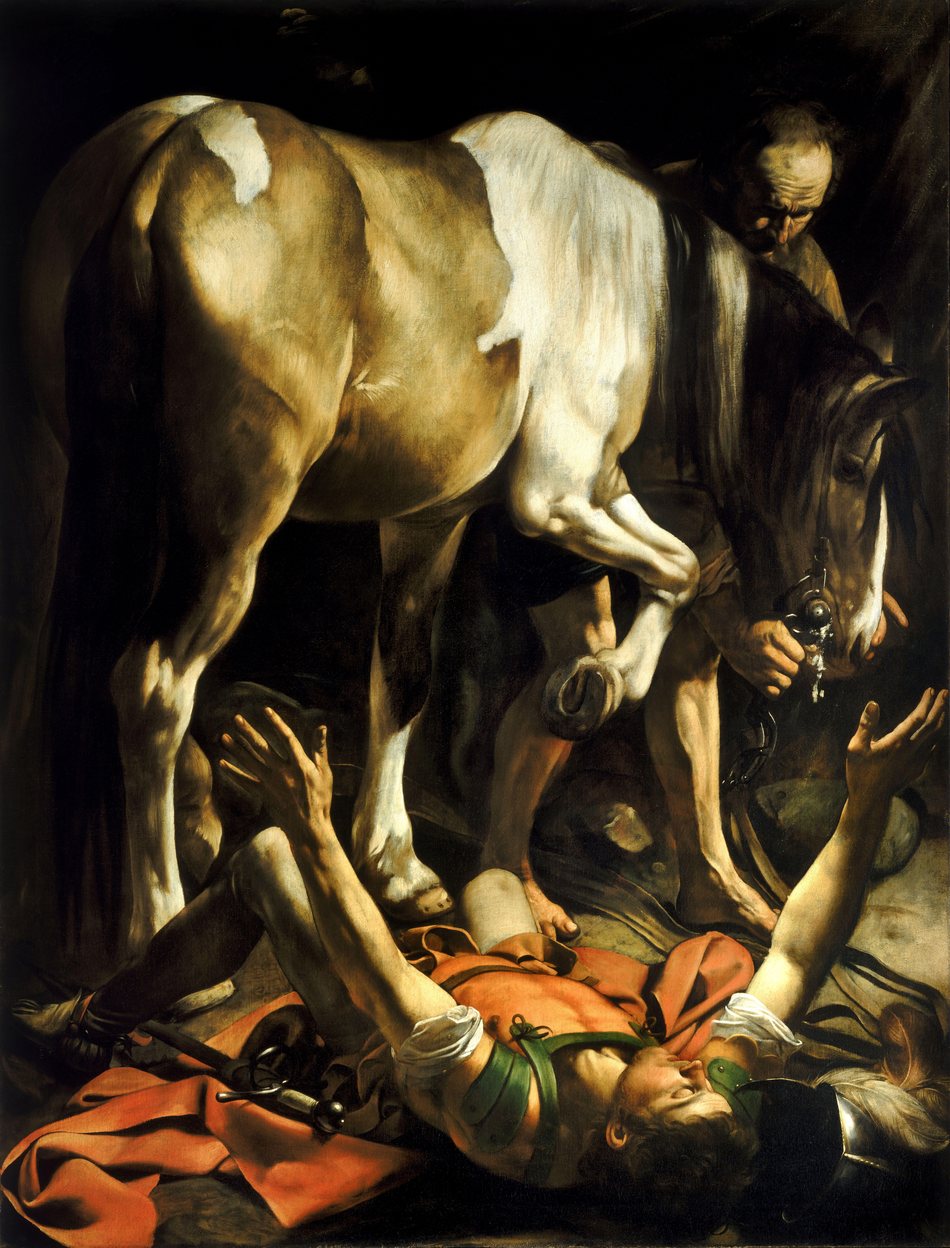
Saul lies blinded in the straw under his own horse, arms lifted toward a light we cannot see, while the horse's great calm body fills the chapel wall like a mountain. The stable boy looks away. Conversion, here, is something that happens on the floor of a stable, in the dark.
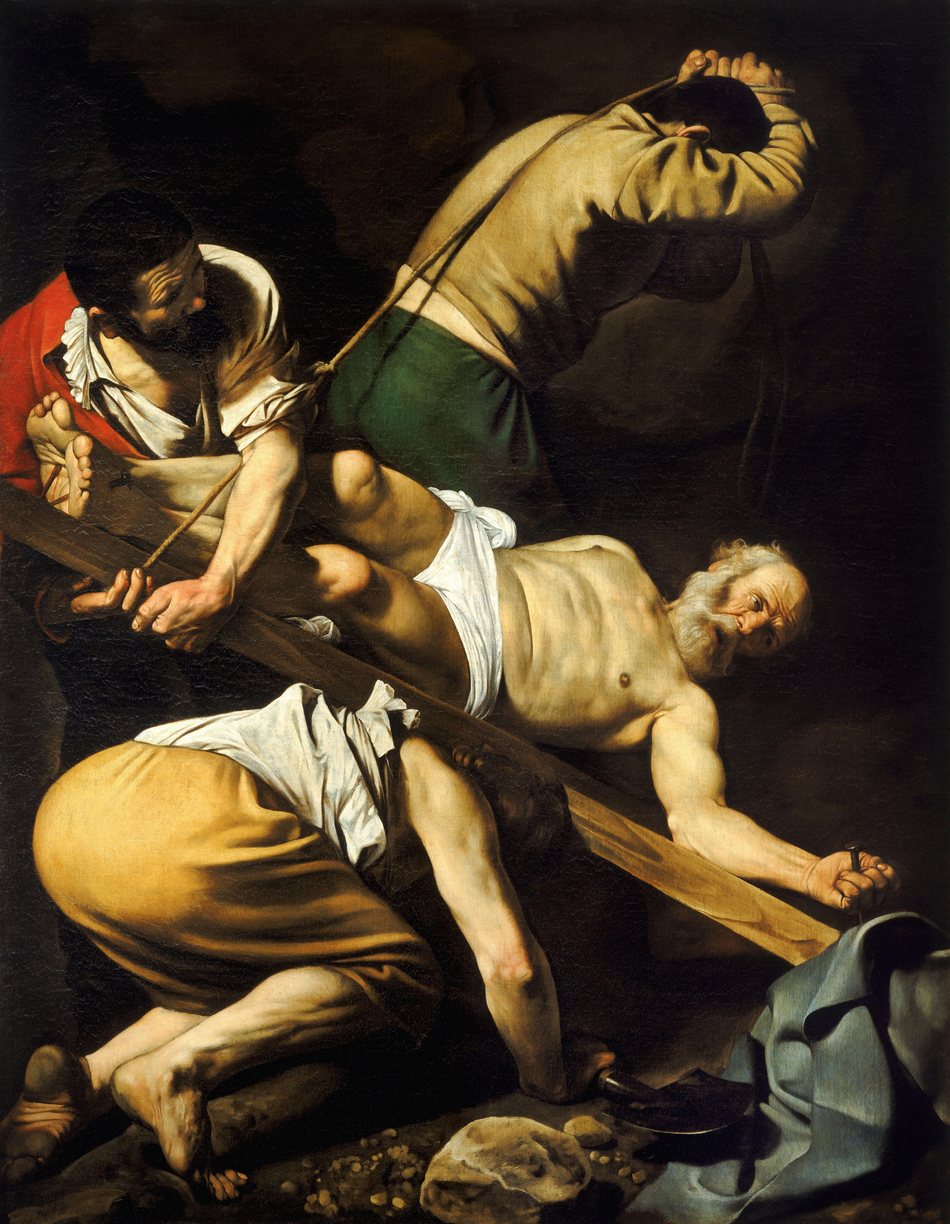
Three labourers heave the cross upright with ropes and shoulders, Peter's weathered body nailed upside down, his head lifting to look out at us. No angels, no glory — a work crew raising a heavy thing in a dark place, and the saint heavier than the wood.
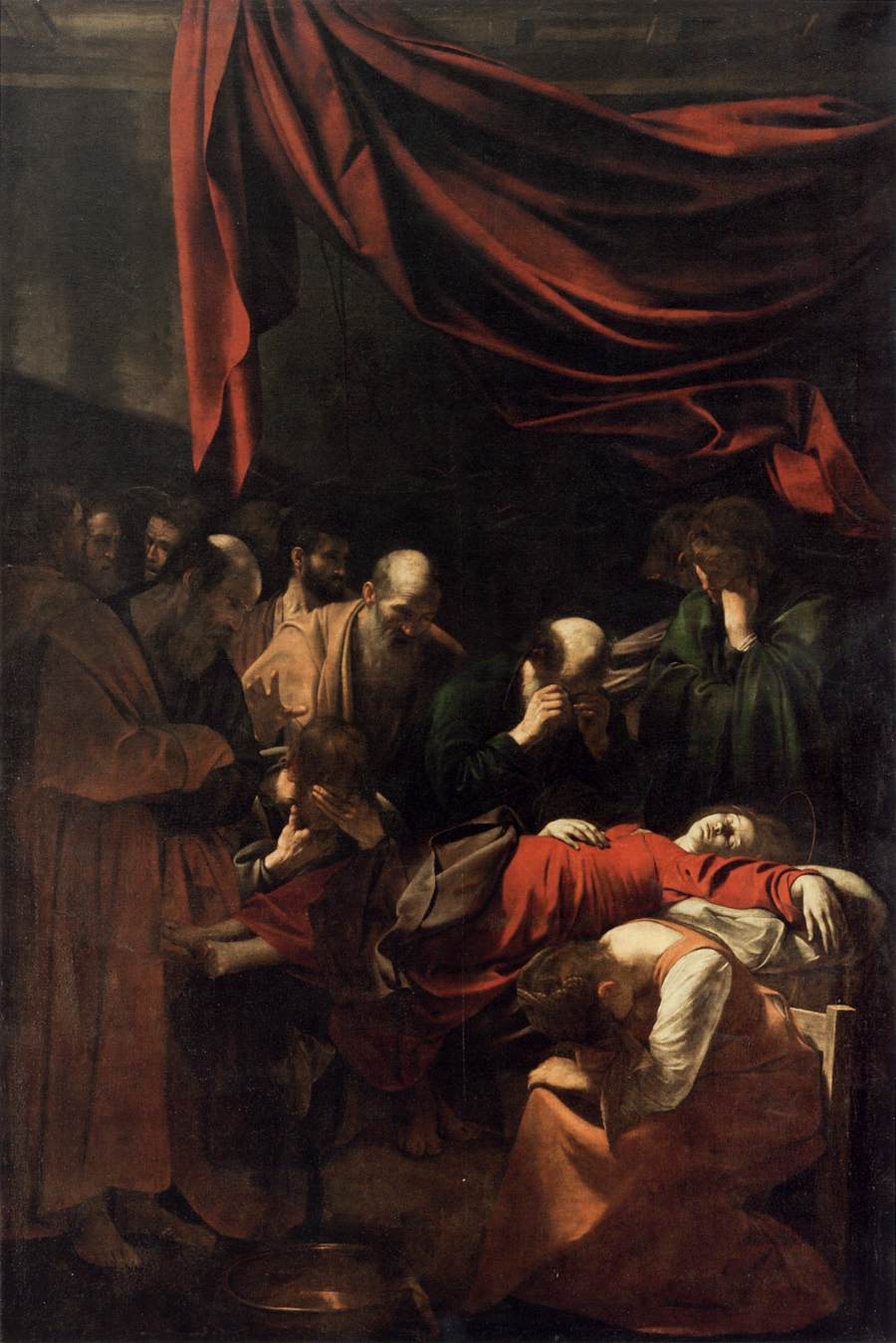
The Virgin lies dead on a plain bed, barefoot, her hand fallen, the apostles huddled in grief under a great red curtain — and the church that commissioned it refused it, scandalised by a Mary who looked like a real dead woman. Rubens, in Rome at the time, urged a duke to buy it instead.
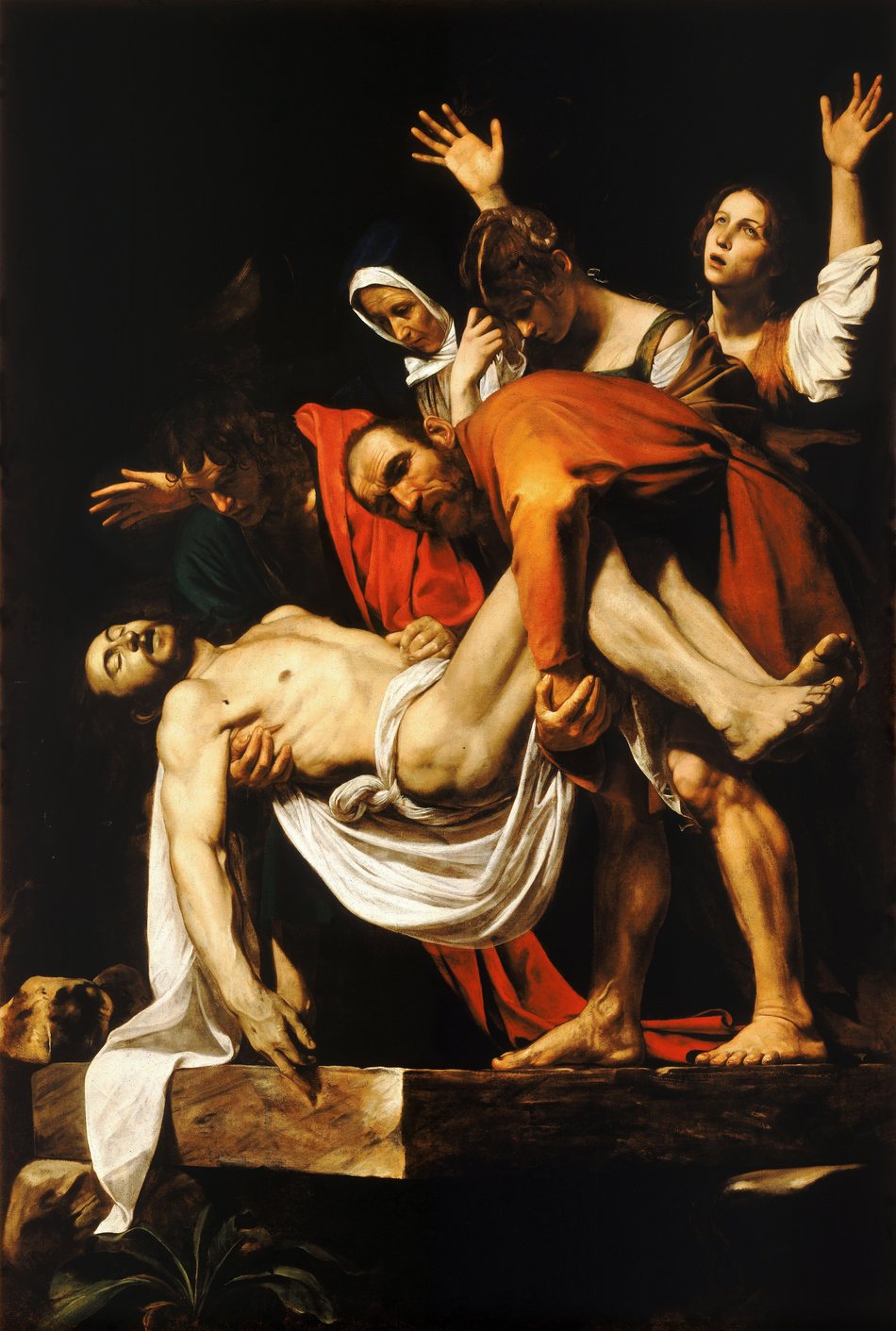
Christ's body is lowered toward the slab, its dead arm hanging straight at us, the bearers' fingers digging into the flesh, one mourner's arms flung to heaven. Painted for a chapel in the Chiesa Nuova, it became the most copied altarpiece in Rome — a machine for grief that still works.
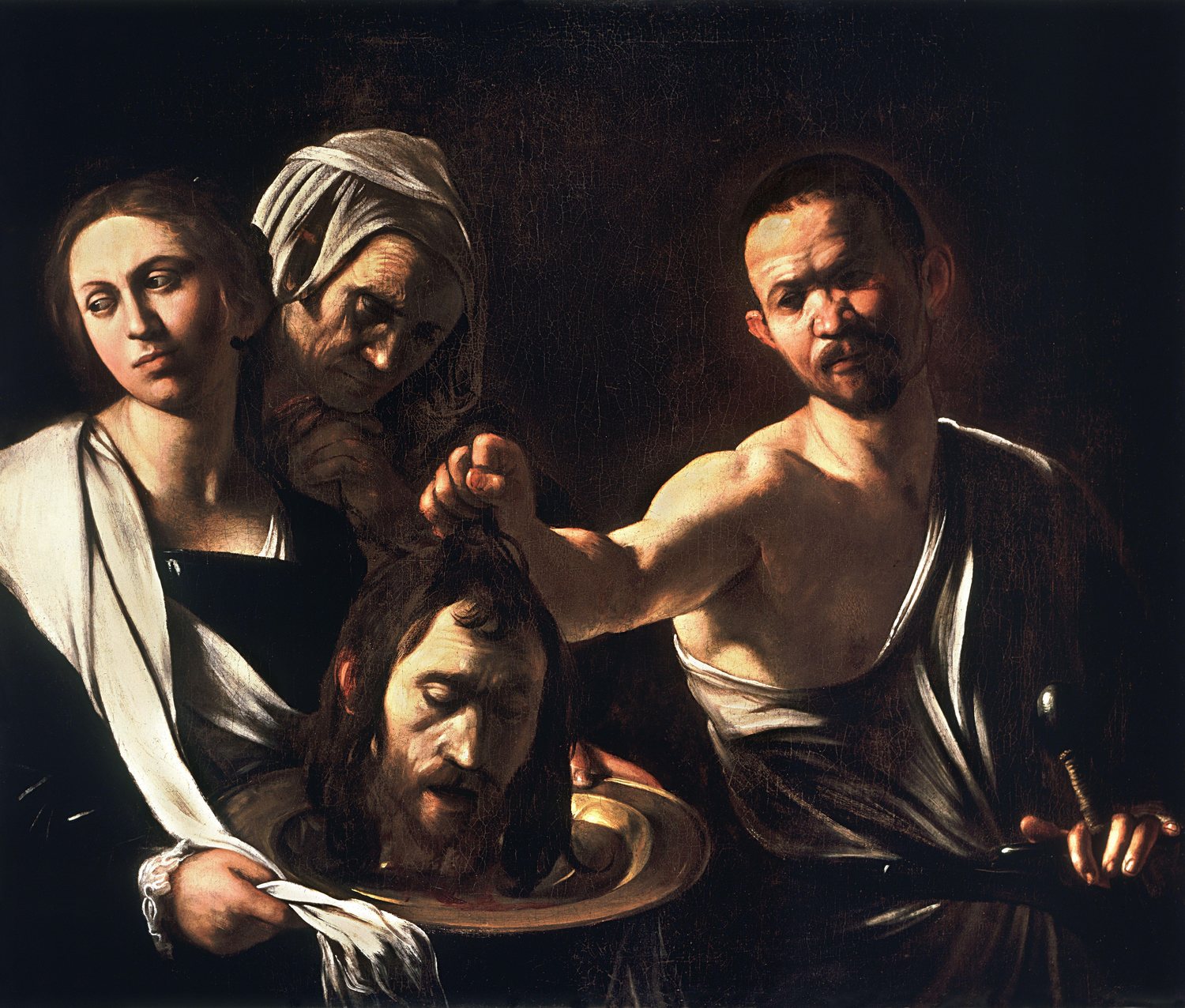
A late work from the flight years: Salome holds the platter almost reluctantly, the old woman clutches her head, the executioner — Caravaggio's face again — stares out. Everything is tired, quiet, and final; the violence is already over, and nobody in the picture is glad.
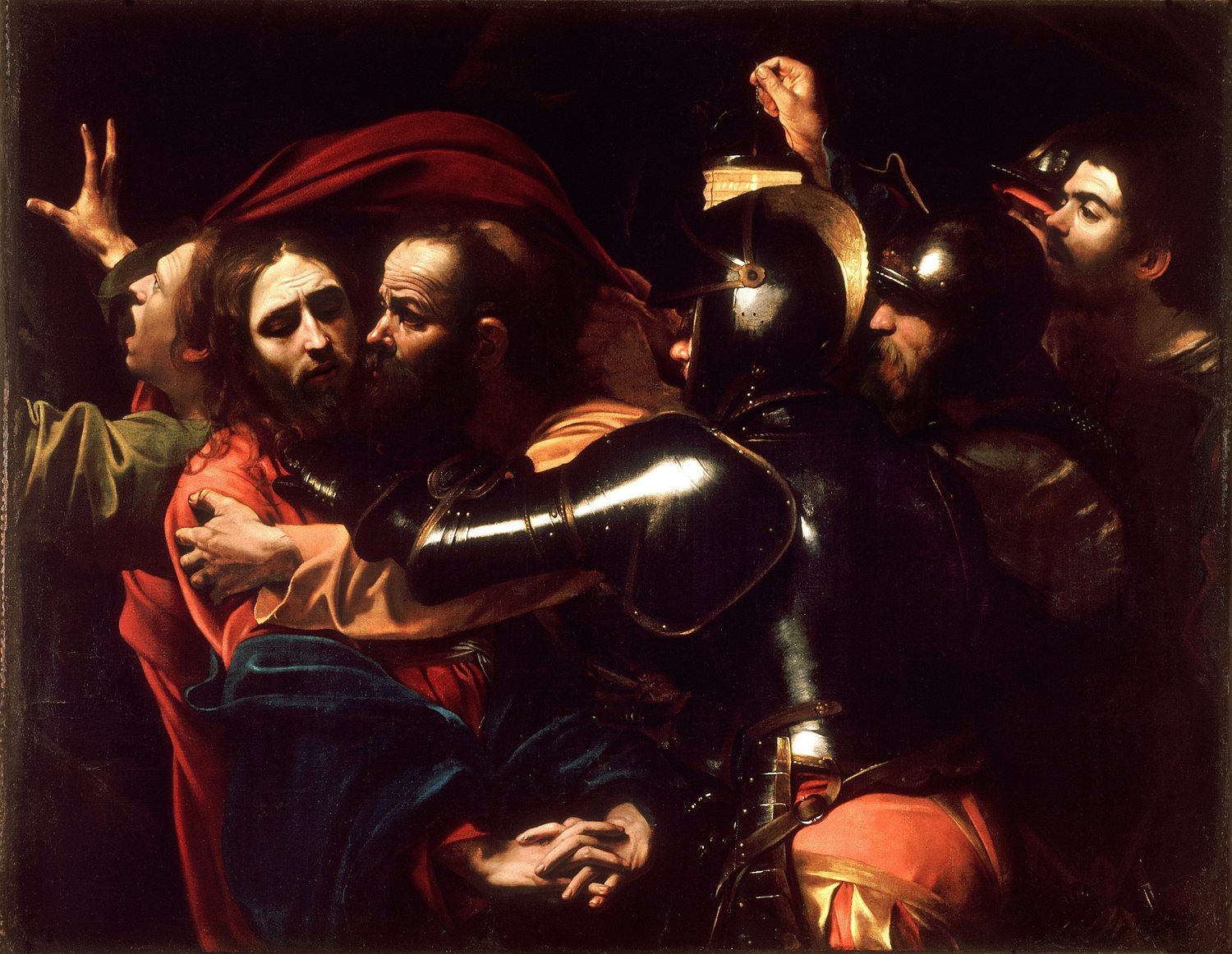
Judas kisses Christ as the soldiers' armour closes in like a machine, and at the right edge a man holds a lantern to watch — Caravaggio himself, lighting his own scene. Lost for two centuries, the picture was found in 1990 hanging in a Jesuit dining room in Dublin, mistaken for a copy.
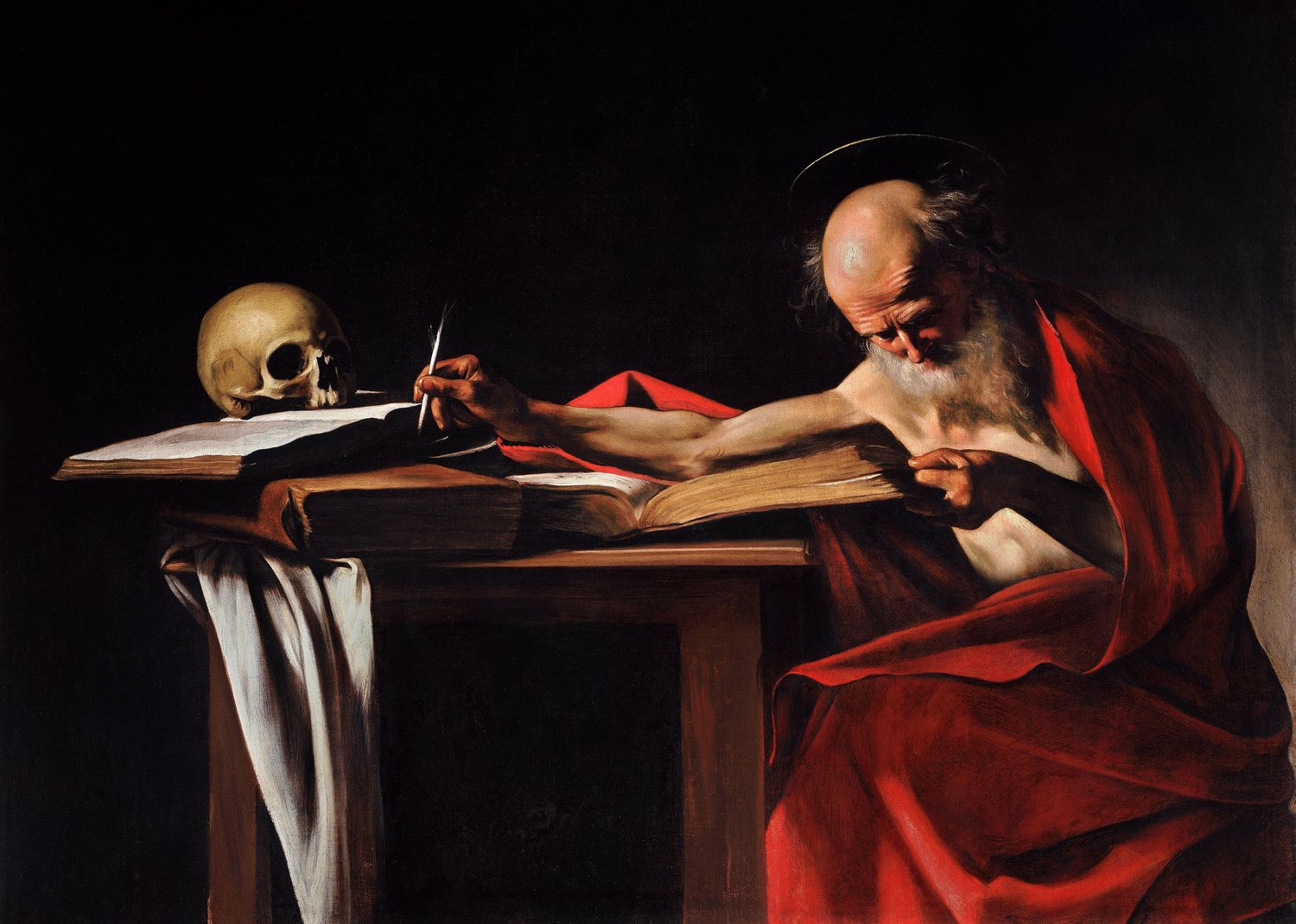
The old scholar bends over his book, a skull keeping him company on the desk, his red robe the only warmth in the dark. Painted for Cardinal Borghese, the pope's nephew — scholarship as a night shift, undertaken in the knowledge of death.
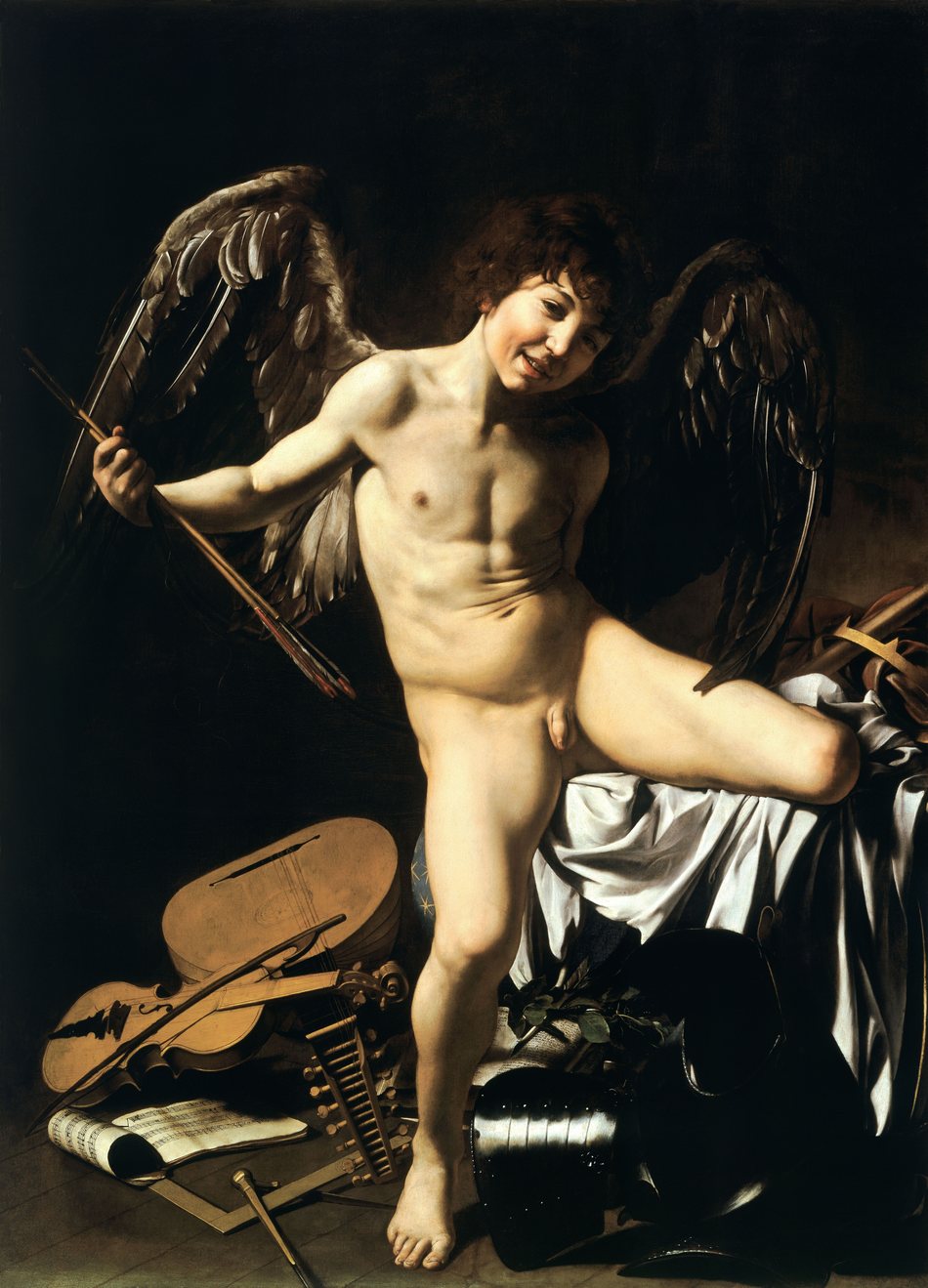
Love, a grinning street Cupid with dark wings, tramples the symbols of all human achievement — armour, laurel, geometry, music — under his feet. A banker commissioned it and kept it behind a curtain, unveiling it only to guests he wished to devastate.
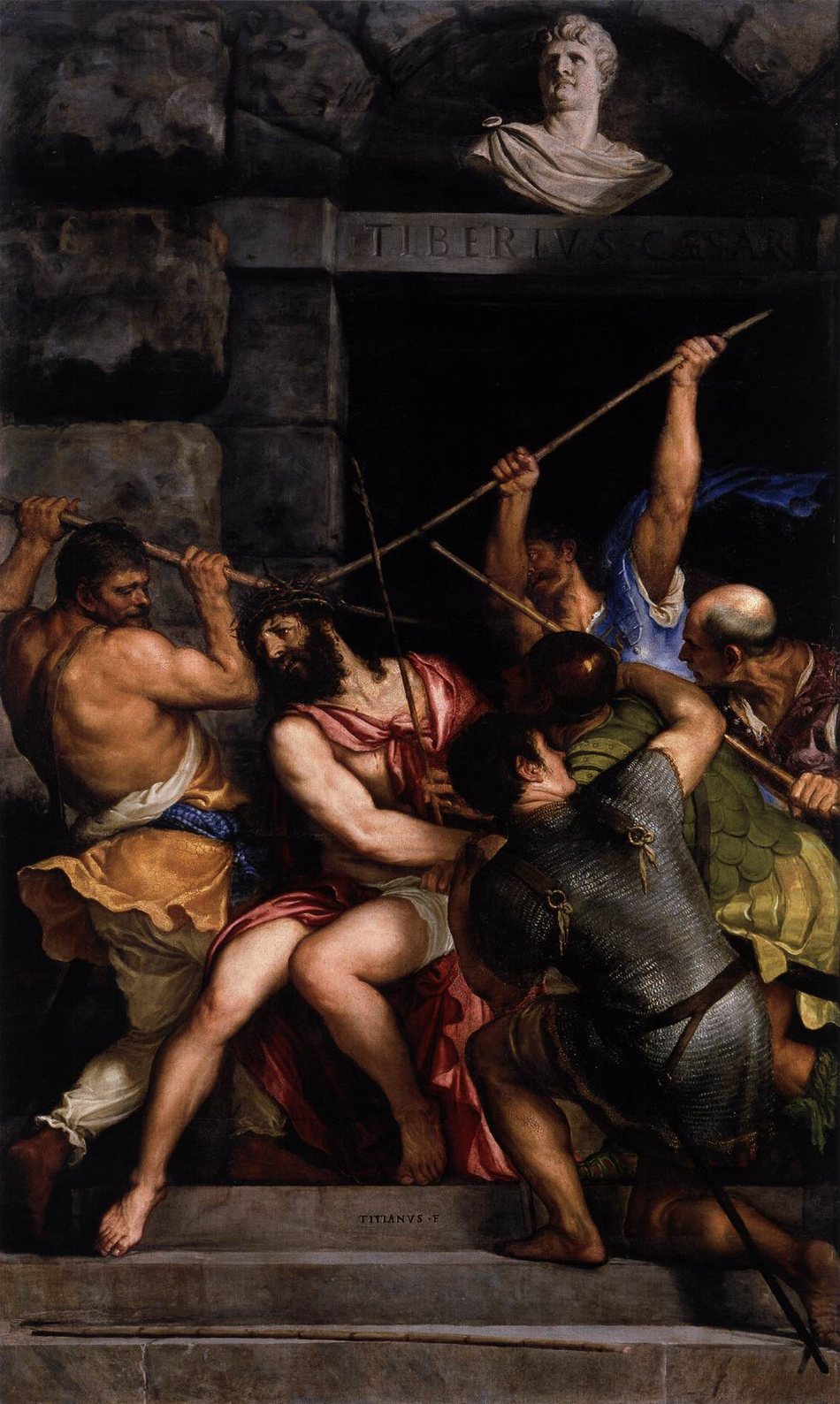
The tormentors jam the crown on with sticks while a man in armour — a portrait of the painter, some believe — watches the torture he is helping to perform. Painted in Naples during the flight, it is among the coldest pictures of cruelty ever made.
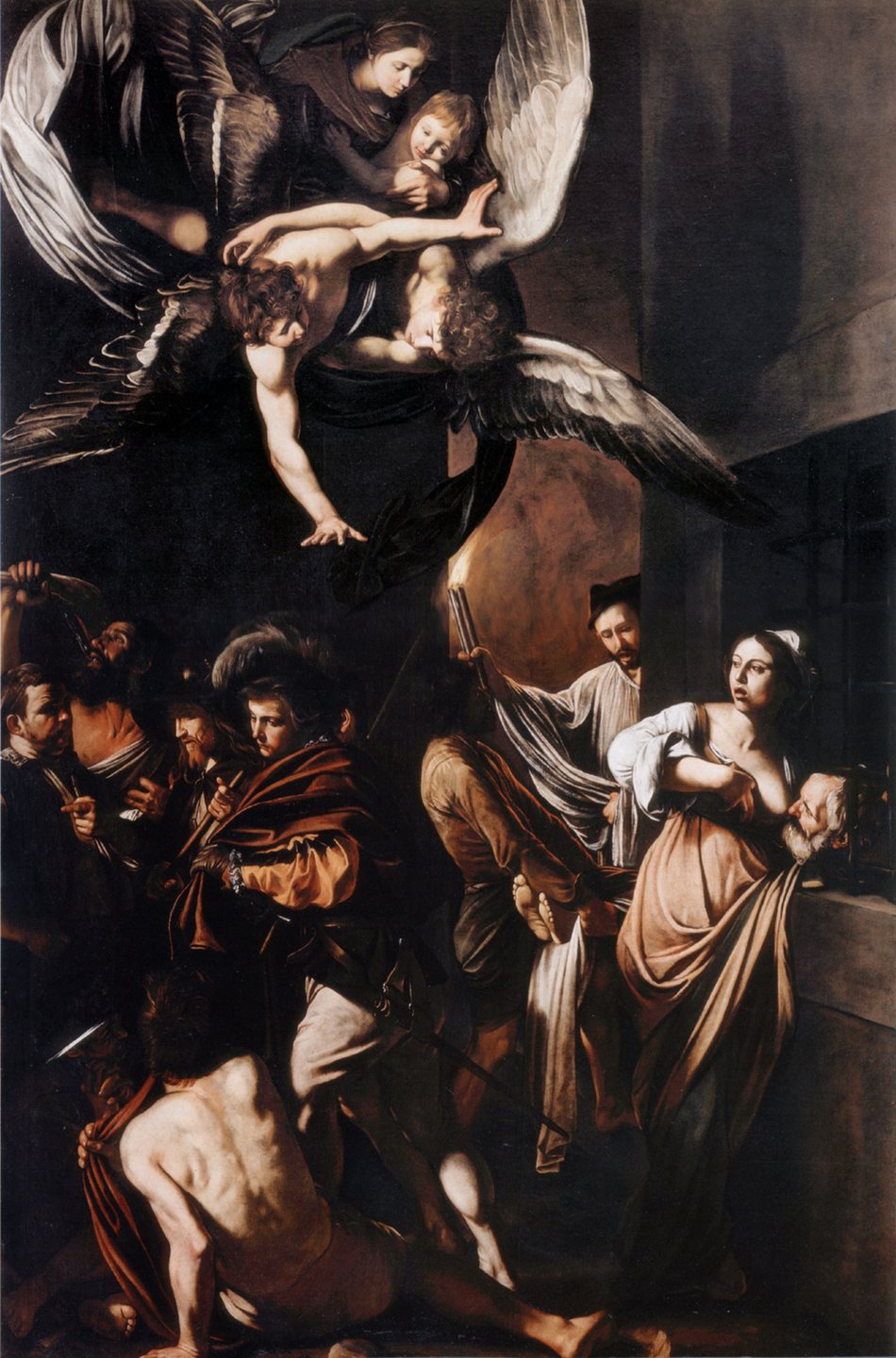
All seven acts of mercy crowded into one Neapolitan alley at night: the hungry fed, the prisoner visited, the dead buried, a daughter nursing her imprisoned father — a whole city's conscience staged under one lantern. Painted in weeks, for a confraternity that still owns it, in the church where it still hangs.
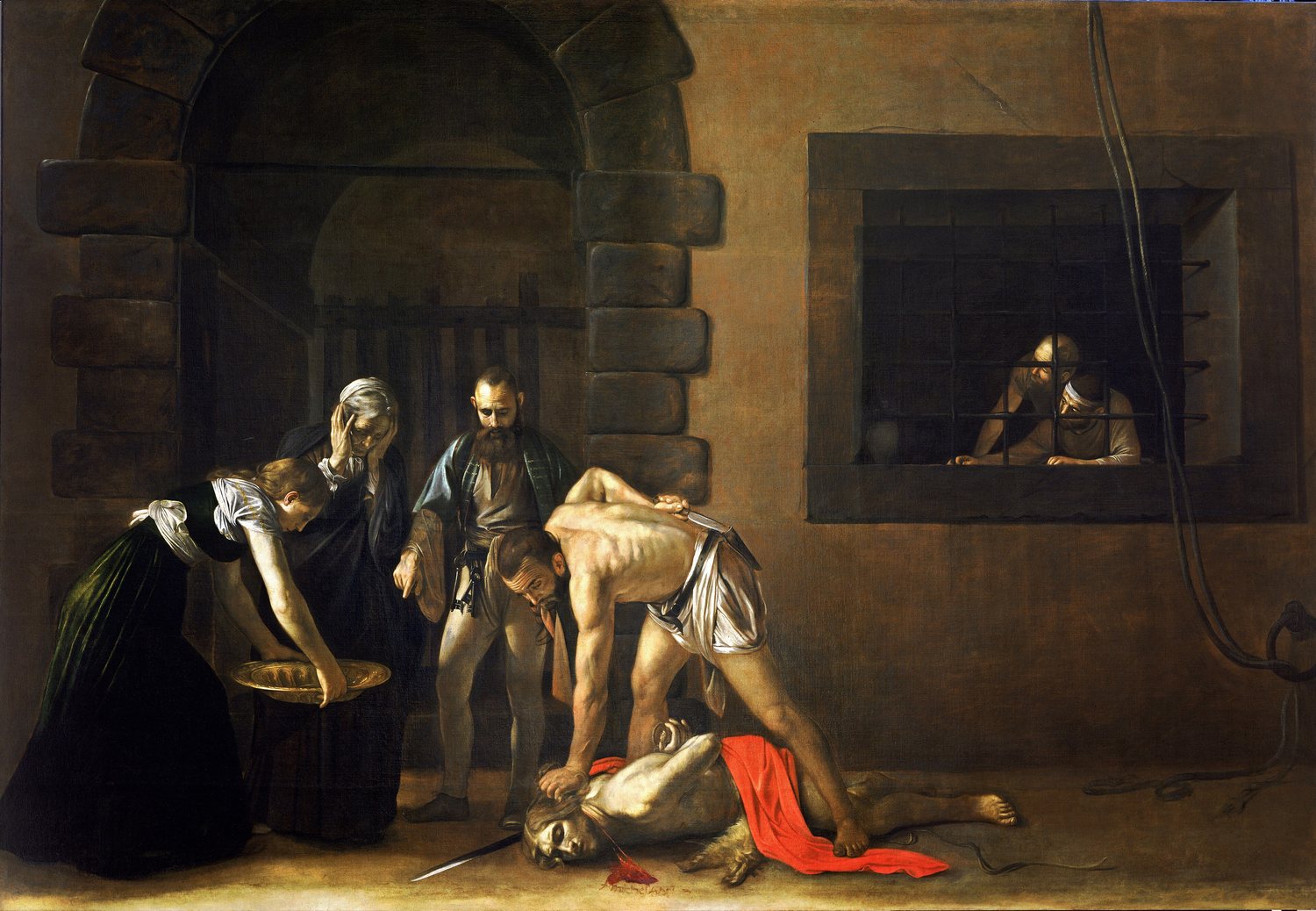
His largest canvas — over five metres wide — painted in Malta in the oratory where it still hangs: the executioner reaches for his dagger to finish the work, the prisoners watch from a barred window, and in the Baptist's spreading blood the painter signed his name: f MichelAngelo. The only signature of his life, written in red.