Botticelli painted the spring of the Renaissance itself — dancing Graces, a Venus arriving on a shell, Madonnas writing among angels — in egg tempera and gold, with a line so musical that Florence forgave him everything, even the strange, severe pictures of his old age under Savonarola's shadow.
Sandro was apprenticed first to a goldsmith, and it never left his hand: the jeweller's precision in a pearl, a brocade, a punched gold halo; draperies edged like enamel. Only after the gold bench did he pass to Fra Filippo Lippi's workshop — the line learned from metal, the faces from Lippi.
His medium was egg tempera — pigment in egg yolk — which dries within minutes and cannot be blended wet. The flesh and draperies are built from thousands of fine hatched strokes laid side by side, which is why his surfaces shimmer like woven silk and his outlines stay razor sharp.
In Botticelli the contour does the work that modelling does in others: a neck curves beyond anatomy, hair streams in ribbons, a veil floats against the wind of the composition. It is drawing as calligraphy — grace chosen over correctness, and recognisable across a crowded room.
Gold leaf went onto a cushion of red bole, was burnished with a dog-tooth stone and then punched with patterned dies — halos, crowns, the brocades of angels. In the Primavera the oranges themselves are gilded fruit. The goldsmith's bench is inside every picture.
The friar Savonarola's preaching shook Florence, and the painter's brother was a follower. Vasari claims Botticelli threw some of his own profane works into the Bonfire of the Vanities in 1497 — the claim is doubted, but the late pictures change unmistakably: harder, more crowded, preaching in paint.
After his death in 1510 the new century of Raphael and Michelangelo swept him aside, and his panels slept in villas and sacristies. The nineteenth century woke him: the Pre-Raphaelites, Ruskin and Walter Pater made the melancholy goldsmith-painter a modern idol — which is why we meet him now as a superstar of a Florence that had forgotten him.
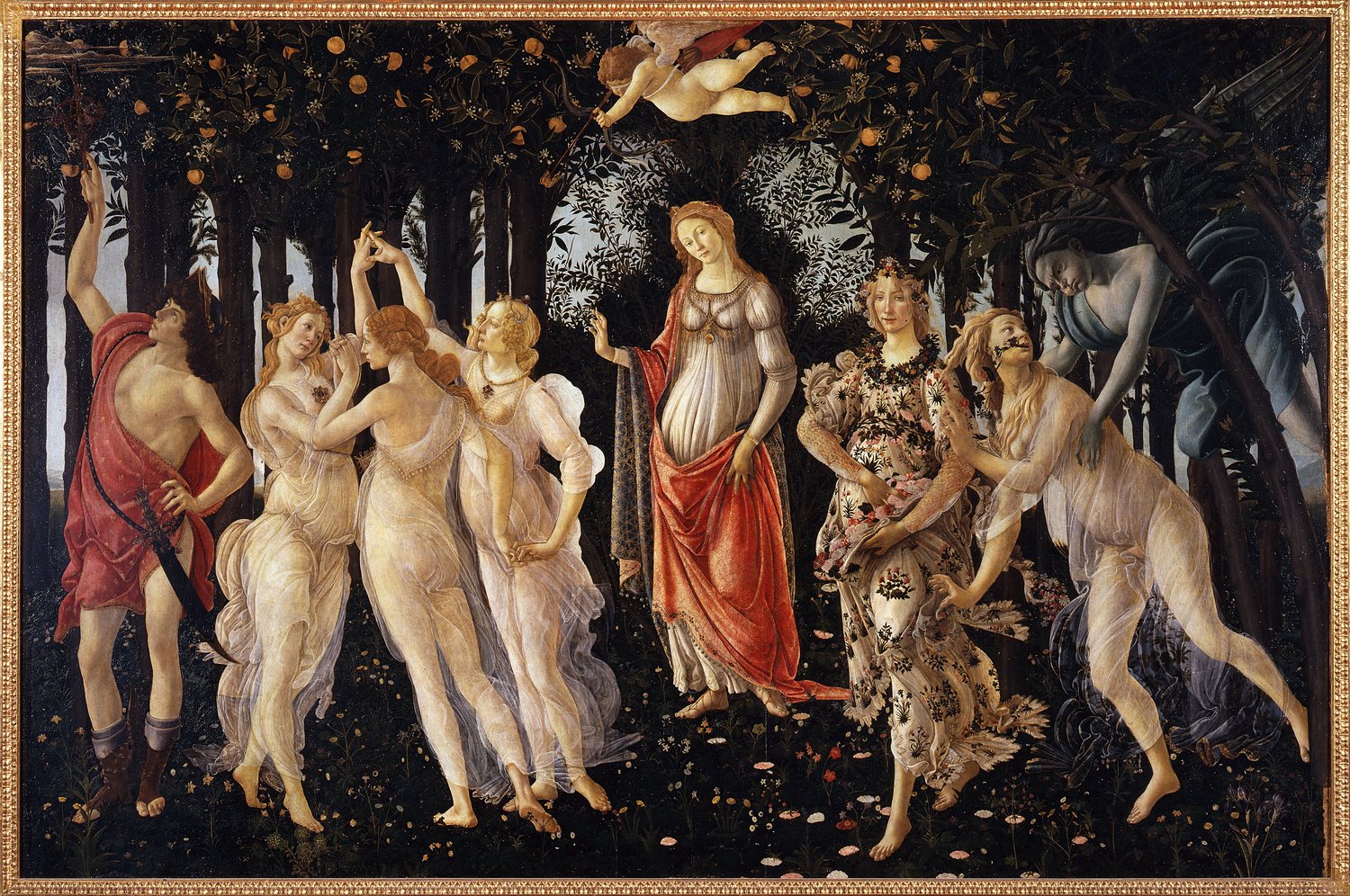
Spring enters an orange grove: Zephyrus seizes Chloris, who becomes Flora scattering roses; Venus stands at the centre, the Graces dance, Mercury stirs the clouds. Botanists have identified some two hundred real plant species in the grass — a mythology painted with a herbalist's patience, probably for a Medici villa.
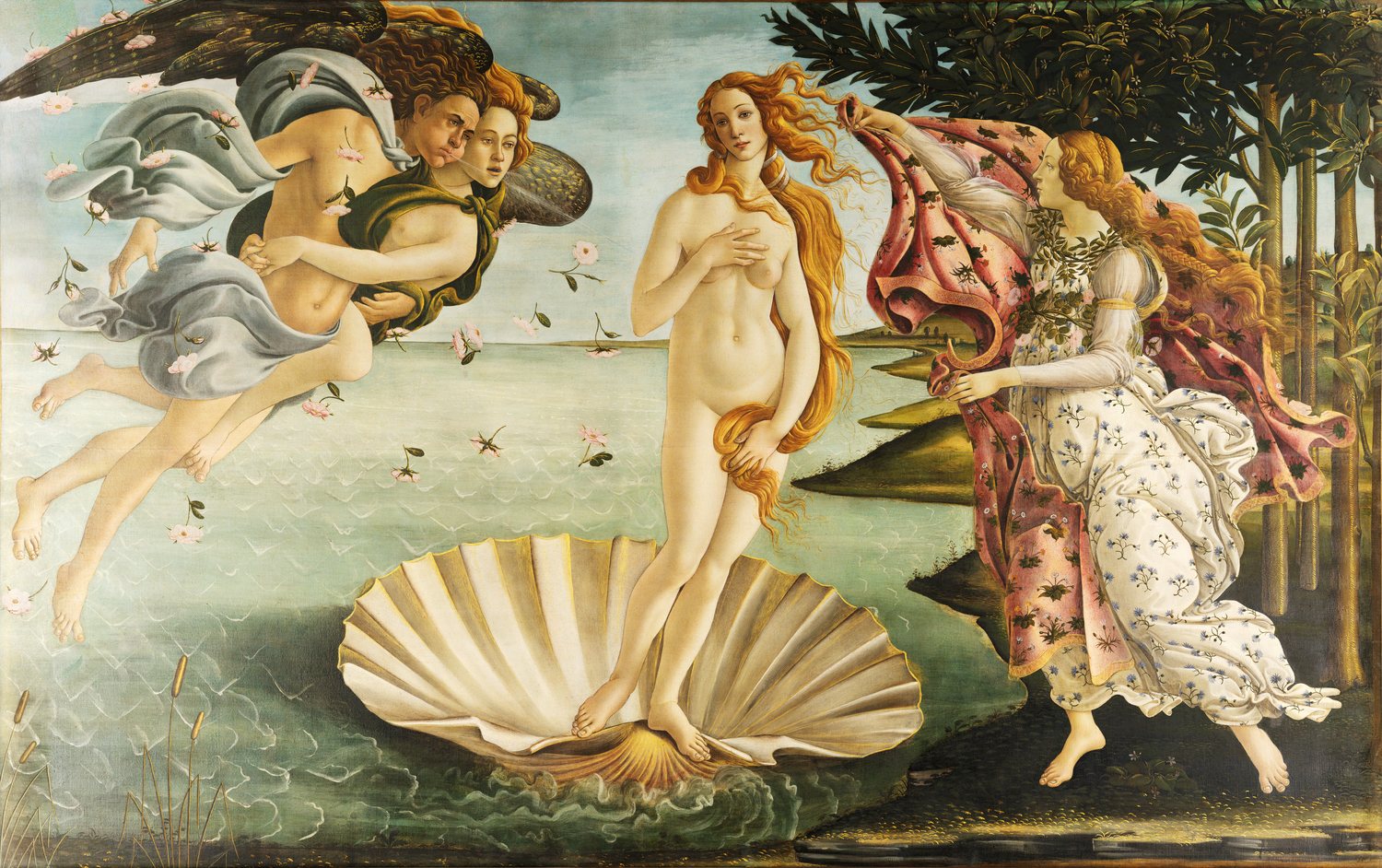
Venus arrives at Cyprus standing on a shell, blown ashore by the winds, a nymph waiting with a flowered cloak. Painted on canvas rather than panel — and the first full-length female nude in Western painting since antiquity. Tradition links her face to Simonetta Vespucci, the toast of Florence, dead at twenty-three; it cannot be proved, and has never needed to be.
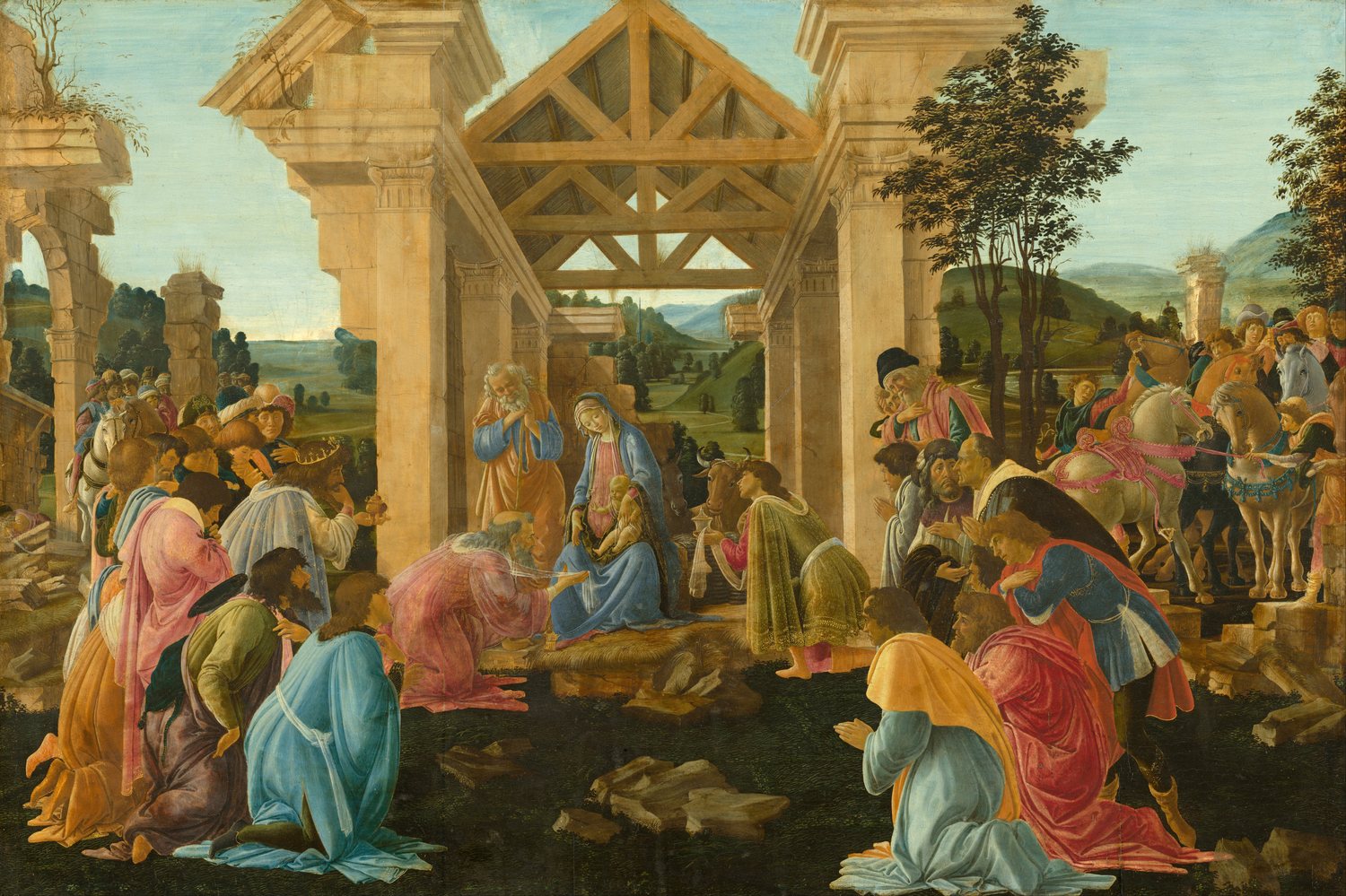
The Magi and their court are portraits: the Medici — Cosimo, Piero, Giovanni — kneel among the kings, and at the far right edge a young man in an ochre cloak looks straight out at us: Botticelli himself, twenty-something, painting his patrons and signing the crowd with his face.
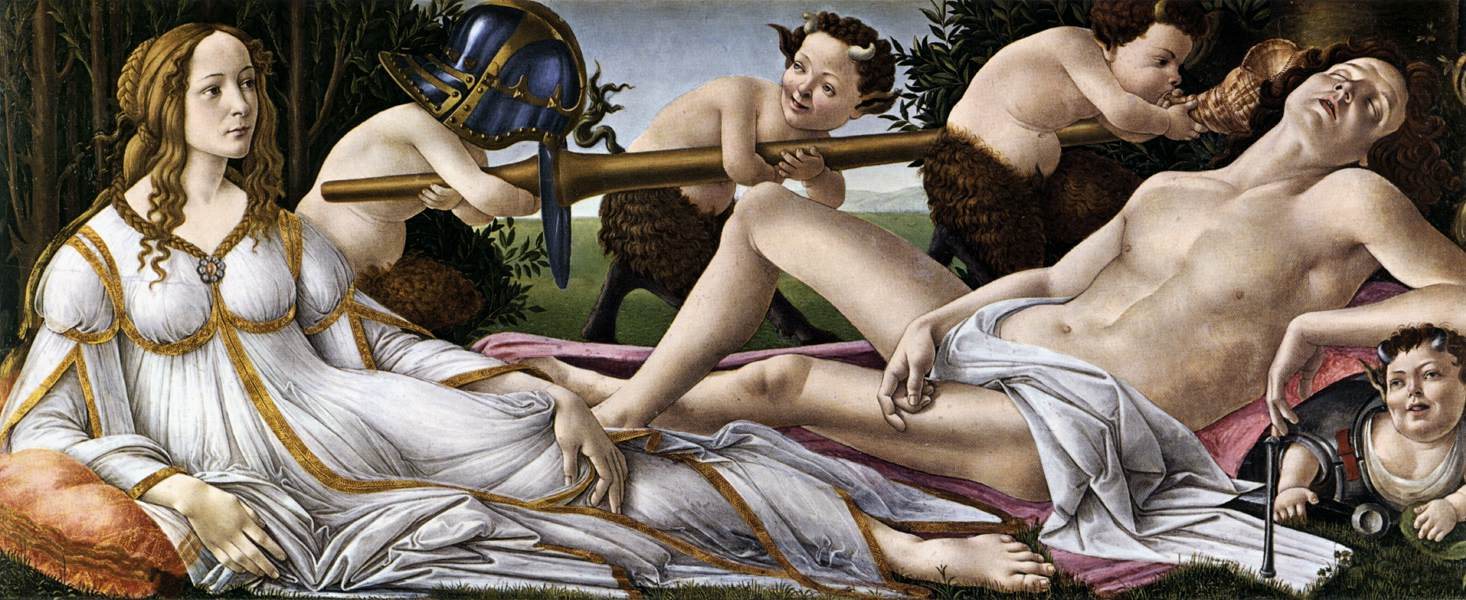
Love has disarmed war: Mars sleeps off the battle of love while little satyrs steal his lance, blow a conch in his ear and crawl inside his helmet. Wasps buzz at the right — vespe, a punning crest for the Vespucci family, who may have commissioned the panel for a wedding chamber.
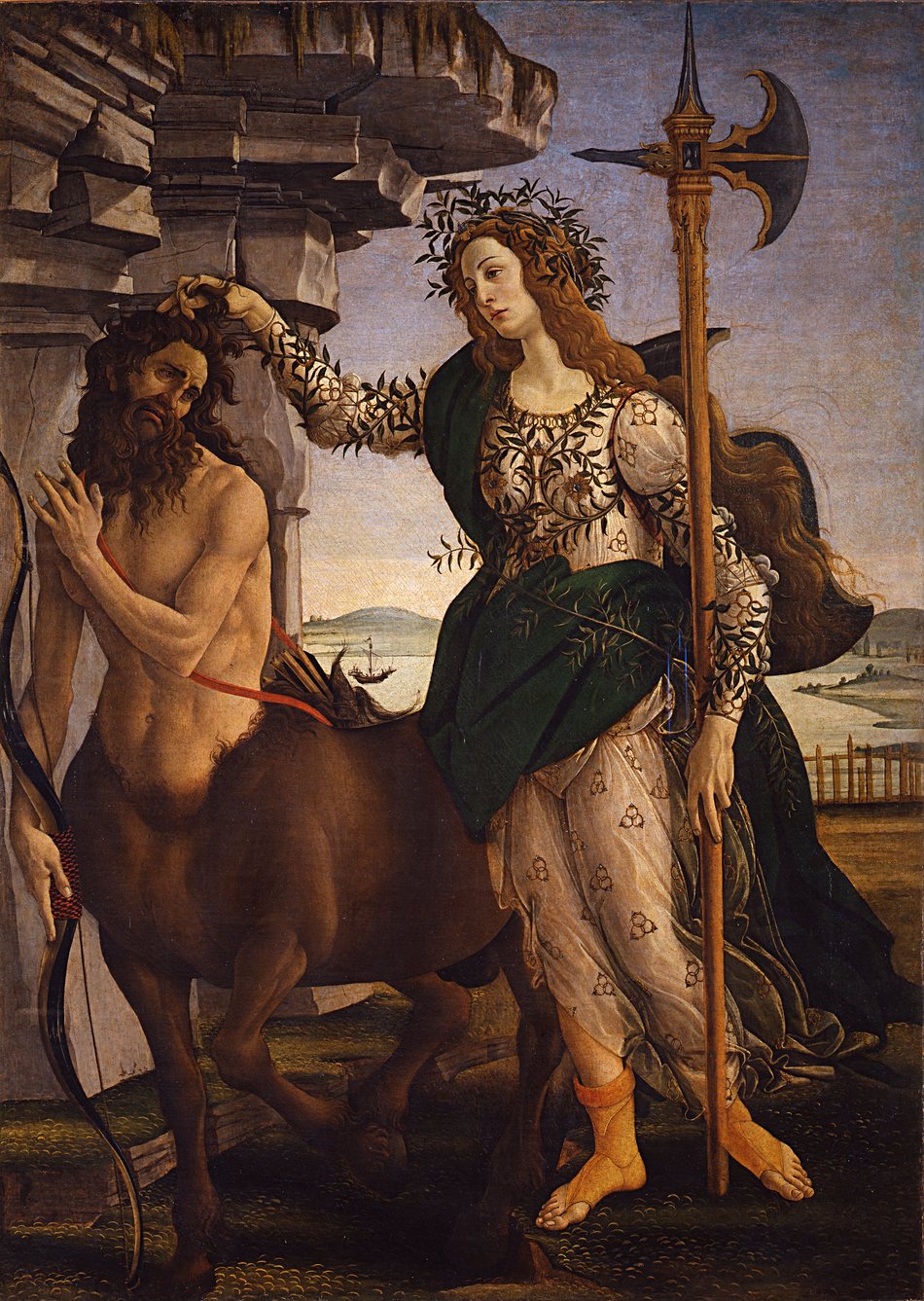
Pallas Athena, in a dress woven with the Medici diamond rings, takes the centaur gently by the hair — reason mastering the beast, without anger. Part allegory, part political emblem for Lorenzo de' Medici, it is among the calmest pictures of power ever painted.
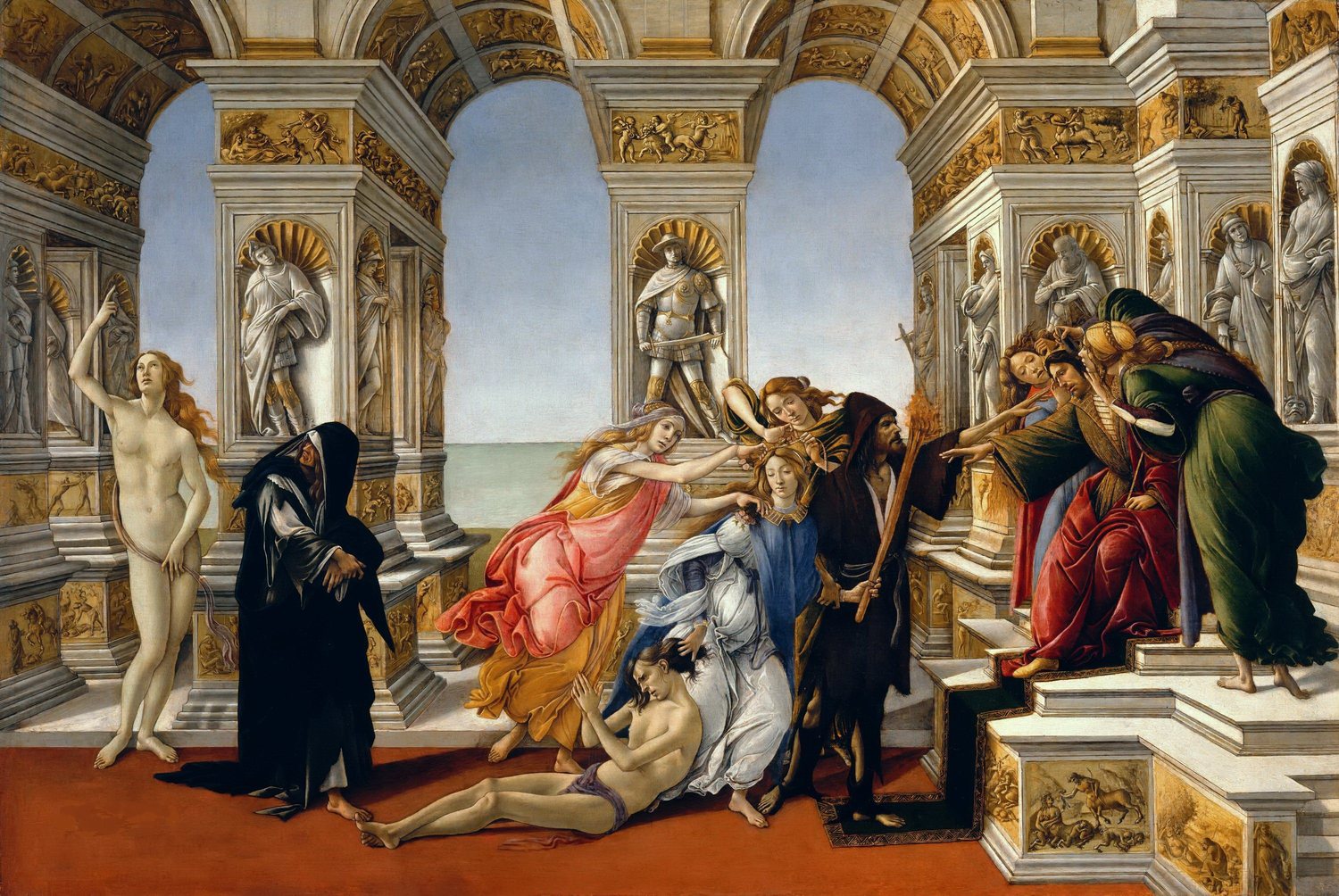
A lost painting by Apelles, rebuilt from Lucian's written description: Calumny drags an innocent youth before a king with ass's ears, attended by Ignorance and Suspicion, while Fraud and Conspiracy dress her hair and naked Truth arrives too late, pointing at heaven. A tiny panel, finished like a jewel — an essay on slander that every courtier in Florence understood.
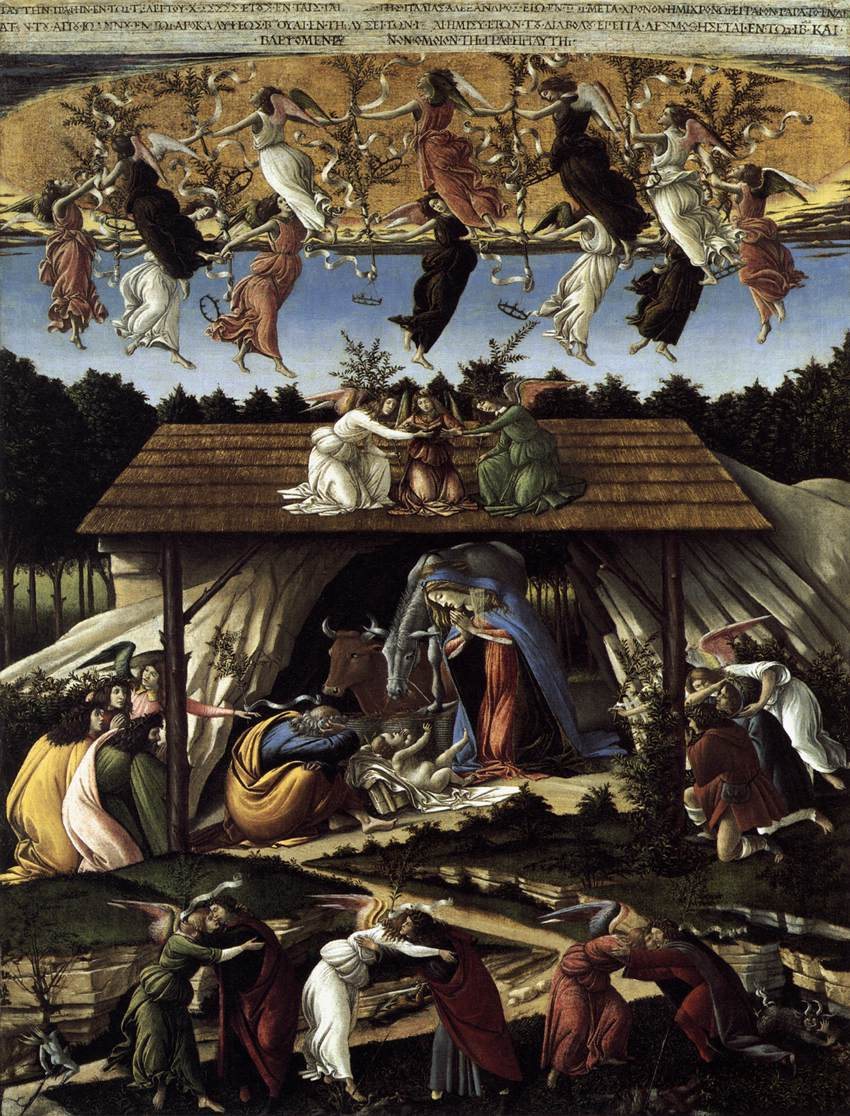
The only picture Botticelli ever signed — in Greek, along the top, with an inscription about the troubles of Italy and the end of the age. Angels dance on the stable roof holding olive branches, devils flee into cracks in the earth, and three men embrace in the foreground like survivors. Painted in Savonarola's Florence, it is a nativity as an apocalypse.
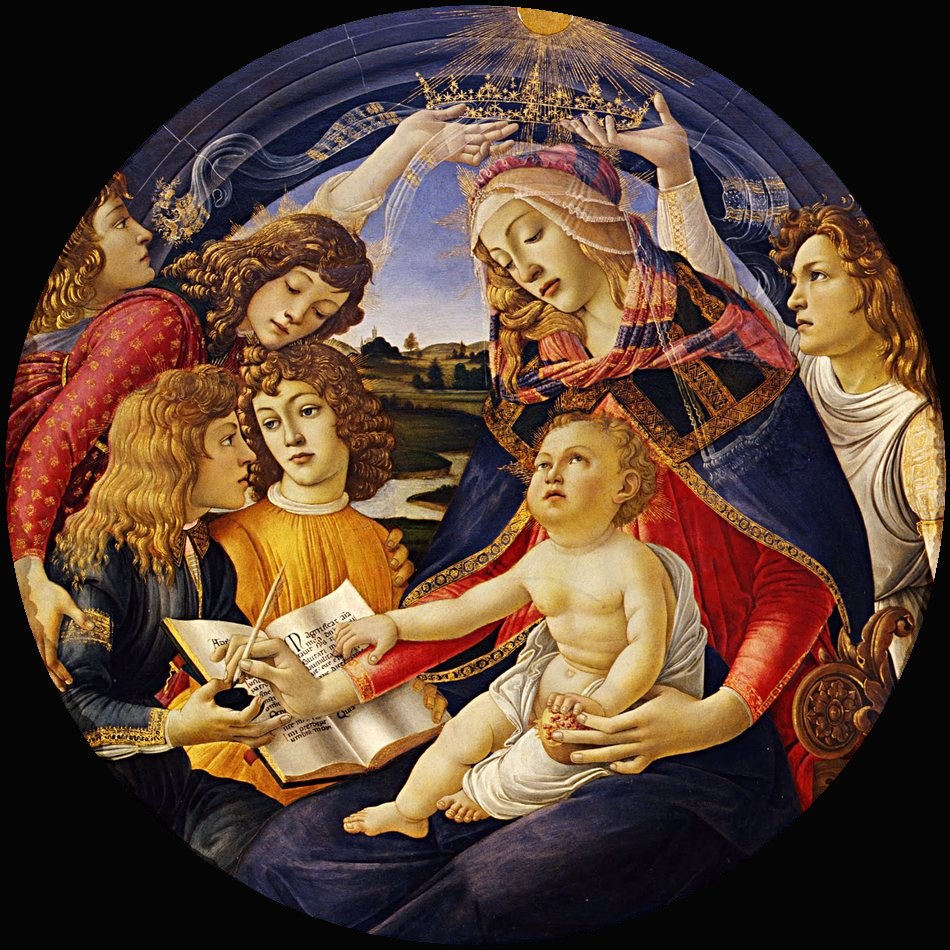
In a round panel made to hang in a Florentine palace, the Virgin writes the first words of the Magnificat in a book the Christ Child himself holds steady, guiding her hand, while angels crowd in with crowns and pomegranates. A private devotion picture executed like a state portrait.
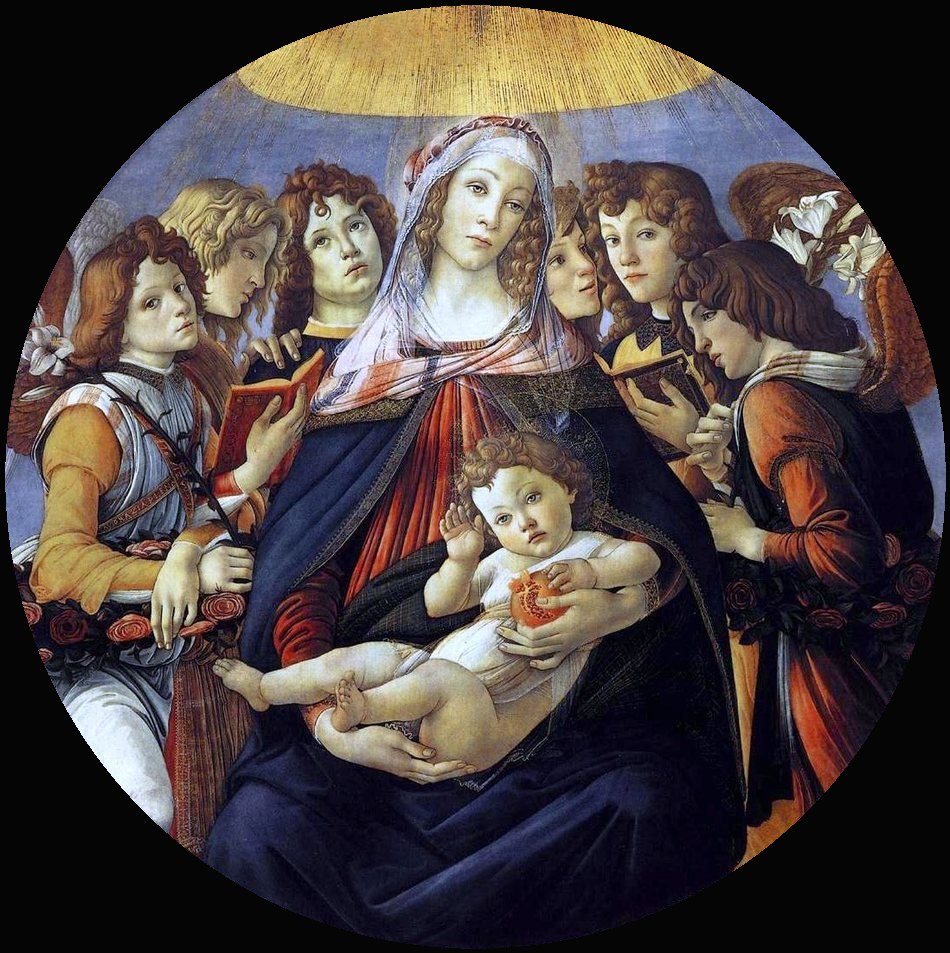
The Virgin holds the Christ Child and a pomegranate, its seeds — visible where the fruit is opened — an old symbol of the Church and of resurrection. Six angels with lilies and roses press close in the circle; the mood is tender and already melancholy, the mother's gaze somewhere beyond the frame.
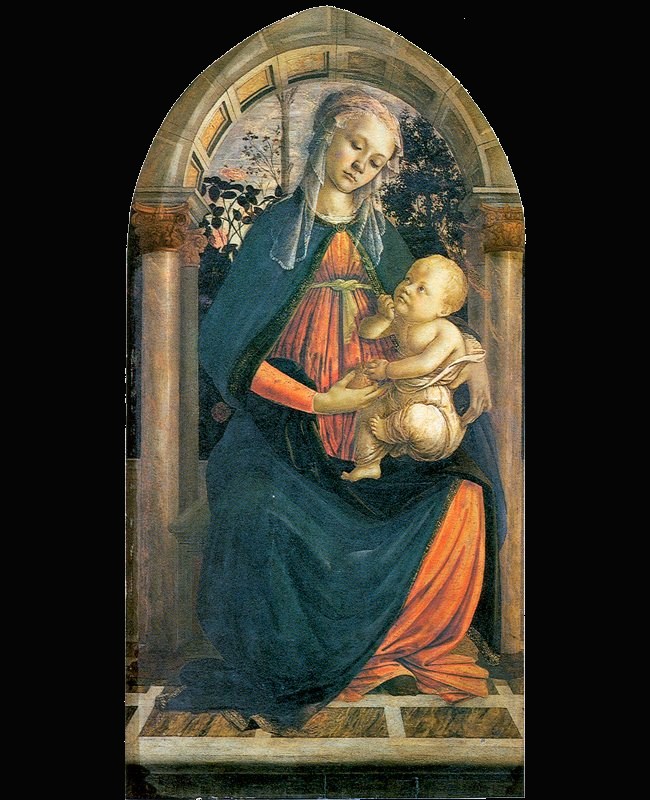
An early work, from the years just after Lippi's workshop: the Virgin sits in a loggia, the Child on her knee, a rose garden flowering behind the arch — Mary's own garden, the hortus conclusus. The architecture is still stiff; the tenderness is already entirely his.
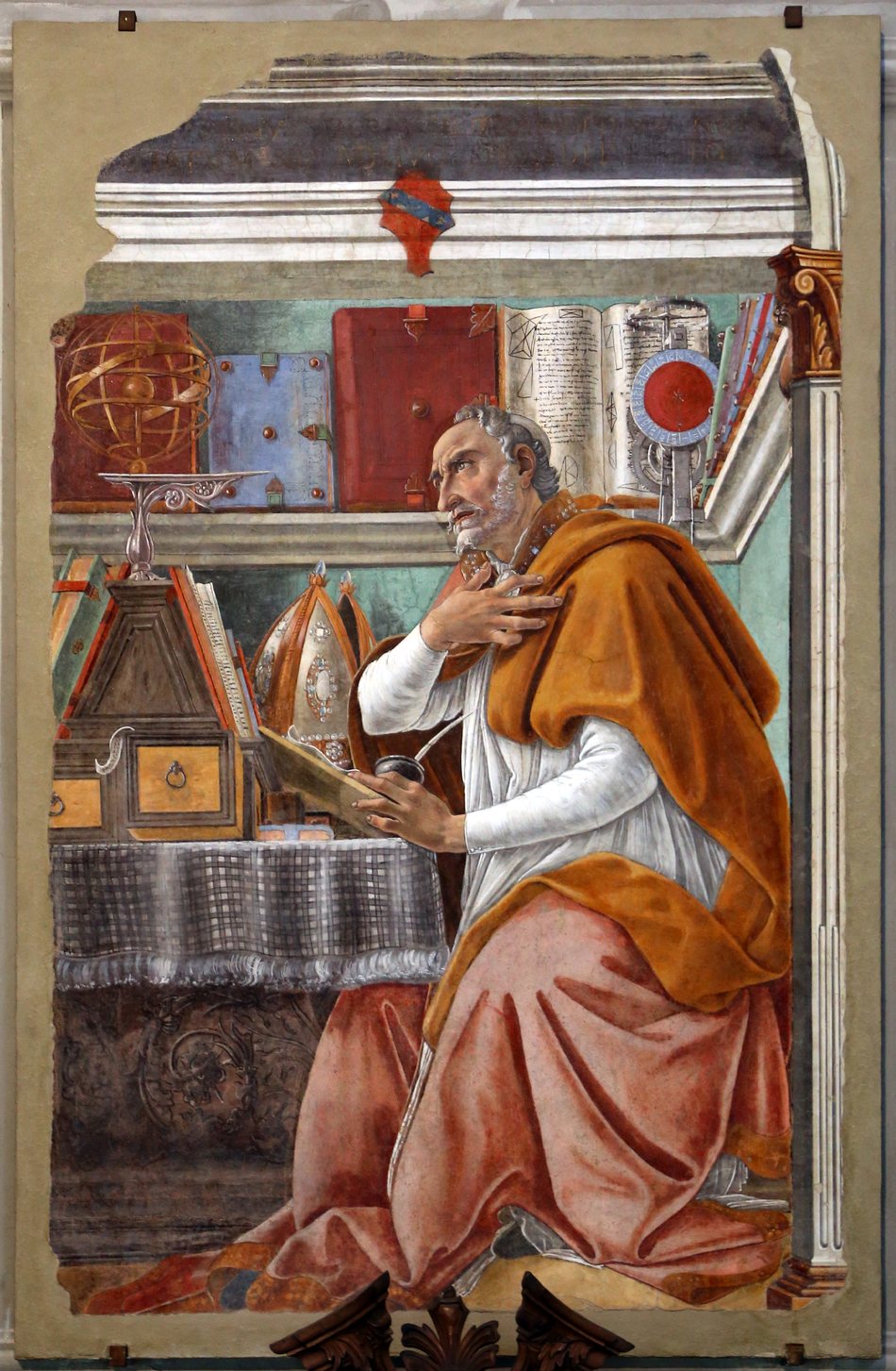
Painted for the Vespucci in their church of Ognissanti, facing Ghirlandaio's St Jerome across the choir: the saint pauses over his books among an armillary sphere, a clock and instruments of measure — and on the floor lies a crumpled, discarded sheet, the geometry he could not master, left in the fresco like a joke for close lookers.
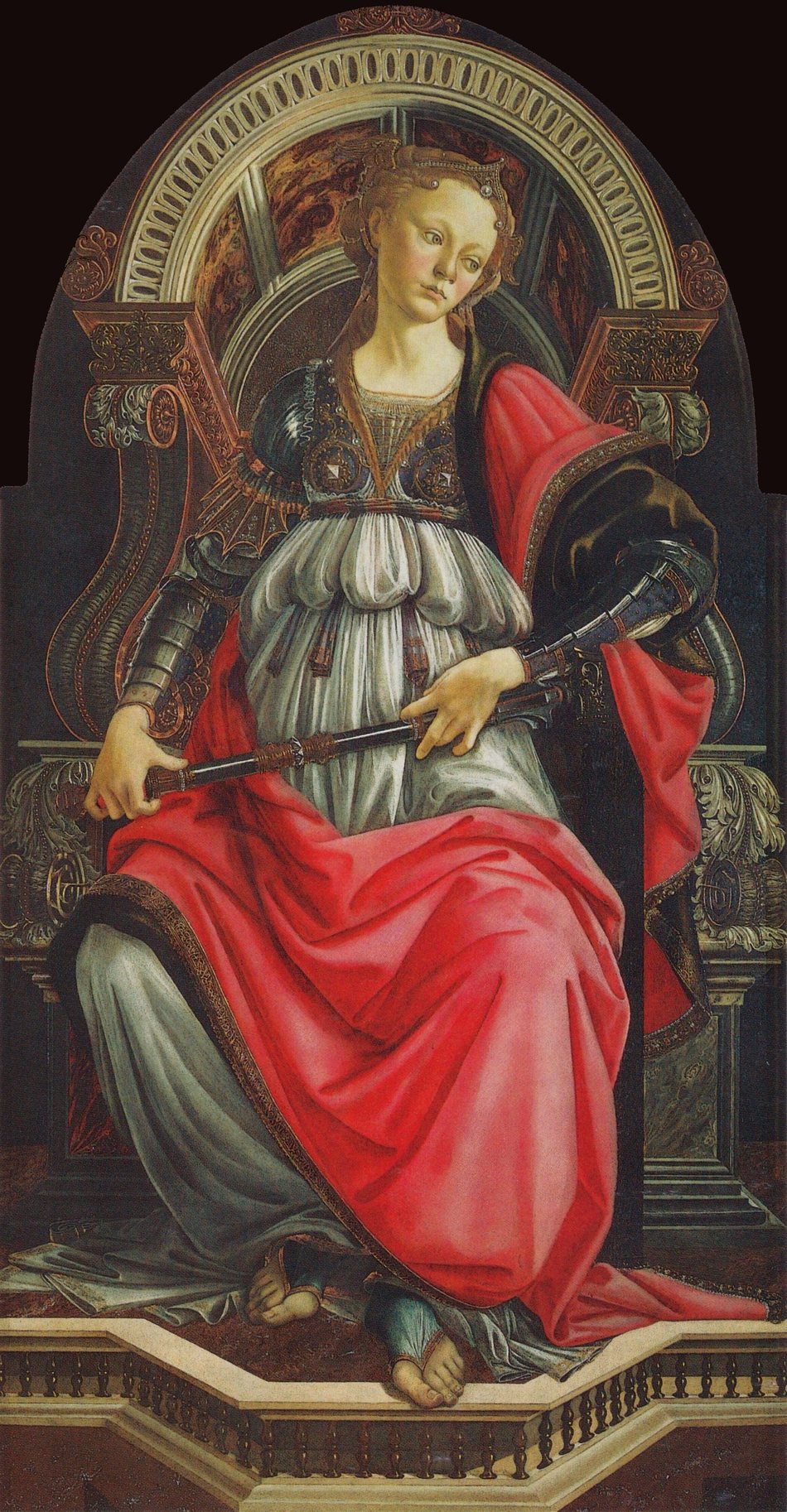
His earliest documented work, painted at twenty-five for the hall of the merchants' court: Fortitude sits with her column, weary and absent-minded, in armour too elegant for war. The other six Virtues of the set went to Piero del Pollaiuolo — the young Botticelli was given one panel and made it the best of the seven.
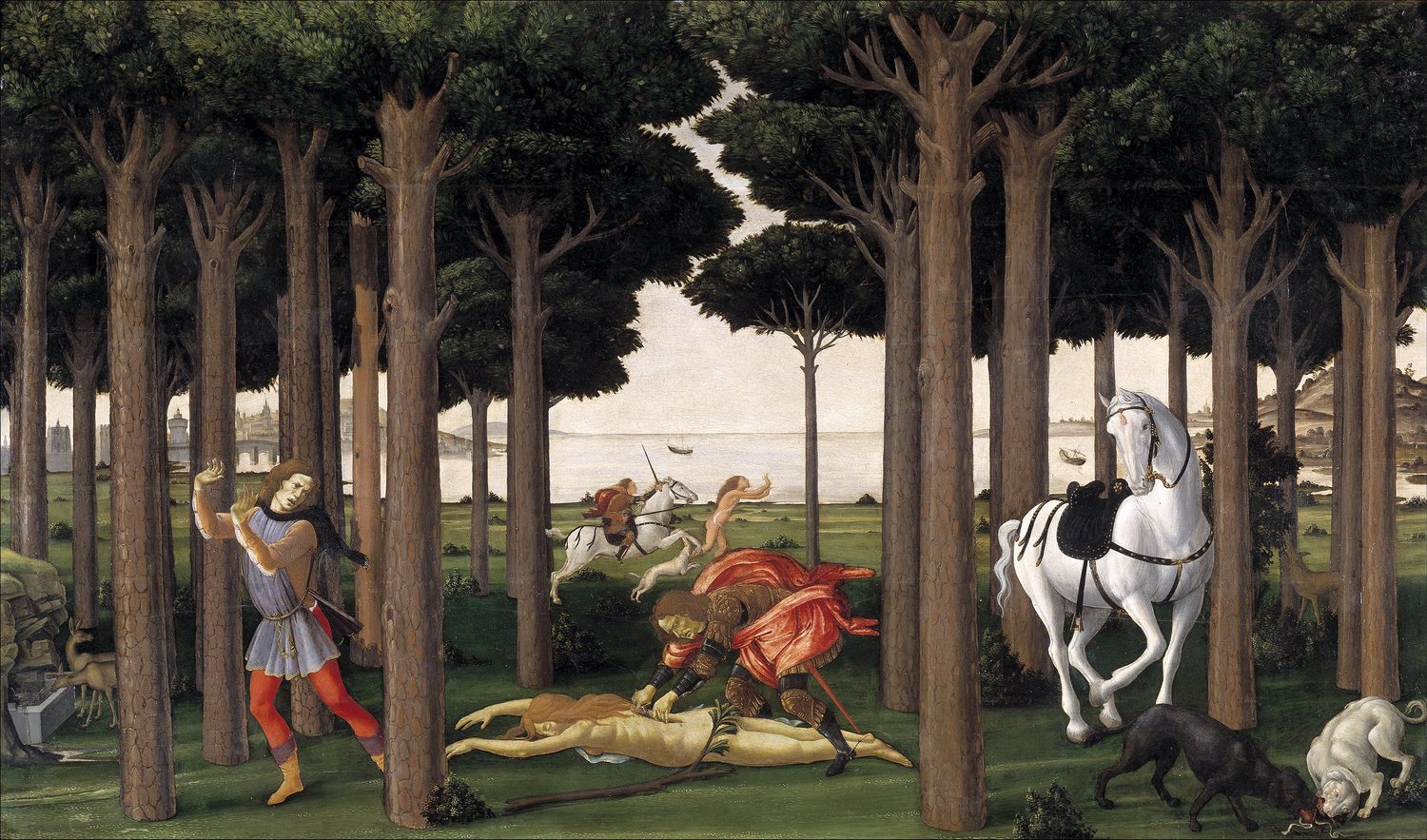
From Boccaccio's Decameron: in the pine forest of Ravenna a ghostly knight hunts a naked woman with mastiffs, forever — the vision that frightened Nastagio's beloved into marrying him. One of four panels painted for a Medici-connected wedding, storytelling as bright and cruel as a tapestry.
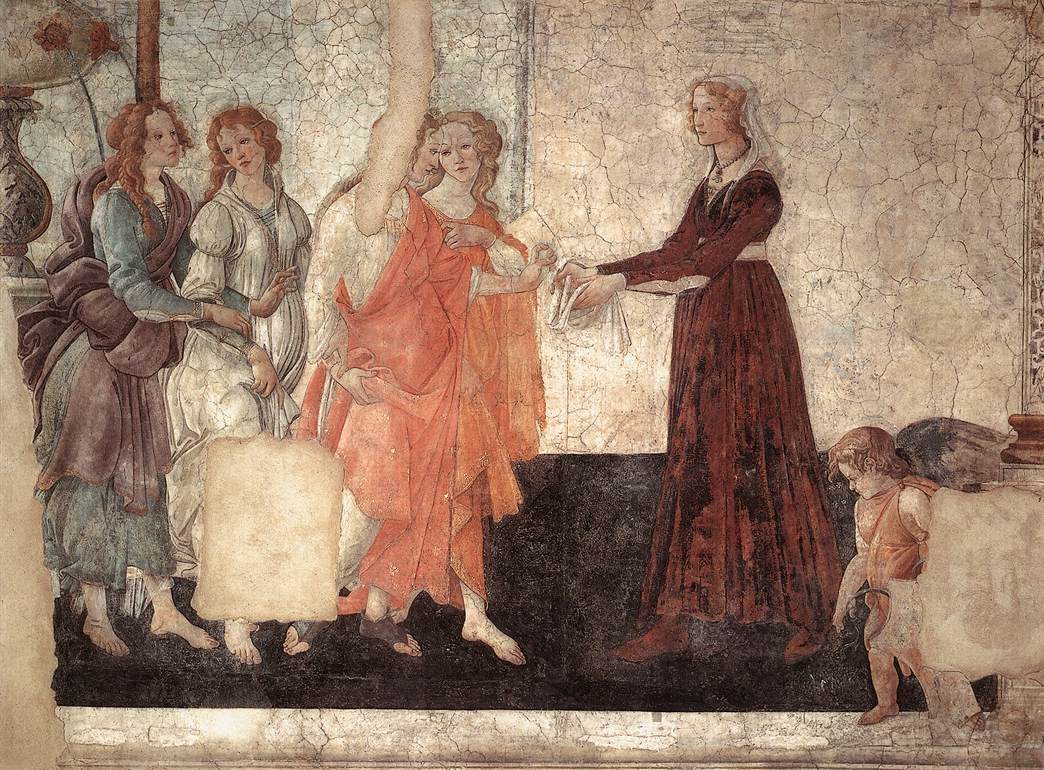
A fresco from the Villa Lemmi near Florence, painted for a wedding and later cut from the wall: Venus and her Graces receive a young woman — the bride — into the company of love and the liberal arts. Its pair showed a young man presented to the seven Liberal Arts; the two frescoes are a marriage in allegory.
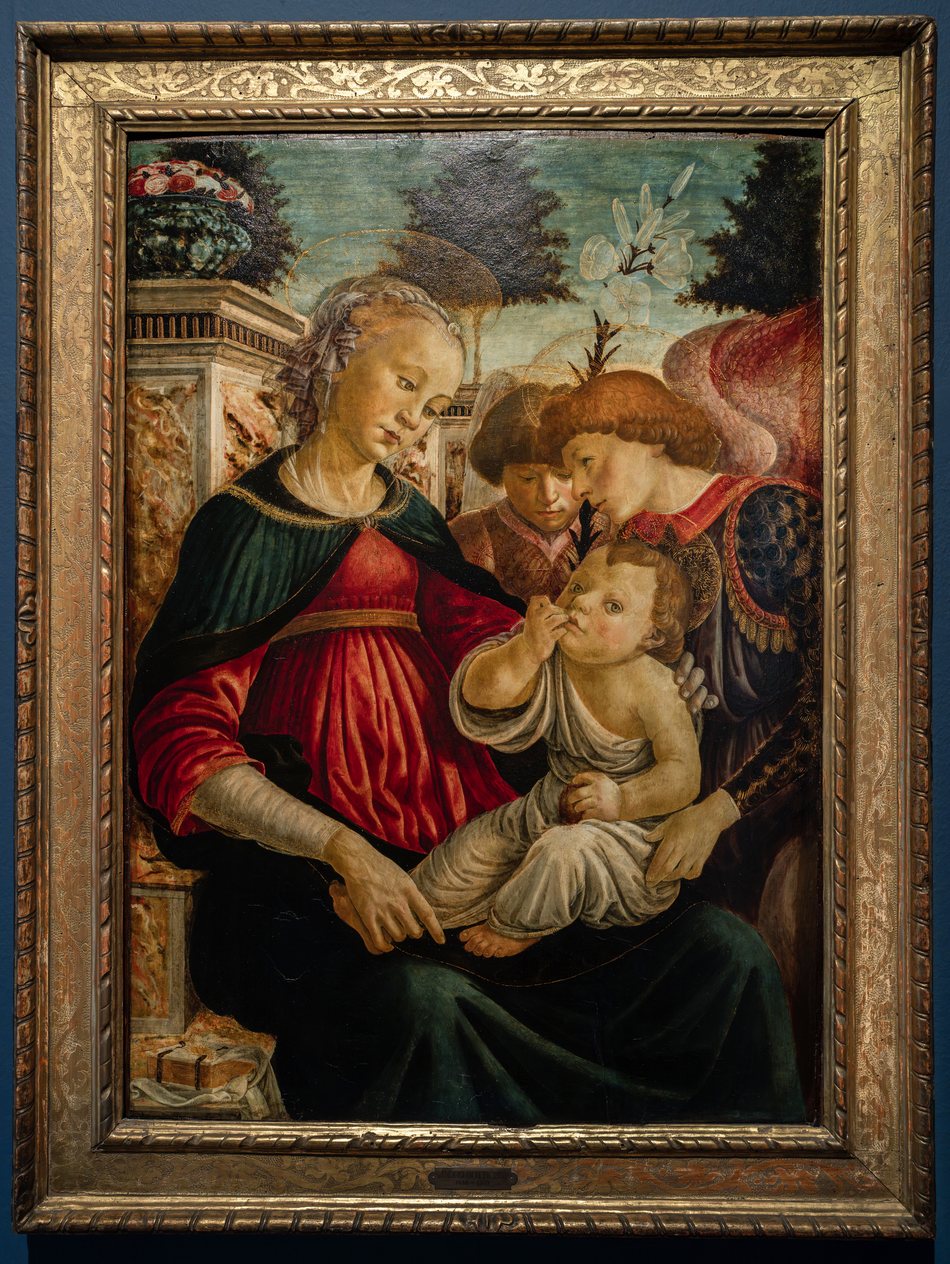
Painted at about twenty-three, still breathing the air of Filippo Lippi's workshop: a grave young Virgin, a blessing Child, two angels like Florentine choirboys. Everything he would become is here in embryo — the line, the melancholy, the gold-brown warmth.
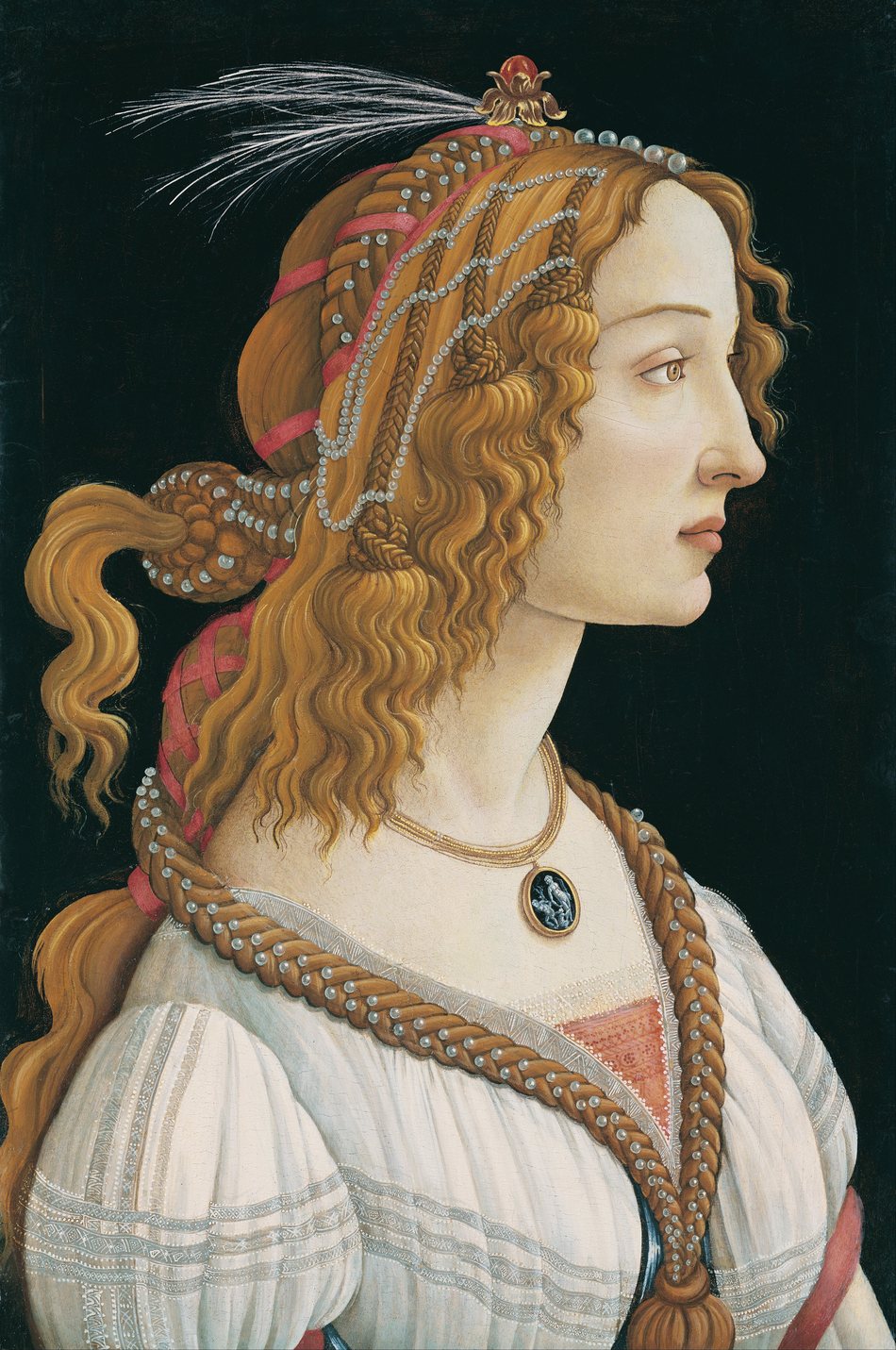
An idealised profile in the manner of a cameo: pearls in the braided hair, a feather, a medallion at the throat. Tradition calls her Simonetta Vespucci, the Genoese beauty for whom Giuliano de' Medici jousted, dead of consumption at twenty-three and mourned by all Florence — the face, they say, of the Venus and the Flora. Ideal, certainly; hers, perhaps.
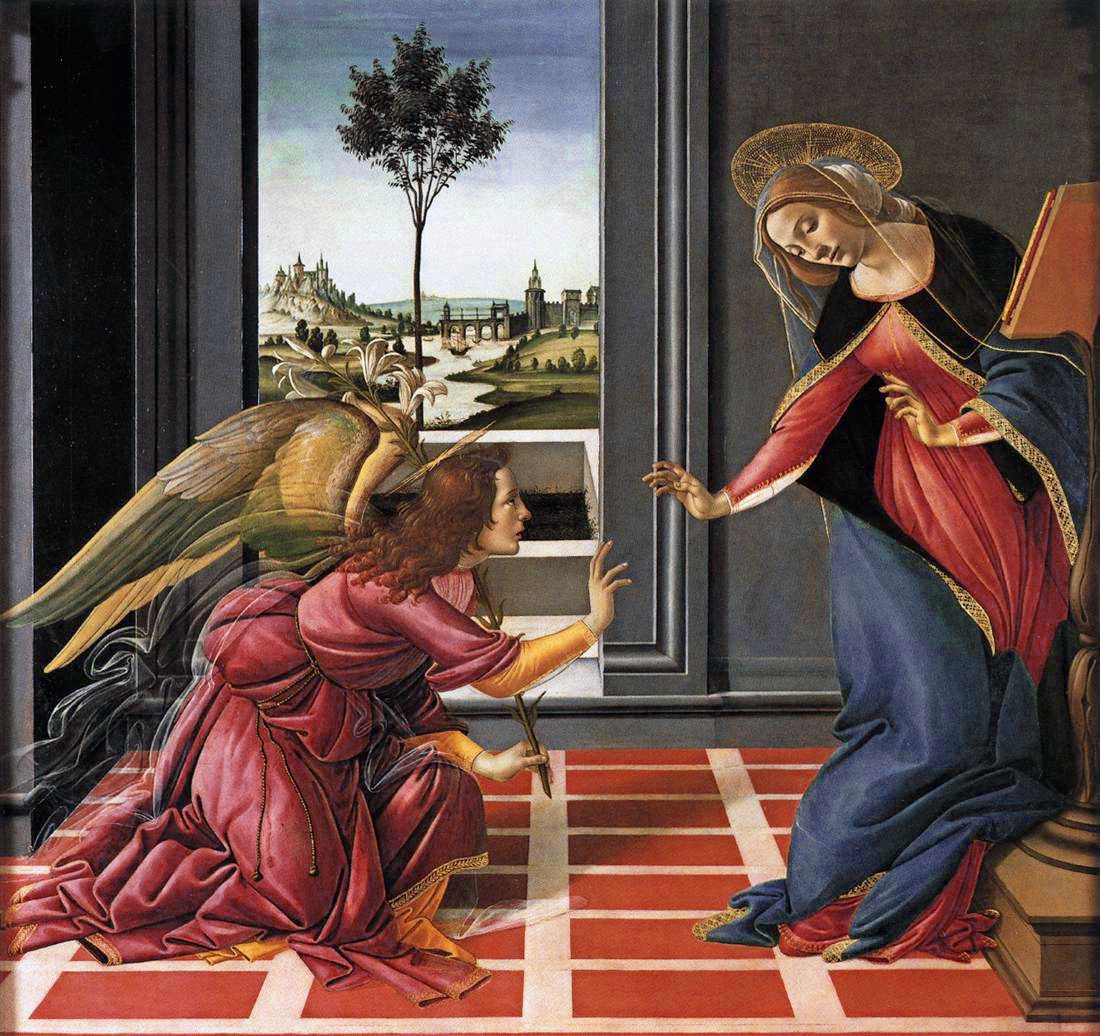
Painted for the convent of Cestello: the angel lands in a Florentine loggia and the Virgin recoils from her prayer desk, her drapery still swinging with the suddenness of it, a garden and a distant river valley calm behind them. Annunciation as a gust of wind indoors.
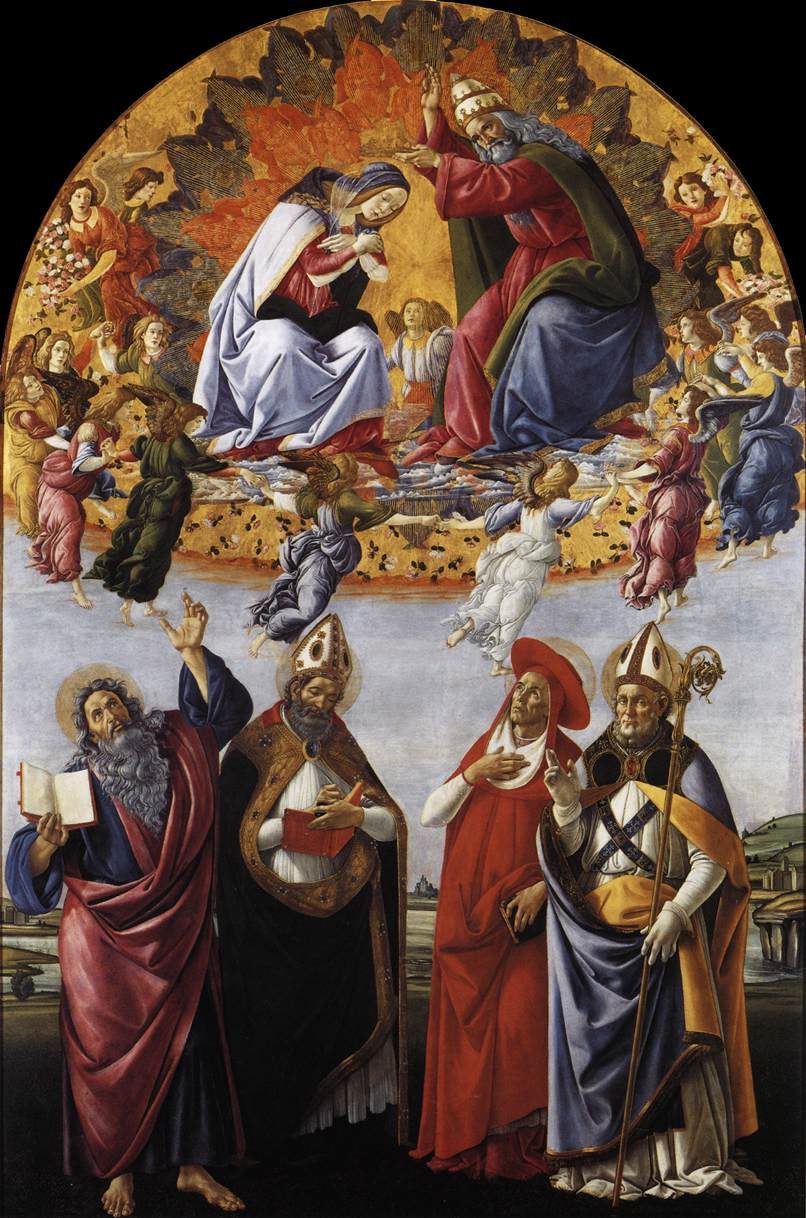
For the friars of San Marco, Savonarola's own convent: above, in a heaven of old-fashioned gold, God the Father crowns the Virgin among circling angels; below, on green earth, four saints write and ponder — John the Evangelist, Augustine, Jerome and Eligius. Two worlds, two techniques, one panel.
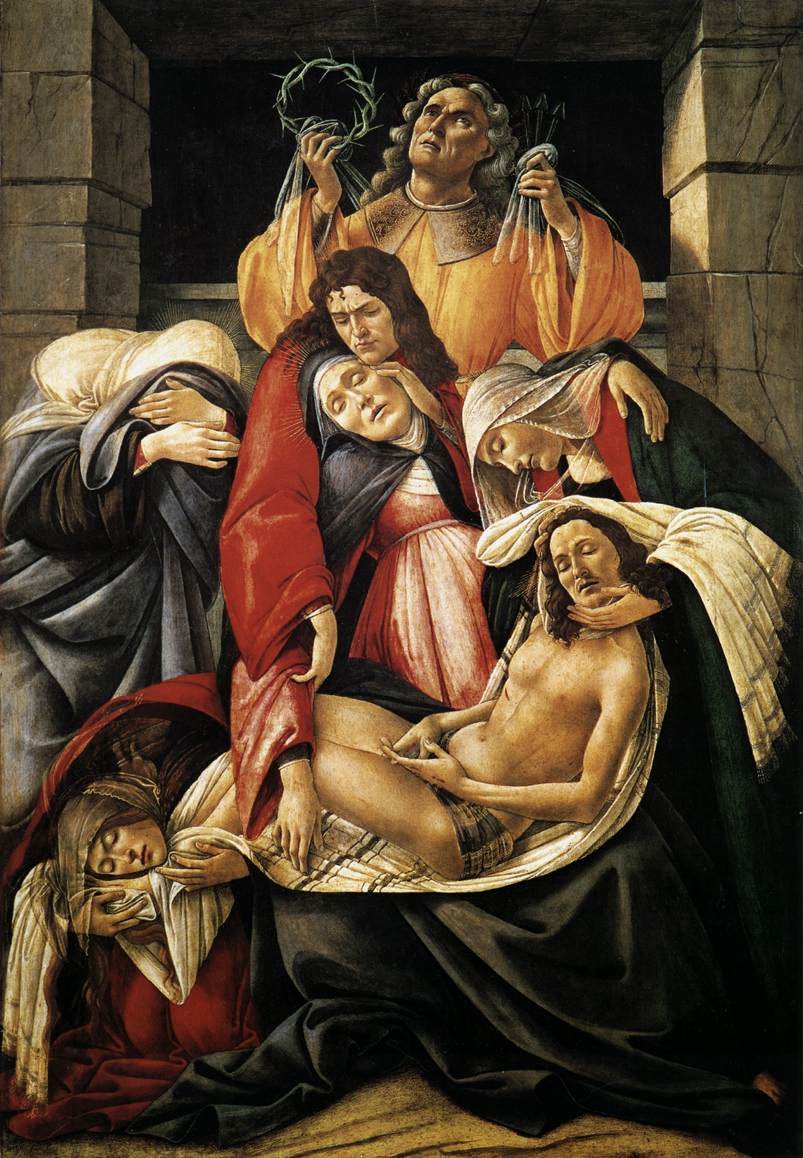
The late manner at its most extreme: the dead Christ displayed upright like an offering while the mourners sway and interlace around him in a single knot of grief, draperies gone stiff as carved wood. No dancing, no spring — the Savonarola years in one panel.
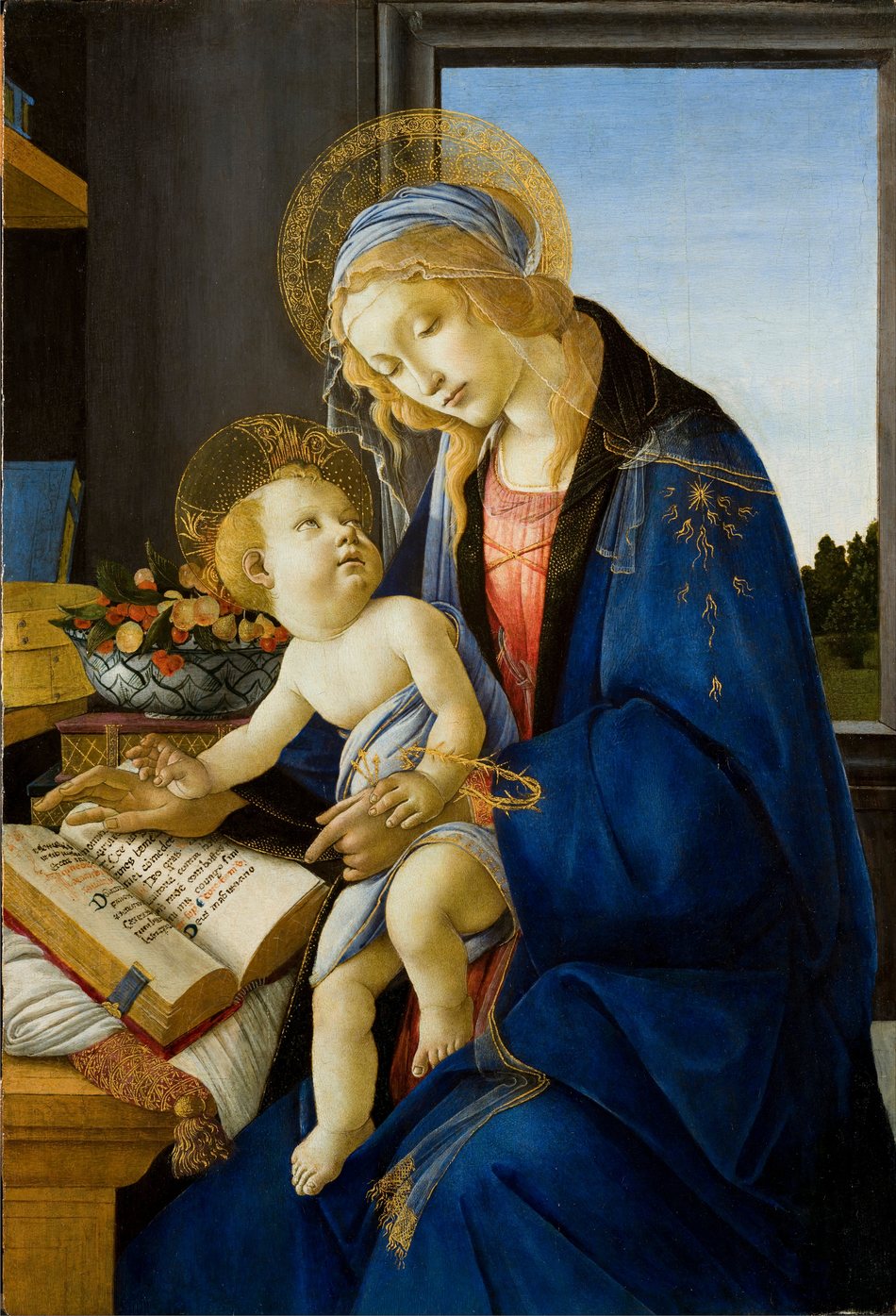
The Virgin teaches the Child to read beside a window of clear northern light; on the sill, cherries and plums — and in the Child's other hand, almost hidden, the crown of thorns and the nails. A lesson in reading that is also a lesson in what the book foretells.