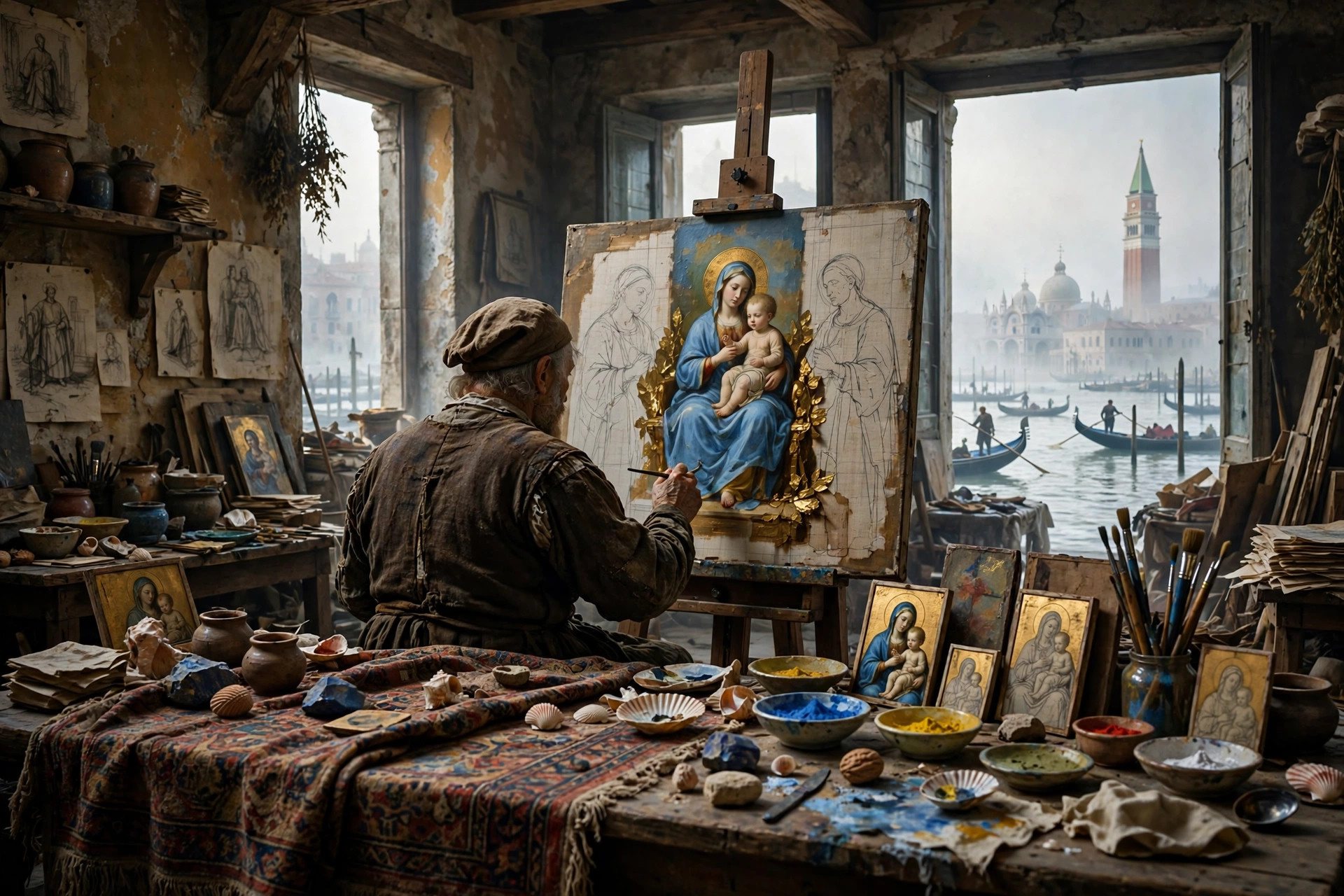
He painted for seventy years and outlived his own century. Giovanni Bellini took Venetian painting from gold and tempera into oil and open air: saints standing in real morning light, landscapes that breathe, faces at peace. Giorgione and Titian learned in his workshop — and the old man, past eighty, was still learning from them.
Painting in the Bellini house was a trade handed down: Jacopo the father, Gentile and Giovanni the sons, a brother-in-law named Mantegna. The workshop kept drawings and cartoons for decades, reusing a fine landscape or a saint's pose across many pictures. Giovanni, the younger son, was expected to be the lesser talent. He became the greatest Venetian painter of the fifteenth century.
In 1475 Antonello da Messina came to Venice carrying the Flemish secret of oil paint, and Bellini grasped it at once. Oil dries slowly: colours can be fused wet into wet, glazed in transparent layers, deepened until light seems to live inside them. His late Madonnas glow with a light tempera could never hold. Venetian painting — Giorgione, Titian, all of it — is built on this conversion.
His great altarpieces — San Giobbe, San Zaccaria — gather the Virgin and saints in a single vaulted space, a sacra conversazione, conversation rather than ceremony. The architecture is painted in true perspective, the marble and mosaic catch the same daylight that falls on the faces, and music-making angels sit at the foot of the throne. Heaven is not elsewhere: it is this room, perfected.
Behind his figures Bellini opens windows onto the most lovingly observed landscapes in Italian art: the dawn breaking over the Agony in the Garden, the sleeping peasant and the vulture in the Meadow, towns and towers recorded one by one. Nature is never backdrop. The light that rises on the hills is the same light that rises on the saints — creation itself at prayer.
On the parapets of his Madonnas Bellini paints a cartellino — a little slip of paper, curling at the corners, casting a real shadow, inscribed IOANNES BELLINVS. It is a signature and an illusion at once: the painter signs his picture by painting a piece of paper inside it. In a workshop world of anonymous teamwork, the cartellino says quietly: this light is mine.
Giorgione passed through his workshop; Titian too. At eighty-four Bellini painted the Feast of the Gods for Ferrara — and years later let the young Titian repaint its landscape to match newer tastes, accepting the correction into his own canvas. Dürer, visiting Venice in 1506, wrote home that Bellini was very old and still the best painter of them all. He died in 1516, painting to the end.
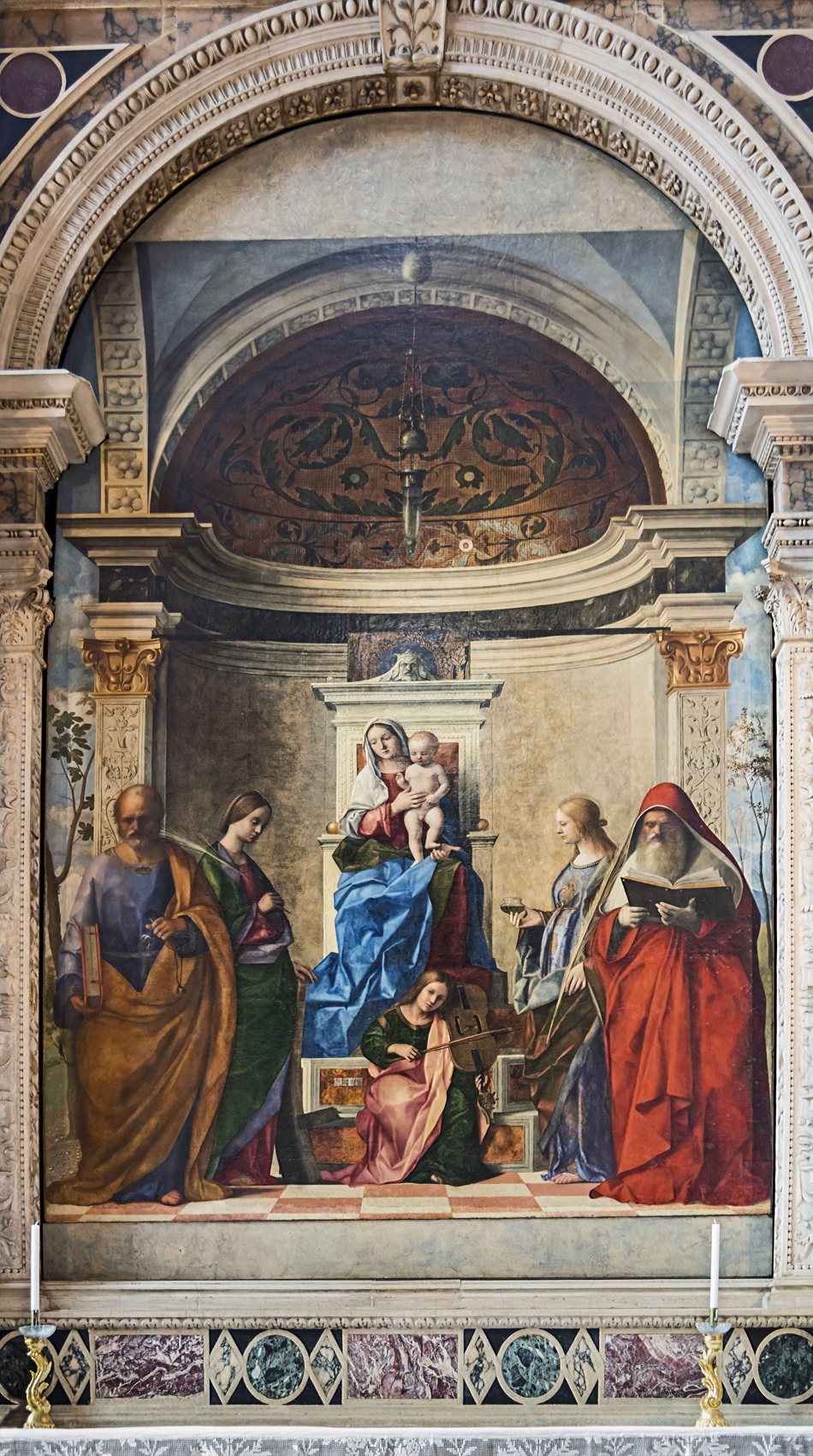
Painted at about seventy-five, and still hanging where he painted it: the Virgin and Child in a marble apse, Saint Peter with his book, Saint Catherine with her wheel, an angel playing the viol at the foot of the throne. The light comes from the left like morning entering the church itself. It is the most serene altarpiece of the Renaissance — nothing moves, and everything breathes.
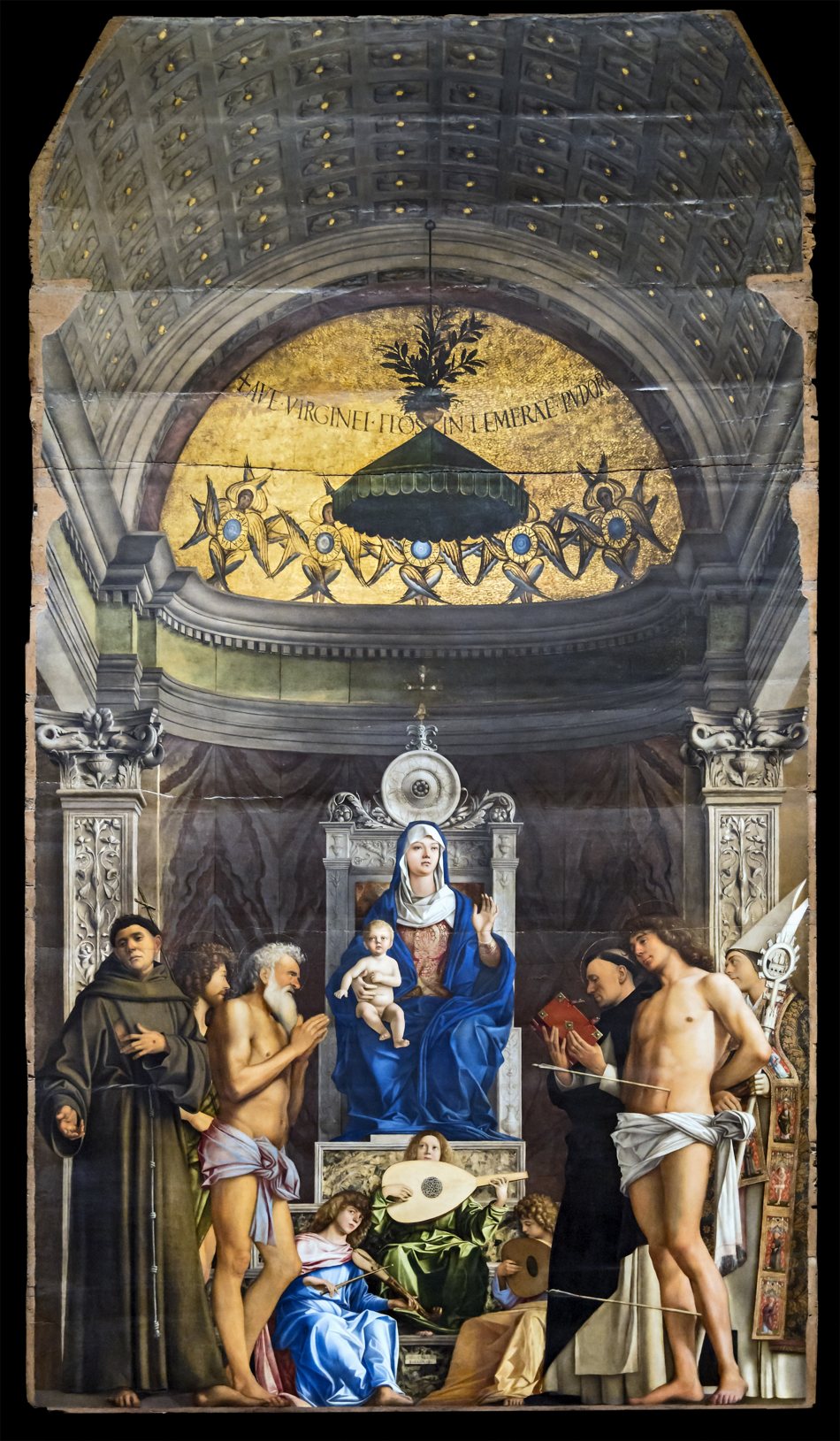
The first great Venetian altarpiece in oil: saints gathered under a coffered vault and a golden apse, Saint Job and Saint Sebastian flanking the throne, three angels making music below. Bellini paints the church the picture was made for continuing into the picture itself — its own architecture answered by the painted one, its own light completing the illusion.
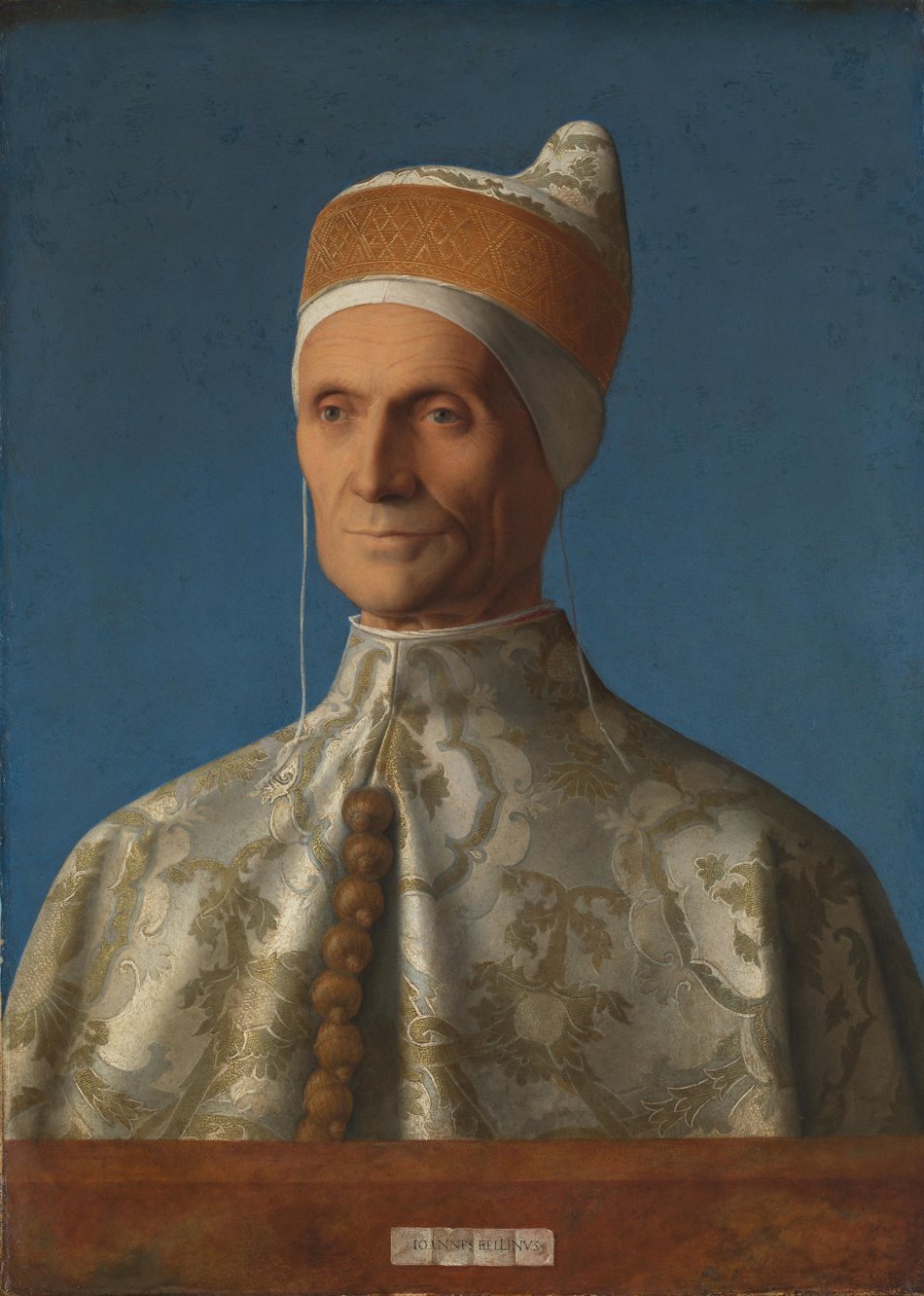
The head of the Venetian state in his brocaded robe of silver and gold, the ducal cap, the buttons like a row of bells — and behind it all, a plain blue sky. Bellini paints power without a single attribute of force: the face is calm, tired, watchful, the silk rendered stitch by stitch in oil glazes. It may be the greatest state portrait ever painted.
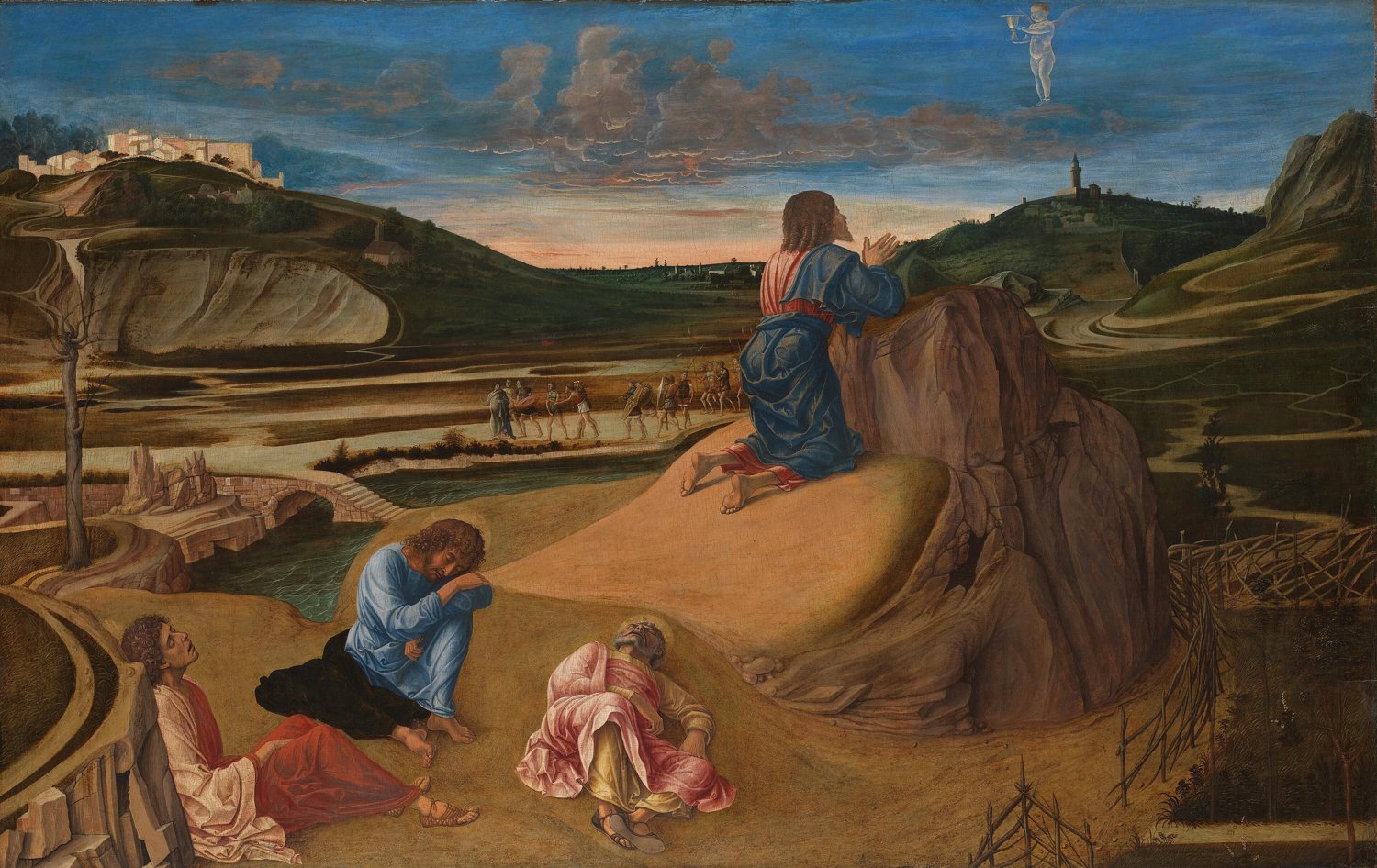
An early work in tempera, painted under his brother-in-law Mantegna's spell — the same subject, the same rocky mount. But the light is Bellini's own: dawn breaking in bands of rose and gold over a sleeping town, the angel small and far, Christ kneeling alone on the rock. Mantegna carves the scene; Bellini lets the morning pray in it.
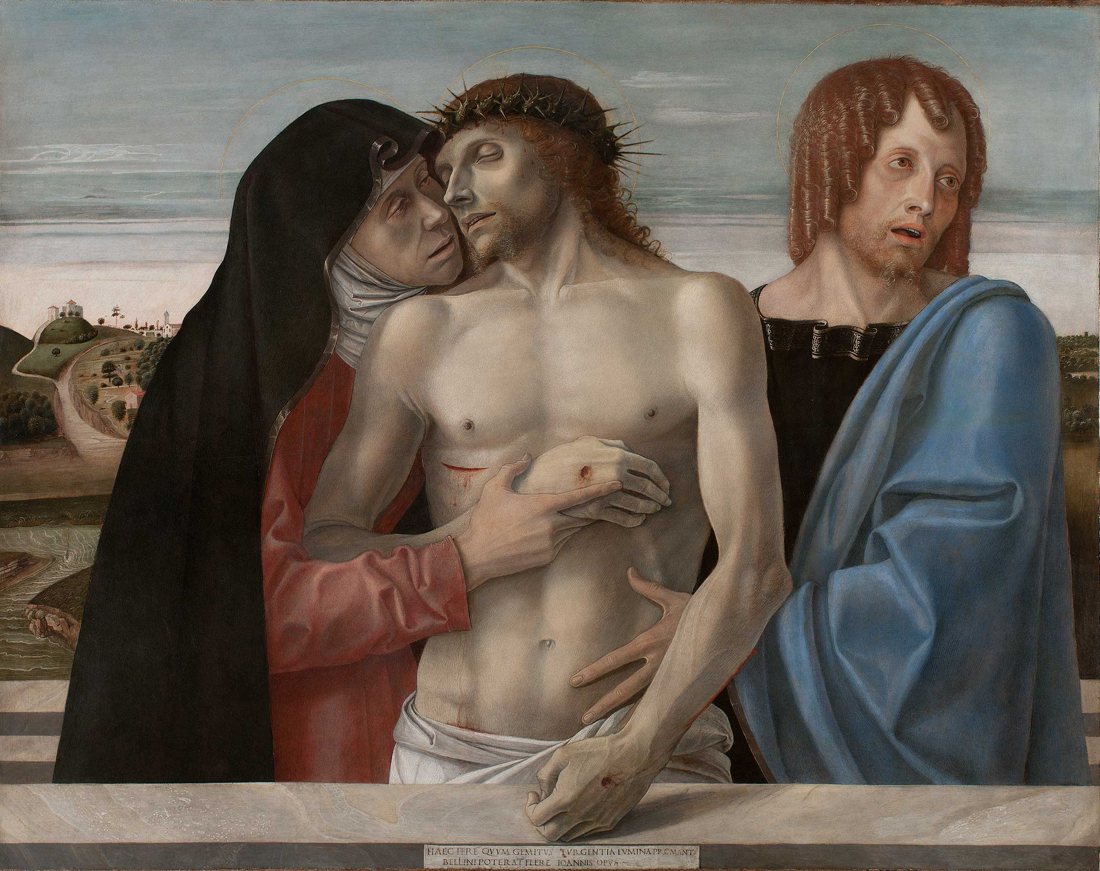
The Virgin and Saint John hold up the dead Christ behind a marble parapet, close enough to touch. Her hand grips his wrist; John's mouth is open in a grief he cannot finish. Across the parapet a painted scroll carries a line from Propertius: these swollen eyes almost speak. At thirty, Bellini already paints silence better than anyone in Italy.
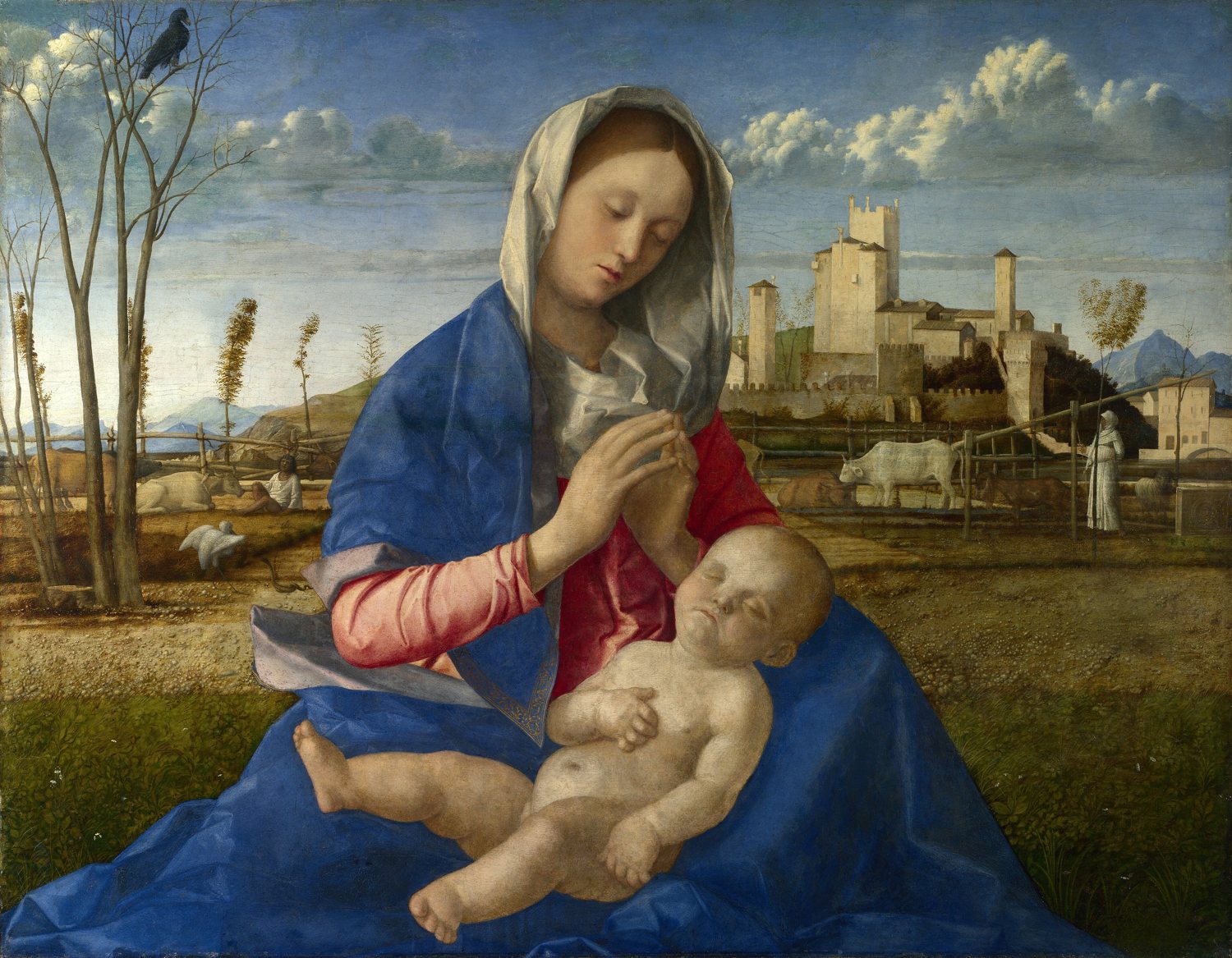
The Virgin kneels in prayer over the sleeping Child in a bare spring landscape: a vulture in a leafless tree, a peasant asleep by the fence, a walled town under snow-capped mountains. The Child's sleep is painted as a premonition of death — his pose is the Pietà in miniature. Bellini turns a meadow into a meditation: everything in it waits, and everything is loved.
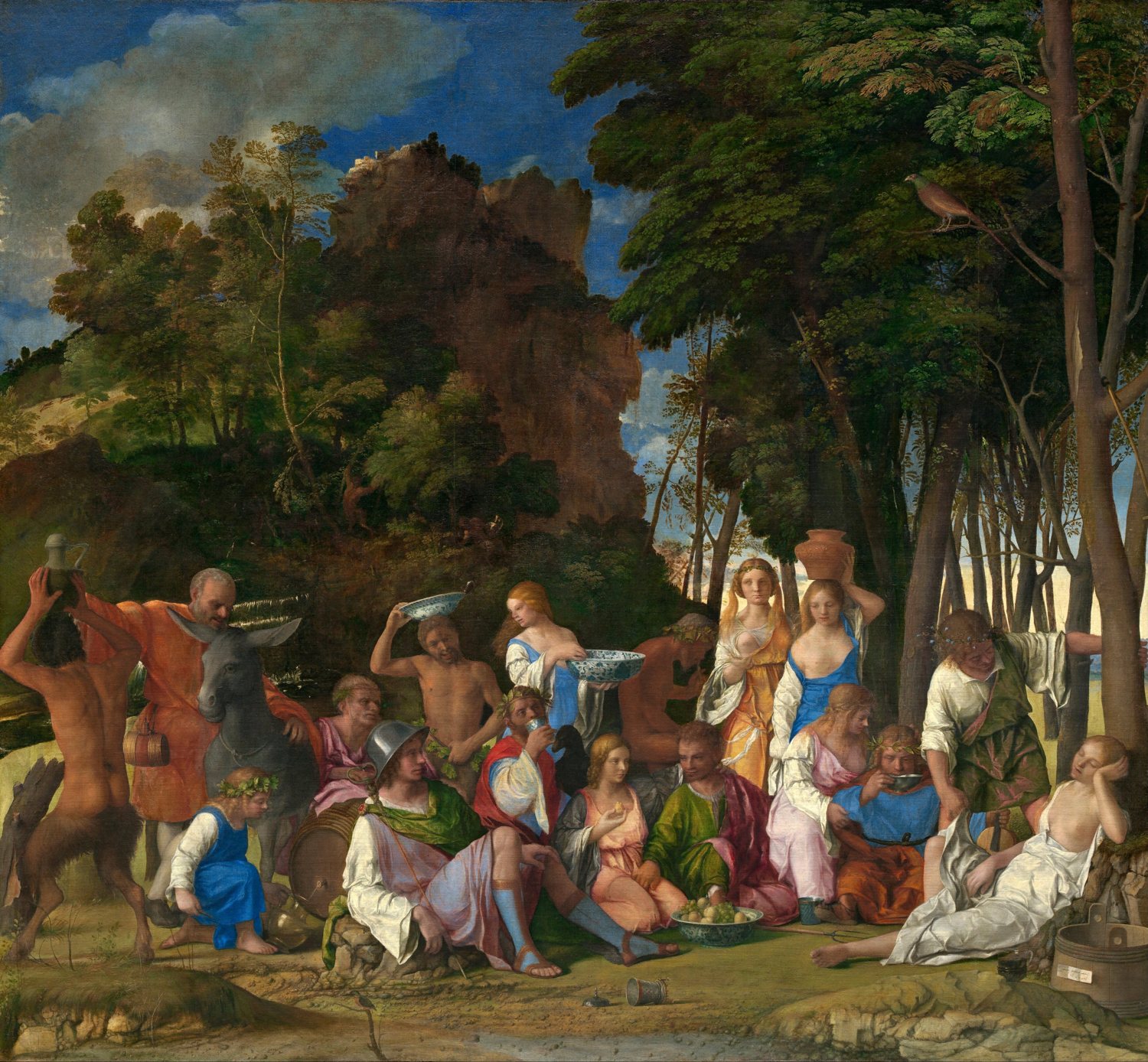
At eighty-four he painted the gods picnicking in a wood — satyrs, nymphs, Silenus on his donkey — for the Duke of Ferrara's private study. After his death the young Titian repainted the landscape behind them into the golden manner of the new age, and left the figures of his old master standing in it. Two generations share one canvas, and the seam is the history of Venetian painting itself.
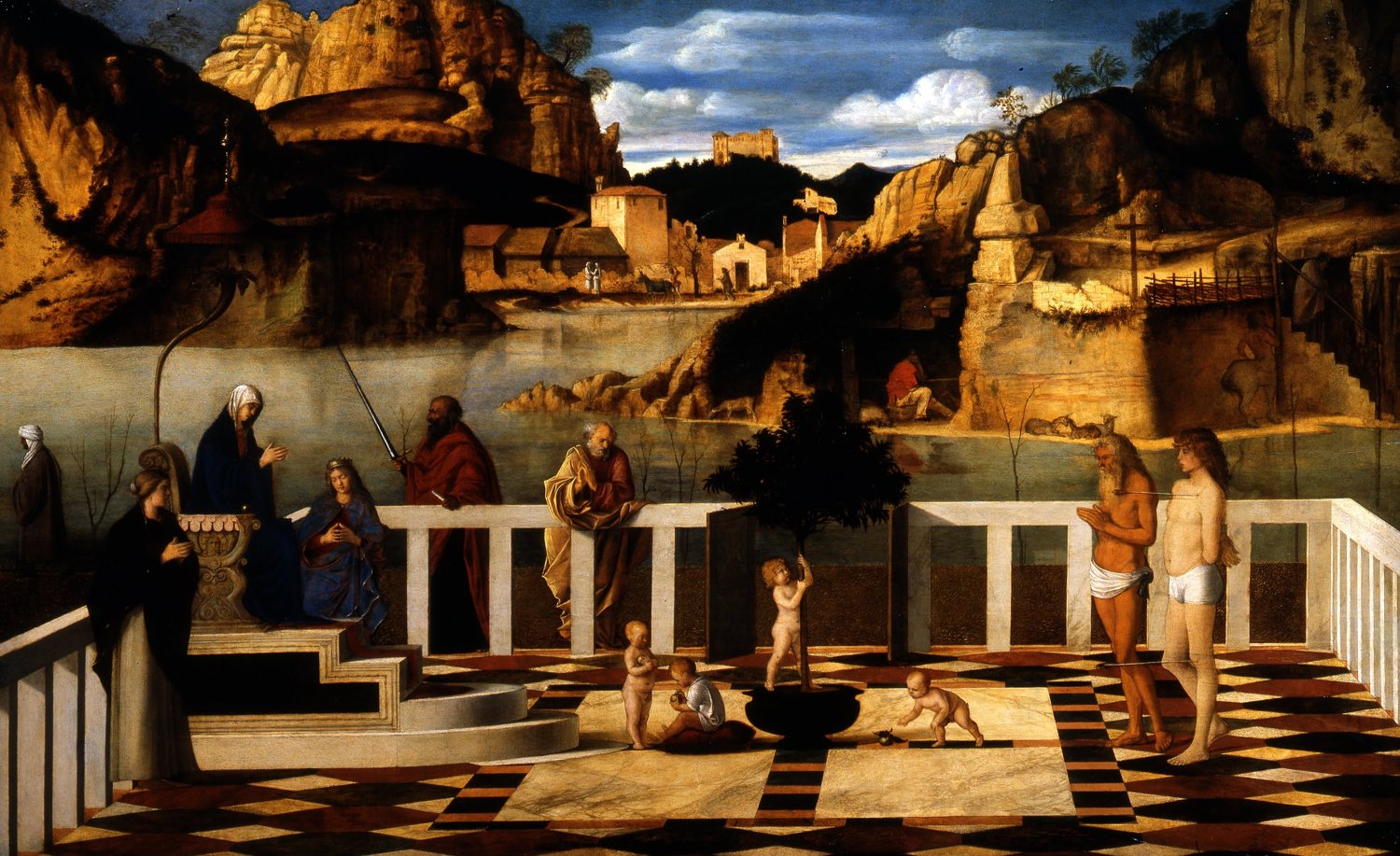
On a marble terrace above a river, saints and children play around a small tree while others cross the water toward rocky hills. Five centuries of scholars have failed to agree on what it means — a pilgrimage of the soul, a dream, a vision of paradise. Bellini keeps the secret. What is certain is the light: late afternoon, golden, holding every figure in a stillness that feels like the edge of heaven.
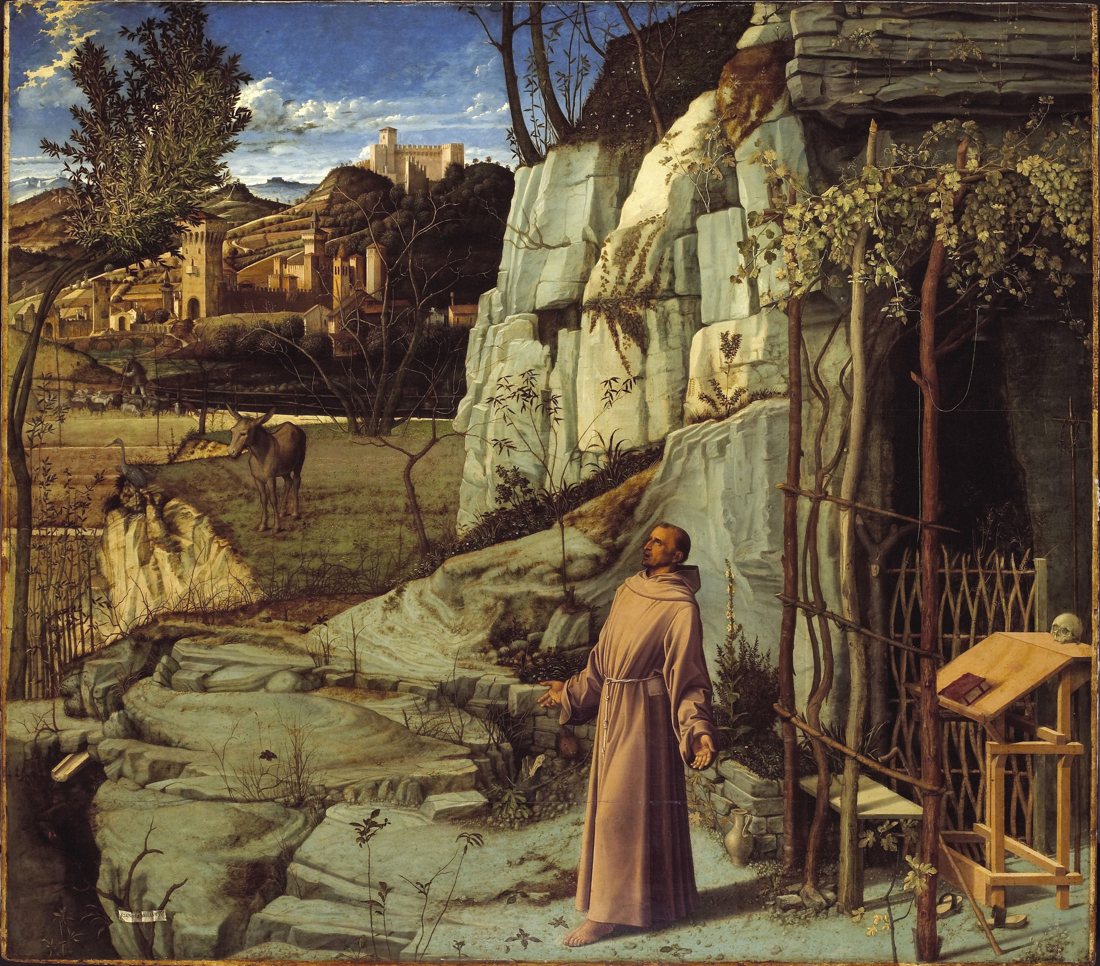
Francis steps out of his rocky cell into the morning, arms open, receiving the stigmata from a light that has no visible source. Around him Bellini paints a whole working world in miniature: a heron, a rabbit, a shepherd with his flock, a town on its hill, the saint's desk with its skull and book. It is less a miracle scene than a portrait of a man at home in creation.
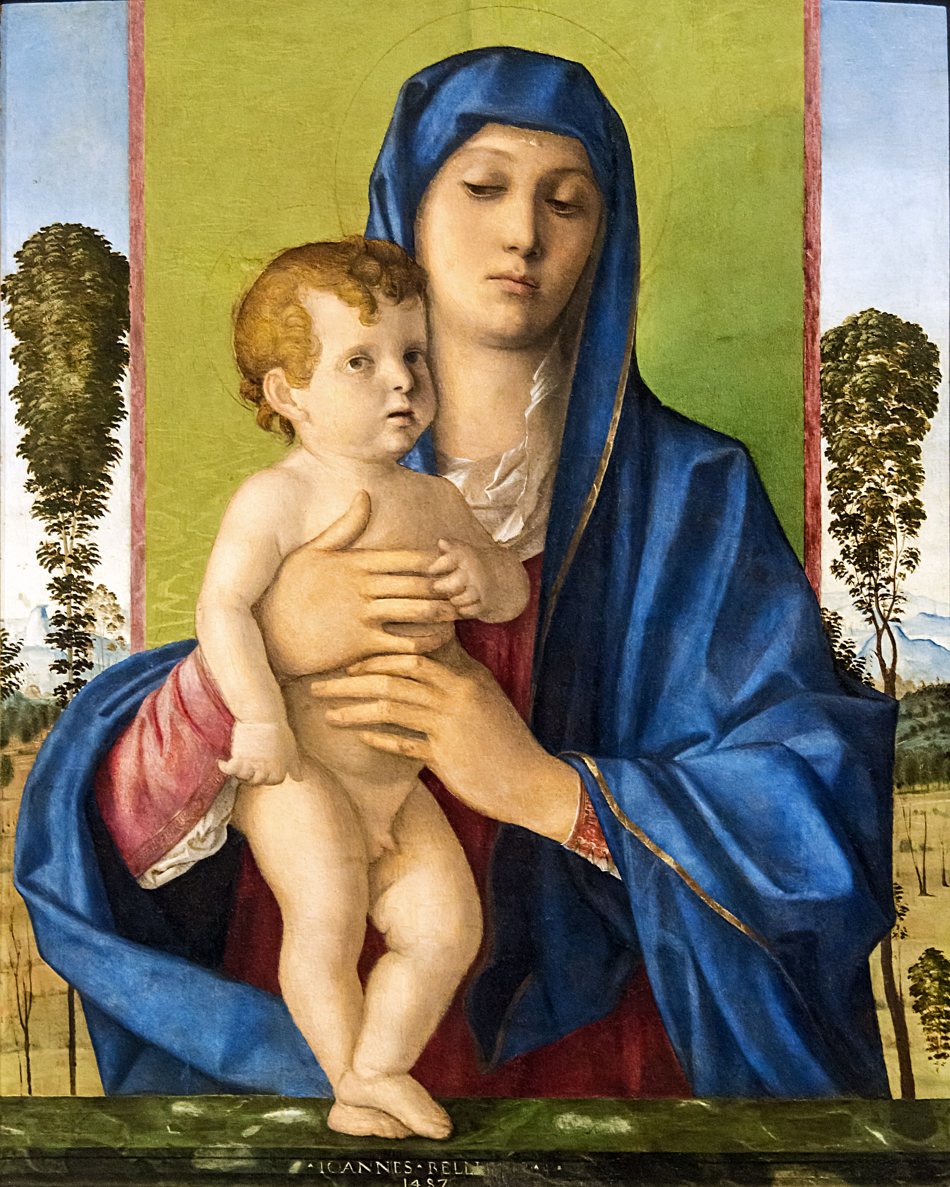
The Madonna of the Little Trees: two small trees rise behind the parapet that gives the picture its name, and on the parapet sits the painted cartellino with his signature. The Child stands, blessing, grave as a little judge; the Virgin's hands hover, not quite touching him. A green curtain closes the world behind them — devotion at the distance of one held breath.