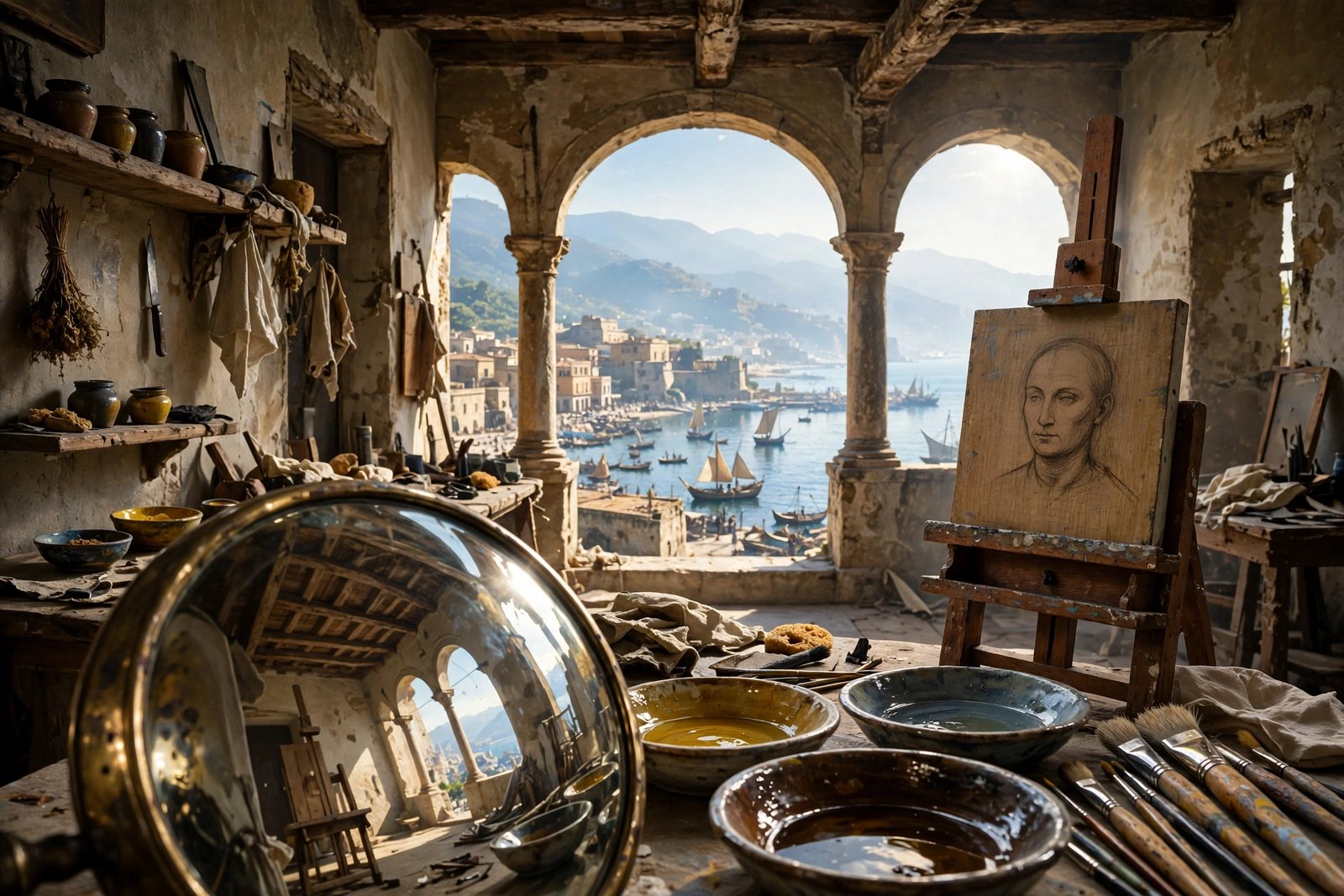
The Sicilian who brought oil painting to Italy. Antonello da Messina learned the Netherlandish secret — colour laid in translucent oil glazes until flesh and light seem sealed under glass — and fused it with Italian geometry and stillness. His panels are small and his output was smaller, yet half of Renaissance portraiture descends from the few faces he left behind.
Antonello's oil technique — transparent glazes over a precise underdrawing, each layer modifying the one beneath — came from the Netherlandish tradition he met in Naples, where Flemish panels were collected at court. In his hands the medium gains Mediterranean clarity: glazes stay thin, luminous and exact, never muddy.
Most of his works are on wood panels small enough to carry under one arm, prepared with a smooth white gesso that takes paint like ivory. The scale is a method: at this size a brushstroke is a decision, and the enamel finish — no visible hurry anywhere — is the point.
In St Jerome in His Study the tiled floor, the steps and the receding arches are laid out on a strict perspective construction, the saint placed exactly at its vanishing heart. Antonello builds rooms like an architect and then lights them like a jeweller — geometry first, radiance second.
His portraits model the head as a solid turned slowly in one light: warm translucent shadows, cool half-tones, a single catchlight in each eye. Almost nothing moves — a raised eyebrow, a scar, the start of a smile — and that restraint is why the sitters still seem present after 550 years.
Antonello signs on a cartellino — a little painted slip of paper, curling at the edges, set on a parapet or step, inscribed with his name in Latin: Antonellus Messaneus. The trompe-l'œil note is both signature and demonstration: paper, shadow and lettering all counterfeited in oil.
Sicily's earthquakes and centuries of damp have thinned his legacy: the Syracuse Annunciation is a ruin of its painted surface, and the Dresden St Sebastian was transferred from panel to canvas to save it. What survives does so because the paint film itself — thin, hard, glassy — is extraordinarily tough.
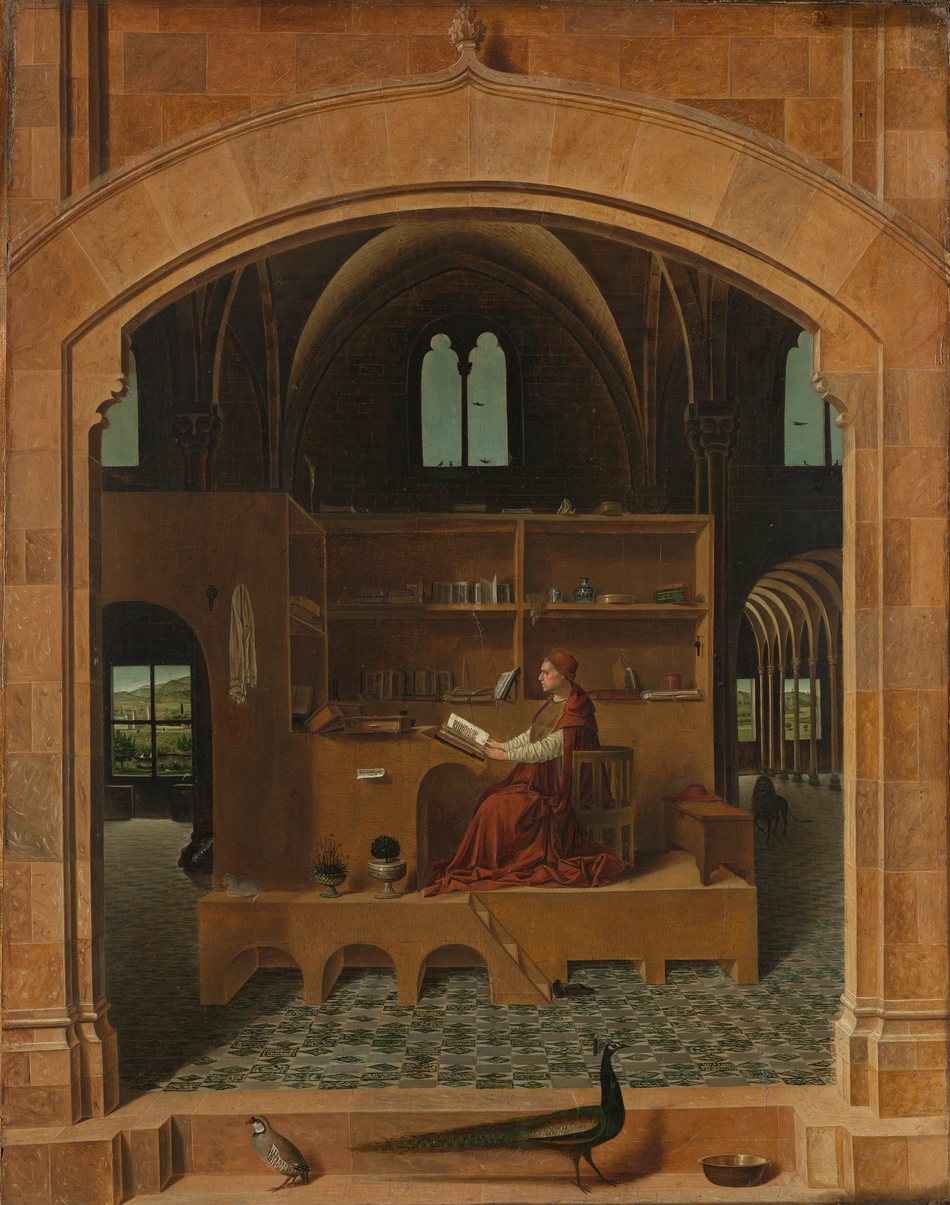
The most beloved small painting of the Renaissance: the saint reads in a Gothic study built inside a vast hall, every tile, book, plant and animal — down to the peacock and the cat — placed by perspective and lit like a jewel. It fits in two hands.
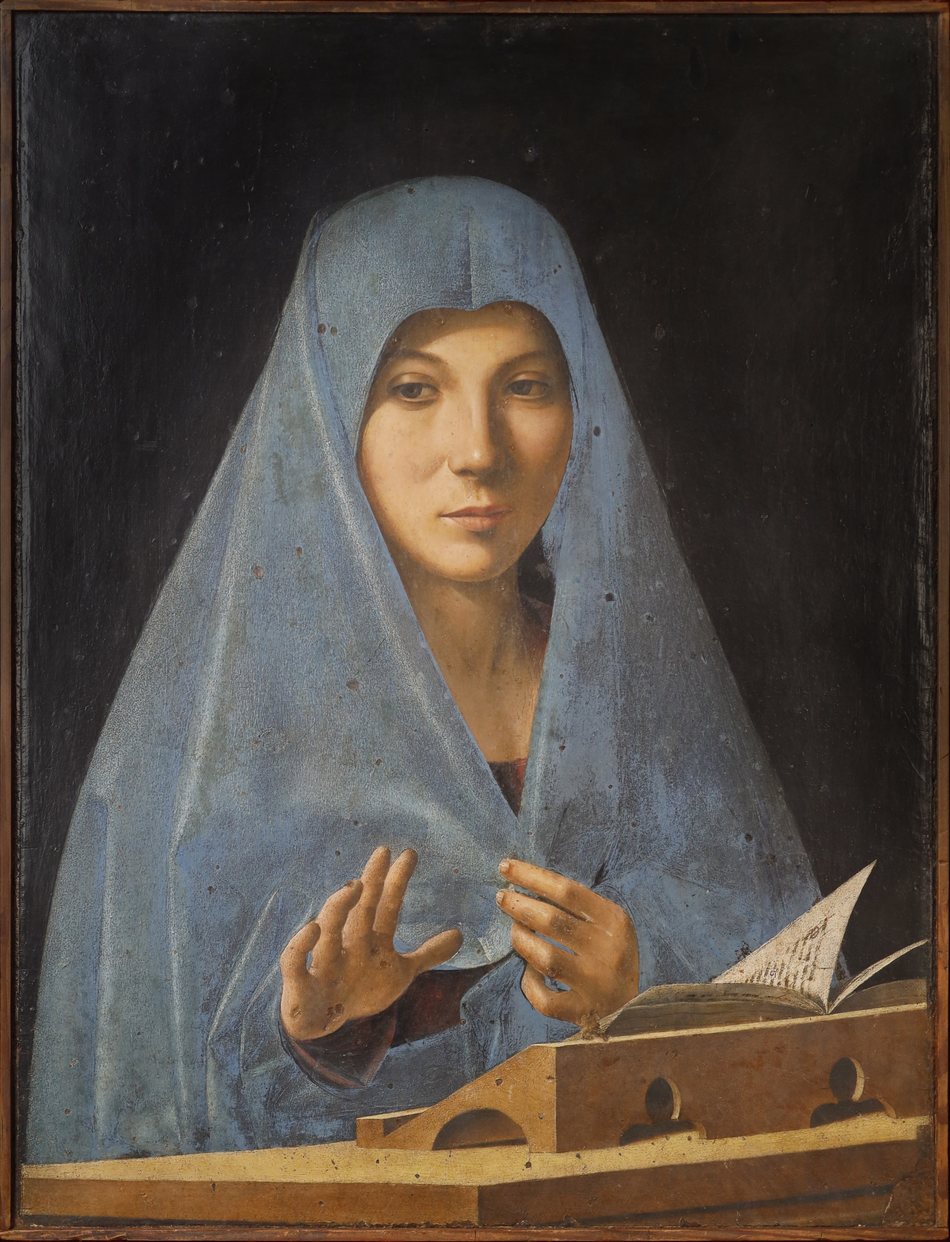
The Annunciation with the angel left out: the Virgin alone, interrupted at her book, one hand raised in a gesture between startlement and consent. Sicily's most treasured painting is barely forty-five centimetres tall.
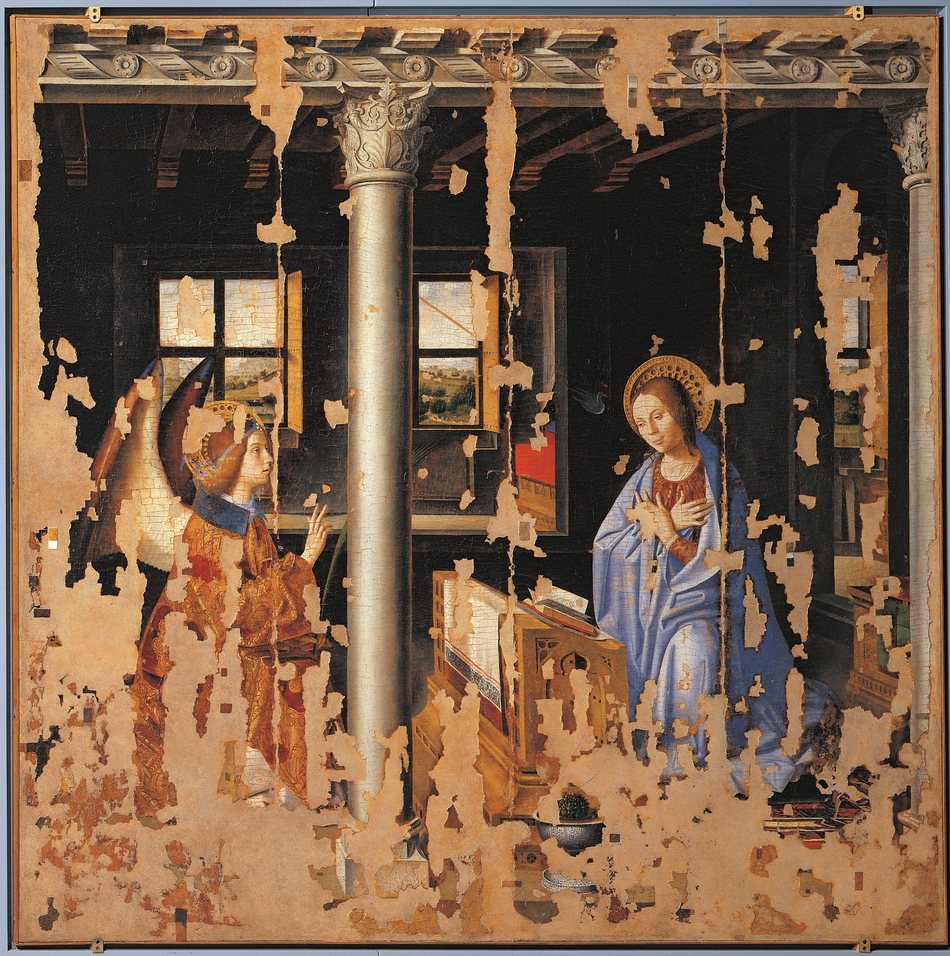
Antonello's only signed and dated altarpiece — and a beautiful ruin: fire, damp and time have eaten much of the surface, yet the architecture of columns and the two figures still stand in their measured Sicilian light.
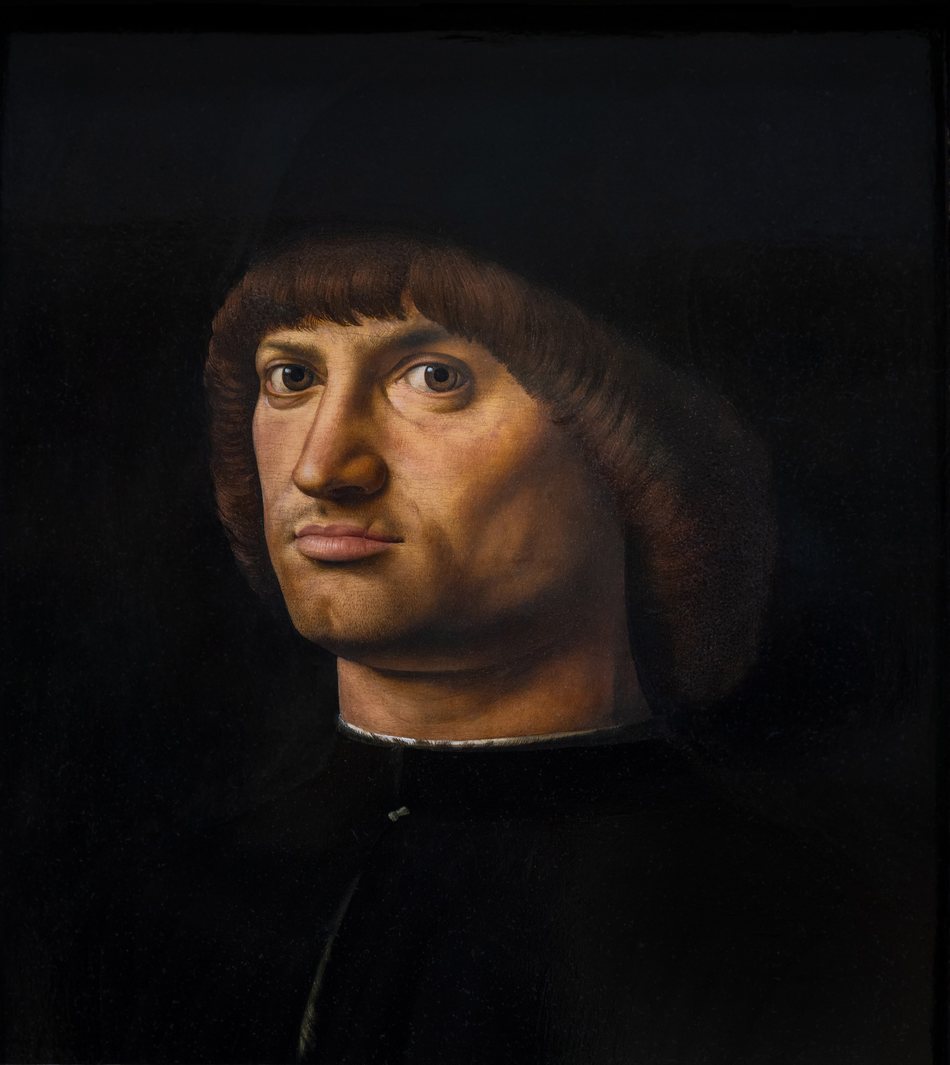
A mercenary captain — the scar on his lip earned him the name Il Condottiere — turns out of blackness with a stare that has outlasted five centuries of viewers. The parapet carries Antonello's painted paper signature.
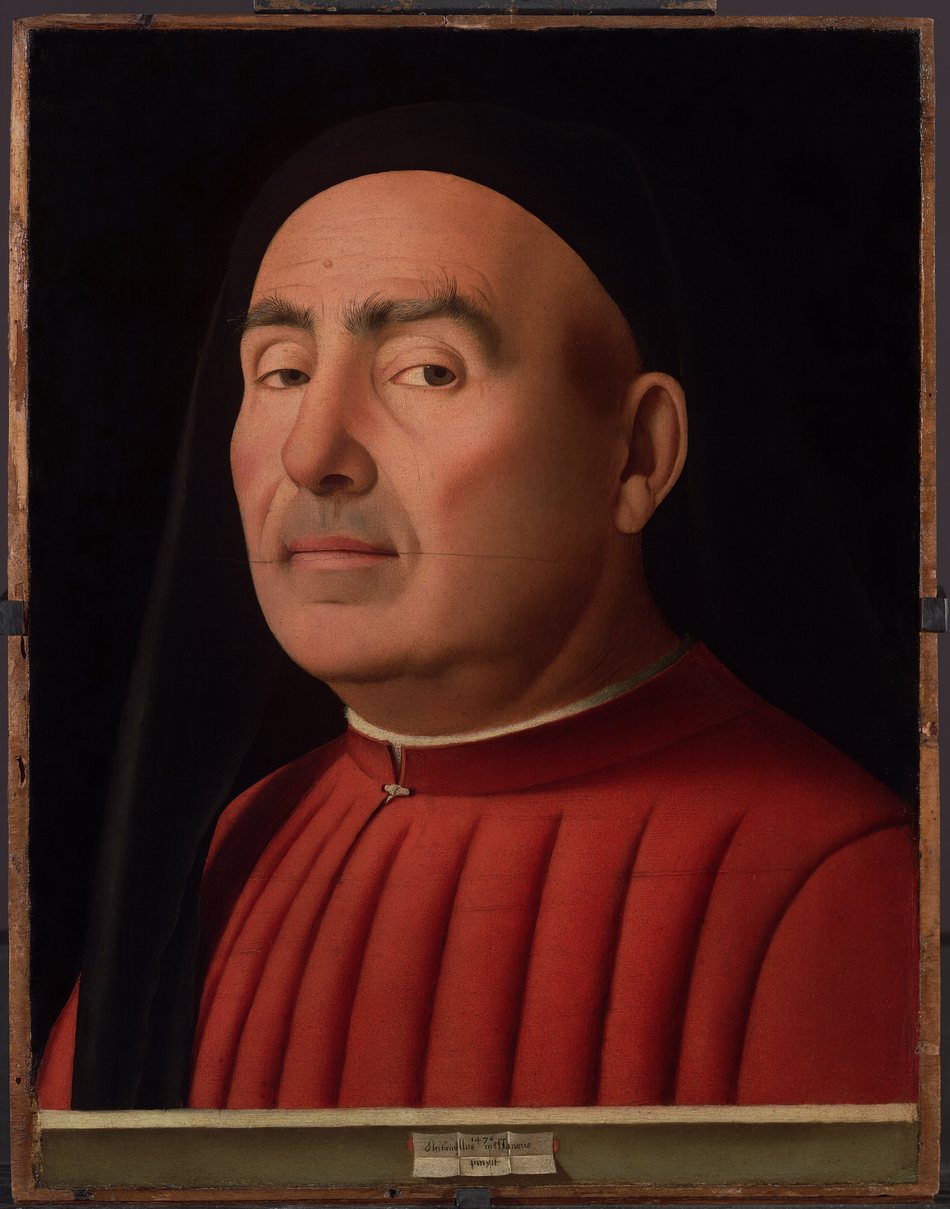
A balding man in a red robe and black cap, painted with such even, enamelled calm that the portrait becomes a study of presence itself — nothing anecdotal, everything essential.
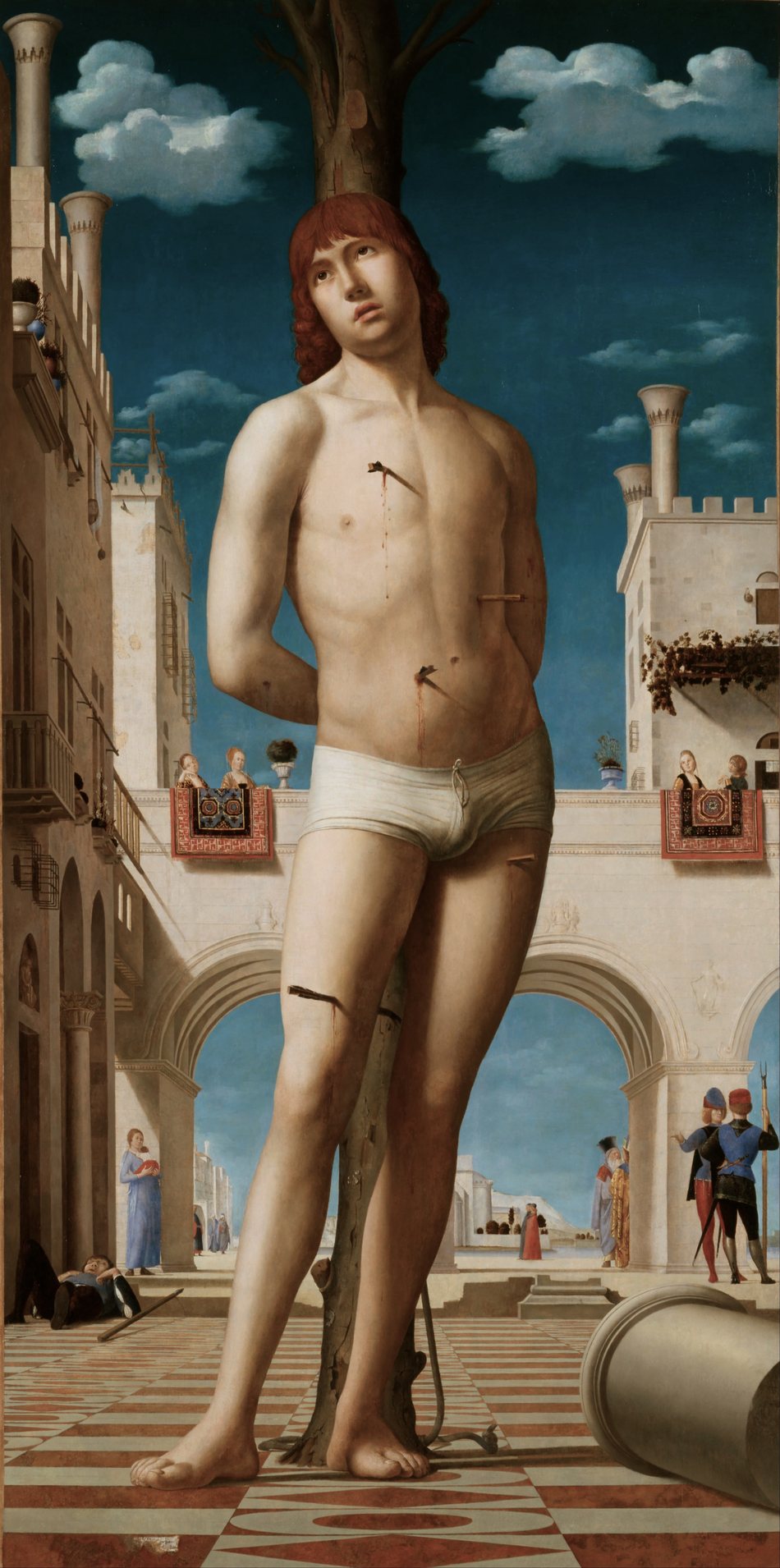
The saint stands bound to his tree in an empty Venetian piazza, serene as a classical statue, while life goes on in the loggias behind him. Painted in Venice, it taught the Venetians what oil could do.
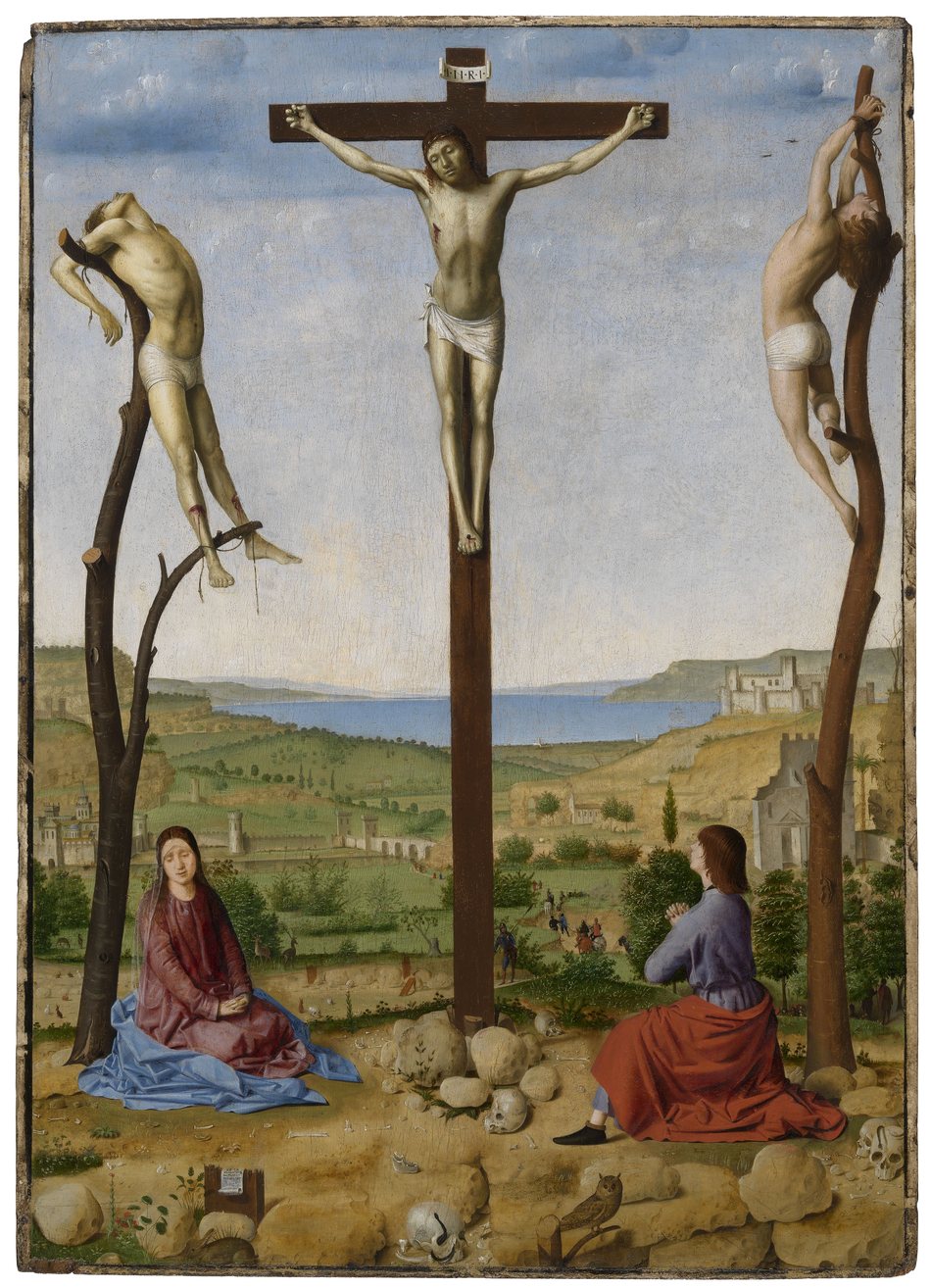
Christ between the two thieves, who hang from bent saplings in the Netherlandish manner, above a Sicilian coastal landscape dotted with tiny towns. Grief in the foreground is two women sitting very still on the ground.
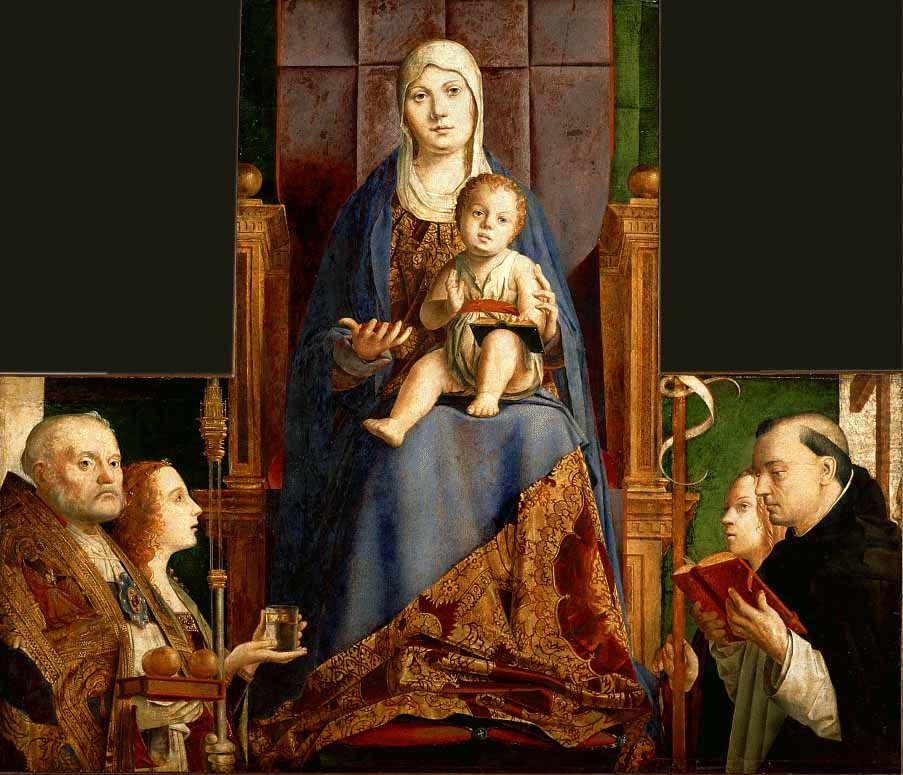
The surviving heart of the altarpiece that changed Venetian painting: the Virgin enthroned high between saints, unified by one clear light. The panel was cut down centuries ago; the black fields mark what was lost.
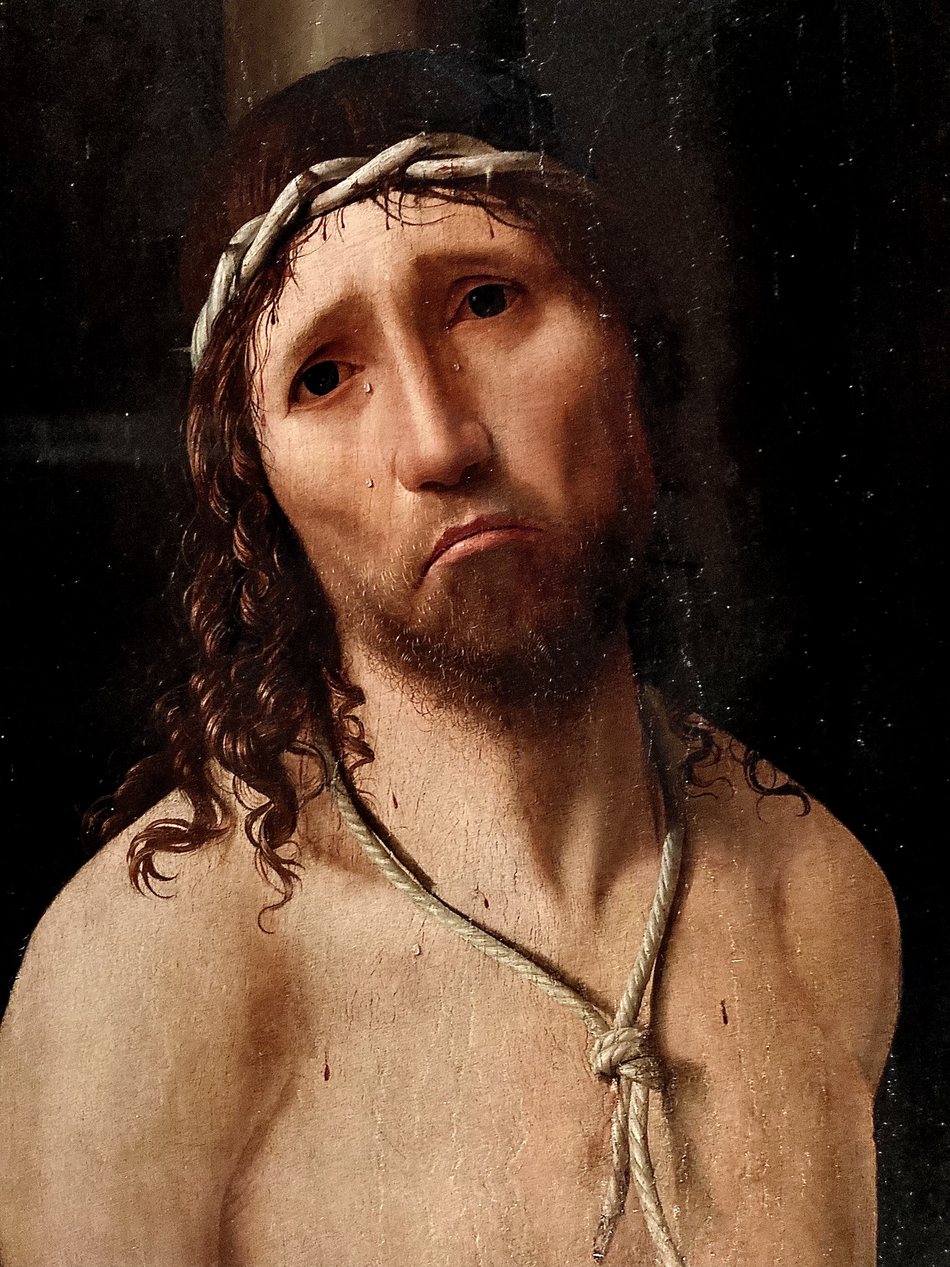
Christ presented to the crowd, a rope around his neck, tears and blood rendered in the same glazes as the living skin — Antonello returned to this half-length Passion image again and again, signing this version with its date.
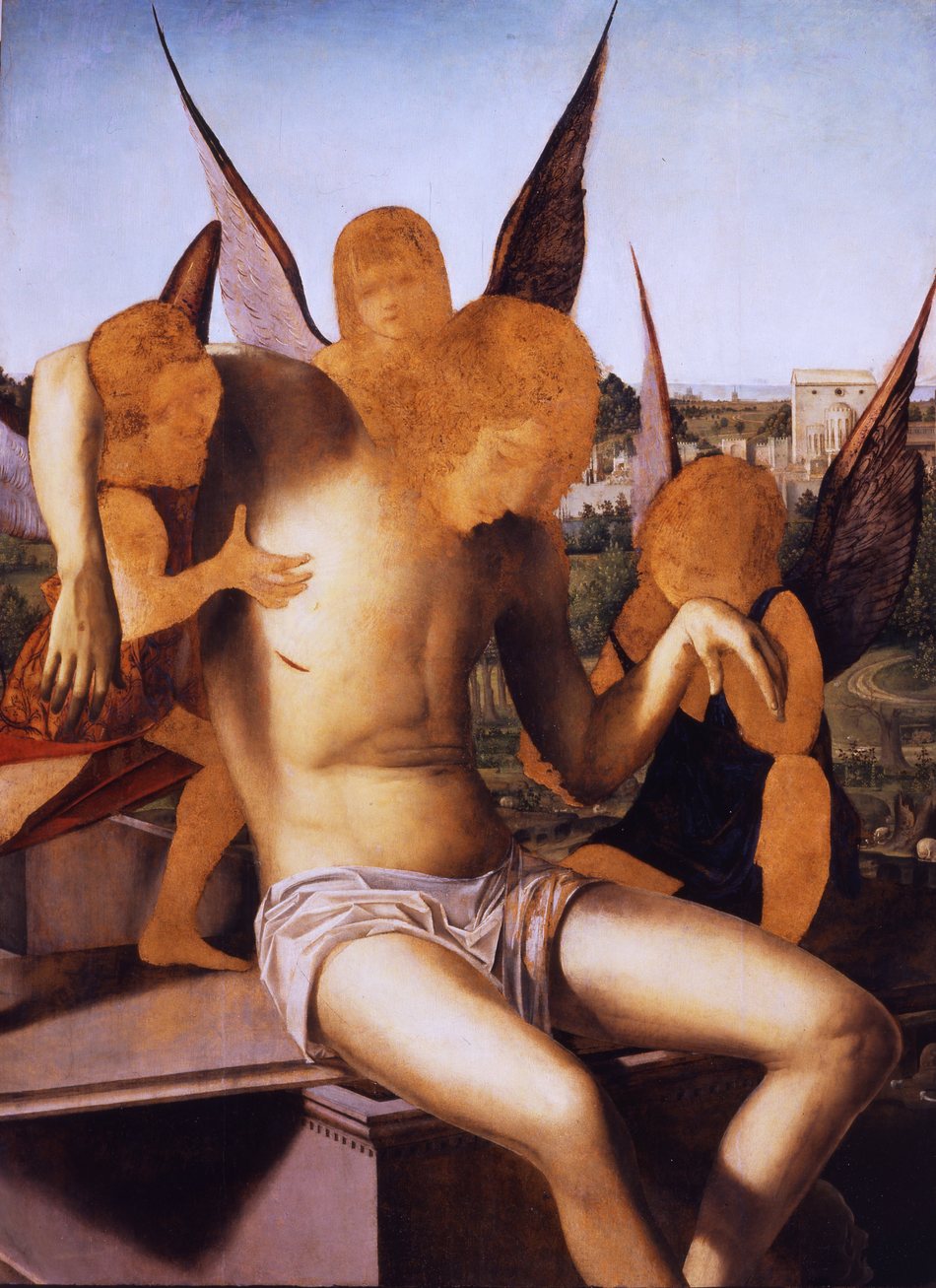
Christ's body, painted with sculptural perfection, is held by three angels whose own forms have been abraded away to golden ghosts — damage that has become part of the picture's terrible beauty.