Tom Keating called himself the avenging faker, and the market made the mistake of laughing only after it had bought. A London picture restorer whose own paintings no gallery would take, he set out to prove that the art trade could not tell a masterpiece from a morning's work — and by his own account flooded it with more than two thousand fakes, above all the moonlit watercolours of Samuel Palmer. He claimed he had planted a clue in every one. This is the room of the forger as saboteur: the man who wrote the word 'fake' under the paint, confessed everything to The Times, and walked out of the Old Bailey a free man.
Keating learned the trade from the inside of other men's pictures. As a restorer he cleaned, retouched and varnished old paintings for dealers — acquiring the forger's whole toolkit as a respectable craft: how varnish yellows, how craquelure forms, how a canvas is relined and a signature refreshed. When he offered the same dealers paintings of his own, they were refused. The lesson he took was the one this whole wing of the gallery keeps teaching: the trade buys names, not pictures. He decided to sell it names.
His confession, when it came, was a flood: more than two thousand works, he said, in the manners of over a hundred artists — Samuel Palmer first and always, but also Constable, Gainsborough, Turner, Degas, Modigliani and the Dutch masters of the seventeenth century. The numbers were his boast and cannot all be verified; the trade had every reason to minimise them and he had every reason to swell them. What is documented is enough: for years, a significant stream of 'discoveries' in the English market came from one restorer's bench.
Keating's defence was built into the pictures. He said he planted 'time bombs' in his fakes for any competent expert to find: the word fake written in lead white beneath the paint, where an X-ray would read it; modern materials where period ones belonged; deliberate anachronisms of costume and detail. The claim was half alibi and half accusation — if the bombs were there and nobody looked, the fraud belonged to the buyers. X-rays later found the hidden words in some of his pictures. The trade's embarrassment was that it had never thought to look.
The thread was pulled by a journalist. In 1970 Geraldine Norman, The Times' salesroom correspondent, noticed that an improbable number of Samuel Palmers — the visionary Shoreham watercolours, small and rare — were surfacing on the market, and she followed them back, source by source, towards Keating's circle. He denied everything for years. Then, in 1977, he confessed in her pages instead: the memoir Fake's Progress told the story as a crusade, one craftsman against a corrupt and ignorant establishment.
He was arrested and charged, and in 1979 the case came to the Old Bailey — where it collapsed. Keating appeared in the dock gravely ill, a frail old man in visible decline, and the prosecution, facing a defendant who might not survive a sentence, discontinued the case. He left court free — and recovered with suspicious speed. It was the perfect Keating ending: the establishment, having failed to detect his pictures, failed also to convict the man who confessed to painting them.
Fame, refused to the painter, came to the forger. On Channel 4's Tom Keating on Painters he demonstrated, with wit and genuine mastery, how Turner or Palmer actually worked — the restorer teaching the nation the techniques he had used against its experts. His fakes began to sell openly under his own name, as 'Keatings', and still do. He died in 1984, leaving the wing's most British question behind him: if the forger plants the clues and the market declines to look, who, precisely, has fooled whom?
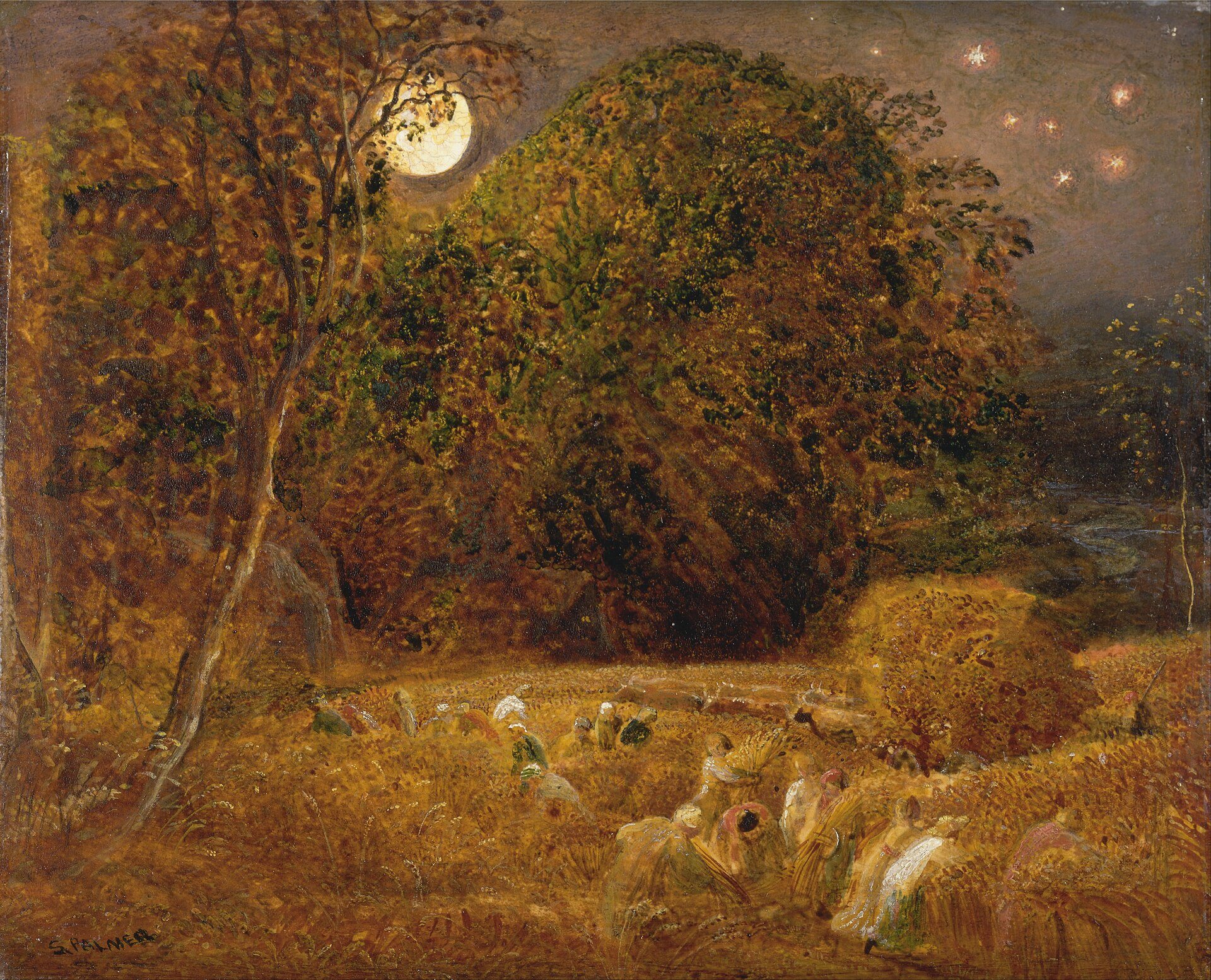
This is the genuine article — a visionary harvest scene by Samuel Palmer, the painter Keating forged above all others. Palmer's Shoreham works are small, dense and jewel-like, lit by impossible moons; precisely the kind of picture a restorer who had handled them for years could reproduce from inside. Keating's 'Palmers' multiplied the rarest corner of English art so successfully that the fakes, for a while, outnumbered the market's memory of the real ones.
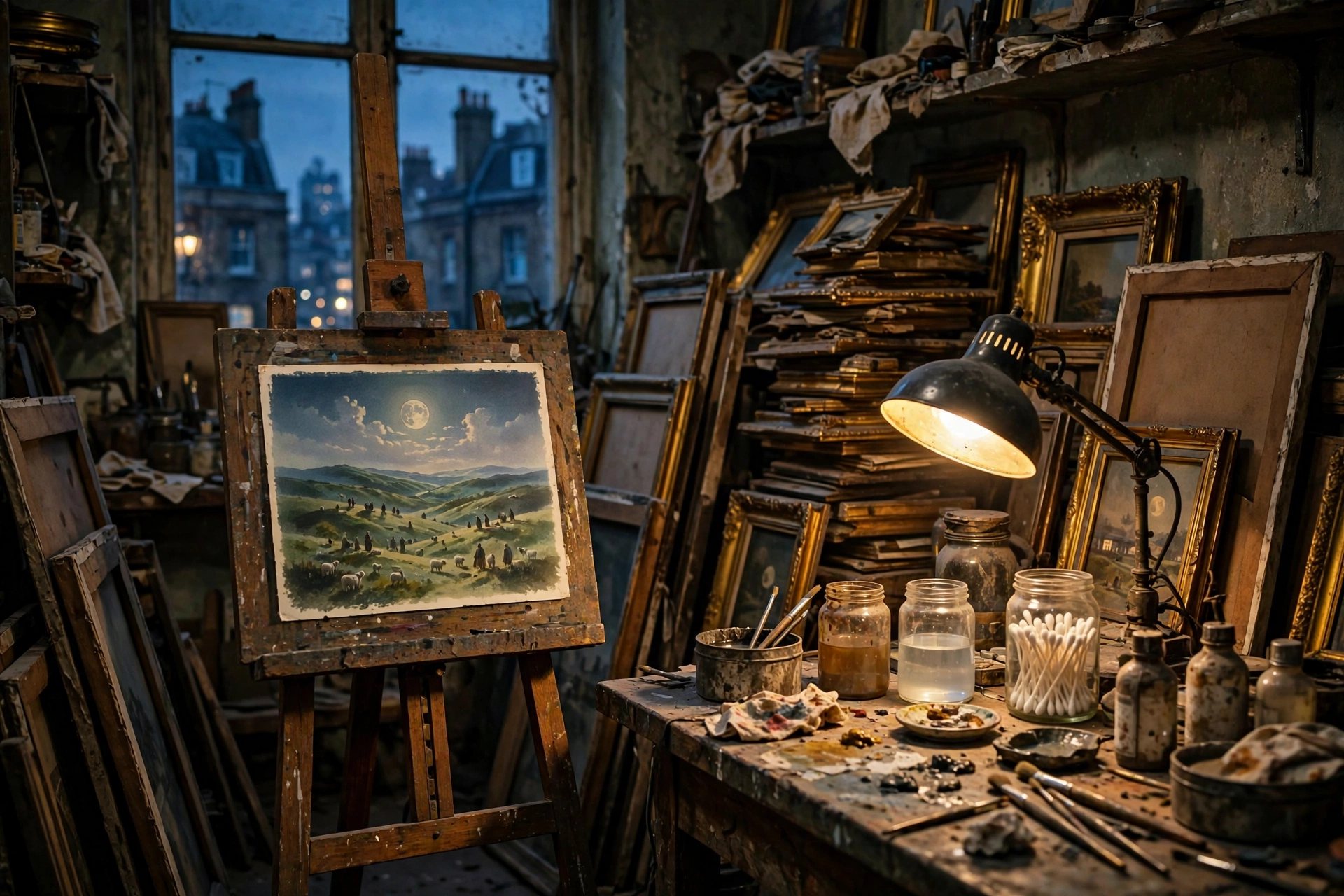
This gallery rebuilds his bench: the moonlit 'Palmer' on the easel, the solvents and cotton swabs of the cleaning trade, gilt frames stacked like evidence. Restoration was the perfect cover and the perfect school — a man paid to touch old pictures all day, whose own pictures nobody wanted. Every skill the forger needed was on this table, in plain sight, being exercised legally until the moment it wasn't.
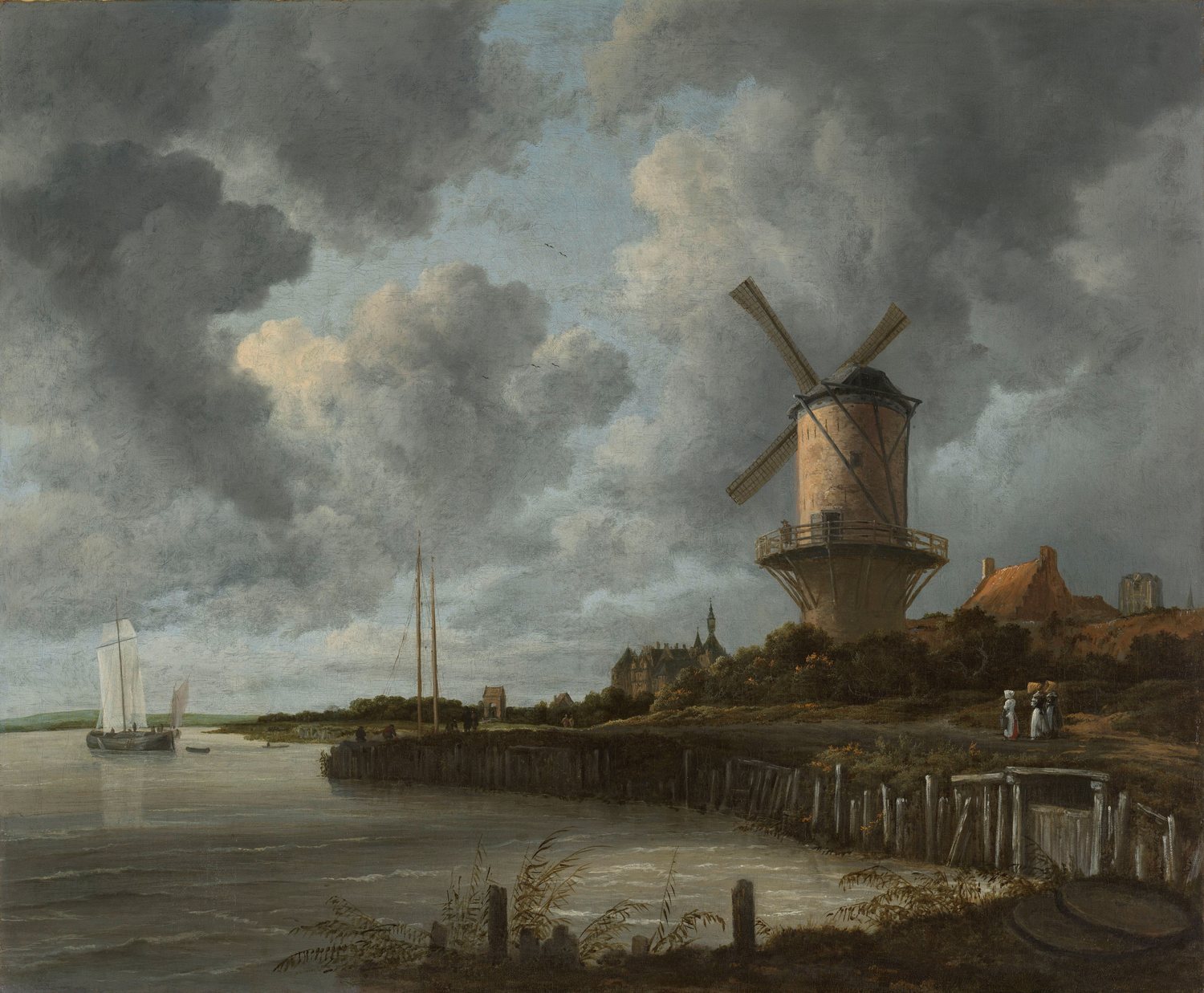
Keating's range ran to the Dutch seventeenth century too — the skies and waters of Ruisdael's world, whose genuine Mill hangs in this gallery. The Dutch pictures were a harder test than Palmer: their paint is layered, their craquelure centuries deep. That he attempted them at all tells you the scale of the man's confidence — and his contempt. He believed the market's eye stopped at the frame and the name beneath it.