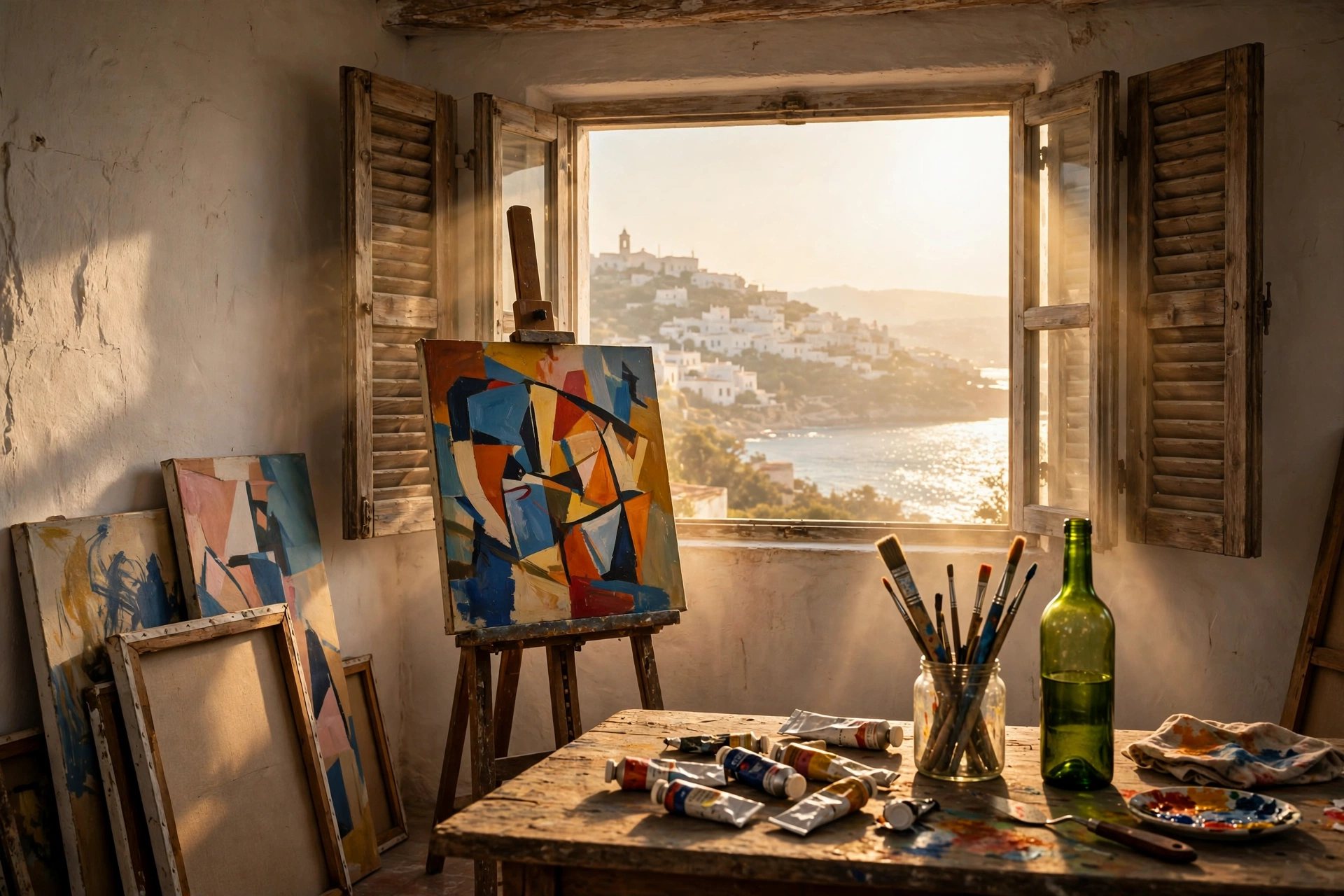
He never copied a painting in his life, he insisted — he invented new ones. From a villa on Ibiza, Elmyr de Hory painted 'Picassos', 'Matisses' and 'Modiglianis' by the hundred and sold them into the great collections of America, working so fluently in other men's manners that experts certified his inventions for decades. He was never convicted of forgery: he sold the pictures unsigned, he said, and let his dealers do the lying. This is the room of the forger as bon vivant — the man Orson Welles filmed and Clifford Irving chronicled, in the sunlit studio where modern masters were manufactured to order.
By his own cheerful account he painted more than a thousand works in the manners of Picasso, Matisse, Modigliani, Derain, Dufy and others — not copies of existing pictures, but new compositions in a borrowed hand. That distinction was his craft and his defence: a copy can be compared and caught; an invention can only be judged by eye, and the eye, flattered to recognise a 'typical' Matisse, rarely judges hard.
De Hory maintained, to the end, that he never signed another painter's name and never sold a picture as anything but a work in someone's style. The signatures, the provenances, the certificates — those, he said, were added downstream by his dealers, Fernand Legros and Réal Lessard, who turned his fluent pastiches into 'discoveries' with paperwork. Whether the court of history believes him is another matter; the courts of law never convicted him of forgery at all.
Legros and Lessard were the engine: tireless, plausible men who carried de Hory's canvases to collectors across America in the 1950s and 60s, priced to tempt — a 'Matisse' for the cost of a good car. Their greatest catch was the Texas oil millionaire Algur H. Meadows, whose gleaming new collection, unveiled in 1967, proved to be salted with de Horys. The Meadows scandal broke the operation open and made the forger, briefly, the most famous painter nobody had heard of.
From the early 1960s his base was Ibiza — a white villa, long lunches, a parade of guests, and a studio full of Mediterranean light. The island was camouflage and theatre at once: who would suspect the charming host, painting openly in the sun, of supplying half the 'modern masters' of Texas? He lived as the art world liked its geniuses to live, and the performance authenticated the pictures better than any certificate.
Fame arrived in print and on film. Clifford Irving's 1969 biography Fake! made de Hory a celebrity; Orson Welles then built his last completed film, F for Fake (1973), around the forger's charm, letting him muse on camera about art, value and lying. The coda is perfect: Irving, the forger's chronicler, went on to fake the autobiography of Howard Hughes — and de Hory, watching his own biographer exposed, laughed the laugh of a man proved right about everyone.
In 1976 Spain agreed to extradite him to France, where the charges at last had teeth. On 11 December 1976, before the police came, de Hory took an overdose of sleeping pills in the Ibiza villa and died as he had lived — on his own timing. He left no fortune and a great many pictures. Today his fakes are sold openly, signed with his own name, as de Horys: the market, having been fooled by the man, now collects the fooling itself.
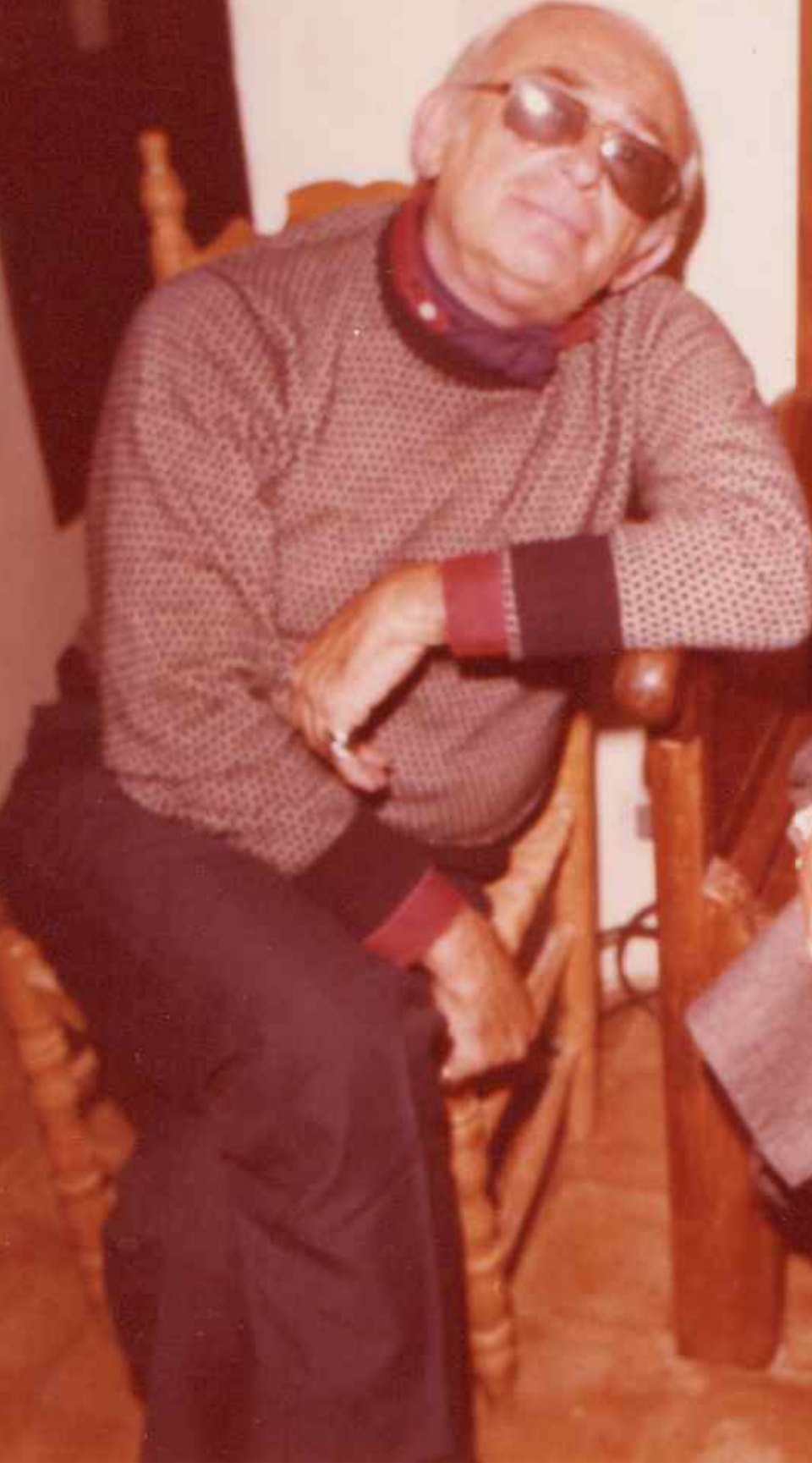
Two years before his death he is exactly as Welles filmed him: silver-haired, amused, entirely unrepentant, a man who regarded the art market as a casino that insulted him by existing. He gave interviews freely and painted in the open. Whatever else he forged, the persona — the exiled Hungarian aristocrat of art — may have been his most durable composition.
This gallery rebuilds his stage: shutters open on the white old town and the sea, an easel of bold modernist colour, canvases stacked like unspent currency. It is a scene, not a document — but everything in it is true to the method. De Hory's forgery was not a midnight craft of locks and chemicals; it was daylight work, done fast, in the sun, by a painter who understood the modern masters' shorthand better than their own dealers did.
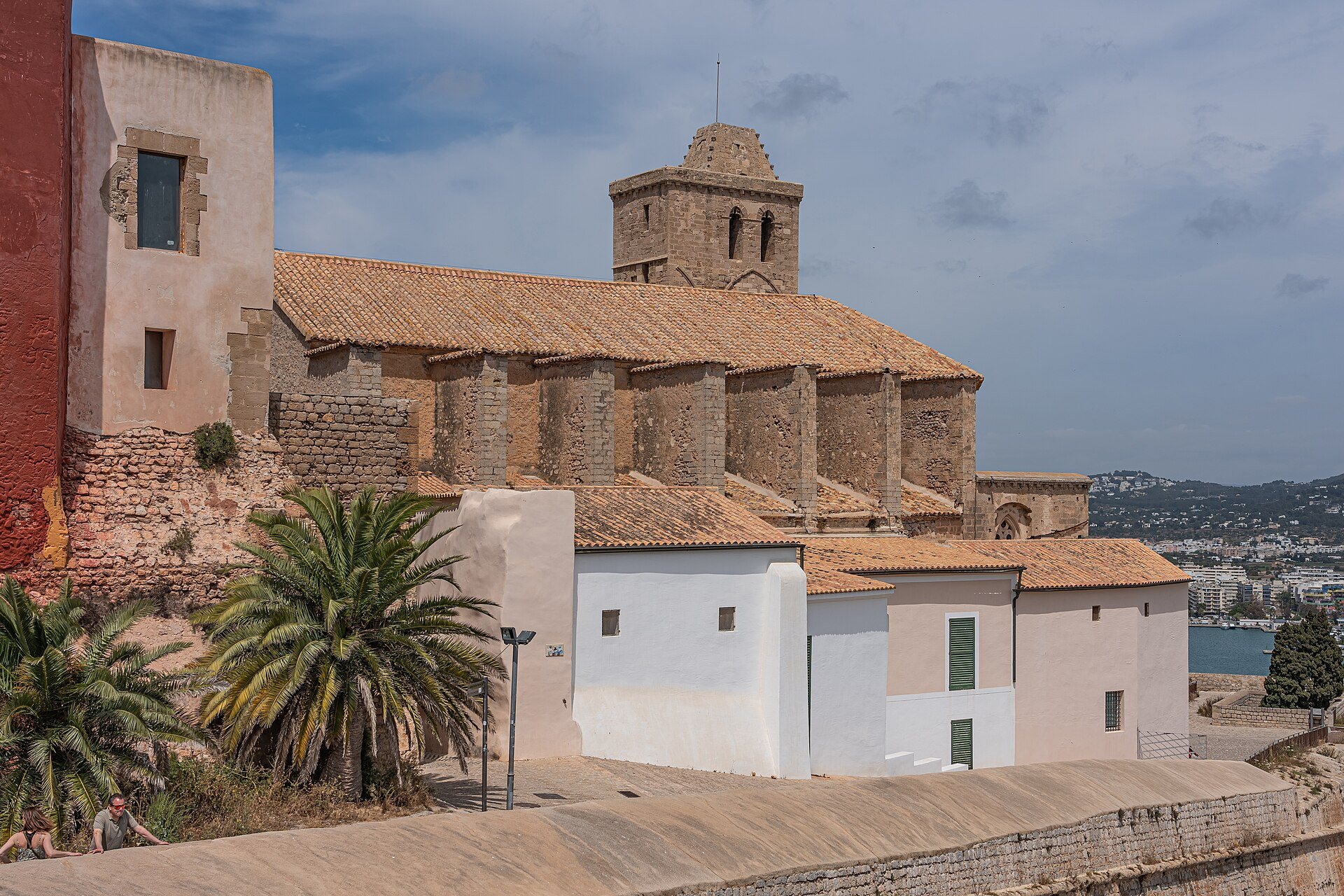
The white citadel above the harbour was the backdrop of the whole performance — the lunches, the guests, the canvases leaving quietly for Paris and New York. From this hill de Hory conducted the strangest career in modern art: a one-man school of Paris, working in the sun, supplying a market that preferred his Matisses to the truth about them.