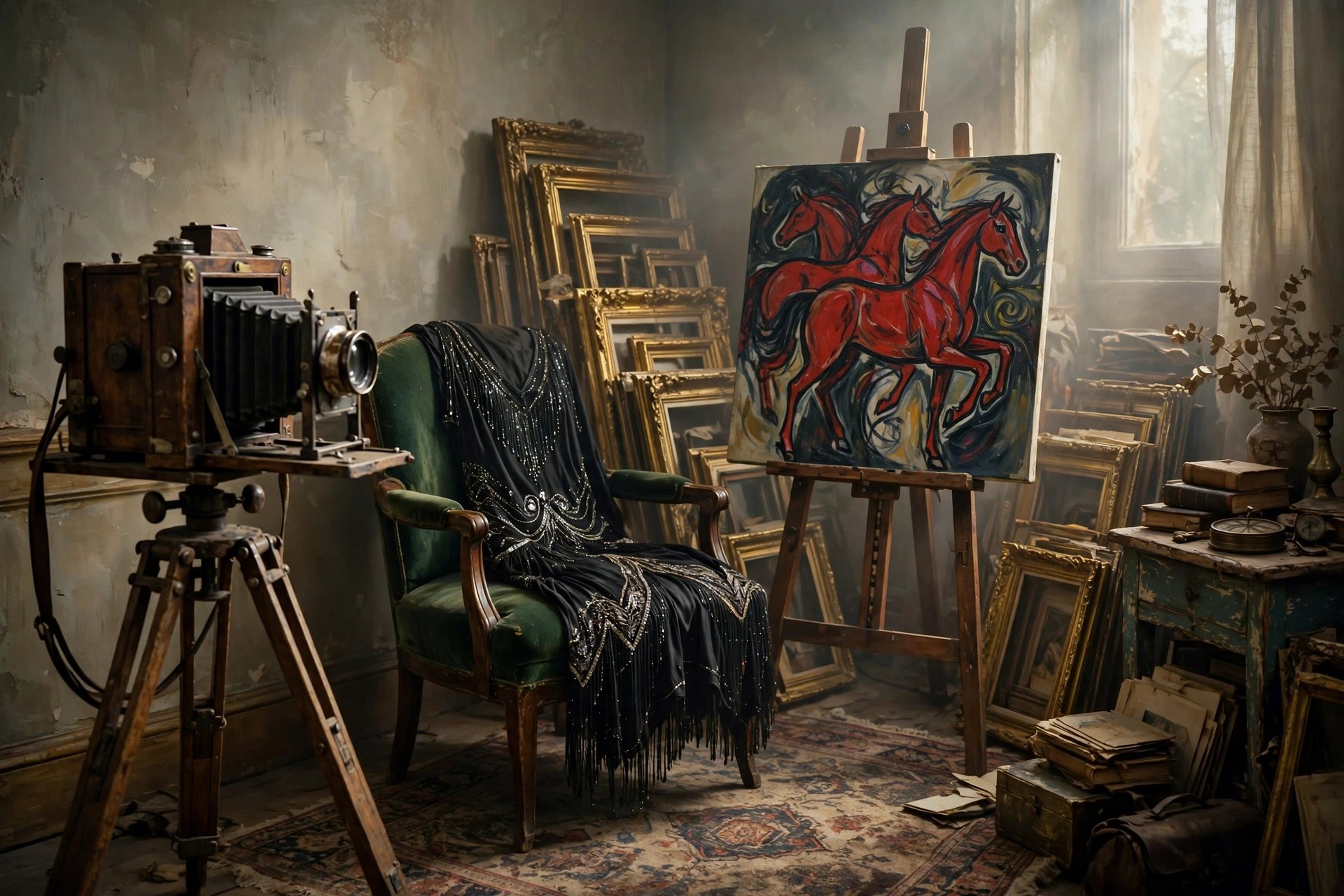
The most successful forger of our own century did not hide in a garret — he built a fiction with a house, a family and a paper trail. Wolfgang Beltracchi painted the 'lost' works of Max Ernst, Campendonk, Derain and Léger, and his wife Helene sold them as the remnants of her grandfather's collection, complete with sepia photographs of the pictures hanging in the family home before the war. The photographs were staged in the 1990s; the grandfather's collection never existed; the experts certified it all. This is the room of the Beltracchi case — the forgery as a family business, undone in the end by a single modern pigment.
Beltracchi worked like Van Meegeren before him: not copies, but the pictures the record was missing — a Campendonk of 1914 that ought to exist, an Ernst of the 1920s that a catalogue had room for. He studied each artist's hand, materials and development until he could improvise inside them, bought period canvases and frames at flea markets, and mixed his paints with an archaeologist's care. The painting, in his system, was only half the product. The other half was the story it arrived with.
The masterstroke was a provenance. The pictures, buyers were told, came from the collection of Werner Jägers of Cologne, whose grandfather had bought directly from the artists and from the great dealer Alfred Flechtheim, then hidden the works away through the Nazi years and the war. A hidden collection explains everything a forger needs explained: no exhibition records, no catalogues, no photographs — except, conveniently, a handful of old family photographs, which the Beltracchis proceeded to manufacture.
So Helene Beltracchi put on a beaded 1920s dress, pearls and a headband, and sat for her portrait as her own grandmother Josephine — in a room hung with her husband's new 'old' paintings, photographed on period equipment and period paper. The sepia prints were shown to experts as documents: here is the collection, on the wall, before the war. It is the boldest stroke in the whole case — provenance not written but performed, a family album as a work of fiction, and it worked for years.
The system met him more than halfway. Werner Spies, the world's leading Max Ernst scholar, authenticated Beltracchi's fake Ernsts; respected galleries handled the pictures; the Lempertz auction house in Cologne sold the 'Campendonk' Red Picture with Horses for 2.88 million euros. Everyone in the chain earned from belief and lost from doubt, and the pictures were, on their surfaces, very good. Beltracchi's defence of himself is uncomfortable precisely because so much of it is true: he never sold a painting to anyone who did not want to believe in it.
The end came from a laboratory, not an eye. The buyers of the Red Picture with Horses had the paint analysed, and in a canvas dated 1914 the analysts found titanium white of a kind not manufactured until decades later. One modern pigment in one picture lit the fuse: investigators followed the money to a villa in Freiburg, and in August 2010 the Beltracchis were arrested. Decades of flawless theatre were undone by the smallest of anachronisms — the one test the forger could not charm, because it does not look at the picture at all.
At the Cologne trial in 2011 Beltracchi confessed to fourteen forgeries and received six years in an open prison; Helene received four. The court dealt with fourteen; he has cheerfully spoken of many more, and the true count of his works in the world's collections is unknown. He emerged to a second career as himself — memoir, documentary film, exhibitions of paintings signed Beltracchi. The market that jailed him now also collects him, which may be the most honest verdict the case produced: the hand was real; only the names were false.

The only forger in this wing who is still alive — photographed in 2024, long after the open prison, the memoir and the documentary, as a public figure in his own right. He gives interviews, exhibits under his own name and repeats his doctrine to every camera: the paintings were good; it was the market's hunger for names that made them crimes. The courts disagreed about the names. About the hand, nobody serious disagrees.
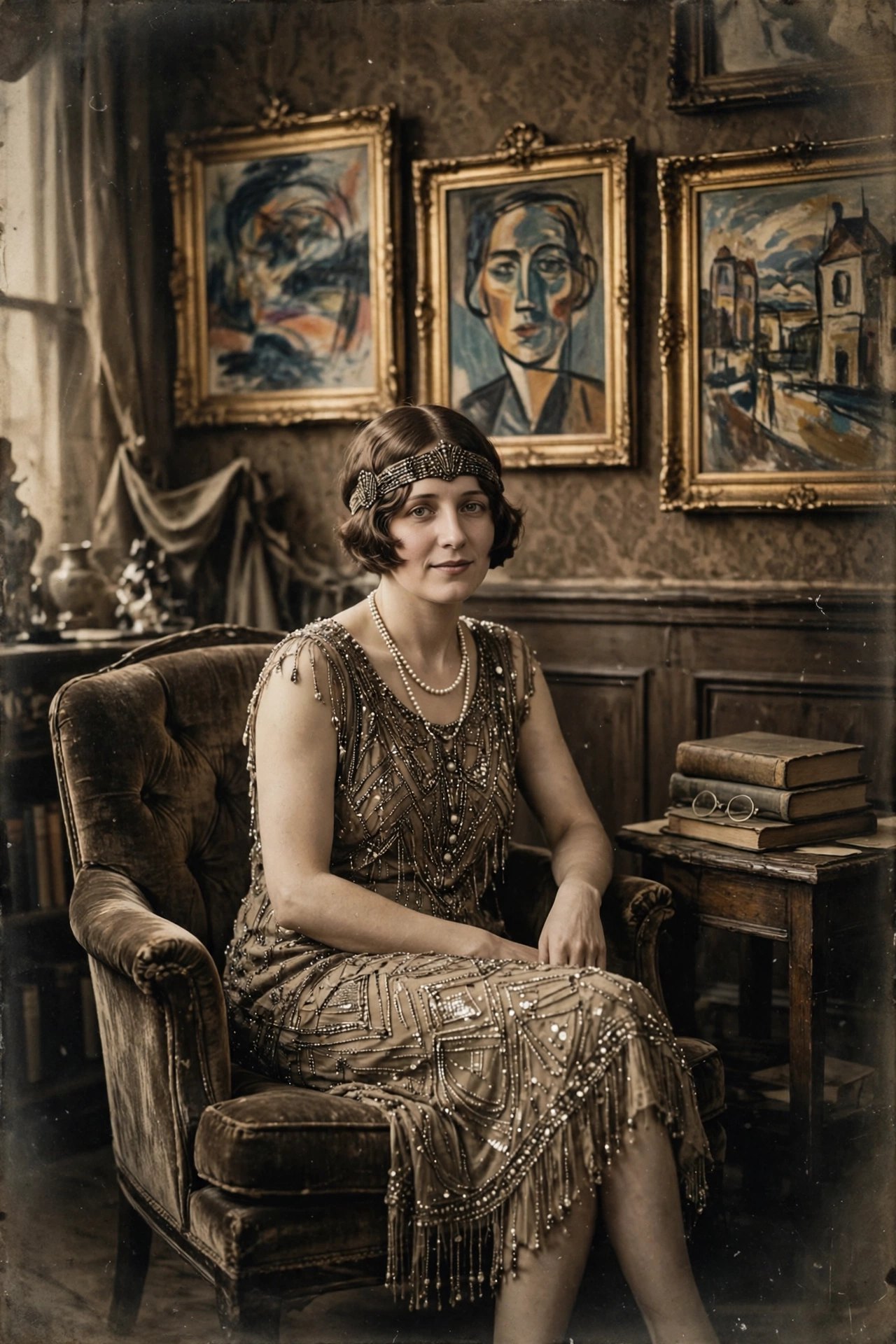
This gallery rebuilds the Beltracchis' most famous prop. Helene posed as her grandmother Josephine, in 1920s dress, before walls of her husband's fresh 'masterpieces', and the sepia prints were presented to experts as pre-war documents of the Jägers Collection. Look at it as the investigators finally did: the dress, the pearls, the paintings behind her — a provenance performed for the camera, and believed because everyone wanted the story to be true.
The other half of the workshop: a period box camera on its tripod, the beaded dress waiting on the armchair, a 'Campendonk' of red horses on the easel and flea-market frames stacked for the next production. Van Meegeren baked his paint; Hebborn aged his paper; Beltracchi's generation forged the evidence around the picture — the collection, the family, the photographs — and left the painting to pass a test it was never really given.