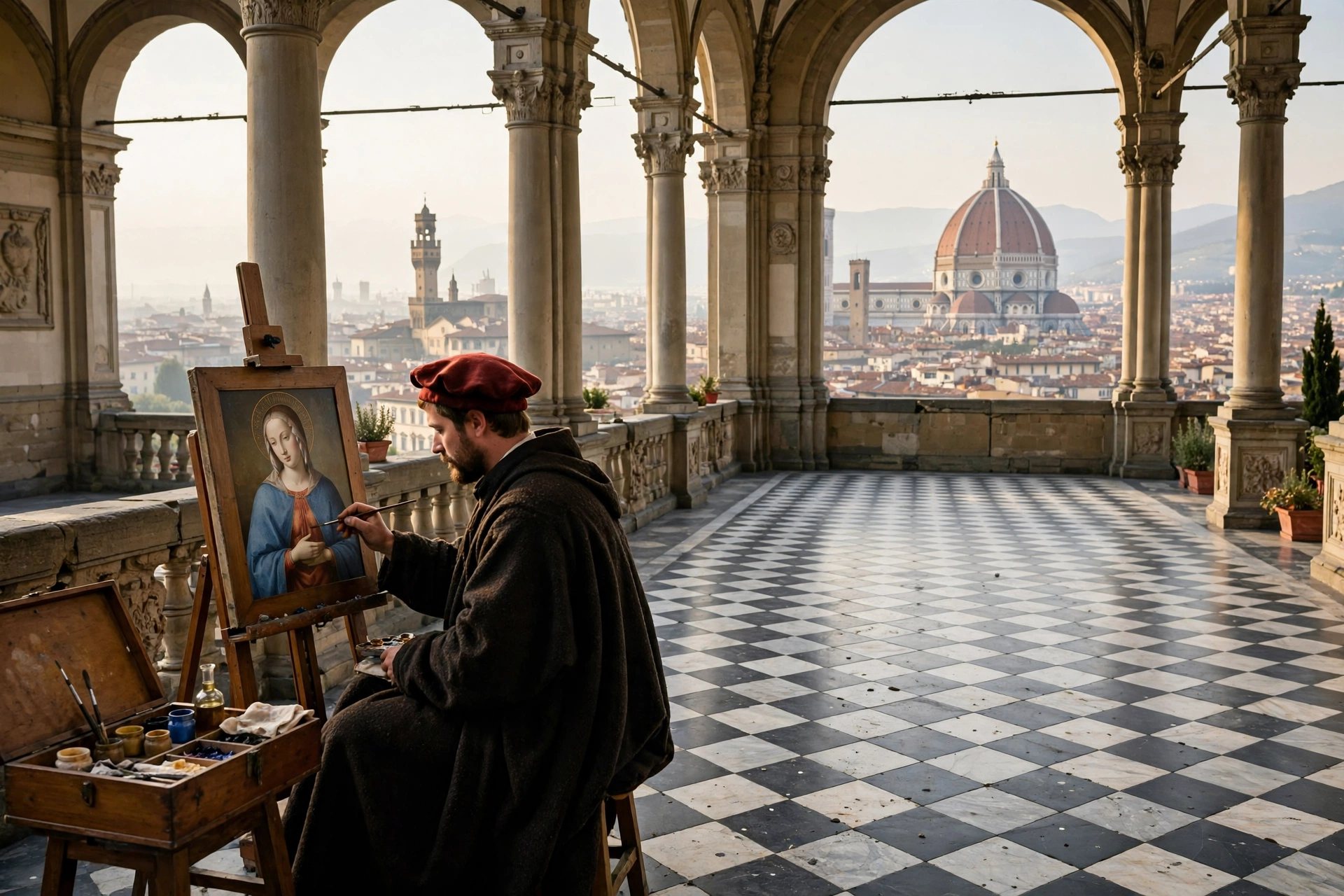
In the second half of the fifteenth century the new art becomes a system. Perspective gives the picture a measurable world; drawing gives it a plan; princes, bankers and republics give it work. Florence teaches structure, Venice begins to teach light, and north of the Alps a goldsmith's son named Dürer is already learning to look. Painting is no longer a craft of walls and panels — it is a way of knowing.
Brunelleschi demonstrated it with a mirror and a peephole; Alberti wrote it down in 1435 as an open window; Masaccio built it into the Trinity's barrel vault. Linear perspective is this room's grammar: orthogonals racing to one vanishing point, figures measured like architecture. Space stops being a backdrop and becomes a place a body can walk into — the single most consequential trick in Western painting.
Florence believed in disegno — drawing as the father of all the arts. Boys entered a workshop at ten or twelve, ground pigments, copied the master's sheets, drew from casts and from life in silverpoint, a metal stylus that cannot be erased. The composition was settled on paper, transferred to the panel by cartoon and pouncing, and only then painted. What looks like spontaneity is architecture.
Egg tempera dries in seconds and is modelled in thousands of fine hatched strokes — luminous, matte, unforgiving. Then, in these very decades, oil painting perfected in Flanders travels south: Antonello da Messina brings its secrets to Venice in 1475, and Italian painters discover blending, depth and shadow that tempera cannot give. The rooms ahead are painted in the marriage of the two.
Look at Botticelli's Adoration of the Magi: the kings and their court are the Medici, portrait by portrait, kneeling at the centre of the sacred story. Patronage in this age is not shy. Bankers buy chapels, guilds commission altarpieces as civic advertising, and the donor's face — painted by the best hand in Florence — joins the saints for eternity. Art is devotion, and also a balance sheet.
The workshops dissected corpses by night and dug up Roman statues by day. Pollaiuolo's engraved Battle of the Nudes is a catalogue of muscles in action; Botticelli answers with the opposite pole — bodies of weightless grace, Primavera and the Venus, where the antique returns not as marble but as weather: spring wind in a garden. Between the muscle and the breeze, the century holds its balance.
Florence draws; Venice, ruled by water and weather, will colour. Giovanni Bellini, trained in tempera, converts to oil and spends fifty years softening every edge into humid Venetian air. In his Madonnas the landscape behind the figures stops being a symbol and becomes a time of day. The next century belongs to his pupils — Giorgione and Titian — and to the argument between disegno and colore that runs through this whole gallery.
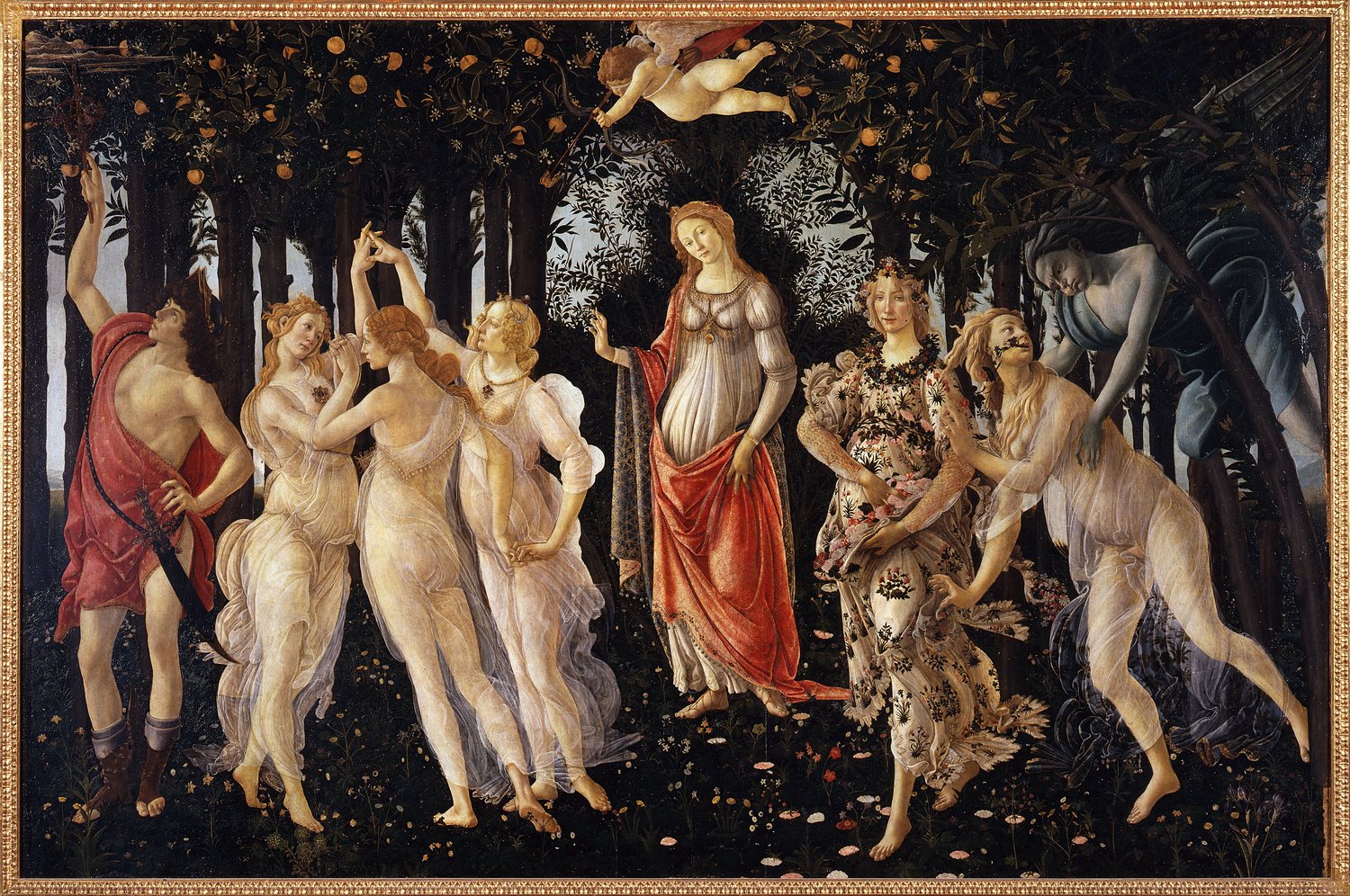
Spring enters an orange grove: Zephyrus seizes Chloris, who becomes Flora scattering roses; Venus stands at the centre, the Graces dance, Mercury stirs the clouds. Botanists have identified some two hundred real plant species in the grass — a mythology painted with a herbalist's patience, probably for a Medici villa.
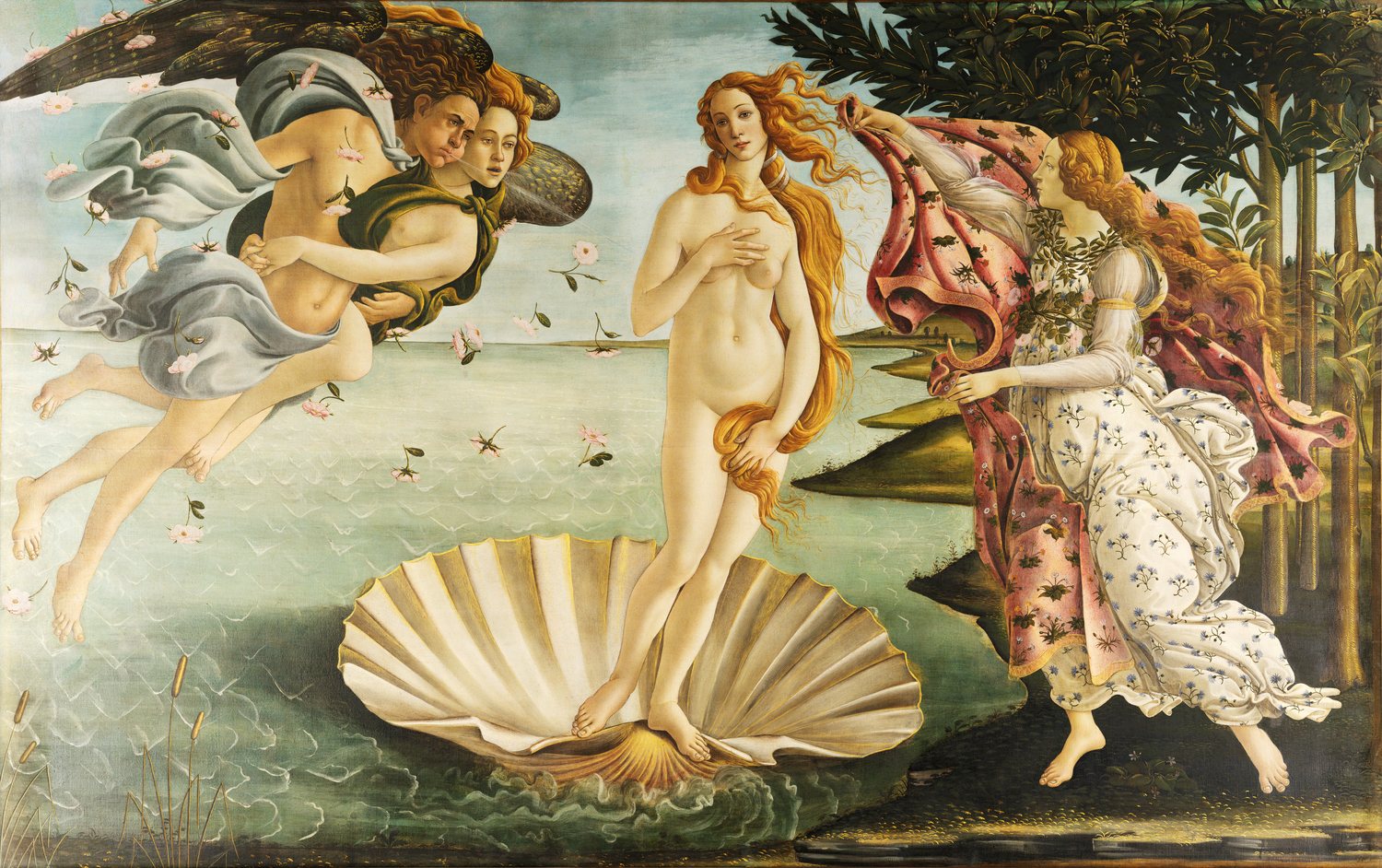
Venus arrives at Cyprus standing on a shell, blown ashore by the winds, a nymph waiting with a flowered cloak. Painted on canvas rather than panel — and the first full-length female nude in Western painting since antiquity. Tradition links her face to Simonetta Vespucci, the toast of Florence, dead at twenty-three; it cannot be proved, and has never needed to be.
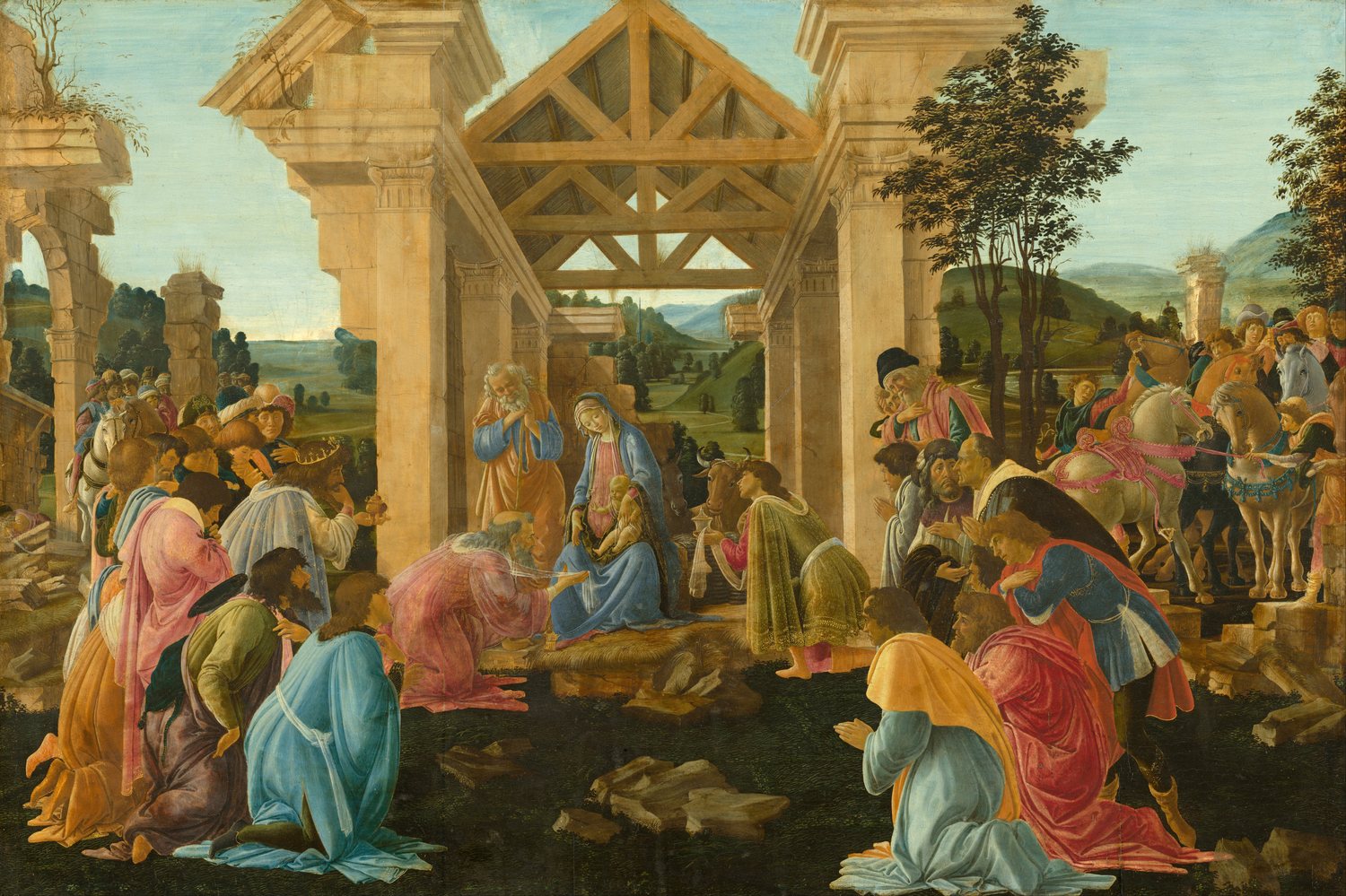
The Magi and their court are portraits: the Medici — Cosimo, Piero, Giovanni — kneel among the kings, and at the far right edge a young man in an ochre cloak looks straight out at us: Botticelli himself, twenty-something, painting his patrons and signing the crowd with his face.
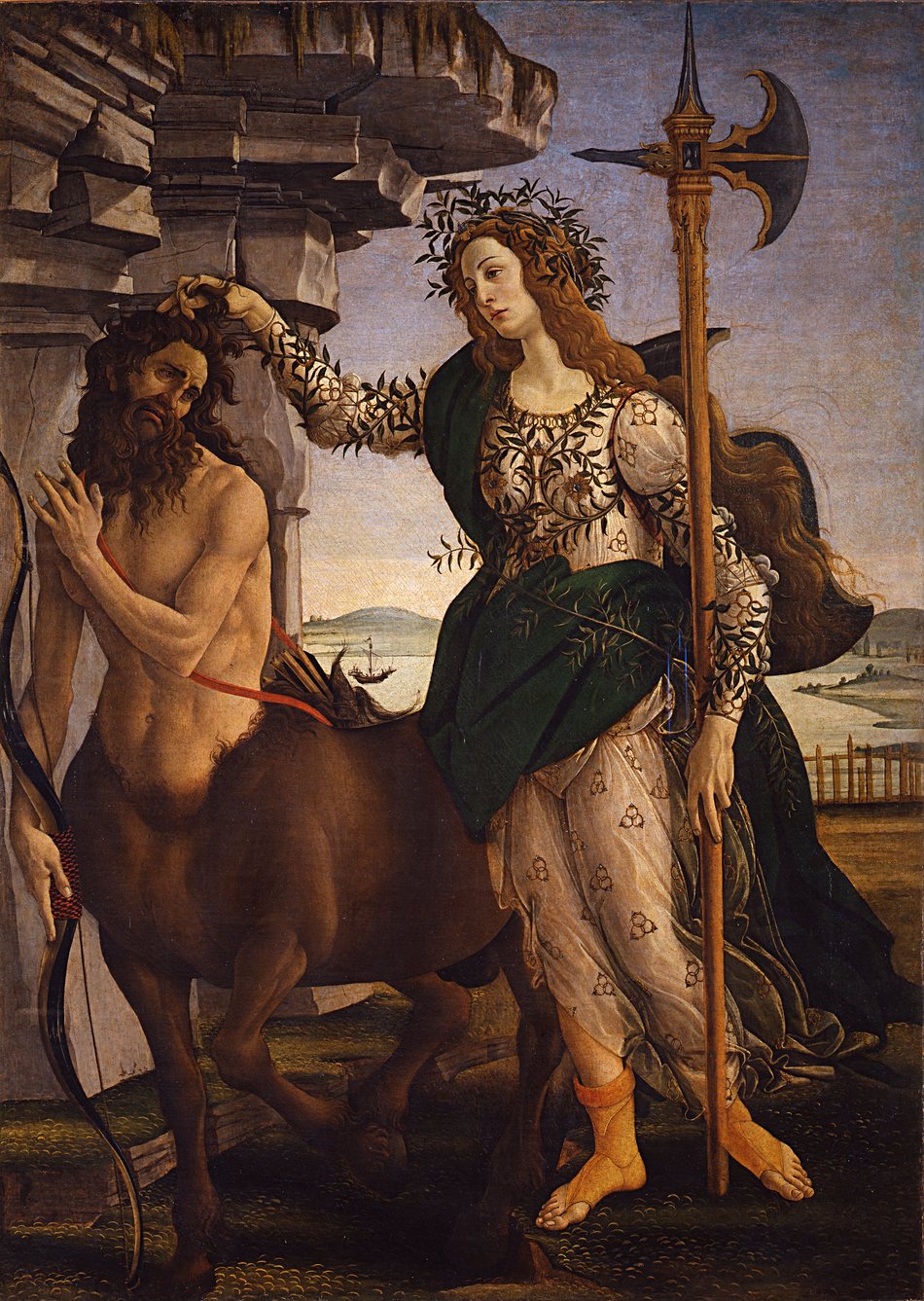
Pallas Athena, in a dress woven with the Medici diamond rings, takes the centaur gently by the hair — reason mastering the beast, without anger. Part allegory, part political emblem for Lorenzo de' Medici, it is among the calmest pictures of power ever painted.
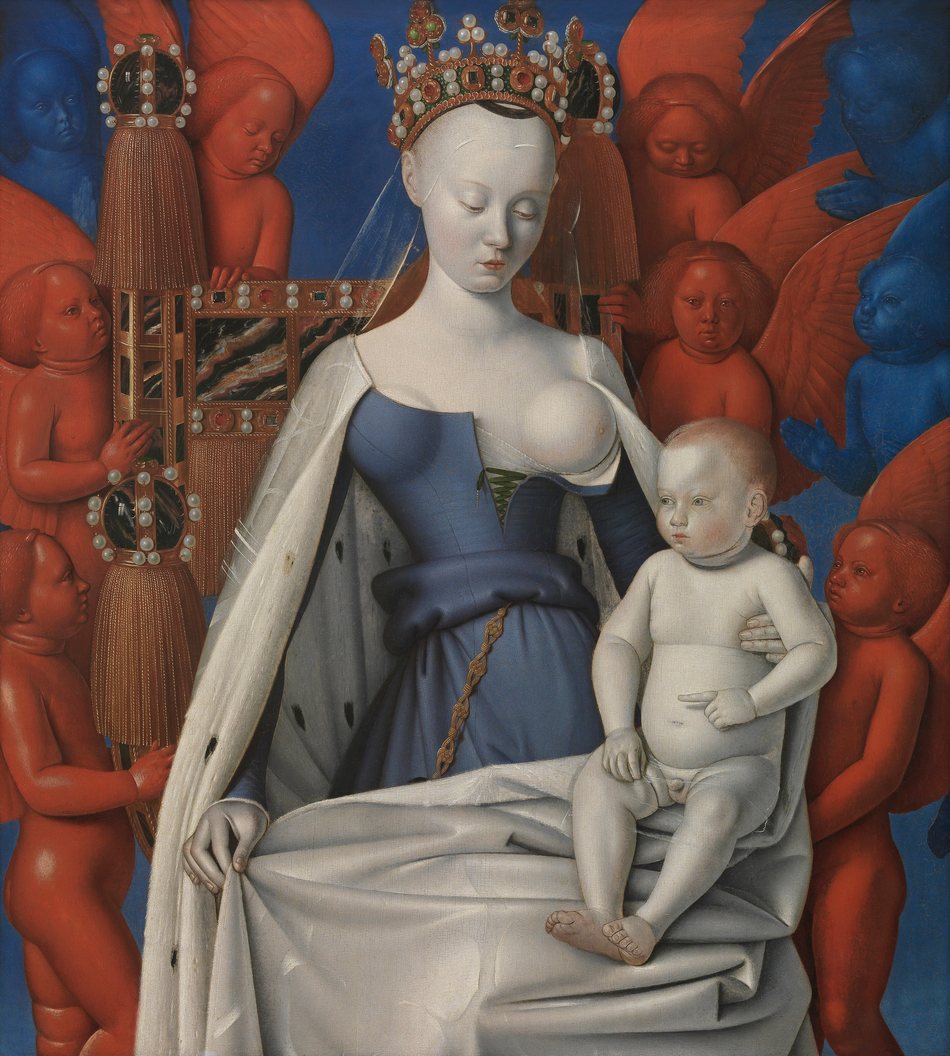
The right wing of the Melun Diptych: the Virgin as a court lady of unearthly pallor, crowned, one breast bare for the Child, enthroned among seraphim in solid red and blue. Tradition says her face is Agnès Sorel, the king's beloved mistress. Nothing in French painting prepares you for its strangeness — a Madonna as cold and perfect as a jewel.
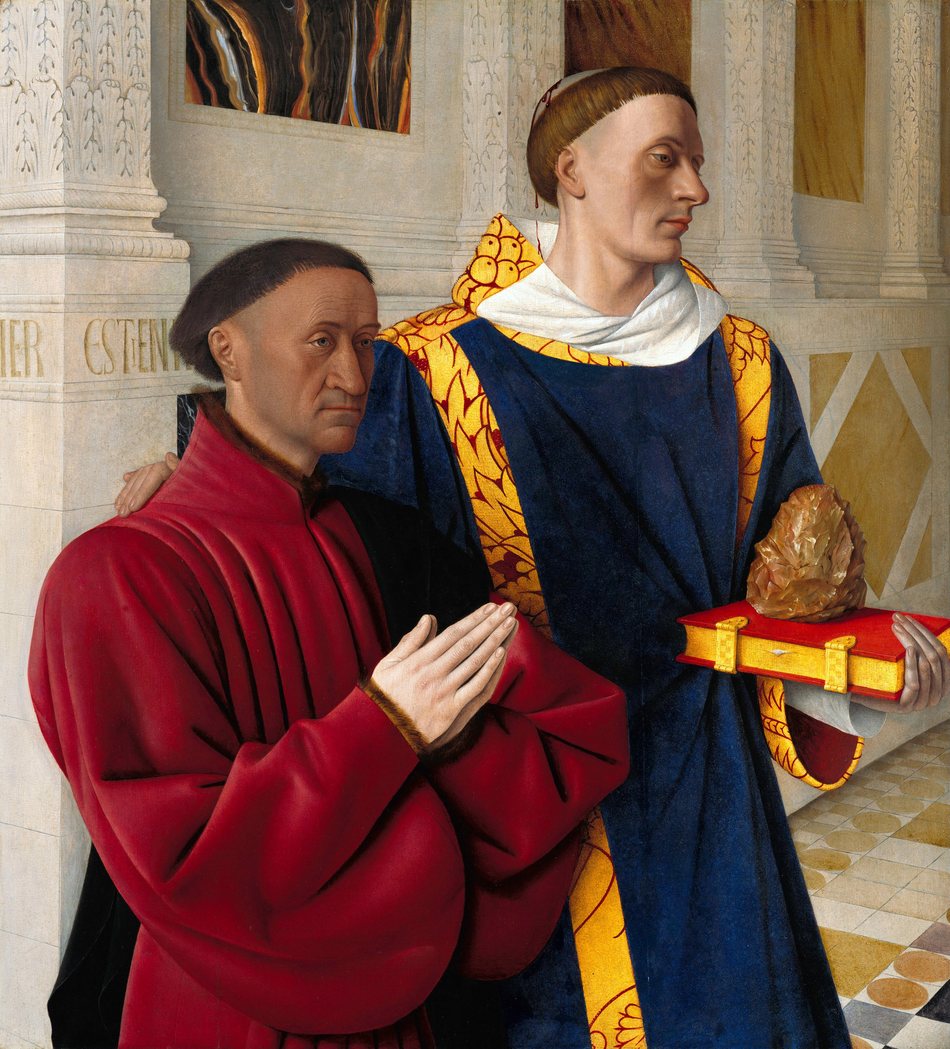
The left wing of the diptych: the king's treasurer Étienne Chevalier kneels in prayer, presented by his patron Saint Stephen, who holds the stone of his martyrdom on a book. The two wings were separated centuries ago — the donor prays in Berlin, his Madonna glows in Antwerp, and the diptych meets only in reproductions like this room.
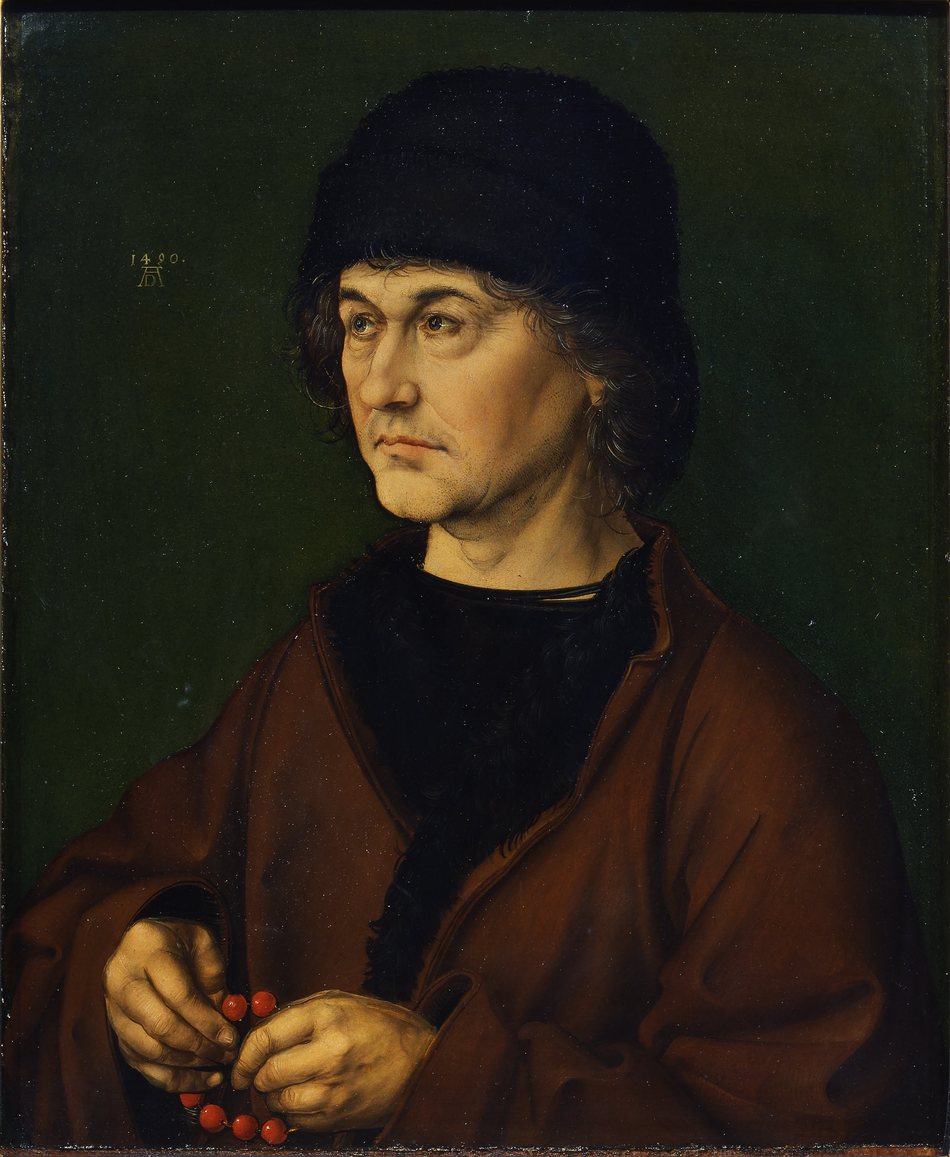
Painted at nineteen, of the Hungarian goldsmith who had taught him to use his hands: Albrecht the Elder in his best brown coat, turning a rosary in his fingers, against the dark green his son would use for decades. The apprentice's examination piece is already a portrait of character, not just of a face.