For one brief generation, everything balances at once. Leonardo is painting the Mona Lisa's smile out of smoke, Michelangelo is on his back under the Sistine ceiling, Raphael is filling the Pope's rooms with serene philosophers — and in Venice Giorgione and the young Titian are dissolving form into colour and weather. Popes and dukes pay without counting. It cannot last, and everyone in this room seems to know it: the balance is perfect because it is brief.
Leonardo: the scientist, for whom a painting is a research programme and never finished. Michelangelo: the sculptor, for whom painting is marble released by other means, done under protest and at superhuman scale. Raphael: the harmoniser, who absorbs both and makes it look effortless. The age is defined by the triangle — inquiry, force and grace — and no generation since has held all three at once.
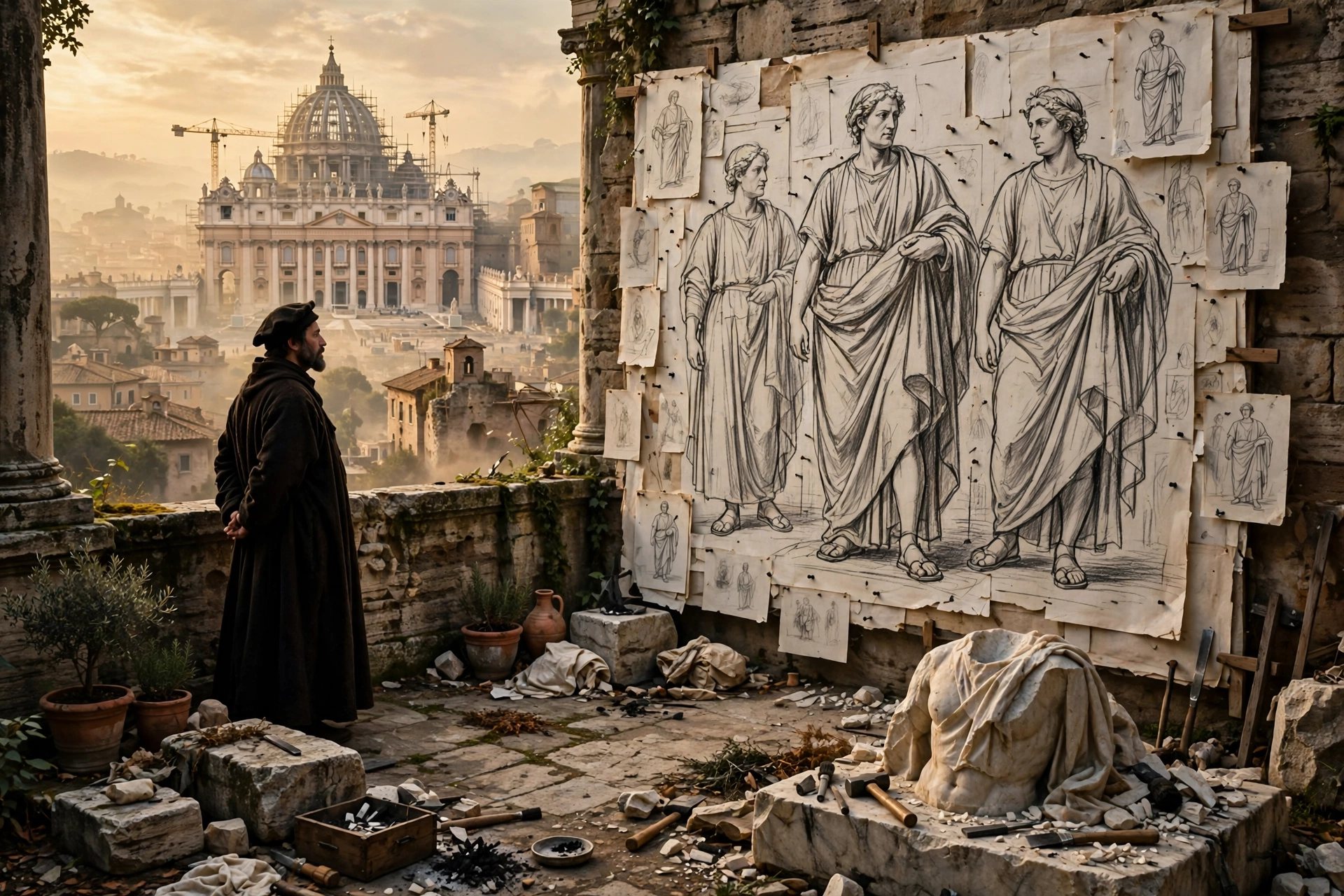
At this scale, nothing is improvised. The composition is drawn full-size on joined sheets of paper — the cartoon — pricked along its lines and pounced with charcoal dust onto the plaster or panel, or incised directly. Michelangelo's and Leonardo's rival cartoons for the Palazzo Vecchio were studied by a generation of artists like scriptures. Most cartoons were destroyed by their own use; the few survivors are among the most precious drawings on earth.
Leonardo's word for his own revolution: gone — smoked away — every outline. Oil paint, thinned to a breath and layered in veils over months, lets a cheek turn into shadow the way dusk turns into night. It is the slowest technique in this gallery and the least forgiving: one opaque touch destroys the air. The Mona Lisa's smile exists only inside this softness; draw a line around it and it dies.
The warrior pope Julius II rebuilt St Peter's, summoned Michelangelo to paint the Sistine ceiling — a sculptor, ordered to fresco twelve thousand square feet — and set Raphael to work in the next rooms, deliberately staging the rivalry. Bramante, his architect, played the two against each other like chess pieces. The High Renaissance is unthinkable without this one man's terrifying appetite: patronage as a form of war.
While Rome builds with drawing, Venice paints with light itself. Giorgione's Tempest has no agreed story — its subject is a mood, a storm's held breath; the Sleeping Venus makes a landscape of a body. Oil on canvas, worked wet and warm, lets colour carry what line carried in Florence. The young Titian finishes the Venus after Giorgione's death at about thirty-three: the pupil completing the master's dream, seamlessly.
In May 1527 mutinous Imperial troops sack Rome for months. Artists scatter — to Venice, Mantua, France, Naples — carrying the Roman manner with them like seed. Raphael is already dead at thirty-seven, Leonardo dead in France, Michelangelo fortifying Florence against the same armies. The High Renaissance ends not with a decline but with a diaspora: its balance is never recovered, because the world that required it has ended.
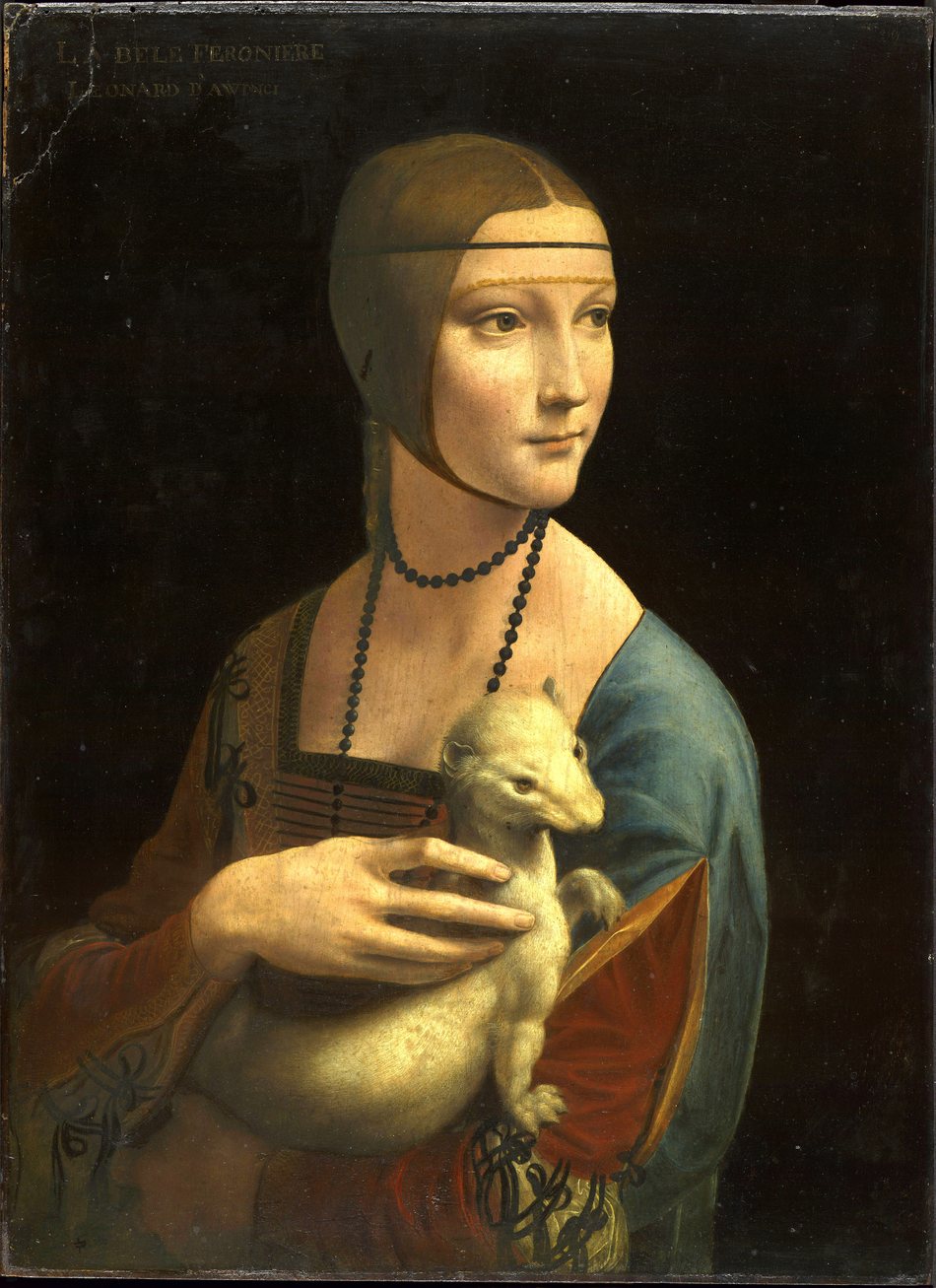
The ermine was painted three times. Light-based analysis in Paris peeled the picture apart: first the lady held nothing at all, then a small grey beast, and only at last the white ermine with its sharp black eyes. The portrait of Cecilia Gallerani changed under Leonardo's own hand.
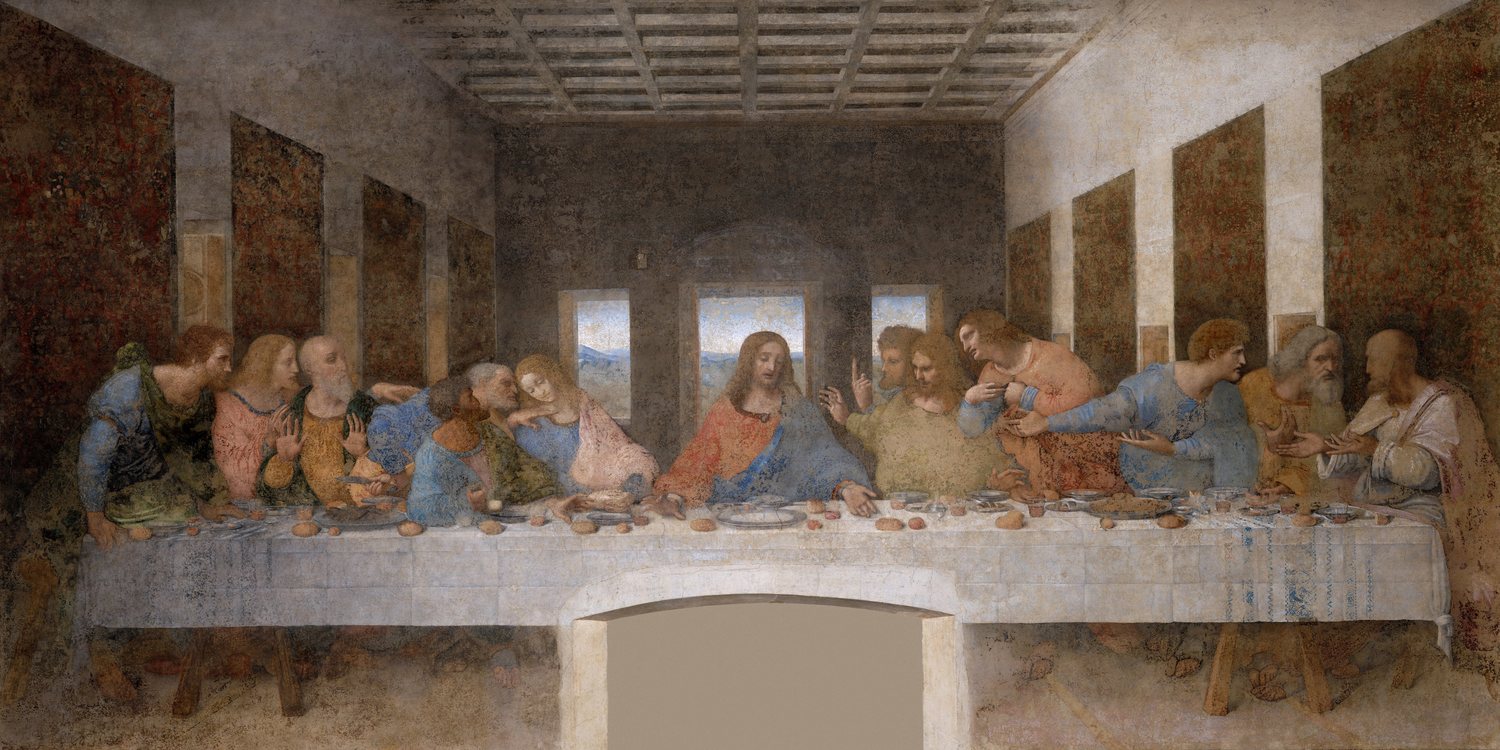
It is not a fresco, and that was its doom. True fresco forced a painter to finish each patch before the plaster dried; Leonardo wanted time to think, so he sealed the dry wall and painted in tempera and oil, like a panel. The experiment gave him three years of slow, perfect work — and the wall began to flake within his own lifetime.
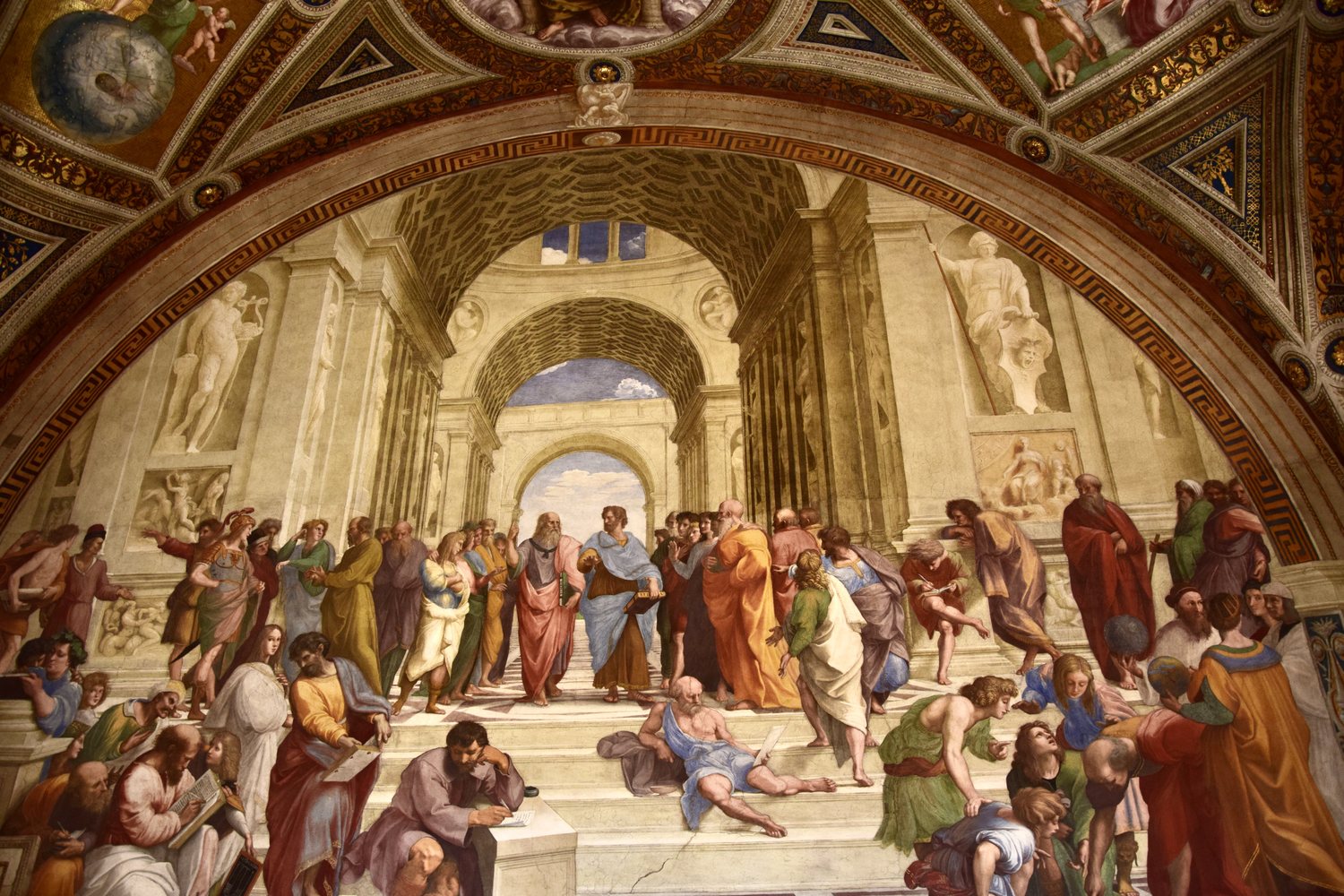
Philosophy itself, staged in a vast Renaissance hall: Plato points up, Aristotle levels his hand at the world, and around them the whole Greek mind argues, measures and dreams — many of them wearing the faces of Raphael's contemporaries, Leonardo and Michelangelo among them. It is a fresco that thinks.
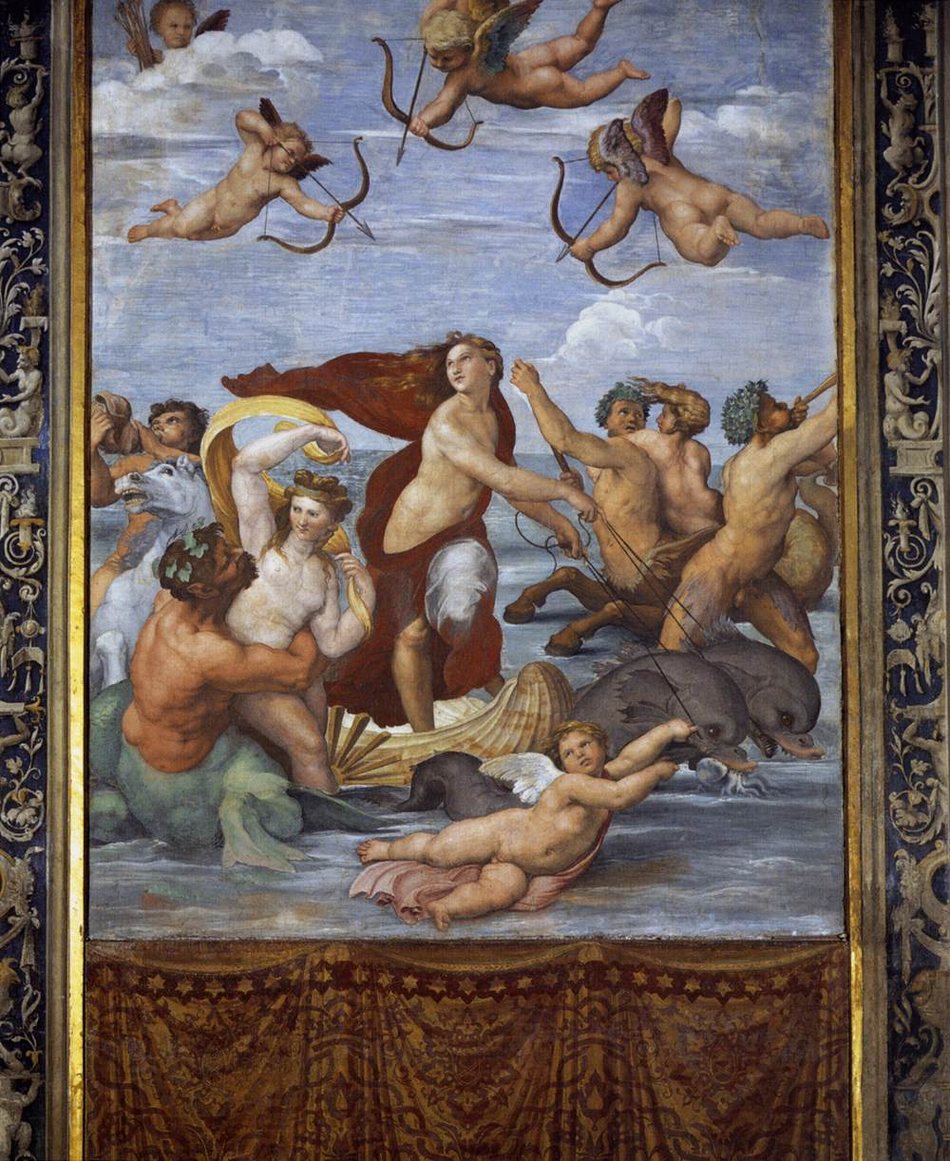
The sea nymph rides her shell chariot drawn by dolphins, tritons and nereids rioting around her, cupids aiming their bows from the sky — pure joy, painted for a banker's villa. Vasari tells that Raphael, asked where he found such beauty, answered that he painted from an idea in his mind.
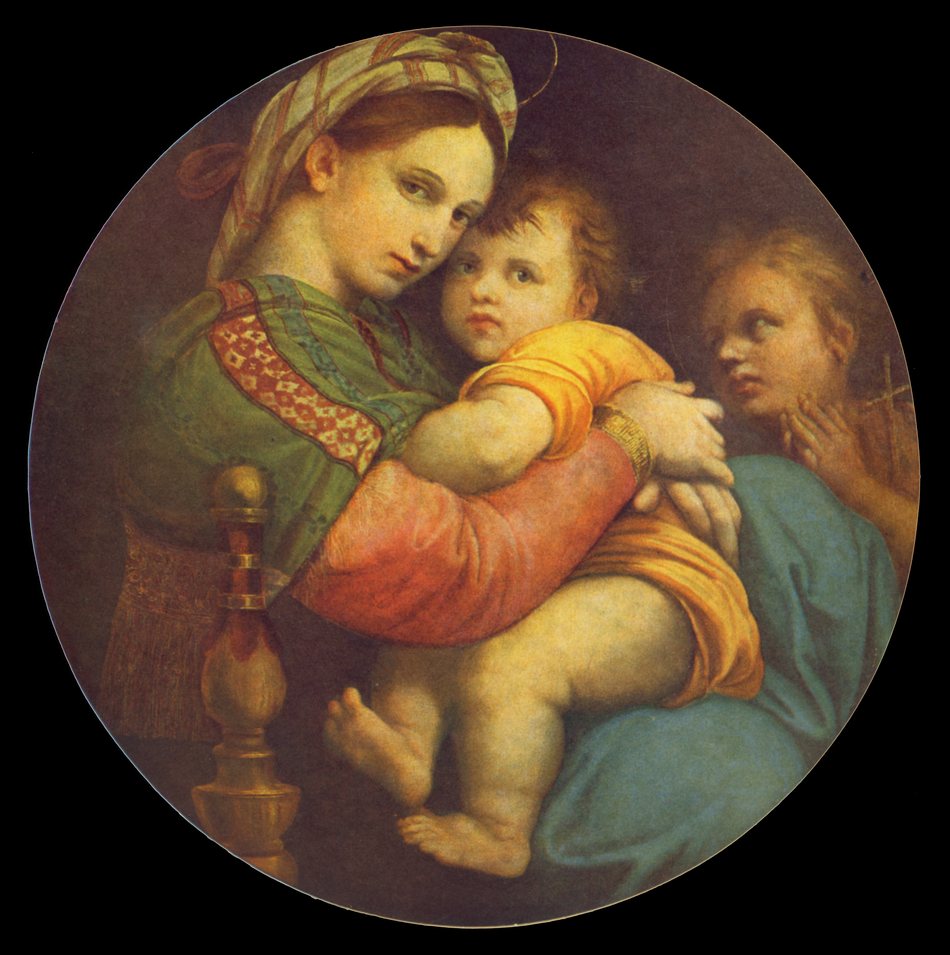
The Virgin hugs the Christ Child close on a chair-back that gives the picture its name, the little St John watching from the edge of the round frame. No landscape, no distance — the tondo is filled entirely with embrace, the most loved Madonna of the nineteenth century.
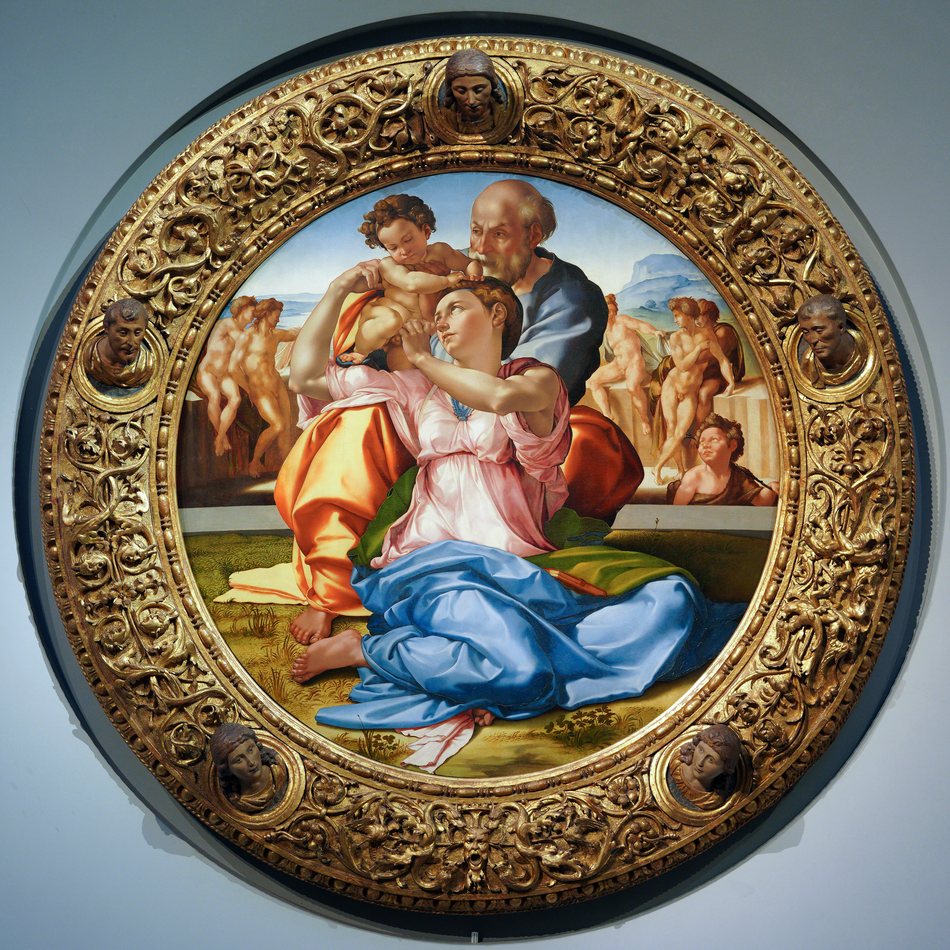
His only finished panel painting: the Holy Family in a round frame, the Virgin twisting like a figure carved from a single block, with naked youths lounging behind a parapet for reasons scholars still argue about. Painted just before the Sistine ceiling, it is the ceiling in miniature — sculpture that happens to be flat.
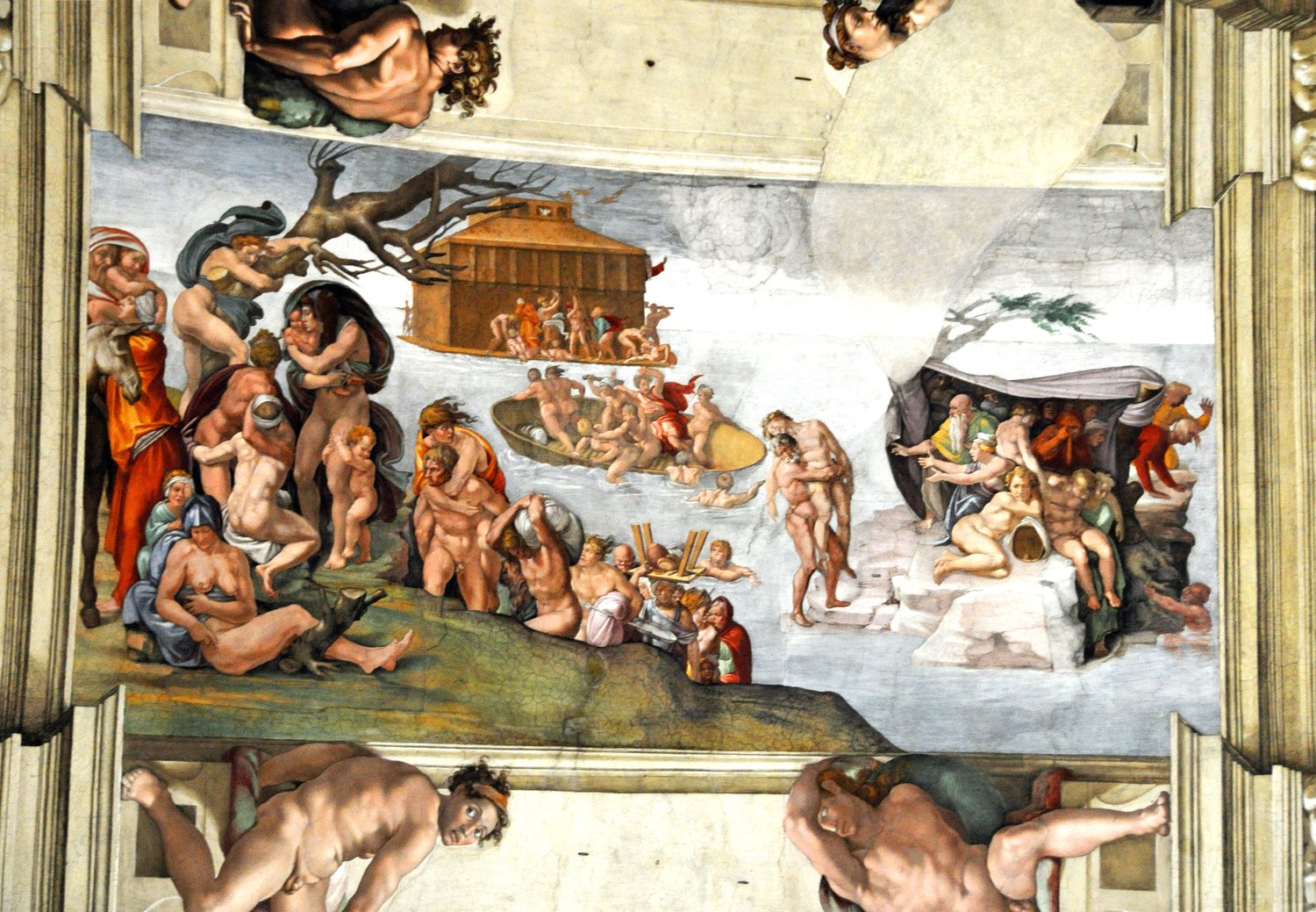
The first Genesis scene he painted — and the one that went wrong: mould bloomed in the fresh plaster and the panel had to be hacked off and redone once he had learned Roman intonaco the hard way. The crowded, desperate figures climbing to drown last are a beginner's fresco and a master's composition at once.
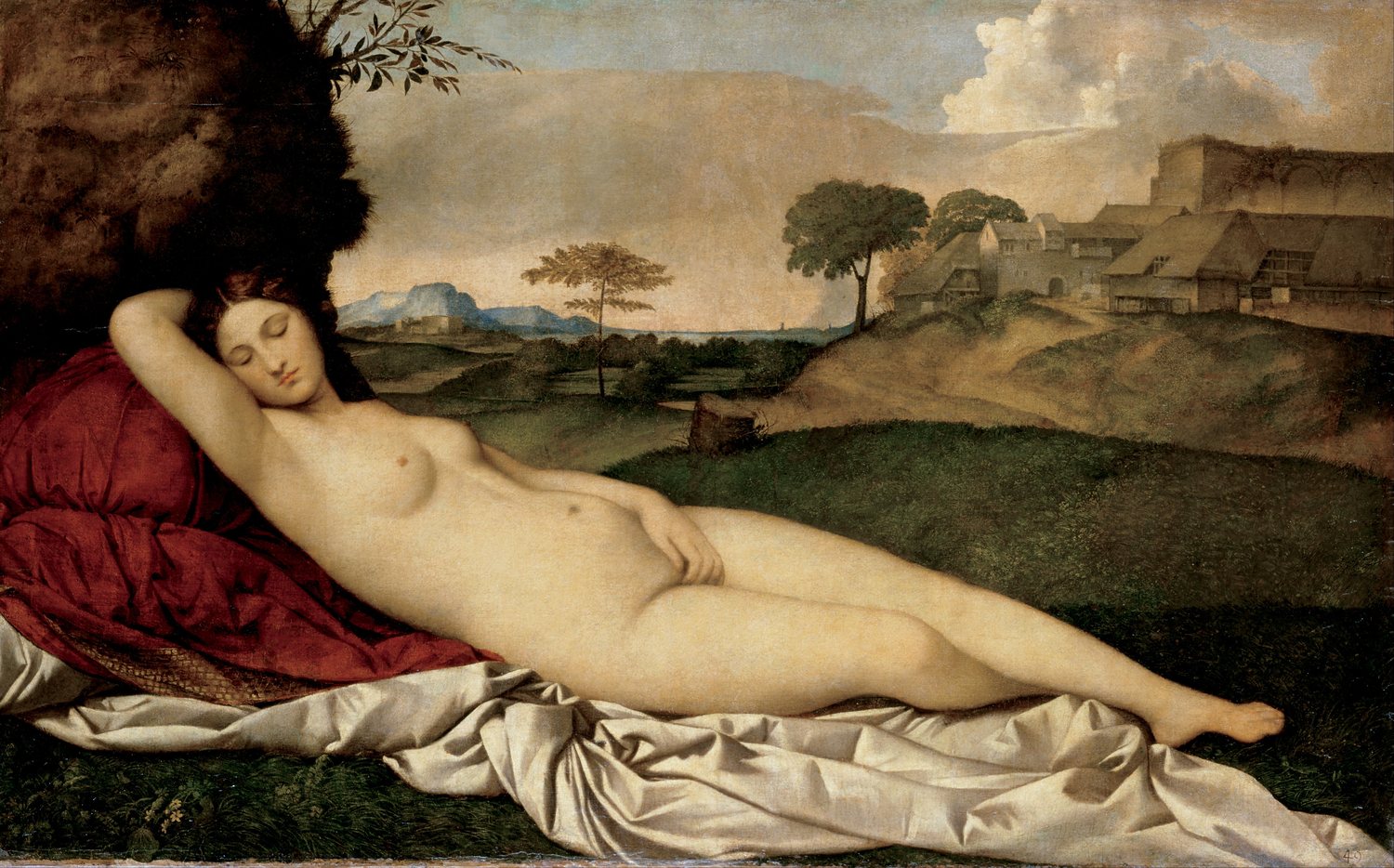
Venus sleeps in a meadow as if the landscape were dreaming her: her body's long curve rhymes with the hills, and the world is quiet enough to hear her breathe. Giorgione died with the picture unfinished; Titian, who had been his fellow pupil, completed the landscape — and spent the rest of his life answering it.
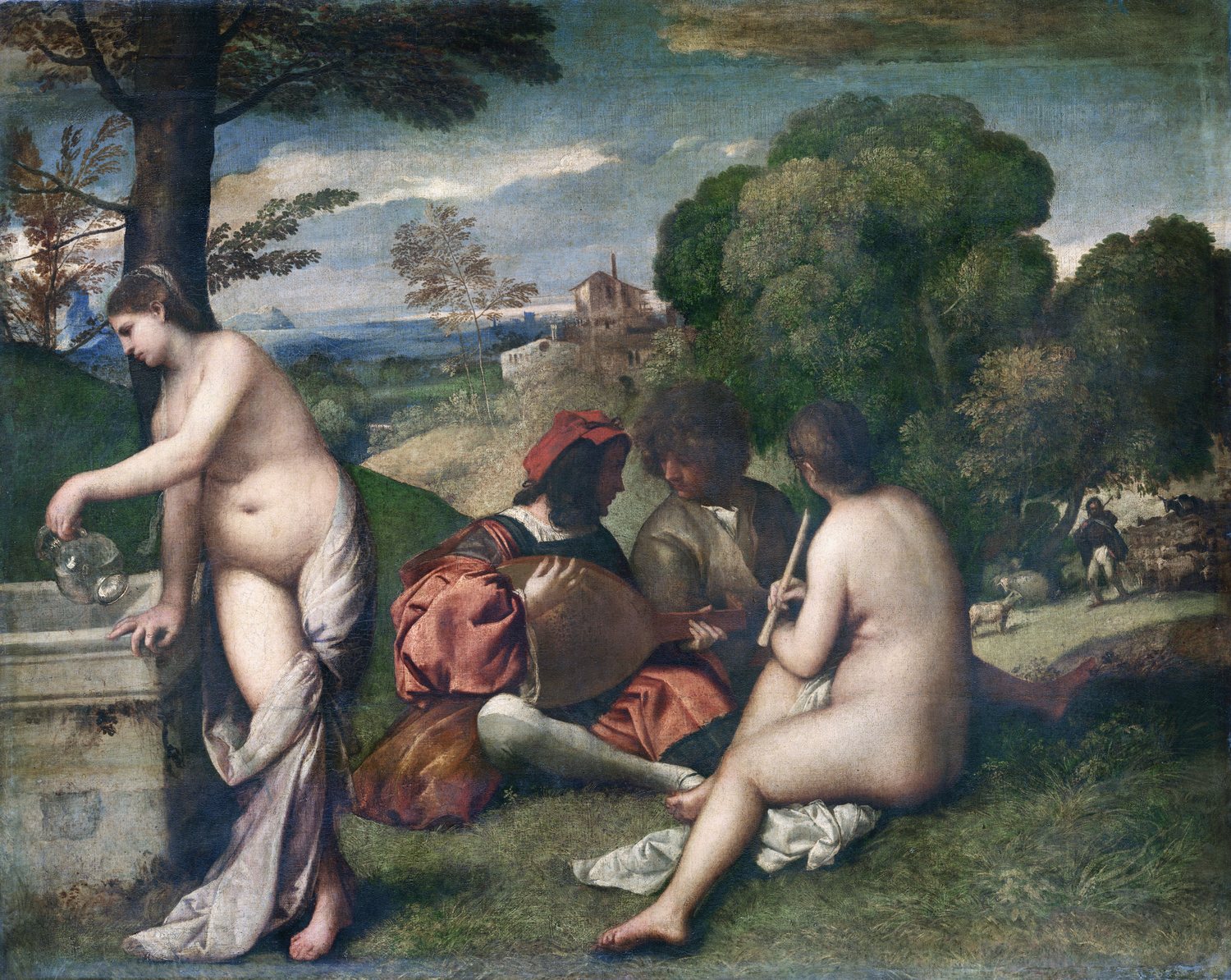
Two clothed men with a lute sit in a meadow with two nude women who seem to belong to another order of being — muses, perhaps, visible only to music; a shepherd pipes in the distance. Whether Giorgione or the young Titian painted it is still argued; the argument itself is the picture's second subject.
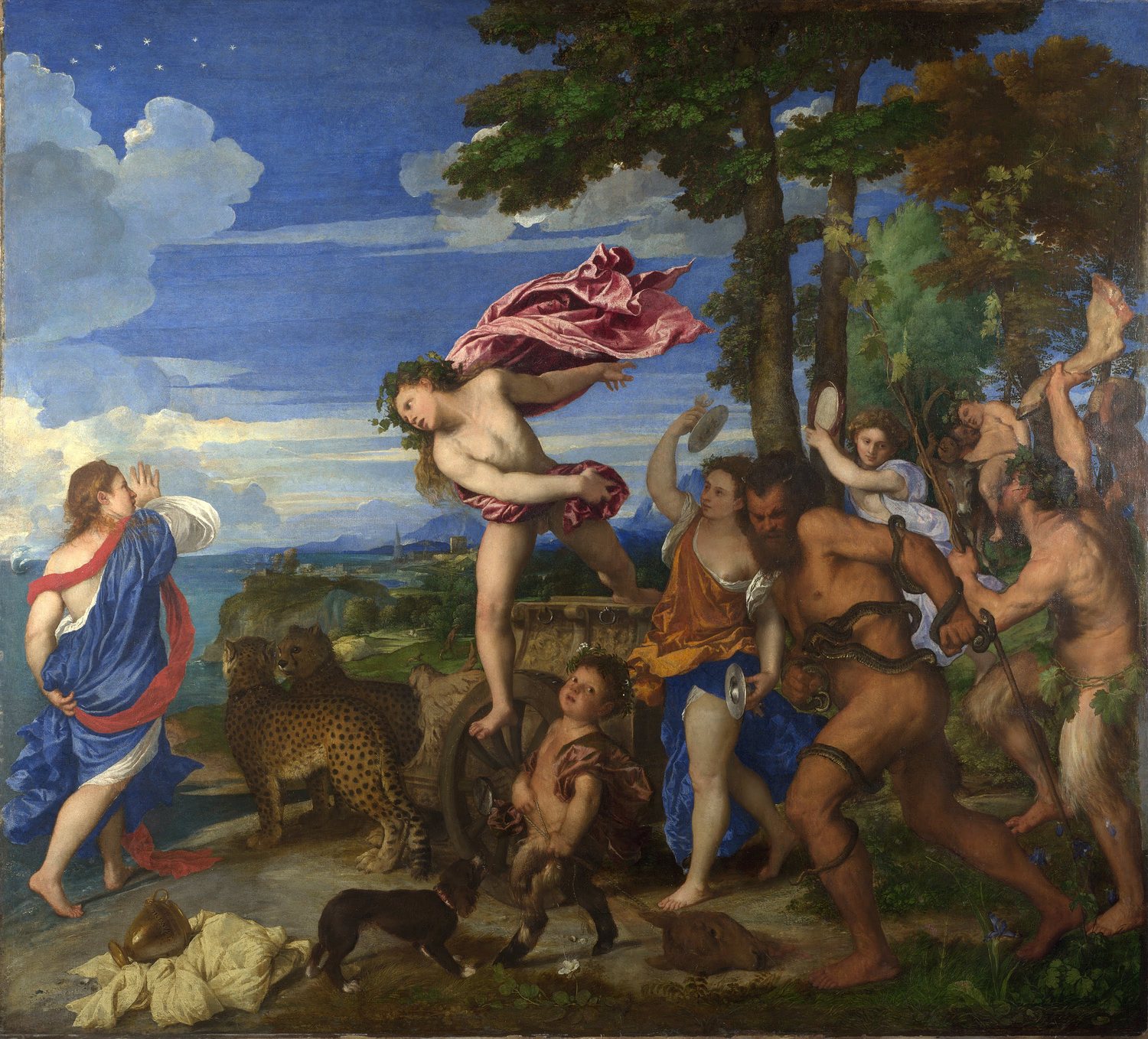
Bacchus leaps from his chariot toward Ariadne, his cloak still flying, her crown already becoming stars in the blue above. The ultramarine sky was the most expensive patch of paint in Europe — the patron, Alfonso d'Este, was buying lapis by the kilo and Titian spent it gloriously.