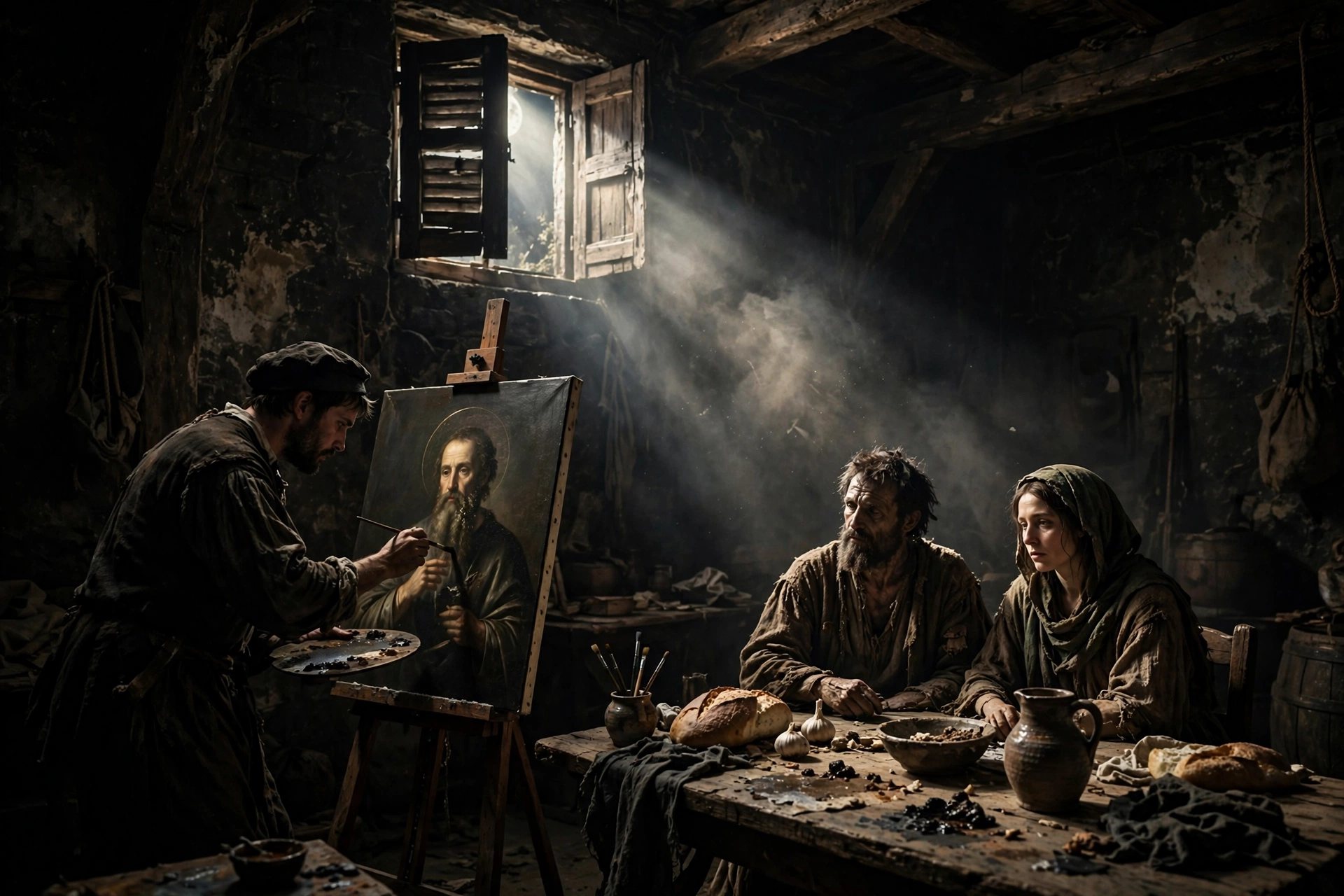
The balance breaks, gloriously. Caravaggio hauls the saints down into a lamplit tavern and paints them from street people; Rome answers with ceilings that open into heaven; Antwerp builds a factory of flesh and silk; Amsterdam turns inward, to a light that seems to come from inside the paint itself. Two faiths, two baroques — one Catholic and theatrical, one Protestant and silent — and between them, the most alive century painting has ever had.
Caravaggio's method is a stage trick turned into theology: a single high light source, backgrounds drowned in black-brown shadow, figures modelled as if carved by the beam. He painted directly from life, fast, often without drawing, scoring the main lines into the wet ground with the handle of the brush — the incisions are still visible in raking light. A hundred painters across Europe copied the recipe within a decade.
His apostles have dirty feet, his Madonnas are Roman working women, his David holds a severed head that is the painter's own portrait. The scandal was the point: the Counter-Reformation needed faith you could touch, and Caravaggio's realism made miracles happen to people with cracked nails. Churches sometimes refused the result — too real — and the refused canvases became the most fought-over pictures in Rome.
The Catholic south paints for the altar and the palace ceiling — Bernini's marble ecstasies, Rubens's altarpieces, ceilings that dissolve architecture into sky. The Protestant north, having whitewashed its churches, paints for the merchant's wall: portraits, landscapes, still lifes, and rooms full of quiet light. Same century, same oil paint, opposite worlds — this gallery hangs them side by side so you can feel the temperature change.
Rubens ran the most efficient art machine of the age: a palatial Antwerp workshop where specialists painted hands, landscapes, animals and silk under his direction, from his oil sketches — the small, blazing bozzetti in which the whole invention is his. He priced work by how much of his own hand it contained and told buyers so. Diplomacy, languages, a knighthood: the baroque artist as a European institution.
Rembrandt's late manner is the opposite of polish: paint dragged, scumbled and knifed on until the surface itself performs — a sleeve is a landslide of ochre, a hand emerges from three strokes. He builds light not by brightening but by thickening: the lit passages carry the most matter, so the picture literally stands higher where the light falls. Stand close and it is rubble; step back and it breathes.
And then, in Delft, the baroque lowers its voice. Vermeer paints the same corner of the same room for twenty years: a window at the left, a map, a woman reading, light arriving like weather. Whether he used a camera obscura is still argued; what is certain is the result — the loudest century in painting also produced its most silent pictures, and they have outlasted the noise.
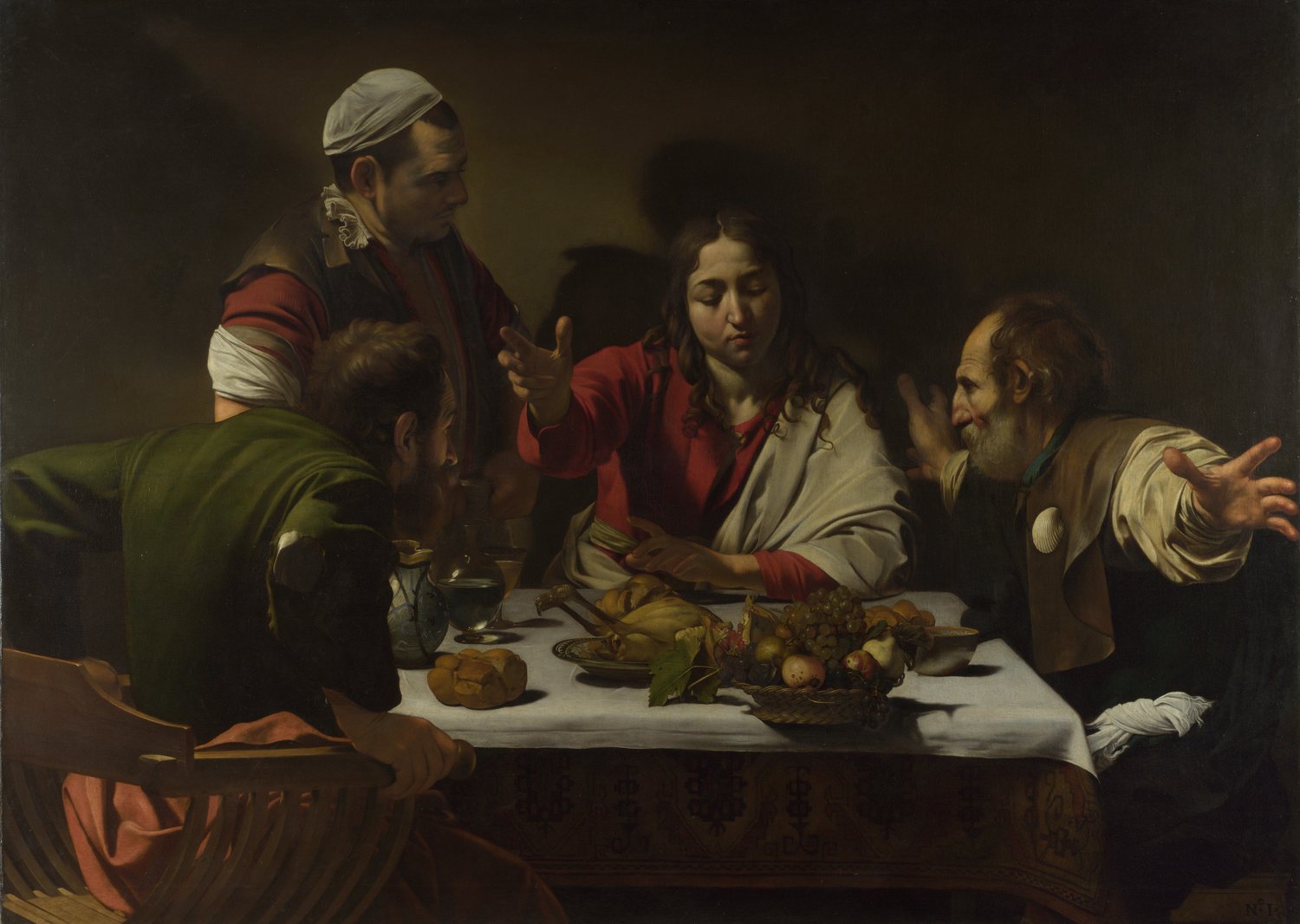
The risen Christ blesses the bread and the inn erupts in recognition: one apostle flings his arms wide, the other grips his chair, the fruit basket teeters on the table's edge toward us. Every object leans into our space — the miracle is happening at our table.
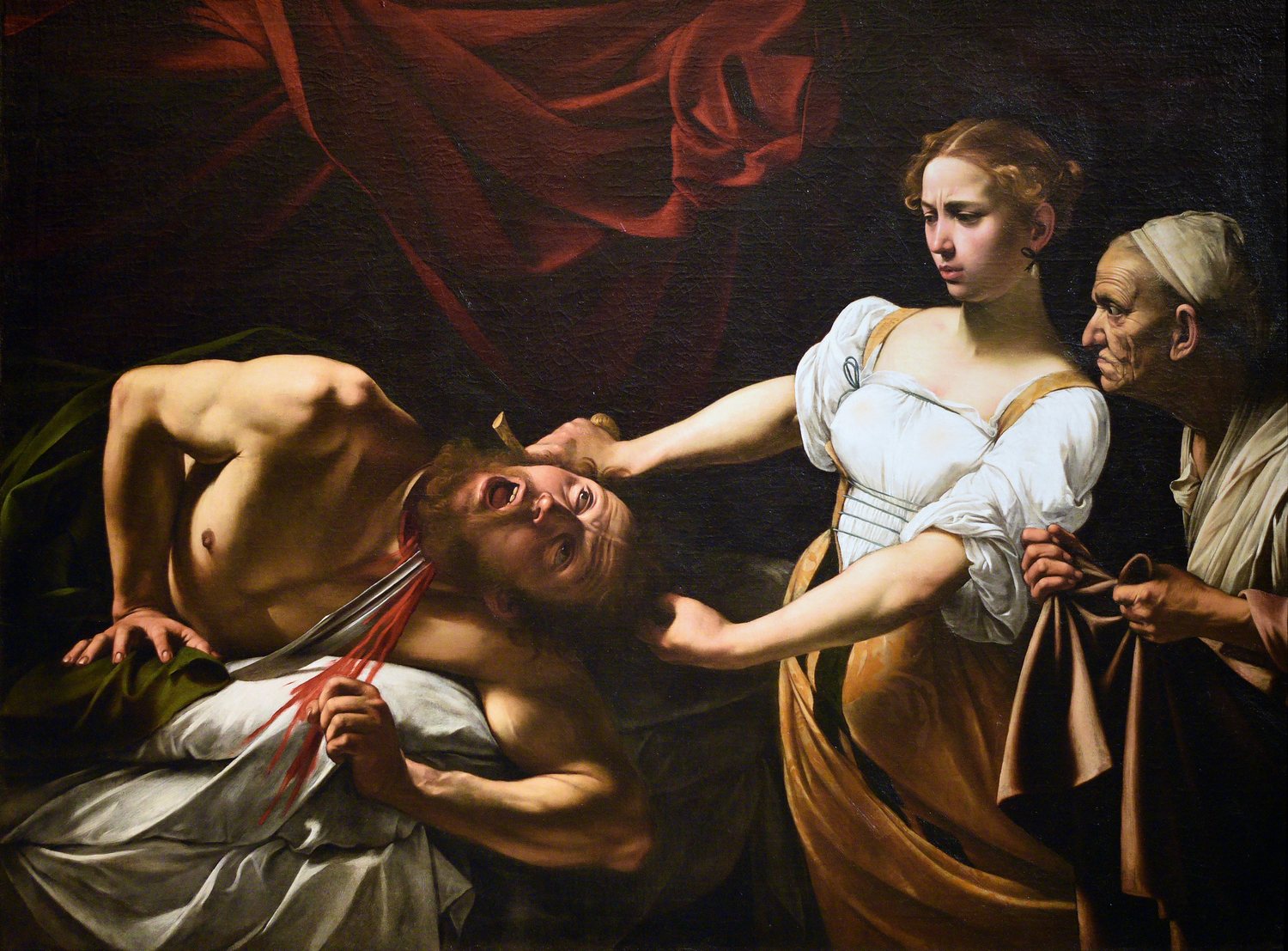
Judith saws at the general's neck with a look of cold distaste, her old maidservant gripping the bedsheet like an accomplice in a kitchen. No heroics, no beauty — a murder at arm's length, lit like an interrogation. Rediscovered in a Roman attic of art history only in 1950, it has never left the mind since.
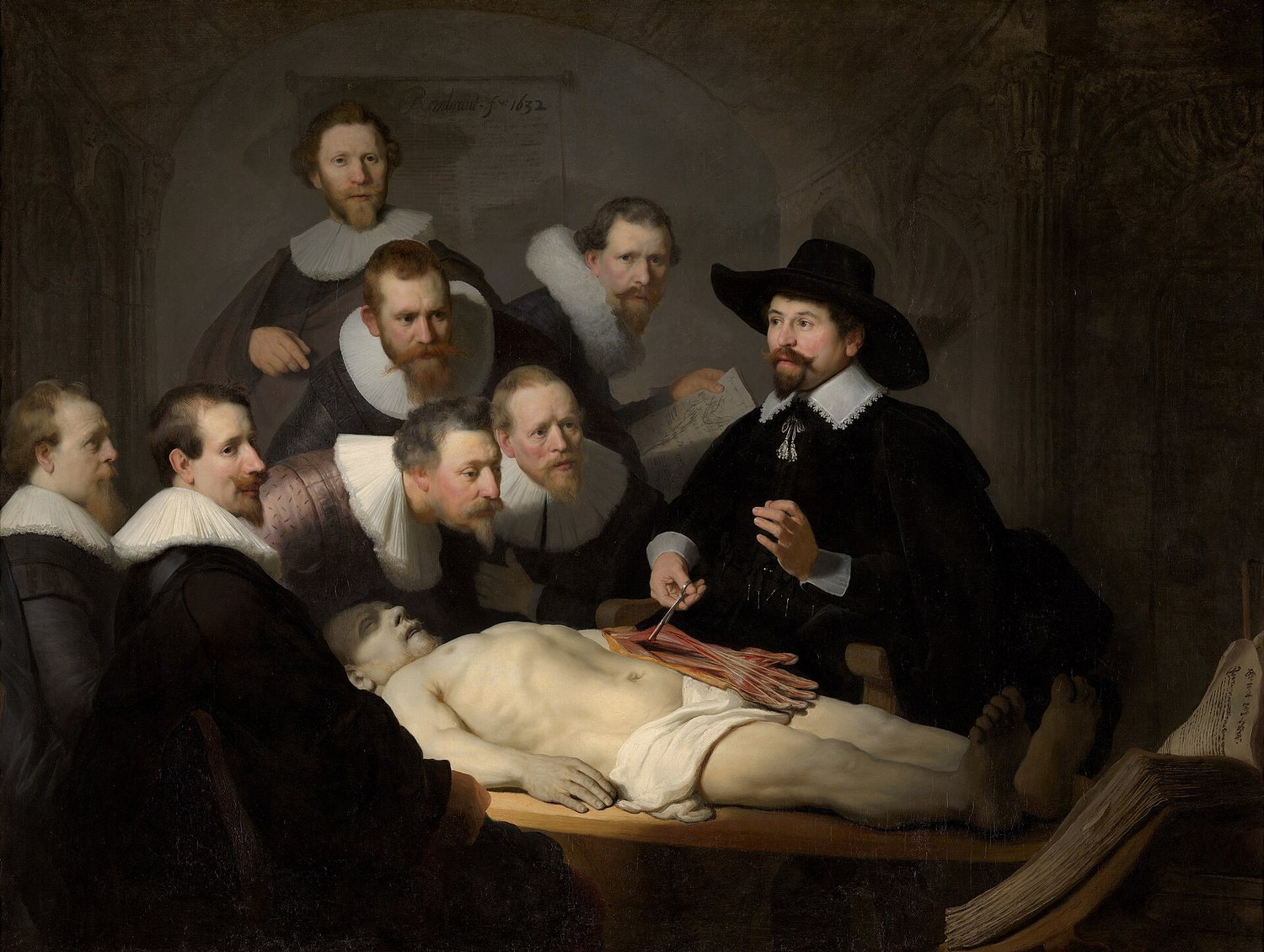
He was twenty-six, and this was the commission that made him in Amsterdam. The corpse is an executed thief, dissected in public over three January days. Look at the hand the doctor lifts: the tendons on display belong to the opposite hand — Rembrandt copied them from an anatomy book's engraving, and no one in the front row of surgeons noticed.
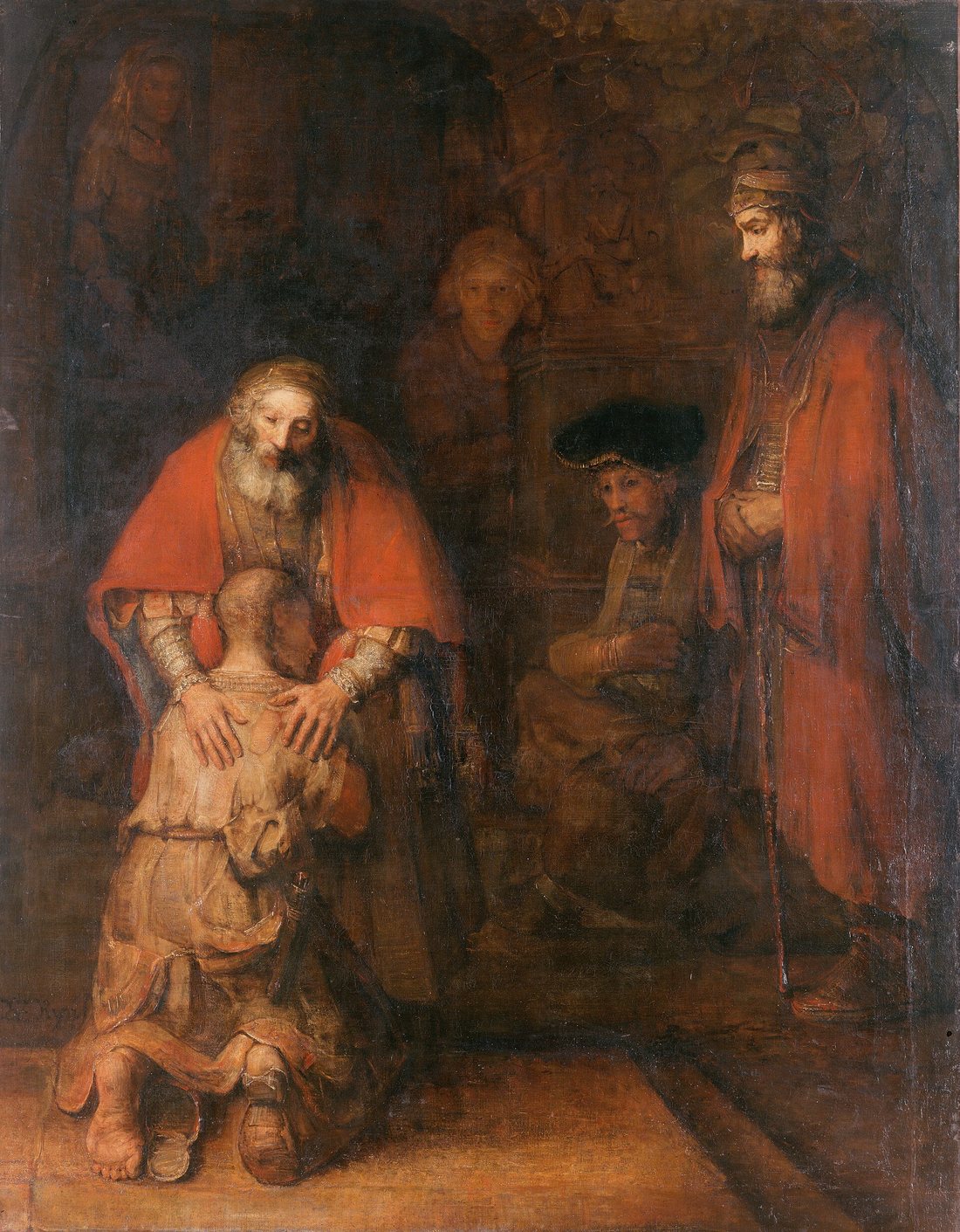
Painted in the last year of his life, when he was poor, widowed twice over and nearly forgotten. The paint in the shadows is thin as breath; on the father's hands it is laid on thick, and the two hands are not a pair — one broader and stronger, one finer — a difference viewers have pondered for three centuries. He signed nothing else with so much mercy.
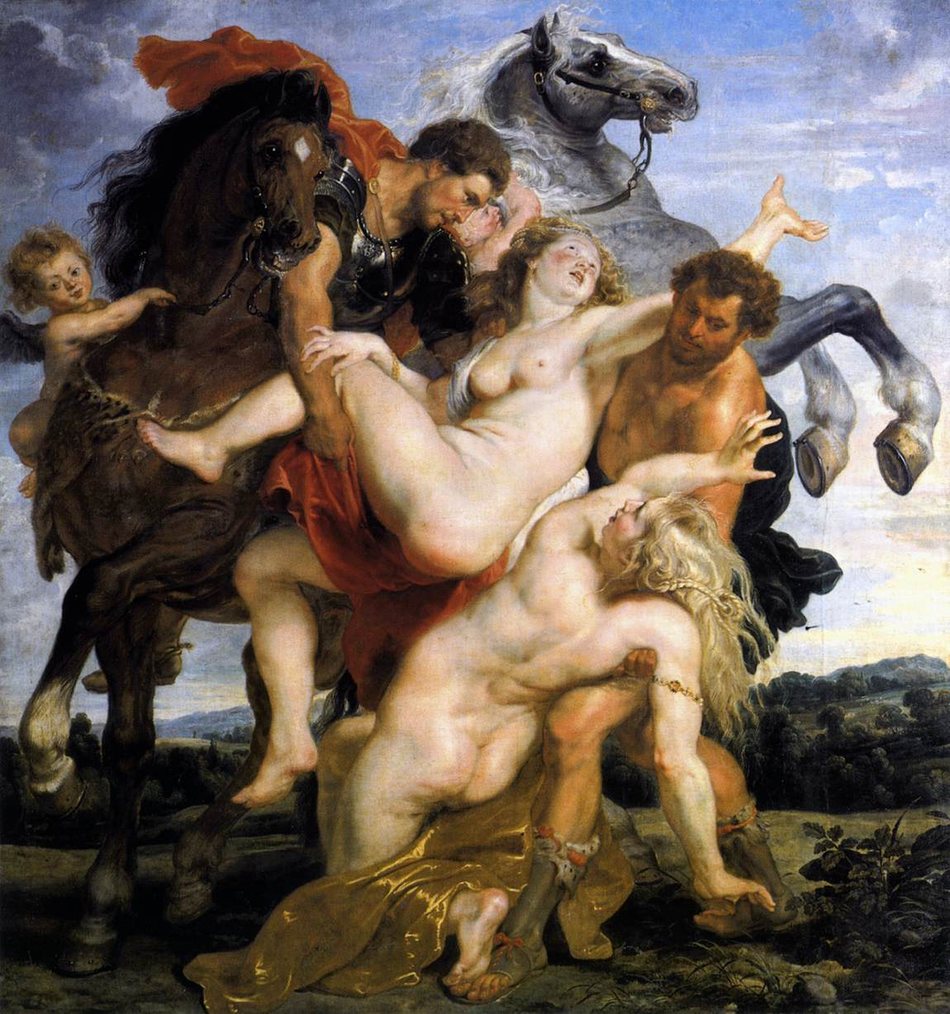
Castor and Pollux seize their brides in one rotating knot of bodies — rearing horses, armour, silk and bare flesh interlocked like a machine with no loose parts. Three textures at full gallop, and not a brushstroke out of place: this is the workshop at the height of its powers.
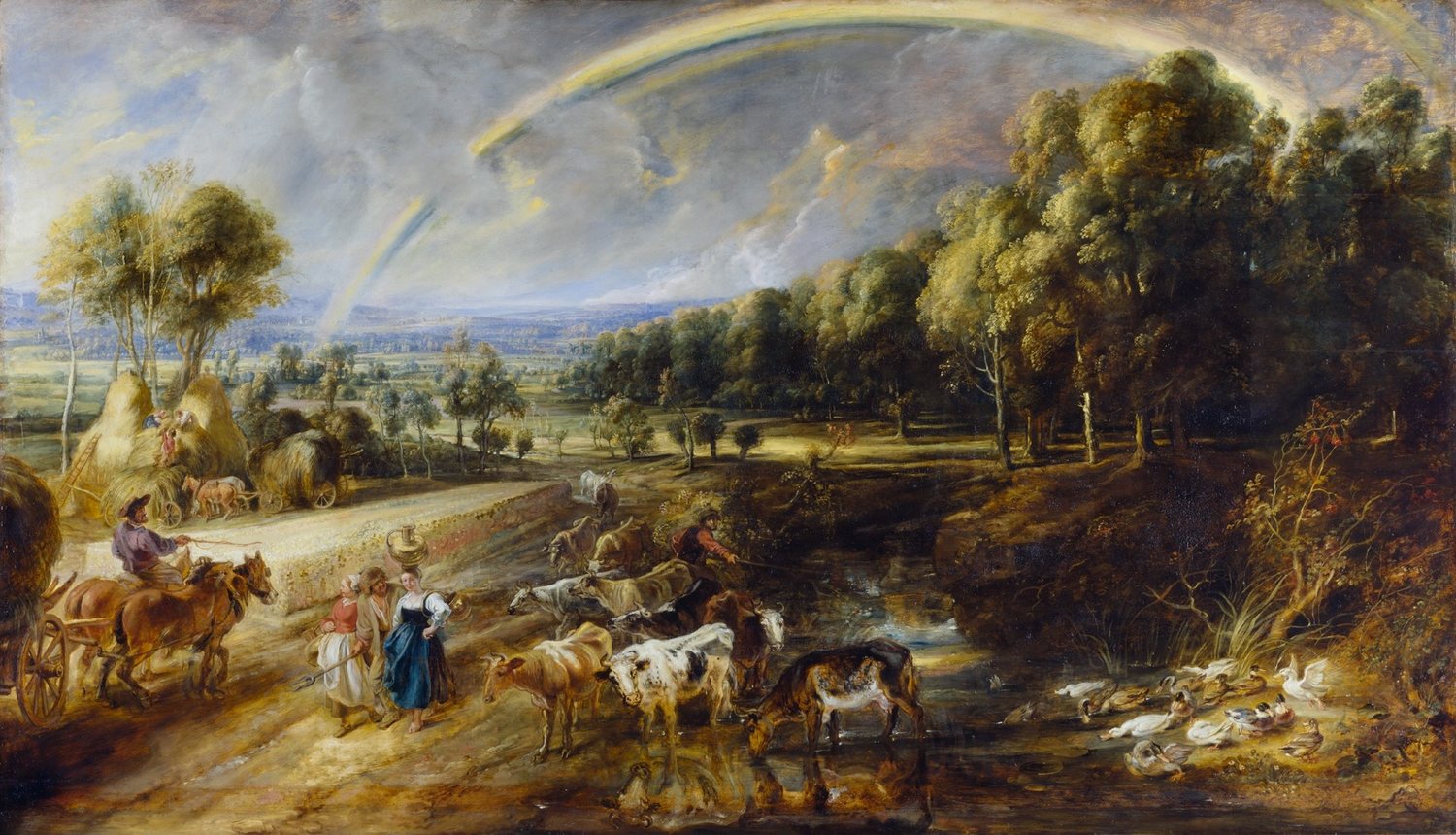
Late Rubens, retired to the castle of Steen he had bought with a diplomat-painter's fortune: his own land under a rainbow, haymakers and a wagon small beneath an enormous Flemish sky. The battles are over; the drama has become weather, and the weather is magnificent.
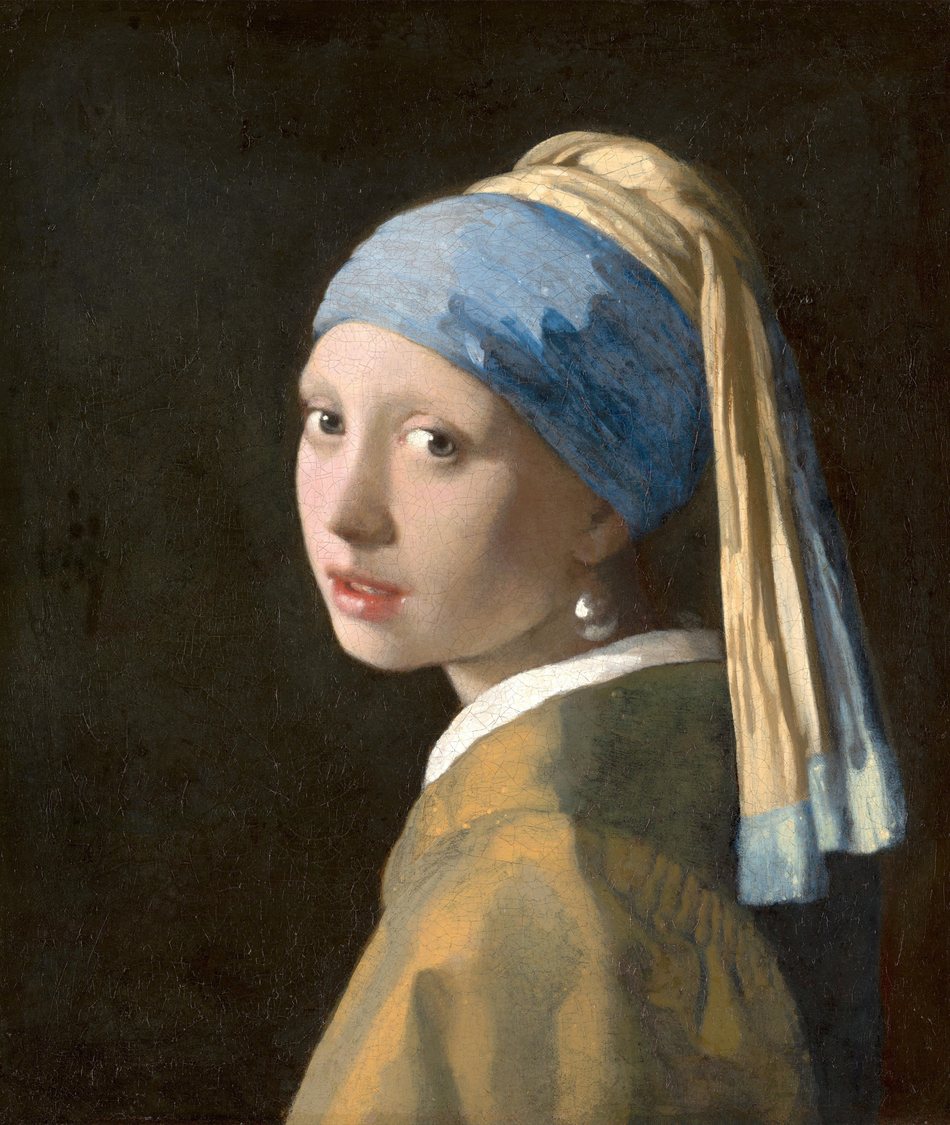
Not a portrait but a tronie — a study of a face, nobody's commission. The famous pearl is almost nothing: a soft grey shadow and one white highlight, hanging from no visible thread. The ultramarine of her headscarf is lapis lazuli, and the lips are parted as if she has just turned to answer you.
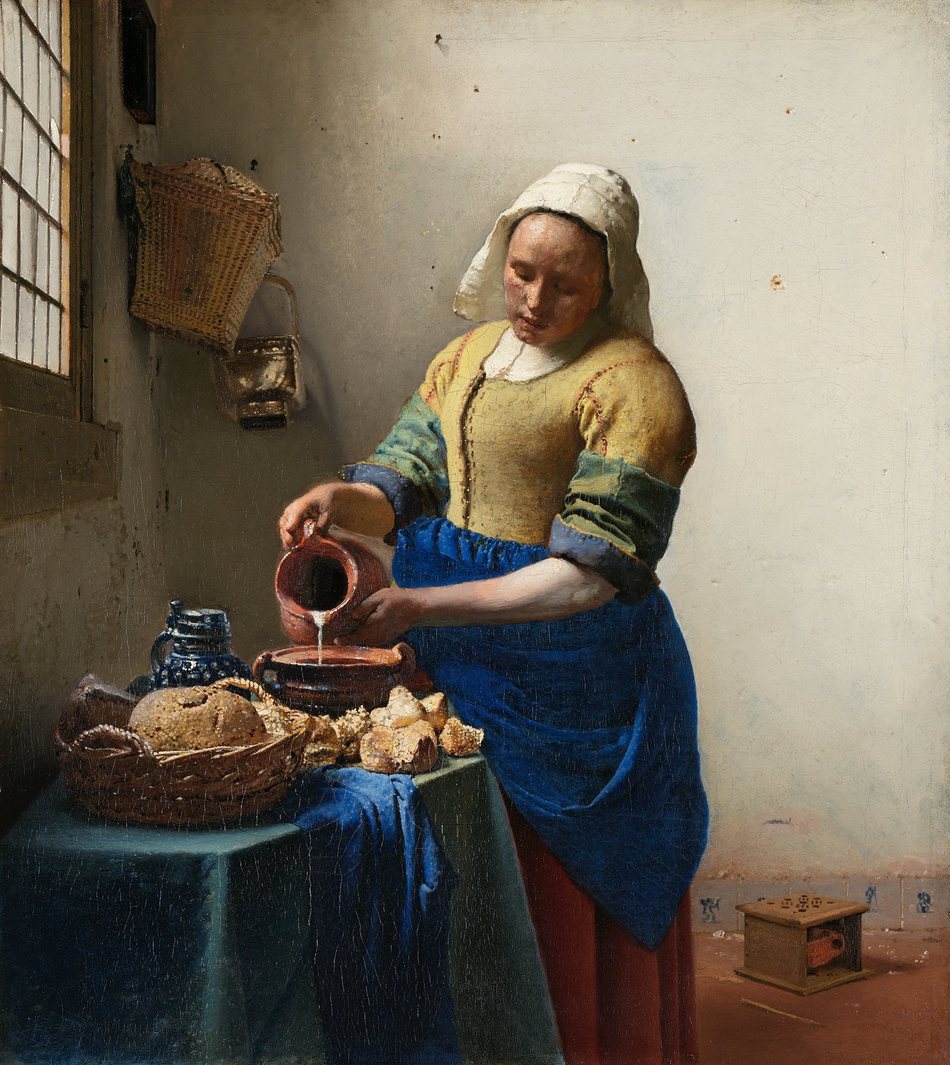
A servant pouring milk, painted like a monument. Her apron is solid ultramarine — pigment dearer than gold on a working woman's dress. The bread and the basket sparkle with pointillé dabs, a single nail casts its shadow on the white wall, and the little foot-warmer on the floor waits for winter.
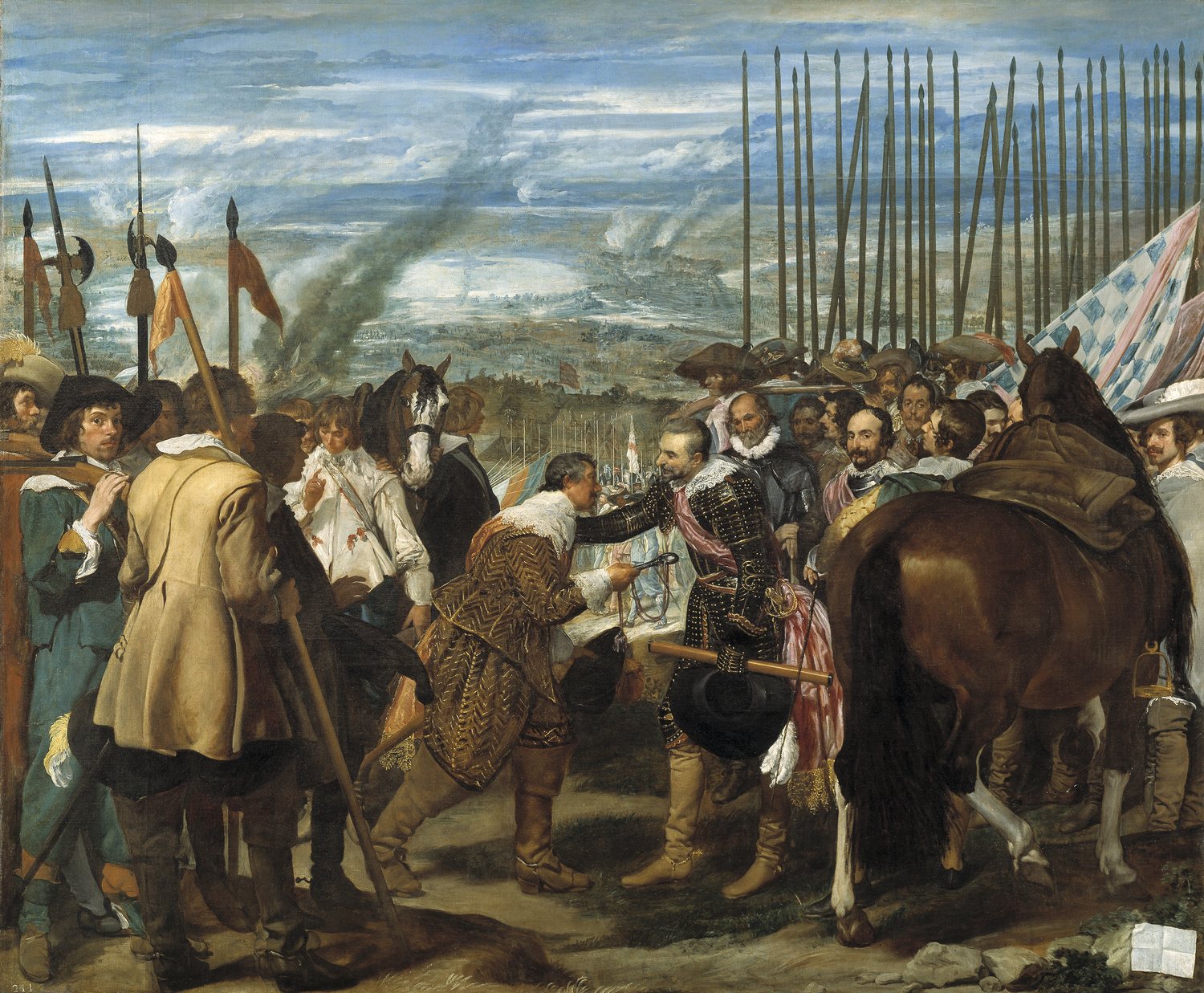
The Dutch commander Justin of Nassau hands the key of Breda to the Spanish general Spinola, who receives it with a hand on the loser's shoulder — a victory painted without a single act of humiliation. Behind them the forest of Spanish lances rises in perfect order; before them, two gentlemen talk. It hung in the Hall of Realms of the Buen Retiro palace, the great gallery of Spanish victories.
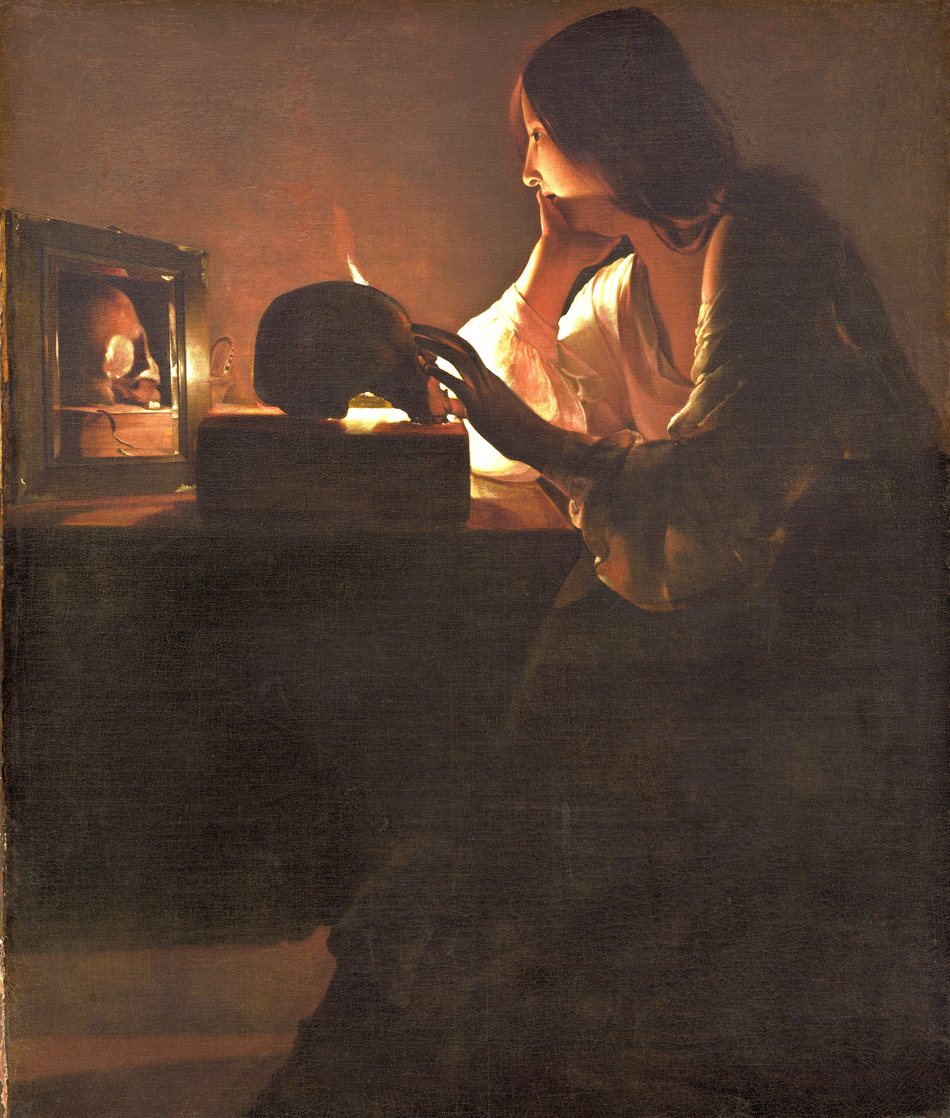
The Magdalene turns from her mirror — in its glass a single candle burns — and rests her hand on a skull, her face propped in thought. The mirror that once served her vanity now shows her the flame of a different life. Two lights, two worlds, one decision, painted in near-darkness.