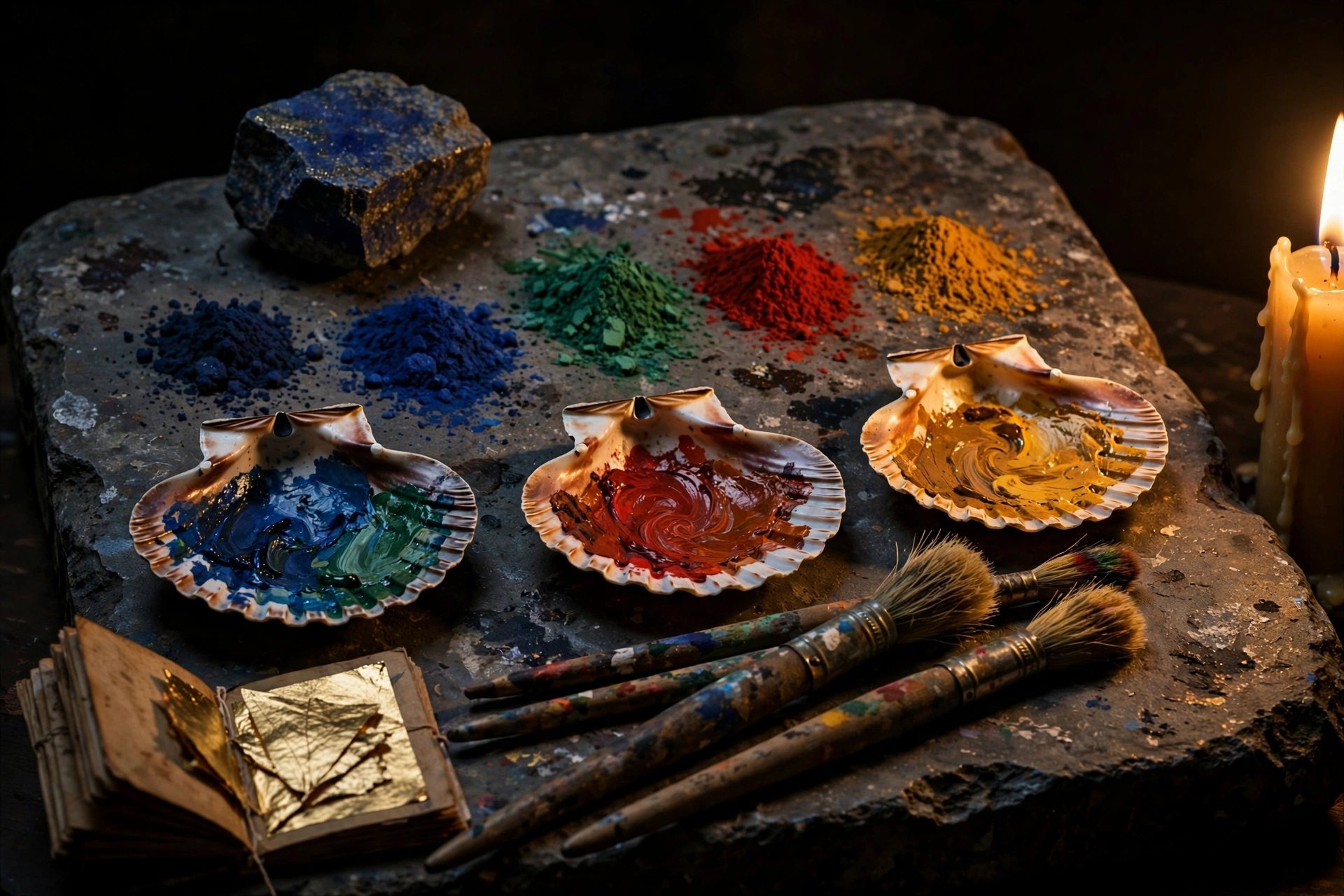
Before a painting is an image, it is a shopping list from the ends of the earth: blue stone from one valley in Afghanistan, red crystals from a Spanish mercury mine, green copper rock, yellow earth, blue glass, and a crimson squeezed out of Mexican insects. Colour was the budget, the danger and the chemistry of the old workshop. This room lays the eight great substances out on the stone — where each came from, what it cost, and how several of them quietly betray the pictures they were bought to glorify.
Pigments arrived as lumps of rock and earth, not powder in tubes. An apprentice spent hours grinding them with a stone muller on a porphyry slab, a little at a time, working oil or water in until the paste shone. The finest ultramarine was kneaded out of lapis with wax and lye, again and again, the first extraction reserved for the Virgin's mantle. Painting began as manual labour, and the master's hand was the last one to touch the colour.
Patrons were not buying genius in the abstract; they were buying substances. Contracts for altarpieces specify how much ultramarine, and of what grade, the painter must use, and where — because the patron, not the painter, often supplied the costly blue, weighed out like bullion. A mantle's depth of colour is a line item. When you read a painting's blues, you are reading its budget.
Several honest colours are traitors in slow motion. Smalt skies grey as their cobalt glass decays; azurite greens toward malachite; red lakes fade in the light they were painted for; vermilion can blacken. The picture in the museum is a palimpsest of chemistry still in progress: skies are greyer, shadows browner, glazes thinner than the painter left them. Every old painting is slowly becoming a different painting.
The table was a pharmacy of toxins: lead white (made by corroding lead over vinegar in dung-warmed pots), mercury vermilion, arsenic yellows. Painters pointed brushes with their lips and ate in the studio. Caravaggio's violent fevers have been blamed on lead; the diagnoses are unprovable and the exposure is not. The beauty of this gallery was manufactured by men slowly poisoning themselves with their materials.
Pigments were sold by apothecaries and specialist colour-sellers — Venice had its vendecolori, who supplied the whole trade and guarded recipes like bankers. Not until 1841, when the collapsible tin tube was patented, did paint become portable and standardised — and painting escaped outdoors. Every landscape revolution since, from the Barbizon school to Impressionism, begins with that tube on the colourman's shelf.
Skin on a panel is engineering: a greenish undermodelling — verdaccio, green earth and black — laid first, then the warm flesh built over it in lead white, vermilion and ochre, so the cool underlayer breathes through like veins under skin. Rubens's flesh adds ultramarine in the half-tones; Rembrandt's late faces are nearly sculpture in paint. When the flesh convinces you, a recipe has worked exactly as its anonymous inventors refined it, hand to hand, for centuries.
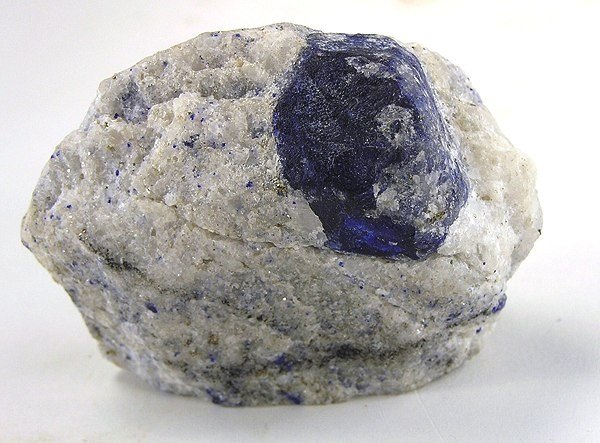
The blue mineral is lazurite, locked in grey rock from one valley in Afghanistan — the stone in this photograph. Carried through Persia and shipped from Venice, it cost more than gold, and its name records the journey: ultramarine, 'from beyond the sea'. Contracts reserved it for the Virgin's mantle. In 1828 a French chemist synthesised it, and the most precious colour on earth became one of the cheapest.
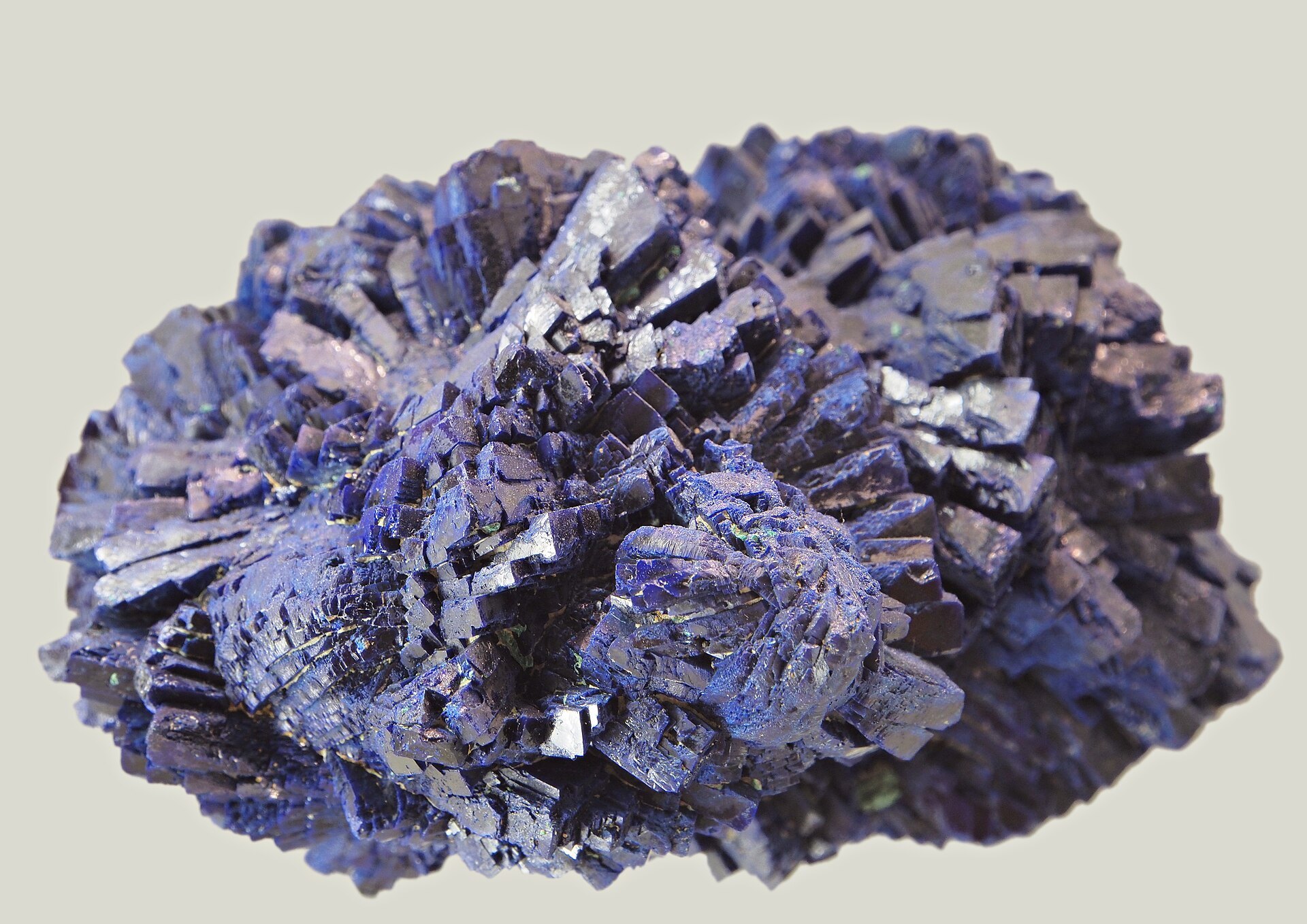
Europe's home-grown blue is a copper mineral, ground coarse — grind it fine and it goes pale. It served for skies and draperies where lapis was unaffordable, but it is restless chemistry: in damp air and oil it slowly greens into malachite, which is why some painted skies have drifted from blue toward grey-green since the fifteenth century. The painter bought blue; time delivered green.
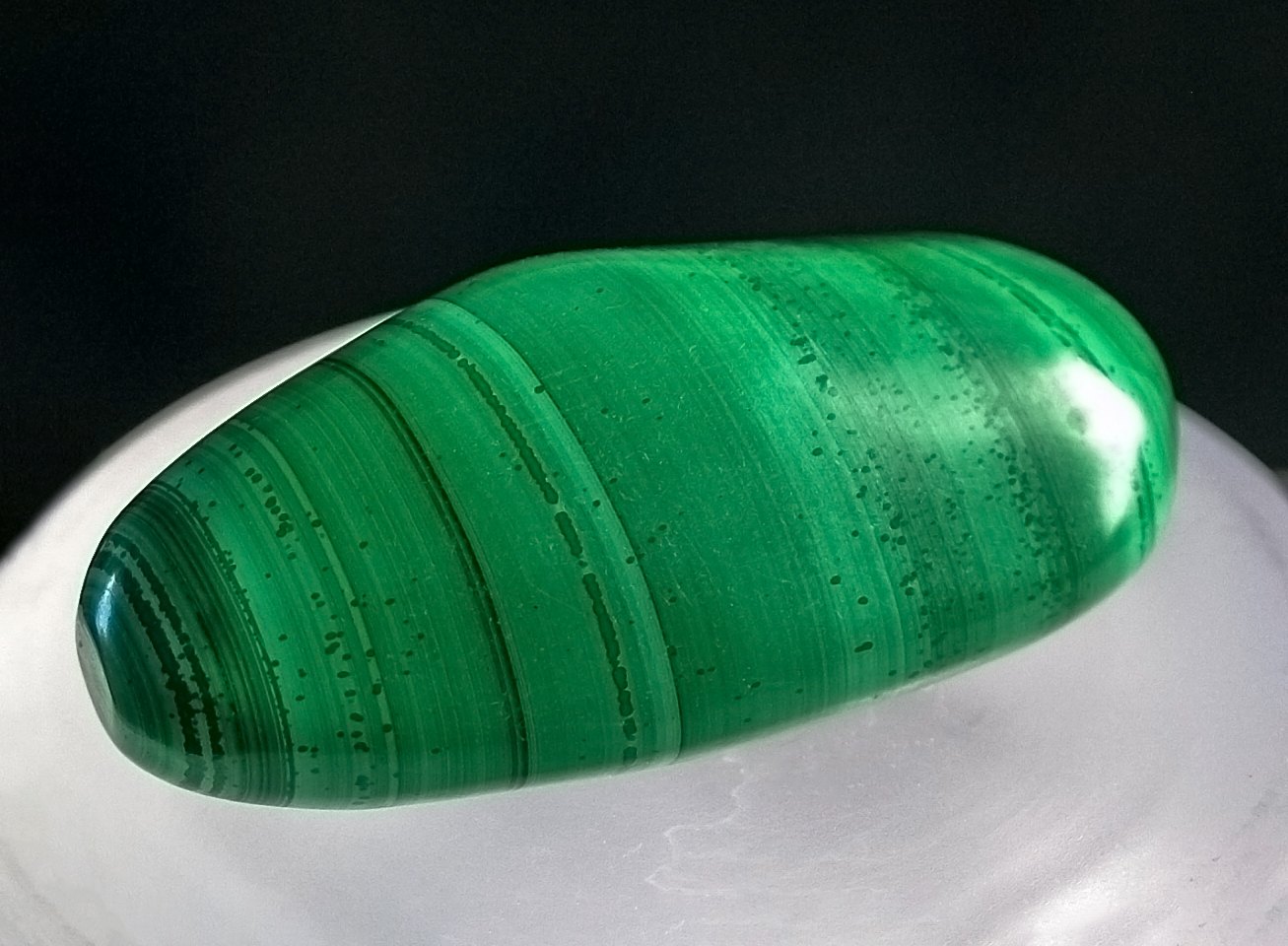
The banded green stone, ground to powder, gave the old palette its most jewel-like green — opaque, permanent, unmistakable in the landscapes of early panels. It is copper's other face: the same metal that makes azurite blue makes malachite green, and the two grow together in the same mines. Painters used it straight from the stone, exactly as it comes out of the earth in this photograph.
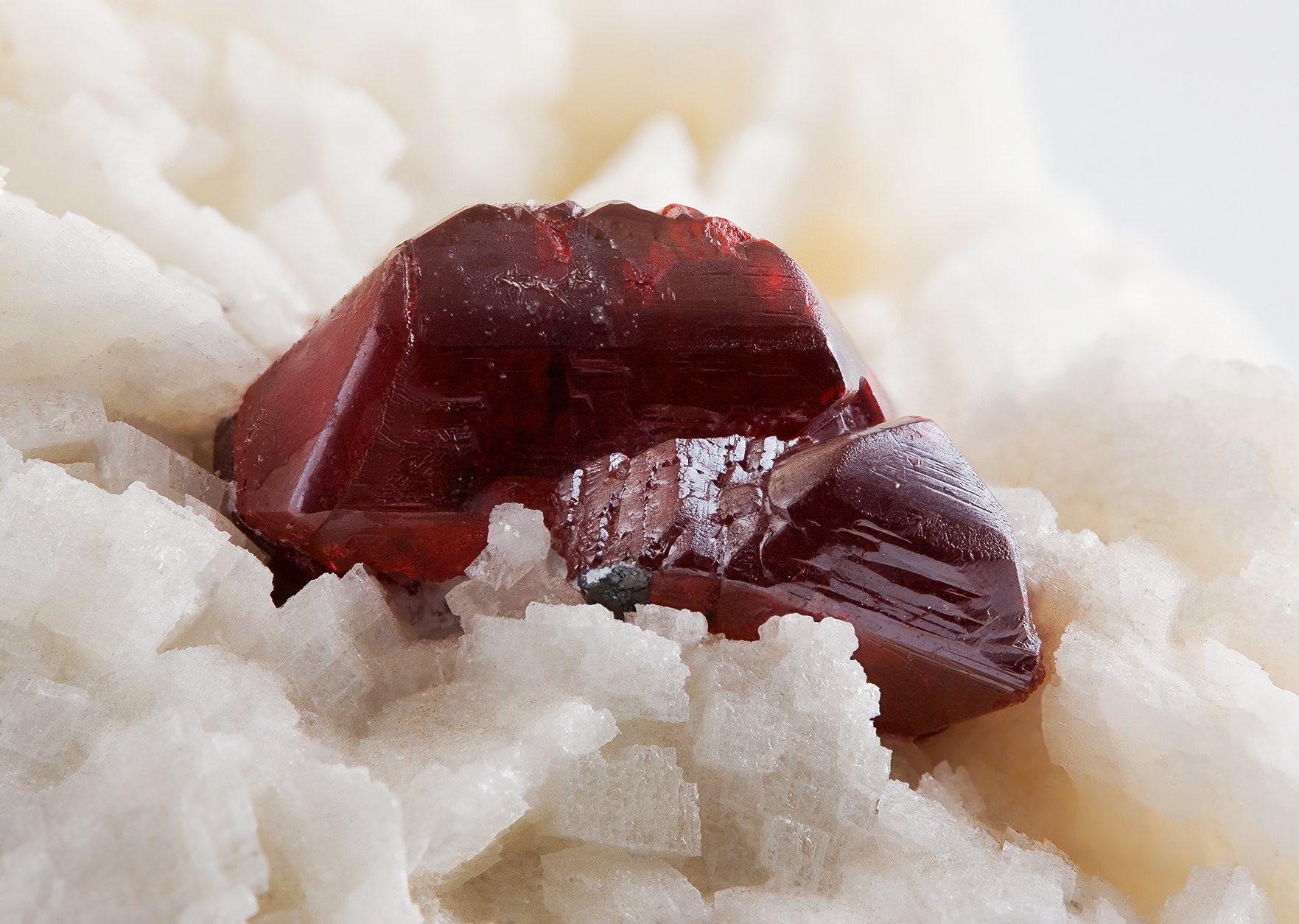
The most brilliant red of the old world is mercury ore — cinnabar, crystallising scarlet on white dolomite, mined at Almadén since Roman times. Ground, it fires the draperies of Titian and the lips of a thousand Madonnas. It is also a slow poison to everyone who mined and ground it, and in strong light it can blacken: several famous reds are quietly turning to soot.
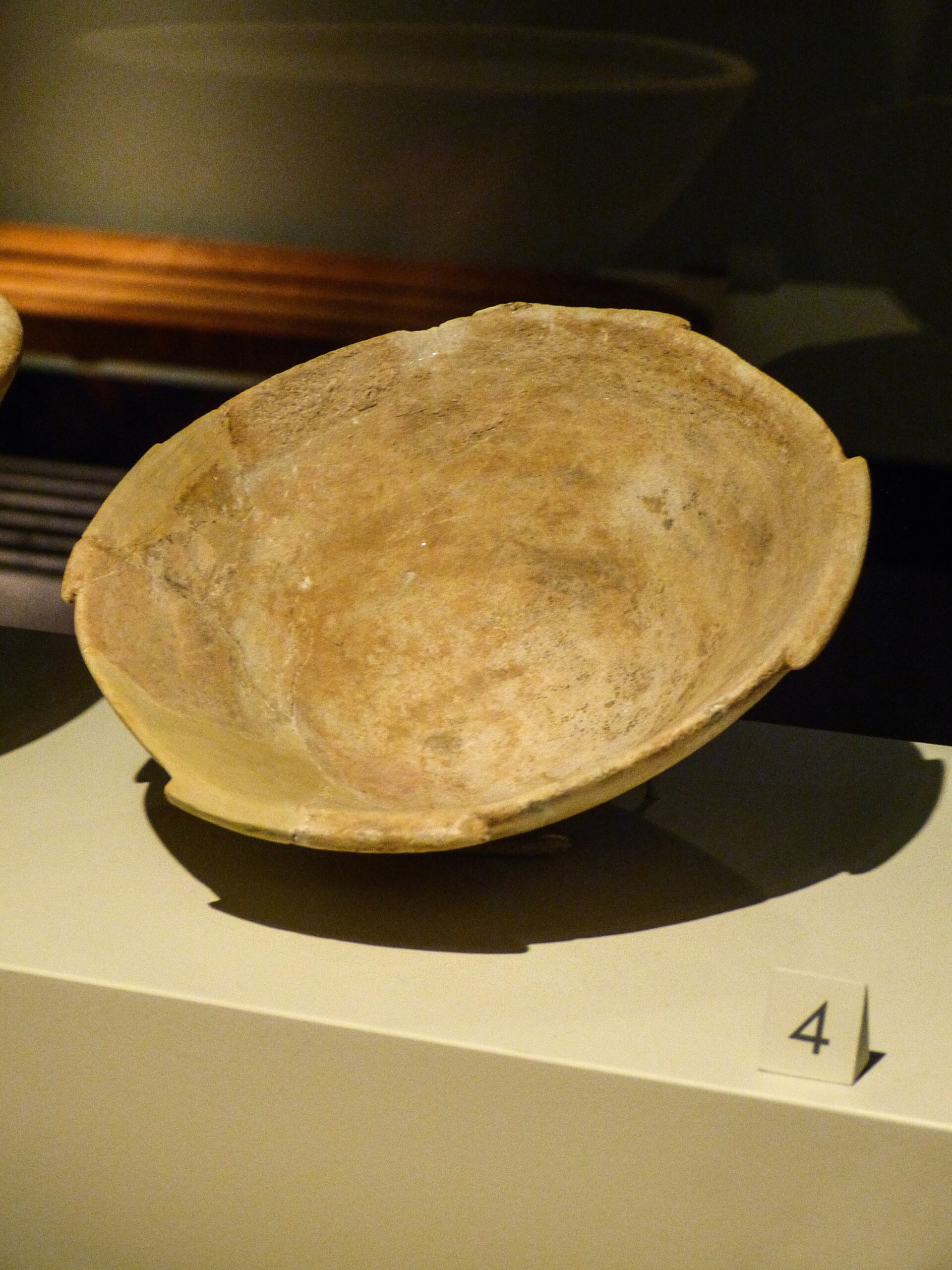
The oldest pigment on the table is dirt: iron-stained earth, dug anywhere, permanent forever. The marble bowl in this photograph is some five thousand years old — Cycladic, about 2800–2300 BC — and still holds its yellow ochre. Ochres paint the caves of the Stone Age, the underdrawings of frescoes (red sinopia), and the warm half of every flesh tone in this gallery. Civilisation's colour box begins here.
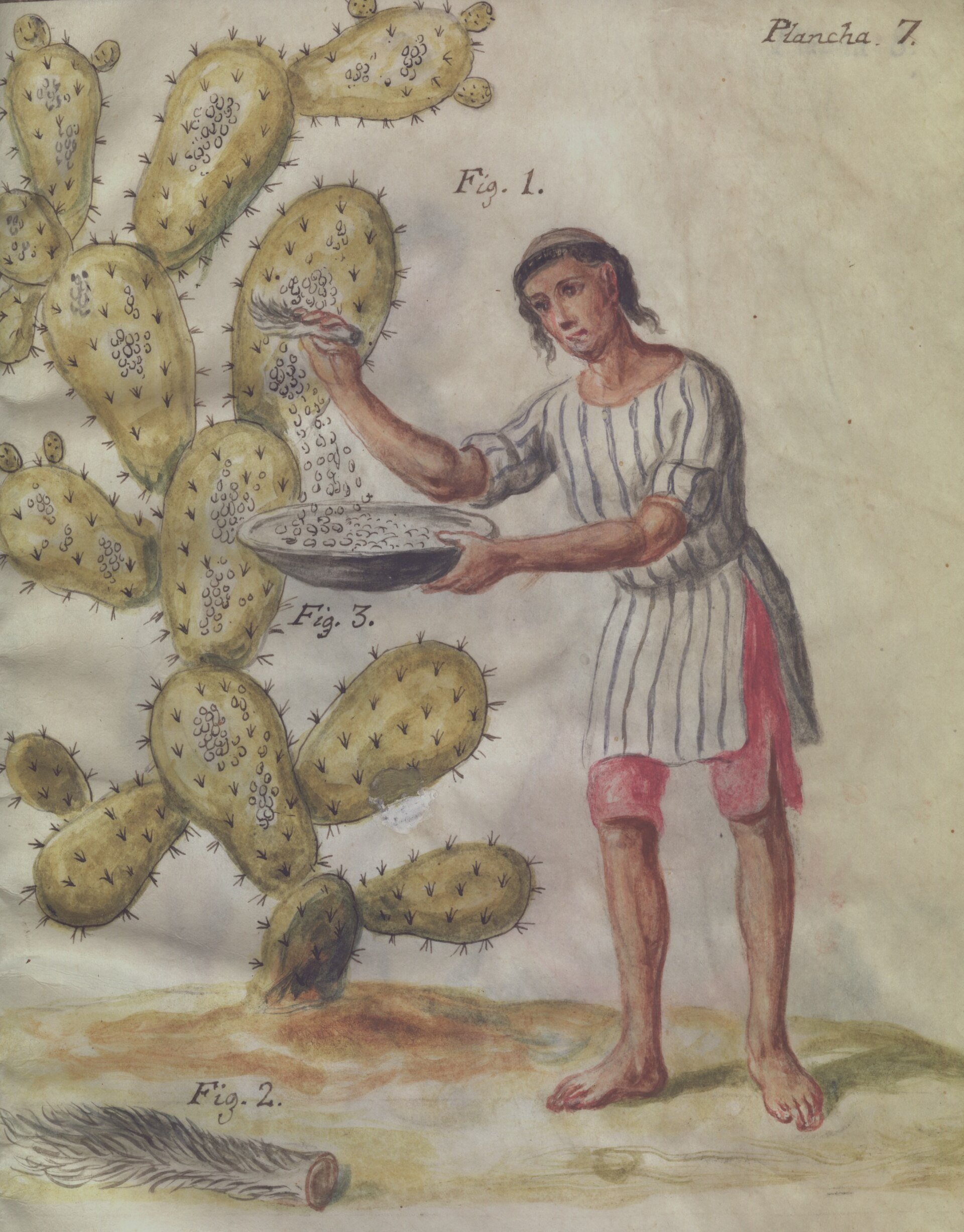
The gatherer in this Mexican image of 1777 brushes white scale insects off a cactus into his bowl, with a deer's tail. Dried and crushed, cochineal gives a crimson lake of unmatched depth — after silver, it was Spain's most valuable American treasure, and it glows, fugitive and gorgeous, in the draperies of the later rooms of this gallery. A red made of seventy thousand insects to the pound.
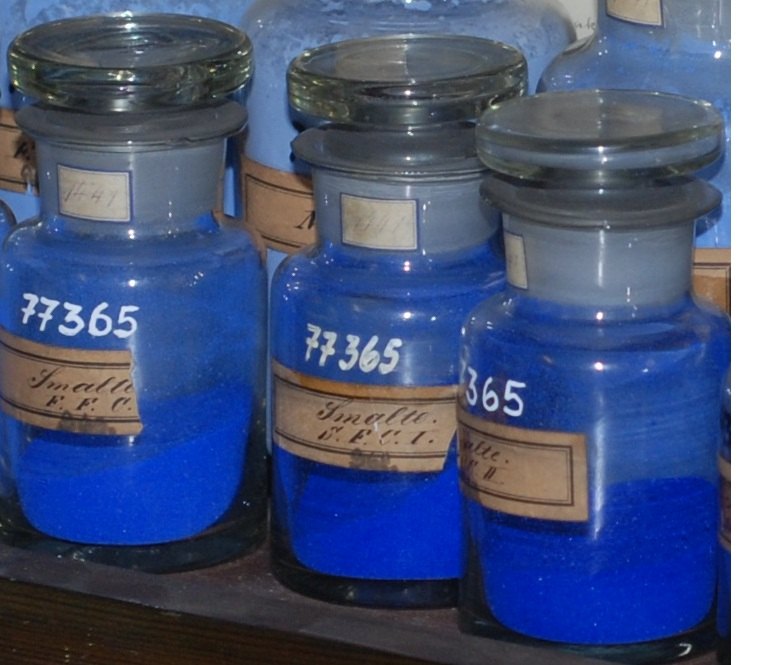
The blue in these apothecary jars is not a mineral at all — it is cobalt glass, made in a furnace and ground like grain. Cheap, gritty and beloved of Rubens and Rembrandt for skies and cool shadows, smalt has a fatal flaw: over centuries its glass gives up its colour, and whole heavens painted with it have faded to grey-brown. Many a Dutch sky hangs in this gallery's century quieter than its painter ever saw it.
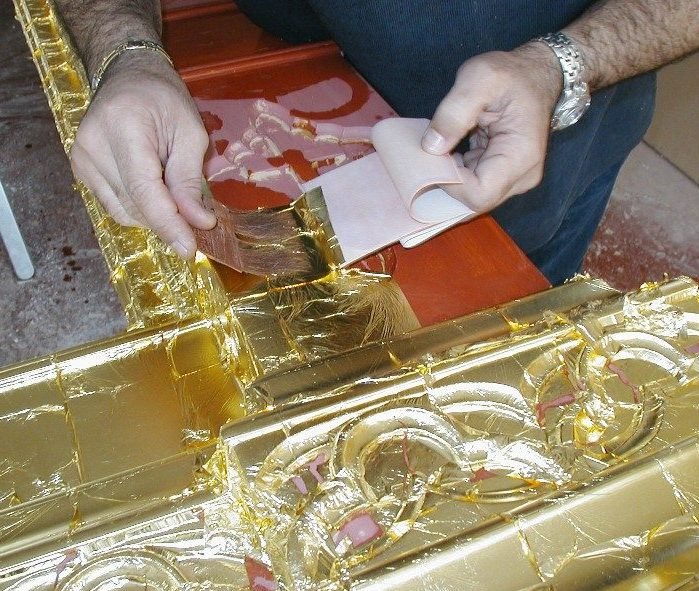
The last substance is not a pigment but a metal: gold beaten thinner than a soap bubble's skin, laid leaf by leaf on red clay bole and burnished with a dog-tooth agate, as in this photograph. On the gold grounds of the first rooms it is not decoration but theology — a light that cannot tarnish, weather or age, because heaven does not change. Everything else on this table decays. Gold declines to.