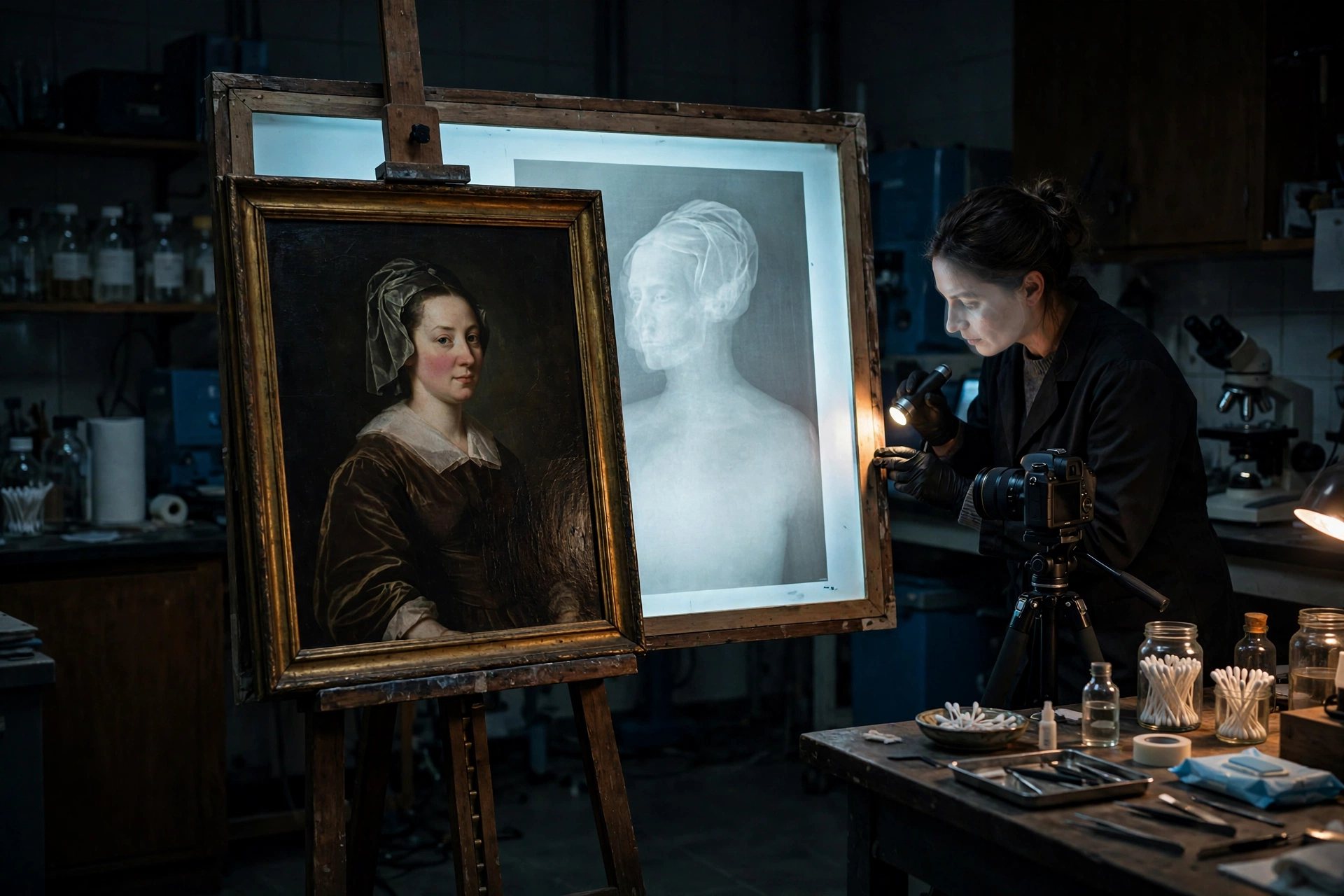
Every painting in this gallery is two paintings: the one you see, and the one underneath. X-rays, infrared and element scanners now read the buried picture — the first idea, the changed mind, the image a later century painted over. This room is the gallery's laboratory: six works whose hidden layers have come back into the light, and the instruments that found them.
X-rays pass through most pigments but are stopped by lead white — the backbone of old flesh painting — so a radiograph shows the picture's skeleton: faces and hands glow, later additions float, and entire abandoned compositions emerge from the dark. Panels reveal their joins, nails and wormholes; canvases their cusping and repairs. It is the oldest of the imaging tools and still the first one reached for.
Carbon absorbs infrared light, so an infrared reflectogram reads the underdrawing through the paint like writing through tissue: the artist's first lines, his changes of mind, the grid he squared up from a sketch. Some painters draw like architects, some barely at all — Vermeer left almost no underdrawing, which is part of his mystery. Forgers beware: the drawing hand is harder to fake than the painted one.
When an artist moves a hand, turns a head or deletes a figure and paints over it, oil paint slowly grows more transparent with age — and centuries later the buried decision ghosts back through the surface. These pentimenti, 'repentances', are the most human documents in a painting: proof that even Van Eyck and Rembrandt composed by trial and error, not by divine download.
The newest scanners crawl across a painting millimetre by millimetre, reading the chemical elements in each point — lead, mercury, copper, iron — and rebuild the picture element by element. Because each pigment has its own chemistry, a hidden portrait in lead white or a buried landscape in copper green reappears in false colour, complete. What took the X-ray a century of hints, the scanner now states outright.
A panel painting carries its birth certificate in the wood: dendrochronology matches its tree rings against dated sequences and gives the earliest year the board could have been painted — a terminus no forger can argue with. Canvases testify too: thread counts and weave maps can show that two paintings were cut from the same bolt of linen, linking pictures — and dates — across collections.
Every revelation poses a moral problem: the overpaint hiding Vermeer's Cupid was itself three centuries old — history, too. Dresden chose to uncover, arguing the Cupid was Vermeer's own idea, removed by another hand. Other museums preserve later states as part of a picture's biography. There is no rule, only judgment — each painting is a patient, and the laboratory must argue its case in public.
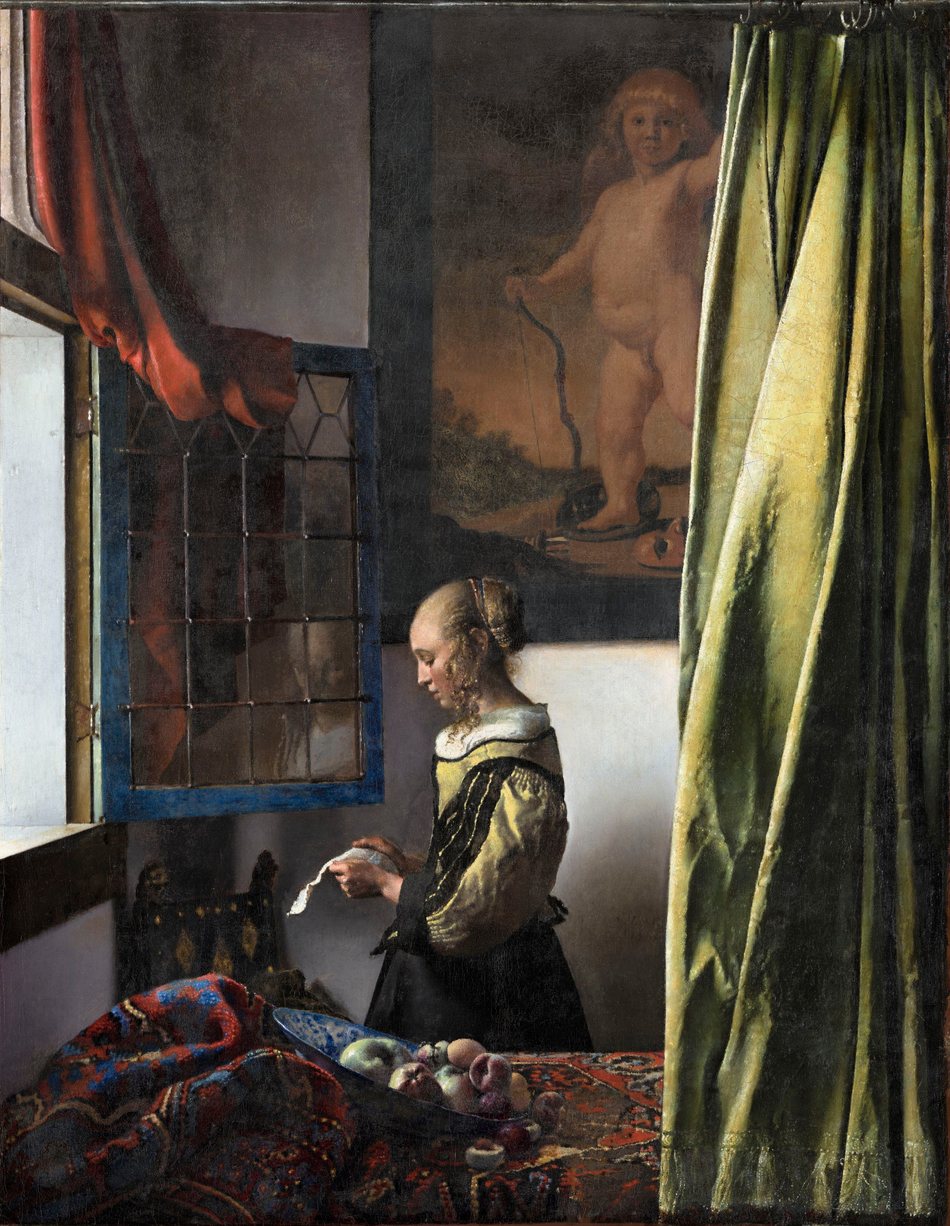
For three hundred years the wall behind the girl was bare, and the letter she reads a quiet mystery. X-rays long ago showed a large Cupid hanging there, painted over by a later hand after Vermeer's death. Dresden's restorers spent four years uncovering him (2017–2021) — and the picture changed its meaning: she reads a love letter beneath the god of love himself.
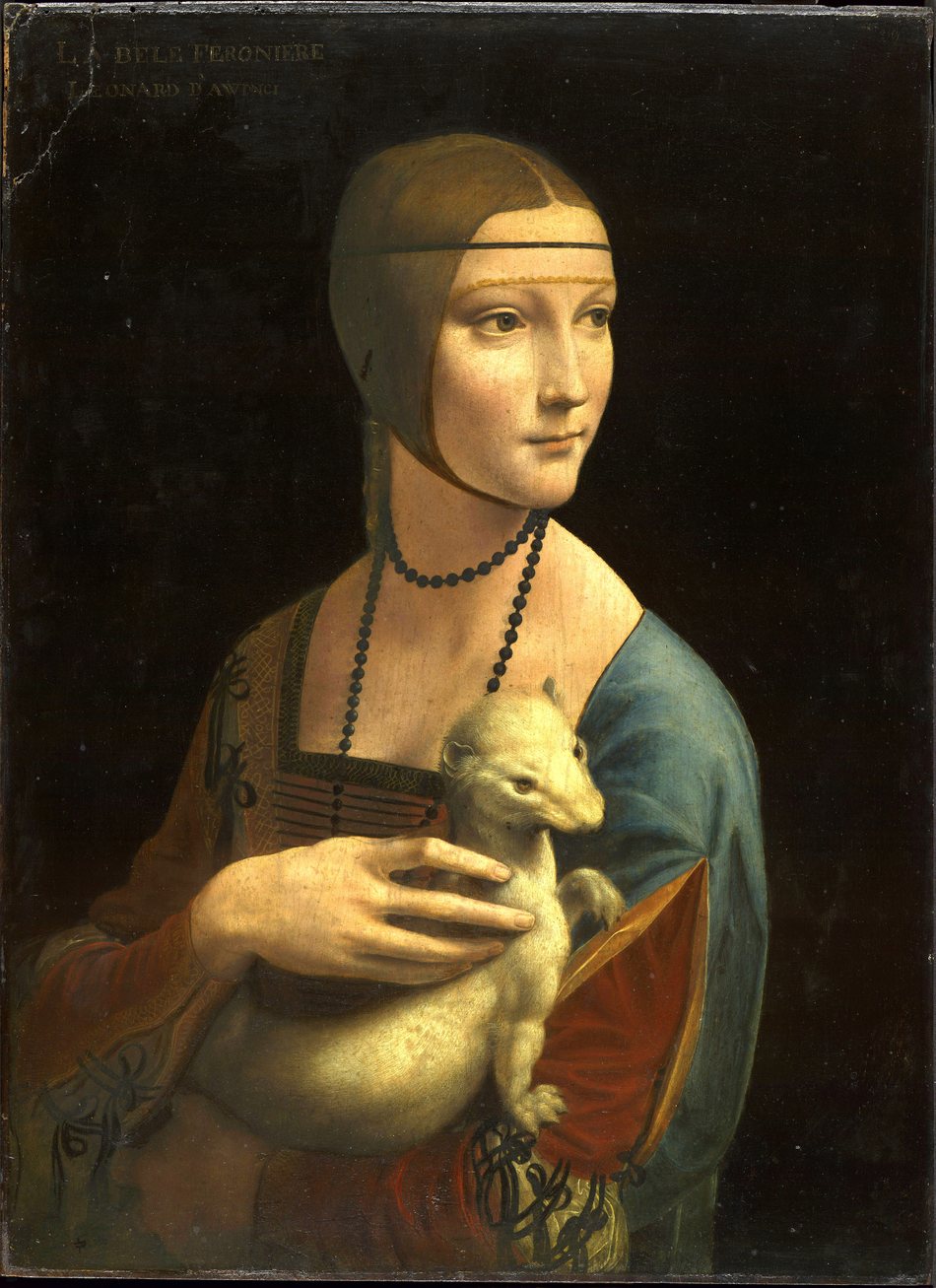
In 2014 the engineer Pascal Cotte peeled this portrait apart with multispectral light, layer by layer, and found the ermine was painted three times: first there was no animal at all, then a small grey creature, and only then the great white ermine of the final picture. Leonardo kept revising the symbol — zoologist, emblem and court gossip all in one small beast.
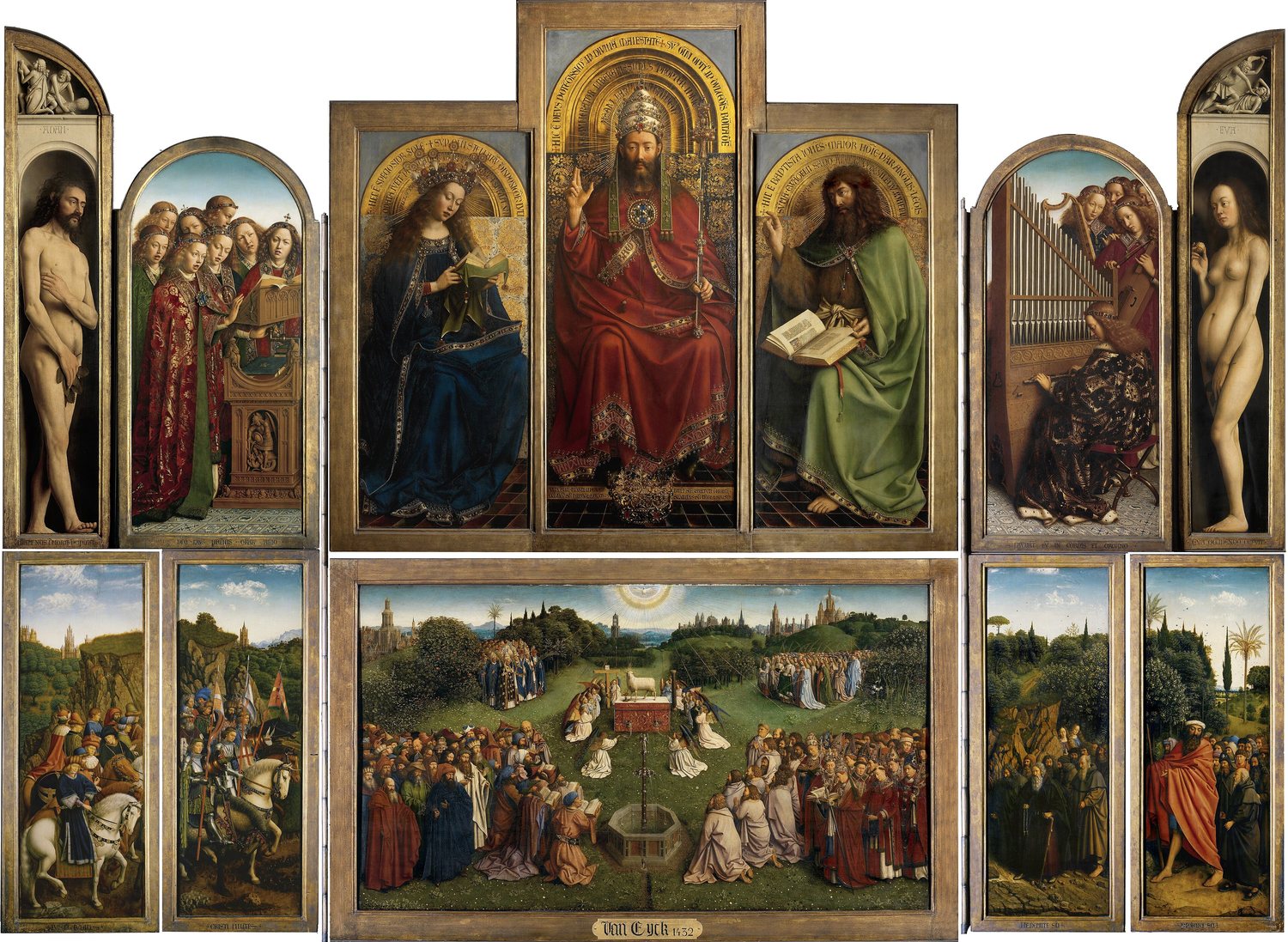
The Lamb of the Ghent Altarpiece wore a mild, sheepish face for nearly five centuries — because a sixteenth-century painter had softened the original. The great restoration finished in 2020 removed the overpaint and the true face looked out: uncannily direct, eyes fixed on the viewer, almost human. The internet briefly argued about a sheep; conservators simply called it Van Eyck, recovered.
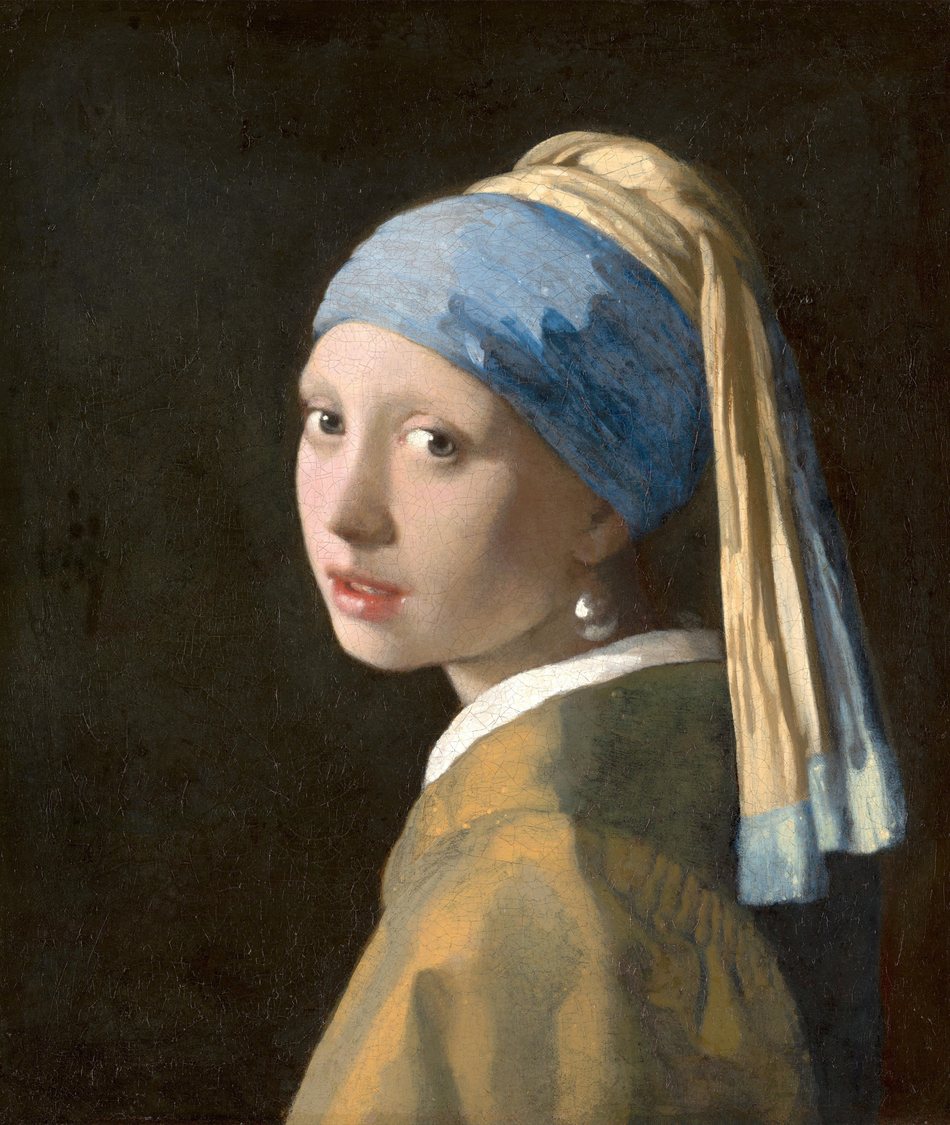
In 2018 the Mauritshuis put its most famous girl through every scanner it had — the 'Girl in the Spotlight' project. The dark background turned out to have been a green curtain, its folds still readable in the chemistry; the girl has eyelashes, long since faded from view; and there is no underdrawing at all. Vermeer composed her directly in paint, and let three centuries do the rest.
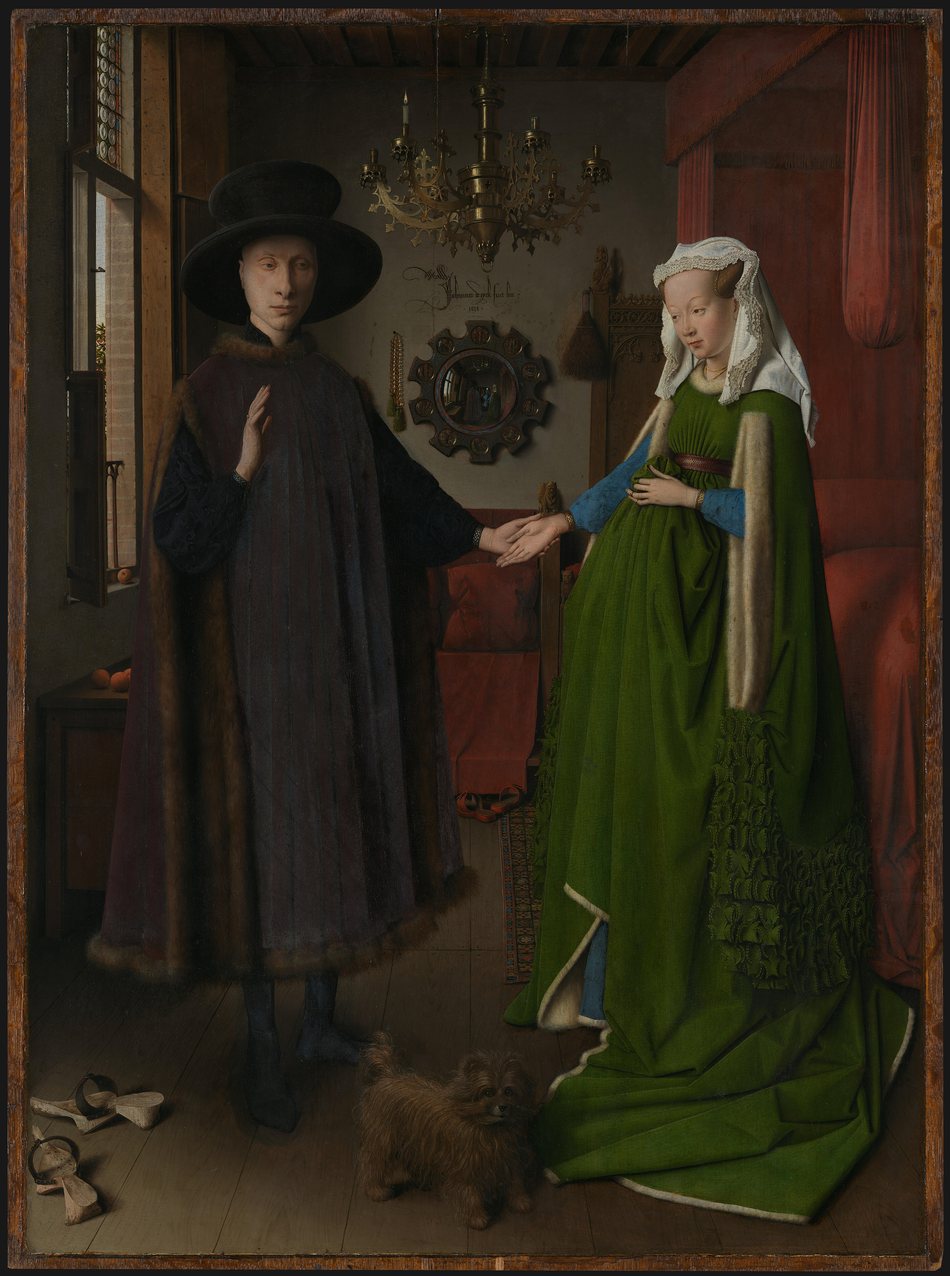
Infrared light reads the drawing under this famous panel, and the drawing disagrees with the painting: the joined hands were first arranged differently, the little dog was reshaped, the faces shifted. Even Jan van Eyck — the most deliberate hand in this gallery — composed by revision. The mirror-perfect surface we admire is the second draft.
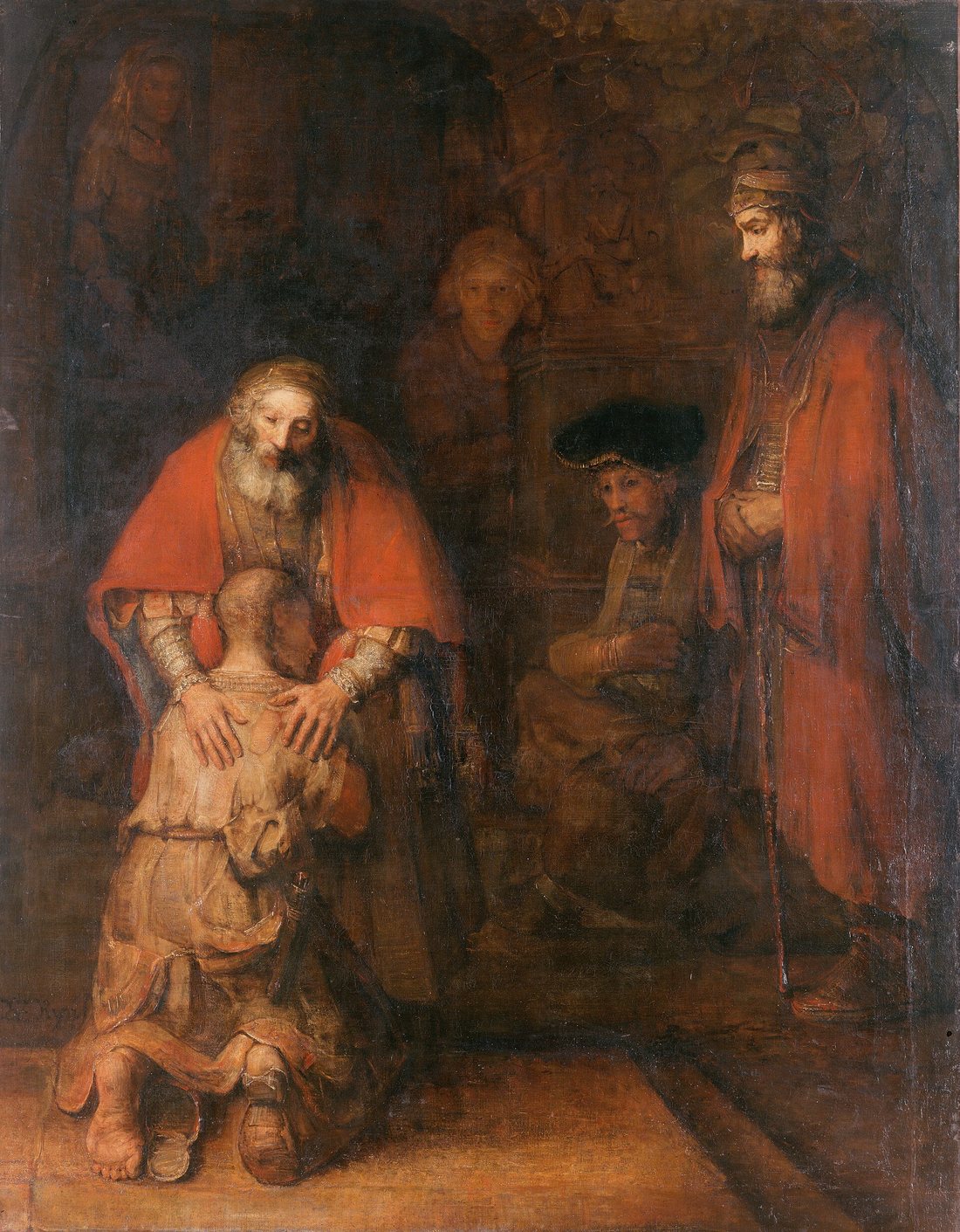
X-rays of the Prodigal Son show Rembrandt rewriting his own picture as he painted: figures at the edges were moved and suppressed, the father's embrace re-arranged, whole passages buried under new paint. The overwhelming tenderness of the final canvas was not struck off in a moment of inspiration — it was edited into being, correction by correction.