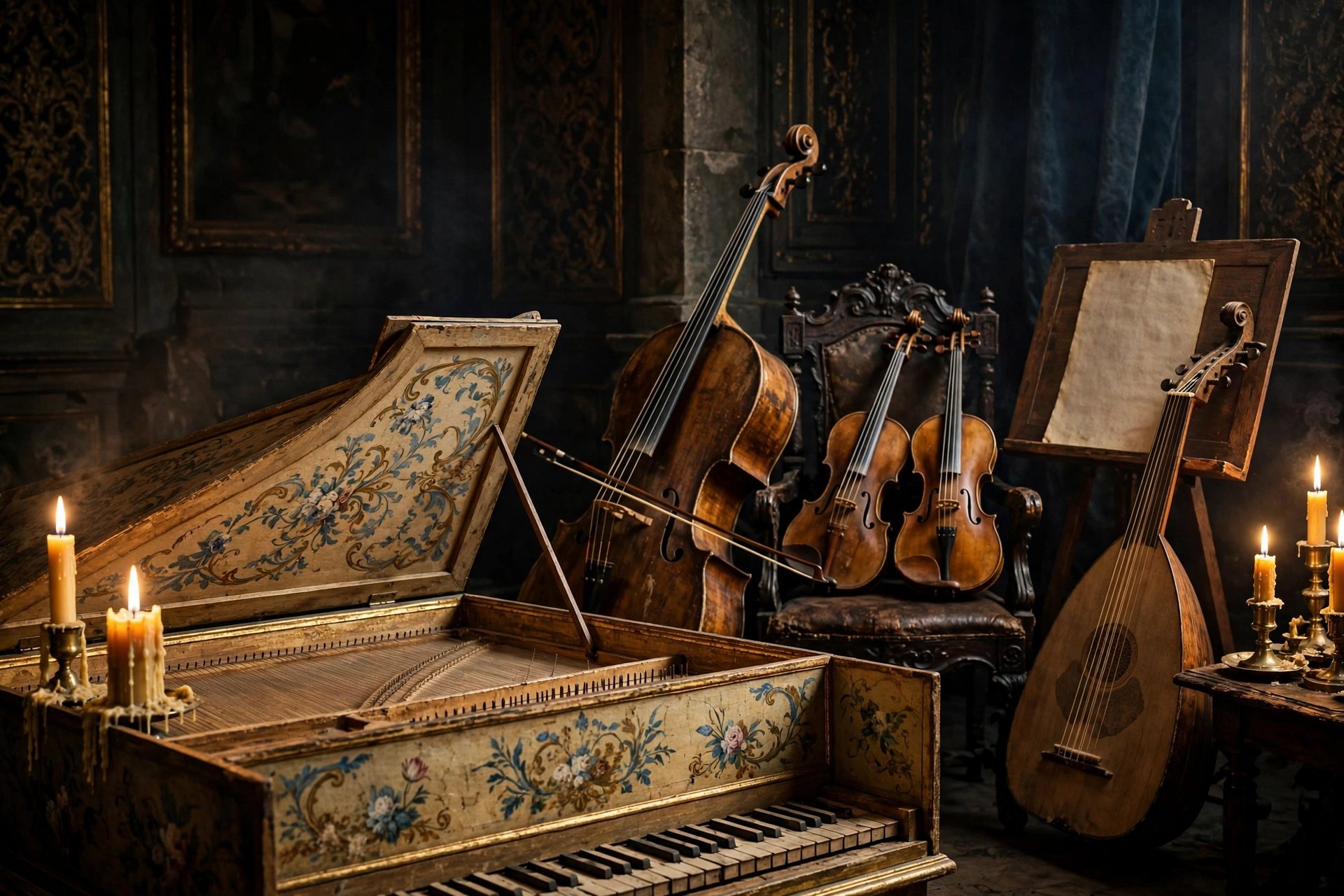
Half the paintings in this gallery are full of music nobody can hear: concerts in Venetian gardens, lessons at the virginal, angels with viols, a hurdy-gurdy man feeling his way through the dark. This room gives the pictures their sound back — the instruments themselves, at the pitch the era used, in the tuning the era preferred, played the way the era played them. The music button above is already tuned: it plays the Aria of Bach's Goldberg Variations.
The era had no single pitch standard, but much of its music sat about a semitone below modern concert pitch — the 'baroque pitch' of A≈415 that period ensembles use today. It is why the old instruments sound mellower in modern revivals: gut strings at lower tension, longer string lengths, a whole sound world pitched, literally, a half-step calmer than ours.
Strings were sheep gut, wound with silver wire for the basses; bows were shorter, convex, and held differently — the baroque bow dances where the modern bow presses. Violins had no chin rests, cellos no spikes, and necks set at a shallower angle. The instruments in the photographs here are not antiques under glass; rebuilt and restrung, they are how we know what Vermeer's music lesson actually sounded like.
Keyboards were tuned in meantone temperament, which makes the common keys glow with pure thirds and pushes the remote keys into a howling 'wolf'. Composers wrote toward the pure keys the way painters composed toward the light. Equal temperament — every key equally, slightly wrong — is a later peace treaty. When you hear a harpsichord of the era played in its own tuning, the harmonies have weather: some keys are sunny, some are storm.
The gallery's pictures keep stopping to make music: Giorgione's shepherds, Vermeer's lessons, Steen's merry companies, La Tour's blind hurdy-gurdy man singing for alms. Music in a painting is rarely innocent — it signifies love (a duet is a courtship), harmony (a well-run household, a well-run soul), or its opposite, the disorder of the tavern. The painters knew the repertoire from inside; several, including Steen's contemporaries in Delft, lived streets away from the instrument makers.
The instrumental suite ordered the evening like courses: allemande, courante, sarabande, gigue — German gravity, French running steps, the slow Spanish sarabande (once banned as indecent), and a final jig to send everyone home. The Sarabande you can hear in the Evening room of this gallery and the dances folded into the Goldberg Aria's family all belong to this table-plan of sound: music as choreography for people who mostly sat still.
Almost all of this music was first heard the way this room is lit: by candles, in rooms of wood and plaster, at volumes a modern hall would call intimate. Notation was a sketch, not a script — players ornamented, improvised basses from figures, and no two evenings matched. The paintings' silence is therefore doubly honest: the music was never in the object. It was in the room, and it left when the candles did.
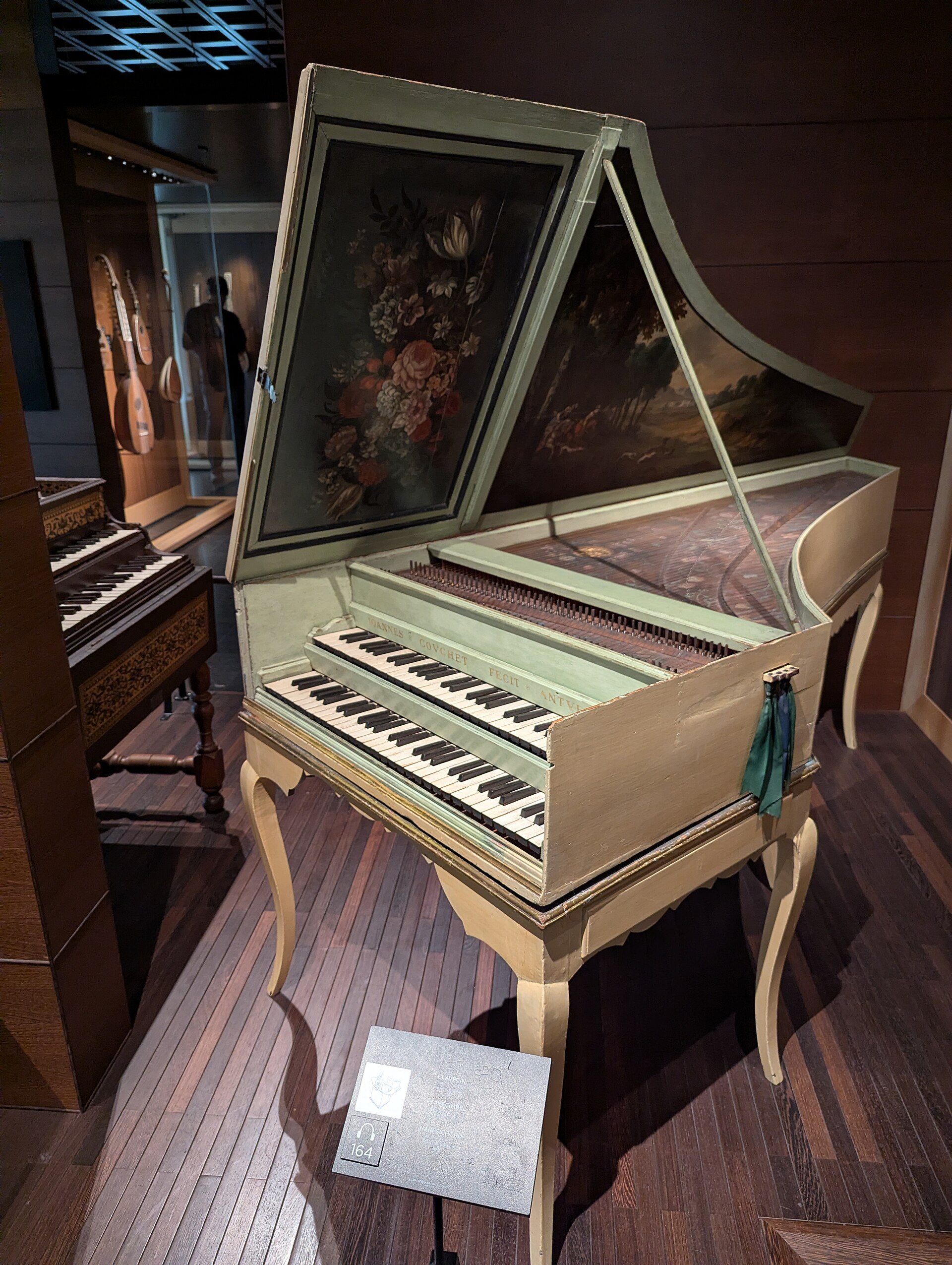
The harpsichord plucks its strings with quills — it cannot play louder by touch, so its music is built from ornament and timing instead. The great Flemish makers, Ruckers and Couchet, built instruments that were also furniture for art: this one's lid carries a painting, its case is a gallery in itself. In Vermeer's Delft, the virginal — the harpsichord's smaller sister — stands in half the interiors, always with a woman at the keys and a lesson in progress.
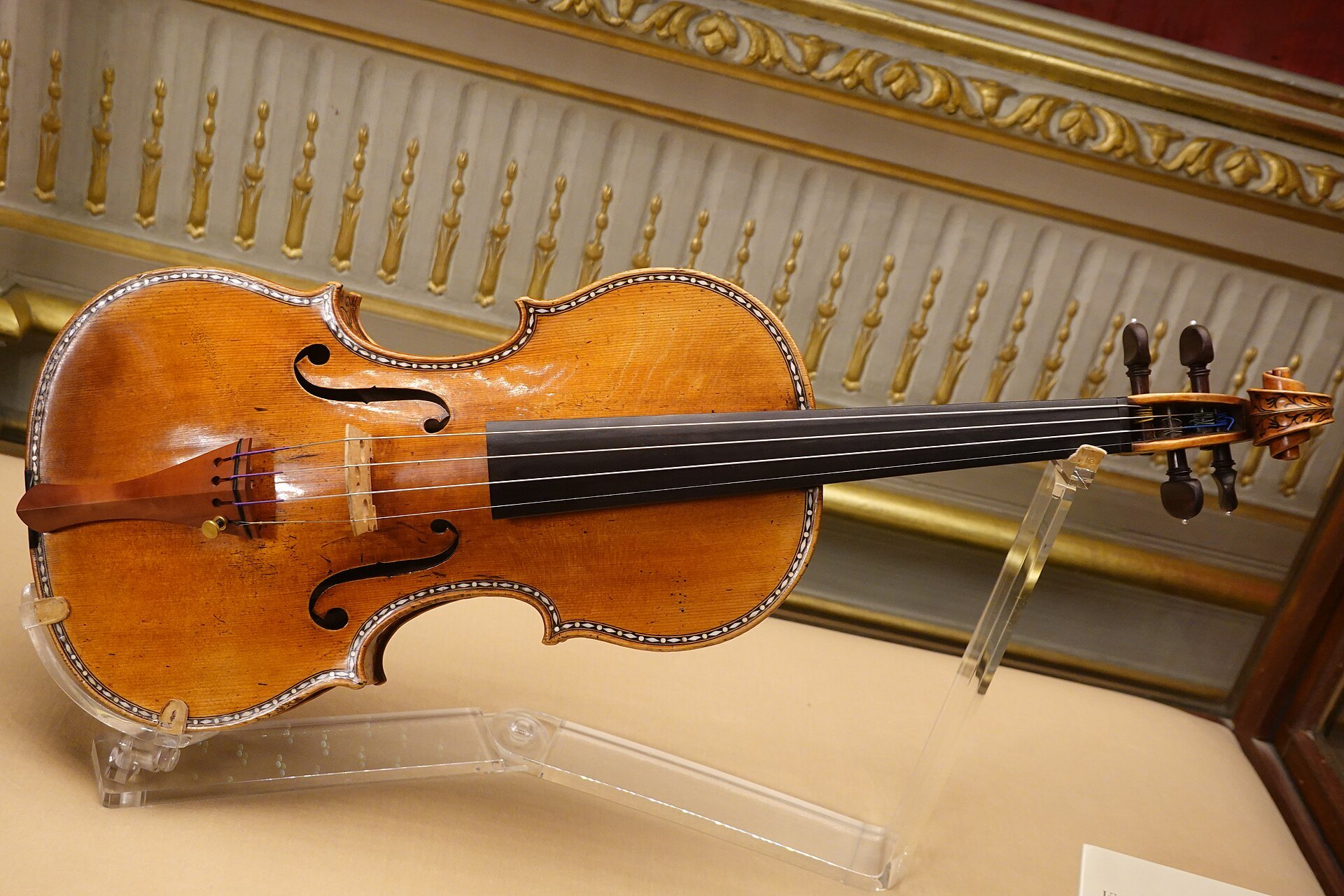
In one small Italian town, three families — Amati, Guarneri and Stradivari — perfected the violin in the very decades when Caravaggio and Rembrandt were perfecting the painted figure. This 1709 Stradivari, inlaid and decorated for the Spanish court, is the era's sound at its most luxurious: varnish like amber, a voice built for rooms of stone and candlelight. The violin family displaced the viols in loud company — and kept them for intimate company, as the next photograph shows.
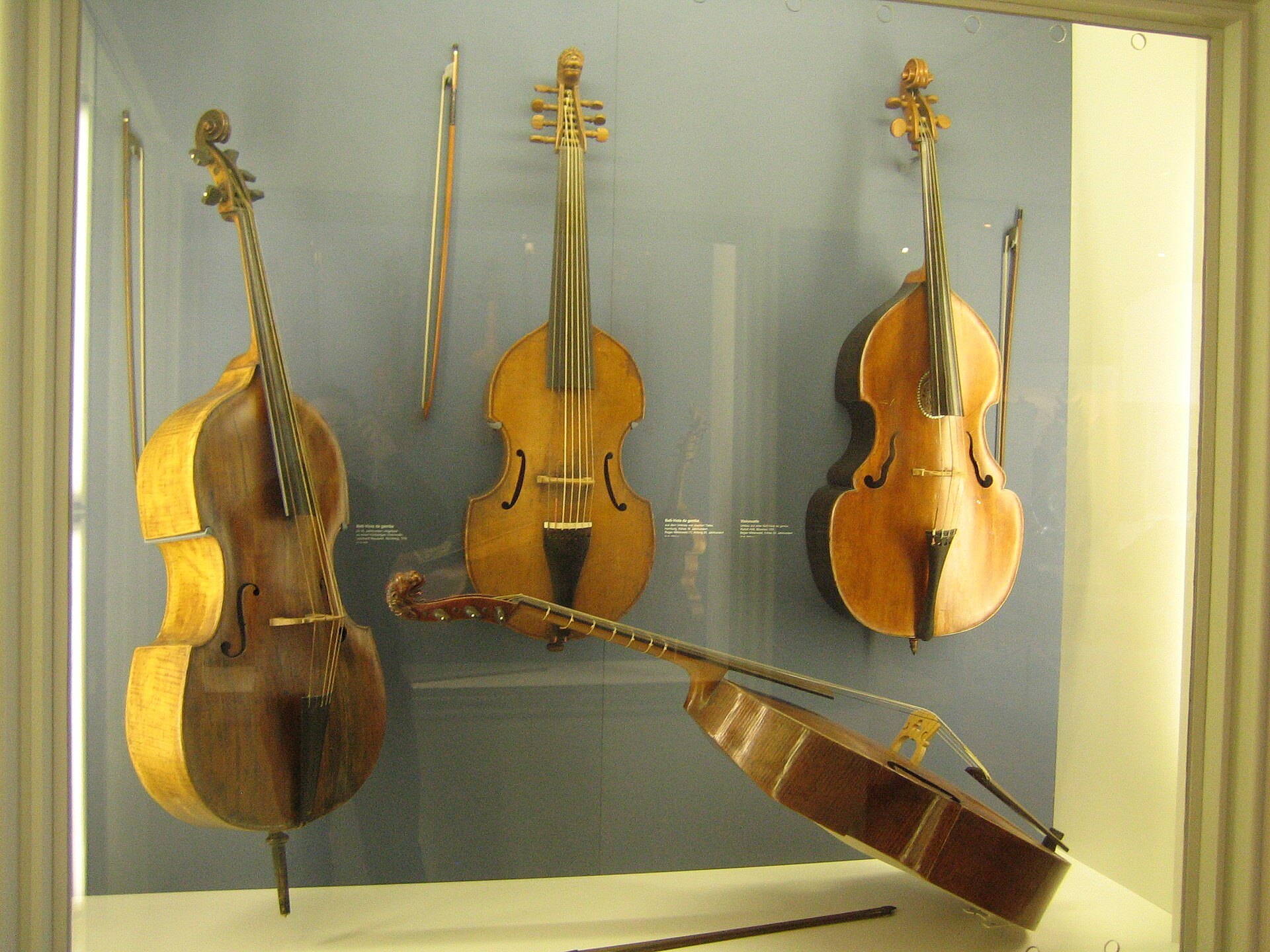
The viols — held downward between the knees, fretted like lutes, bowed underhand — came in families, like voices in a choir, and a chest of them was a household's evening. Their sound is softer and more nasal than the violins', closer to singing. In the paintings they belong to angels and to quiet rooms; in life they were the chamber music of people who played for themselves, not for halls.
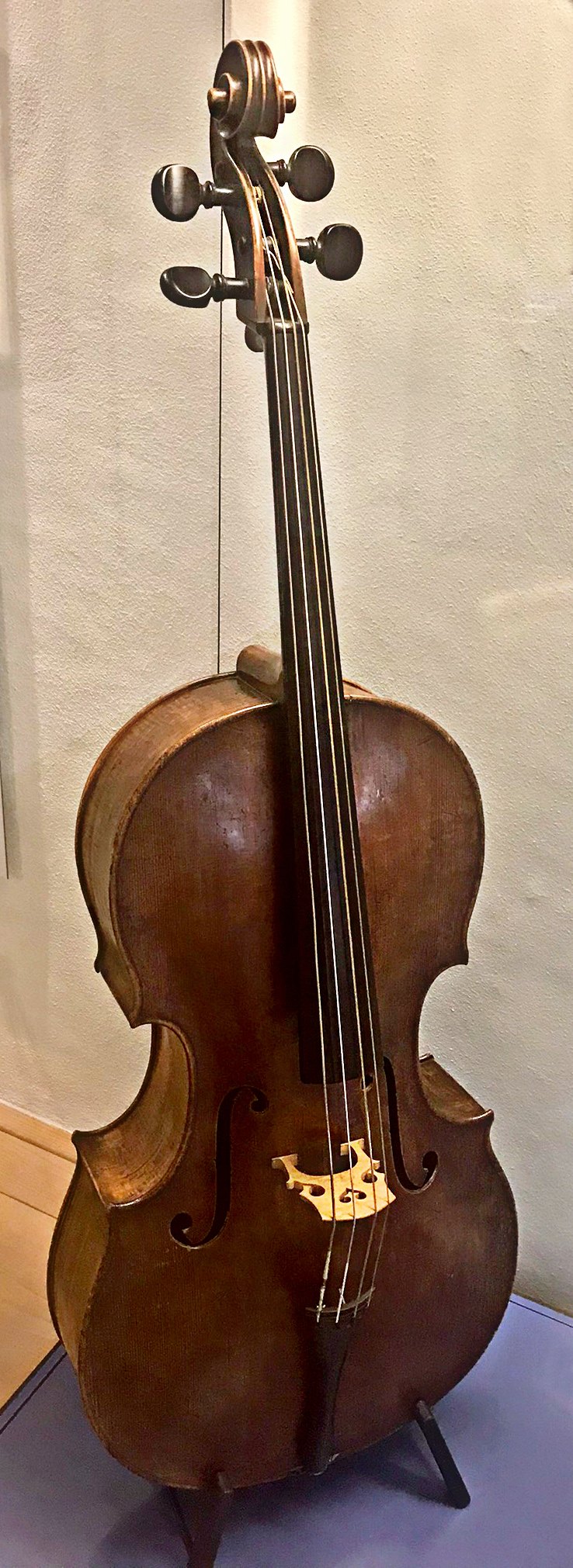
For most of the era the cello was the orchestra's floor: it walked the bass line under everything, spikeless, gripped between the calves. Then, around 1700 in Bologna, players began asking it to sing — and by the time of this late, elegant Klotz instrument it had become a soloist. Bach's six suites for it alone, written about 1720, are the era's most private music: one instrument, one player, a whole architecture of sound.
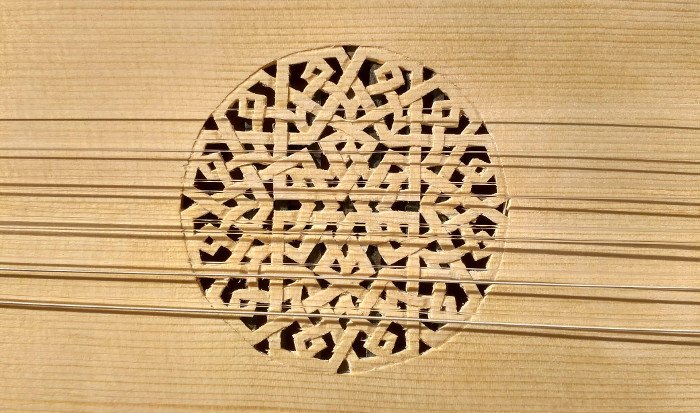
Every lute carries this small miracle in its belly: a rose carved from the solid spruce of the soundboard, in interlacing knots that are part ornament, part signature, part philosophy — the instrument's music made visible before it is heard. The lute was the era's most intimate voice, the accompanist of songs in a thousand paintings, and the hardest to keep in tune: 'lutenists,' ran the joke, 'spend half their lives tuning, and the other half playing out of tune.'