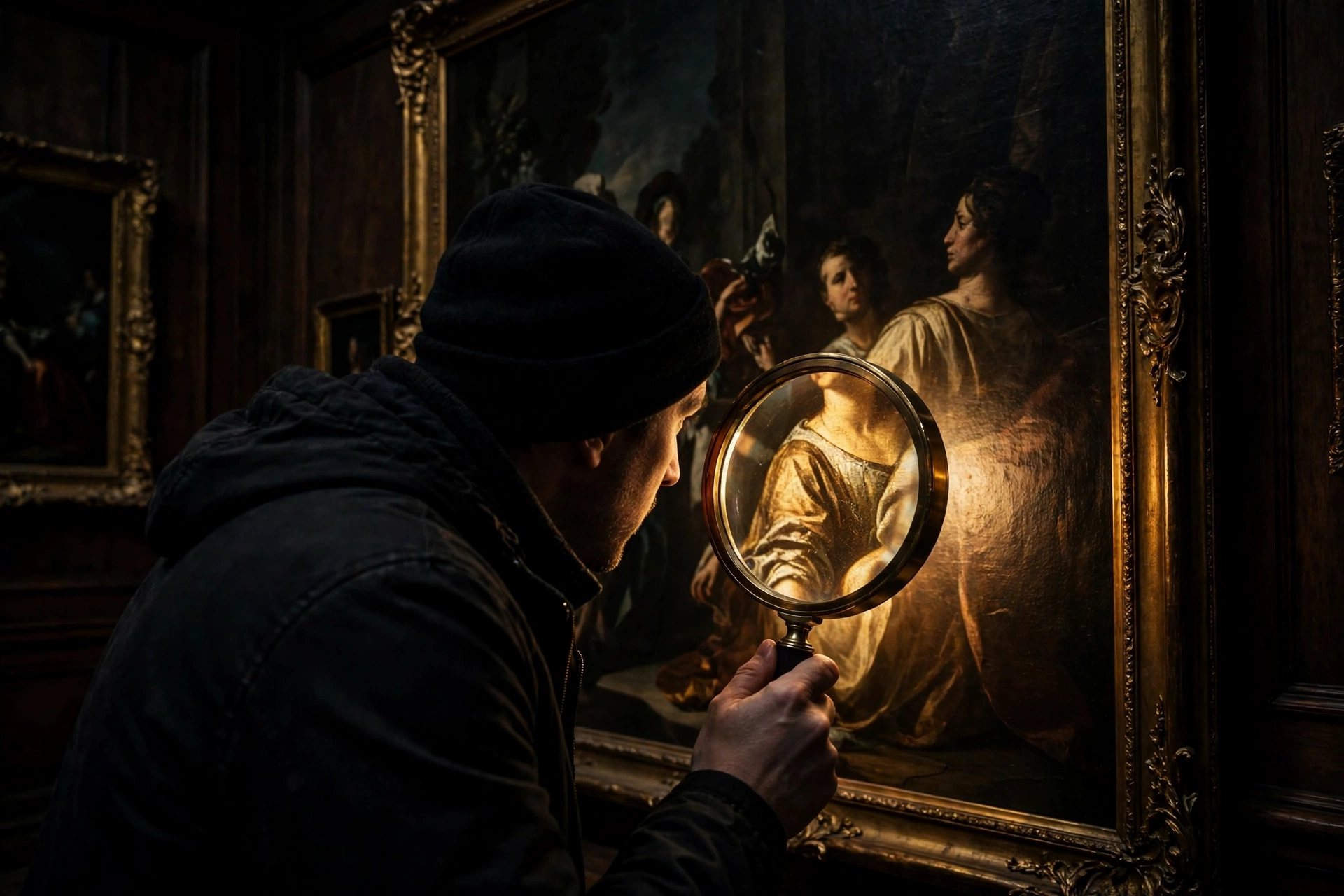
From across the room a painting is a window. Step closer and it becomes a crowd of small decisions — a window reflected in a hare's eye, a skull smeared across a floor, the painter's own face on a severed head. The old masters hid their best jokes and their deepest thoughts at the scale of a thumbnail. This room lends you a magnifying glass: six details, each large enough to live in.
These pictures were not made for museum walls and spotlights. They hung in candlelit rooms, over doors, inside cabinets — and their owners lived with them for decades. A detail at thumbnail scale is a private pleasure: something you discover in your tenth year with a painting, and then show a grandchild. The masters painted for the long acquaintance, not the first glance.
A convex mirror is a painter's dare: it shows the room behind the viewer, bends straight lines, and shrinks a world into a palm. Van Eyck, and after him Petrus Christus, Memling and Massys, painted mirrors the way fencers salute — as proof of mastery. A mirror in a picture is never decoration; it is the painter signing his skill in the hardest place available.
Not all signatures sit in the corner. Van Eyck writes 'Jan van Eyck was here' in elegant script on a wall, like a guest-book entry. Michelangelo, furious at being thought incapable of the Pietà, carves his name across the Virgin's sash. Others smuggle their own faces into crowds of apostles and executioners. The detail rooms of this gallery keep finding the artists hiding inside their own pictures.
An anamorphic image is painted in deliberate distortion and resolves only from one extreme viewpoint — low, at the side, almost along the surface. It is the only kind of painting that choreographs the visitor's body: you must walk, stoop and peer before it surrenders its secret. Holbein's skull is the famous example; the sixteenth century was full of them, hidden in portraits like traps for the curious.
Fifteenth-century panels sometimes carry a painted fly, life-size, apparently settled on the frame or a saint's robe. It is a trompe-l'oeil calling card — the story was told of Giotto fooling Cimabue into brushing one away — and a small philosophical joke: art so true it deceives even about what is not there. When you find one, the painter has reached across five centuries and tapped you on the shoulder.
The instrument this room recommends costs nothing: time. Choose one painting, stand before it for ten full minutes, and let your eye go where it wants after the obvious is exhausted. Details surface in minute four or five — the reflection, the inscription, the fly. Every work in this room rewards that patience; the magnifying glass was only ever a metaphor for staying.
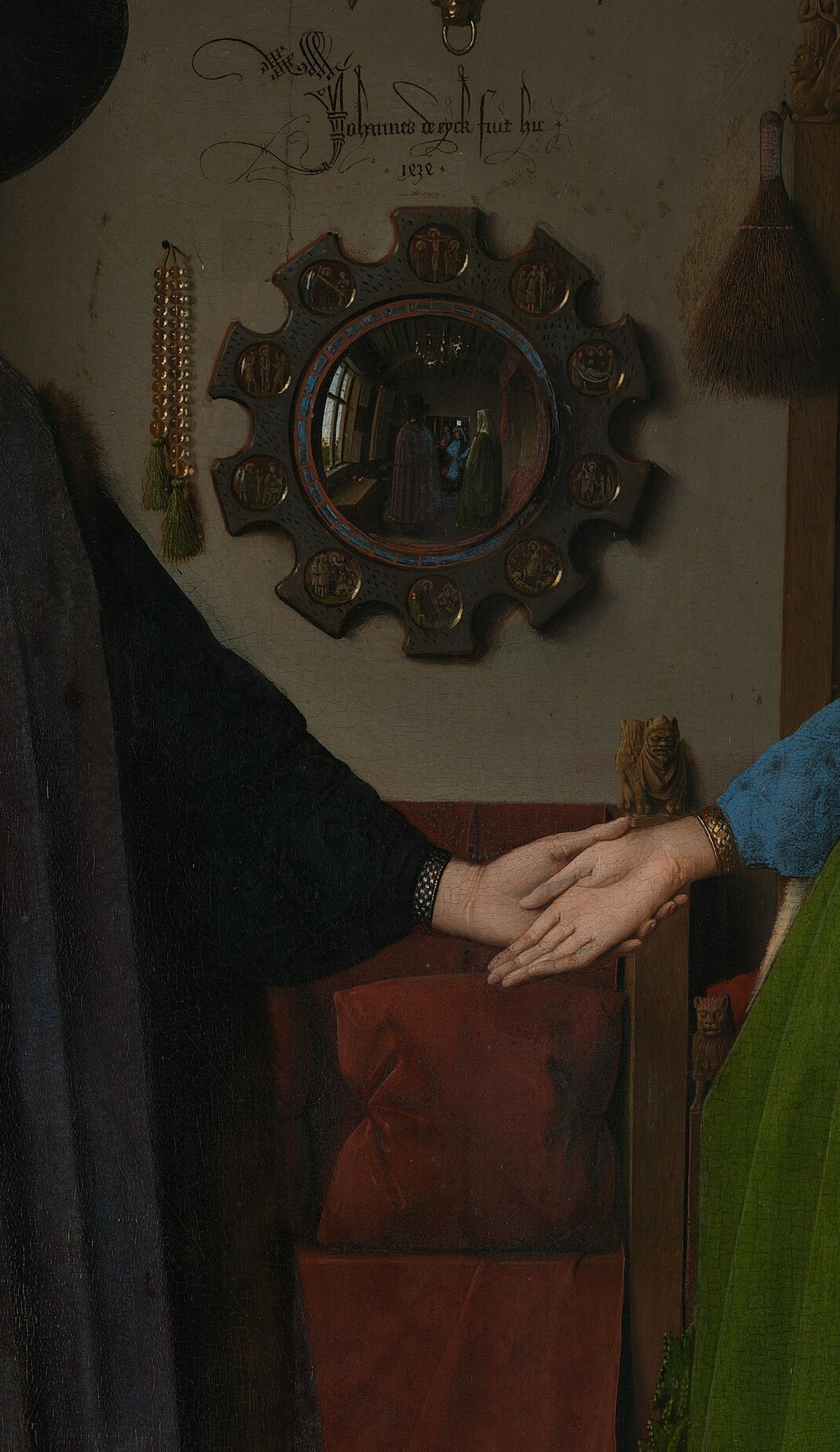
In the little convex mirror, the room turns around: two more men stand in the doorway, one raising a hand in greeting — witnesses, arriving. Above the mirror Van Eyck wrote in elegant script, not 'I painted this' but 'Jan van Eyck was here, 1434'. And the mirror's frame carries ten scenes of Christ's Passion, each a few millimetres across: a whole altarpiece, worn like a jewel.
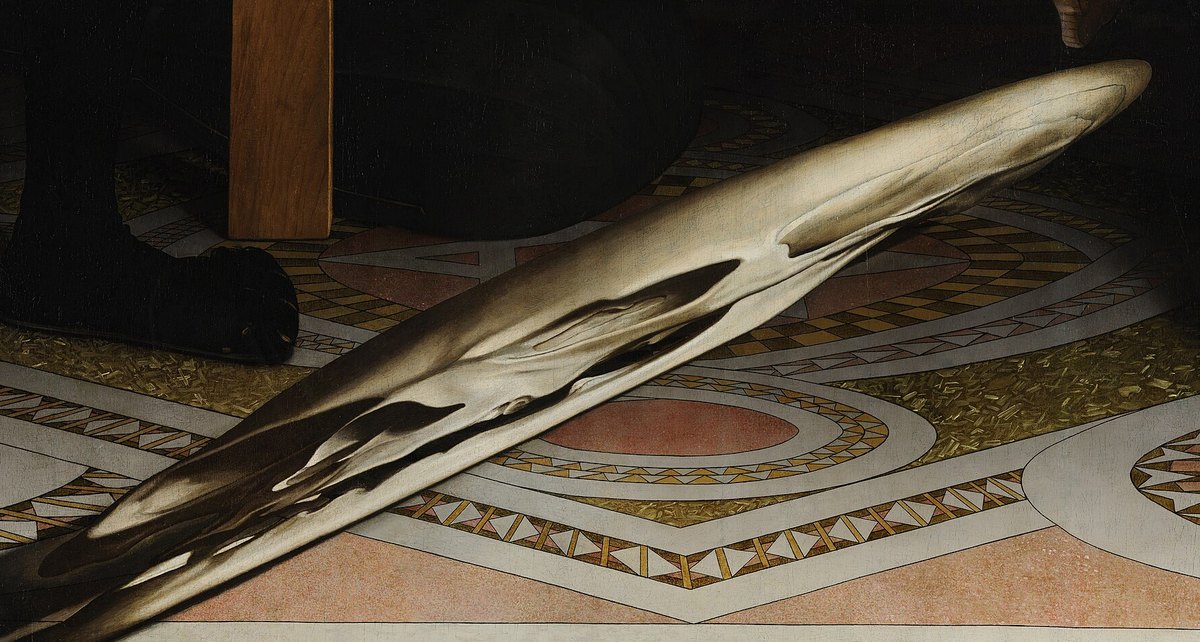
From the front it is a grey smear, an accident on the marble floor. Step to the right, lower your eye to the picture's level, and the smear gathers itself into a skull, grinning up at you. Two rich, brilliant men stand surrounded by globes, instruments and books — every tool of human knowledge — and death lies at their feet, visible only if you move. The detail is the whole painting's meaning, hidden in plain sight.
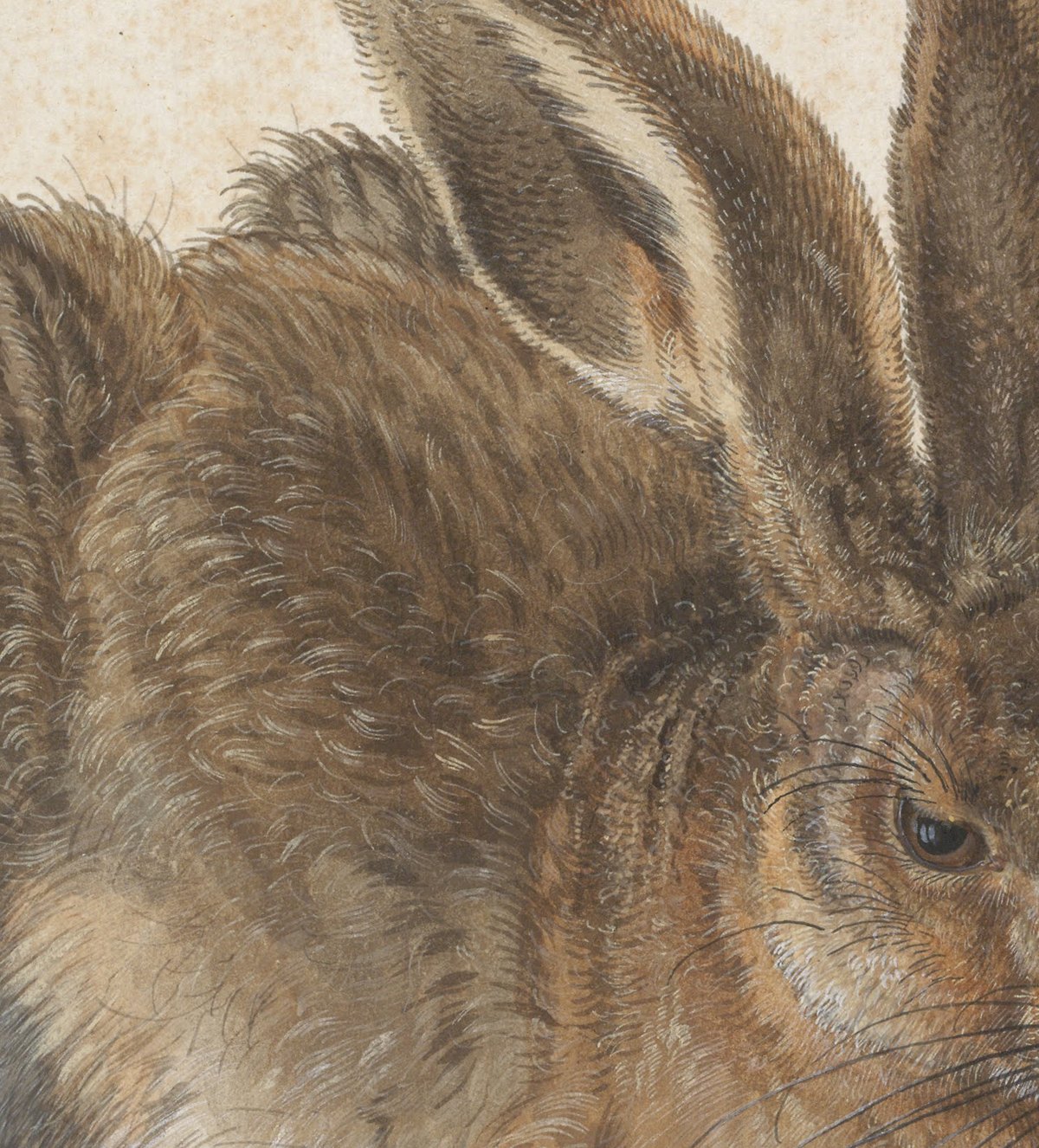
Look into the hare's eye: a tiny window is reflected there, the mullions clear — tradition says it is the window of Dürer's own workshop. Around it, the fur is built from thousands of individual strokes, guard hairs over soft underfur, in watercolour and bodycolour on paper. The sheet was probably never a study for anything else. At this scale, a hare becomes a landscape you can get lost in.
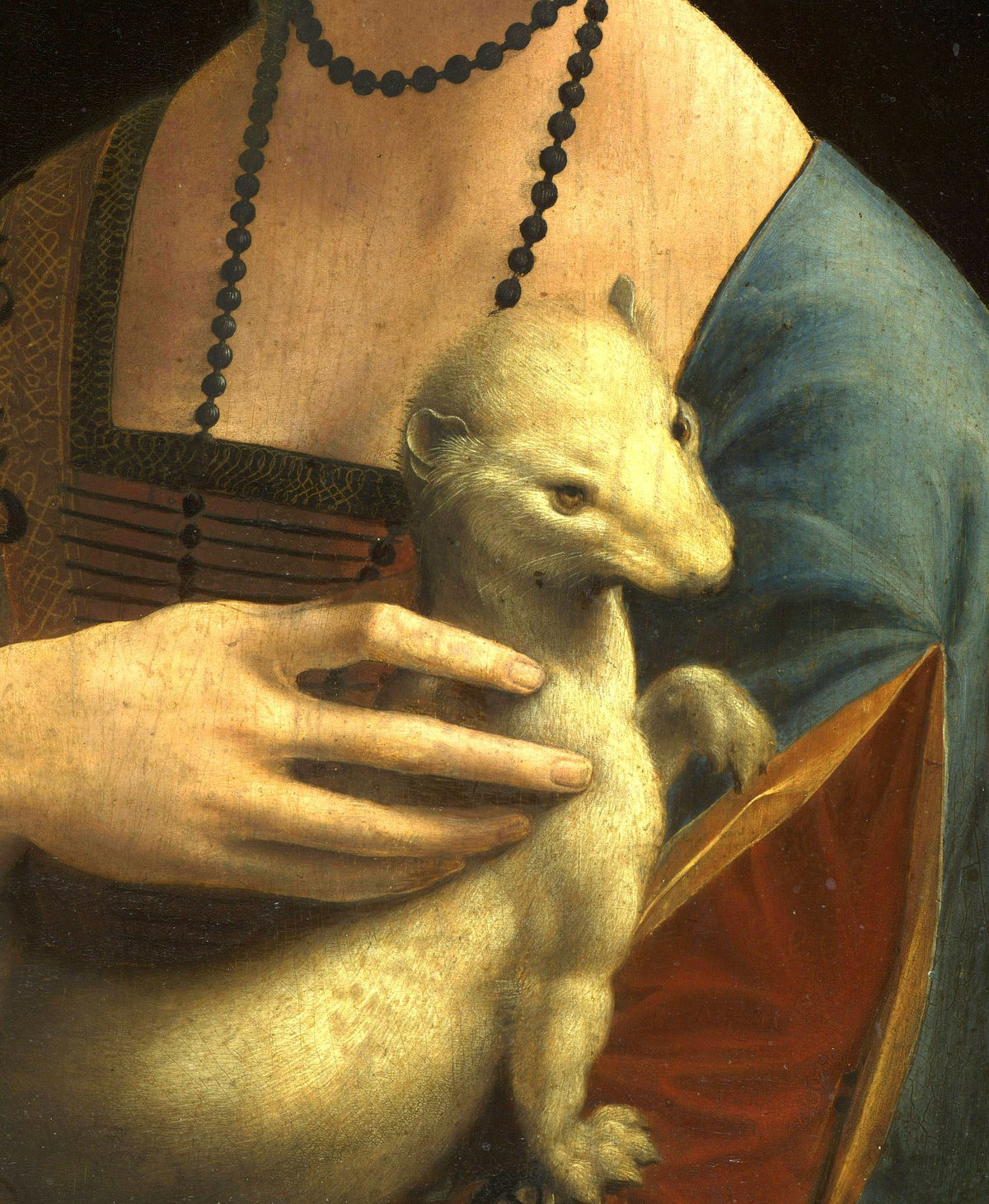
Cecilia's long fingers rest along the ermine's back, and hand and animal are painted with the same strange tenderness — the laboratory room in this gallery shows how often Leonardo repainted both. The ermine twists toward a sound we cannot hear; the hand does not tighten. It is the still point of the whole portrait: power, held gently, in two kinds of white fur and skin.
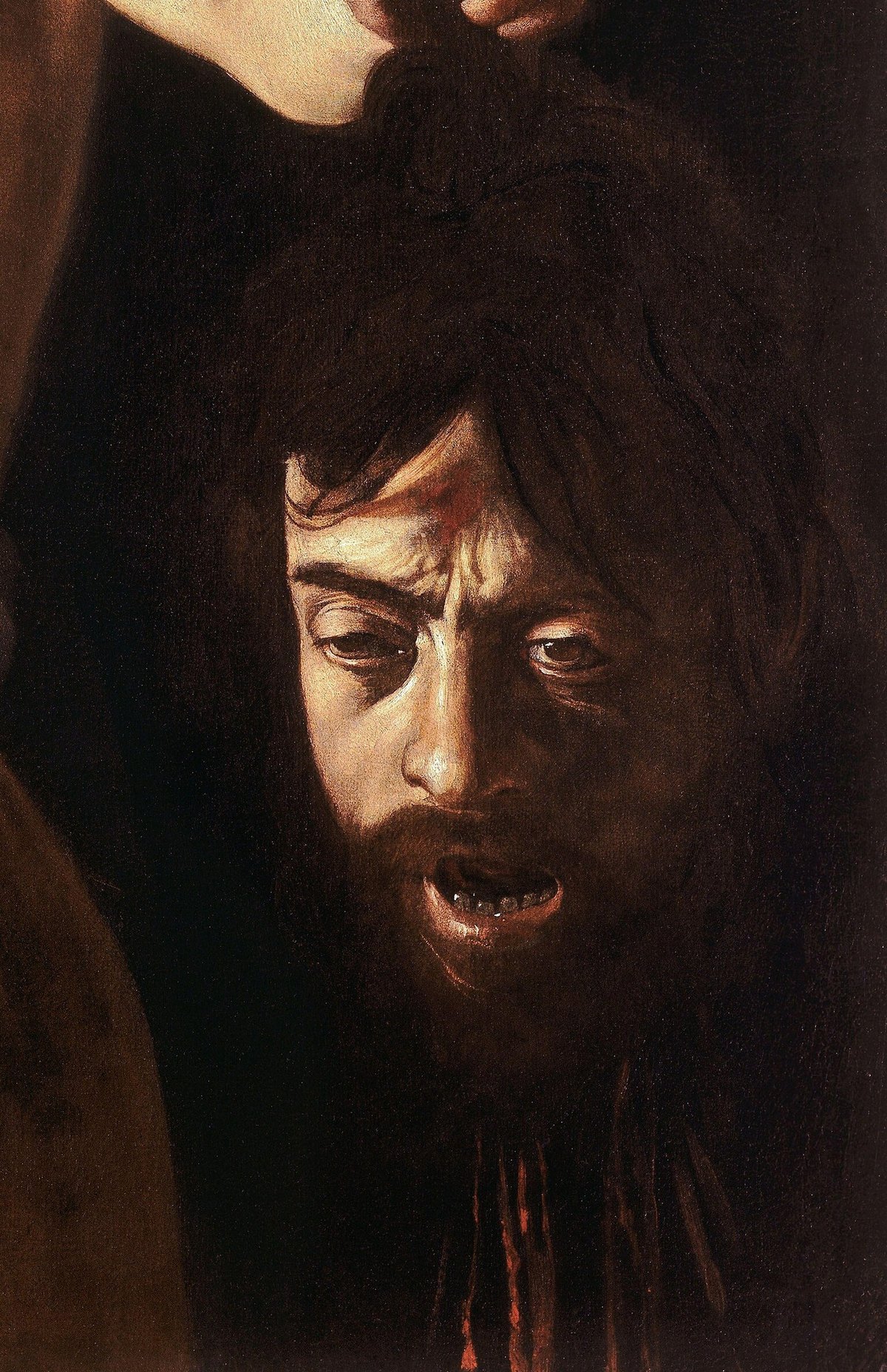
The severed head is Caravaggio's own face — older, exhausted, the mouth still open. He painted it while he was a fugitive from Rome with a death sentence for murder hanging over him, and sent versions of this picture to plead his case. Young David holds the head up without triumph, almost with pity. At full size it is a Bible story; at this size, it is a confession.
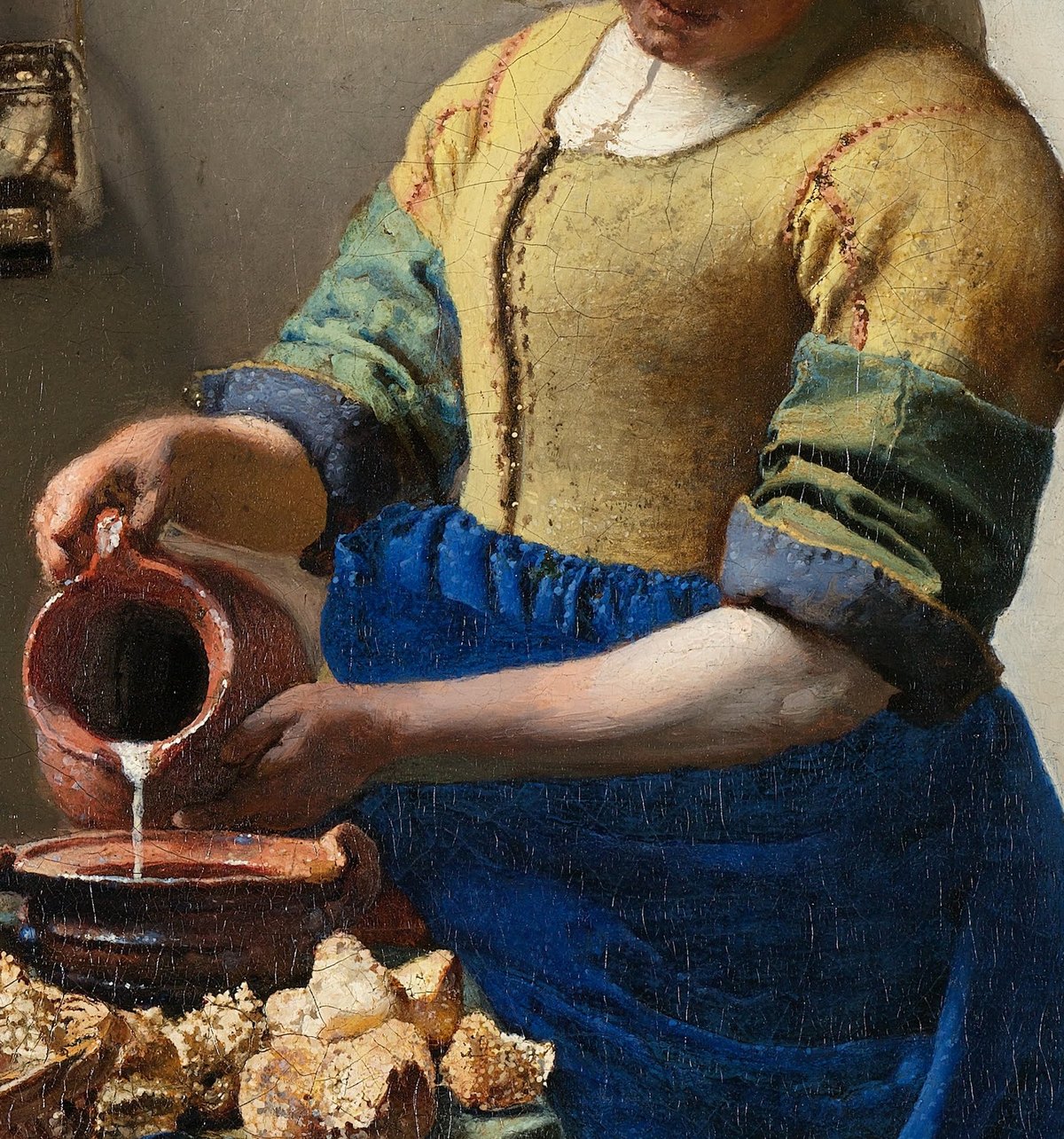
The stream of milk is a thread of white paint a few millimetres wide, unbroken from jug to bowl — and around it the still life sparkles: the crusts of the bread are dotted with tiny points of light, the famous pointillés, and the apron burns with the most expensive blue on earth. Come this close and Vermeer's calm realism dissolves into what it always was: absolute control of paint, pretending to be ordinary life.